
- Details
- Written by: Halna du Fretay
- Category: 2024
- Hits: 5709










On November 8, 2024, India, through Bharat Dynamics Limited (BDL), signed a Memorandum of Understanding (MoU) with Russia’s Rosoboronexport (ROE) to cooperate on the development of advanced variants of the Pantsir air defense system. This agreement, signed during the fifth meeting of the India-Russia Inter-Governmental Commission (IRIGC) subgroup in Goa, signifies a strategic step in defense relations between the two countries, especially in the context of the ongoing Russia-Ukraine conflict.
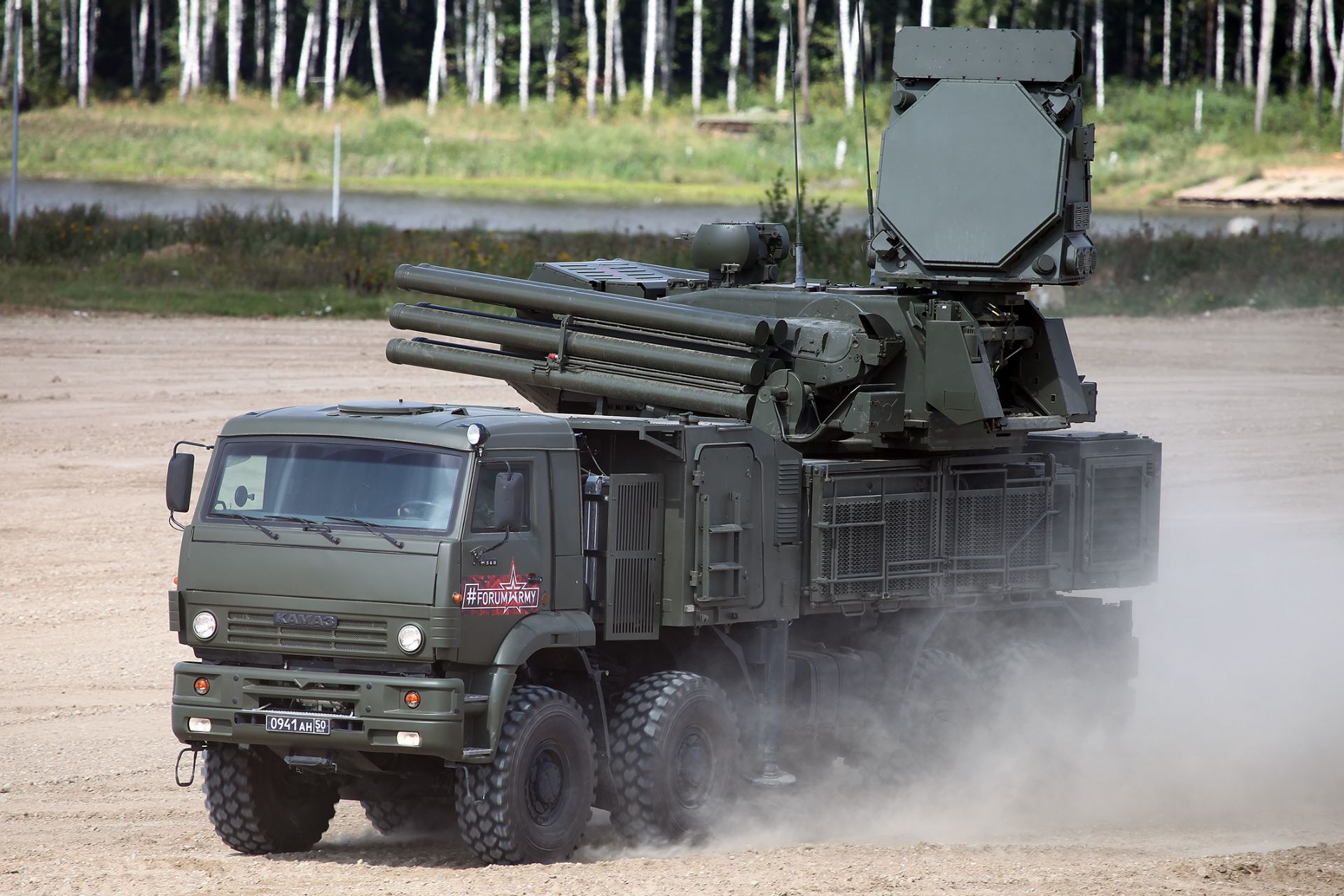
The collaboration with Rosoboronexport on Pantsir development supports India’s "Make in India" initiative by leveraging BDL’s manufacturing expertise and Russian technology to enable local production, thereby reducing India’s reliance on defense imports (Picture source: Vitaly Kuzmin)
The Pantsir-S1, developed by the KBP Design Bureau in Tula, Russia, is a versatile, mobile air defense system that combines missiles and automatic guns to safeguard military installations and critical infrastructure against aerial threats. Equipped with twelve 57E6 surface-to-air missiles and two 30mm automatic cannons, the system can engage multiple targets within a 20 km range for missiles and up to 4 km for cannons, with an altitude reach of 15 km, enabling effective defense against low- to mid-altitude aerial threats, including subsonic cruise missiles and precision-guided munitions. The Pantsir-S1 is mounted on an 8x8 all-terrain chassis (Ural or Kamaz for the Russian army), enhancing its mobility across various terrains. The system’s fire control, integrating multi-band radar and infrared imaging, ensures precision targeting and resilience against electronic countermeasures.
Designed for standalone or integrated operation with other air defense systems, the Pantsir-S1 provides broad coverage against large-scale aerial assaults. It can neutralize aerial threats traveling up to 1,000 m/s, including drones and helicopters, and functions effectively even under electronic warfare conditions. Its ability to operate passively and use electro-optic tracking channels enhances its performance in environments with heavy interference. Widely used by countries such as Russia, Syria, and the United Arab Emirates, the Pantsir-S1 has proven essential for defending ground forces and infrastructure from modern aerial threats, offering a flexible defense solution for evolving air threat scenarios.
The MoU, signed by BDL’s Managing Director Commodore A. Madhavarao (Retd) and ROE’s Deputy Director of the Naval Department, Mr. Kovalenko German, highlights India’s commitment to diversifying its air defense systems and sustaining strategic partnerships with longstanding international allies. This cooperation aligns with India’s policy of bolstering self-reliance in defense while integrating technological innovations from foreign partners.
The Indian Army has identified the need for a modern, self-propelled air defense system to protect its mechanized units in mobile, high-threat environments. A Request for Information (RFI) issued in July outlines the requirements, specifying systems with minimum 30mm caliber cannons effective up to 3.5 km and missiles with an effective range of 6.5 km and a maximum altitude of 3 km, mounted on six- or eight-wheeled vehicles for enhanced mobility and flexibility.
The partnership with Rosoboronexport for Pantsir development aligns with India’s policy of strengthening domestic defense capabilities. Through BDL’s manufacturing expertise and Rosoboronexport’s technology, this collaboration could allow for local production of the Pantsir system, in line with India’s "Make in India" initiative. This technology transfer represents a step toward reducing India’s reliance on imports.
For India, the Pantsir system offers not only enhanced air defense capabilities but also a strategic tool to counter regional threats. With adaptability to various terrains and the ability to engage multiple aerial threats simultaneously, the Pantsir is a significant addition to India’s defensive arsenal, enhancing readiness against regional security challenges.
India’s defense relations with Russia have traditionally been strong, with Russia serving as India’s primary arms supplier. According to the Stockholm International Peace Research Institute (SIPRI), between 2019 and 2023, 34% of Russian arms exports went to India, leading to high-profile acquisitions such as the S-400 Triumf air defense systems.
Adopting a multi-alignment policy, India has maintained a neutral stance regarding Russia’s actions in Ukraine, avoiding explicit condemnation while advocating for peace. This approach seeks to preserve strategic ties with Moscow, critical for the modernization of India’s armed forces, while balancing its commitments with other global partners. Thus, India aims to secure its defense partnership with Russia, a substantial source of its defense imports, while diversifying its procurement sources to strengthen strategic autonomy
Read more: India and Russia Sign Agreement for Development of Pantsir Air Defense System Variant

- Details
- Written by: Halna du Fretay
- Category: 2024
- Hits: 4216
On November 12, 2024, India’s Defence Research and Development Organisation (DRDO) successfully conducted the first flight test of the Long-Range Land Attack Cruise Missile (LRLACM) from the Integrated Test Range (ITR) in Chandipur, off the coast of Odisha, using a mobile articulated launcher. Reports confirm that all subsystems performed as expected, achieving the primary mission objectives. This test represents a significant step for India in enhancing its self-reliance in defense technology and strengthening its strategic cruise missile capabilities.
The LRLACM is compatible with the Universal Vertical Launch Module (UVLM), already in use for the BrahMos missile system, providing versatility for both naval and land operations (Picture source: DRDO)
Designed as a successor to the Nirbhay cruise missile, the LRLACM (Long Range Land Attack Cruise Missile) is a precision weapon capable of reaching targets over 1,500 kilometers away. Developed by the Aeronautical Development Establishment (ADE) in Bengaluru with support from other DRDO laboratories and Indian industry partners such as Bharat Dynamics Limited and Bharat Electronics Limited, the LRLACM is equipped with advanced turbofan engines and foldable wings with a span of 2.7 meters. The missile, measuring 6 meters in length and 0.52 meters in diameter, weighs approximately one ton. It also features a sophisticated radio frequency (RF) seeker system, enhancing targeting accuracy.
The LRLACM is designed for deployment from both land-based platforms and naval vessels. It is compatible with the Universal Vertical Launch Module (UVLM), already in use for the BrahMos missile system, providing versatility for both naval and land operations. This strategic project received Acceptance of Necessity (AoN) from the Defence Acquisition Council (DAC) in August 2023, enabling rapid progression towards further testing and large-scale production.
During the November 12 test flight, the LRLACM demonstrated its ability to follow a preprogrammed flight path using waypoint navigation, executing complex maneuvers at various altitudes and speeds. The missile’s performance was closely monitored through a network of sensors, including radar, electro-optical tracking systems, and telemetry, deployed across various locations by the ITR, ensuring comprehensive tracking of the flight path. This data validated the missile's navigation and maneuverability, confirming its suitability for long-range strike missions.
The LRLACM’s propulsion system relies on the domestically developed Manik engine, also known as the Small Turbofan Engine (STFE). This engine has undergone extensive successful testing under the DRDO’s Indigenous Technology Cruise Missile (ITCM) program, aimed at validating the indigenous turbofan’s capabilities for military use. Earlier this year, DRDO confirmed that the STFE met all technical requirements, clearing the way for full integration with the LRLACM. Supported by discussions with three private companies interested in manufacturing this advanced cruise missile, the program is now progressing towards large-scale production.
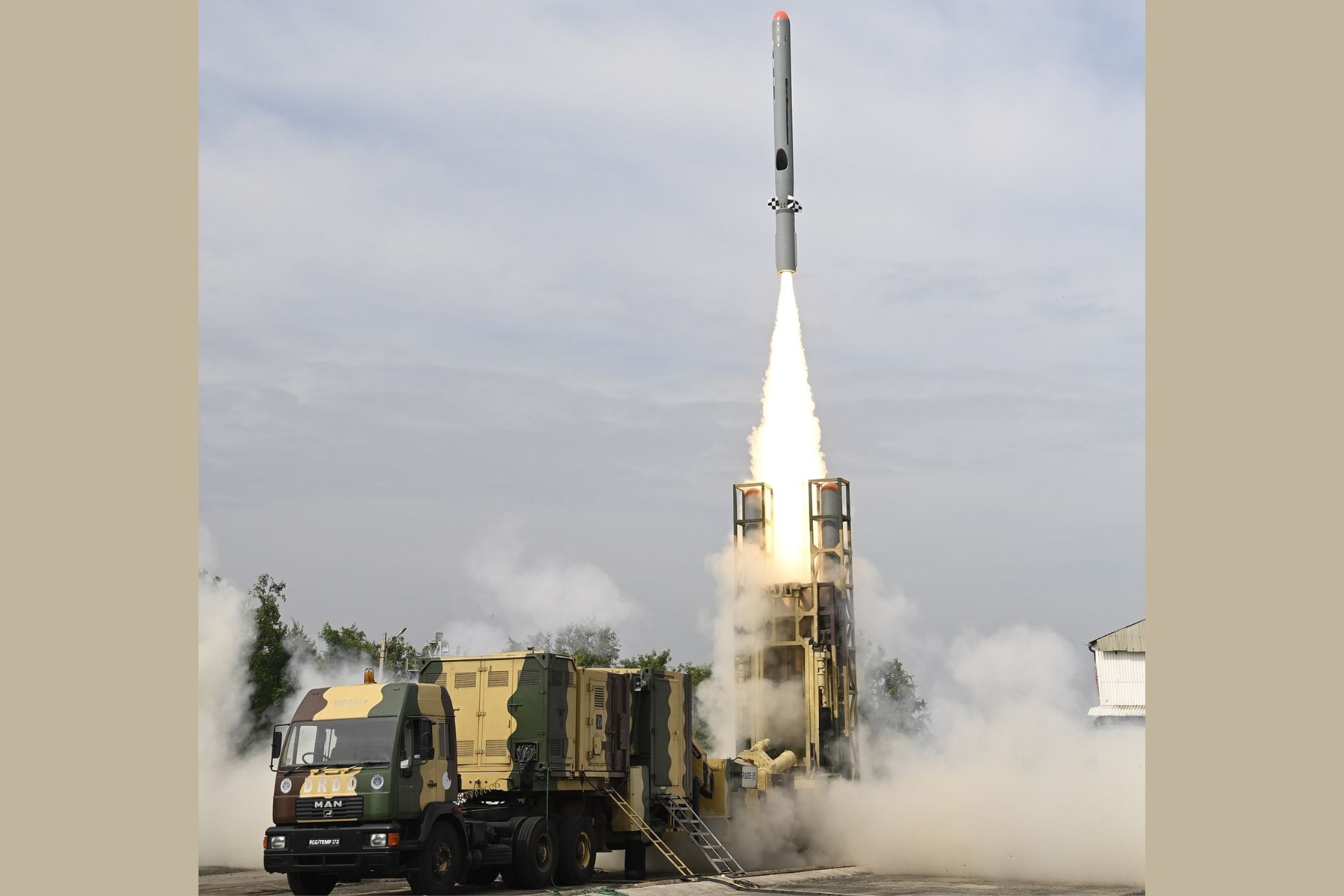
The LRLACM’s development aligns with India’s broader defense strategy, focused on enhancing Indigenous capabilities and achieving greater strategic autonomy (Picture source: DRDO)
The LRLACM’s development aligns with India’s broader defense strategy, focused on enhancing indigenous capabilities and achieving greater strategic autonomy. With its long-range precision strike capability, this missile strengthens India’s deterrence capacity in a complex geopolitical environment. Its deployment within both naval and land forces adds a significant asset to India’s defense portfolio.
Defence Minister Shri Rajnath Singh expressed satisfaction with the successful test, congratulating DRDO, the armed forces, and Indian industry partners. He emphasized that this milestone paves the way for future advancements in indigenous cruise missile technology, reinforcing India’s defensive and strategic posture. Dr. Samir V. Kamat, Secretary of the Department of Defence R&D and DRDO Chairman, also commended the teams involved, highlighting India’s commitment to investing in advanced defense technologies.
The Long-Range Land Attack Cruise Missile (LRLACM) is part of India’s ballistic missile program aimed at bolstering national security and deterrence. Since the 1980s, India has developed a range of ballistic missiles, including the Prithvi and Agni series, covering short to intercontinental ranges. The LRLACM, as a long-range land attack cruise missile, complements this arsenal by providing precise, extended-range strike capability, enhancing India’s strategic flexibility. This initiative reflects India’s defense ambitions, aiming to modernize its armed forces, achieve technological self-sufficiency, and assert its role as a regional power. By developing advanced indigenous weapon systems like the LRLACM, India seeks to reduce reliance on arms imports and establish a robust defense posture in response to contemporary security challenges.

- Details
- Written by: Halna du Fretay
- Category: 2024
- Hits: 8328
China recently introduced the GDF-600, a new hypersonic boost-glide concept platform, during the Zhuhai Air Show held from November 12 to 17, 2024. Developed by the Guangdong Aerodynamic Research Academy (GARA), the GDF-600 is notable for its ability to release sub-munitions, including missiles and drones, mid-flight. This innovation has the potential to transform modern combat tactics, drawing attention from international defense experts due to its technological advancements and operational versatility.
One of the GDF-600’s core technologies is its sub-munition separation system, which enables precise, controlled release of multiple payload types in flight. (Picture source: X Channel @MuxelAero)
The GDF-600 is capable of reaching speeds up to Mach 7, approximately 8,650 km/h, and can cover distances of up to 600 km, though GARA indicates that its range could theoretically be extended to 6,000 km. With a launch mass of 5,000 kg, including a payload capacity of 1,200 kg, the system can carry a range of specialized equipment, such as supersonic missiles, reconnaissance drones, and kinetic-impact projectiles. This platform is designed for rapid, effective penetrations into enemy air defenses, complicating interception efforts and reducing response times.
One of the GDF-600’s core technologies is its sub-munition separation system, which enables precise, controlled release of multiple payload types in-flight. This process is supported by cost-effective thermal protection to ensure durability at hypersonic speeds. The platform also features a simplified, optimized flight control system, enhancing operational efficiency and adaptability in dynamic combat scenarios.
The GDF-600 can deploy various types of sub-payloads suited for diverse tactical missions. These include supersonic missiles with a range of 100 to 500 km, subsonic missiles with a reach of up to 100 km, cruise missiles covering 10 to 80 km, aerial bombs effective up to 70 km, and drones capable of operating over distances between 2 and 15 km. This range of deployable munitions enables the GDF-600 to perform missions ranging from reconnaissance to electronic warfare and direct kinetic strikes.
The modular and controlled deployment of sub-munitions adds a strategic layer to the GDF-600’s capabilities. These sub-payloads can be released at different points along the vehicle's trajectory, allowing for simultaneous strikes on multiple targets and complicating enemy defenses. The onboard drones can also conduct electronic warfare and reconnaissance operations, increasing complexity for opposing defense systems and introducing additional challenges on the battlefield.
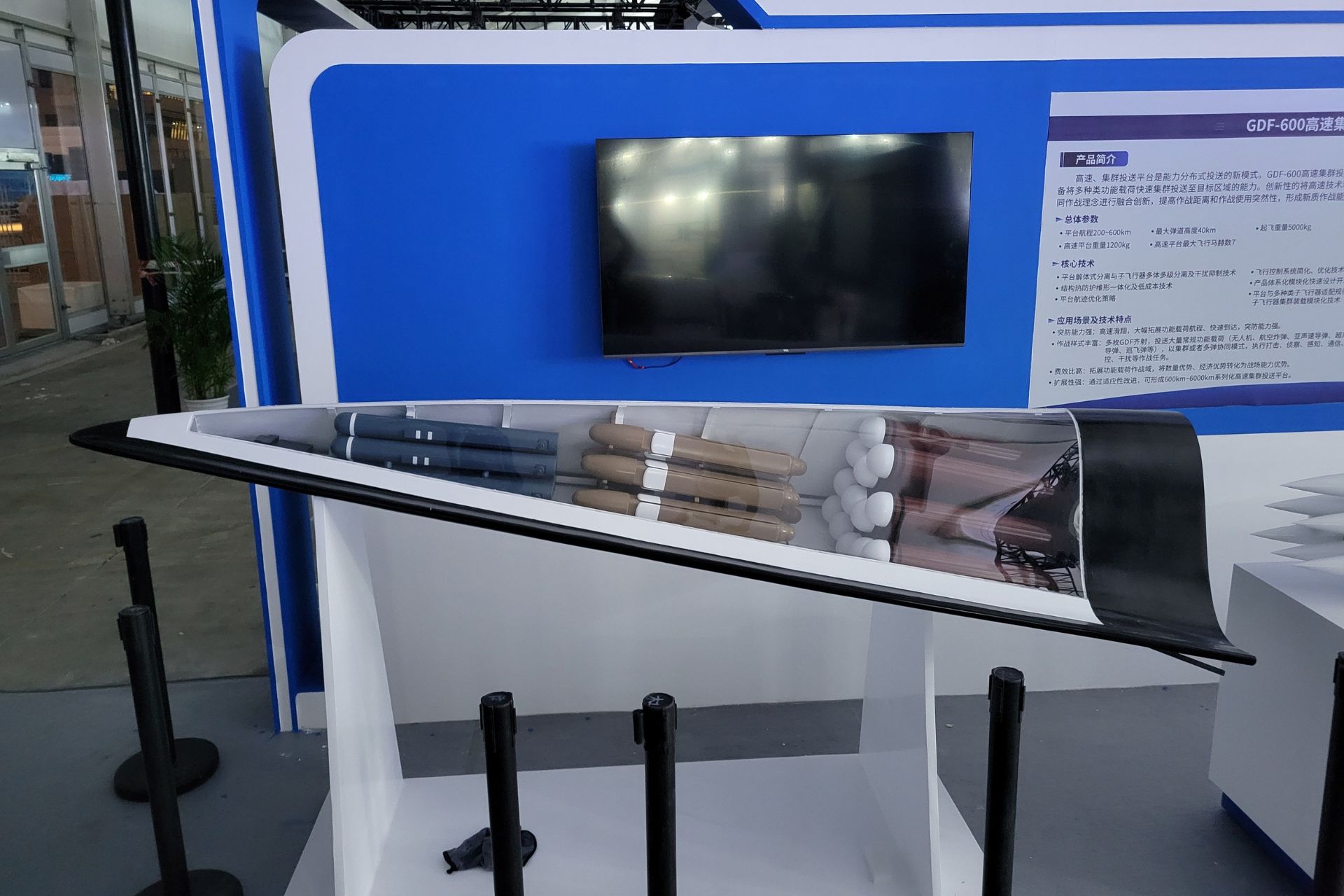
The GDF-600’s modular sub-munition deployment enables multi-target strikes and electronic warfare, creating added strategic complexity for enemy defenses. (Picture source: X Channel @MuxelAero)
While primarily designed for terrestrial launch, the GDF-600 is adaptable to aerial and naval platforms, broadening its operational scope. Reaching a maximum altitude of 40 km, this hypersonic vehicle can bypass and penetrate air defense networks effectively. Its altitude, combined with high speed and unpredictable trajectories, makes it particularly difficult to intercept.
The GDF-600’s modularity further enhances its flexibility, enabling adaptation for various missions, from surveillance to large-scale attacks. This modular design, combined with optimized thermal protection and a streamlined flight control system, supports both flexibility and potentially lower production and maintenance costs.
With the introduction of the GDF-600, China aims to advance its capabilities in hypersonic weapons, an area where the United States and other Western powers have faced technical challenges. U.S. programs such as the Air Force’s AGM-183A ARRW and the Army's Dark Eagle hypersonic missile have encountered setbacks that have delayed their progress. Initially offering a range of 600 km, the GDF-600 could be used to reinforce regional deterrence by projecting fast and precise force in sensitive areas such as the Taiwan Strait or the South China Sea, where China has territorial claims.
Moreover, the GDF-600’s capability to deploy a variety of sub-payloads, including reconnaissance drones and loitering munitions, provides options for multi-target strikes and electronic warfare missions, complicating adversarial defense systems. Its flexibility allows it to adapt to a range of missions, from precision strikes to reconnaissance and electronic interference, enhancing the versatility of China’s armed forces. This new addition to China’s arsenal could thus significantly strengthen the country’s offensive and defensive capabilities, aligning with its military modernization and power projection strategy.

- Details
- Written by: Administrator
- Category: 2024
- Hits: 10340
China’s CH-9 (Cai Hong-9) UAV (Unmanned Aerial Vehicle), developed by the Chinese Company CASC (China Aerospace Science and Technology Corporation), was unveiled at AirShow China 2024 as a versatile and capable multi-role drone in the “Rainbow” series. Known for its impressive range of up to 11,500 km, the CH-9 provides sustained ISR (Intelligence, Surveillance, Reconnaissance) and strike capabilities over vast distances, making it a valuable asset for military operations and an attractive option in the global defense market.
Follow Army Recognition on Google News at this link
The CH-9 UAV (Unmanned Aerial Vehicle) has a wingspan of 24.8 meters and a maximum takeoff weight of 5,000 kg, enabling it to carry a variety of payloads and mission-specific equipment. With a payload capacity of 480 kg, the CH-9 is well-suited for carrying advanced electro-optical and infrared sensors, which are crucial for real-time intelligence gathering. Additionally, it can be equipped with a range of precision-guided munitions, allowing it to conduct accurate strikes against ground targets.
The CH-9 can carry several precision-guided munitions that significantly enhance its tactical strike capabilities. Among these, the FT Series Guided Bombs are designed for accurate strikes on specific targets, allowing the CH-9 to neutralize high-value or fortified positions with pinpoint accuracy. This makes it particularly effective in missions where precision is critical to minimize collateral damage and achieve specific tactical objectives.
The CH-9 can also carry the CM-502 Missile, a compact, precision-guided missile ideal for tactical ground targets. The CM-502’s lightweight design aligns well with the CH-9’s payload capacity, enabling high-precision attacks on armored vehicles, enemy fortifications, and other critical ground assets. This missile further expands the CH-9’s range of effective targets in complex combat environments.
Additionally, the LS-6 Guided Bomb offers another precision-strike option. Equipped with an advanced guidance system, the LS-6 enhances the CH-9’s ability to deliver controlled, high-accuracy strikes. This capability is essential for missions requiring minimal collateral damage, making the CH-9 a reliable choice for surgical operations and sensitive military engagements.
These weapon options extend the CH-9’s capabilities beyond traditional ISR (Intelligence, Surveillance, Reconnaissance) missions, making it suitable for limited tactical strike roles and enabling it to perform both surveillance and light-attack tasks.
The CH-9’s endurance and range are equally impressive. With a maximum range of up to 11,500 km and an operational endurance of up to 40 hours, the CH-9 can monitor large areas and conduct sustained operations over extended periods. Its cruise speed of 200-350 km/h and maximum speed of 420 km/h allow it to cover significant distances quickly or loiter over areas of interest when required. The maximum altitude of 11,000 meters further enhances its high-altitude surveillance capabilities, making it harder to detect and counter.
Regarding operational flexibility, the CH-9 can be controlled over an operational radius of up to 2,000 km when satellite communication allows it to perform missions well beyond the line of sight. This capability is precious in regions where long-range UAV missions are required for border security or regional stability, as well as for strategic monitoring in contested areas.
For export markets, the CH-9 provides a competitive alternative for countries that need both ISR and limited strike capabilities without the cost of heavier, larger platforms. With its long endurance, adaptable payload options, and reliable strike capabilities using precision-guided munitions, the CH-9 appeals to countries focused on security, counter-terrorism, and regional monitoring. Its compatibility with various guided bombs and missiles gives it versatility across a range of mission types, from surveillance to targeted attacks.
In conclusion, the CH-9 represents a step forward in China’s development of cost-effective, multi-role UAVs. With its impressive endurance, extensive operational range, and flexible payload options, including precision-guided munitions like the FT series bombs, CM-502 missile, and LS-6 bombs, the CH-9 is poised to be a valuable asset for both the Chinese military and international buyers. This balance of surveillance capability and tactical strike options positions the CH-9 as a significant player in the global UAV market, aligning with the growing demand for versatile, affordable unmanned systems capable of multi-mission performance.
Read more: Exclusive: China's New CH-9 Drone Boasts 11,500 km Range and Advanced Strike Capabilities
- Details
- Written by: Jérôme Brahy
- Category: 2024
- Hits: 3848
According to a report from the French National Assembly’s Defense Committee published on November 8, 2024, the French Ministry of Armed Forces is reportedly aiming to produce 1,200 new AASM (Armement Air-Sol Modulaire) units by 2025 to continue supporting Ukraine’s defense needs while also replenishing and expanding the French Air and Space Force's (AAE) own munitions stock. This decision follows an earlier announcement that France is set to deliver 600 soon-to-be-retired AASM munitions to Ukraine by the end of 2024.
Follow Army Recognition on Google News at this link
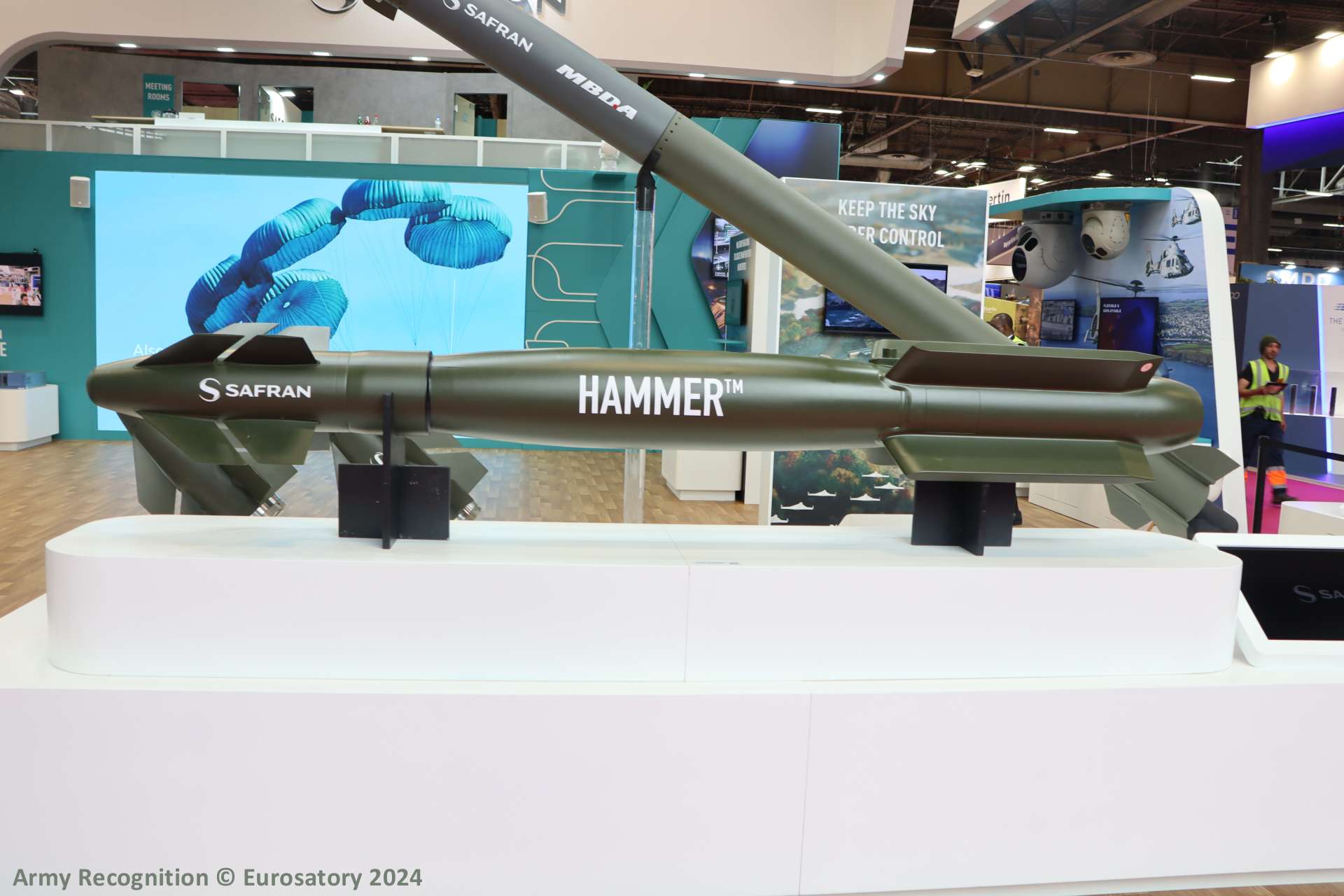
The AASM’s modular design supports different bomb weights, from 125 kilograms to 1,000 kilograms, and includes an aerodynamic extension kit with winglets and a rocket booster to increase range. (Picture source: Army Recognition)
The AASM, also known as the Hammer, is a versatile French air-to-surface weapon developed by Safran Electronics & Defense, suitable for both close air support and long-range strike missions. This smart weapon is modular, allowing it to be configured with various guidance systems according to operational needs. The most common version integrates a hybrid inertial navigation system (INS) and GPS for guidance, achieving high accuracy with a circular error probability (CEP) of about 10 meters. For enhanced precision, variants equipped with infrared or laser guidance can strike targets within one meter of accuracy, even against moving targets.
The weapon’s modular design supports different bomb weights, from 125 kilograms to 1,000 kilograms, and includes an aerodynamic extension kit with winglets and a rocket booster to increase range. AASM bombs can be launched from various aircraft, including the Dassault Rafale and Mirage 2000D, as well as platforms used by other nations, such as India’s Tejas and the F-16. France’s decision to prioritize the production of these munitions reflects the increasing demand for high-precision strike capabilities among allied forces and underscores the growing role of the AASM in contemporary conflicts.
Since its introduction in 2007, the AASM has been deployed in multiple operations, starting with its combat debut in Afghanistan in 2008. It later saw significant use in Libya in 2011, where French forces employed the weapon to strike both ground and airborne targets. In recent years, India placed an order for the AASM Hammer in 2020 and has since integrated it with the indigenous Tejas fighter. Additionally, following an announcement in January 2024, France has been supplying Ukraine with AASM units at a rate of 50 units per month. This commitment has enabled Ukrainian forces to use the weapon in the ongoing Russo-Ukrainian conflict, with the first documented use by Ukraine occurring on March 5, 2024.
In January 2024, President Emmanuel Macron announced that 50 AASM bombs would be delivered monthly to Ukraine throughout the year, totaling 600 units. These bombs are designed to be used with fighter jets such as the Rafale and Mirage 2000. However, French and Ukrainian engineers have successfully adapted the AASM to be compatible with Ukraine's MiG-29 and Su-27 aircraft.
Since March 2024, Ukraine has incorporated AASM bombs into its military operations. These munitions enable the Ukrainian air forces to conduct long-range precision strikes while minimizing risks to pilots. Videos have shown Ukrainian MiG-29s and Su-27s dropping AASMs on Russian targets, notably in the Kherson and Belgorod regions. The use of these bombs has allowed Ukraine to effectively target enemy positions, including military infrastructure and command centers, while reducing collateral damage.
Read more: France targets production of 1,200 new AASM bombs for Ukraine and National Defense
- Details
- Written by: Triffaux
- Category: 2024
- Hits: 7677
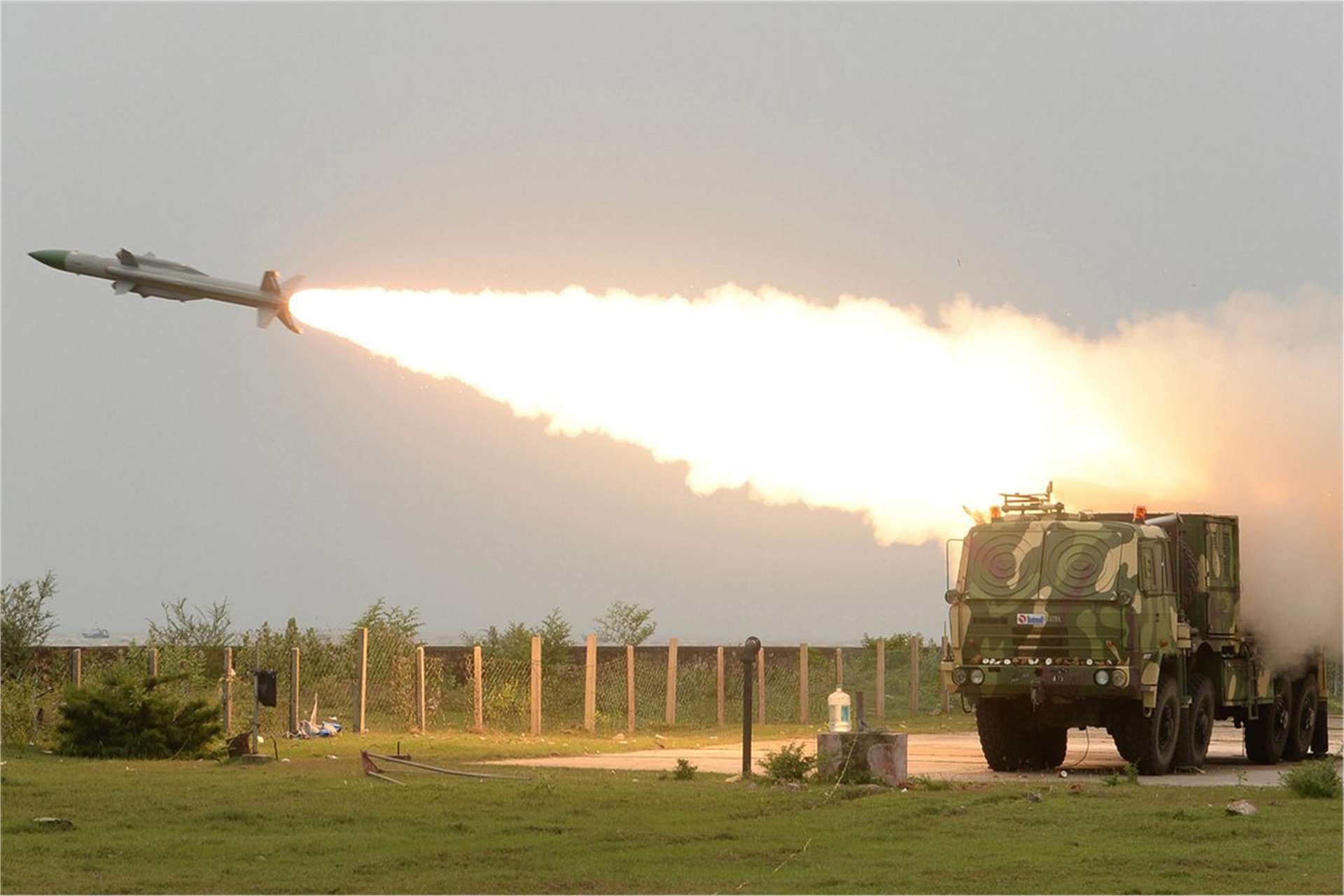
According to an article published on November 12, 2024, by the Indian newspaper The New Indian Express, India reportedly shipped a second battery of its Akash air defense system to Armenia. This delivery is part of a 2022 agreement, under which Armenia ordered 15 Akash systems valued at approximately $720 million.
Indian-made Akash surface-to-air defense system (Picture source: Wikimedia)
AKASH is a Short Range Surface to Air Missile System to protect vulnerable areas and points from air attacks. Akash Weapon System (AWS) can simultaneously engage Multiple Targets in Group Mode or Autonomous Mode. It has built-in Electronic Counter-Counter Measures (ECCM) features. The entire weapon system has been configured on mobile platforms.
The Akash system, developed by India’s Defence Research and Development Organization (DRDO) and manufactured by Bharat Electronics Limited (BEL), is a cornerstone of India’s self-reliant defense capabilities. Deployed by the Indian Air Force in 2014 and the Indian Army in 2015, Akash is a medium-range surface-to-air missile (SAM) system capable of intercepting aerial threats like fighter jets, drones, cruise missiles, and air-to-surface missiles within a 25-kilometer range. In 2020, India approved Akash’s export, and this delivery to Armenia underscores India's ambitions to expand its defense export market.
Beyond Armenia, other nations, including Vietnam, Egypt, and the Philippines, have shown interest in the Akash system. Parallel to this transaction with Armenia, India signed an agreement with the Philippines in 2022 for the export of the BrahMos supersonic cruise missile, with the first delivery occurring in April 2024. These deals position India as a potential defense supplier for countries seeking reliable and cost-effective defense solutions.
An Akash air defense battery includes several specialized vehicles, each serving a specific role in the system’s overall function. A complete Akash battery consists of up to six distinct vehicles, each contributing to the air defense’s coverage and reactivity.
The core of the battery is the Akash Missile Launcher Vehicle (AMLV), mounted on rugged Tata or Ashok Leyland trucks. Each launcher vehicle can carry up to three Akash missiles, ready to be launched upon detecting a threat. A standard battery typically includes four launcher vehicles, offering a robust defensive capability with simultaneous firing capacity.
A critical element is the Rajendra Radar Vehicle (ARV), which carries the Rajendra 3D radar, a passive electronically scanned array that detects, tracks, and designates targets for the missiles. Mounted on a Tatra platform for resilience and terrain adaptability, this radar vehicle is essential for accurate missile guidance, providing extended coverage and rapid response within a 25-kilometer radius.
The battery also includes a Command and Control Vehicle (C4I), known as the Akash Command and Control Vehicle (ACCV). This mobile coordination center houses the C4I system (Command, Control, Communications, Computers, and Intelligence), facilitating communication and control between the radar, launchers, and ground crews. The command vehicle centralizes data and target distribution, enabling a coordinated and efficient response to aerial threats.
Additional Logistics Support Vehicles (LSV) accompany the battery to transport extra munitions, maintenance equipment, and spare parts. Known as Akash Logistics Vehicles, these support vehicles ensure resupply and operational continuity, even during prolonged combat conditions.
Lastly, a Transport and Loading Vehicle (TLV), also known as the Transport and Loading Vehicle (TCR), completes the Akash battery. Designed to reload the launchers directly in the field, the TCR enables quick and secure reloading, sustaining the battery’s firing capability in operational environments.
The Akash missile is a medium-range SAM developed for effective air defense against diverse aerial threats. Designed by DRDO, Akash can intercept targets up to 25 kilometers away and at altitudes of 18,000 meters, making it suitable for countering fighter jets, helicopters, drones, and cruise missiles. It is equipped with a high-explosive fragmentation warhead, ensuring effective target neutralization.
The Akash system is based on a surveillance and control radar known as the Rajendra 3D radar, a passive electronically scanned array capable of detecting and tracking multiple targets simultaneously. Coupled with the missile for in-flight guidance, the radar enables precise interception, even in the presence of evasive maneuvers or electronic jamming. Powered by a two-stage solid-fuel rocket motor, Akash reaches speeds of up to Mach 2.5 (around 3,000 km/h), ensuring swift interception.
Akash missiles have a semi-active guidance system that locks onto the target with the Rajendra radar, allowing the missile to correct its flight path for precise impact. The Akash system is highly mobile, deployable on both wheeled and tracked vehicles, allowing rapid repositioning on the battlefield. This mobility and versatility make Akash a reliable solution for modern air defense needs.
The export version of Akash differs slightly from the one used by Indian armed forces, tailored to meet specific customer requirements. The missile configuration also includes over 96% indigenous components, highlighting India's commitment to domestic manufacturing.
The Akash systems acquired by Armenia could play a strategic role in protecting against Azerbaijani threats. Primarily, Akash would be highly effective against reconnaissance and attack drones, a key component of Azerbaijan’s arsenal. In recent conflicts, drones, especially Turkish Bayraktar TB2 and Israeli Harop kamikaze drones, have proven their effectiveness in reconnaissance and precision strikes. The Akash system, capable of detecting and intercepting low- to medium-altitude targets, would be instrumental in countering these threats.
In addition to drones, Akash could also be deployed against Azerbaijani attack helicopters and tactical aircraft, intercepting these at a range of 25 kilometers. This includes aircraft like the Su-25 or MiG-29, used for precision strikes or close air support missions. The integrated Rajendra radar enhances the system's effectiveness, enabling tracking of multiple moving targets and increasing defensive success against coordinated aerial attacks.
Finally, Akash could contribute to the defense against possible cruise missiles or air-to-ground missiles launched from Azerbaijani combat aircraft, protecting Armenia’s military and strategic infrastructure.
Read more: Armenia Receives New Indian-Made Akash Surface-to-Air Defense System
- Details
- Written by: Halna du Fretay
- Category: 2024
- Hits: 10246
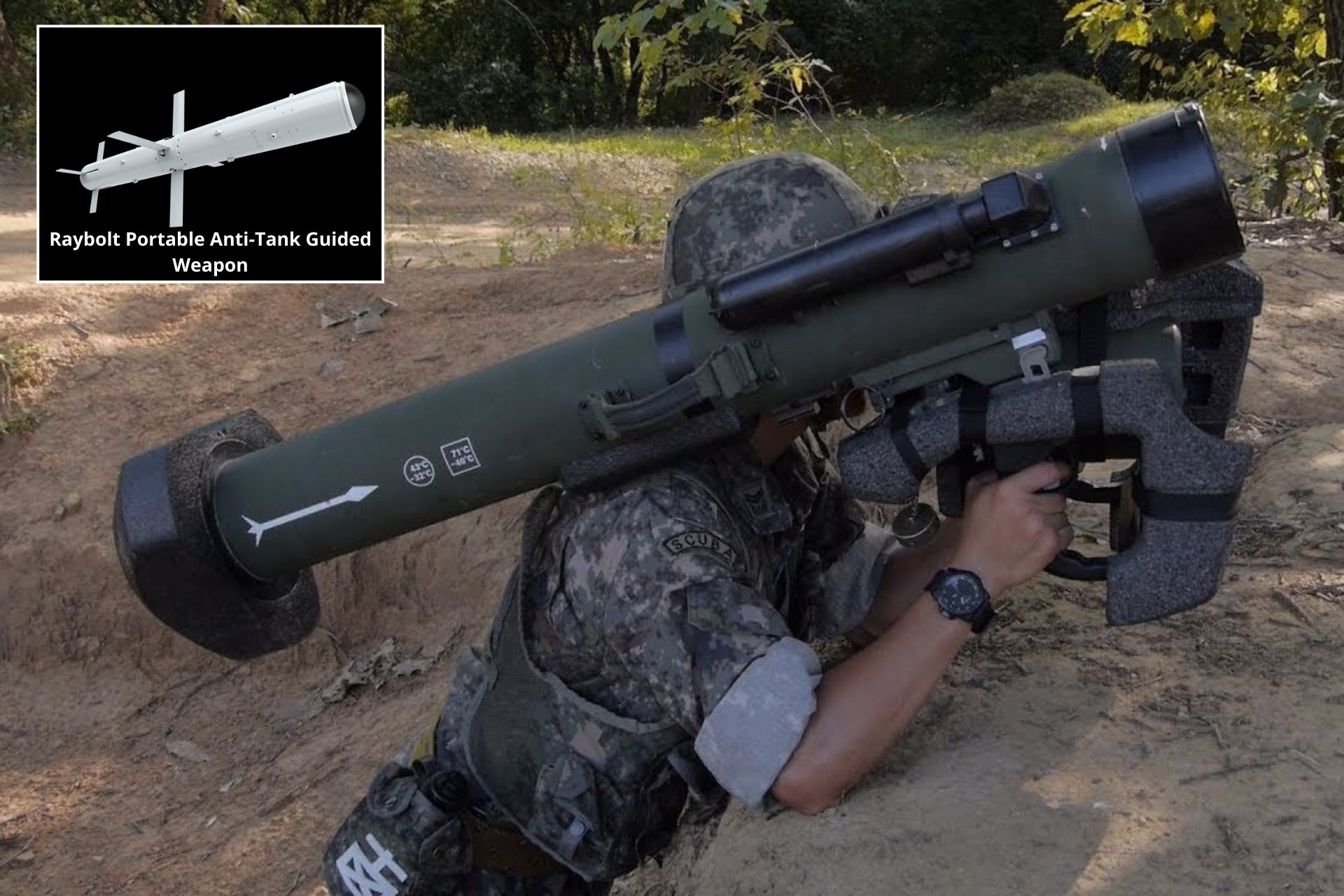
The Philippine Army has awarded LIG Nex1 the contract for a "test purchase" of AT-1K Raybolt anti-tank missile systems, set to be delivered by 2025, as reported by PHDefense Resource on November 11. This acquisition, formalized in October 2024 under the Medium Multi-Purpose Assault Weapon (MMAW) with Precision Guided Munition (PGM) Acquisition Project (ORD-PABAC-025-24), marks a critical step forward in enhancing the Philippine Army’s capabilities in coastal defense and countering armored threats.
The Raybolt missile, with a range exceeding 2,000 meters, infrared-guided precision, and both direct and top-attack modes with a hit probability over 90%, meets the Philippine Army's requirements for effective anti-armor and coastal defense against amphibious threats (Picture source: South Korean MoD/ LIG Nex1)
The Philippine Army has awarded LIG Nex1 the contract for a "test purchase" of AT-1K Raybolt anti-tank missile systems, set to be delivered by 2025, as reported by PHDefense Resource on November 11. This acquisition, formalized in October 2024 under the Medium Multi-Purpose Assault Weapon (MMAW) with Precision Guided Munition (PGM) Acquisition Project (ORD-PABAC-025-24), marks a critical step forward in enhancing the Philippine Army’s capabilities in coastal defense and countering armored threats.
The selection of the AT-1K Raybolt, a missile system recognized for its fire-and-forget capability, comes as the Philippine Army reassesses its armament needs. Initially, the focus had been on unguided, lightweight anti-tank weapons; however, strategic priorities and a reassessment following recent conflicts, such as the war in Ukraine, have shifted the focus toward more advanced systems. Unlike traditional anti-tank weapons, the Raybolt provides advanced precision guidance via an infrared seeker capable of targeting both light armored vehicles and main battle tanks. With a tandem warhead designed to defeat explosive reactive armor, the Raybolt offers a robust solution against fortified targets.
This project is funded by the Philippine Army’s 2024 Capital Outlay budget, rather than the Armed Forces of the Philippines (AFP) Modernization Program, as initially planned. This shift reflects a broader strategic approach within the Philippine Army to incorporate small arms and specialized equipment into its annual expenses, ensuring a steady procurement flow and potentially enabling annual acquisitions to reinforce its arsenal continually.
The AT-1K Raybolt from LIG Nex1 was chosen through a public bidding process. The project began with the publication of a tender in May 2024, with the Raybolt emerging as the sole qualified bidder after a rigorous evaluation in June. This missile system surpassed other contenders, such as Rafael's Spike MR and Raytheon's FGM-148 Javelin, primarily due to its cost-effectiveness and competitive technical specifications, including its direct-attack range and maneuverability. The acquisition will include five launchers and ten missiles, totaling PHP 205.3 million and resulting in a cost saving of PHP 3 million from the initial budget allocation.
The Raybolt's technical specifications align closely with the Philippine Army’s requirements. The missile offers a range of at least 2,000 meters and uses an infrared sensor for enhanced targeting precision. It is designed for both direct and top-attack modes, engaging targets from a minimum range of 65 meters in direct attack and 150 meters in top-attack mode, with a hit probability above 90%. These characteristics make it an effective choice for both anti-armor engagements on land and coastal defense against amphibious incursions, providing a versatile capability suited to the Philippine Army's evolving operational needs.
This acquisition is not only a step forward in the Philippine Army’s modernization but also highlights its adaptability to the requirements of contemporary warfare. Choosing an advanced, guided anti-tank missile system with fire-and-forget capability represents a strategic improvement over the previous generation of unguided RPG-7-type weapons, which the Philippine Army has traditionally used. Introducing the AT-1K Raybolt, with its enhanced lethality and adaptability, addresses emerging threats and regional dynamics, underscoring the importance of ready, deployable, and precise anti-armor capabilities.
As the Philippine Army’s first acquisition of this type, the Raybolt’s deployment will serve as an evaluation or "test" purchase. If results prove favorable, similar acquisitions may be made in the coming years as part of the Philippine Army’s capital investment plans, ensuring continuous enhancement of its defense arsenal with advanced weaponry.
By integrating advanced anti-tank technology into its arsenal, the Philippine Army not only strengthens its defensive strategic posture but also lays the groundwork for future modernization efforts. The Raybolt’s deployment will bolster the country's coastal and anti-armor defenses and set a precedent for integrating high-precision guided systems into its regular inventory, reflecting a forward-looking approach to national security.
- Details
- Written by: Administrator
- Category: 2024
- Hits: 6408
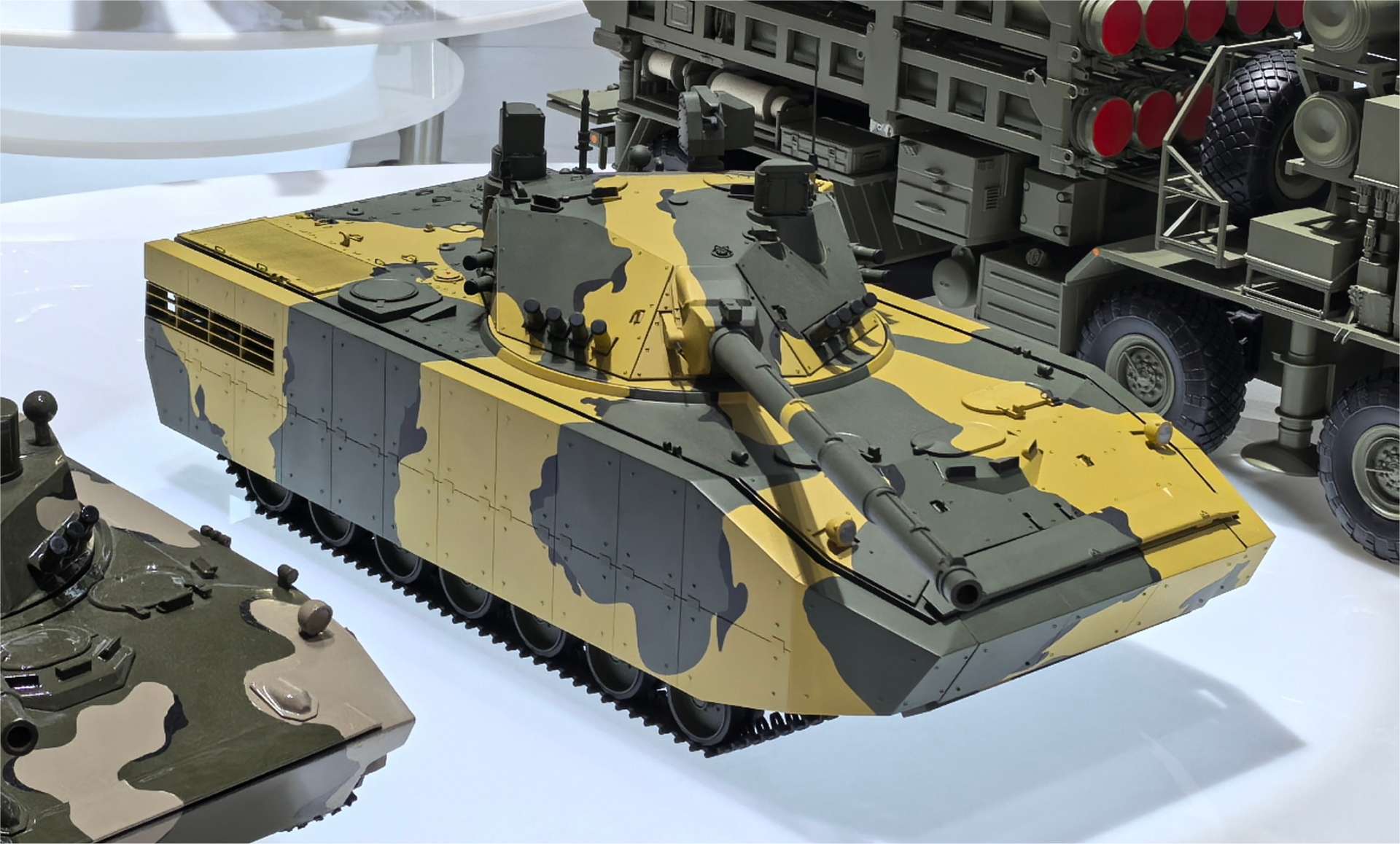
At AirShow China 2024, Russia unveiled an upgraded version of its 2S25M Sprut-SDM1 light amphibious tank, featuring an enhanced armor package specifically mounted around the sides of the hull. The 2S25M, developed by the Russian defense manufacturer Kurganmashzavod, is a highly mobile, air-transportable, and amphibious combat vehicle designed to support rapid deployment forces and deliver direct fire support in various combat scenarios. This latest iteration will increase survivability against emerging threats in modern combat environments, particularly for amphibious and airborne assault operations.
Follow Army Recognition on Google News at this link
Russia displays a scale model of the upgraded 2S25M amphibious tank with advanced armor package at AirShow China 2024, highlighting new protection and mobility features for modern combat scenarios. (Picture source: Russian Telegram)
The additional armor around the hull's sides is the most notable improvement on this new version of the 2S25M. This armor upgrade is designed to enhance protection against small arms, shell splinters, and certain types of anti-tank munitions, improving the tank’s ability to operate in high-threat environments. The armor package does not appear to compromise the vehicle’s amphibious capabilities, which remain a key feature for Russian airborne forces and marine units operating in complex and water-rich terrain.
The 2S25M Sprut-SDM1 is an evolution of the original 2S25, retaining the same 125mm smoothbore gun as used on Russian main battle tanks like the T-72 and T-90. This powerful weapon allows the 2S25M to engage various targets, including armored vehicles, fortifications, and even low-flying helicopters, with high-precision rounds and anti-tank guided missiles. The vehicle is equipped an automated fire control system, enabling improved accuracy and engagement speed.
A unique advantage of the 2S25M is its amphibious capability, allowing it to cross water obstacles and conduct beach landings without preparation. The vehicle can reach speeds of up to 7 km/h in water using water-jet propulsion. Additionally, it is air-transportable and can be deployed from cargo aircraft like the Il-76 or even paradropped, making it ideal for airborne operations and rapid deployment.
The new version of the 2S25M continues to prioritize mobility and protection. Equipped with a hydropneumatic suspension, the vehicle can adjust its ground clearance for better adaptability to different terrains. The crew of three benefits from advanced fire suppression systems and NBC (nuclear, biological, and chemical) protection, ensuring survivability in various combat scenarios.
With this upgrade, Russia aims to position the 2S25M as a versatile and robust platform for amphibious and airborne forces, which are often in need of light, mobile firepower with substantial combat capabilities. The vehicle’s presentation at AirShow China 2024 may signal potential interest in export markets, especially from countries with similar operational requirements for light tanks that can support both airborne and marine operations.
In summary, the new armored version of the 2S25M unveiled at AirShow China 2024 underscores Russia’s commitment to enhancing the survivability and versatility of its light armored vehicles, addressing the operational needs of both domestic forces and potential international clients.
Read more: Russian 2S25M Amphibious Tank with New Armor Package Debuts at AirShow China 2024
- Details
- Written by: Halna du Fretay
- Category: 2024
- Hits: 3751
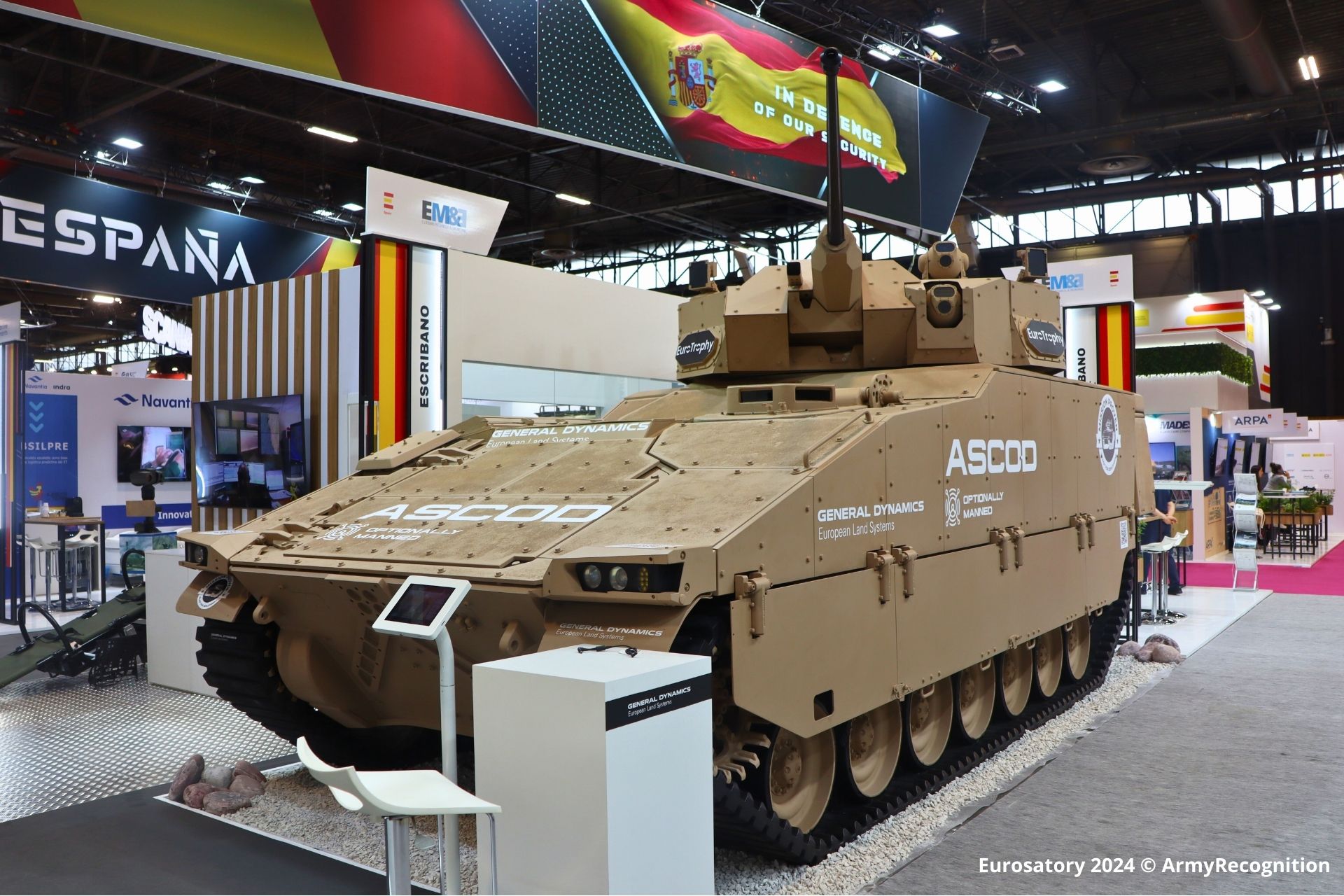
On November 11, 2024, Latvia’s Ministry of Defense announced its intent to continue contract negotiations with the Spanish company GDELS-Santa Bárbara Sistemas for the acquisition of ASCOD infantry fighting vehicles aimed at strengthening the country’s military capabilities. This move is part of a broader initiative to enhance the mobility and firepower of Latvia’s land forces, according to Defense Minister Andris Sprūds.
ASCOD vehicles are already in service with several armed forces worldwide, including Spain, Austria, the United Kingdom, the United States, and the Philippines (Picture source: Army Recognition)
The ASCOD is a next-generation tracked armored vehicle, designed in a joint effort between Spain’s Santa Bárbara Sistemas and Austria’s Steyr, both now part of General Dynamics European Land Systems (GDELS). Adapted for modern missions, the ASCOD stands out for its mobility, reliability, and protection, with a modular design allowing configurations such as the Armored Personnel Carrier (APC) and Infantry Fighting Vehicle (IFV). It is built to meet challenging terrain requirements, with a top speed of 70 km/h and a range of 500 km, powered by either a 600 kW MTU V-8 engine or an 810 kW SCANIA V-8 engine, paired with a Renk automatic transmission, providing enhanced maneuverability and stability through its torsion bar suspension system and dual rubber wheels.
For combat, the ASCOD can be equipped with various weapon configurations: the APC version includes a remote weapon station with a 12.7 mm machine gun, while the IFV variant can be outfitted with a turret featuring a 30 or 40 mm cannon and anti-tank missile launchers. Designed for high protection, the ASCOD is built with modular steel armor that can achieve STANAG 4569 level 6, capable of withstanding mine explosions and RPG attacks. The vehicle also integrates active and passive protection systems, 360° situational awareness technology, and NRBC (Nuclear, Radiological, Biological, Chemical) detection and defense systems, providing maximum security for the crew in diverse combat environments.
According to the ministry’s statement, negotiations with the Spanish manufacturer are ongoing, with an agreement anticipated by the end of this year or early next year. This capacity-building initiative follows a detailed assessment by Ministry of Defense and National Armed Forces experts to determine the most suitable vehicle model for Latvia’s military needs. This assessment covered the operational capabilities of various platforms, cost, available equipment, local industry integration potential, and delivery timelines.
ASCOD vehicles are already in service with several armed forces worldwide, including Spain, Austria, the United Kingdom, the United States, and the Philippines. Originally developed in the 1990s by Spain and Austria, these vehicles entered service in 2002 and today include the PIZARRO model for Spain, ULAN for Austria, and AJAX for the United Kingdom. Their modular design offers adaptability and scalability, making them versatile for current and future operational theaters, as noted by the manufacturer.
In Latvia, the acquisition process began in early 2023, with a feasibility study that involved pre-selecting several potential suppliers. Functional tests were conducted in the fall of 2023 to evaluate the operational capacities of competing platforms. This step allowed the National Armed Forces to perform a detailed review of the results, considering operational requirements and local industry demands. While specific details on the number of vehicles or costs have yet to be disclosed, Latvia appears committed to prioritizing this acquisition to meet its NATO capability development goals.
The modernization of the Latvian army aligns closely with NATO’s capability development objectives, in which introducing infantry fighting vehicles is a priority. By adding ASCOD vehicles to its arsenal, Latvia aims to meet NATO’s requirements, thus reinforcing its commitment to collective security.
In 2021, GDELS-Santa Bárbara Sistemas previously signed a contract to supply Latvia with the M3 amphibious bridge and ferry system via a partnership with the United States, demonstrating a cooperative relationship that may expedite the current negotiations for the ASCOD vehicles. This close cooperation could help ensure shorter delivery times and address Latvia’s specific defense needs.
Read more: Latvia Begins Contract Negotiations to Acquire Spanish ASCOD Infantry Fighting Vehicles
- Details
- Written by: Jérôme Brahy
- Category: 2024
- Hits: 7198
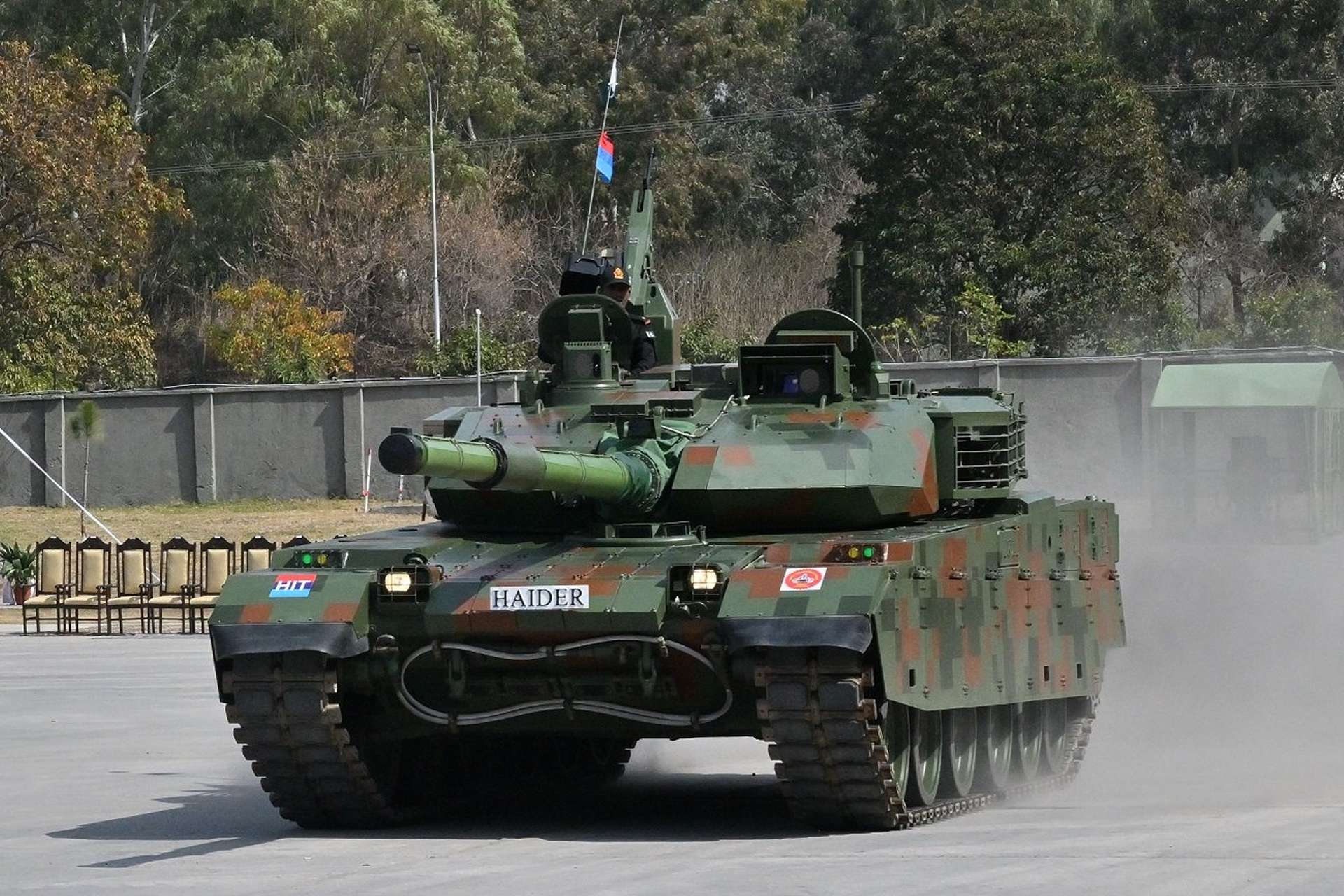
Pakistan’s Heavy Industries Taxila (HIT) recently initiated a project to develop an Active Protection System (APS) for main battle tanks (MBTs), marking a significant step toward enhancing the capabilities of its armored fleet. The project is managed by HIT’s Advanced Research Development and Information Center (ARDIC), which issued a tender on October 14, 2024, seeking lab testing and equipment necessary for the APS's development. This tender specifies requirements for a lab measurement unit, a radar emulator unit, and two radar sensing units, which are critical components in establishing the APS's core functionality through precise testing.
Follow Army Recognition on Google News at this link
The APS project also represents a continuation of Pakistan's ongoing efforts to localize defense technologies, particularly for its Haider, a variant of the Chinese VT-4 tank. (Picture source: HIT)
The proposed Active Protection System (APS) aims to shield tanks from advanced threats such as anti-tank guided missiles (ATGM) and loitering munitions. Modern APS systems typically include sensors for detecting incoming threats and countermeasures to neutralize them, often classified as ‘soft-kill’ or ‘hard-kill’ solutions. A soft-kill system deploys measures like smoke or directional infrared emitters to disrupt the targeting system of an incoming munition, while a hard-kill solution engages the threat directly, using either intercepting munitions or explosively formed penetrators to neutralize it before impact. HIT’s approach, as indicated by the tender, appears to focus on radar-based detection, though specific details about the threat-neutralizing component remain unspecified.
The tender outlines a structured procurement process, with a single-stage, two-envelope method for bid submission. To qualify, firms must provide a range of documents, including valid National Tax Number (NTN) certificates, bank statements, audit reports from the last three fiscal years, and assurances that they are not defaulters or blacklisted. Interested firms must submit their bids by November 14, 2024, with technical assessments set to begin the same day. The equipment will undergo rigorous testing to ensure durability and adherence to technical standards, while companies are required to provide a warranty covering all aspects of maintenance for at least two years, with additional marks awarded for extended warranty offerings. Furthermore, HIT mandates confidentiality measures and restricts participation from firms linked to countries deemed ineligible, specifically India and Israel, to safeguard the project’s integrity.
The APS project also represents a continuation of Pakistan's ongoing efforts to enhance and localize defense technologies across its entire tank fleet. As of 2024, Pakistan’s fleet of main battle tanks (MBTs) includes 2,537 units, comprising approximately 300 Al-Khalid (MBT 2000), an estimated 110 Al-Khalid I, 315 T-80UD, around 500 Al-Zarrar, 400 Type-69, 268 Type-85-IIAP, 44 VT-4, and an estimated 600 ZTZ-59 tanks. Developing an indigenous APS is a strategic move to strengthen the operational capabilities of these units, ensuring they can counter modern threats and remain effective in diverse operational scenarios. This APS initiative reflects Pakistan’s drive to reduce reliance on foreign defense technologies and increase the self-sufficiency of its armored forces.
The development of an APS aligns with Pakistan’s defense strategy, as the region faces a rise in sophisticated ATGMs and loitering munitions across various operational scenarios. The adoption of such systems is not only a response to these threats but also a reinforcement of Pakistan’s position in South Asia’s evolving defense landscape. As the project progresses, HIT aims to ensure that the APS meets operational requirements and withstands diverse threat environments, reinforcing Pakistan’s armored capabilities with localized, state-of-the-art defensive technologies.
Active Protection Systems (APS) have become a focal point in modern armored warfare, aiming to enhance the survivability of tanks against advanced anti-tank weaponry. Israel's Trophy system, developed by Rafael Advanced Defense Systems, has been operational since 2011 and has demonstrated effectiveness in intercepting various threats, including anti-tank guided missiles and rocket-propelled grenades. The system utilizes radar to detect incoming projectiles and deploys countermeasures to neutralize them before impact. As of 2023, production has scaled up, with 40 Trophy systems and 500 countermeasures being produced monthly.
Russia has also advanced its APS technology with the development of the Arena system by the Kolomna Engineering Design Bureau. Arena employs a Doppler radar to detect incoming threats and launches defensive rockets to destroy them mid-air. The modernized Arena-M variant claims to intercept munitions from all directions, including top-attack missiles like the Javelin. In 2023, reports indicated plans to equip T-90M and T-80BVM tanks with Arena-M, with considerations for installation on T-72B3 and T-72B3M models. These developments underscore a global trend toward integrating APS into armored vehicles to counter evolving battlefield threats.
Read more: Pakistan to develop indigenous active protection system to protect entire tank fleet

- Details
- Written by: Jérôme Brahy
- Category: 2024
- Hits: 5218
On November 11, China unveiled the new Falcon 70 short- and medium-range air defense system at the Zhuhai Air Show 2024. Developed by the Shanghai Academy of Space Technology under the China Aerospace Science and Technology Corporation (CASC), this system integrates detection, guidance, and interception capabilities, allowing it to operate independently. Yang Guang, a representative from the Shanghai Academy, highlighted the system’s multi-role configuration aimed at intercepting aerial threats that penetrate medium- and long-range air defense networks, such as cruise missiles, air-to-ground missiles, guided bombs, rockets, and aircraft, including fixed-wing planes, helicopters, and drones.
Follow Army Recognition on Google News at this link
Although currently equipped with a Volvo 6x2 chassis, the platform could be integrated with other configurations based on client requirements, enabling its potential use by different branches of China’s military, including the Army, Air Force, Navy, and Rocket Force. (Picture source: Weibo)
In its design, the Falcon 70 addresses limitations observed in previous air defense systems, particularly challenges posed by swarm attacks. China's air defense infrastructure previously relied heavily on systems like the HQ-16 and HQ-7B, which have relatively limited missile capacities, constraining their ability to handle dense aerial threats without a reload. Russia's experiences in Syria and Ukraine with the Pantsir-S1 system, which encountered difficulties intercepting successive UAV swarms, further demonstrate these challenges. The Falcon 70 system responds to such needs by supporting 21 missiles per vehicle, offering greater resistance to saturation attacks. In a battalion configuration, a Falcon 70 unit can launch over a hundred medium- and short-range missiles, surpassing the engagement capabilities of comparable systems, including Israel's Spyder and Russia’s latest Tor-M2 and Buk-M2 systems.
While primarily intended for export, the Falcon 70 is also viewed by CASC as a potential upgrade for China’s own air defense capabilities. China's medium- and short-range air defense currently comprises the HQ-16 and HQ-17 systems, with the HQ-16 tasked with protecting larger operational zones and the HQ-17 focused on battlefield proximity defense. The Falcon 70 provides a system capable of bridging the 15–70 km range gap between existing short- and mid-range systems, as well as offering a higher missile capacity per battery and an adaptable platform.
The Falcon 70 system's response to emerging air assault tactics includes "soft and hard" kill methods to counter UAV and loitering munition swarms. It is equipped with electronic countermeasures that disrupt communication links and GPS signals of incoming swarm drones, reducing their effectiveness and causing them to lose coordination. The growing threat posed by UAVs and loitering munitions has led to similar developments in nearby regions. For instance, Taiwan has developed the Jian Xiang anti-radiation drone, reportedly to counter Chinese air defense systems, while India has invested in anti-radiation and loitering munitions, acquiring Israeli-made Harpy and Harop drones. The Falcon 70’s features align with these trends, incorporating anti-swarm capabilities to address drone threats.
Accordingly, the Falcon 70 includes a phased-array radar and electro-optical tracking mounted on its combat vehicle, enabling it to detect and track targets independently and maintain mobility during operations. The vehicle can be deployed in both field and point-defense roles, designed to protect long-range convoys and critical infrastructure. The LY-70 medium-range missile, a key component of the Falcon 70, uses composite guidance (including inertial navigation, data links, and active radar), providing reliable targeting against various aerial threats, while the FB-10A short-range missile employs infrared imaging guidance for strong multi-target capabilities and anti-jamming performance, with an interception range of up to 18 kilometers. Together, these missiles reportedly achieve a high probability of target destruction, reaching up to 90%.
The Falcon 70 system’s flexibility is reflected in its modular vehicle platform, which can be adapted to various operational needs by mounting on different vehicles, such as tracked or armored vehicles. Although currently equipped with a Volvo 6x2 chassis, the platform could be integrated with other configurations based on client requirements, enabling its potential use by different branches of China’s military, including the Army, Air Force, Navy, and Rocket Force.
The recent introduction of the Falcon 70, SWS2, and HQ-19 air defense systems at the Zhuhai Air Show 2024 collectively strengthens China's multi-layered defense capabilities. The Falcon 70 addresses medium- and short-range aerial threats, including drones, with autonomous operational features. The SWS2, which combines a 35mm cannon with missile launchers, provides flexible close-range defense, and the HQ-19 focuses on intercepting medium-range ballistic missiles, enhancing China's missile defense comparable to systems like THAAD. Together, these systems offer comprehensive defense against a range of threats, from drones and cruise missiles to ballistic missiles, reinforcing China’s strategic air defense infrastructure.
- Details
- Written by: Triffaux
- Category: 2024
- Hits: 11492
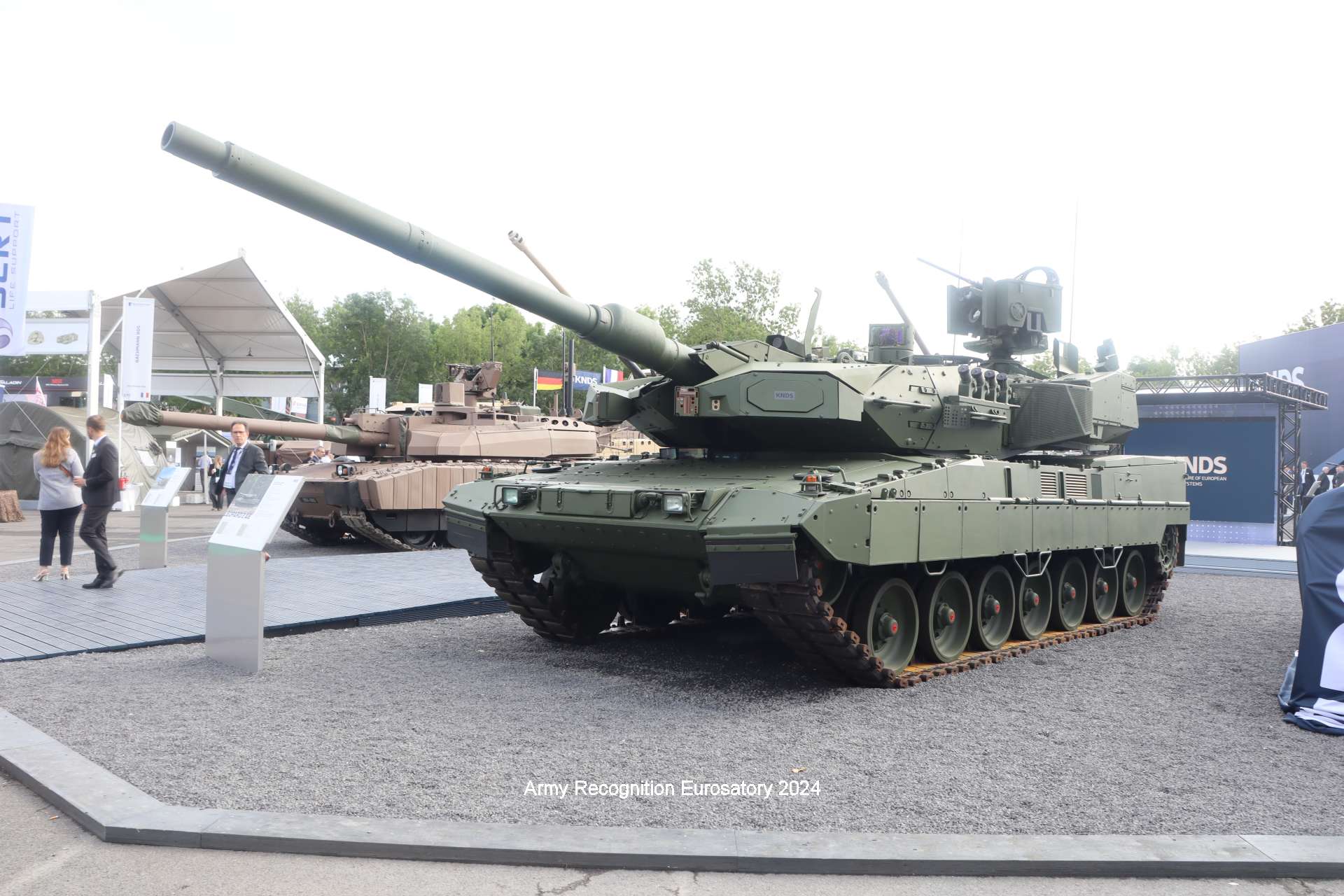
On November 5, 2024, Ralf Ketzel, director of KNDS Germany, revealed in an interview with the journal Hartpunkt that the company has already begun delivering Leopard 2A8 battle tanks to Norway. Originally scheduled for delivery at the end of the decade or by 2026, these shipments have been moved forward. The tanks are part of an order for 54 units placed by Norway with Krauss-Maffei Wegmann (KMW), now part of KNDS, which also includes the former French company Nexter.
KNDS Leopard 2A8 Main Battle Tank (Picture source: KNDS)
Norway signed a procurement contract with KNDS to modernize its battle tank fleet, ordering 54 Leopard 2A8 tanks from Krauss-Maffei Wegmann (KMW), a German partner of KNDS that includes the French defense company Nexter. This contract reflects Norway's desire to strengthen its defense capabilities against a potential Russian invasion. Initially, the country planned to acquire the Leopard 2A7 model, but operational requirements and technological advancements led to the choice of the more modern and efficient 2A8 version.
Signed in 2022, the contract originally scheduled deliveries between 2026 and the end of the decade, but KNDS has accelerated its timeline, with the first units delivered as early as November 2024. Ritek, a Norwegian company, has also been incorporated into the project to handle maintenance for the new tanks, ensuring technical autonomy in their management. This acquisition is part of a broader initiative by the Norwegian armed forces to modernize and strengthen their military capabilities in response to current geopolitical challenges.
In addition to Norway, other European countries, including Croatia, the Czech Republic, the Netherlands, and Lithuania, also plan to acquire this upgraded version of the Leopard. Croatia recently announced an order for 50 units, while the Czech Republic has ordered 77 tanks, the Netherlands 50, and Lithuania may acquire up to 94. The Leopard 2A8 is designed to be one of the most advanced main battle tanks currently on the market. It can reach a combat weight of around 70 tons and is equipped with a 120mm L55A1 cannon, capable of firing programmable HE (High-Explosive) rounds and new KE (Kinetic Energy) rounds for increased battlefield effectiveness. Among notable improvements, its fire control system will be fully digital and will benefit from a power system independent of the main engine, providing at least 20 kW of continuous power.
The Leopard 2A8, with its cutting-edge technology, offers increased resilience against modern threats encountered in conflicts like Ukraine, where drones and anti-tank missiles are widely used. The tank is notably equipped with the EuroTrophy active protection system, an adaptation of the Israeli Trophy system, designed to detect and neutralize incoming projectiles, such as anti-tank missiles and rockets, before they reach the vehicle. This proactive defense capability enhances crew safety and reduces the risk of direct impact.
In response to increasing aerial threats, especially drones, the Leopard 2A8 features advanced detection systems that allow it to quickly identify hostile drones. It is also equipped with a roof-mounted Remote Controlled Weapon Station (RCWS), armed with machine guns or automatic grenade launchers, which enables it to neutralize these drones at close range, thus adding an active defense layer against close aerial attacks.
The armor of the Leopard 2A8, made from a composite of advanced materials such as steel, tungsten, composites, and ceramics, provides enhanced protection against ballistic projectiles, improvised explosive devices, and artillery fragments, thereby increasing the survival of the vehicle and its crew against direct impacts. Additionally, the tank is equipped with sophisticated optical and infrared sensors for the early detection of threats, including drones and anti-tank missile teams. Some jamming systems may also be integrated to disrupt enemy communications and drone guidance systems, thereby reducing their operational effectiveness.
From a firepower perspective, the Leopard 2A8 is equipped with the Rheinmetall Rh-120 L/55A1 120mm cannon, an advanced version of the L/55 model already present on the 2A7. This cannon can use programmable HE (High-Explosive) rounds, in addition to new KE (Kinetic Energy) rounds, which significantly enhances the tank's ability to effectively engage a wide range of targets, from lightly armored vehicles to fortifications. This versatility is a major asset in combat environments where targets can quickly vary, requiring munitions adapted to each situation.
On the technology front, the Leopard 2A8 includes an advanced energy management system with an Auxiliary Power Unit (APU) independent of the main engine. This energy autonomy allows the tank to keep its systems active without generating noise or a significant thermal signature, offering valuable discretion during ambush or static defense operations. Furthermore, its fire control system is fully digital and incorporates fusion sensors for optimized target acquisition and tracking. The tank's optics are also enhanced: the PERI-R 17 A2 panoramic sight for the commander and the EMES 15 sight for the gunner provide improved situational awareness and increased precision.
For Norway, the modernization process has accelerated in recent years through the renewal of its military equipment, following several major initiatives, including the purchase of 52 F-35 fighters in 2018 to replace its aging F-16s, thereby ensuring air superiority against potential regional threats. In 2019, Norway also strengthened its naval fleet by ordering four new U212CD conventional submarines in cooperation with Germany, to secure its waters and enhance its maritime deterrence capabilities.
The deployment of the first Leopard 2A8s in 2024, much earlier than planned, reflects Norway's commitment to rapidly adapting its ground forces to the demands of modern warfare, characterized by an increased use of sophisticated technologies, such as drones and precision anti-tank weapons. Through these initiatives, Norway confirms its commitment to a robust and effective defense, aiming to protect its national sovereignty while contributing to the stability of the Nordic region and the NATO Alliance.
Read more: KNDS Delivers First Next-Gen Leopard 2A8 Tank to Norway to Counter Russia
- Dassault Aviation Submits Preliminary Offer to Peru for Acquisition of 24 Rafale Multi-Role Aircraft
- IDV and Leonardo Partner to Provide Key Components for Italian Army in LRMV Modernization Program
- US to Send New Batch of 500 PATRIOT and AMRAAM Missiles to Strengthen Ukraine’s Air Defense
- France Confirms Future Deliveries of Mistral and SCALP Missiles to Ukraine