
- Details
- Written by: Jérôme Brahy
- Category: 2024
- Hits: 4045




Breaking news






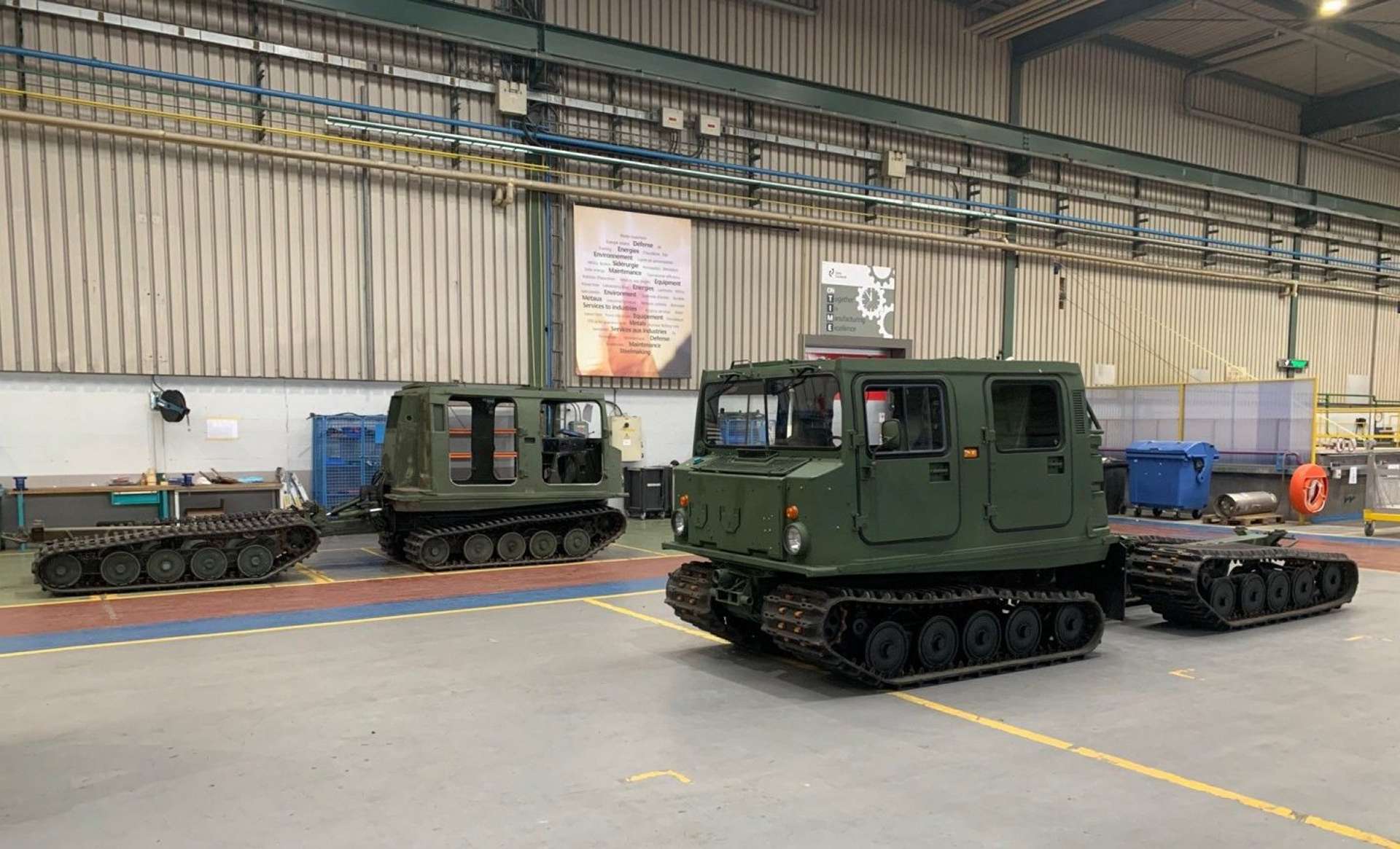
On June 11, 2024, the Belgian company John Cockerill announced its engagement in adapting and supplying Bandvagn 206 (BV 206) all-terrain vehicles for the Ukrainian army. The project includes significant upgrades to the BV 206s, focusing on engine and interior modifications, to convert them into medical vehicles equipped with medical kits and upgraded engines. This follows the modernization of several M113 vehicles already delivered by the Belgian Ministry of Defense to assist Ukraine in its conflict with Russia.
Follow Army Recognition on Google News at this link
John Cockerill Defense will refurbish, modernize and reconfigure these BV 206 all-terrain vehicles, converting them into armored medical evacuation vehicles at John Cockerill's facility in Aubange, Belgium. (Picture source: John Cockerill)
On April 10, 2024, Army Recognition reported that this initiative is part of a broader €412 million military aid package from the Belgian government to support Ukraine with several dozen vehicles. This aid package was approved by the Belgian federal government on March 15, 2024, in cooperation with the Dutch and Luxembourg governments, to provide military assistance to Ukraine. John Cockerill Defense will refurbish, modernize and reconfigure these BV 206 vehicles, converting them into armored medical evacuation vehicles at John Cockerill's facility in Aubange, Belgium. The project aims to equip Ukraine with vehicles capable of performing medical evacuations from the front lines, utilizing the BV 206's reliability and all-terrain capabilities.
The current contract follows John Cockerill Defense's previous project in 2023, which involved upgrading ten M113 armored personnel carriers. This initial batch was part of a planned delivery of 40 armored vehicles, funded by the Benelux countries—Belgium, the Netherlands, and Luxembourg. In July 2023, these nations announced their collaboration to refurbish decommissioned M113 APCs from a European army and deliver them to Ukraine. These vehicles were equipped with FN weapon stations designed to be armed with either a 7.62 mm or 12.7 mm machine gun sourced from Belgian army stocks.
Since 2022, Ukraine has received a notable quantity of Bandvagn 206 (BV 206) vehicles from various countries as part of military aid packages. Germany has been a significant contributor, committing to supply a total of 64 BV 206 vehicles to Ukraine. The first shipment included eight of these tracked all-terrain vehicles, with further deliveries planned, although the exact timeline for the complete delivery remains unspecified. In addition to Germany, other countries such as the Netherlands, Italy, and the UK have also provided BV 206 vehicles to Ukraine. The Ukrainian Armed Forces have started using these vehicles, including both the standard BV 206 and the armored BV 206S variant. These contributions were not always publicly announced at the time of delivery but have been confirmed through various reports and sightings in Ukraine.
The BV 206 is a tracked, articulated all-terrain vehicle originally developed by the Swedish company Hägglund & Söner, now part of BAE Systems. Its development started in 1974, and the first production units were delivered to the Swedish Defense Administration in 1980. Designed to handle the challenging conditions of northern Sweden, including snow and boglands, the BV 206 was intended for military use but has found applications in various countries. Over 11,000 units have been produced, and it has been used by the armies of more than 37 nations, including the United States, Canada, and several European countries. The vehicle’s low ground pressure allows it to traverse loose snow and soft terrain effectively, and its amphibious capabilities enable it to cross bodies of water, making it suitable for a wide range of environments.
The BV 206 features a front-mounted engine, with variants powered by different engines over its production history, including a Ford 2.8-liter V6 petrol engine and Mercedes-Benz diesel engines. Its articulated design provides enhanced maneuverability, and its dual-unit configuration can transport up to 17 passengers or a payload of up to 2,250 kilograms. The vehicle can achieve speeds of up to 54.7 km/h on land and 4.7 km/h in water. The BV 206 uses a hydrostatic, articulated steering system for a tight turning radius and is equipped with reinforced nylon tracks. It is suitable for various tasks, including the transportation of personnel and cargo, search and rescue operations, and deployment in extreme environments such as polar regions.
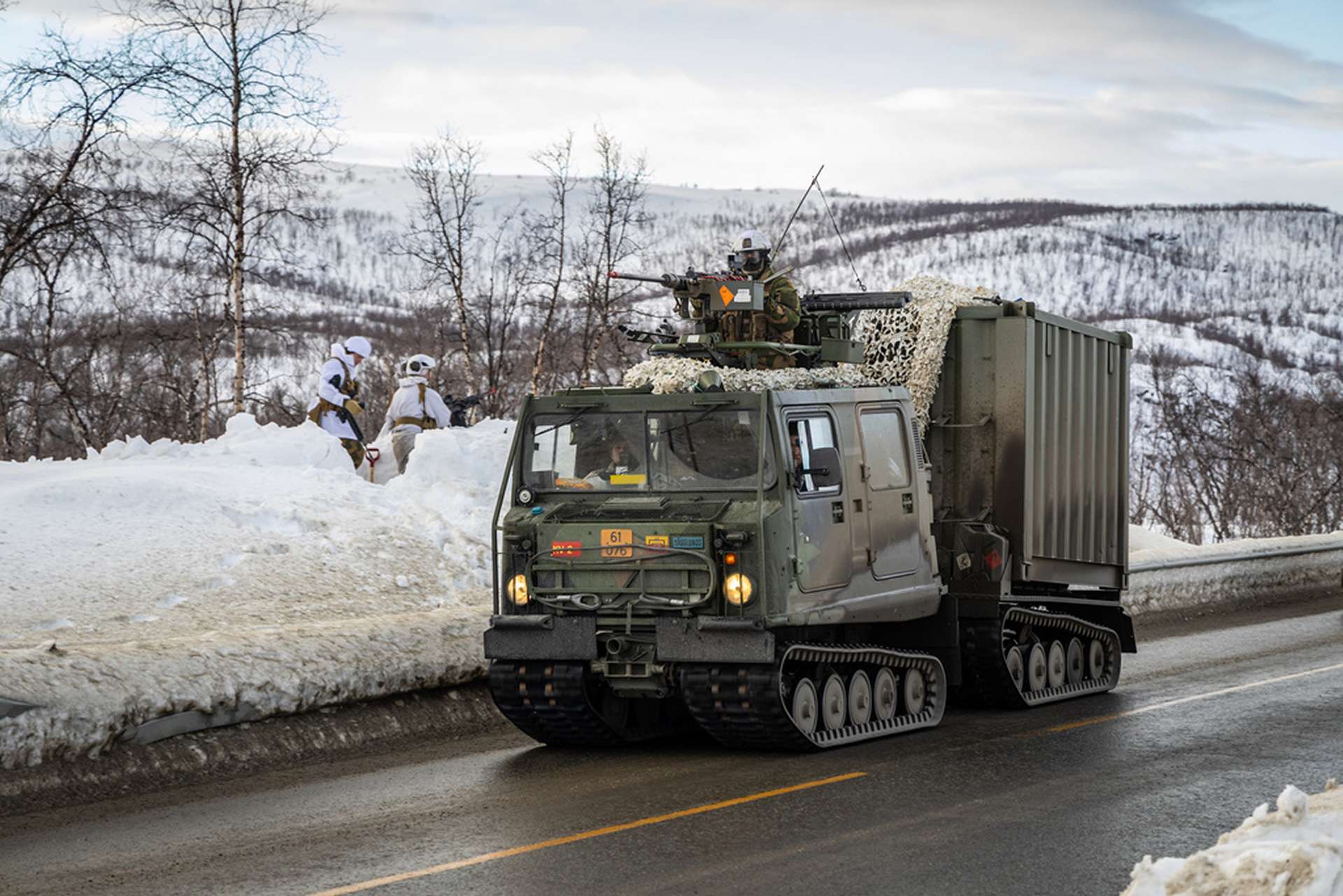
Over 11,000 units have been produced, and the BV 206 has been used by the armies of more than 37 nations, including the United States, Canada, and several European countries. (Picture source: Norwegian MoD)
Read more: Belgian company John Cockerill to deliver BV 206 medical evacuation vehicles to Ukraine

- Details
- Written by: V.Saint
- Category: 2024
- Hits: 7970
Breaking news
Norway opens its own production of Leopard 2 tanks, with the Franco-German holding KNDS and the Norwegian company RITEK signing an agreement to organize the assembly of German equipment. This was reported by the Norwegian Ministry of Defense.
Follow Army Recognition on Google News at this link
Norwegian Bergepanzer 2 ARV and NM189 Ingeniørpanservogn engineering vehicles and leopards are prepared to be given to Ukraine, March 2023 (Picture source: norwegian armed forces)
Last year, the Norwegian military department ordered 54 Leopard 2 tanks from the German group Krauss-Maffei Wegmann, with an option for 18 additional vehicles. Previously, it was planned that all tanks would be assembled in Germany, but now we are only talking about 17 vehicles. The remaining 34 MBTs will be assembled at the RITEK plant in Levanger.
Norwegian Defense Minister Bjorn Arild Gram congratulated KNDS Deutschland and RITEK, who signed an agreement today under which tanks will be assembled in Norway for the first time in history. Additionally, he specified that 37 of the 54 Leopard 2 tanks that Norway ordered from the German Krauss-Maffei Wegmann will be assembled at the RITEK plant in Levanger.
Armed with a 120mm gun and modern sloped armor on the turret, the Leopard 2A7 is currently used by more than 3500 units across 18 nations, making it the most widely used modern tank. Offering a good balance between protection, comfort, and firepower, the Leopard is appreciated for its efficiency and technology.
It was previously reported that Norway had ordered 54 Leopard 2A7NO tanks to equip a heavy mechanized brigade in accordance with NATO requirements. However, the Norwegians declined the option for 18 tanks of the latest Leopard 2A8 version, preferring to invest in air defense systems and long-range artillery. This decision was based on the study of the experience of the conflict in Ukraine.
It is planned that Norway will receive the 54 new tanks by mid-2027.
Read more: Norway launches first Leopards 2A7 MBT production line
- Details
- Written by: Vandenbosch
- Category: 2024
- Hits: 5302
Breaking news
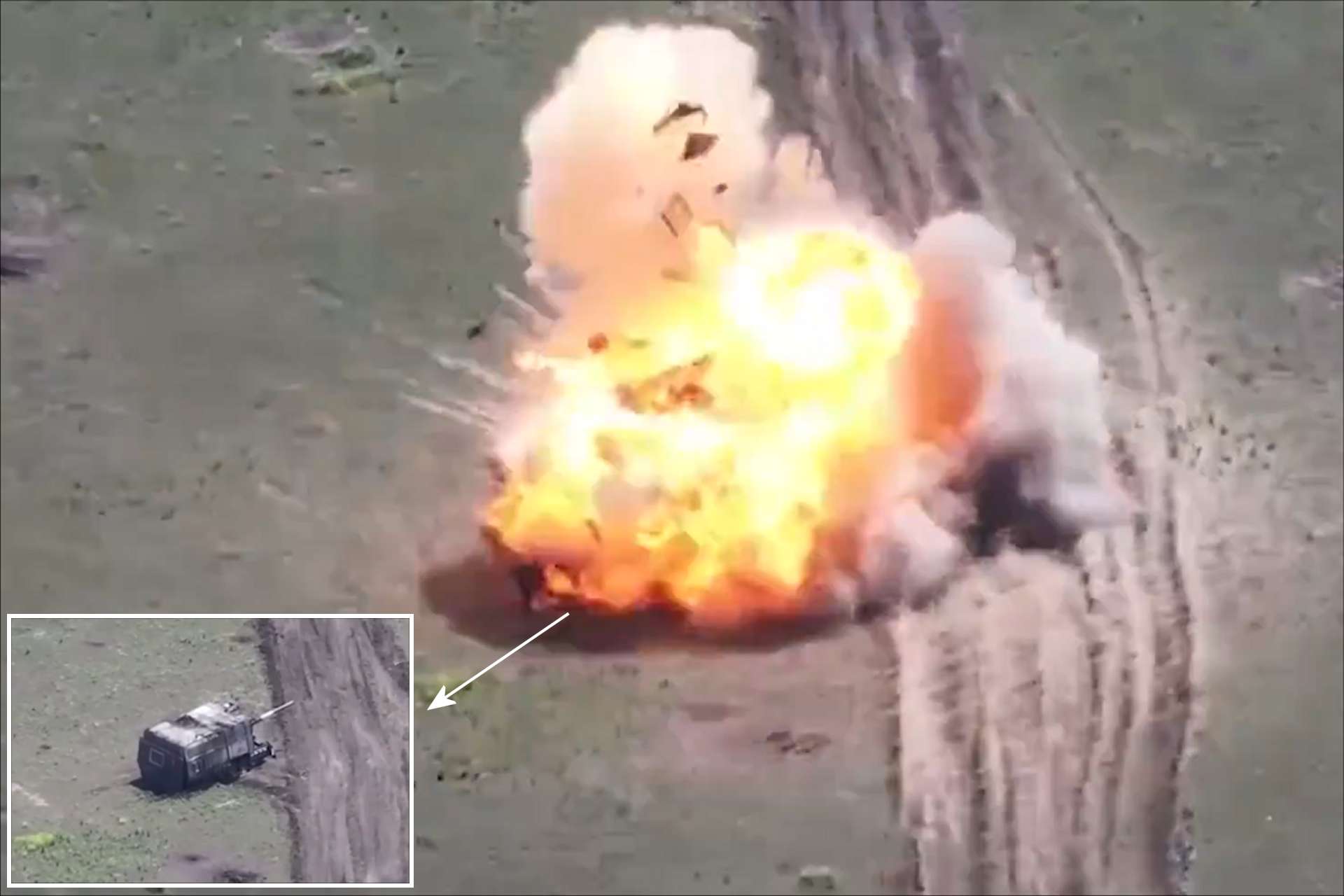
A video shared on social media by the 46th brigade of the Ukrainian army shows the brutal destruction of a Russian "Turtle Tank," a modified armored vehicle, by Ukrainian drone operators. The Turtle Tanks are increasingly common among Russian armed forces, but their actual impact on the battlefield remains questionable.
Follow Army Recognition on Google News at this link
Impressive destruction of a Russian "Turtle Tank" in Ukraine. (Picture source: Ukrainian MoD)
The "Turtle Tanks," also known as Tsar Mangal, are modified versions of the Russian T-62, T-72, and T-80 tanks. These vehicles are equipped with additional protections, including a steel roof, reinforced sides, and anti-drone grills, designed to reduce their vulnerability to aerial attacks, especially those conducted by drones.
Despite these improvements, the "Turtle Tanks" have significant limitations, particularly in terms of visibility and mobility. Their non-rotating turret limits their maneuverability and makes them more vulnerable to targeted attacks. Furthermore, although these tanks are designed to withstand drone strikes, Ukrainian drone operators have demonstrated their ability to find and exploit weaknesses in this new armor.
The video, shared on social media platforms, shows the precise attack of a Ukrainian drone against a Russian "Turtle Tank." This drone managed to penetrate the tank's defenses and cause considerable damage, thus confirming the continued effectiveness of Ukrainian forces in using drone technology to counter Russian innovations.
The "Turtle Tank" in question had been previously abandoned by Russian forces, likely due to a mine explosion that damaged the vehicle. The initial explosion severely affected the tank's mobility, probably forcing the crew to abandon it under enemy fire.
This particular tank was also equipped with a demining system mounted at the front, designed to neutralize landmines before they reached the main chassis of the vehicle. However, it appears that this system partially exploded due to the mine, contributing to the immobilization of the vehicle and making it an easy target for Ukrainian drones.
The Turtle Tank cannot fulfill the role of a true combat tank; it is more suited to roles such as artillery or demining. However, even in these configurations, the Turtle Tank struggles to achieve real effectiveness. While the war in Ukraine has brought many innovations, such as the emergence of drones, it is uncertain whether the Turtle Tank will be adopted and applied industrially.
If the Turtle Tank cannot fulfill the role of a combat tank, a demining vehicle, or even a mobile artillery unit due to a lack of range and firepower, what is the purpose of this modification? It is likely intended to reassure the crew. The drones and various threats that have emerged during the conflict in Ukraine terrify Russian soldiers. Adding a series of protections, perhaps unnecessary from a purely technical perspective, is not at all redundant from a psychological standpoint. The crew feels safer and is therefore more capable of carrying out missions to completion.
This event occurs in a context of war where each side competes in ingenuity to gain a tactical advantage. The Russian "Turtle Tanks," although innovative, have yet to prove their invulnerability on the battlefield, especially in the face of the determination and adaptability of Ukrainian forces.

The Turtle Tank is equipped with a partially destroyed mine clearance system at the front of the vehicle. ( Picture Source: Ukrainian Mod)
Read more: Impressive Destruction of a Russian Turtle Tank in Ukraine

- Details
- Written by: Jérôme Brahy
- Category: 2024
- Hits: 24753
Breaking news
On 8 June 2024, the Twitter account Ömer Çay shared a picture, which appears to be authentic after verification, revealing a new hybrid vehicle, likely made by Rheinmetall, combining a Leopard 2 hull with a Skyranger 35 mobile air defense system turret. This development, confirmed later by Rheinmetall, suggests a potential replacement for the Gepard 1A2 self-propelled anti-aircraft gun (SPAAG) built on the Leopard 1 main battle tank chassis.
Follow Army Recognition on Google News at this link
This hybrid of a Leopard 2 tank and a Skyranger 35 air defense system suggests a potential replacement for the Gepard 1A2 self-propelled anti-aircraft gun (SPAAG) built on the Leopard 1 main battle tank chassis. (Picture source: Twitter/Ömer Çay)
The purpose of fitting a Leopard 2A4 tank with a Skyranger 35 turret is to transform it into a mobile ground-based air defense (GBAD) system. The Skyranger 35 is designed to provide short-range air defense against aerial threats such as drones, helicopters, and low-flying aircraft, as well as ground threats. It features a 35mm revolver cannon capable of firing up to 1,000 rounds per minute and is equipped with advanced sensors for 360° surveillance and target tracking. This system can operate autonomously or be integrated into larger air defense networks, enhancing the protection of mobile units and critical infrastructure, like the Gepard 1A2.
The Skyranger 35 is a mobile air defense system developed by Rheinmetall, equipped with a 35mm Oerlikon Revolver Cannon capable of firing 1,000 rounds per minute with an effective range of up to 4,000 meters. It is designed to counter various aerial threats, including UAVs, helicopters, and missiles, using programmable time-delay ammunition to enhance its ability to hit small and fast-moving targets. The system includes an integrated sensor suite with X-band or Ku-band radar, providing a detection range of up to 30 kilometers, and an electro-optical/infrared (EO/IR) camera with a laser rangefinder for automatic target tracking
Therefore, this new vehicle could potentially replace older mobile air defense systems such as the Gepard anti-aircraft gun or other less advanced short-range air defense (SHORAD) systems. In terms of performance, this new vehicle will outclass the aging Gepard 1A2 self-propelled anti-aircraft gun (SPAAG) built on the Leopard 1 main battle tank chassis. The Gepard 1A2 is equipped with twin 35mm Oerlikon KDA autocannons, each with a firing rate of 550 rounds per minute, totaling 1,100 rounds per minute. These cannons use various types of 35mm ammunition, including SAPHEI, HEI, and FAPDS rounds, for an effective range against air targets of up to 5,000 meters.
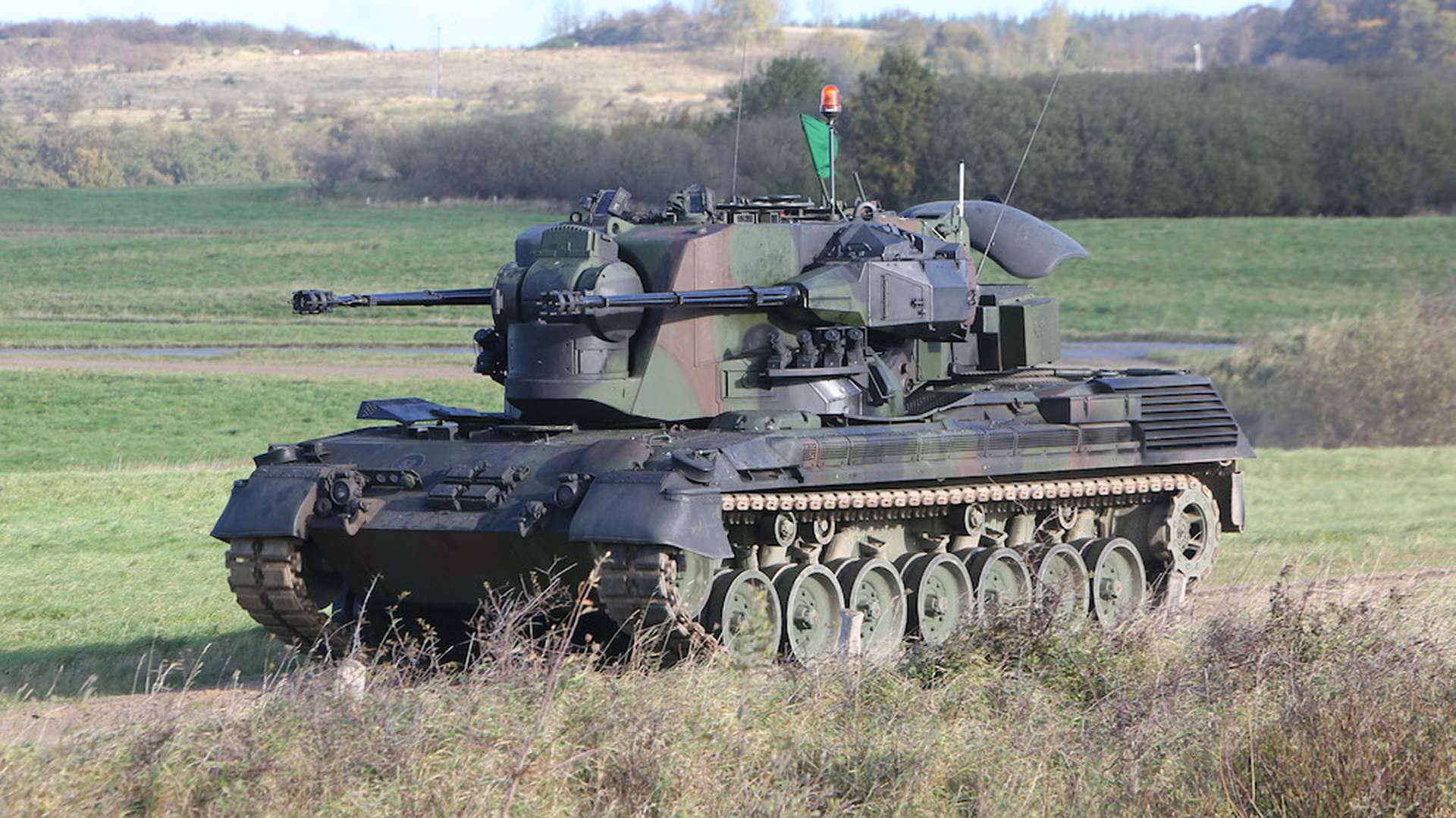
The Gepard 1A2 is equipped with twin 35mm Oerlikon KDA autocannons, each with a firing rate of 550 rounds per minute, totaling 1,100 rounds per minute. (Picture source: KNDS)
To date, several vehicles are based on the chassis of the Leopard 2 main battle tank, and this new prototype could add an SPAAG vehicle based on this chassis. The Bergepanzer 3 Büffel is an armored recovery vehicle equipped with a crane system, winch, and support blade to recover damaged vehicles under armored protection. It features a 12-cylinder diesel engine and advanced transmission for improved mobility and performance. The vehicle's crane system, mounted at the front, can lift loads of up to 30 tonnes, and the main winch system supports effective recovery capabilities.
Another vehicle based on the Leopard 2 chassis is the AEV 3 Kodiak, an armored engineering vehicle designed for battlefield engineering tasks such as minefield breaching, obstacle removal, and earth moving. The Kodiak is equipped with an excavator arm, dozer blade, and a range of interchangeable tools, including a hydraulic hammer and earth auger, to perform various engineering operations. The vehicle's design includes a mine-protection package and a camera system for enhanced situational awareness.
The WISENT 2 is a multifunctional armored support vehicle that can serve as both an armored recovery vehicle (ARV) and an armored engineer vehicle (AEV). Designed for recovery missions, military engineering tasks, and mine clearance operations, the WISENT 2 can be converted between ARV and AEV configurations in under five hours. It includes a crane boom, winch system, and various engineering tools, making it suitable for a wide range of battlefield support roles.
Additionally, the Leguan Bridge Layer utilizes a modular bridging system mounted on the Leopard 2 chassis. This vehicle can rapidly deploy bridges to allow other vehicles to cross obstacles such as rivers and ditches. The use of the Leopard 2 chassis provides logistical advantages, as it shares many spare parts and service procedures with other Leopard 2-based vehicles, enhancing operational efficiency and compatibility within NATO forces.
Finally, as reported by Army Recognition on June 3, 2024, Rheinmetall's new Leopard 2A4-KF51 Panther hybrid tank is set to be featured at the Eurosatory 2024 exhibition in France. This hybrid model combines the Leopard 2A4 chassis with the KF51 Panther turret, which features a 130mm gun. This development might be a demonstrator for the future Leopard 2AX, an upgrade solution for existing Leopard 2 fleets, or a competitor to the MGCS and E-MBT. This hybrid tank could also be part of Rheinmetall's strategy to offer a modernized variant of the Leopard 2A4 tank, ensuring interoperability with NATO forces and integrating new technologies for enhanced combat capabilities.
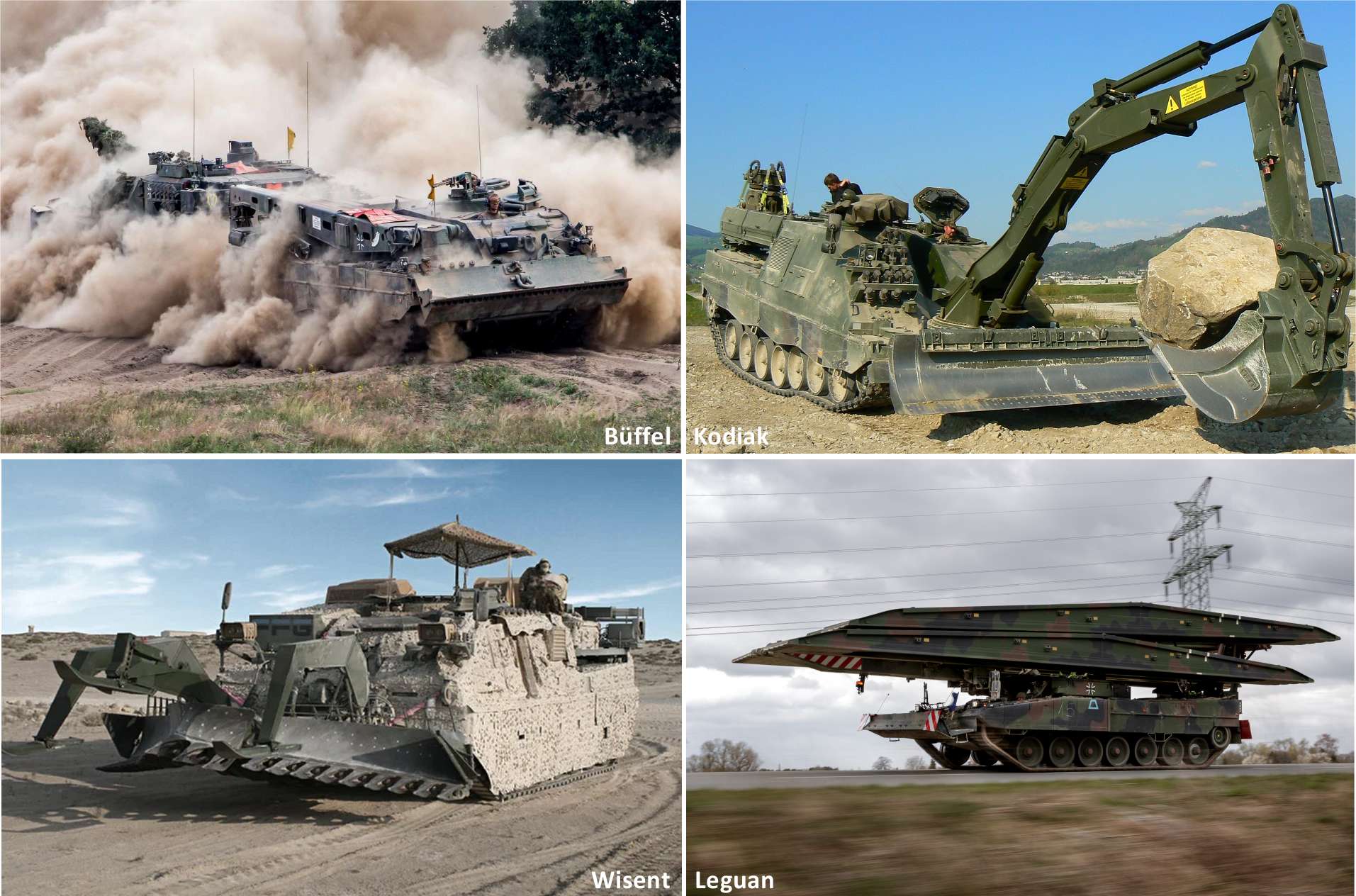
To date, several engineering vehicles are based on the chassis of the Leopard 2 main battle tank, including the Bergepanzer 3 Büffel, the AEV 3 Kodiak, the WISENT 2, and the Leguan. (Picture source: Bundeswehr, Rheinmetall, and FFG)
Read more: Could Rheinmetall's new hybrid vehicle replace the Gepard 1A2 anti-aircraft gun?

- Details
- Written by: Halna du Fretay
- Category: 2024
- Hits: 1981
Breaking news
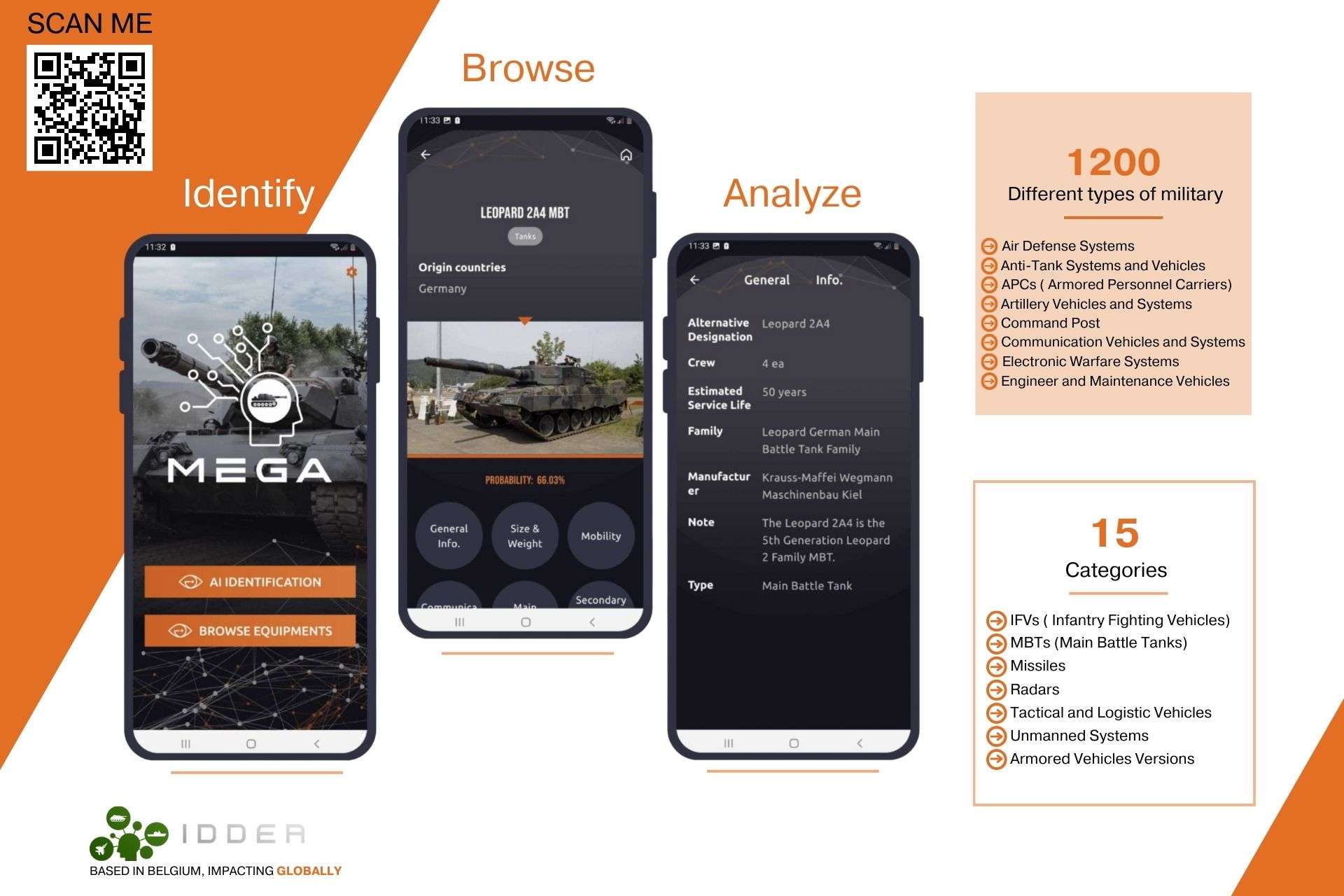
IDDEA (International Digital Defense Equipment Agency) is proud to announce its strategic partnership with the Army Recognition Group, a renowned communication agency specializing in the defense sector. This collaboration marks a significant step in enhancing IDDEA’s global external communications and public relations efforts.
Follow Army Recognition on Google News at this link
Read more: IDDEA Selects ArmyRecognition Group for Strategic Communication Effort

- Details
- Written by: Triffaux
- Category: 2024
- Hits: 6404
Breaking news
Sako, the renowned Finnish manufacturer known for its precision firearms, has announced the launch of its new sniper rifle, the TRG 62 A1, equipped with an innovative caliber, 9.5 x 77 mm. This announcement, made on June 7, 2024, is a revolution in the range of precision rifles, promising to enhance performance at distances exceeding 1,500 meters.
Follow Army Recognition on Google News at this link
SAKO TRG 62 A1 Sniper Rifle (Picture source: Sako)
The TRG 62 A1 is designed to surpass the limitations of traditional calibers like the .338 Lapua Magnum, which shows its constraints at distances beyond 1,000 meters. To meet the demand for more effective solutions without resorting to heavier weapons such as .50 BMG caliber rifles, Sako has opted for the 9.5 x 77 mm caliber, initially developed in 2009 as a long-range sport shooting cartridge.
The main advantage of this new caliber is its ability to maintain a supersonic trajectory up to 1,600 meters, thus offering better accuracy and greater impact energy. According to Sako experts, at a distance of 2,000 meters, the 9.5 x 77 mm cartridge delivers 25% more energy than the .338 Lapua Magnum.
The TRG 62 A1 incorporates high-tech technologies to maximize precision and durability. It is equipped with high-quality cold-forged barrels, known for their longevity. The adjustable trigger and modifiable stock, characteristic of the TRG family rifles, adjust to each shooter's preferences. Moreover, the stock is designed to be foldable, thus facilitating transport and adaptation to different shooting scenarios.
In addition to its technical capabilities, the TRG 62 A1 stands out with a reduced weight of only 7 kg, thanks to innovations such as the optimized stock design and a new muzzle brake. These improvements also help minimize recoil, making the rifle more manageable, even in demanding shooting conditions.
With this new offering, Sako not only targets long-range sports shooters but also governmental and military agencies, providing a viable solution for engagements at very long distances. The competition in the long-range caliber market is intensifying with entries such as RUAG's .375 SWISS P, which also promises impressive performance in a relatively compact format. The release of the TRG 62 A1 in 9.5 x 77 mm caliber thus marks a key moment in the evolution of precision firearms technology.
Read more: Finnish Company Sako Develops New TRG 62 A1 Sniper Rifle

- Details
- Written by: Triffaux
- Category: 2024
- Hits: 7088
Breaking news
The Indian Army has taken an important step forward by equipping itself with the Man Portable Counter Drone System (MPCDS), designed and manufactured by the Indian company AXISCADES Technologies Ltd. This development marks a pivotal shift in the country's defense strategy, with an initial order of 100 crore rupees ($12 million USD) for these innovative systems.
Follow Army Recognition on Google News at this link
Axiscades Man Portable Counter Drone System (Picture source: Axiscades)
The MPCDS stands out for its portability and its ability to operate on both battery and mains power, covering multiple frequency spectrums. It is capable of detecting and neutralizing a wide range of drones up to a distance of 5 kilometers. "This system is the first of its kind in the portable category to be integrated into the Indian Defense Forces," stated Arun Krishnamurthi, CEO and Managing Director of AXISCADES. According to him, the system is already being deployed across various commands of the Indian Army.
This system represents a major advancement for AXISCADES, illustrating India's commitment to achieving complete autonomy in defense engineering. It also represents a step forward towards fulfilling the national ambition of reducing dependence on foreign technologies in defense and security.
The Indian Ministry of Defense and the armed forces have expressed their intent to significantly enhance their capabilities against UAVs (Unmanned Aerial Vehicles), planning for emergency purchases and tenders in the coming years, representing a financial opportunity estimated at 3,000 crore rupees.
The introduction of these advanced technologies reflects a change in the Indian defense strategy, increasingly seeking to integrate high-tech technological solutions to address modern threats. AXISCADES, as a leader in the development of counter-UAV solutions, strategically position itself to meet the growing demand, both domestically and internationally, for sophisticated defense systems tailored to new security challenges.
Read more: Indian Forces get new AXISCADES Man Portable Counter Drone Systems
- Details
- Written by: V.Saint
- Category: 2024
- Hits: 12888
Breaking news
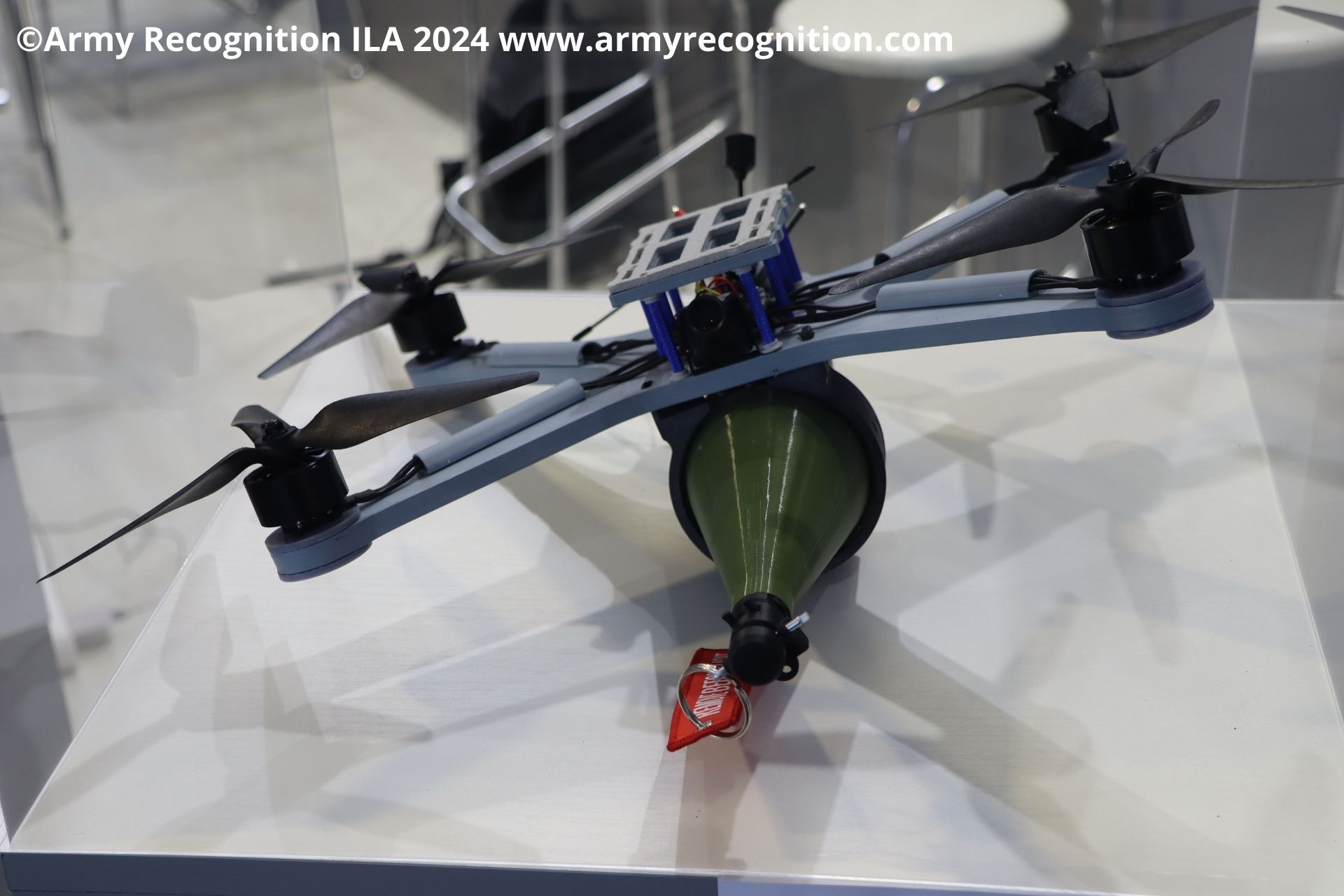
At the ILA 2024 fair, a young German company's booth, strategically placed near the Ukrainian stand, highlighted their significant product: the MAUS drone. As the first industrially produced FPV drone within NATO, the MAUS platform is fully modular, designed to be cost-effective, reliable, and easy to use, even for minimally trained operators.
Follow Army Recognition on Google News at this link
Maus UAV plateforme presented at ILA 2024 (Picture source: Army recognition)
The MAUS platform by Donaustahl GmbH is a highly versatile quadcopter designed to be quickly reconfigured for different types of missions, from observation and bombing to suicide missions.
Donaustahl GmbH, a German company, focuses on developing and manufacturing defense systems. Their product range includes loitering munitions, civil protection devices, and various explosive devices such as the trench cleaner and a munition carry kit that complements the MAUS platform. Their website also features systems for converting handguns into shoulder weapons and other modular systems suited for diverse operational needs.
The MAUS drone is designed as a user-friendly loitering munition, emphasizing simplicity in manufacturing, operation, and modification. It typically carries a payload up to 2.7 kg, sufficient to transport an RPG-type rocket with a slightly reduced range of about 7 km. Additionally, the drone is equipped with a high-resolution camera, enabling it to provide clear, real-time images of the battlefield.
Read more: First battle proven FPV drone made in NATO presented by German industry
- Details
- Written by: Vandenbosch
- Category: 2024
- Hits: 7908
Breaking news
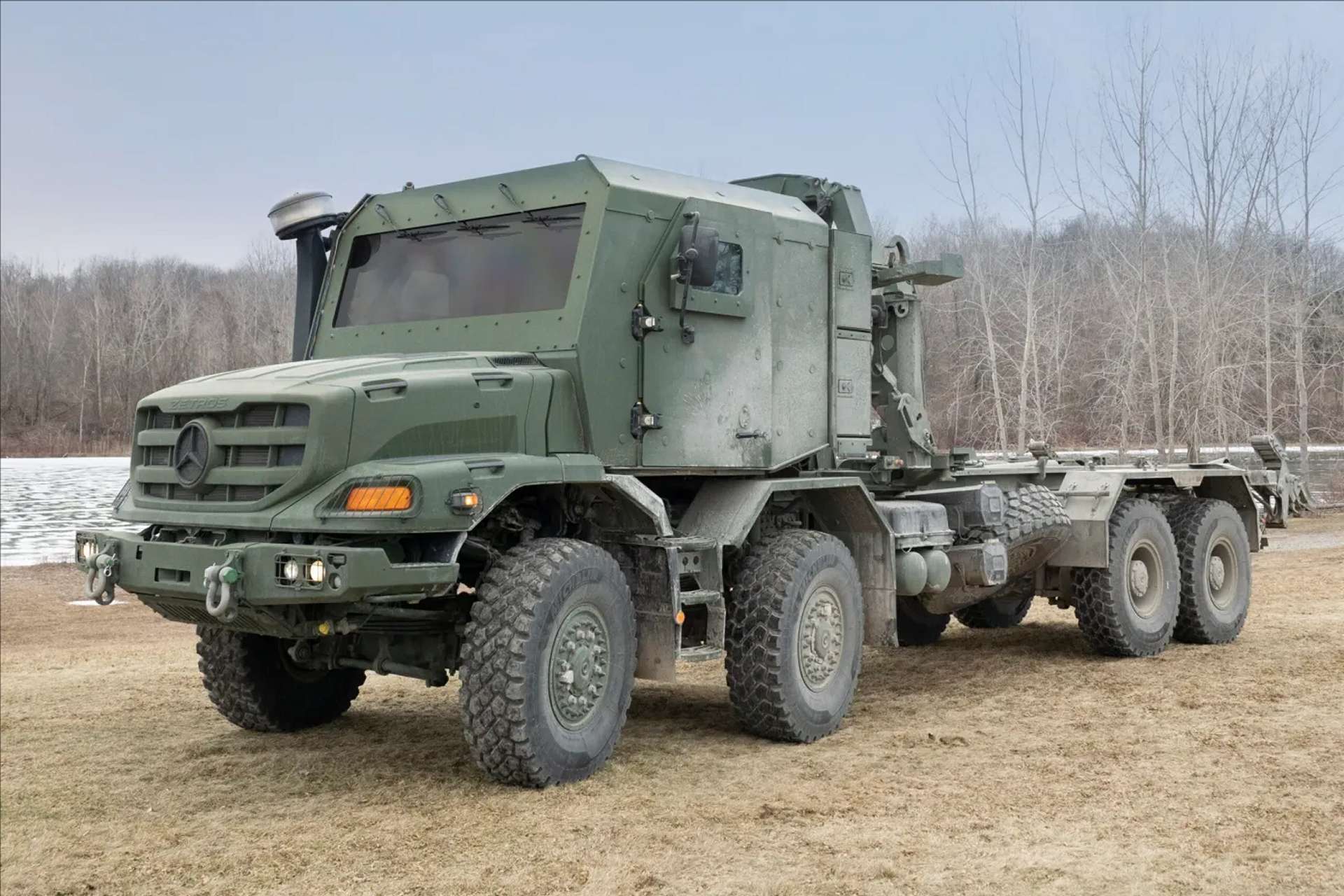
Mercedes-Benz Special Trucks has introduced the four-axle, all-wheel-drive (8×8) Zetros off-road truck, available in two variants starting in 2025. This expansion will offer configurations ranging from two-axle to four-axle models. The company released this information on June 7, 2024.
Follow Army Recognition on Google News at this link
The new Zetros 8×8, which will be showcased at Eurosatory 2024. (Picture source: Mercedes-Benz)
The new Zetros 8×8, which will be showcased at Eurosatory, is the result of a significant order from the Canadian Ministry of Defence, which includes the delivery of over 1500 Zetros vehicles in the coming years. Additionally, Mercedes-Benz will present a Zetros with a protected cab, now available directly from the Wörth plant. The entire range of Zetros off-road vehicles, from 4×4 to 8×8, will be offered with or without a protected cab from a single source.
Visitors to Eurosatory will also see other military vehicles on display: a Unimog U5000 troop transporter, an Arocs 6×6 armored tractor unit with a double winch, a Zetros 4×4, and the versatile FGA chassis for armored personnel carriers (APC).
Franziska Cusumano, Head of Mercedes-Benz Special Trucks, stated, "With our expanded portfolio, we can now offer the complete range of Zetros off-road trucks. The new Zetros 8×8 provides a robust and highly mobile logistics vehicle with a large payload, ideal for military use. Customers will also benefit from obtaining the Zetros with a protected cab from a single source, all made in Germany."
The Zetros 8×8 variant offers an increased payload of up to 25 tons and more body space due to its longer frame. This allows for a broader range of tactical and logistical uses. Powered by the OM 460 six-cylinder diesel engine, it delivers 265 to 375 kW (360 to 510 HP) and a maximum torque of 2,300 Nm from 12.8 liters of displacement. Off-road, drivers benefit from large slope and ramp angles, fordability, and longitudinal and transverse differential locks for enhanced traction and maneuverability.
The Zetros 8×8 will be available in two configurations: one with two front axles and two rear axles, both front axles being steerable; and the other with one steerable front axle and three rear axles, with the last rear axle being steerable to reduce the turning radius. Both variants will be available as tractors or carrier vehicles with large body spaces.
Starting with the new Zetros 8×8, the option of a protected cab is now available ex-works. This protection safeguards the driver and crew from ballistic fire or landmines. The protected cab will also be available for the entire Zetros series starting in 2025. This allows Mercedes-Benz to offer complete vehicle solutions, including protected cabs, from a single source, ensuring comprehensive service and parts availability.
The new Zetros 8×8, measuring 11.15 meters in length, 2.60 meters in width, and 3.70 meters in height, is powered by a Euro V OM 460 engine delivering 510 HP. It features an Allison 4500 SP automatic transmission, on-the-move tire pressure adjustment, and a 1.50-meter affordability for high off-road mobility.
The vehicle also includes a hook lift system for quickly loading and unloading containers. This provides great flexibility and speed of operation, particularly useful in situations requiring efficient and rapid logistics.
Mercedes-Benz Special Trucks continues to meet specific customer needs by collaborating with manufacturers of protected driver cabs and military chassis, offering complete solutions for large orders and specific national requirements.
Read more: Mercedes-Benz Introduces New Zetros 8x8 Trucks which will be at Eurosatory 2024
- Details
- Written by: V.Saint
- Category: 2024
- Hits: 27351
Breaking news
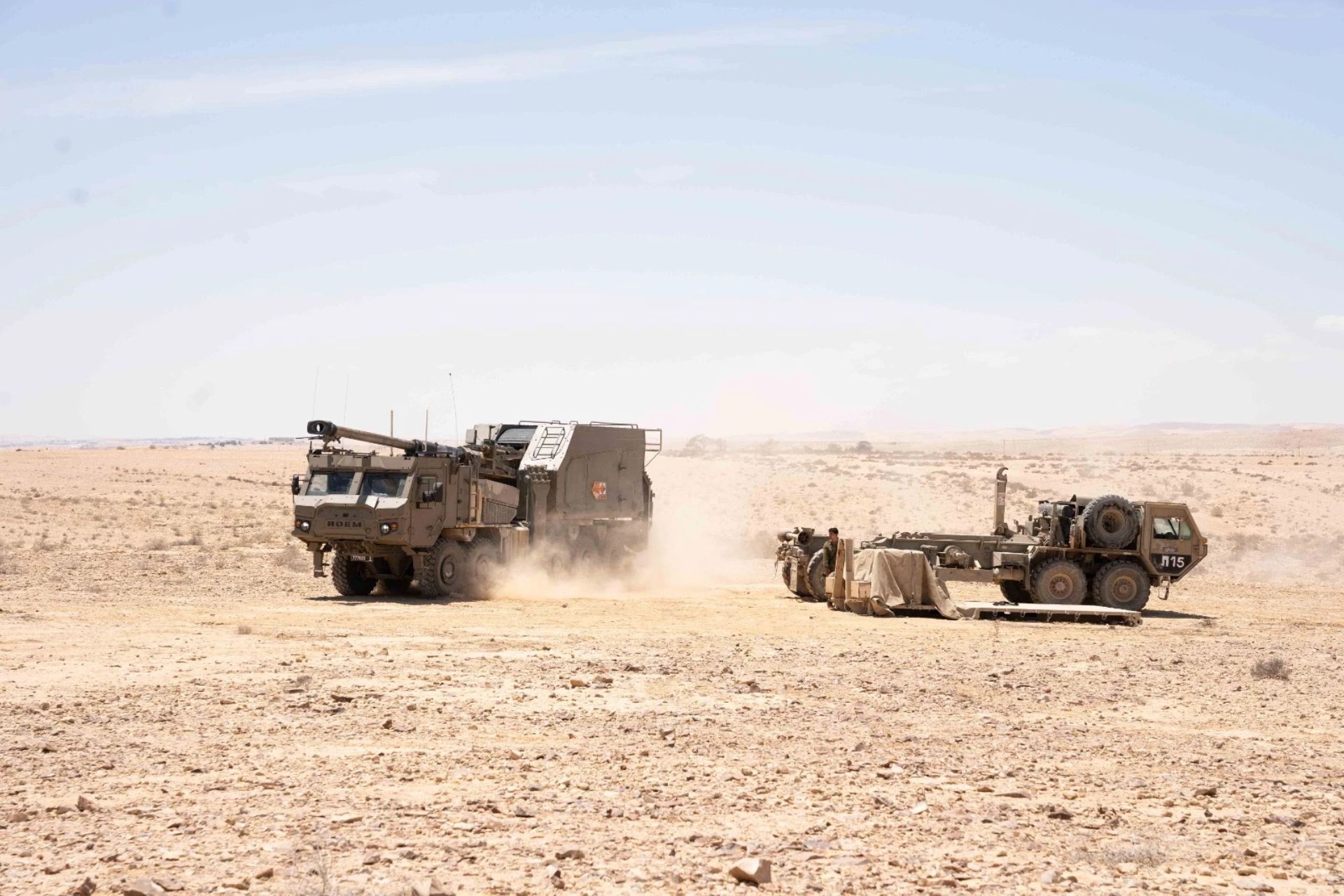
Recently, the first operational model of the new Israeli army 155mm 8x8 wheeled self-propelled howitzer - "The Thunder" - was completed. This included field excursions, armament testing, and initial firing conducted by artillery hunters. The real-world tests were quickly carried out to support Israeli ground military operations.
Follow Army Recognition on Google News at this link
Tested Thunder SPH with loading auxiliary vehicle (Picture source: Israeli defense forces )
"The Thunder" is the first wheeled se lf-propelled howitzer capable of fully automatic firing without human contact. This new cannon brings revolutionary capabilities to the battlefield - significantly increasing the rate of fire, allowing for longer-range shooting compared to the currently used cannons by the IDF, enabling independent and rapid movements on roads, and possessing high traffic capabilities on rough terrain. The automatic system of the cannon streamlines its use, reduces the number of operators needed, and allows the commander to plan and operate firing more effectively over a broader battlefield area.
Developed by Elbit Defense Company, 'The Thunder' is a testament to efficiency and innovation. Fully automated, it achieves a firing rate of 8 rounds per minute, a feat that was once unimaginable. Capable of firing different types of shells with a range of 40 km, 'The Thunder' offers significant firepower with a reduced crew. Unlike previous vehicles that required a crew of about seven men, 'The Thunder' only needs three: a driver, a gunner for close defense of the vehicle, and a commander. This reduction in crew size not only enhances efficiency but also significantly reduces operational costs.
The transition to the new cannon is good news for the artillery corps and the close cooperation with maneuvering brigades, and it will change the use of artillery on the future battlefield.
Artillery is the ultima ratio regum, the last argument of kings, allowing for fire dominance, the necessity of which is well-proven in times of war. The Thunder's firing capabilities enable it to support maneuvering forces with close and lethal assistance.
The Thunder is part of the reinforcement processes for all ground fire systems, including rockets, missiles, and remotely piloted aircraft systems, according to the IDF.
- Details
- Written by: V.Saint
- Category: 2024
- Hits: 5530
Breaking news
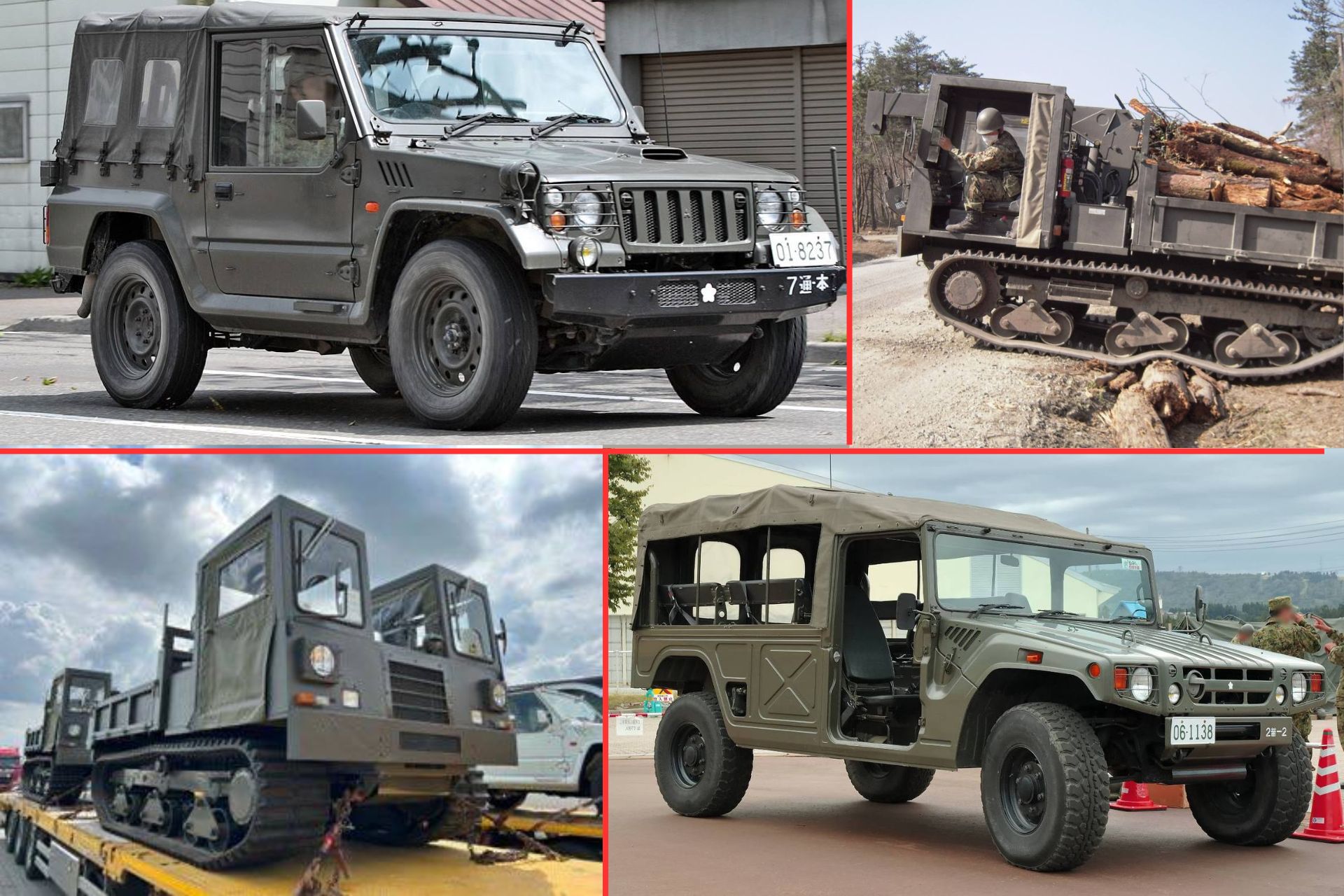
Japan has announced the delivery of 101 light vehicles to Ukraine. A significant portion of these vehicles are intended to support the mobility of units, serving as unprotected troop transport vehicles. Another vehicle, the PC-065B, is more focused on engineering tasks; capable of transporting heavy loads, it is traditionally used for clearing and support work but is also suitable for transporting artillery munitions, for example.
Follow Army Recognition on Google News at this link
Example of delivered vehicles from Japan. (Picture source: Japan defense forces )
Toyota HMV Off-road:
The Toyota HMV (High Mobility Vehicle) Off-road is designed to offer exceptional mobility in the toughest environments. Equipped with a high-performance diesel engine, it provides the necessary power to traverse rough terrains and overcome natural obstacles. The permanent four-wheel drive (4x4) system combined with a 5-speed manual transmission ensures optimal traction and superior maneuverability, even in extreme conditions. With a length of 4.5 meters, a width of 2 meters, and a height of 2.1 meters, the Toyota HMV is spacious enough to transport troops or essential equipment while remaining compact for rapid tactical operations.
Weighing approximately 3 tons empty, this vehicle can support a payload of up to 1.5 tons, making it a versatile asset for logistical and transport missions. Its top speed reaches 110 km/h, while its range is about 500 km, making it effective for long-distance deployments. The Toyota HMV is equipped with reinforced suspension and off-road tires, allowing it to navigate effortlessly over muddy, sandy, or rocky surfaces. Its robust chassis is designed to withstand the harsh conditions of the battlefield, offering exceptional durability and reliability.
The safety of the occupants is ensured by an armored body that protects against small arms fire and shrapnel.
Mitsubishi Type 73 Kogata:
The Mitsubishi Type 73 Kogata, another crucial element of this delivery, is a light vehicle primarily used for transporting personnel and light equipment. Its small size and great maneuverability make it ideal for operations requiring speed and discretion. Adapted to logistical and tactical needs, the Type 73 Kogata can be configured to transport up to 10 soldiers with their complete equipment or be modified for specific roles such as transporting communication equipment or light armament.
The Mitsubishi Type 73 Kogata is equipped with a 105-horsepower diesel engine with a 4-cylinder capacity, offering adequate power for military operations. It features a 4-speed manual transmission and a four-wheel-drive system (4x4) with a range reducer, allowing it to navigate various difficult terrains. With dimensions of 4.2 meters in length, 1.8 meters in width, and 2.1 meters in height, it has a compact size while being capable of transporting up to 10 soldiers with their full gear. Weighing about 2.5 tons empty, the Kogata can support a payload of one ton. It reaches a top speed of 100 km/h and offers a range of 400 km on a single fuel charge, making it effective for prolonged missions. The independent suspension on all four wheels ensures excellent mobility on rough terrains. Its lightweight armored body provides protection against small arms fire and shrapnel, while its off-road capability allows it to climb slopes up to 60% and overcome approach angles of 45 degrees and departure angles of 35 degrees.
PC-065B Tracked Engineering Vehicle:
The PC-065B is a tracked engineering vehicle designed to perform a variety of logistical and engineering support tasks on the battlefield. Equipped with a powerful 240-horsepower diesel engine, it provides robust power to move heavy loads and operate in difficult environments. The automatic 6-speed transmission and the track system offer exceptional traction and superior mobility on rough, muddy, or sandy terrains. With a length of 7.2 meters, a width of 3.2 meters, and a height of 2.5 meters, the PC-065B is imposing and designed for durability and operational efficiency.
Weighing approximately 20 tons, the PC-065B can transport payloads of up to 10 tons, making it an ideal choice for transporting construction materials, ammunition, or troops. Its top speed reaches 60 km/h, and it has a range of 300 km, allowing for prolonged operations without frequent resupply. The multi-bogie suspension ensures excellent stability and shock absorption, reducing vibrations and increasing comfort for the crew.
The PC-065B is equipped with an armored cabin that protects the crew against small arms fire and shrapnel, ensuring maximum safety during missions. Additionally, this engineering vehicle can be configured with various mission-specific equipment, such as articulated arms, bulldozer blades, and hydraulic lifting systems, enabling it to clear debris, build fortifications, or repair damaged infrastructure.
Thanks to its modular design, the PC-065B can also integrate demining systems, cranes, and other engineering tools, increasing its versatility and utility on the battlefield.
Read more: Japan announces delivery of 101 military vehicles to Ukraine
- Details
- Written by: Triffaux
- Category: 2024
- Hits: 6436
Breaking news
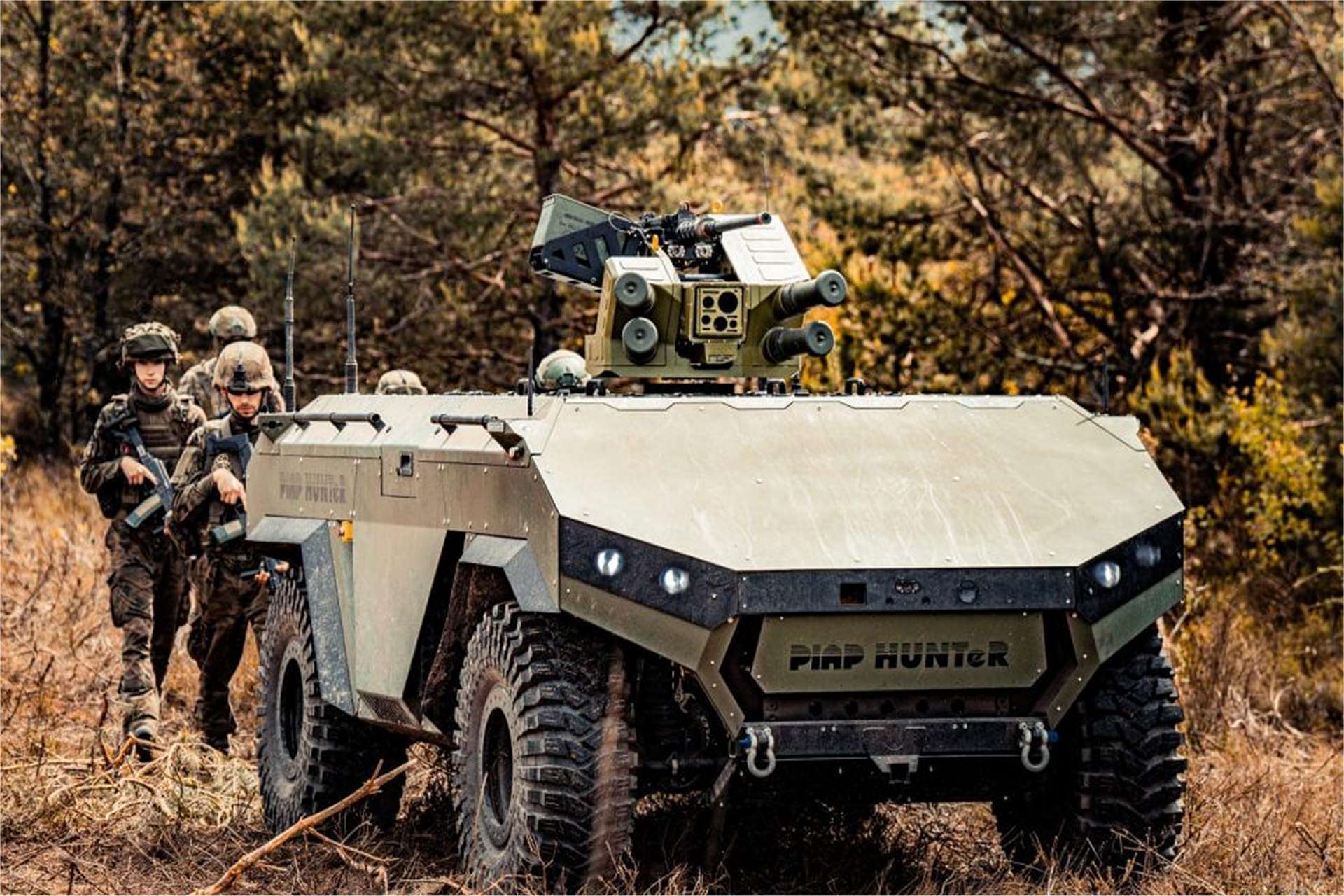
In May 2024, the Piap Hunter unmanned ground vehicle (UGV) was seen during a recent training exercise of the Polish 21st Rifles Brigade. This demonstration highlighted the advanced capabilities of the Piap Hunter in surveillance and rapid response, emphasizing its crucial role in the modernization and enhancement of the Polish Army's security operations. The Piap Hunter, with its high mobility and hybrid systems, is designed to excel in a variety of tasks, ranging from land border protection to the management of critical incidents.
Follow Army Recognition on Google News at this link
PIAP Hunter Nex-Gen Unmanned Ground Vehicle (Picture source: Poland MoD)
The HUNTeR is a high-mobility unmanned hybrid platform designed for rapid response tasks in civil security and crisis management. This advanced unmanned ground vehicle (UGV) excels in both routine surveillance tasks, such as land border protection, and rapid intervention scenarios, including responding to border intrusions or critical infrastructure incidents.
Capable of reaching speeds up to 50 km/h in both teleoperated and semi-autonomous modes, the HUNTeR platform distinguishes itself from other market offerings with its sophisticated autonomy algorithms. This ensures a quick response time and efficient navigation across diverse terrains.
As a series hybrid UGV, the HUNTeR combines the advantages of a combustion engine and an electric motor. This hybrid system facilitates extended field operations and silent, low-noise movements, which are crucial for covert observation tasks. The vehicle can operate efficiently in various conditions, providing long-term field performance and the ability to conduct silent operations when necessary.
To further enhance its operational capabilities, the HUNTeR can be equipped with an observation aerial mobile platform (UAV). This UAV acts as an additional vision source and communication relay, significantly extending the range and effectiveness of surveillance and communication.
The HUNTeR platform weighs 3500 kg and measures 470x220 cm with a wheelbase of 270 cm. It can reach a maximum speed of 50 km/h, supported by a robust suspension system. The dependent 3-link type suspension with Panhard bar, coil springs, and controlled damping shock absorbers offers a suspension stroke of 25 cm.
The 4x4 drive system features differential locks, two steering axles, and 1m diameter wheels. The drive power is 90 kW continuous and 220 kW peak, facilitated by a serial hybrid system with traction electric motors integrated with the driving axles.
The vehicle is equipped with disc brakes on the wheels and a parking brake on the electric motor. The power supply is managed by a Li-Ion NMC battery with a capacity of 40 kWh and BTMS system, alongside a 110 kW generator. It supports additional devices with power options including 600 VDC, 3x400 VAC, and 24 VDC.
The HUNTeR is fitted with HD cameras for driving, positioned at the front and rear, and additional cameras on the railing for top views. It has four side cameras (two on each side) and a PTZ camera for panoramic views. The digital communication system offers selectable operating frequencies, such as 1.3 GHz and 2.4 GHz, with a maximum communication range of 800 meters.
Control options include a portable control panel with an additional screen connection, steering wheel, and pedals for precise control. The HUNTeR can also be equipped with a tethered UAV with a landing field and PTZ head, a radio transmitter to extend the control range, and various power supplies for accessories. It includes a set of sensors with an autonomy module for assistant driving in teleoperated and autonomous modes, a hydraulic drive manipulator, and load boxes among other modular equipment.
The Arex ZMU-03 unmanned turret, designed to be mounted on the Piap Hunter UGV, is equipped with a 12.7 mm heavy machine gun and smoke grenade launchers. It also offers the option to be fitted with a small drone. Developed by Arex, a WB Group subsidiary, the turret features advanced stabilization for both the weapon and its observation equipment. It is equipped with day and thermal cameras as well as a laser rangefinder. The turret can be operated either from an onboard station or remotely via a portable console, offering versatility in various combat scenarios.
Read more: Poland Deploys PIAP Hunter Next-Gen Unmanned Ground Vehicle
- NP Aerospace acquires Jankel Armouring assets following bankruptcy filing
- Hezbollah's first attack with Iranian-made Falaq-2 333 mm rockets targets Israeli command center
- United States Announces Major New Assistance for Ukraine Including M113s
- Peru Launches Tender to Strengthen Security Forces with 4x4 MRAPs