
- Details
- Written by: V.Saint
- Category: 2024
- Hits: 3152










a French company specialising in distribution is changing direction and starting to produce a weapon based on user needs.
Sun roc specialises in retailing defence products such as helmets, tactical waistcoats and ballistic plates. But today Sun roc is moving into the production of weapons, developed by the field experience of its teams, and is now presenting the multi-calibre HVT.
Follow Army Recognition on Google News at this link
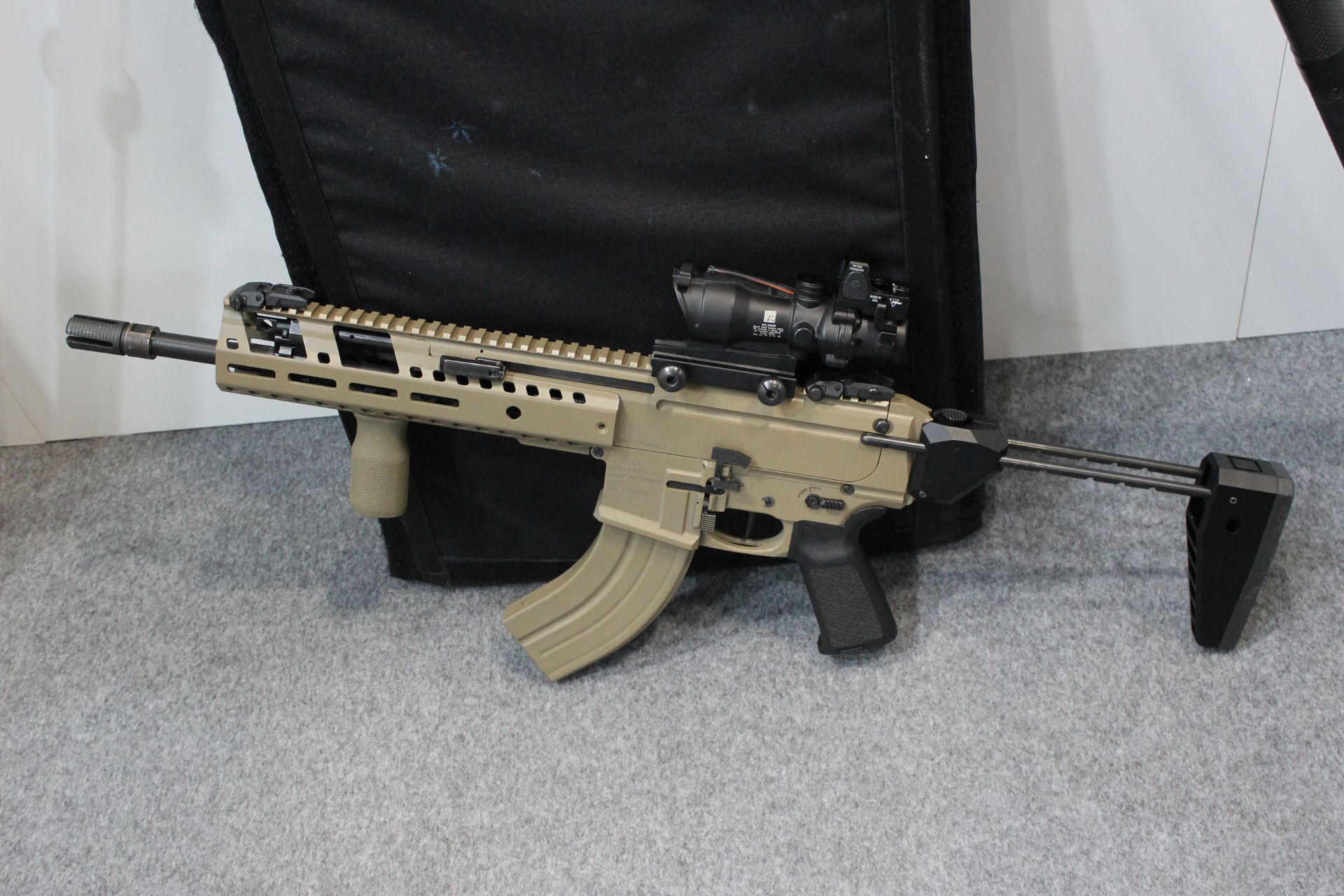
HVT chambered in 7.62x39 presented at Eurosatory by Sunrock (Picture source: Army recognition)
Available in a range of calibres from 300 blk to 7.69x39, the HVT multi caliber is fully adaptable with just a few technical adjustments. In order to meet the user's requirements, the HVT allows the stock to be changed, the type of M-LOK or Picatinny rail mountings to be changed, and the type of flame arrestor to be changed. Based on the AR-15 platform, the HVT is built to improve one of the major problems of the platform, which is the movement linked to the two parts that make up the frame of the weapon. Often separated here, there is only one part. What's more, the cocking lever is designed to allow ambidextrous use of the weapon without the need for different manipulations.
Multi-calibre does not mean that the weapon can fire different cartridges, but rather that the weapon can be machined on the same platform to the same size but can carry different ammunition, which will have different uses.
Still at the test stage, the HVT has officially been announced as being in the pre-marketing stage, but thanks to it, France is further increasing its capacity in the design and manufacture of light infantry weapons. In France, the prevailing trend was to close down arms factories in order to specialise in larger calibre weapons.
Read more: Sunrock paves a way for French weapons factory renewal
- Details
- Written by: Triffaux
- Category: 2024
- Hits: 12794
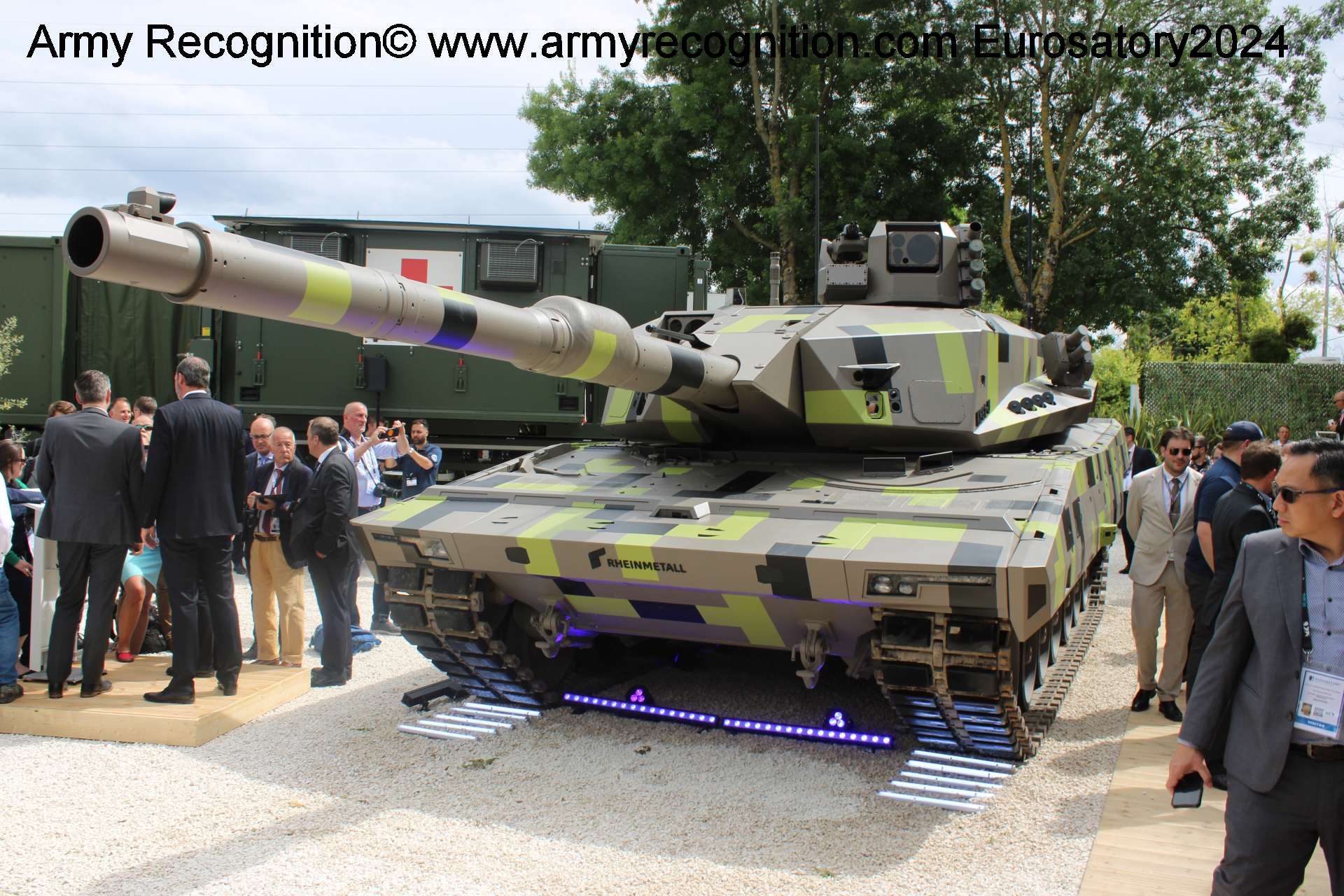
On June 17, 2024, Rheinmetall unveiled its new tank, the KF51-U, equipped with a high-tech uncrewed turret, formerly known as CUT (Concept Uncrewed Turret), at Eurosatory 2024. The main armament of the KF51-U is the 130 mm Future Gun System with a barrel length of 51 calibers. The armament is fed by an automated magazine located in the rear part of the turret, capable of feeding 25 shells.
Follow Army Recognition on Google News at this link
Rheinmetall KF51-U Main Battle Tank (Picture source: Army Recognition)
The turret is also equipped with a coaxial .50 heavy machine gun as well as a controlled combat station, equipped with a Main Sensor Slaved Armament (MSSA) weapon system equipped with a Rheinmetall RMG762 machine gun. with three rotating barrels. This system makes it possible to maintain a continuous fire even if one of the barrels is on fire.
The crew members are equipped with day and night vision optics and integrated laser rangefinders. The shooter uses modern SEOSS 400s. Observers and shooters can observe independently of each other and assign and engage targets. The KF51-U therefore has hunter-killer and killer-killer capability.
The KF51-U is also equipped with an electrical fire control system, C4I equipment, and other parts of the sensor system, including a weather sensor. The SAS system (Situational Awareness System) guarantees superior situationality. Active and passive protection systems, such as the Active Protection System APS or Iron Fist, as well as soft-kill protection systems such as MUSS and ROSY rapid obscurant system protect the crew and the set against a wide range of enemy threats.
- Details
- Written by: Jérôme Brahy
- Category: 2024
- Hits: 6397
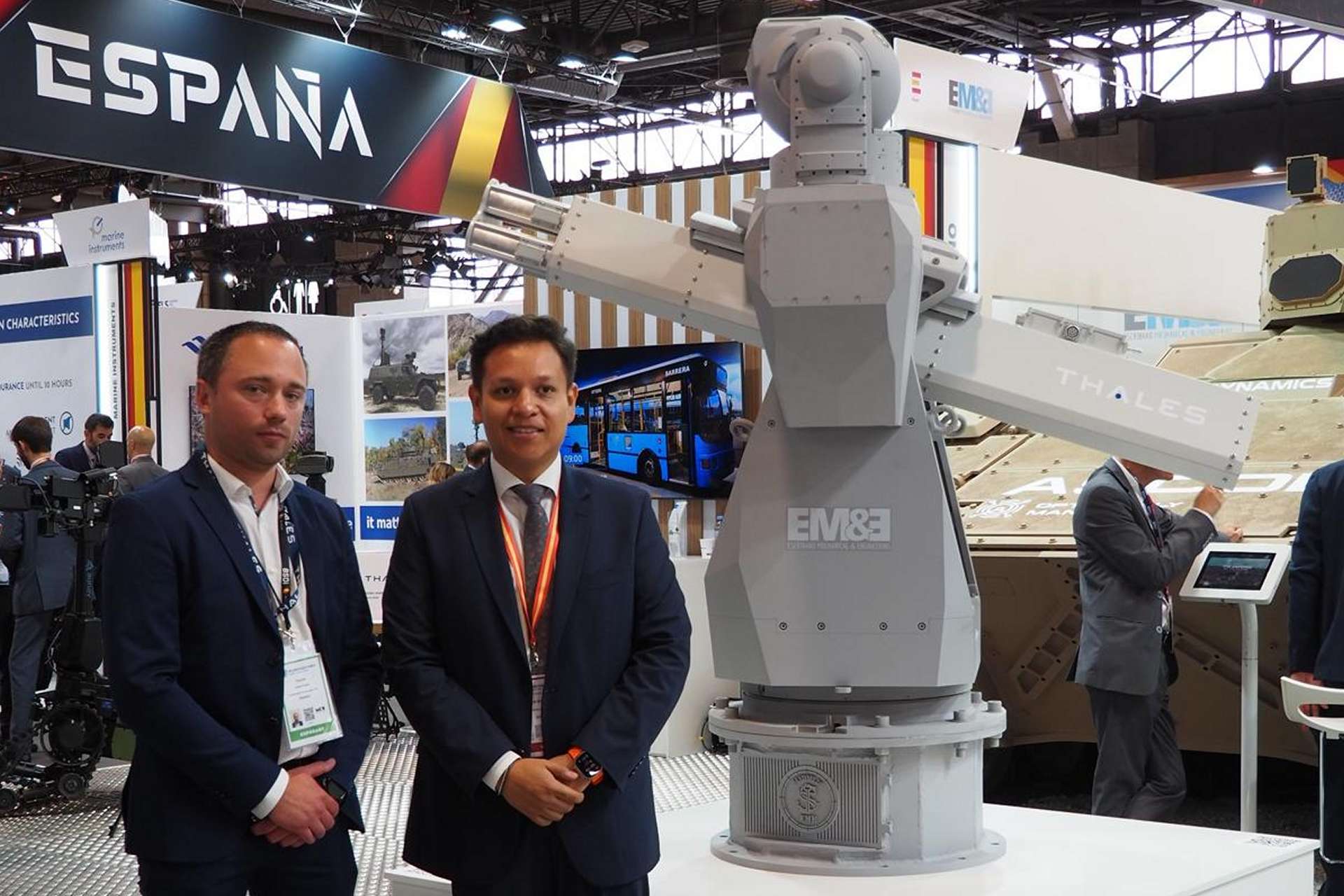
On June 18, 2024, the Spanish company Escribano Mechanical & Engineering and the French company Thales entered into an international agreement to collaborate on the Sentinel Rocket remotely controlled rocket weapon system and offer a joint solution for neutralizing threats in the naval and land-based Counter-Unmanned Aircraft System (C-UAS) field. This agreement was formalized at the Eurosatory 2024 defense exhibition, aimed at addressing the emerging threats posed by drones and drone swarms through advanced technology and joint expertise.
Follow Army Recognition on Google News at this link
Escribano Mechanical & Engineering and Thales will collaborate on the Sentinel Rocket remotely controlled rocket weapon system to offer a joint solution for neutralizing threats in the naval and land-based Counter-Unmanned Aircraft System (C-UAS) field. (Picture source: Escribano)
The collaboration combines the strengths of both companies, integrating Escribano's remotely operated weapon stations with Thales' launchers and missiles. The result of this partnership is the Sentinel Rocket, a system designed to enhance the capabilities of naval and terrestrial defense forces against UAV threats. The Sentinel Rocket system integrates Escribano's gyrostabilized remote stations, equipped with an electro-optical system, and Thales' rocket launchers, which have high propulsion speed, a range of up to 3 kilometers, and can deploy over 8,000 steel balls, creating a steel cloud.
Jocxan Bojorquez, Business Development Director at Escribano, emphasized the need for innovation in addressing new security threats, noting that the combined technological and industrial capabilities of both companies have produced a technologically advanced product. Thomas Colinet, Rocket System Domain Director at Thales Belgium, expressed his satisfaction with the partnership, highlighting its alignment with European efforts to strengthen the industrial base and technological sovereignty.
The agreement between Escribano and Thales supports the European Union's Defense and Security Policy, which aims to enhance the European defense industrial base. In an environment with increasing threats, the collaboration seeks to optimize investments and capabilities through cooperation among European defense companies, thereby strengthening the region's collective security posture.
Escribano, established in 1989, has evolved from a small mechanical workshop in Spain into a global company in the defense and security sector. The company provides comprehensive engineering solutions, high-precision mechanical manufacturing, and the production of complex optronic integration systems. Escribano's product range includes stabilized platforms for land, naval, and airborne applications, thermal cameras and sensors for border surveillance, and ammunition guidance kits. The company conducts all product development and customer-specific adaptations in-house at its Madrid facilities, focusing on innovation and the integration of artificial intelligence into its solutions.
Thales, listed on Euronext Paris under the ticker HO, specializes in three primary business areas: Defense & Security, Aeronautics & Space, and Cybersecurity & Digital Identity. The company employs around 81,000 people across 68 countries and generated sales of €18.4 billion in 2023. Thales invests nearly €4 billion annually in research and development, focusing on areas such as artificial intelligence, cybersecurity, quantum technologies, cloud technologies, and 6G.
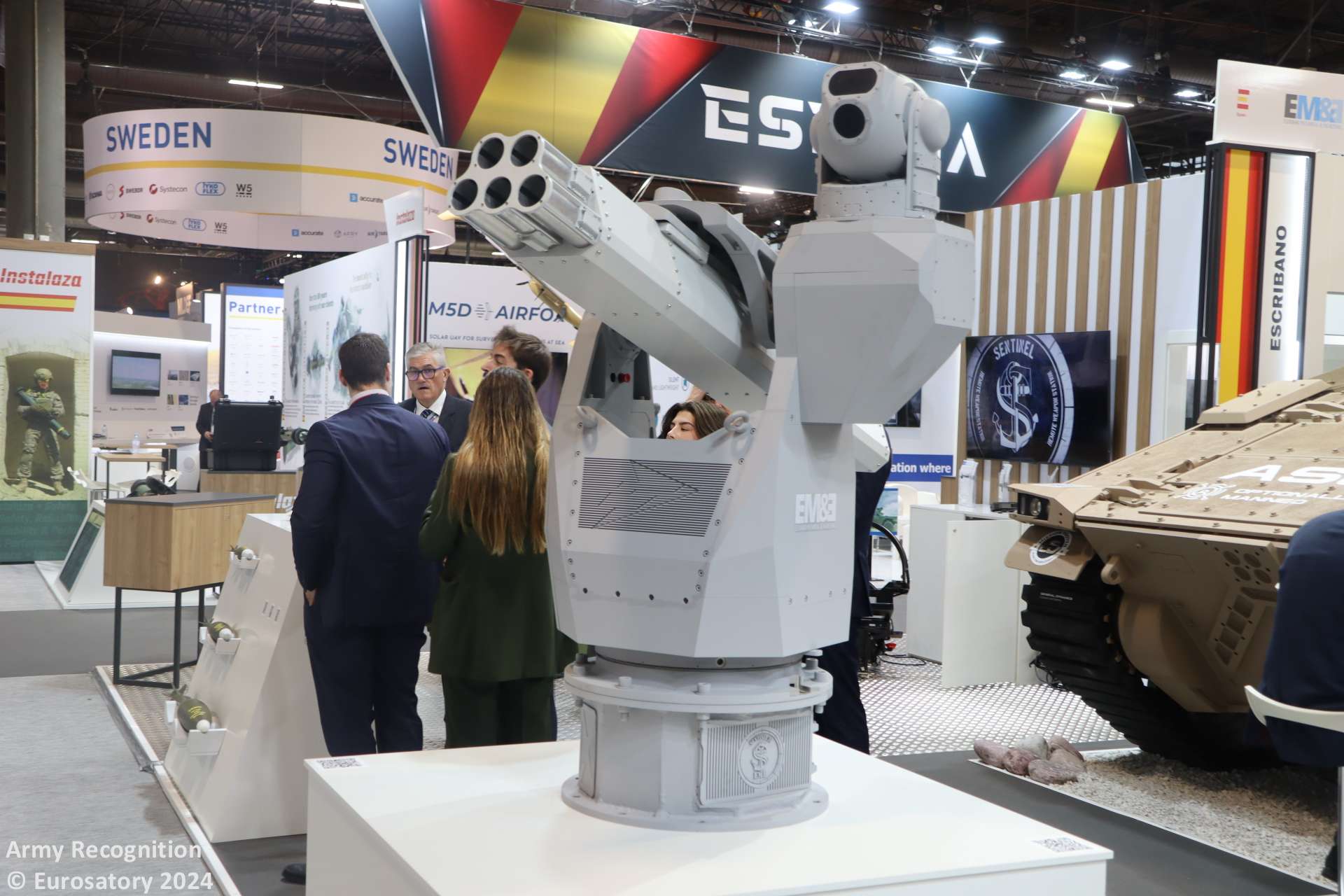
The launcher is compatible with both guided (LGR) and unguided (UGR) rocket munitions, specifically the guided FZ275 LGR and unguided UGR 2.75" rockets. (Picture source: Army Recognition)
The Sentinel Rocket system is a remotely controlled rocket weapon station designed for enhanced stabilization and day/night targeting capabilities. This gyro-stabilized platform is capable of operating rocket launchers for combat and surveillance missions under various conditions. The Sentinel Rocket system features a 2-axis gyro-stabilized platform with an elevation range of -20 to +60 degrees and an azimuth rotation of 359 degrees, maintaining a stabilization level of less than 1 milliradian.
The FZ605 rocket launcher, part of the Sentinel Rocket system, is designed to minimize payload and exposure to rocket exhaust gases. It can be integrated on airborne platforms with NATO 14" lugs and on land vehicles with flat interfaces. The launcher is compatible with both guided (LGR) and unguided (UGR) rocket munitions, specifically the guided FZ275 LGR and unguided UGR 2.75" rockets. These rockets feature a semi-active laser guidance system for precision targeting and can be equipped with high explosive warheads. The guided FZ275 LGR incorporates a SUKL dual-mode semi-active laser seeker that receives coded laser designator pulses for supplemental guidance after launch. Both guided and unguided variants can be configured with high explosive warheads, offering flexibility and precision in various combat scenarios.
The Sentinel Rocket's electro-optical suite includes a cooled 3rd generation mid-wave infrared camera with a 640x512 resolution and a 20x continuous zoom. This IR camera offers a wide field-of-view (WFOV) of 26.30° horizontal and 20.98° vertical, and a narrow field-of-view (NFOV) of 1.31° horizontal and 1.05° vertical. Additionally, the system includes a laser rangefinder accurate to ±5 meters up to 8,000 meters with a programmable pulse rate of 1-10Hz, and a high-definition day sight camera with a CMOS sensor offering a 1920x1080 resolution and a 30x continuous zoom. The day sight camera also provides a WFOV of 55.9° horizontal and 35.6° vertical, and a NFOV of 2.1° horizontal and 1.2° vertical.
Under typical conditions, the sensors integrated into the Sentinel Rocket system can detect a NATO target measuring 2.3 x 2.3 meters at a distance of 19.17 kilometers in visible wavelengths and 16.01 kilometers in infrared wavelengths. The system's recognition and identification ranges are 6.5 kilometers and 4.41 kilometers, respectively, providing robust situational awareness and targeting capabilities.
- Details
- Written by: Vandenbosch
- Category: 2024
- Hits: 3603
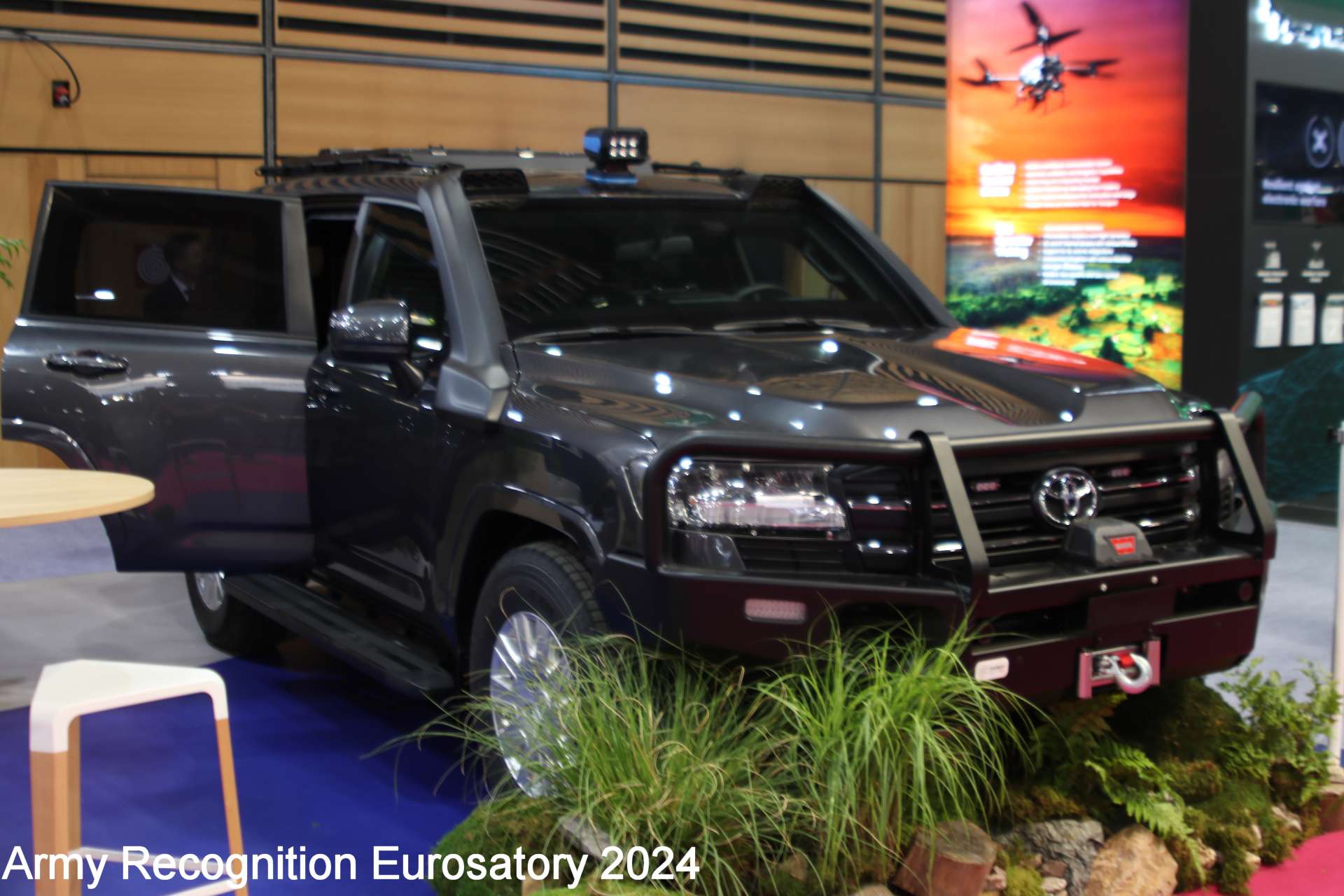
At Eurosatory 2024, Centigon France unveiled for the first time its new version of the Fortress 300, now optimized for special operations forces. Based on the robust Toyota Land Cruiser 300 platform, this armored 4x4 vehicle aims to push the boundaries of protection and mobility on the field while meeting the demanding needs of modern intervention units.
Follow Army Recognition on Google News at this link
The Fortress 300 Intervention is based on the Fortress 300. (Picture source: Army Recognition)
The Fortress 300 Intervention is based on the Fortress 300 VR7, already renowned for its VR7-certified ballistic protection. This new version is distinguished by a modular architecture, offering unprecedented flexibility in option configurations.
The intervention version of the Fortress 300, specially designed for intervention groups, offers exceptional interior modularity. This allows the vehicle to be equipped according to the specific needs of operators, making it capable of fulfilling a wide variety of missions: hostage rescue intervention, search and apprehension of heavily armed individuals, surveillance, pursuit, and more. Moreover, the vehicle is so adaptable that it is not limited to roles performed by special operations forces alone.
The base version of the Fortress 300 reaches the full VR7 level. It protects against 5.56x45 and 7.62x51 caliber ammunition shots at a distance of 10 meters, with respective velocities of 950 m/s and 830 m/s. It also withstands DM-51 grenade explosions on the floor and roof, as well as DM 31 mines (with optional anti-mine floor) and 15 kg TNT explosions at 2 meters (with optional anti-blast locks). The new variant here sees its armor reinforced, making the vehicle heavier, and necessitating a complete overhaul of the suspension. The engine has also been upgraded to a V8.
For special operations forces, flexibility is essential. The Fortress 300 offers options such as fuel tank protection, bull bars, an electric winch, reinforced bumpers, anti-blast locks, and DM31 floor protection. Other options include a roof escape hatch, integrated cameras, dual-tone sirens, and PA systems, pre-installations for radio and ECM equipment, strobe lights, reinforced running boards, infrared lights, and a blackout system. Additionally, the vehicle is equipped with side roof racks and reinforced steps to accommodate operators on the sides of the vehicle.
The Fortress 300 Intervention presented at Eurosatory 2024 embodies an exciting novelty for armored vehicles intended for special operations forces. With superior protection, increased flexibility, and adaptability that reminds us of Legos due to the numerous options available, several clients have already expressed interest, and we eagerly await the future that lies ahead for the Fortress 300 Intervention.
Read more: Eurosatory 2024: Centigon Unveils Fortress 300 Intervention for First Time
- Details
- Written by: Halna du Fretay
- Category: 2024
- Hits: 2953
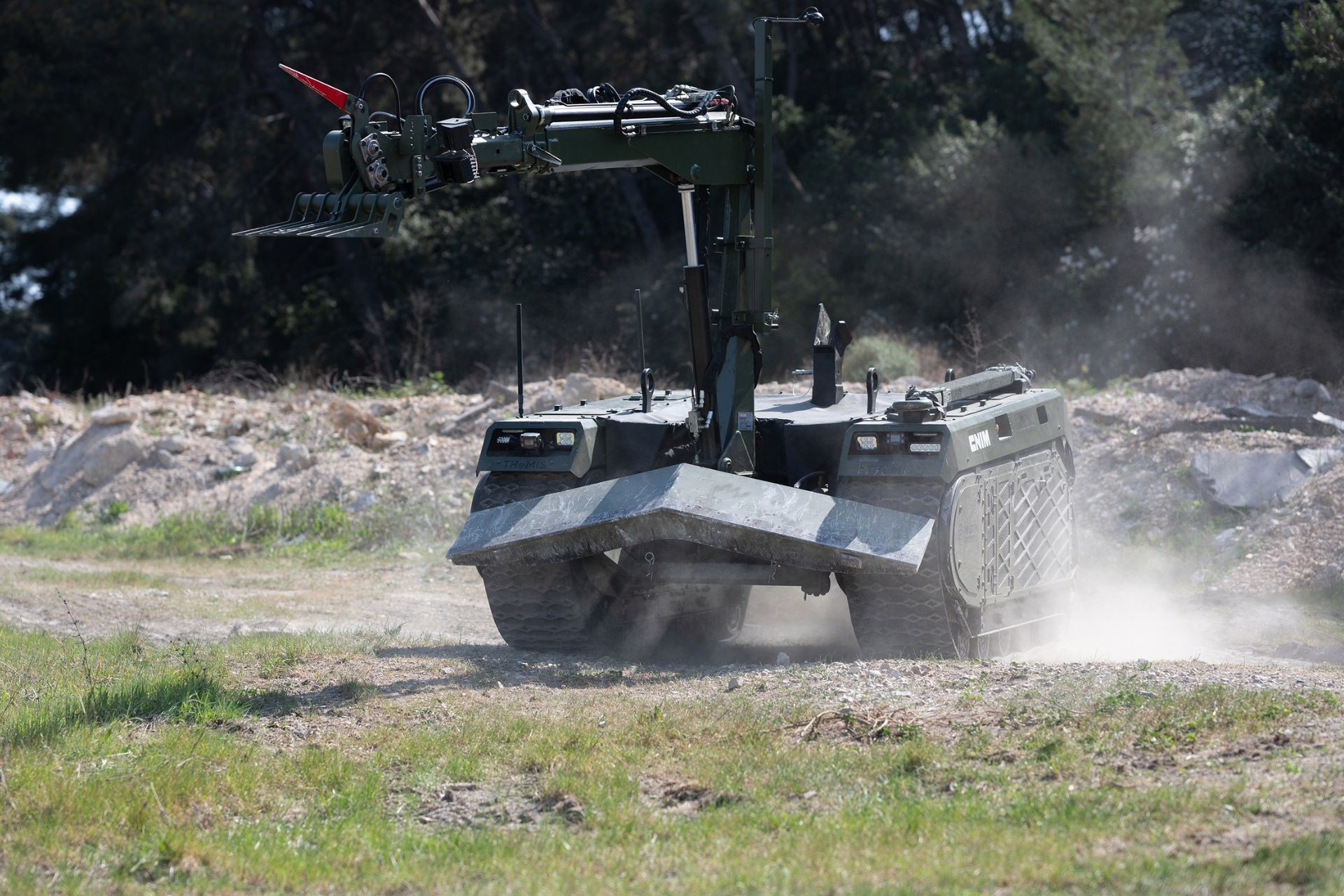
At Eurosatory 2024, CNIM Systèmes Industriels displays the Route Clearance Unmanned System (ROCUS), an advanced unmanned ground vehicle designed to enhance the safety and efficiency of military route clearance operations. CNIM Systèmes Industriels, a longstanding partner in the defense and security sector since 1856, continues to support armed forces with robust and reliable operational equipment. ROCUS is the latest addition to their suite of solutions aimed at protecting soldiers and ensuring mission success.
Follow Army Recognition on Google News at this link
A key feature of ROCUS is its unmanned and remotely operated design, which significantly reduces the risk to soldiers by allowing operations to be conducted from the safety of a protected vehicle (Picture source: CNIM Systèmes Industriels)
The ROCUS is engineered to operate in challenging terrains, providing a high degree of mobility with its tracked vehicle design, which ensures low ground pressure. It boasts an impressive performance capability, with a top speed of 20 km/h and an endurance of up to 10 hours. Equipped with a 4-meter robotic arm that can lift up to 100 kg, the ROCUS can perform a variety of tasks both day and night, thanks to its versatile operating capabilities.
A key feature of ROCUS is its unmanned and remotely operated design, which significantly reduces the risk to soldiers by allowing operations to be conducted from the safety of a protected vehicle. The unified command system streamlines control and coordination, enhancing the effectiveness of route clearance missions. The hybrid design of the vehicle reduces the logistic footprint, making it easier to transport and deploy in various operational scenarios. Additionally, the ROCUS is towable, adding to its ease of transport and flexibility in the field.
Improvised Explosive Devices (IEDs) have long posed a significant threat, causing numerous casualties and damaging military assets. ROCUS addresses this challenge by inspecting, confirming, and acting on potential threats, thus ensuring the safe passage of convoys and the successful completion of missions. Its robust and enduring design allows it to operate effectively in difficult terrains, combining endurance and carrying capacity to meet the demanding needs of military operations.
CNIM Systèmes Industriels' commitment to innovation and support for armed forces is evident in the design and capabilities of ROCUS. By providing an advanced solution for route clearance, CNIM enhances the military's capability to conduct safer and more efficient operations. As this technology proliferates, it promises to save lives and improve the effectiveness of military missions, reinforcing CNIM's role as a key partner in defense and security.
Read more: ROCUS at Eurosatory 2024: Combat Proven Unmanned Ground Vehicle

- Details
- Written by: Triffaux
- Category: 2024
- Hits: 16589
At Eurosatory 2024, Hyundai Rotem, a key player in South Korea's defense industry, is showcasing its latest innovation in armored warfare: the Next Generation Main Battle Tank (NG-MBT), which some observers have already nicknamed the K3. This new tank represents an important step in response to evolving combat scenarios and the South Korean military's demand for improved tactical capabilities.
Follow Army Recognition on Google News at this link
Hyundai Rotem Next-Generation K3 Main Battle Tank (Picture source: Army Recognition)
The NG-MBT follows a traditional layout with a driver's compartment at the front, a centrally located turret, and a rear-mounted powertrain. What sets it apart is its innovative crew configuration: a three-member crew, including the driver, commander, and gunner, all housed in an armored capsule located in the forward hull. This design aims to enhance crew protection by isolating them from potential threats posed by autoloaders and ammunition storage.
At the heart of its firepower is an unmanned turret armed with a remotely controlled 130mm smoothbore cannon, capable of engaging targets up to 5km away. The tank is also equipped with multi-purpose anti-tank guided missiles (ATGM) with a range of 8 km, including advanced modes for line-of-sight and beyond-line-of-sight engagements. These capabilities are complemented by a remote-controlled weapons station on the turret, accommodating weapons ranging from 12.7 to 30mm.
Defensively, the NG-MBT is equipped with a suite of advanced technologies, including a Directional Infrared Countermeasures (DIRCM) system to thwart heat-seeking missiles, an Active Protection System (APS), and a drone jamming device. Its low-profile design and reduced radar and infrared signatures make it exceptionally difficult to detect on the battlefield, reminiscent of the Polish PL-01 tank.
Armor protection is paramount, with a modular system comprising steel, ceramic and composite materials. This includes very high hardness armor plates, oxide-free ceramics, and reactive armor modules capable of withstanding large caliber kinetic and chemical energy projectiles. The tank meets STANAG 4569 Level 4a/4b standards for mine protection and is further enhanced with stealth technologies, including RF and infrared camouflage based on metamaterials.
On the mobility side, the NG-MBT is powered by a Diesel engine, offering a top speed of 70 km/h on the road and 50 km/h off-road. Its rubber tracks reduce noise emissions, contributing to its stealth tactical capabilities. With a combat weight of less than 55 tonnes and dimensions optimized for agility (less than 10.8m long, 3.6m wide, and 2.4m high), the tank offers an impressive operational range ranging up to 500 km.
Technologically advanced, the NG-MBT integrates AI algorithms for complete situational awareness, a combined manned and unmanned system, and a CSISR (Command, Control, Communication, Computer, Cyber Information suite, Surveillance, and Reconnaissance) robust with high-speed satellite communications and connectivity capabilities.
Hyundai Rotem's NG-MBT represents a formidable addition to the modern battlefield, integrating cutting-edge technologies with enhanced protection, firepower, and mobility to meet the rigorous demands of 21st-century warfare. As it debuts at Eurosatory 2024, it is poised to set new benchmarks for armored combat systems on a global scale.
Read more: Hyundai Rotem presents Nex-Gen K3 Main Battle Tank at Eurosatory 2024
- Details
- Written by: Halna du Fretay
- Category: 2024
- Hits: 2588
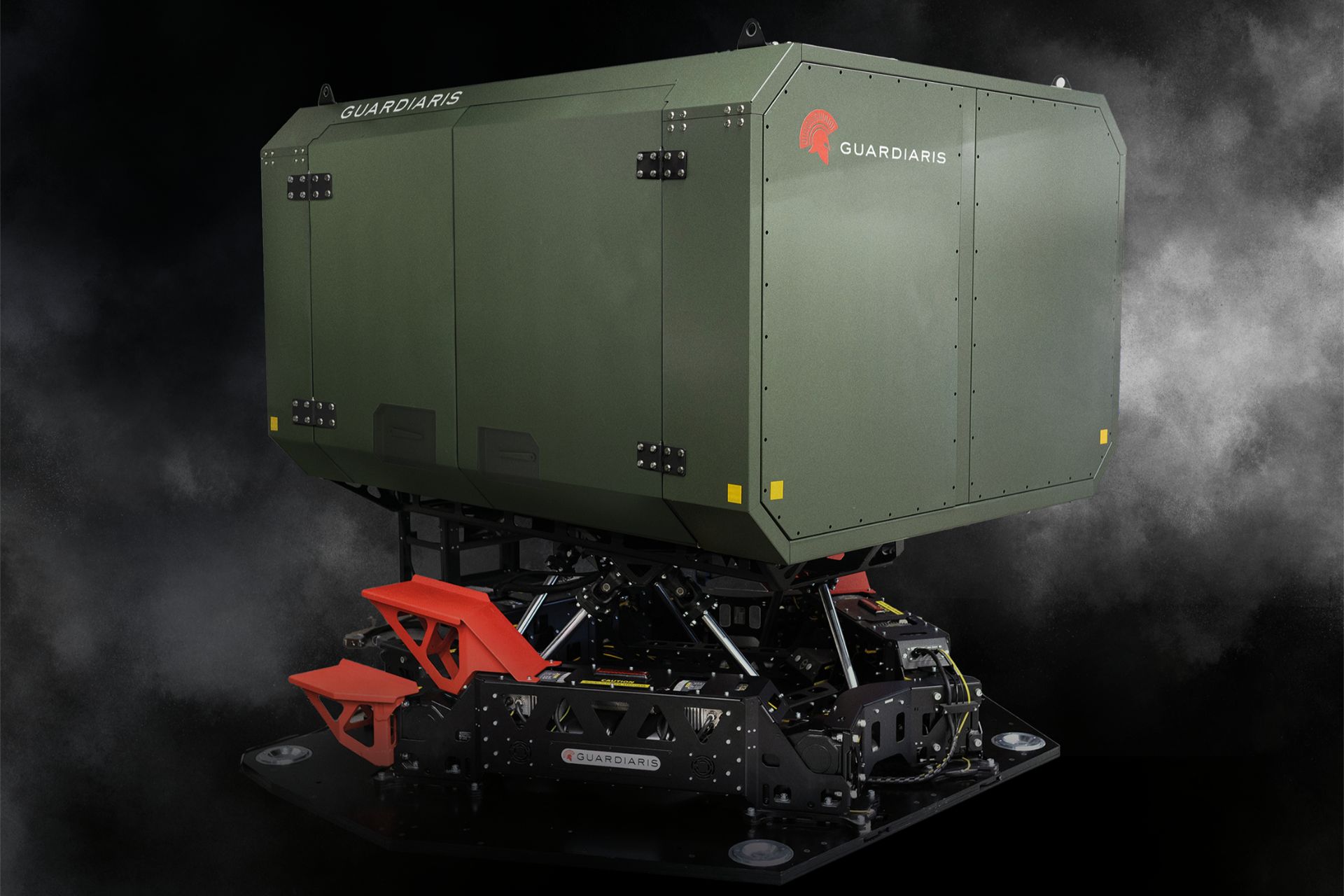
At Eurosatory 2024, Guardiaris unveils the Modular Joint Light Tactical Vehicle (JLTV) Crew Trainer, a highly customizable and advanced training simulator designed to replicate the JLTV 4x4 vehicle's interior. This simulator accommodates four crew members: driver, a gunner, a commander, and a fourth operator. It features an integrated modular remote weapon station simulator with ballistics and a customizable interior cabin replica, making it a versatile tool for training.
Follow Army Recognition on Google News at this link
The JLTV Crew Trainer's modular design supports various types of remote weapon stations, including systems from Elbit, Konsberg, Rafael, Otokar, and Valhalla Turrets (Picture source: Guardiaris)
The JLTV Crew Trainer's design prioritizes realism and functionality. It integrates exact replicas of the vehicle controls and provides comprehensive training for all vehicle and weapons systems operating procedures. The simulator can train crew members individually or simultaneously, enhancing their communication via intercom and radio. Multiple JLTV units can train concurrently, leveraging a 6 Degrees of Freedom (DoF) motion platform that accurately simulates vehicle dynamics across various terrains.
A notable feature of this simulator is its ability to monitor key biometric signals, including heart rate and eye tracking, to evaluate trainee performance comprehensively. The eye tracking system ensures that trainees maintain attention on controls, battlefield developments, and their environment. The fully immersive training environment, supported by a large database of environments and objects, enhances situational awareness and decision-making.
The simulator includes a comprehensive After-Action Review (AAR) system for fast data collection and analysis, offering insights into individual and team performance during exercises. The in-house developed GUARD™ simulation graphics engine powers the solution, providing advanced real-time data capture, true ballistics simulation, and AI-generated forces for diverse training scenarios. The user-friendly training management interface allows for fast scenario prototyping and complex scenario creation.
The JLTV Crew Trainer's modular design supports various types of remote weapon stations, including systems from Elbit, Konsberg, Rafael, Otokar, and Valhalla Turrets. Each crew member's station, whether driver, gunner, or commander, includes detailed procedures and operations training, from vehicle handling and tactical maneuvering to target detection and decision-making.
This simulator can be deployed standalone or as part of a larger training network, enabling platoon-to-squad level vehicle training and enhancing troop readiness. It supports full multi-mission tactical configurations, including other vehicles, remote weapon stations, small arms, forward observers, and multiple anti-armor simulators. The solution's versatility and adaptability make it suitable for diverse and complex tactical combat training environments. Additionally, it is HLA interoperable, allowing seamless connections with other simulator systems upon customer request.
Guardiaris, the constructor of this advanced training platform, ensures that the JLTV Crew Trainer meets the evolving needs of military training with unparalleled versatility and adaptability. As this technology proliferates, it promises to enhance the effectiveness of tactical training and readiness.
Read more: Advanced JLTV Crew Trainer Unveils at Eurosatory 2024
- Details
- Written by: V.Saint
- Category: 2024
- Hits: 3892
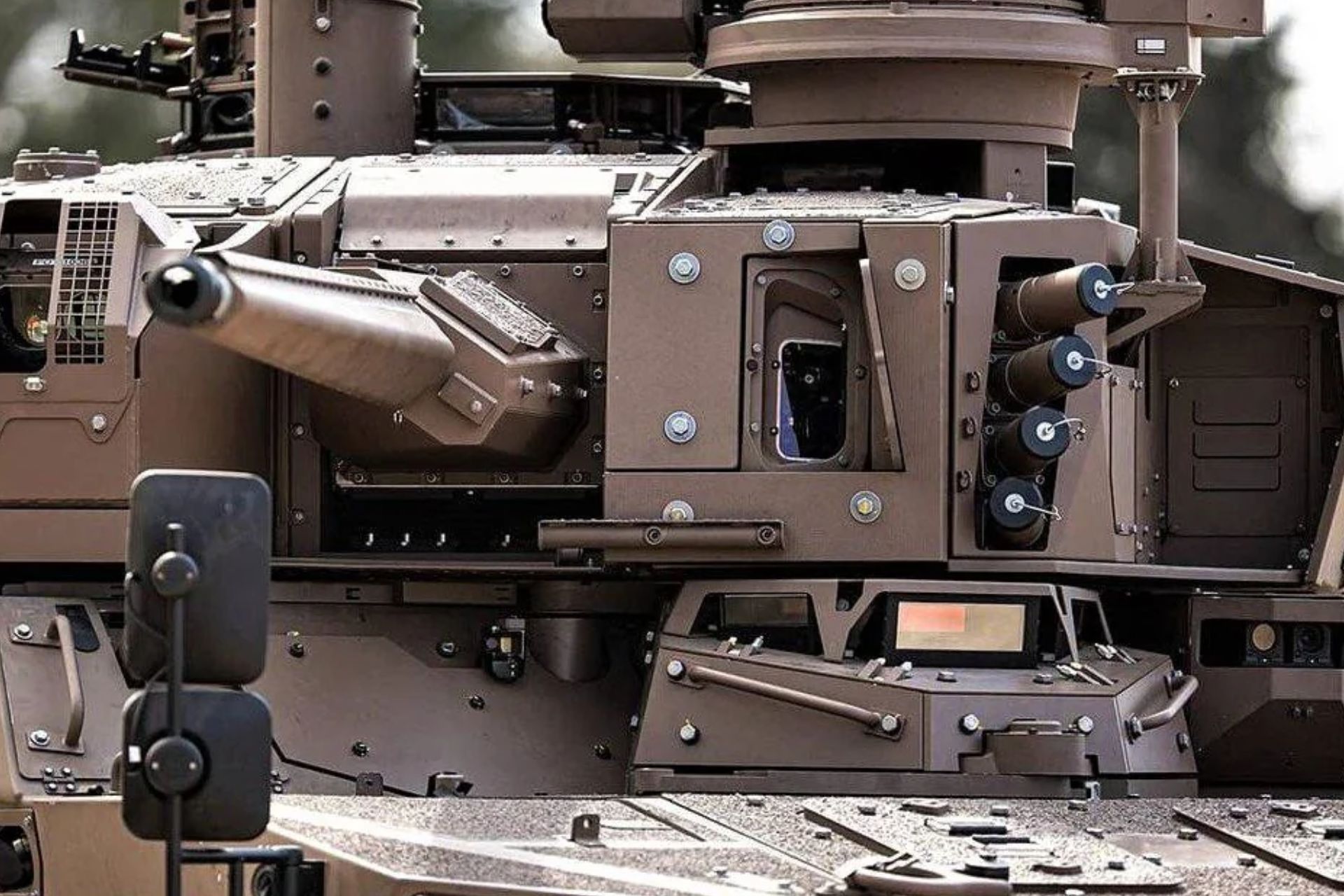
During Eurosatory, CTA International will be presenting the 40mm CTAS developed jointly by Nexter and BAE Systems. CTA International is a 50/50 joint company founded in 1994 by Royal Ordnance (BAE Systems) and Giat Industries (NEXTER Systems), based in Bourges/France. The gun presented here is all the more topical as it equips the new Jaguar armoured vehicle. Which is currently being delivered to French regiments.
EBRC Jaguar equipped with the 40mm CTAS barrel (Picture source: French MoD/ CTA international )
With its compact and versatile telescopic cased design, the 40CTAS offers the agility and mobility required for critical missions, without compromising firepower. Thanks to its compact size, the system is easily adapted to any type of turret, land or naval, manned or unmanned. It is compatible with small bushing diameters. The low turret intrusion made possible by the push-through architecture enables extremely high elevation angles of up to 75°.
The 40CTAS achieves an operational range of over 4 km while offering unrivalled armour penetration for a medium-calibre weapon. The terminal effect of the 40 mm HE cartridge is 4 times greater than that of a conventional 30 mm high-explosive cartridge. 40CTAS ammunition can target land, sea and air targets, including emerging drone threats.
The 40CTAS has a rate of fire of up to 200 rounds per minute and includes a high-precision mode compatible with the coincidence firing system.
For over 25 years, CTA INTERNATIONAL has been the design authority for the 40CTAS weapon system. It offers the end-user increased lethality and greater firepower than any other medium-calibre system.
600 40CTAS have been manufactured to date. The 40CT/CTAS is currently being introduced into the armed forces of 3 NATO users. Today it equips the French Jaguar, which is being introduced into the light cavalry forces, the Rapid Fire turrets equipping the Bâtiment ravitailleur de forces, and the British AJAX light armoured vehicles.
CTA international also presents the various cartridges that are adapted to the 40mm jaguar, which retains a particularly interesting destruction capacity in anti-tank, and in the specific case of the jaguar, which is designed to fight against armoured vehicles as part of a deployment in a combat zone, it is equipped with anti-tank missiles for joint use with the 40mm. Jaguar vehicle is prepared with a fully automatic ammo chooser and loader wich allows to the crew the possibility to automatically choose and load the perfect ammunition for a given use.
Read more: CTA international gives details about new French jaguar 40mm barrel

- Details
- Written by: Vandenbosch
- Category: 2024
- Hits: 3972
At Eurosatory 2024, one of the vehicles that caught our attention was undoubtedly the GRF. This military vehicle has been designed to meet the most stringent requirements of modern military operations.
Follow Army Recognition on Google News at this link
The GRF Armored Vehicle from Defenture at Eurosatory 2024. (Picture source: Army Recognition)
The GRF stands out for its off-road capabilities, inherited from rally sports expertise. Its independent suspension system on all four wheels gives it impressive maneuverability and robustness, making it ideal for the most rugged terrains. The four-wheel steering option adds extreme maneuverability, allowing tight and quick turns even in confined spaces, thus eliminating the need for complex maneuvers.
One of the GRF's major advantages is its air transportability. Thanks to its optimized dimensions (1800 mm in width, 5100 mm in length, and 1870 mm in height) and special lifting brackets, the GRF can be easily transported inside a CH-47 Chinook helicopter or suspended underneath it. This feature facilitates the rapid and flexible deployment of the vehicle in conflict zones.
In terms of mobility, the GRF is equipped with an ultra-strong central spine chassis that gives it remarkable fording ability, capable of crossing watercourses up to 750 mm deep, with an option to reach 860 mm. This capability is essential for missions requiring movement through aquatic or muddy terrains.
The GRF is also an example of modularity. Its battlefield-proven platform is interchangeable and can be modified to meet various operational requirements. The vehicle can operate in extreme temperatures, from -32°C to +49°C, with an option for even more rigorous conditions of -40°C. Additionally, it meets EMC standards according to STANAG 4370 and AECTP 500, ensuring protection against electromagnetic interference.
The safety and protection of the GRF's occupants are also considered, with optional modular ballistic protection compliant with STANAG level 1. The separate and waterproof (IP 67) 24V electrical circuits for the vehicle and communications, switchable for recovery mode, add an extra layer of reliability for critical missions.
The GRF presented at Eurosatory 2024 represents an advancement in the field of military vehicles. It was interesting to learn more about it, and if you are eager to see it for yourself, don't hesitate to visit Eurosatory 2024 in Paris this week.
Read more: Eurosatory 2024: Presentation of GRF Armored Vehicle by Defenture
- Details
- Written by: Halna du Fretay
- Category: 2024
- Hits: 1959
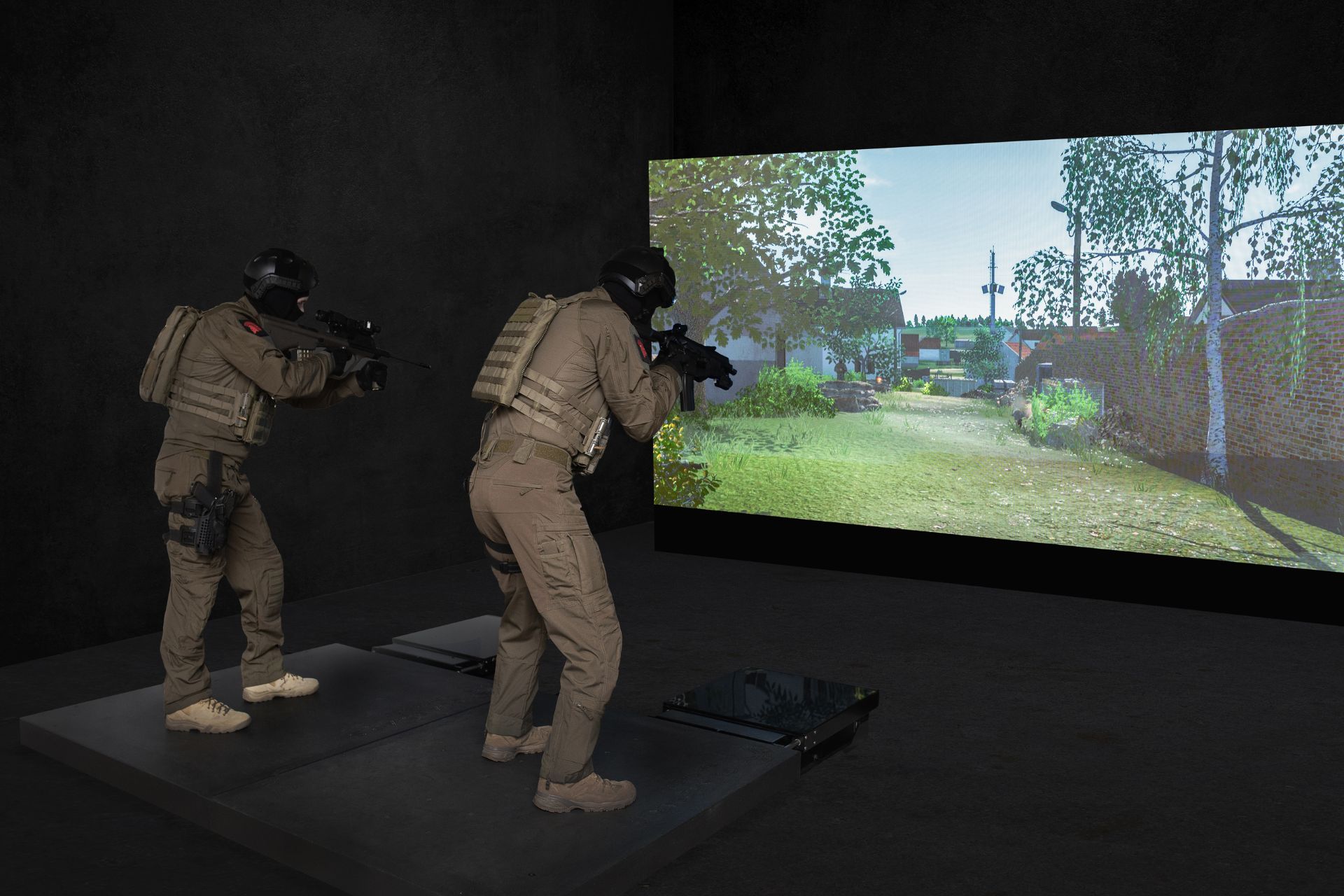
At Eurosatory 2024, Guardiaris displays a revolutionary innovation in military training: the Small Arms Mobile Trainer, or SAMT™. This mobile, modular system offers an unprecedented firing and combat tactics training solution, thanks to laser-free technology and advanced synthetic environment integration.
Follow Army Recognition on Google News at this link
SAMT™ offers total immersion thanks to high-fidelity 3D visual stimuli and a surround sound environment. (Picture source: Guardiaris)
The SAMT™ is a highly customizable mobile system, enabling comprehensive training in the handling of small arms and anti-tank weapons. It can integrate small arms, military vehicles and remote-controlled weapon stations, offering total freedom of movement in a realistic training environment. This revolutionary "plug-and-play" system is designed to provide an unrivalled training experience, thanks to stackable LED screens that form an LED wall, making it easy to extend the training area.
Thanks to the ability to connect multiple SAMT™ systems, multiple squads can train simultaneously in a common scenario, paving the way for new training configurations to dramatically improve troop readiness. The system also features an LED-based After-Action Review (AAR), providing accurate post-training analysis. Gathering information in real time, it calculates and displays key performance indicators, such as weapon handling in six degrees of freedom, accurate ballistics for all weapon types, triggering and firing accuracy, soldier position and posture, physiological and cognitive responses, as well as visual feedback.
The patented SAS laserless technology of the SAMT™ allows unlimited mobility and total freedom of movement throughout the training area without the need for additional equipment, guaranteeing training under realistic and optimal conditions. Adaptable to all weapons, the SAS module can be mounted on the Picatinny rail or installed inside any modified real weapon or replica weapon, ensuring that any type of weapon or device (such as a helmet) can be used in the trainer.
SAMT™ offers total immersion thanks to high-fidelity 3D visual stimuli and a surround sound environment. A special floor that simulates the physical shock of real combat situations adds an extra layer of stress, increasing the complexity of training. Compatible with NATO standards and protocols, the system can participate in large-scale joint military exercises.
After-Action Review collects actionable data in real time and interprets it for in-depth analysis, monitoring performance at individual or squad level, and calculating key performance indicators. A searchable database enables rapid data collection, event filtering and aggregation for comprehensive analyses.
SAMT™ sets a new standard for realism in training thanks to a superior level of interaction in a computer-generated artificial reality, displayed in the optical sight. Training is carried out in realistic synthetic environments, supported by dynamic weather parameters, day and night, affecting visibility and ballistic calculations.
Terminal ballistics, supported by a proprietary 3D image generator and a realistic physics engine, enable the synthetic environment to adapt the actual behavior and penetration efficiency of projectiles when they strike certain surfaces or materials.
Add-ons such as Guard Rail and VPS Smart Glasses take immersion and analysis to the next level, while the Mobile Training Center (MTC) presents the entire SAMT™ system integrated into an easily transportable and expandable container, enabling mobile training anywhere. The unique collapsible container offers simple, straightforward use, while the wheeled version offers a self-contained solution that can be easily transported by truck.
Guardiaris, a highly innovative company specializing in the production of tailor-made training solutions for the defense industry, is thus breaking new ground in modern military training. By combining advanced technology and adaptability, the SAMT™ represents a major advance in the preparation of armed forces worldwide.
Read more: SAMT: A New Era in Firearms Training Displays at Eurosatory 2024
- Details
- Written by: V.Saint
- Category: 2024
- Hits: 3283
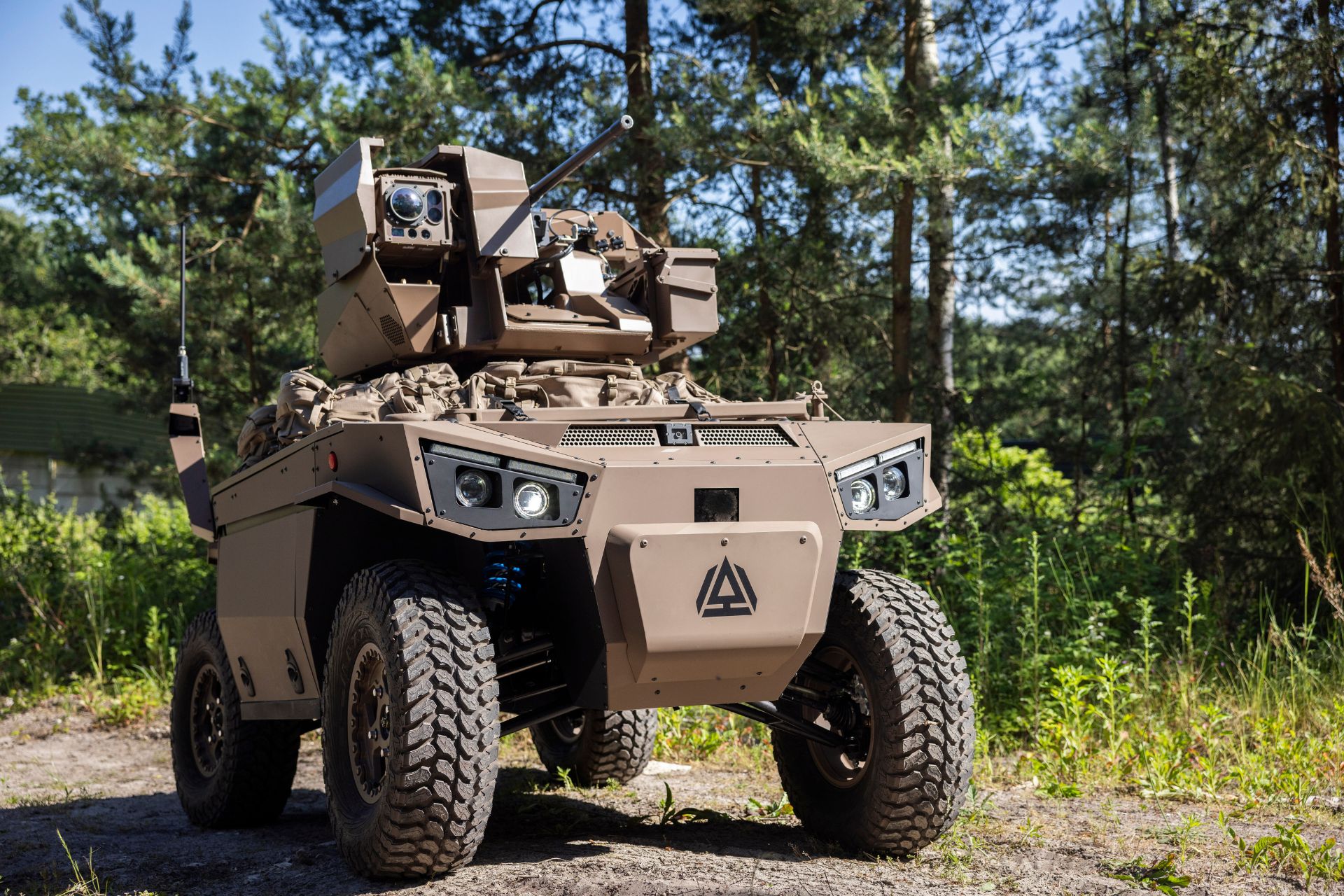
In a world premiere at the eurosatory show, Arquus is today presenting the manufacturer's first land drone. The standard version has a 2450*1600cm platform, enabling a wide range of payloads to be carried.
Follow Army Recognition on Google News at this link
Drailer with Remote weapon Station mounted (Picture source: Arquus )
Arquus' first robotic vehicle, the DRAILER is an exceptionally mobile platform that can be deployed for infantry support missions, but also for a range of specialist missions such as mine clearance, electronic warfare, anti-drone warfare and very short-range ground-to-air missions.
The Drailer's modular design is based on a user-friendly system, with rails modelled on the M-lok system used on firearms. The drone is in 4x4 configuration, and can operate at a speed of 20km/h over 200km. And it's powered by an electric motor, so it's particularly quiet. What's more, it can be towed by a vehicle, such as a Griffon or similar, at speeds of up to 90km/h, enabling it to follow action zones as closely as possible and facilitate logistics.
Equipped with a hybrid electric/diesel propulsion system for unobtrusive mobility, the DRAILER is a robot with tried-and-tested technologies and a range suited to theatres of operation.
A versatile robot, it is a great companion in the field. It can operate a payload of up to 700 kg, while at the same time having the crossing capacity to meet high-intensity requirements.
Read more: Arquus delivers fully adaptable UGV for French and Overseas Armies
- Details
- Written by: Vandenbosch
- Category: 2024
- Hits: 3255
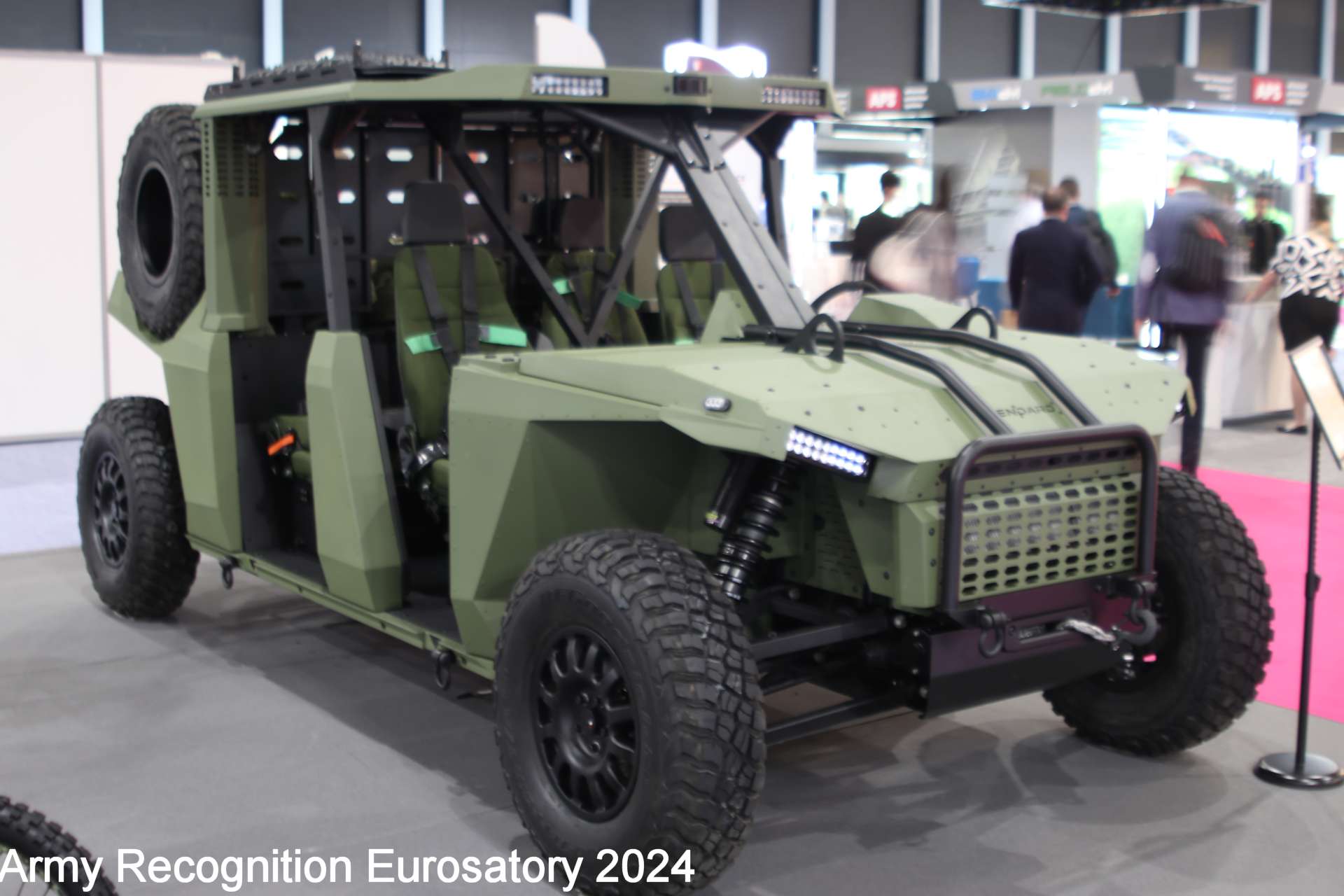
At the 2024 edition of Eurosatory, the international defense and security exhibition, ETENDARD unveiled its new tactical vehicle, the FURIE. Designed to meet the needs of armed forces and civil security entities, this lightweight and versatile buggy stands out for its ability to operate in extreme conditions and on all types of terrain. Inspired by Rallye-Raid competition vehicles, the FURIE benefits from the same proven design techniques that made the T3MAX by RedBull successful in the Dakar Rally.
Follow Army Recognition on Google News at this link
The Furie is, based on a civilian vehicle, adapted for the military market, and everything has been revised to meet market requirements as closely as possible. (Picture source: Army Recognition)
Etendard was present only with a concept two years ago, but in those two years, the French company has not been idle and now presents its new vehicle. At Eurosatory 2022, the French company had gauged the market to see if a variant of its non-military buggy could be of interest. Today, we are seeing this promising military version.
The Furie features compact dimensions (420 cm long, 208 cm wide, and 189 cm high), and its wheelbase of 320 cm provides remarkable agility. Its ground clearance, adjustable between 35 cm and 40 cm, and its double-wishbone suspension with combined hydropneumatic shock absorbers allow for a travel of 380 mm, ensuring excellent maneuverability on rough terrain.
Under the hood, the FURIE has a 2.0L Turbo Diesel engine with 4 cylinders in line, delivering 220 HP and 480 Nm of torque at 2000 rpm. This powerful engine is paired with an automatic transmission with 6 long gears and 2 short gears, and a 4x4 transmission, allowing the vehicle to adapt to various road conditions. The limited-slip differentials and the liquid cooling system for the engine, gearbox, and intercooler increase the setup's reliability.
One of the major assets of the FURIE is its autonomy, exceeding 1000 km on a mixed cycle thanks to a 150-liter fuel tank, compatible with diesel and jet fuels (F-34 / F-63). This vehicle is designed to carry up to 1200 kg of payload, with a modular configuration allowing for 4 passengers plus 3 additional seats.
The high-strength steel chassis, interchangeable upper roll bar, and full aluminum bodywork offer more than adequate protection for a tactical buggy. The FURIE is equipped with 280 mm disc brakes with double-piston calipers and 33’’ LT255/85/R16 tires with a run-flat system, mounted on reinforced aluminum rims with a bead-lock system.
The vehicle has multiple features for tactical missions, including advanced connectivity systems with USB and USB-C ports, a central 7-inch control panel, and infrared lighting for discreet operations. A 4.3-ton electric winch with 15 meters of synthetic cable, sand recovery plates, and an onboard air compressor completes this arsenal of functionalities.
In terms of transportability, the FURIE complies with STANAG and MIL-STD standards, facilitating its integration into international missions. Its maintenance is simplified thanks to interchangeable and easily available parts, with training provided by Etendard for users and technicians.
Etendard offers complete customization of the FURIE to meet the specific needs of its clients, in addition to a soon-to-be-available hybrid version. The FURIE thus represents an innovative and adaptable tactical solution, indicating that Etendard is ready to venture into the defense industry with this vehicle.
Read more: Eurosatory 2024: Presentation of Tactical Buggy Furie by Etendard