
- Details
- Written by: Tkuhn
- Category: 2024
- Hits: 2928










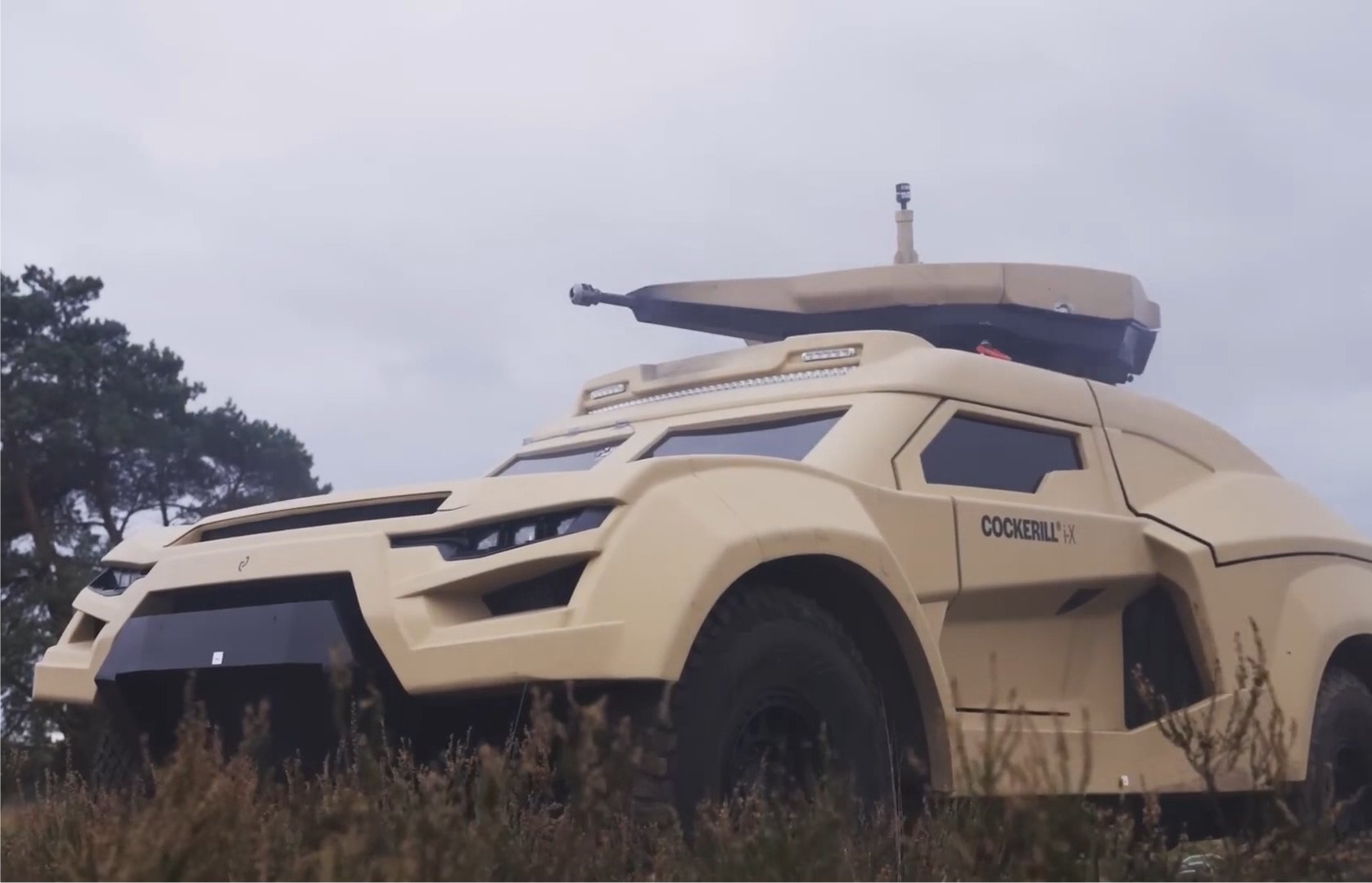
At the prestigious Eurosatory 2024 defense and security exhibition, John Cockerill Defense captivated attendees with a comprehensive presentation of its latest advancements in military technology. The company highlighted four key innovations: the Man-Machine Interface of the Cockerill i-X, Agueris® simulators, the CPWS remote-operated turret, and the Cockerill 3105.
Follow Army Recognition on Google News at this link
Cockerill i X armoured fighting vehicle. (Picture source: JCD)
The Man-Machine Interface of the Cockerill i-X represents a significant leap in integrating advanced control systems with operator usability. This interface ensures that operators can manage complex systems with greater efficiency and precision, enhancing overall mission performance.
John Cockerill's Agueris® simulators demonstrated their advanced training capabilities, offering realistic and immersive training experiences for military personnel. These simulators are designed to improve readiness and operational effectiveness by providing a safe and controlled environment for training.
The CPWS (Cockerill Protected Weapon Station) remote-operated turret showcased its advanced targeting and engagement capabilities. This turret allows for precise and effective control from a remote location, significantly enhancing the safety and combat effectiveness of military operations.
Finally, the Cockerill 3105 was a highlight of the presentation, impressing with its powerful armament and versatile combat capabilities. This system combines heavy firepower with mobility, making it a formidable asset in various combat scenarios.
- Details
- Written by: Tkuhn
- Category: 2024
- Hits: 2221
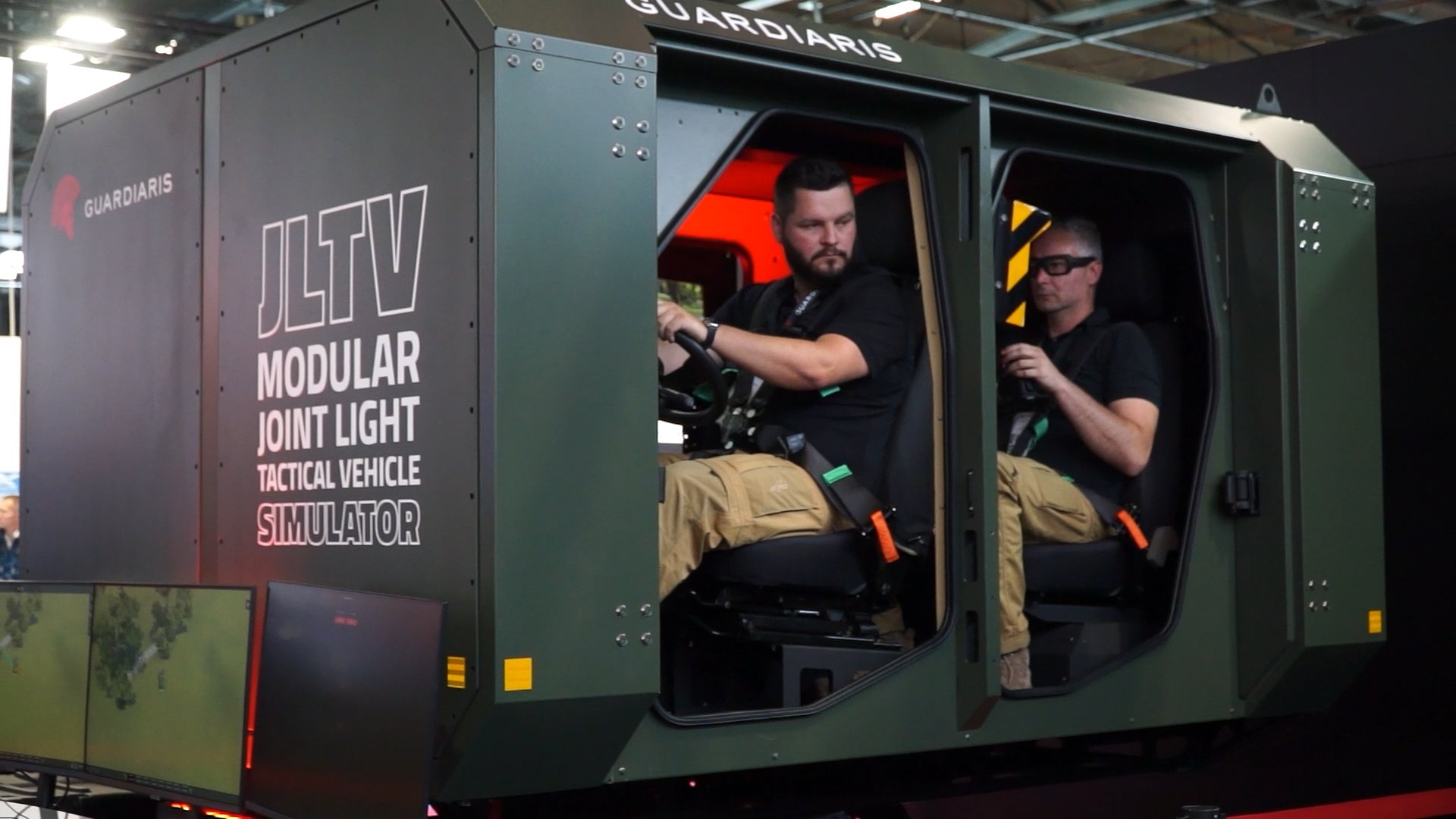
Guardiaris, a pioneering company in advanced training solutions, has made a significant splash at Eurosatory 2024 with the debut of its state-of-the-art JLTV Crew Trainer and Mobile Arms Simulator.
Follow Army Recognition on Google News at this link
Guardiaris' JLTV Crew Trainer. (Picture source: Army Recognition)
The JLTV Crew Trainer is designed to provide comprehensive training for Joint Light Tactical Vehicle (JLTV) crews, enhancing their operational readiness and tactical proficiency. This advanced simulator replicates real-world scenarios, allowing crews to practice and refine their skills in a safe and controlled environment. Notable features include high-fidelity graphics, realistic vehicle handling, and a wide array of customizable mission scenarios, catering to specific training needs.
Complementing the JLTV Crew Trainer, the Mobile Arms Simulator stands out as a versatile training solution for various firearms, including pistols, rifles, and machine guns. Utilizing cutting-edge sensor technology and immersive environments, the simulator replicates the experience of live-fire exercises without the associated costs and safety concerns.
- Details
- Written by: Jérôme Brahy
- Category: 2024
- Hits: 10782
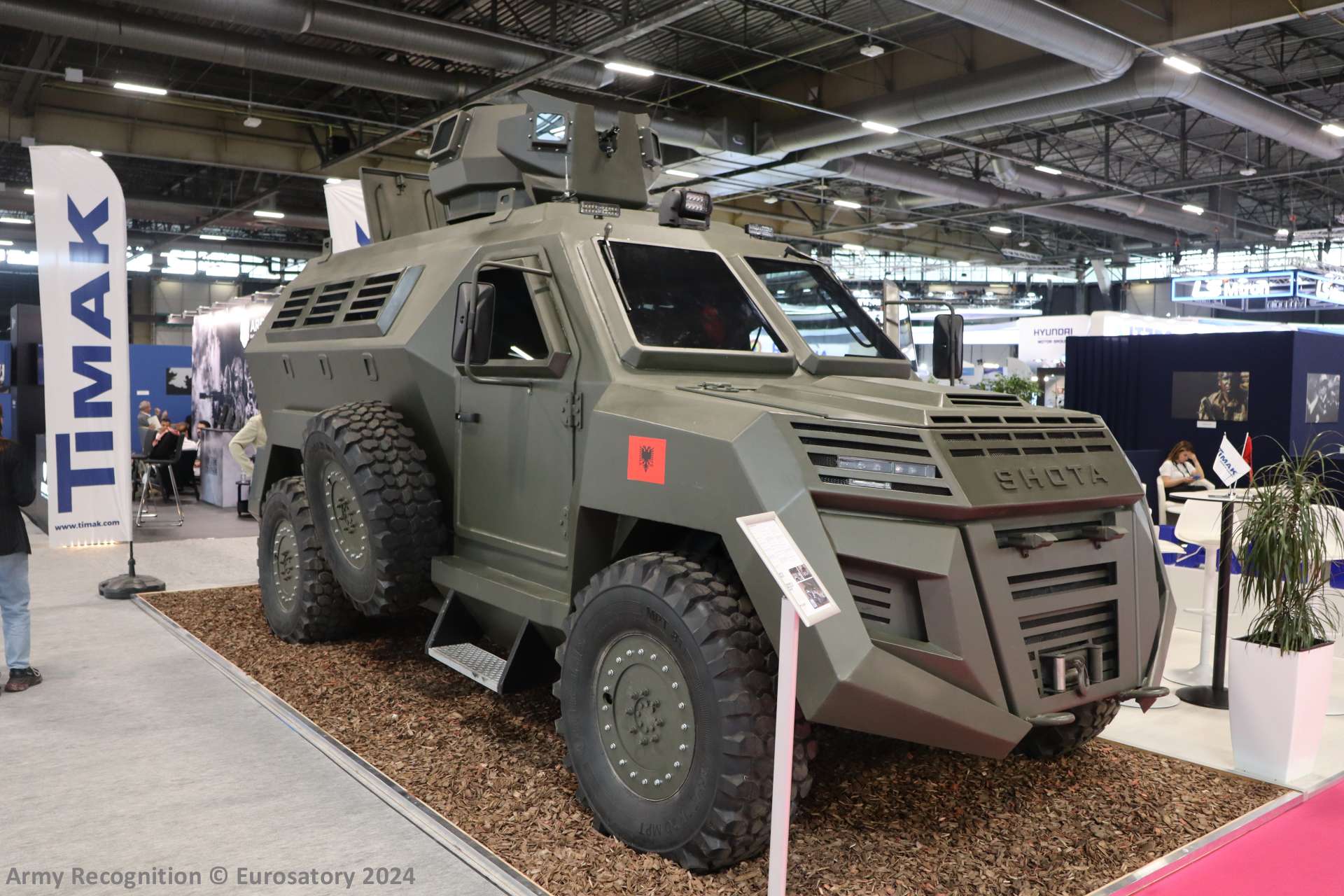
At the Eurosatory 2024 exhibition, the Albanian company Timak displayed for the first time the Shota, the first MRAP vehicle from Albania, which was developed by women engineers. Using a Ford F-550 chassis, this vehicle features enhanced protection against threats such as ballistic arms fire, mine blasts, and improvised explosive devices (IEDs), along with a V-shaped bottom to mitigate blast impacts.
Follow Army Recognition on Google News at this link
The Shota Mine Resistant Ambush Protected (MRAP) project is supported by the Albanian Ministry of Defense, aiming to reduce Albania's reliance on foreign military equipment and foster a domestic military industry. (Picture source: Army Recognition)
Timak, which has historically produced police cars and ambulances, expanded into military vehicles due to a need for protected military ambulances, including those for Ukraine. This move is driven by changing geopolitical dynamics in Europe and the region. The Shota Mine Resistant Ambush Protected (MRAP) project is supported by the Albanian Ministry of Defense, aiming to reduce Albania's reliance on foreign military equipment and foster a domestic military industry.
The Shota MRAP features Armox Advanced 9mm armor with a BR7 protection level, offering resistance to 7.62×39mm API BZ rounds at 30 meters with a velocity of 695 meters per second. The vehicle also includes 56-millimeter-thick ballistic glass and can be equipped with additional armor. It utilizes a V-shaped bottom to mitigate shock waves from blasts and incorporates advanced materials for ballistic protection.
Inside, the vehicle is equipped with seats featuring four-point safety harnesses with quick-release mechanisms, complying with automotive legislation, including seat belt anchorage test 76/115/EEC M2. The driver and commander seats have floor-mounted blast mitigation units, height adjustments of 60 millimeters, slide-rail adjustments of 160 millimeters, head-rest and head lateral support, and back angle adjustment. Crew seats are also equipped with blast mitigation, body and head lateral support, and head rests.
Externally, the Shota MRAP includes heavy-duty vehicular handles, reinforced door hinges, stand-on running boards and fenders, and front and rear bumpers designed to withstand ramming obstacles. It has a 13-ton towing hook and heavy-duty run-flats on all tires. The vehicle measures 6.5 meters in length, 2.68 meters in width, and 2.1 meters in height, with a weight of 8 tons. It accommodates a crew of 2 plus 8 additional personnel and is powered by a 6-cylinder, 6210cc engine.
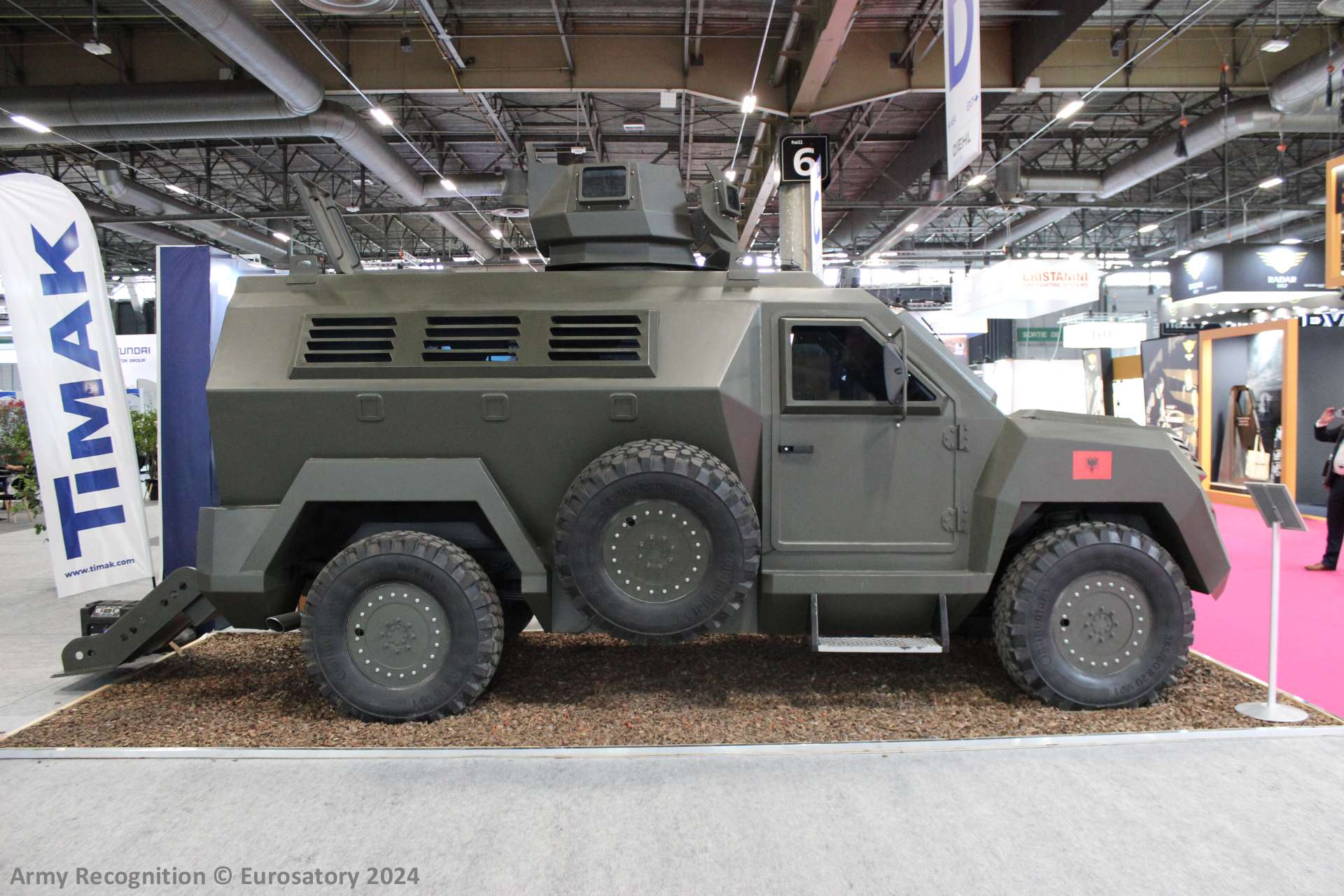
The SHOTA MRAP, measuring 6.5 meters in length, 2.68 meters in width, and 2.1 meters in height, accommodates a crew of 2 plus 8 additional personnel. (Picture source: Army Recognition)
Operational features include a 360-degree rotation searchlight, a rotatable platform on the roof, and a 360-degree gunner protection system. The Shota also has a 12-ton rated pull line industrial winch with an 8.0 HP motor and an emergency exit hatch. It uses a 24V electrical system, supplemented by an auxiliary battery with a 12V digital management battery system. LED dome lights in both the front and rear cabins provide lighting, and an independent heating and air conditioning system ensures climate control.
The Shota is equipped with an electronic rust protection system. Additional features include two storage boxes for tools and spares, a hydraulically operated bonnet system, sand and transmission guards, and a video surveillance and monitoring system.
In terms of kinetic energy and blast protection, the Shota is designed to handle artillery and grenade threats. It can withstand 155mm high explosive rounds at 80 meters with azimuth angles of 360 degrees and elevation from 0 to 22 degrees. The vehicle can also endure a 6 kg explosive mass blast under any wheel or track location, as well as a 25 kg TNT side blast test.
The development of the Shota MRAP involved input from armed forces, including those from Ukraine, focusing on performance and protection while keeping costs in mind. The vehicle has yet to undergo testing, which is expected to begin soon. Timak also plans to collaborate with a Turkish company for further development.
- Details
- Written by: Halna du Fretay
- Category: 2024
- Hits: 4636
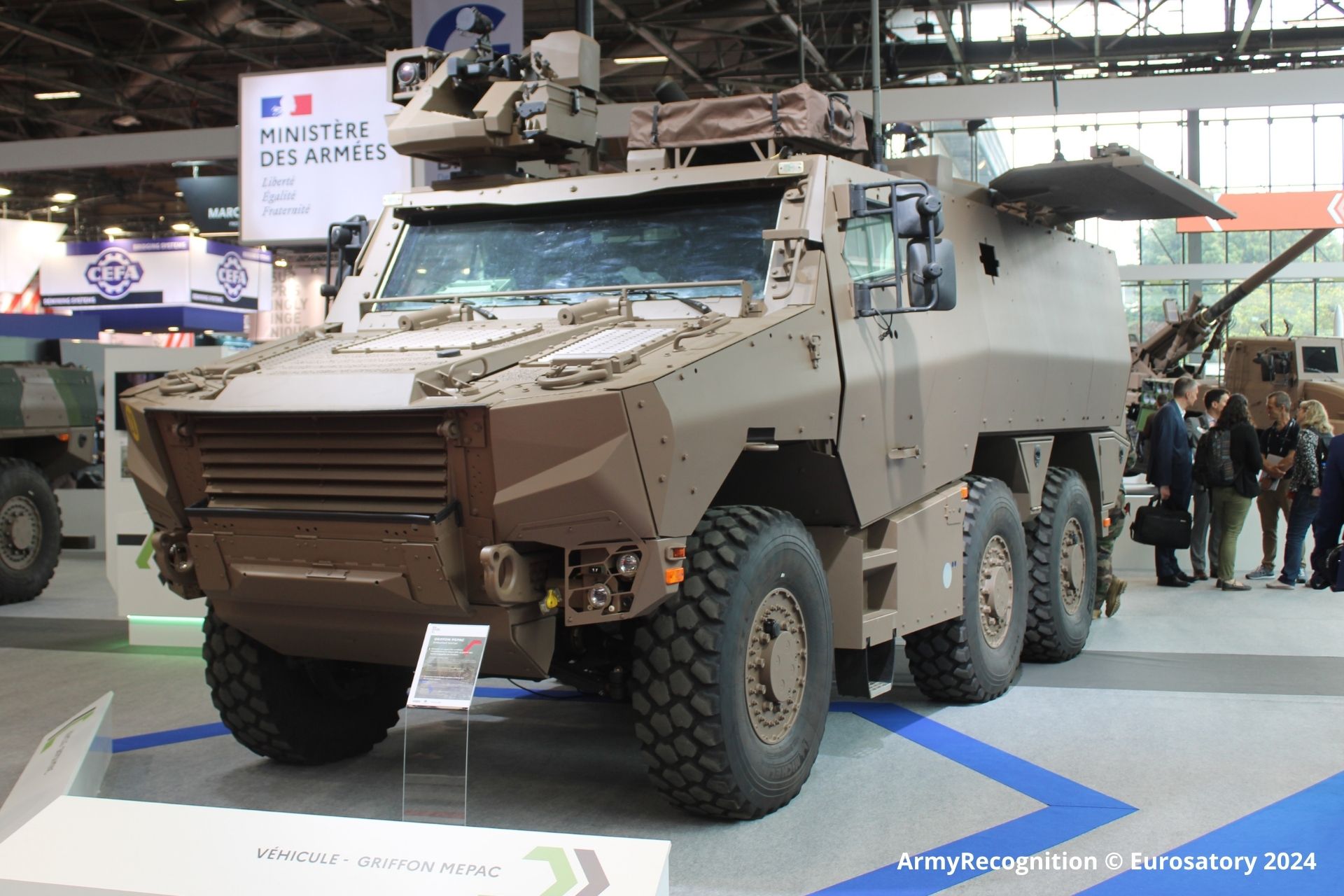
French Army Displays the latest variant of the Griffon VBMR (Véhicule Blindé Multi-Rôles), the Griffon MEPAC, stands out as a significant development. This 6x6 wheeled armored vehicle, developed under the EBMR (Engin Blindé Multi-Rôles) program, is designed with modular armor for ballistic protection, capable of withstanding small arms fire and mine explosions. The Griffon aims to replace the aging VAB armored personnel carrier currently in service.
Follow Army Recognition on Google News at this link
Mounted in the rear of the Griffon, the mortar offers improved accuracy and firing speed compared to its towed counterparts (Picture source: ArmyRecognition)
The Griffon MEPAC is primarily intended for indirect fire support, particularly in close-contact scenarios, offering infantry units adaptable artillery backing. Its self-propelled system, coupled with the mobility of the Griffon vehicle, ensures rapid response capability, facilitating quick positioning and firing.
Historically, French infantry regiments utilized 120 mm RT F1 (Mo 120 RT) heavy mortars towed by VAB 4x4 armored vehicles until the early 2000s. Currently, support sections are equipped with the 81 mm mortars model F1 (Mo 81 LLR F1), while the Mo 120 RT has been transferred to artillery units.
The Griffon MEPAC is armed with the 2R2M 120mm semi-automatic mortar system, manufactured by Thales. This system includes the 120 mm RT, which was introduced into service with the French artillery units in the mid-1990s. Mounted in the rear of the Griffon, the mortar offers improved accuracy and firing speed compared to its towed counterparts. Within the vehicle, the turntable-mounted mortar can rotate through 360 degrees and has an elevation range of 40 to 85 degrees, powered hydraulically. Equipped with Thales' computerized fire-control system (FCS), automatic laying system (ALS), and inertial navigation system (INS), the 2R2M mortar system can achieve a firing rate of up to 10 rounds per minute and has a maximum range of up to 13 km.
Operated by a crew of four, the Griffon MEPAC also features the T2 remotely operated turret developed by the French company Arquus. This turret offers flexibility in armament choices, ranging from a 7.62mm or 12.7mm machine gun to a 40mm automatic grenade launcher. Integrated into the SCORPION program, the Griffon incorporates the SCORPION Information and Command System (SICS), fostering connectivity with other SCORPION vehicles such as the Leclerc XLR, Jaguar, and Serval, thus establishing a unified communications and battlefield management system. Additionally, the MEPAC is equipped with the ATLAS artillery system, facilitating automated firing and links for ground-to-ground artillery.
As reported by Laurent Lagneau on February 17, 2024, General Pierre Schill, Chief of Staff of the French Army, disclosed during a session with the French Senate that the French Army will receive its first batch of eight Griffon MEPAC (Mortier Embarqué pour l'Appui au Contact) 120mm self-propelled mortar carriers in 2024. The initial units are slated for delivery to the 11th Marine Artillery Regiment, marking a new phase in the French military's artillery capability.

- Details
- Written by: Vandenbosch
- Category: 2024
- Hits: 2684
Denmark has announced its 19th military aid package for Ukraine, aimed at supporting the immediate needs of the Ukrainian army and facilitating direct investments in Ukrainian arms production, according to the Danish Ministry of Defense.
Follow Army Recognition on Google News at this link
A Leopard 1A5 DK operated by Ukrainian forces ( illustrative image). (Picture source: Ukrainian MoD)
This new package includes substantial funding for Ukraine's defense industry, additional resources to support Denmark's donation of F-16 fighter jets, and the transfer of weapons from Danish stockpiles. The Ministry of Defense did not specify the exact weapons included in the package.
Danish Defense Minister Troels Lund Poulsen emphasized that Denmark is providing the maximum possible support to Ukraine's battlefield needs. He also highlighted Denmark's long-term commitment to Ukraine's security, stating, "We have created a Danish model for donations via the Ukrainian defense industry, which will help build up Ukrainian military equipment production in both the short and long term."
Danish Foreign Affairs Minister Lars Løkke Rasmussen added that investing in Ukraine's defense industry is a sustainable way to enhance its combat capabilities. He assured that Denmark would continue expanding its support for Ukraine's defense sector, involving the European Union in these efforts.
The Ministry of Defense indicated that the last two aid packages allocated a total of 1.2 billion Danish kroner (approximately $170 million) for investments in Ukraine's defense industry. This new package allows for the rapid distribution of funds to meet Kyiv's needs, with the first project expected to launch this summer.
Denmark has already sent a significant amount of military equipment to Ukraine. Among the notable deliveries, Denmark promised 19 F-16 Fighting Falcon fighter jets on August 20, 2023. In June 2022, Denmark provided four AGM-84 Harpoon coastal defense missile systems equipped with Harpoon missiles.
In terms of artillery, Denmark sent 19 Caesar 155mm self-propelled howitzers, which have an excellent reputation in Ukraine, in April 2023. Starting in July 2023, Denmark, in cooperation with Germany and Norway, delivered five of the sixteen ShKH Zuzana 2 self-propelled howitzers. Denmark also provided tanks, notably the Leopard 1A5 DK.
Danish aid is not limited to these contributions, and this new aid package demonstrates the country's commitment to supporting Ukraine in its conflict with Russia. This 19th aid package is likely not the last.
- Details
- Written by: Jérôme Brahy
- Category: 2024
- Hits: 4846
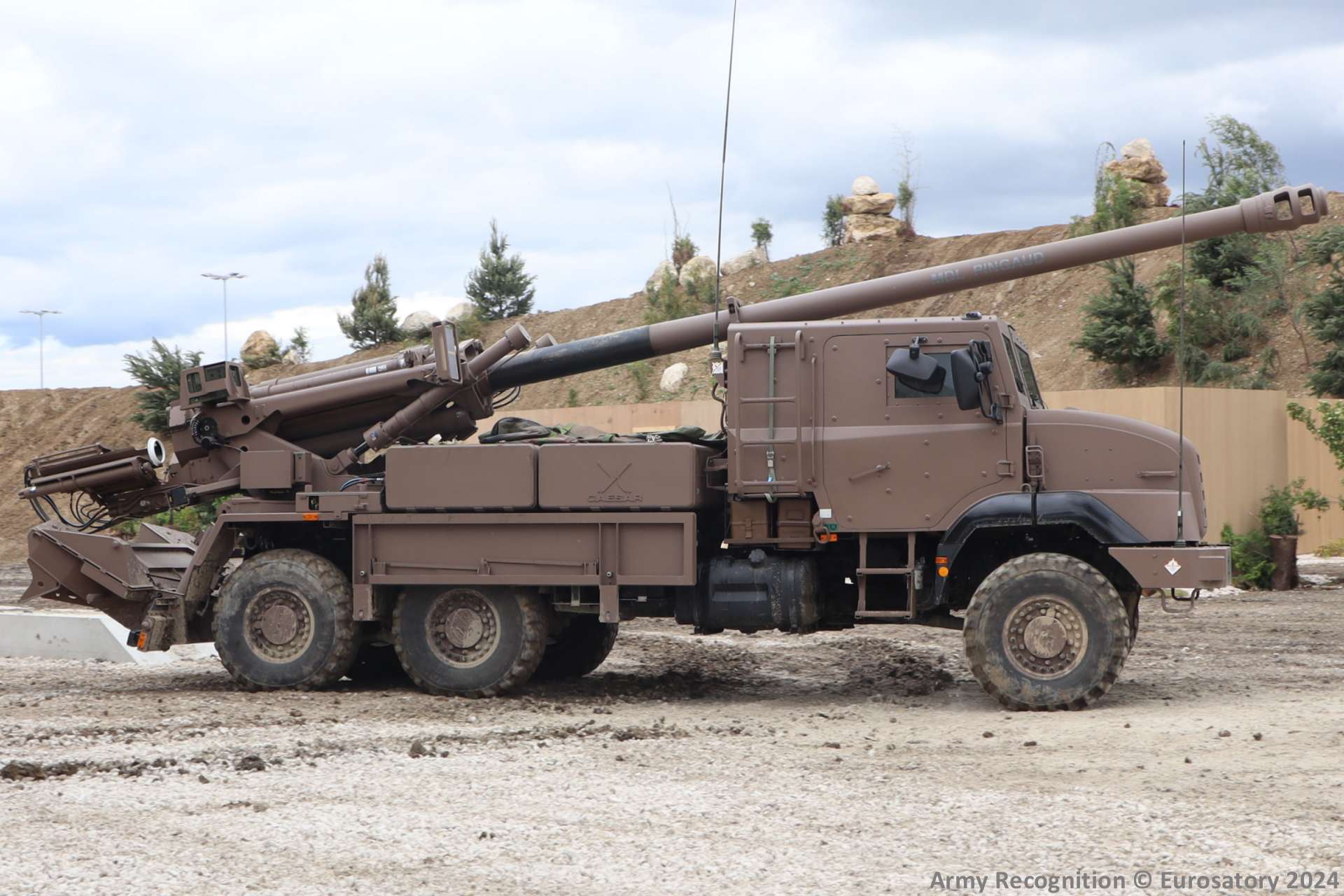
On June 19, 2024, Estonia signed an agreement with the French Defence Procurement Agency (DGA) and the defense company KNDS to acquire 12 CAESAR 155mm self-propelled howitzers. This procurement deal, signed during the Eurosatory 2024 defense exhibition in Paris, includes an option for Estonia to purchase up to six additional howitzers in the future and will lead to the creation of a new Estonian wheeled self-propelled artillery battalion.
Follow Army Recognition on Google News at this link
The first batch of CAESAR howitzers is scheduled for delivery by the end of 2024, with the remaining units arriving by mid-2025, to develop a new wheeled self-propelled artillery battalion (Picture source: Army Recognition)
Magnus-Valdemar Saar, Director General of the Estonian Centre for Defence Investments (ECDI), emphasized the importance of this partnership, noting the role French companies play in enhancing Estonia’s defense capabilities and contributing to the European defense industry. General Gaël Diaz De Tuesta of the DGA stated that the CAESAR howitzers represent an advanced solution in wheeled artillery, a vital component for effective fire support. He also mentioned that this joint procurement initiative with Croatia and France would boost interoperability among the EU’s land forces.
The CAESAR howitzers, mounted on a 6×6 chassis and equipped with a 155 mm caliber cannon, will be incorporated into Estonia’s newly established third self-propelled artillery battalion. This unit will operate under the command of the Estonian division, according to Project Officer Major Rauno Viitman. The effectiveness and reliability of the CAESAR system, proven in various conflicts including the ongoing war in Ukraine, were key factors in Estonia's decision. Ramil Lipp, ECDI’s Strategic Category Manager for Armament, emphasized the importance of this acquisition for enhancing Estonia’s indirect fire capabilities and integrating these new systems with Estonia’s domestic fire support system, TOORU.
The first batch of CAESAR howitzers is scheduled for delivery by the end of 2024, with the remaining units arriving by mid-2025. General Emeric Wininger, Director for Central and Eastern Europe and Latin America at the DGA, confirmed that the reinforced production line at KNDS France would enable the timely delivery of the first howitzers by the end of this year.
Estonia’s Minister of Defence, Hanno Pevkur, marked this procurement as a milestone in Estonia-France defense relations. He noted that the CAESAR howitzers, proven effective in Ukraine’s defense against Russian aggression, would enhance Estonia’s mobile, flexible, and long-range fire support capabilities. This acquisition aligns with the priorities outlined in Estonia’s National Defence Development Plan, which calls for the rapid development of a wheeled self-propelled artillery battalion.
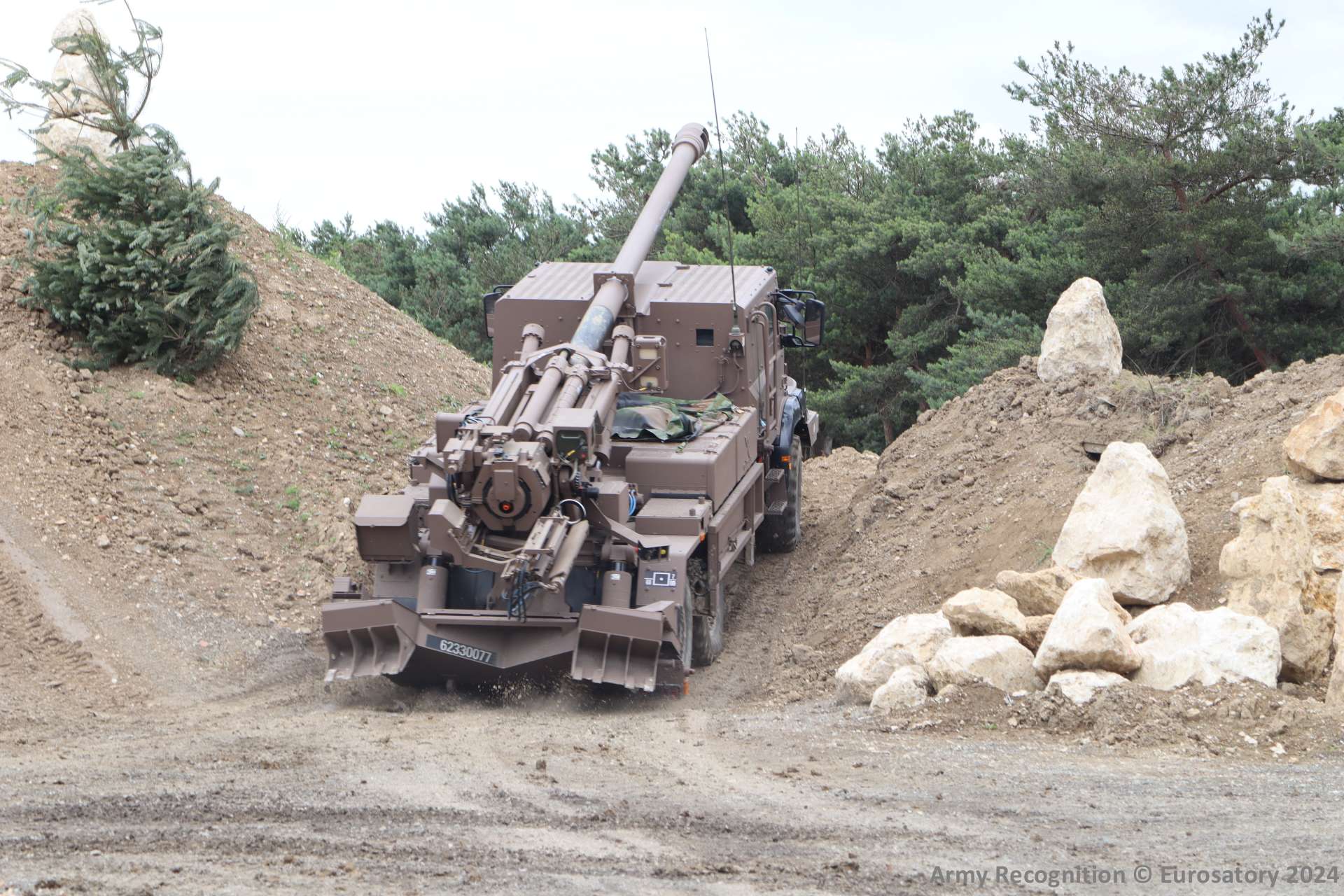
The howitzer can fire standard shells up to 42 kilometers and rocket-assisted projectiles beyond 50 kilometers, with a rate of fire of six rounds per minute. (Picture source: Army Recognition)
Minister Pevkur expressed that the French industry could meet Estonia’s urgent requirements, providing six howitzers along with necessary training and spare parts within the desired timeframe. This deal strengthens Estonia’s defense capabilities and the strategic partnership between Estonia and France, contributing to the interoperability and effectiveness of their armed forces.
The CAESAR self-propelled howitzer, developed by the French defense company Nexter, has its origins in the late 1990s. The first prototype was completed in 1994, and initial deliveries to the French Army began in 2003. Designed to replace older artillery systems, the CAESAR aimed to provide improved mobility, deployment speed, and precision firepower. It integrates advanced technologies such as an inertial navigation system and a ballistic computer, reflecting a shift towards more mobile and flexible artillery solutions in modern military operations.
The CAESAR's combat performance includes its use in various conflicts. It is mounted on a 6×6 or 8×8 truck chassis and equipped with a 155 mm, 52-caliber cannon. The howitzer can fire standard shells up to 42 kilometers and rocket-assisted projectiles beyond 50 kilometers. It has a rate of fire of six rounds per minute and is designed for rapid deployment, capable of setting up and firing within 60 seconds. The CAESAR has been used in military operations in Afghanistan, Iraq, and Mali. In Ukraine, it has been used by Ukrainian forces since 2022, with France delivering 30 units and Denmark supplying 19 CAESAR 8x8 units.
The CAESAR is utilized by various countries worldwide. France operates 109 units and plans to upgrade to the CAESAR NG model by 2030. Denmark and the Czech Republic have incorporated the CAESAR into their artillery forces, with Denmark operating 19 units until recently and the Czech Republic ordering 52. Indonesia and Thailand also use the CAESAR, with Thailand employing it in conflict against Cambodia. Additionally, Lithuania has ordered 18 units, indicating the system's adoption among NATO and EU members.
- Details
- Written by: Halna du Fretay
- Category: 2024
- Hits: 5742
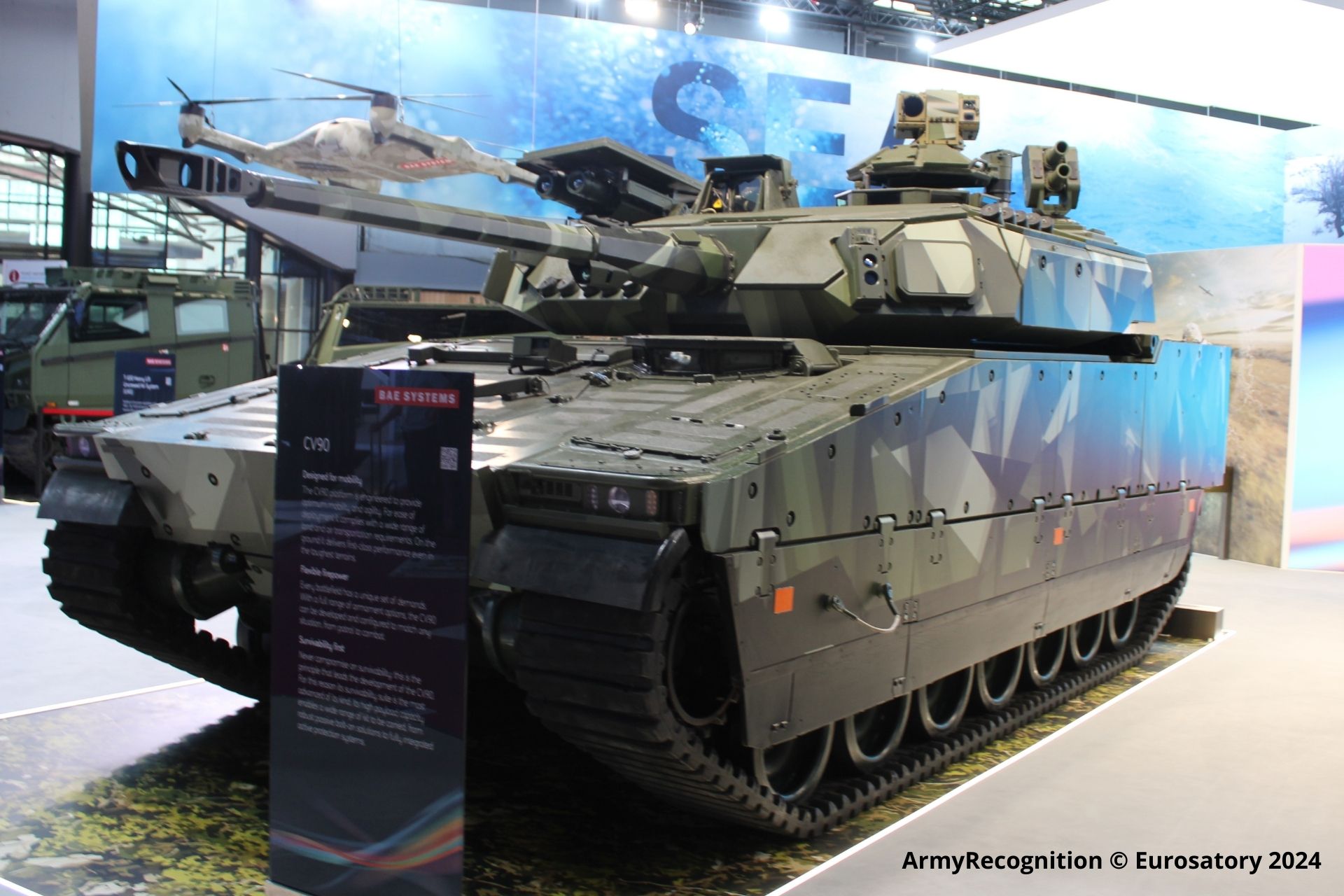
BAE Systems Hägglunds has unveiled the latest variant of its CV9035 Mk.IV vehicle at Eurosatory 2024. This versatile armored vehicle is designed to meet the diverse needs of modern military missions, offering a blend of robustness, agility, and evolutionary capabilities. The CV9035 Mk.IV showcased at Eurosatory includes several notable features.
Follow Army Recognition on Google News at this link
The CV90 features advanced survivability solutions, offering flexible and modular protection for its crew against a variety of threats, including heavy weaponry, IEDs, and anti-tank mines (Picture source: ArmyRecognition)
The upgraded CMS-1 commander COAPS (EOPS in the case of the CV), developed by the Czech company EVPÚ Defence, is noteworthy. This system, already used in previous Mk.III+ and tested during Czech and Slovak military trials, replaces the Israeli solution used in the initial Mk.IV presentation model and is also used by the Dutch CV9035NL MLU. The standard CMS-1 for the CV9030CZ and CV9035SK includes a daytime HD camera, a cooled thermovision unit with an 18 km range, and a laser rangefinder. New for this Eurosatory variant are wipers for both optical channels, a minor but practical addition already present for the gunner sight.
The CV90 features advanced survivability solutions, offering flexible and modular protection for its crew against a variety of threats, including heavy weaponry, IEDs, and anti-tank mines. The vehicle also integrates protection against Chemical, Biological, Radiological, and Nuclear (CBRN) threats through its CBRN/HVAC system. Additional protection options include armor against shaped charge warheads, a Defensive Aid Suite (DAS) that deploys countermeasures, and ADAPTIV camouflage for active multi-spectral cloaking.
Despite its robust protection suite, the CV90 maintains high mobility, powered by a reliable, fuel-efficient V8 diesel engine. The vehicle excels both in agile sprints over challenging terrain and long-range patrol missions, with new variants capable of traveling up to 900 km. The platform’s active damping system enhances off-road speed, increases the gunner’s hit probability, and extends the lifespan of subsystems and components.
Lethality is a key feature of the CV90, which can be equipped with a range of armaments to meet various requirements. Typically fitted with a two-man turret and a 25-35 mm Bushmaster cannon, the CV90 supports different configurations, including manned and unmanned turrets and missile systems. Its Fire Control System autonomously sets ammunition type, angles, fuse settings, and dispersion patterns, reducing operator workload and sensor-to-shooter time. The vehicle’s hunter-killer function allows the commander to search, engage, or delegate targets to the gunner.
The CV90 also excels in C4ISTAR capabilities, offering top-tier, all-weather intelligence, surveillance, target acquisition, and recognition capabilities. Fully digitized and General Vehicle Architecture (GVA)-compliant, the vehicle integrates leading-edge technologies for optimized and lethal ISTAR performance. The open electronic architecture allows seamless integration of current and future C4ISTAR and communication products.
Another new feature is the addon armor on the commander hatch, a solution not previously used by any other model. This design change addresses upper hemisphere threats. The addon armor plates for the D-series turret also show a slight redesign. Unlike the black patterned plates used by the Dutch CV9035NL, those displayed at Eurosatory are green and without pattern, though their shapes are slightly reworked. These plates are similar to those used in Czech and Slovak testing, suggesting that the showcased vehicle is approaching the specifications of the actual CV90 CZ/SK, with preproduction models expected by summer. However, the presented CV still uses the standard LWS system, not the Czech EVPÚ LAWAREC LWS and radar warning systems designated for CV9030CZ.
With a record of 1,300 units sold to seven European nations, including four NATO members, the CV90 has demonstrated its capabilities in various combat scenarios, including Afghanistan and Liberia. The platform’s versatility is evident in its 15 different variants, each designed to meet specific mission and customer requirements.
The CV90 family includes turreted and non-turreted variants, offering configurations such as Infantry Fighting Vehicle, Reconnaissance, Command & Control, Anti-Aircraft Vehicle, Mortar, Combat Repair, and more. Upcoming additions include direct fire and artillery variants.
The CV90 continues to evolve, incorporating new technologies like ADAPTIV camouflage and BattleView360, which offers a 360-degree see-through armor with augmented battle management information. With continuous improvements and a solid industrial cooperation model, the CV90 remains a formidable and adaptable solution for modern military needs.
Read more: New Turret for the Versatile CV9035 Mk.IV by BAE Systems at Eurosatory 2024
- Details
- Written by: Vandenbosch
- Category: 2024
- Hits: 2818
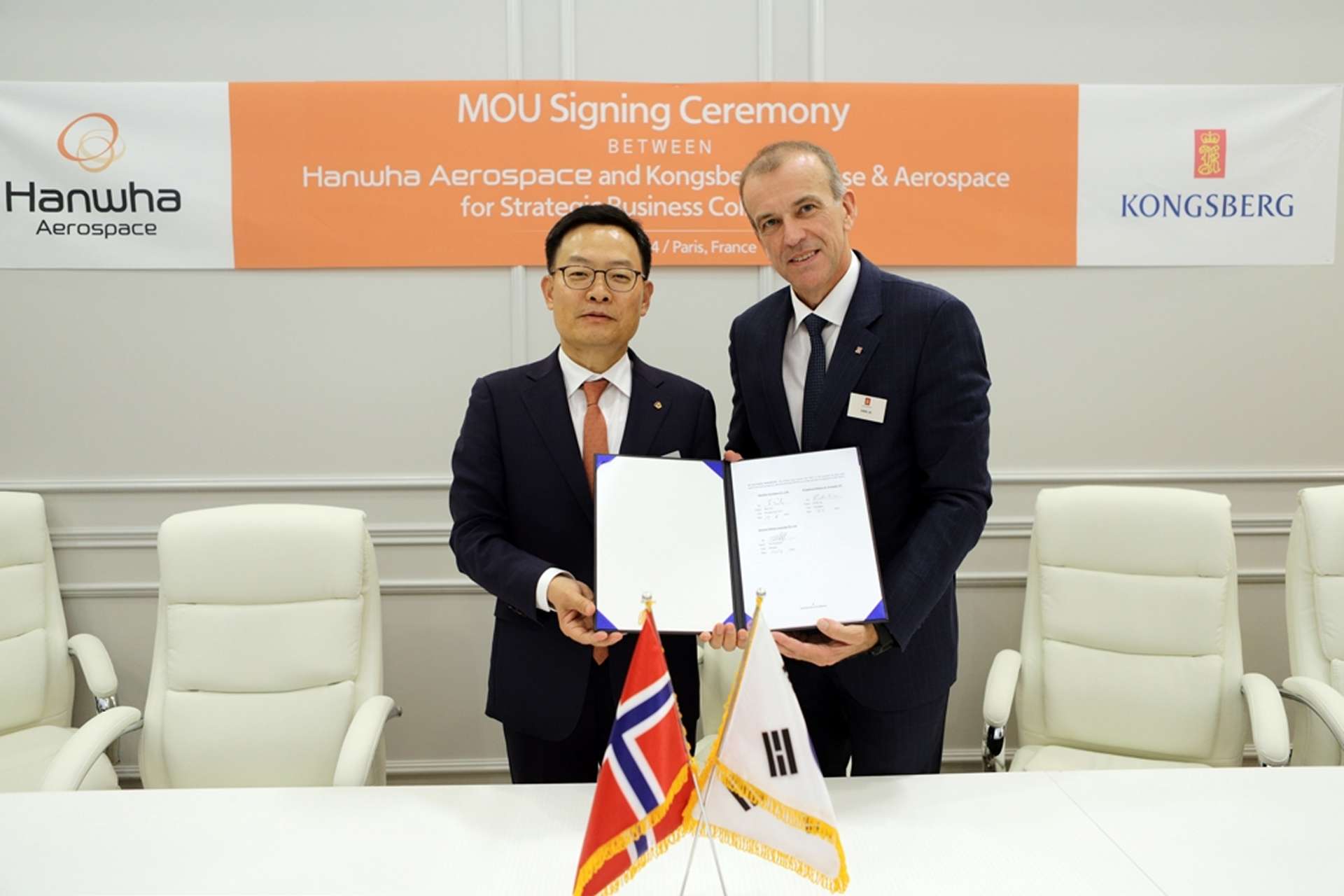
At the Eurosatory 2024 exhibition in Paris on June 17, South Korea’s Hanwha Aerospace and Norway’s Kongsberg Defence & Aerospace strengthened their collaboration by signing a memorandum of understanding (MoU). This agreement aims to enhance their joint efforts in delivering high-performance combat solutions for land platforms.
Follow Army Recognition on Google News at this link
Hanwha Aerospace and Kongsberg strengthened their partnership at Eurosatory 2024. (Picture source: Kongsberg)
The expanded partnership between Hanwha and Kongsberg focuses on developing and marketing advanced defense solutions globally, including in their domestic markets in Norway and South Korea. The two companies have a history of successful collaborations, providing combined systems to various countries such as Norway, Finland, Estonia, and Australia.
The MoU includes provisions to integrate Kongsberg’s Integrated Combat Solution (ICS), digital vehicle platforms, and remote weapon systems with Hanwha’s land platforms, notably the K9/K10 Thunder artillery system and the Chunmoo multiple rocket launcher.
Jaeil Son, President and CEO of Hanwha Aerospace, emphasized the significance of this agreement, stating, “The memorandum of understanding that has just been signed holds special significance for us. Kongsberg Defence & Aerospace is a globally recognized company providing high-quality equipment and services. We are therefore particularly pleased to further develop our existing cooperation, and through this partnership, we will be developing the most advanced, cutting-edge solutions together. The agreement signed today is further proof of Hanwha Aerospace’s growing commitment in Europe.”
Jørgen Bull, Vice President of Land Systems at Kongsberg Defence & Aerospace, echoed this sentiment, saying, “This MoU confirms the strong relationship between the two companies and our desire to work together to develop first-class solutions for our customers.”
This strengthened partnership is set to drive innovation and excellence in defense solutions, benefiting both companies and their global clientele.
Read more: Eurosatory 2024: Hanwha Aerospace and Kongsberg Strengthen Their Partnership
- Details
- Written by: Jérôme Brahy
- Category: 2024
- Hits: 4390
On June 20, 2024, the Supreme Council of Defense of Romania, presided over by President Klaus Iohannis, convened at the Cotroceni Palace. It was decided to donate a Patriot missile defense system to Ukraine. The meeting focused on several critical issues, notably the operational status and strategic significance of the Patriot missile defense systems.
Follow Army Recognition on Google News at this link
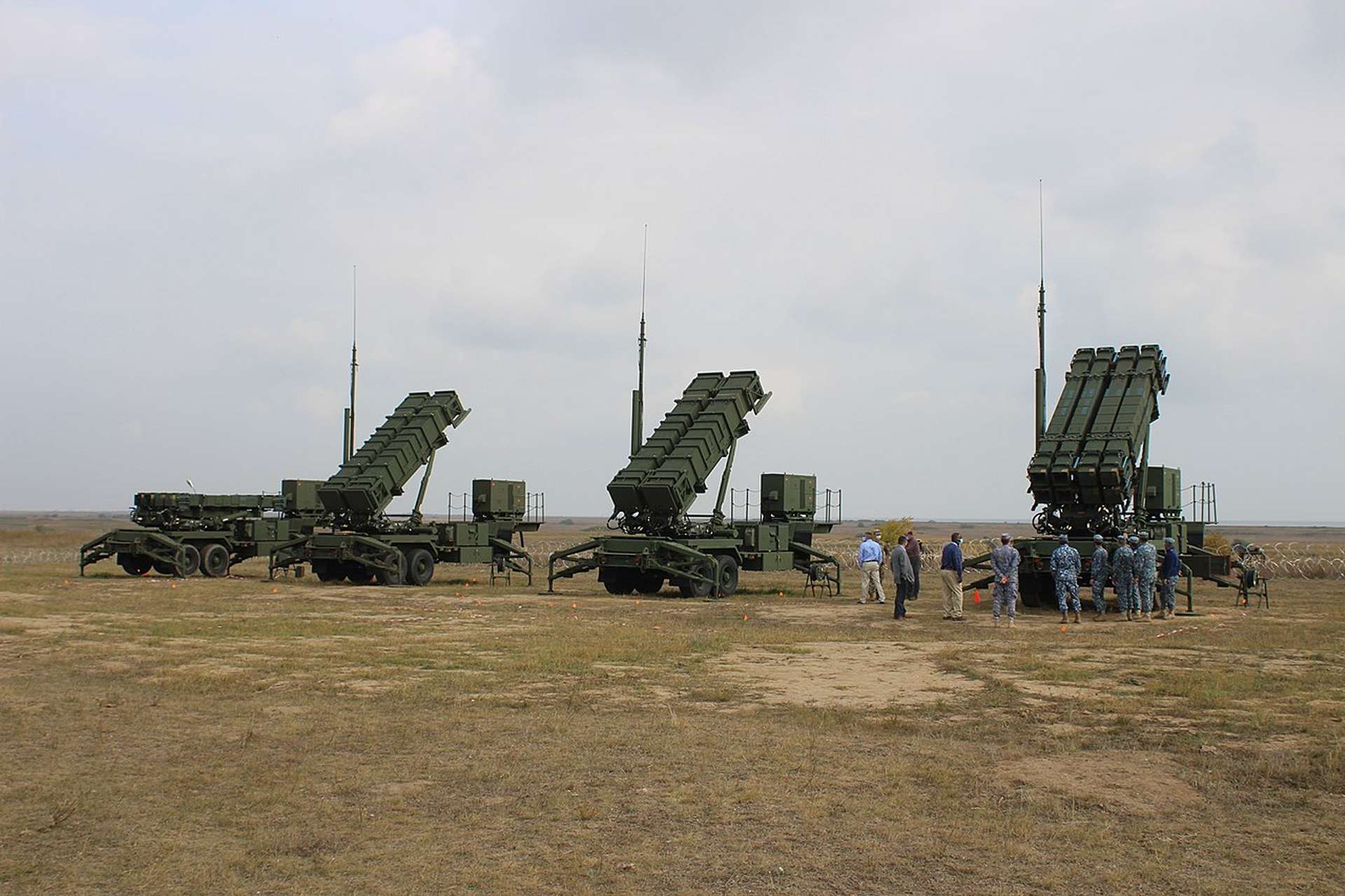
Romania received its first Patriot surface-to-air missile system in September 2020, completing the delivery of four systems by 2023. (Picture source: Romanian MoD)
The Ministry of National Defense presented an analysis to the Supreme National Defense Council, detailing the current status of the four operational Patriot systems. The report also included the progress of acquiring three additional systems, emphasizing their operational importance both nationally and within the allied framework. A significant point of discussion was the potential impact and strategic considerations of transferring one of these systems.
The council's deliberations were influenced by the significant deterioration of the security situation in Ukraine. Russia's ongoing and intensified attacks on Ukrainian civilians and critical infrastructure, particularly within the energy sector, have created severe regional security repercussions. This escalating conflict has also posed direct implications for Romania's security, prompting a need for a responsive and coordinated stance with allied nations.
In light of these developments, the council members reached an agreement to donate one of Romania's Patriot systems to Ukraine. This decision is contingent upon continued negotiations with allied nations, particularly the United States, to procure a similar or equivalent defense system. The aim is to ensure that Romania's air defense capabilities remain robust, maintaining national security and NATO interoperability.
This decision was based on a technical evaluation conducted by Romanian authorities. All necessary measures have been implemented to mitigate any potential vulnerabilities that might arise from this transfer. Concurrently, Romania will continue its dialogue with allied partners to secure additional support and fortify its air defense infrastructure.
The Romanian Air Force's 74th Patriot Regiment operates both PAC-2 GEM-T and PAC-3 MSE Patriot missile systems. Romania received its first Patriot surface-to-air missile system in September 2020, completing the delivery of four systems by 2023. This acquisition stemmed from a November 2017 agreement in which Romania purchased seven Patriot Configuration 3 units, which included radars, a control station, antennas, launching stations, and power plants. The package also comprised 168 Patriot Advanced Capability-3 Missile Segment Enhancement (PAC-3 MSE) missiles and 56 Patriot MIM-104E PAC-2 Guidance Enhanced Missile TBM (GEM-T) missiles, with the agreement valued at around $4 billion. Additionally, three more systems are scheduled to be deployed with the Romanian Land Forces.
The Patriot PAC-2 missile system is a surface-to-air missile platform designed for intercepting aircraft and has been adapted to counter ballistic and cruise missiles. It employs a blast-fragmentation warhead, which detonates near the target to inflict damage via high-velocity fragments. The PAC-2 has a maximum range of approximately 160 kilometers and can engage targets at a wide range of altitudes. Its radar system can track and guide multiple missiles simultaneously, enhancing its capability to defend against various airborne threats.
The Patriot PAC-3 missile system, on the other hand, uses hit-to-kill technology, which destroys targets through direct impact, providing higher precision. This system is optimized for intercepting tactical ballistic and cruise missiles. Each launcher can carry up to 16 PAC-3 interceptors, compared to the four PAC-2 missiles per launcher. The PAC-3 features improvements in speed, maneuverability, and target discrimination due to its more powerful rocket motor and advanced guidance system. These enhancements make the PAC-3 a critical element of integrated air and missile defense systems.
Read more: Breaking News: Romania donates a US Patriot missile defense system to Ukraine
- Details
- Written by: Halna du Fretay
- Category: 2024
- Hits: 3101
Pearson Engineering showcases its latest innovation at Eurosatory 2024, unveiling the second of its RCV-Pioneer modular payloads designed for minefield breaching. This development follows the debut of the RCV-Pioneer urban obstacle clearance payload at DSEI 2023. The new minefield breaching variant is engineered for large Unmanned Ground Vehicles (UGVs) and is designed to be scalable to meet various operational requirements.
Follow Army Recognition on Google News at this link
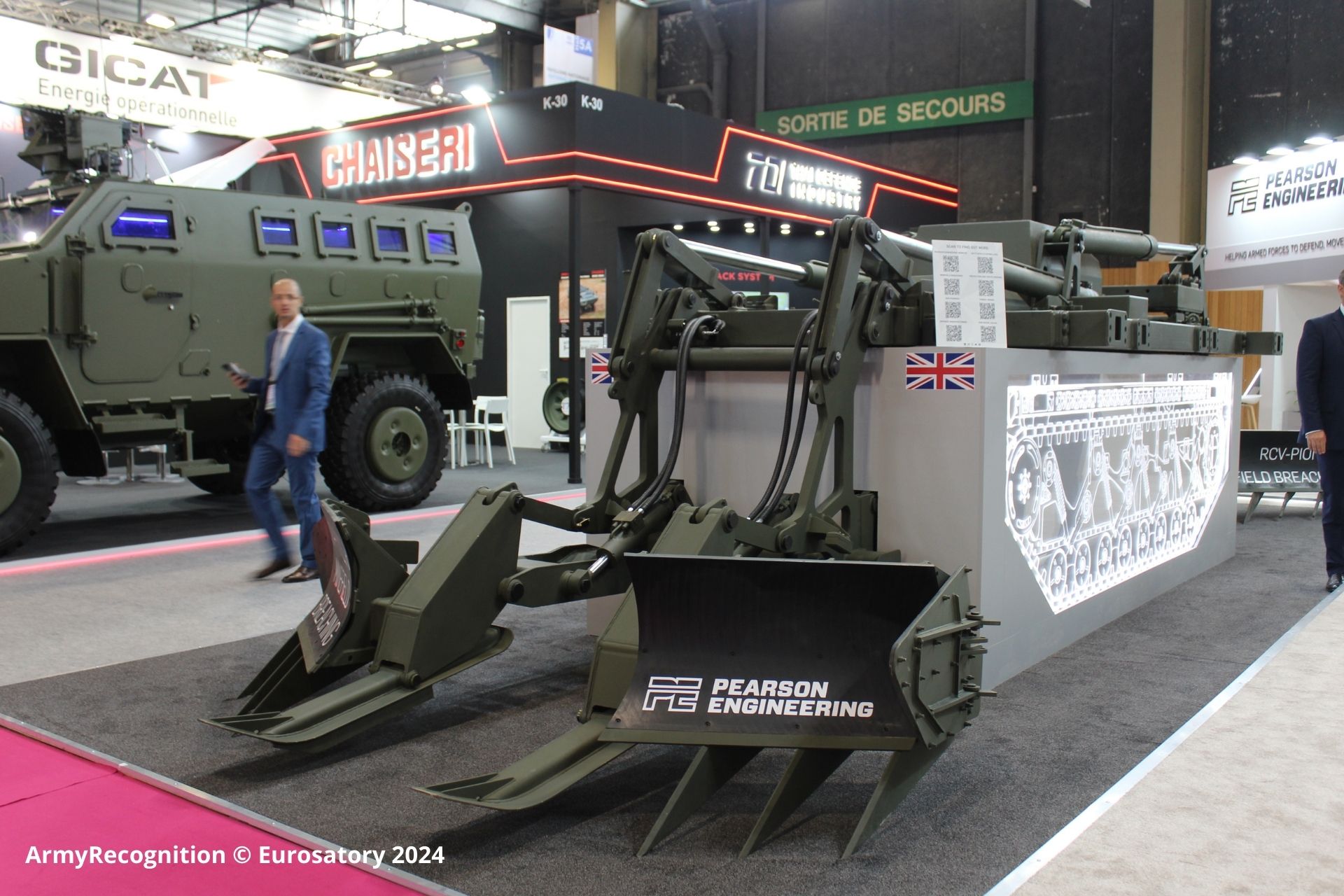
For the upcoming trials, the system measures 4 meters wide with mine plow blade extensions and a total length of 10.5 meters, including an approximated host vehicle, with a height of 2.5 meters depending on the host vehicle (Picture source: ArmyRecognition)
The breaching system features two sets of mine ploughs: two track-width blades at the front to protect the vehicle and a full-width set at the rear to create a clear path. Remarkably, this system can be installed or removed from the platform in field conditions in less than 20 minutes without the need for specialist tools. For the upcoming trials, the system measures 4 meters wide with mine plough blade extensions and a total length of 10.5 meters, including an approximated host vehicle, with a height of 2.5 meters depending on the host vehicle. Pearson Engineering emphasizes that these specifications are for the trials system and that the system is scalable.
A company official highlights that this system is likely to be part of a variety of RCV-Pioneer payloads that draw upon Pearson Engineering's extensive experience in the field. These payloads include options for gap crossing, minefield clearance, detection, and other functionalities, all designed to be swappable with common platforms. The official notes that the development of this system anticipates the evolving breaching requirements influenced by recent global conflicts, such as the return to traditional warfare in Ukraine, albeit with modern technological overlays.
Trial plans with several NATO nations are already in development for the period from September to November 2024. The system utilizes Pearson Engineering’s Vector track width mine plough, which was unveiled at Eurosatory two years ago. This mine plough maximizes ploughing capability on lightweight vehicles with lower tractive power compared to traditional armored engineer vehicles. Weighing between 1.2 and 1.5 tons depending on its configuration, the Vector mine plough has been optimized for use with wheeled vehicles and has previously been trialed with the Spanish Army’s VCR 8x8 Dragon.
Regarding the RCV-Pioneer mine breaching payload, the official explains that the plough sections are arranged around a free-standing and intelligent mission payload frame that enables rapid docking with the chosen uncrewed vehicle. Adjustable jacks lower the frame onto the vehicle before locks secure the payload and vehicle together. The system also uses the same features to unlock the frame from the vehicle and lift it off.
The operation of the system is managed through a customizable Operator Control Unit, which includes a real-time digital twin visualization to shorten training and mission times. It also features an embedded video screen to enable Beyond Line-of-Sight control.
Pearson Engineering’s innovative solutions in minefield breaching systems underscore its role as a leading developer in military engineering technology. The upcoming trials with NATO countries demonstrate the potential proliferation of these advanced systems across allied forces, enhancing their operational capabilities in challenging environments.
Read more: Pearson Engineering Displays New Minefield Breaching System at Eurosatory 2024

- Details
- Written by: Vandenbosch
- Category: 2024
- Hits: 4660
Hanwha Aerospace, a prominent South Korean defense contractor, has successfully expanded the market for its K9 self-propelled artillery to Romania. With this agreement, Romania becomes the tenth country to adopt the K9, further cementing its reputation as a standard artillery system among Western nations.
Follow Army Recognition on Google News at this link
K9s previously sent to Poland by South Korea (Picture source: Polish MoD)
The South Korean Ministry of National Defense announced on June 19, 2024, that Hanwha Aerospace was selected as the preferred bidder for Romania's self-propelled howitzer project. This selection follows a summit between South Korea and Romania in April. To finalize the negotiations, South Korean Defense Minister Shin Won-sik visited Romania to discuss with Romanian Defense Minister Angel Tilvar.
The deal includes 54 K9 self-propelled howitzers and 36 K10 ammunition resupply vehicles, marking Romania's largest arms acquisition in the past seven years. The contract is valued at $920 million. As a NATO member, Romania has been modernizing its armed forces since 2023, aiming to replace its outdated towed artillery systems. The ongoing conflict in Ukraine has heightened Romania's concerns about potential threats from Russia, prompting this modernization effort.
The K9 is a self-propelled artillery system designed in South Korea, equipped with a 155 mm main gun and a 12.7 mm heavy machine gun. Designed for robust protection, it can withstand armor-piercing projectiles of 14.5 mm caliber and 152 mm artillery shell fragments. This 46,300 kg vehicle is used by several countries, including Australia, Egypt, Estonia, India, Finland, Norway, Poland (using the K9 chassis), South Korea, and Turkey.
The K9 stands out with a maximum speed of 67 km/h and a range of 360 km, making it highly mobile on the battlefield. In terms of protection and survivability, it is equipped with a CBRN (Chemical, Biological, Radiological, and Nuclear) protection system, a heater, internal and external communication systems, a manual fire suppression system, and an automatic fire control system.
The vehicle requires a crew of five to operate effectively. In terms of dimensions, the K9 measures 7.44 meters in length, 3.4 meters in width, and 2.73 meters in height at the turret. These characteristics make the K9 an essential tool for modern armed forces, capable of providing powerful and mobile fire support while ensuring significant protection for its crew.
This acquisition brings the total number of countries using the K9 to ten, including Finland, Norway, Estonia, Poland, Australia, India, Turkmenistan, and Egypt. Russia and its neighboring Eastern European countries are also actively adopting next-generation self-propelled guns.
Read more: Hanwha to Export K9 Self-Propelled Artillery to Romania

- Details
- Written by: Administrator
- Category: 2024
- Hits: 8454
At the Eurosatory defense exhibition on June 19, 2024, France and Italy jointly unveiled the advanced SAMP/T NG system. This state-of-the-art air defense system represents a significant advancement, showcasing the robust collaboration between the two nations. Initially designed to manage the ASTER family of munitions, including the ASTER 30 B1 and ASTER 30 B1NT, the SAMP/T NG is equipped to engage long-range air threats and autonomously counter ballistic missiles.
Follow Army Recognition on Google News at this link
Unveiling the SAMP/T NG system at Eurosatory 2024, showcasing its advanced capabilities to engage long-range air threats and counter ballistic missiles autonomously. (Picture source: Eurosam)
The SAMP/T NG (Surface-to-Air Missile Platform/Terrain New Generation) is an advanced air defense system produced by Eurosam, a Franco-Italian consortium. This consortium includes major defense industry players MBDA France, MBDA Italy, and Thales. Eurosam was established to develop and produce advanced missile systems for ground and naval air defense, and the SAMP/T NG is a significant result of their collaborative efforts.
The development of the SAMP/T NG system began in 2021 under the European Organisation for Joint Armament Cooperation (OCCAR). The system is designed to provide comprehensive 360-degree protection against a wide range of air threats, including ballistic missiles and supersonic targets. It features upgraded Aster missiles and advanced radars, such as the Leonardo Kronos Grand Mobile High Power for Italy and the Thales Ground Fire 300 for France. These enhancements make the SAMP/T NG a critical component in ensuring airspace sovereignty and the protection of both military forces and civilian areas for France and Italy.
The latest enhancements of the SAMP/T NG extend its capabilities beyond its original design. It now features a multirange and multilayer capacity through SHORAD Vertical Launchers, providing comprehensive protection against a wide spectrum of air threats such as MTO, drones, ABT, and TBM. This advanced configuration makes the SAMP/T NG a fully scalable system capable of countering saturating and combined attacks, positioning it as the only European system that integrates various effectors within the full NATO operative ABT/TBM chain
The SAMP/T NG is an advanced air defense system developed through a collaboration between France and Italy. Initially designed to manage the ASTER family of munitions, including ASTER 30 B1 and ASTER 30 B1NT, the system is capable of engaging long-range air threats and autonomously countering ballistic missiles.
The SAMP/T NG extends its capabilities by incorporating a multirange and multilayer capacity with SHORAD Vertical Launchers, providing comprehensive protection against a wide range of air threats such as manned tactical operations (MTO), drones, aerial ballistic threats (ABT), and tactical ballistic missiles (TBM). This scalability allows the SAMP/T NG to effectively counter complex and combined attack scenarios, making it unique in Europe for integrating various effectors within the full NATO operative air and ballistic threat management chain.
A key component of the SAMP/T NG is the Module of Engagement New Generation (ME NG), featuring an open architecture that facilitates the integration of multifunction firing radars like Thales Ground Fire and Leonardo Kronos Grand Mobile High Power. The system can manage up to six ASTER launchers, each equipped with eight missiles, as well as up to six Short-Range Air Defence (SHORAD) launchers, including VL MICA or CAMM-ER, and Very Short-Range Air Defence (V-SHORAD) assets.
Furthermore, the SAMP/T NG is designed for integration into NATO Tactical Control Chains and Command Chains, ensuring coordination with upper layer Command and Control centers. Developed in partnership between Thales and MBDA Italia, the ME NG's common core hardware and software architecture allows for national-specific requirements and the coordination of different weapon systems and munitions, enhancing its operational flexibility and effectiveness.
- Eurosatory 2024: French Company MC2 Technologies unveils its Mercat Drone Detection System
- Eurosatory 2024: Canadian Company GSCI Enhances Combat Readiness with Photonics LUX-14 Tactical Night Vision Monocular
- Ukrainian Company UUT exhibits its Ravlyk Universal Mobile Platform at Eurosatory 2024
- Greek and German Defense Companies Forge Alliance to Enhance Leopard 2A8 Tank Armor