

Breaking News: Rare Russian S-70 Okhotnik Stealth Drone Reportedly Shot Down Over Donetsk in Ukraine
- Details
- Written by: Administrator
- Category: 2024
- Hits: 12509










According to pictures released on Social Networks on October 5, 2024, the Russian-made S-70 Okhotnik-B stealth unmanned combat aerial vehicle (UCAV), one of Russia's most advanced drones, has been reportedly shot down near Kostyantynivka in the Donetsk region in Ukraine. The incident marks a rare and crucial loss for Russia, as the S-70 Okhotnik-B is a high-tech stealth UCAV central to Russia's evolving aerial warfare strategy.
Follow Army Recognition on Google News at this link
A very rare Russian stealth S-70 Okhotnik-B unmanned combat aerial vehicle (UCAV) was reportedly shot down near Kostyantynivka in the Donetsk region, Ukraine, marking a significant loss for Russian military forces in the ongoing conflict. (Picture source: Russian Social Network)
According to various sources, the S-70 was brought down by friendly fire in what appears to be a catastrophic misidentification by Russian forces. However, other credible reports suggest that Ukrainian air defense systems were responsible for shooting down the highly sophisticated drone. This conflicting information reflects the fog of war and the challenges of verifying events in active combat zones, but it underscores the high-stakes nature of modern warfare, where even the most advanced systems are not immune to destruction.
If Ukrainian forces were indeed responsible for the downing, it would signify a considerable achievement, especially considering the S-70’s stealth capabilities and cutting-edge technology designed to evade advanced air defenses. The incident raises critical questions about the vulnerabilities of stealth drones in combat zones teeming with sophisticated air defense systems, a point that is particularly significant in the context of modern warfare.
This incident could have serious implications for the Russian military’s perception of its advanced unmanned aerial assets. The S-70 Okhotnik-B, which is part of Russia's next-generation aerial warfare strategy, was designed to perform stealth missions, reconnaissance, and precision strikes in highly contested environments. Its development has been seen as a pivotal step in Russia's move toward autonomous warfare, leveraging artificial intelligence and integrated combat systems.
However, the fact that the drone was shot down—whether by friendly fire or enemy action—suggests that the Okhotnik’s electronic warfare capabilities and stealth features may need significant refinement when facing modern air defenses. This event is likely to prompt the Russian military to reconsider how it deploys these drones on the battlefield. One possibility is that Russia might shift toward using the S-70 in stand-off roles, keeping it at a safe distance from enemy defenses, or enhancing its Electronic Countermeasures (ECM) to better defend against anti-air systems.
The incident could also speed up technological upgrades for the S-70, particularly in terms of improving its communication systems, stealth profile, and survivability in hostile airspaces. Russia’s defense industry might now focus on developing countermeasures that can protect the drone from advanced missile systems like those deployed by Ukraine.
Beyond the immediate military implications, this incident could have broader geopolitical effects. The loss of such a valuable drone on the Donetsk front could further escalate the arms race in drone technology, particularly between Russia and Ukraine, but also involving NATO and other global powers. As drones become more integral to modern warfare, the development of more advanced offensive and defensive systems will likely intensify.
The incident serves as a reminder that even the most advanced technologies must continuously evolve to stay ahead of rapidly advancing air defense capabilities. Both Russia and Ukraine are expected to intensify their efforts to adapt to the realities of drone warfare, leading to continued advancements in artificial intelligence, automation, and stealth technologies.
The S-70 Okhotnik-B, with its integration into Russia’s broader military strategy, represents a shift toward more autonomous and interconnected systems in modern warfare. These drones offer the potential to combine human piloting with AI-driven unmanned support, reshaping the dynamics of air combat. With its stealth design and ability to carry out precision strikes, the S-70 was expected to play a key role in Russian operations, especially in contested regions like Donetsk.
However, the loss of such an asset may lead to a reconsideration of tactics and technological adjustments. The incident could also serve as a cautionary tale for other nations developing similar platforms, emphasizing the need for constant adaptation in the face of evolving threats and the crucial role of electronic warfare in drone survivability.
In summary, the downing of the S-70 Okhotnik-B over Donetsk is not just a blow to Russia's military efforts but a reflection of the intense and rapidly changing nature of modern aerial warfare, where even advanced stealth drones are vulnerable to cutting-edge air defense systems. This event could mark a turning point in how such technologies are deployed and defended in future conflicts.
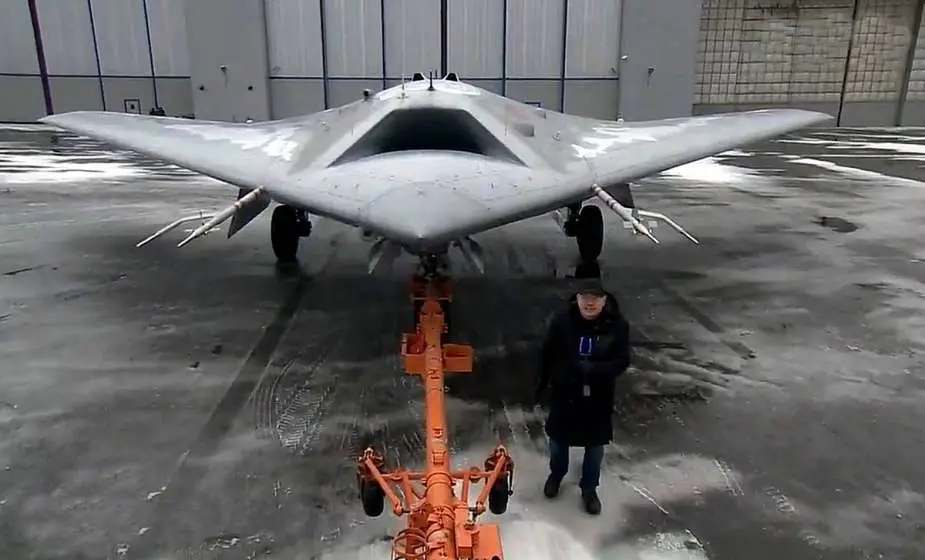
The S-70 Okhotnik-B is a Russian stealth unmanned combat aerial vehicle (UCAV) designed for autonomous missions and advanced aerial warfare. (Picture source Russian Social Network)
The Sukhoi S-70 Okhotnik-B, also known as the Okhotnik ("Hunter"), is a cutting-edge Russian unmanned combat aerial vehicle (UCAV) designed by Sukhoi in collaboration with other branches of the Russian defense industry. It represents a significant advancement in Russia's military technology, aimed at developing a stealth-capable heavy UCAV capable of performing a wide range of combat and reconnaissance missions. The Okhotnik is part of Russia's broader efforts to modernize its defense capabilities and compete with other nations' unmanned aerial systems.
The development of the S-70 Okhotnik began in the early 2010s, driven by the increasing global focus on drones for military applications. Russia had recognized the importance of UAVs not only for reconnaissance but also for combat operations. The Okhotnik's design incorporates lessons learned from earlier Russian drone programs while drawing from global trends in stealth technology and UCAVs. It made its public debut in the mid-2010s, with its first flight taking place on August 3, 2019, marking a key milestone in its development.
One of the most distinctive aspects of the S-70 Okhotnik is its role as a "loyal wingman" to the Su-57, Russia's fifth-generation stealth fighter. This collaborative concept envisions the UCAV working in coordination with manned aircraft, enabling complex mission strategies where the Okhotnik can autonomously perform reconnaissance or strike roles while being directed by the Su-57. Tests conducted in late 2021 demonstrated this operational synergy, showcasing the potential of the two platforms working in tandem.
The Okhotnik is built to perform various combat tasks, with stealth as one of its defining features. Its flying-wing design, resembling the shape of advanced U.S. drones like the X-47B, helps reduce its radar cross-section, making it difficult to detect in enemy airspace. This design is complemented by radar-absorbing materials, further enhancing its stealth capabilities. As a strike platform, the S-70 can carry a wide array of precision-guided munitions, including air-to-surface missiles and bombs, making it capable of engaging high-value targets in contested environments. Additionally, the aircraft is equipped for intelligence, surveillance, and reconnaissance (ISR) missions, using its advanced sensors to gather critical battlefield information.
The UCAV is designed for both autonomous and semi-autonomous operations, meaning it can function independently or be remotely controlled by operators or manned aircraft. Its potential role in joint missions with the Su-57 demonstrates its versatility in both solo and collaborative operations. Furthermore, the Okhotnik is equipped with advanced artificial intelligence, allowing it to perform complex tasks like navigation, target recognition, and engagement with limited human input.
Regarding technical specifications, the S-70 Okhotnik features a large and heavy structure for a UCAV, measuring around 14 meters (46 feet) in length and with a wingspan of approximately 20 meters (65 feet). It is powered by a single jet engine, possibly a variant of the AL-31 engine used in the Su-27 or the more advanced AL-41 from the Su-57, giving it subsonic speeds of up to 1,000 kilometers per hour (620 mph). The UCAV has a long operational range, likely exceeding 6,000 kilometers (3,730 miles), making it suitable for long-distance missions far from its base. Its payload capacity is significant, with the ability to carry up to 2.8 tons of munitions, housed in an internal weapons bay to maintain stealth during combat operations.
Overall, the S-70 Okhotnik represents a major advancement in Russia's military drone capabilities. It is critical to Russia's evolving approach to modern warfare, where unmanned and manned systems work together to achieve strategic goals. Although the Okhotnik is still in the testing phase, it is expected to enter full operational service in the coming years, providing Russia with a powerful new tool for both reconnaissance and strike missions.
- Details
- Written by: Vandenbosch
- Category: 2024
- Hits: 4937
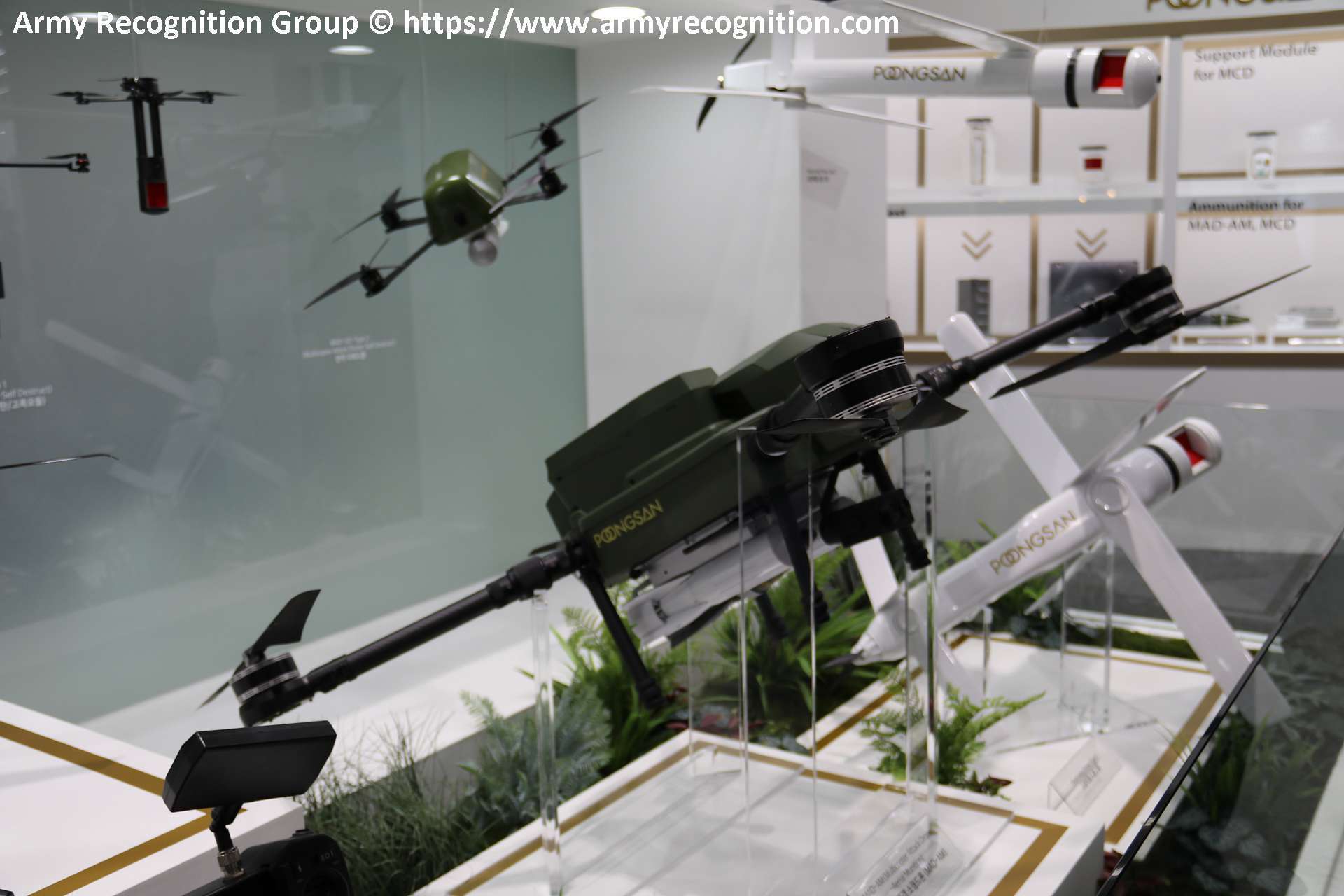
During the KADEX 2024 exhibition in South Korea, the Korean arms manufacturer Poongsan unveiled a new range of combat drones, including the MAD-AM (Multicopter Attack Drone-Aerial Munition), a compact quadcopter drone designed to provide a light and mobile attack solution. This drone, easily transportable in a backpack, is intended for use by a single soldier on the battlefield, thus enhancing individual strike capability in various tactical environments.
Multicopter Attack Drone-Aerial Munition at KADEX 2024. (Picture source: Army Recognition)
The MAD-AM is remotely controlled and capable of carrying up to three small grenade-type munitions equipped with stabilizing fins to ensure steady descent. This feature allows for increased accuracy during strikes, as the munitions are dropped vertically onto the target. Depending on the mission, these munitions can be fitted with either high-explosive fragmentation (HE) warheads or shaped charges optimized for penetrating the upper armor of main battle tanks (MBTs) and other armored vehicles.
This drone is designed to offer tactical flexibility in anti-tank missions or against lightly armored targets, utilizing both the mobility and discretion offered by a compact quadcopter. Due to its small size, the MAD-AM can easily navigate through complex terrains, enabling a stealthy approach before delivering its munitions directly onto enemy targets.
The presentation of the MAD-AM at KADEX 2024 aligns with a global trend toward lighter and autonomous combat solutions, reflecting the growing need for modern armed forces to integrate tactical drone systems capable of supporting ground soldiers in high-intensity operations. Poongsan thus strengthens its position in the attack drone sector by offering an adaptable and efficient solution that meets the demands of contemporary conflicts.
Founded in 1968, Poongsan Corporation is a major South Korean manufacturer in the fields of non-ferrous metals and munitions. It is particularly known for its production of military munitions, ranging from small 5.56 mm cartridges to 8-inch artillery shells for systems such as howitzers. The company has established itself as a key supplier to the Korean armed forces and international defense markets, while also playing a significant role in the production of munitions for sporting and commercial uses.
Poongsan benefits from a fully integrated manufacturing process, mastering every stage of ammunition production, from raw materials such as copper alloys and explosive compounds to the final assembly of munitions. This technical expertise and its constant commitment to research and development have enabled the company to maintain a competitive global position, particularly in the manufacturing of high-precision munitions and large-caliber weapons. In addition to ammunition, the company also produces copper alloys used in various industries, including the manufacturing of electronic components and semiconductor parts.
The MAD-AM represents a new milestone in the evolution of portable attack drones, combining advanced technology with field efficiency. Its presentation at KADEX 2024 has generated significant interest, demonstrating that the demand for this type of combat system continues to grow in an increasingly uncertain international context.
Read more: Presentation of South Korean MAD-AM Drone by Poongsan at KADEX 2024
- Details
- Written by: Triffaux
- Category: 2024
- Hits: 4245
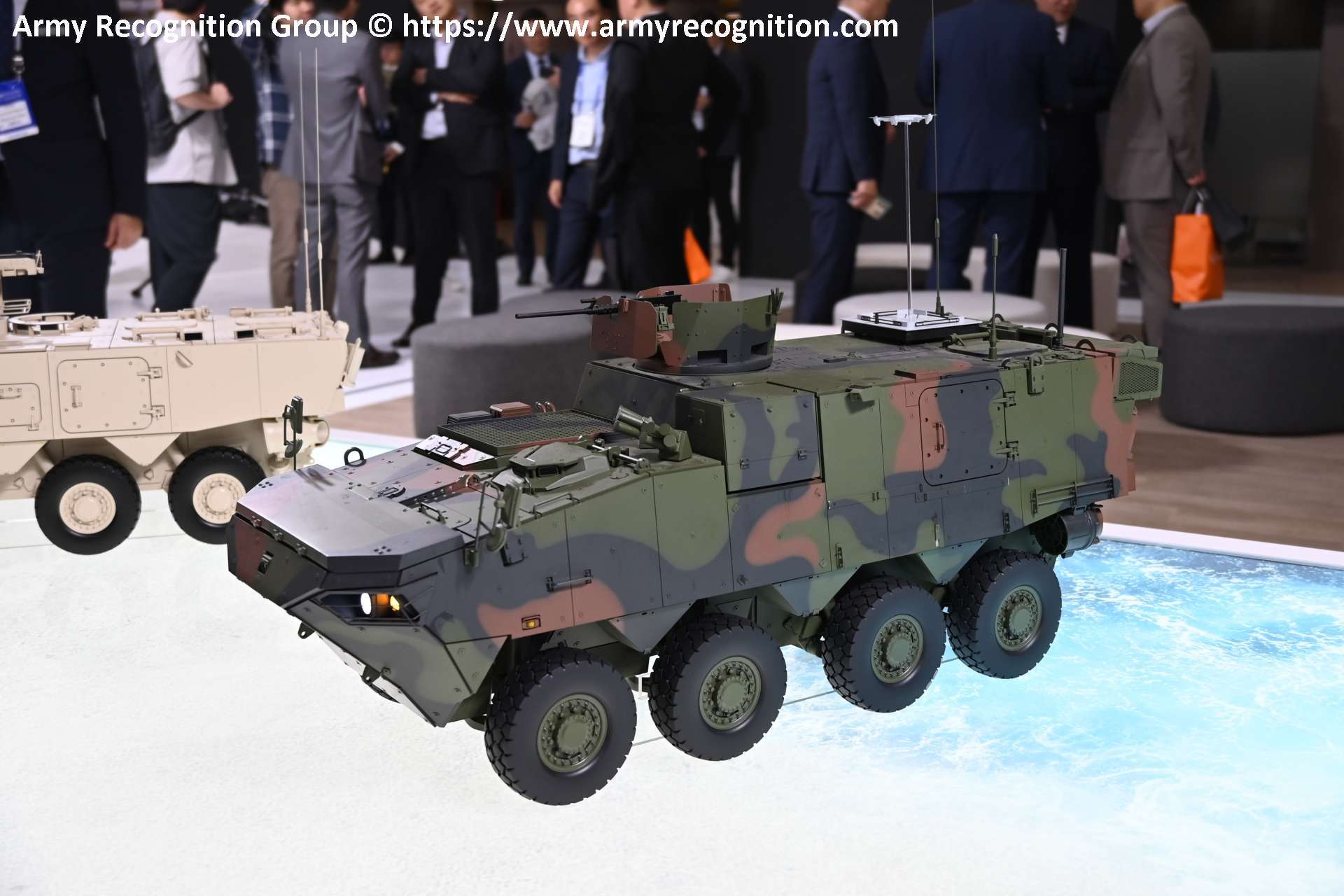
Hyundai Rotem is currently showcasing its K877 Command Post Vehicle (CPV) at the KADEX 2024 defense exhibition, held from October 2 to 6, 2024, in Gyeryongdae, South Korea. This event serves as a key platform for defense manufacturers to unveil their latest innovations, with Hyundai Rotem standing out by presenting the K877 CPV, designed to enhance tactical command and control on the battlefield.
Follow Army Recognition on Google News at this link
Hyundai Rotem K877 Command Post Vehicle (Picture source: Army Recognition)
The K877 CPV is a robust vehicle, engineered for mobility and protection, with a combat weight of 21.5 tons and a top speed of 95 km/h on land and 8 km/h in water. It is specifically built to operate in challenging terrains, with a 60% slope-climbing capability and a 30% side slope tolerance. The vehicle is equipped with advanced systems, including a 420-horsepower engine, hydropneumatic suspension, and a central tire inflation system (CTIS), ensuring adaptability to various operational environments. For firepower, the K877 is armed with a K6 machine gun, offering essential defensive capabilities.
This mobile command post is designed to facilitate high-level military operations by integrating a C4I system, ensuring effective coordination of tactical command and control at the division or brigade level. The vehicle also includes modern features such as screens and side cameras for improved situational awareness on the battlefield. By emphasizing both mobility and communication, it becomes an essential tool for modern warfare, especially during large-scale ground operations.
According to the Defense Acquisition Program Administration (DAPA), this new mobile command post will replace the current tent-based command posts used by the South Korean military. The vehicle will allow military leaders to issue commands to soldiers while on the move. It will be equipped with a modern command and control system, along with a high-pressure system to enhance survivability. Additionally, the command post will feature armored plates to protect against firearms and chemical, biological, and radiological attacks. A total of 55.3 billion won (approximately $4.4 million) has been allocated for the initial mass production of these vehicles.
Hyundai Rotem's presence at KADEX 2024 highlights the company’s evolution as a key player in the defense, railway transport, and infrastructure construction sectors. Founded in 1977, Hyundai Rotem is part of the Hyundai Motor Group and has grown to become a leader in the production of military land vehicles, such as the K2 Black Panther and K808 armored vehicles. In addition to its defense expertise, the company has also made significant advancements in high-speed rail systems, including South Korea’s KTX, and large-scale infrastructure projects worldwide.
As a manufacturer of advanced defense solutions, Hyundai Rotem has demonstrated its ability to develop innovative vehicles that meet the operational needs of modern warfare. The K877 CPV, showcased at KADEX 2024, reflects this ambition with its integrated command and control technologies, enhancing South Korea’s capacity to operate effectively in complex military environments.
Read more: Hyundai Rotem Hilights Next-Gen K877 Command Post Vehicle at KADEX 2024
- Details
- Written by: Jérôme Brahy
- Category: 2024
- Hits: 5325
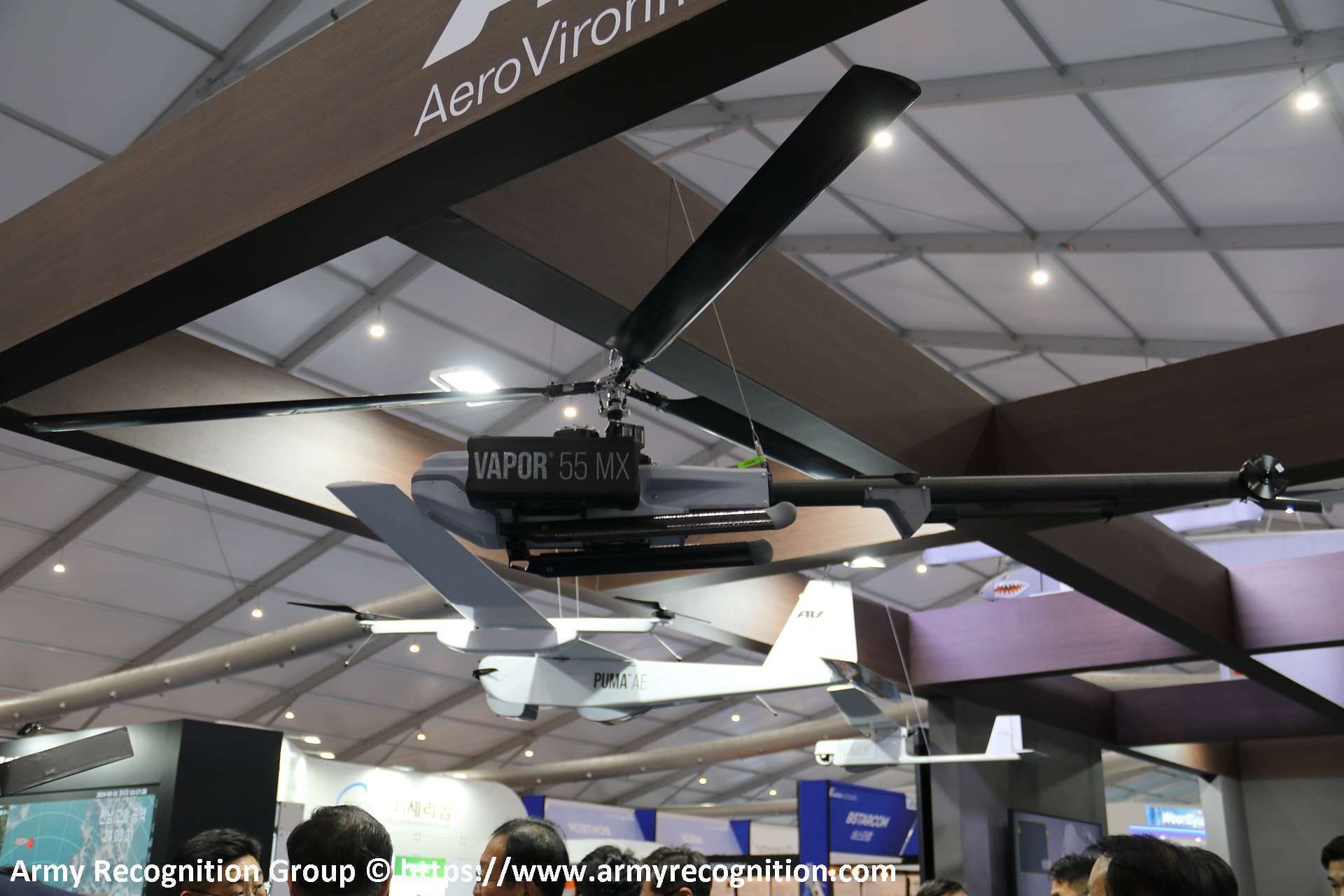
At KADEX 2024, AeroVironment, a U.S.-based company, introduced its latest unmanned aircraft system (UAS), the Vapor 55 MX. This all-electric helicopter UAS is designed to meet a variety of mission requirements across defense, commercial, and industrial sectors. Its modular design allows users to configure it with single or multiple sensor payloads, depending on specific operational needs.
Follow Army Recognition on Google News at this link
A key aspect of the Vapor 55 MX is its modular, low-profile structure, which improves portability through its telescoping tail and fold-up landing gear. (Picture source: Army Recognition)
A key aspect of the Vapor 55 MX is its modular, low-profile structure, which improves portability through its telescoping tail and fold-up landing gear. The system is engineered to carry heavier payloads and operate over longer distances. It offers a payload capacity of up to 4.5 kilograms at a gross takeoff weight (GTOW) of 24.9 kg. The endurance in cruise mode is up to 75 minutes. For defense-specific missions, the GTOW can be increased to 29.5 kg, allowing for payloads of up to 9 kg, although with a reduction in endurance.
The UAS operates at altitudes ranging from 0 to 3,657 meters and can handle sustained wind speeds of up to 55.5 km/h. It is equipped with various data link options, including 900 MHz, 2.4 GHz, and 5.8 GHz for video transmission, with the possibility of integrating Silvus, Persistent Systems, or MicroHard radios. The modular radio interface connector enables quick switching between different communication systems.
The design also incorporates a larger payload bay, expanded by 20%, with belly-mounted Picatinny rails that allow for quick mounting and dismounting of payloads. The UAS can be fitted with various sensors, including electro-optical/infrared (EO/IR) systems, hyperspectral sensors, PPK mapping, and drop mechanisms, among other payloads.
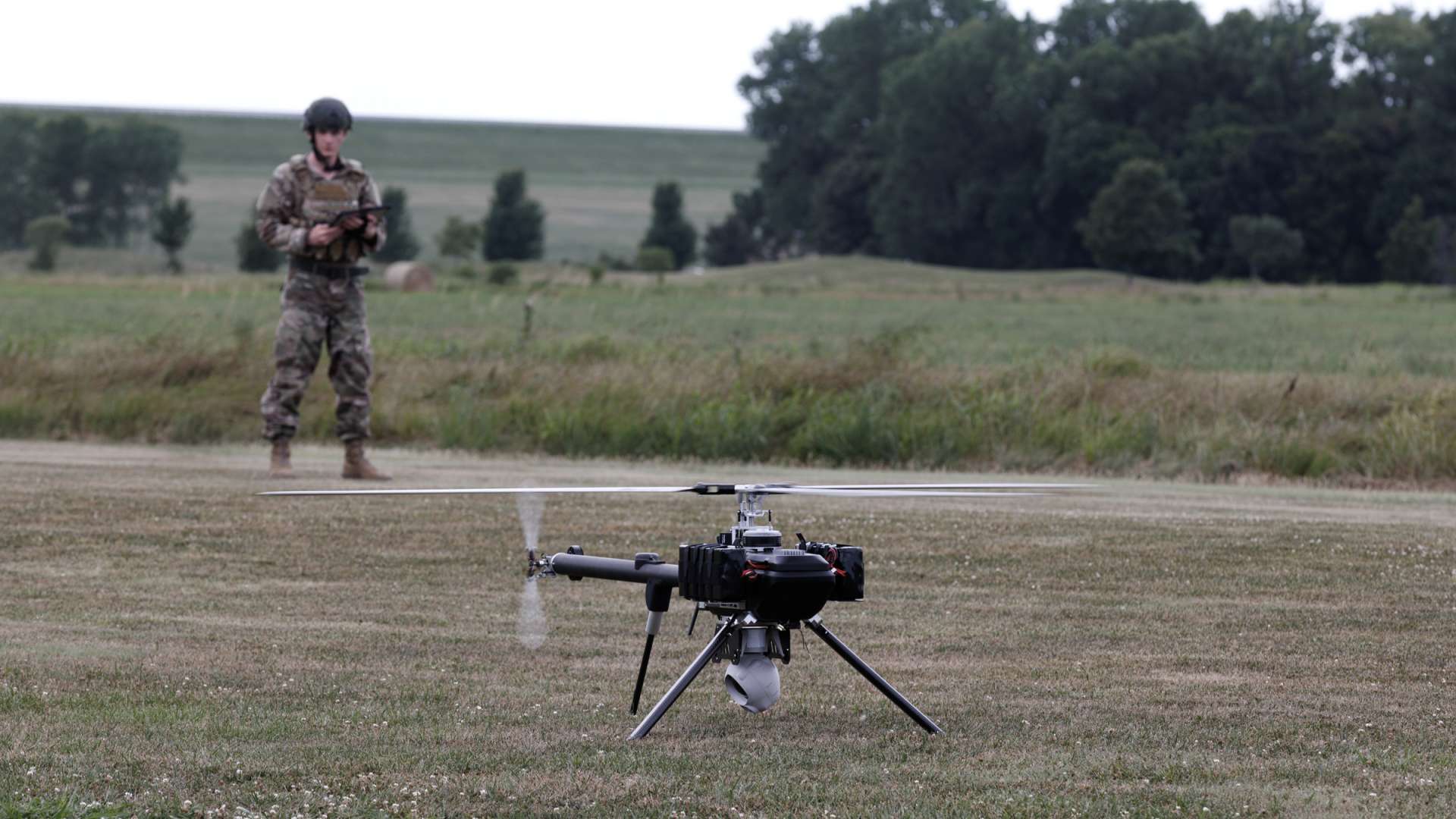
The Vapor 55 MX helicopter UAS operates at altitudes ranging from 0 to 3,657 meters and can handle sustained wind speeds of up to 55.5 km/h. (Picture source: AeroVironment)
Maintenance requirements have been addressed through design choices that aim to reduce operational costs. For example, the system does not require belt replacements, which increases the mean time between overhauls. The UAS is controlled through an advanced flight control system that includes autopilot features and robust flight controls for various operational conditions.
In terms of dimensions, the Vapor 55 MX measures 1.8 meters in length, 0.67 meters in width, and 0.64 meters in height, with a rotor diameter of 2.29 meters. It is capable of operating in temperatures between -17°C and 49°C, providing flexibility for use in different environmental conditions.
The UAS has a maximum ground speed of 15 meters per second and can operate within a range of up to 32 kilometers when using Silvus or MPU5 radios. The system is designed for quick deployment and assembly, making it suitable for both military and civilian applications that require a fast response.
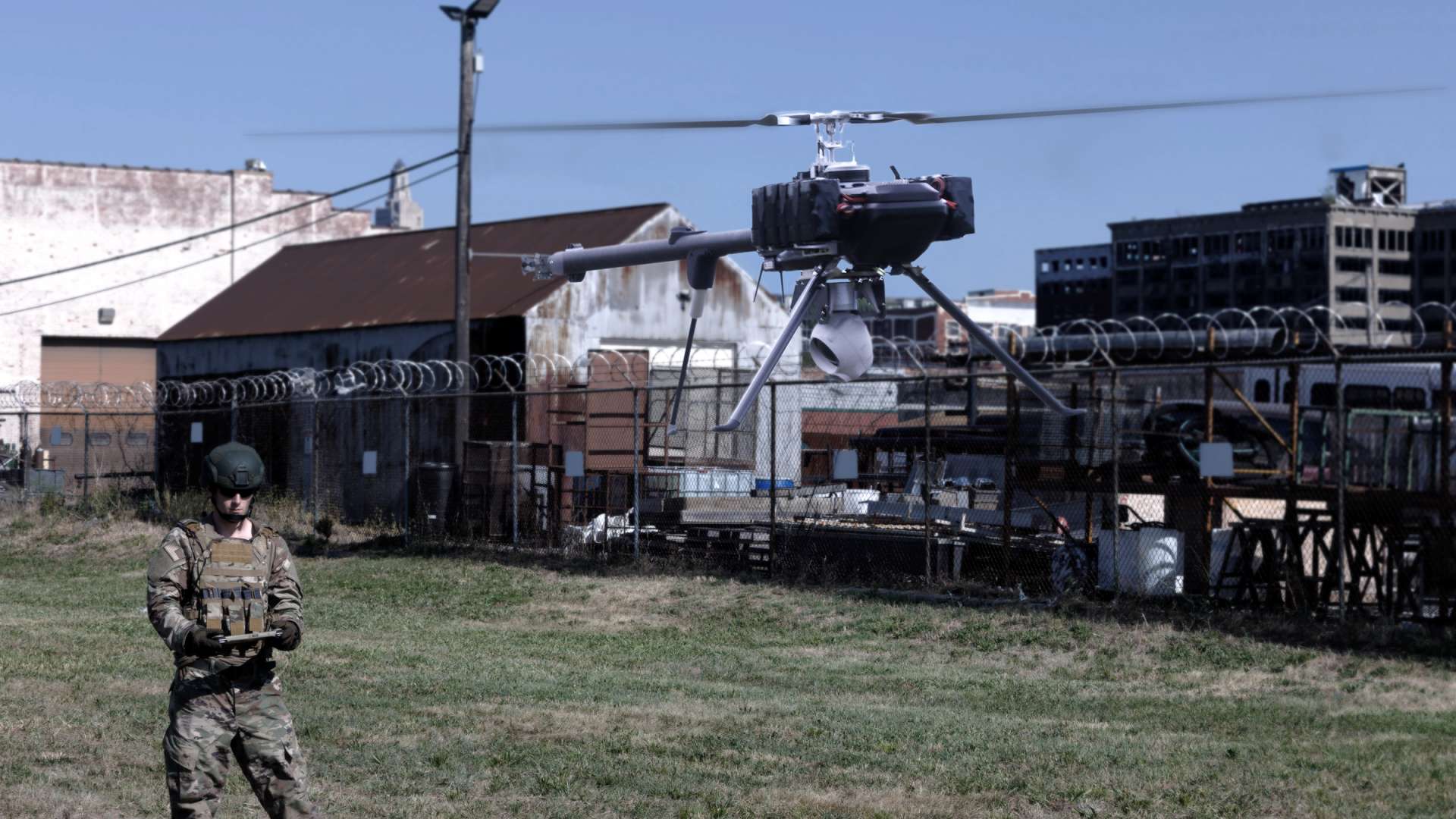
The UAS has a maximum ground speed of 15 meters per second and can operate within a range of up to 32 kilometers when using Silvus or MPU5 radios. (Picture source: AeroVironment)
Read more: AeroVironment offers Vapor 55 MX helicopter UAS with 9-kilogram payload at KADEX 2024

- Details
- Written by: Triffaux
- Category: 2024
- Hits: 6664
The K808, an 8x8 wheeled Armored Personnel Carrier (APC) specifically designed to adapt to the rugged terrain and challenging paths of Peru, is being showcased at KADEX 2024 in South Korea, which runs from October 4 to 7. Designed for rapid deployment and reconnaissance missions, the K808 is capable of operating in a variety of terrains, including mountainous and riverine areas. This vehicle, manufactured by Hyundai Rotem, a South Korean company specializing in ground defense vehicles, demonstrates its ability to meet the demands of the most challenging environments, such as those in Peru, where it will soon be exported.
Hyundai Rotem 8X8 K808 Armored Personnel Carrier (Picture source: Army Recognition)
Once Hyundai Rotem signs a binding contract with FAME later this month, the Korean company will export an initial batch of 30 units of its K808 wheeled armored vehicles, worth about 60 million dollars, to Peru, with the possibility of delivering up to 120 additional units later. This would mark Hyundai Rotem’s first overseas exports of its wheeled armored vehicles, as well as Korea’s first armored vehicle sales to Latin America.
The K808 is an eight-wheeled infantry transport vehicle that replaces the K511A1, also known as the Army Truck, used by the Korean Army. Hyundai Rotem stated that its armored vehicles are well-suited to the rugged terrain and difficult paths of Peru, also known as the "Roof of South America." As a wheeled armored vehicle, its eight wheels are independently driven and suited for climbing hills and traversing rough terrain. The K808 can cross obstacles up to 40 centimeters high and navigate trenches up to 1.5 meters deep, with a water jet that allows it to easily cross shallow rivers, according to the company. Its tactical tires are equipped with an automatic air pressure adjustment system called CTIS.
In terms of protection, the K808 is designed to withstand small arms fire and artillery shell fragments. According to military sources, its frontal arc can withstand impacts from 12.7mm armor-piercing rounds. Additional armor can be installed to enhance the vehicle’s level of protection based on operational needs.
The K808 is powered by a turbocharged Hyundai diesel engine generating 420 horsepower, paired with an automatic transmission offering 7 forward gears and 1 reverse gear. It can reach a top speed of 100 km/h on roads and has a range of up to 800 km. Fully amphibious, the vehicle is equipped with two water jets, allowing it to travel at speeds of up to 8 km/h in water, making it particularly effective for amphibious operations.
Each soldier onboard the K808 is seated on blast-resistant seats that are not attached to the vehicle floor, providing better protection against landmine explosions. The vehicle is also equipped with a central tire inflation system, run-flat tires, and a CBRN (Chemical, Biological, Radiological, and Nuclear) protection system, ensuring the crew’s safety in the most hazardous environments.
In April of last year, the Peruvian Minister of Defense approved a budget for the purchase of armored vehicles. Under the latest agreement, Hyundai Rotem also has the right to supply the Peruvian Army with other types of maneuver systems, ranging from four and six-wheeled armored vehicles to light and heavy tactical vehicles.
STX will be responsible for delivering the armored vehicles manufactured by Hyundai Rotem to Peru. With this agreement, Hyundai Rotem also hopes to accelerate its breakthrough in the international defense systems market.
In December 2022, the company delivered 10 units of its next-generation K2 Black Panther combat tank to Poland, as part of its 3.4 billion dollar contract to export 180 K2 tanks to the country, marking Korea’s first export of combat tanks. Three months earlier, the company also entered into a strategic partnership with Kongsberg Defense & Aerospace AS, Norway’s largest defense supplier, to jointly develop next-generation combat tanks.
Read more: Hyundai Rotem Exhibits K808 APC Tailored for Peru at KADEX 2024

- Details
- Written by: Jérôme Brahy
- Category: 2024
- Hits: 14433
At the Korea Army International Defense Exhibition (KADEX) 2024, the South Korean Agency for Defense Development (ADD), in collaboration with Hanwha Aerospace, presented the Drone Multiple Launcher. This system is designed to modularize launch sites, featuring multiple launching pads capable of deploying several small-sized drones and rail-type launchpads for medium-sized drones.
Follow Army Recognition on Google News at this link
Based on an unmanned search vehicle platform, the Drone Multiple Launcher could launch up to 10 drones. (Picture source: Army Recognition)
Based on an unmanned search vehicle platform, the launcher enables mission-specific operations (including attack and surveillance) tailored to various targets. Operated remotely under the control of a ground control vehicle, the system can simultaneously deploy drones of different sizes and shapes. It can also be integrated with existing platforms such as the Chunmoo Multiple Rocket Launch System (MRLS) and the L-SAM long-range surface-to-air missile system.
In a parallel development, Korea Aerospace Industries (KAI) and Kia Motors also introduced a new 4x4 modular drone carrier vehicle. This vehicle combines the Kia K151 Raycolt with KAI's Compact & Multi-Mission Modular UAV (CMMAV). Reflecting a global trend toward enhancing unmanned aerial systems, this collaboration aims to boost the capabilities of drones for a range of military applications.
The CMMAV is a modular UAV designed for multiple missions, characterized by its ability to quickly change payloads based on specific requirements. Its versatility allows it to perform intelligence, surveillance, reconnaissance (ISR), communications relay, and strike missions. Designed for canister launch, the CMMAV is suitable for deployment by ground, naval, and air forces and incorporates swarm technology for coordinated drone operations.
The system features tube-based launches, precision flight controls, and an integrated Command, Control, Communications, Computers, and Intelligence (C4S) fire control system. While specific performance metrics such as altitude, speed, and endurance have not been detailed, the CMMAV's multi-modular payload capacity is expected to support a range of military functions.
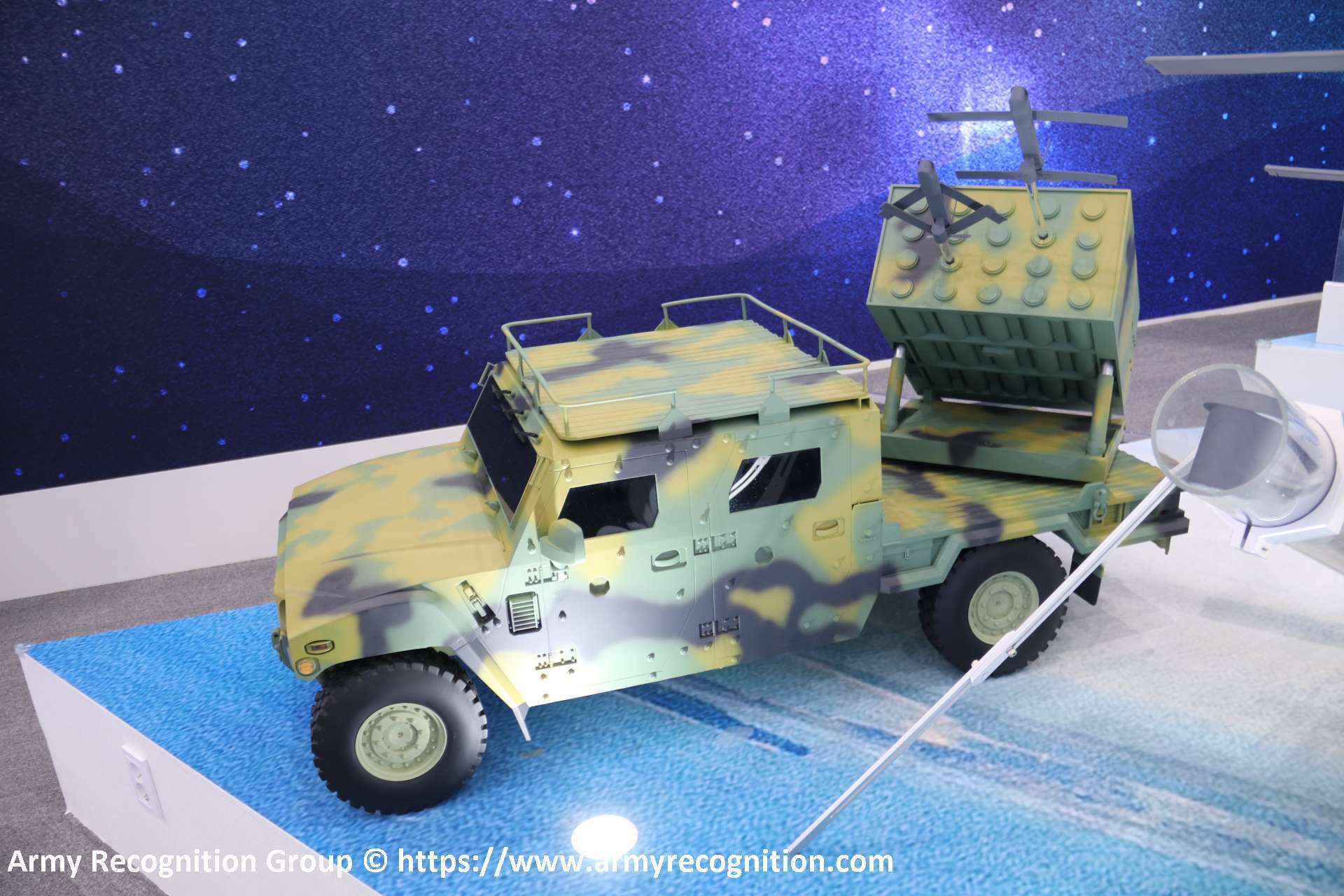
This new drone carrier vehicle combines the Kia K151 Raycolt with KAI's Compact & Multi-Mission Modular UAV (CMMAV) and has the capability to launch up to 20 drones. (Picture source: Army Recognition)
These two South Korean novelties mirror similar developments in other countries, to combine drone swarms, multiple launch systems, and vehicles already in service within their national armed forces.
In Russia, a Multiple Launch Drone System (MLDS) is reportedly under development, based on the 6x6 Kamaz 5350 Patrol armored vehicle. This system is designed to launch Lancet kamikaze drones via 16 transport-launch containers, allowing for the rapid deployment of up to 64 drones using a tube-based method instead of the traditional catapult launch system. The Lancet drones, developed by Zala Aero Group, are equipped with optical-electronic and TV guidance systems, ensuring precise control during the final flight phase. They have a range of 40 kilometers, a takeoff weight of 12 kilograms, and can reach speeds of up to 300 kilometers per hour. The drones can carry various types of warheads, including high-explosive, thermobaric, and high-explosive anti-tank (HEAT), making them versatile tools for the Russian military.
The MLDS prototype includes dual UAV operator control stations and utilizes swarm technology for its drones. The Lancet drones can share intelligence, autonomously identify targets, and conduct coordinated attacks. The system's layout features an armored cabin, followed by an operator center, and the launcher housing the drones. This configuration facilitates drone launches from various locations and swift repositioning, enhancing the system's potential to engage a greater number of objectives.
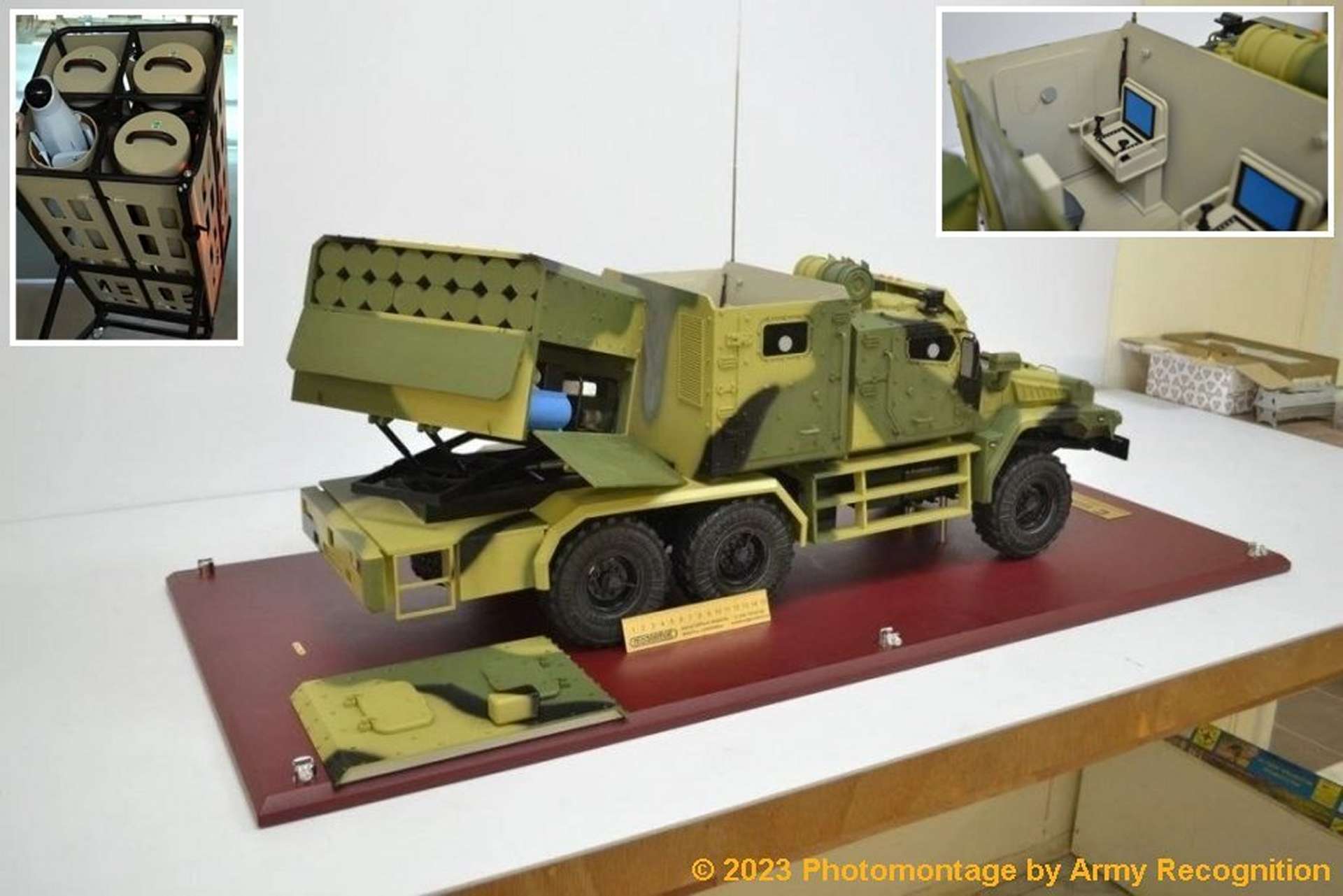
The MLDS prototype, based on the 6x6 Kamaz 5350 Patrol armored vehicle, is designed to launch Lancet kamikaze drones via 16 transport-launch containers, allowing for the rapid deployment of up to 64 drones. (Picture source: Russian social media)
Similarly, China has been investing heavily in swarm drone technologies. The People's Liberation Army (PLA) has demonstrated swarm tactics using FPV (First Person View) kamikaze drones, designed to overwhelm enemy defenses by coordinating attacks on ground units or infrastructure. In trials, modified Dongfeng Mengshi 6×6 CTL181A armored vehicles have been fitted with 48-tube multiple UAV launchers. These drones can be deployed individually or in swarms and are capable of autonomously maneuvering to their targets. The PLA has showcased the ability to launch drones even while on the move, integrating the system with various platforms to enhance battlefield capabilities.
In the United States, advancements are also underway. The Navy's Low-Cost UAV Swarming Technology (LOCUST) program has developed launchers capable of firing swarms of drones that can jam enemy communications and draw enemy fire. These launchers can tube-launch 31 drones in just 40 seconds, with the drones capable of flying autonomously or being manually controlled. The drones are expendable, costing approximately $15,000 each, and are intended for use in dangerous situations.
The Air Force Special Operations Command (AFSOC) is working on the Air-Launched Effects (A2E) program, which integrates drone swarming with larger platforms like the MQ-9 Reaper to deploy smaller UAVs mid-flight. These drones can carry out multiple roles, including ISR and strike missions, with the goal of controlling large formations of drones using a single crew.
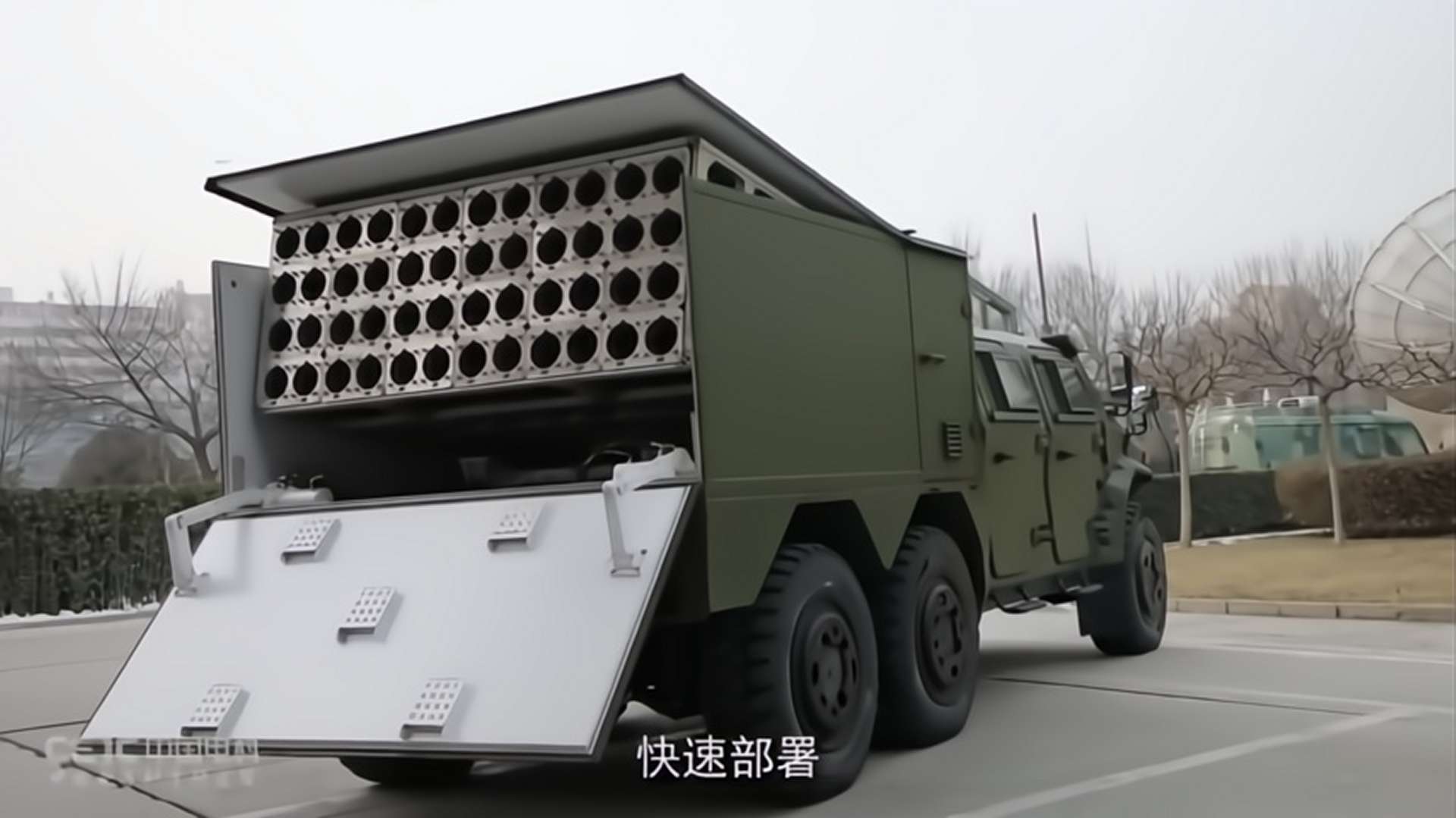
In trials, the Chinese People's Liberation Army (PLA) modified Dongfeng Mengshi 6×6 CTL181A armored vehicles which have been fitted with 48-tube multiple UAV launchers. (Picture source: CETC)
In Israel, SpearUAV has introduced the MCL Viper system, a Multi-Canister Launcher designed to deploy multiple drones from military vehicles without exposing operators to harm. The system integrates seamlessly with various platforms, offering capabilities in intelligence, surveillance, target acquisition, reconnaissance (ISTAR), and electronic warfare. Its versatility allows tactical units to maintain high maneuverability and real-time response, making it a valuable tool on the battlefield.
Finally, German company Rheinmetall has unveiled a containerized launcher concept for Hero family loitering munitions, also known as kamikaze drones, from Israeli firm UVision. The modified shipping container with 126 launch cells opens up operational possibilities on land and at sea, allowing for the deployment of drones in various scenarios.
The rapid progression of drone swarm technologies and multiple drone launcher systems is reshaping modern military tactics by providing enhanced operational capabilities. Traditional air defense systems may not be able to knock down incoming drones fast enough, and jamming may not be effective against autonomous drones that do not rely on direct operator control or GPS navigation. This has led to advancements in counter-UAS systems and the development of new defensive measures, such as deploying counter-swarms to outwit and outfight attacking drones.
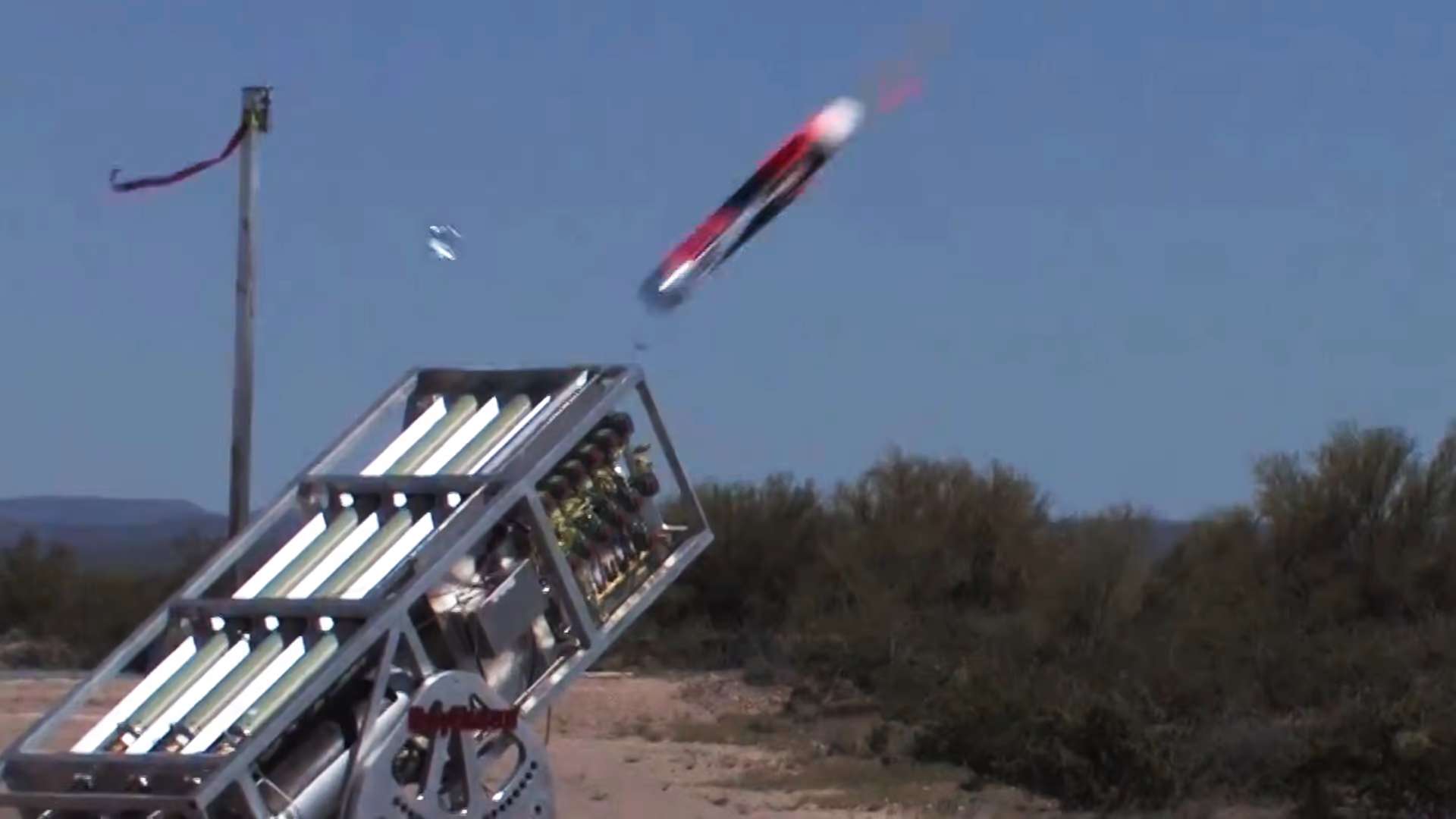
The US Navy's Low-Cost UAV Swarming Technology (LOCUST) program has developed launchers capable of launching 31 drones in just 40 seconds, with the drones capable of flying autonomously or being manually controlled. (Picture source: US DoD)
Read more: South Korea to combine new Drone Multiple Launcher with Chunmoo MLRS and L-SAM systems
- Details
- Written by: Administrator
- Category: 2024
- Hits: 7562
Hanwha Defense, a major player in South Korea's defense industry, has officially announced the development of a new 8x8 wheeled self-propelled howitzer at the KADEX 2024 defense exhibition. The project, set to be a key collaboration with the South Korean Armed Forces, aims to create a next-generation mobile artillery system to meet the military’s evolving operational needs.
Follow Army Recognition on Google News at this link
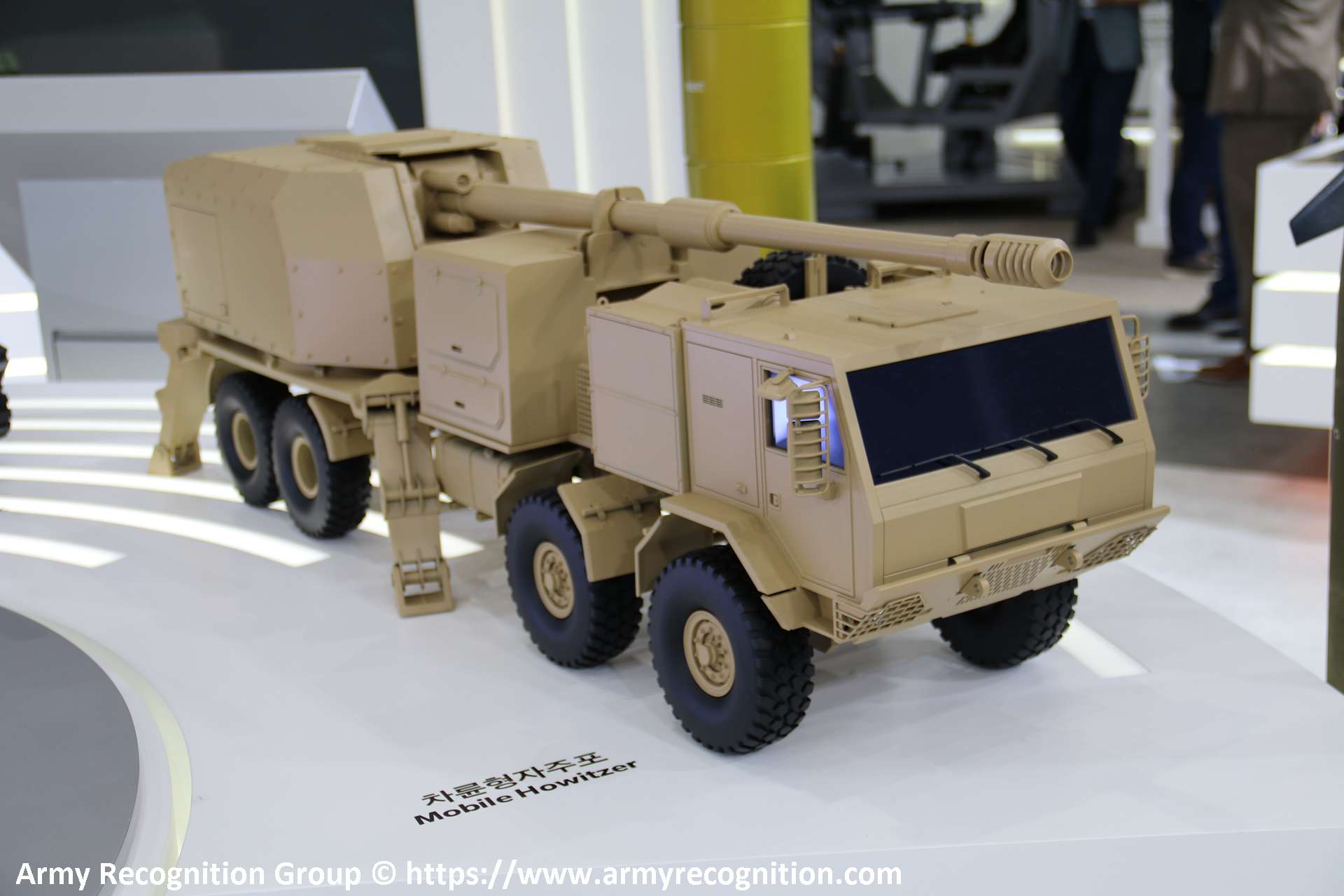
At KADEX 2024, South Korean defense company Hanwha Defense unveils a scale model of its upcoming 8x8 155mm wheeled self-propelled howitzer. (Picture source: Army Recognition Group)
At KADEX 2024, Hanwha Defense unveiled a scale model of its 155mm wheeled self-propelled howitzer project, offering a first look at the artillery vehicle’s expected design and features. Although the project is still in development, it is anticipated to advance rapidly in the coming years, with field trials expected as soon as 2025.
This new South Korean wheeled howitzer is expected to rival the RCH 155, a renowned self-propelled artillery piece produced by German defense company KNDS. With competition in the global defense market intensifying, the South Korean defense giant seeks to position its upcoming artillery vehicle as a formidable alternative, offering advanced mobility and firepower tailored to modern battlefield requirements.
Hanwha Defense's new howitzer will be based on an 8x8 wheeled truck chassis, providing it with the high mobility needed for rapid deployment and efficient operation in diverse terrains. Using a wheeled platform is a departure from traditional tracked systems, such as the K9 Thunder, one of South Korea’s flagship self-propelled howitzers. The new vehicle is expected to offer improved speed and flexibility by integrating a wheeled configuration, especially in regions where road infrastructure allows for greater maneuverability.
The new howitzer will feature the same turret weapon system as the K9, a globally recognized artillery platform. This choice reflects the success of the K9's highly effective 155mm caliber gun, which has been proven in various military operations. The modular approach of utilizing the K9's turret in the new design allows Hanwha to leverage existing technologies while enhancing the vehicle's versatility and operational capacity.
Unlike traditional self-propelled artillery that typically requires larger crews, Hanwha Defense’s new wheeled howitzer will be designed to operate with a crew of just two. This marks a significant reduction in manpower requirements, a feature that aligns with trends in modern military systems emphasizing automation and operational efficiency. The reduction in crew size will likely be achieved through advanced automation and remote-controlled systems, allowing for quicker response times and reduced logistical burdens on the battlefield.
Hanwha's entry into the wheeled self-propelled artillery market is seen as a direct challenge to European competitors, particularly the German-made RCH 155, which has garnered international attention for its performance and mobility. The RCH 155, produced by KNDS, is also based on a wheeled chassis and has been widely regarded as one of the most advanced self-propelled howitzers in the market.
South Korea’s ambition to develop its own 8x8 howitzer is part of a broader trend of modernizing its military equipment while reducing dependency on foreign suppliers. By developing a domestically produced solution, South Korea is not only bolstering its defense capabilities but also strengthening its position in the global arms market, with an eye on potential export opportunities.
The development of a new 8x8 wheeled self-propelled howitzer reflects South Korea’s growing influence in the global defense industry. Hanwha Defense, already recognized for its contributions to land defense systems, is expected to showcase this new vehicle as part of its broader strategy to expand its reach in international markets.
This new 8x8 self-propelled howitzer, once fully developed, could become a competitive export product, especially for countries looking for cost-effective, high-performance alternatives to European or American systems. With an emphasis on reduced crew requirements, mobility, and firepower, Hanwha’s 8x8 howitzer is set to address the needs of modern militaries facing diverse operational challenges.

- Details
- Written by: Vandenbosch
- Category: 2024
- Hits: 5150
At the KADEX 2024 exhibition in South Korea, LIG Nex1 presented advanced technological solutions for drones. Two key systems drew particular attention: a transport multicopter drone capable of carrying a 40kg payload and an integrated anti-drone system, designed to address the growing threats posed by unidentified drones.
LIG Nex1 presented advanced technological solutions for drones at KADEX 2024. (Picture source: Army Recognition)
The first system, the "40kg-class transport multicopter drone," uses a hybrid engine, combining an internal combustion engine with a battery. This configuration allows the drone to fly for more than 60 minutes while carrying a significant payload. This capability for heavy material transport opens up important strategic possibilities, whether for military forces or civilian missions, particularly in environments where ground access is limited. The drone can be used to deliver supplies, equipment, or even ammunition on the battlefield, providing enhanced flexibility during logistical operations.
The hybrid engine represents a major advancement for drones in this category. By combining the benefits of internal combustion, which provides enough power to lift heavy loads, with the energy efficiency of batteries, LIG Nex1 has created a device capable of extended missions while minimizing dependence on conventional energy sources. This combination is particularly useful in situations where flight duration and load capacity are priorities, as is often the case in military operations in remote or hard-to-reach areas.
In addition to this transport capability, LIG Nex1 unveiled an integrated anti-drone defense system. As the use of drones, both for military and civilian purposes, continues to expand, the threat posed by unidentified drones, especially to sensitive infrastructure, is becoming increasingly concerning. This defense system aims to detect, identify, and neutralize such threats, ensuring the protection of critical installations such as military bases, government buildings, or energy infrastructures.
The system operates through advanced sensors that detect the presence of hostile drones nearby. Once detected, these drones are identified to assess their threat level. If the drone is deemed dangerous, several options are available to neutralize the threat, ranging from interference with its control signals to more aggressive solutions, such as the use of directed energy weapons.
This integrated anti-drone system is designed to be adaptable to different environments. It can be installed in fixed infrastructures or deployed on mobile platforms, providing flexible and scalable defense coverage depending on operational needs. This makes it a viable solution for protecting strategic areas and supporting moving troops, particularly during operations in complex terrains where the threat of drones can be omnipresent.
These two systems presented by LIG Nex1 at KADEX 2024 illustrate the company's commitment to addressing the current challenges of the modern battlefield. The 40kg-class transport multicopter drone and the anti-drone system offer concrete solutions to the growing need for mobility and security, two essential aspects for today's armed forces.
As drones continue to revolutionize military operations, both in surveillance and attack roles, the innovations presented by LIG Nex1 could play a key role in how armed forces adapt to this new environment. By combining heavy transport capabilities with sophisticated defense solutions, LIG Nex1 is establishing itself as a leader in the research and development of aerial defense technologies.
In conclusion, the drone solutions presented by LIG Nex1 at KADEX 2024 provide effective responses to emerging challenges, whether in logistics or security. These technologies help to enhance operational capabilities while addressing the growing threats posed by unidentified drones, marking a significant advancement in the evolution of modern defense systems.

- Details
- Written by: Jérôme Brahy
- Category: 2024
- Hits: 9076
At KADEX 2024, Hanwha Aerospace introduced the Tigon 8x8, a multi-purpose combat vehicle developed using the company’s own technology. This new 8x8 configuration builds on the earlier Tigon 6x6 wheeled armored vehicle, which has achieved export success in the Middle East and Southeast Asia. The Tigon 6x6 has been modified into an 8x8 variant to enhance mobility, firepower, and survivability. Equipped with an engine exceeding 700 horsepower, the Tigon 8x8 is designed to maintain its performance even in challenging environments, including desert conditions.
Follow Army Recognition on Google News at this link
At the KADEX 2024 exhibition, the Tigon 8x8 was presented as a tank destroyer, equipped with the TAipers ATGM, also known as Cheongeom. (Picture source: Army Recognition)
The vehicle is capable of carrying various weapon systems, such as a 12.7mm Remote Controlled Weapon Station (RCWS), a 105mm turret, and Anti-Tank Guided Missile (ATGM) launchers. It offers ballistic protection at STANAG Level 4 and mine protection at STANAG Level 3 or higher. This ensures a degree of protection for the crew in the event of direct fire or mine threats. At the event, the Tigon 8x8 was presented as a tank destroyer, equipped with the TAipers ATGM, also known as Cheongeom. The vehicle’s role is to engage enemy tanks from long distances, using the ATGM system to target key assets before any close combat occurs.
The TAipers ATGM has a range of 8 kilometers, reaches a speed of 200 meters per second, and can penetrate up to 1,000 millimeters of rolled homogeneous steel. The Tigon 8x8 has been selected for the 24-1 Export Weapon System Modification and Development Project, under the leadership of the Korea Research Institute for Defense Technology Planning and Advancement (KRIT). In September 2024, Hanwha signed a contract related to this project. Although details of specific buyers remain confidential, the Tigon 8x8 has already seen exports to the Middle East and Southeast Asian regions.
The Tigon series originated with the 6x6 model, which was first introduced in April 2018 at the Defense Services Asia (DSA) exhibition in Kuala Lumpur. The Tigon 6x6 was designed for operations in the Middle East and Asia, providing enhanced performance compared to Hanwha’s earlier Black Fox 6x6 armored vehicle. Powered by a 525-horsepower engine, the 6x6 model can reach speeds exceeding 110 km/h and is equipped with STANAG Level 3 protection against direct fire, mines, and improvised explosive devices (IEDs). The Tigon 6x6 also features amphibious capabilities, using water-jet propulsion to achieve speeds of 8.5 km/h in water.
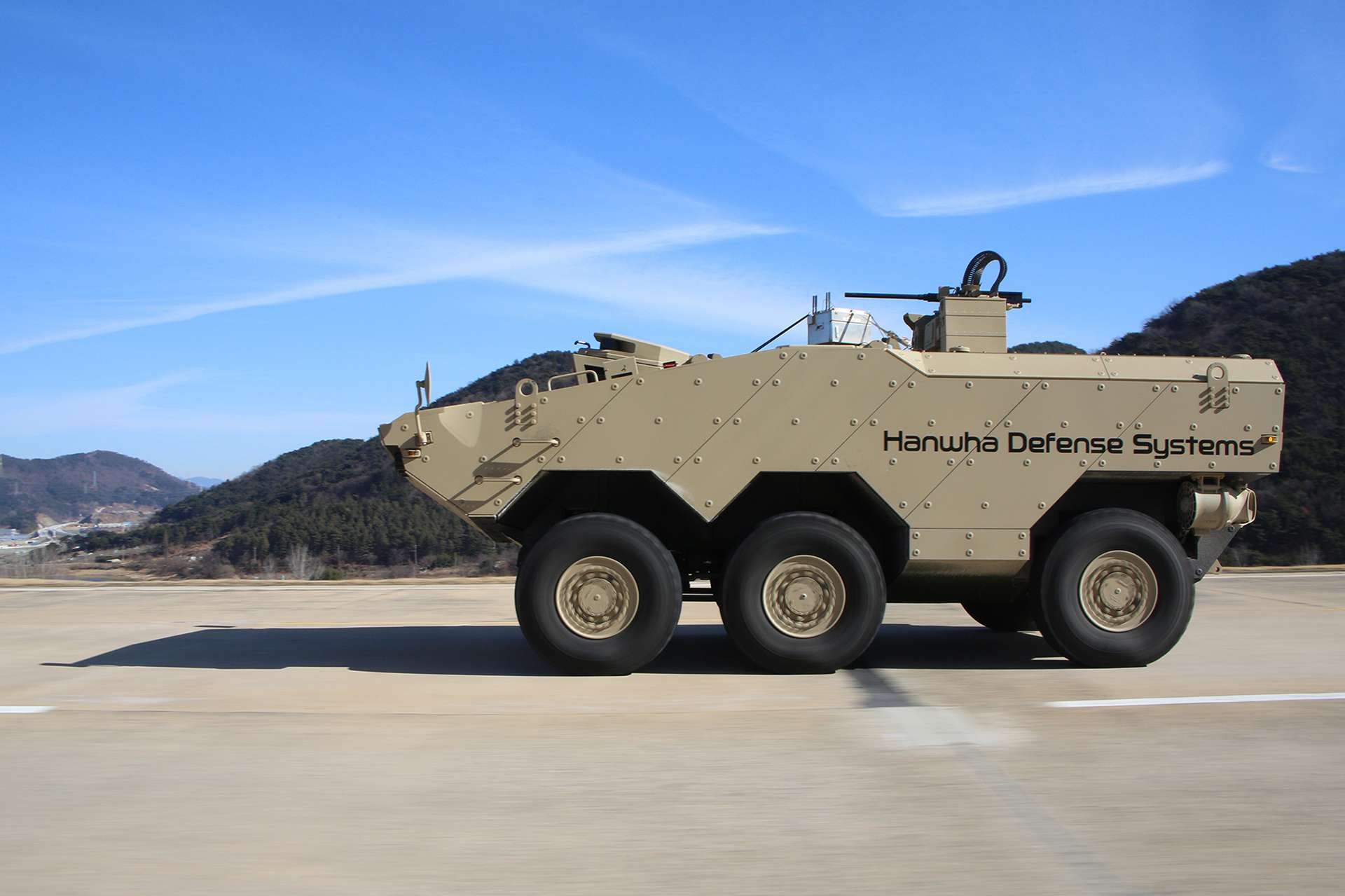
The Tigon series originated with the 6x6 model, which was first introduced in April 2018 at the Defense Services Asia (DSA) exhibition in Kuala Lumpur. (Picture source: Hanwha Aerospace)
The Tigon 6x6 can be fitted with a range of armaments, including a 12.7mm or 30mm RCWS and a 90mm cannon. The vehicle is versatile and can serve as an armored personnel carrier, accommodating up to 11 individuals, including a driver, commander, and gunner. It uses a modular system, allowing it to adapt to various operational requirements and environments, including road and off-road terrains.
In 2022, Hanwha showcased a land platform integration kit for the TAipers ATGM at the MSPO exhibition in Kielce, Poland. The missile was initially developed for helicopters but has been adapted for land vehicle deployment. The TAipers system can be mounted on a wide range of platforms, including light tactical and heavily armored vehicles. It is stored in a pod and can be elevated for launch when a target is identified. The missile system’s versatility in both air and ground roles reflects current trends in the adaptation of air-to-ground munitions for multi-role capabilities.
The TAipers missile system is comparable to other systems in the market, such as the Israeli Spike and Turkish UMTAS missiles. Its range and fiber-optic guidance have made it suitable for a variety of roles, both ground-launched and air-launched, without major modifications. Hanwha’s adaptation of the TAipers system highlights the growing demand for flexible missile systems across different platforms.
Hanwha’s broader export efforts include a partnership with Malaysia’s AVP Engineering, where the Tigon 6x6 was first showcased at the DSA 2018 exhibition. AVP supplies firefighting vehicles and military trucks to the Malaysian government and has collaborated with Hanwha on technology transfers, local manufacturing, and logistics support. After the exhibition, the Malaysian Army was expected to conduct performance trials of the Tigon 6x6, which may open further export opportunities in the region.
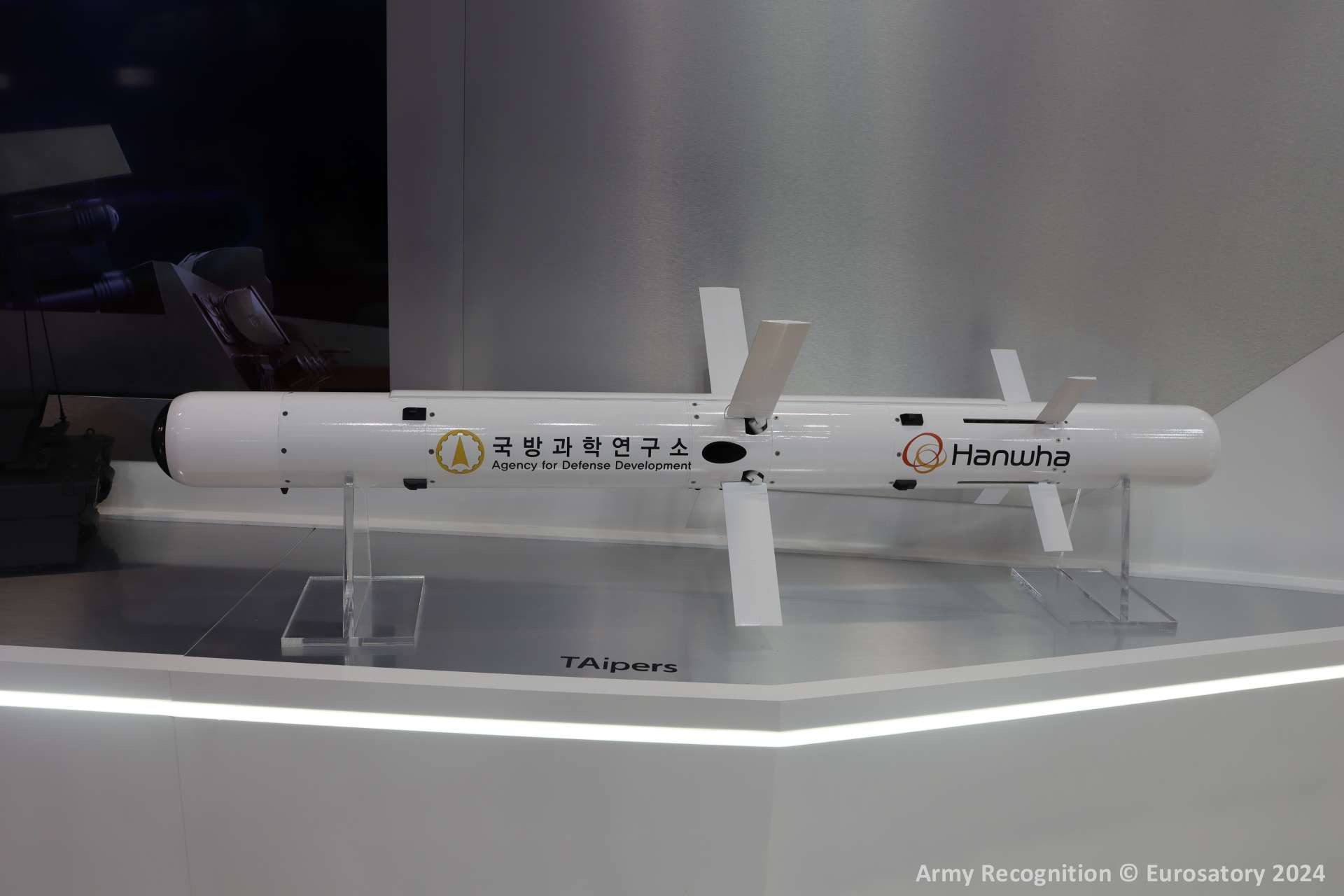
Initially developed for helicopters but has been adapted for land vehicle deployment, the TAipers system can be mounted on a wide range of platforms, including light tactical and heavily armored vehicles. (Picture source: Army Recognition)
Read more: Hanwha Aerospace reveals Tigon 8x8 tank destroyer featuring TAipers ATGM at KADEX 2024
- Details
- Written by: Halna du Fretay
- Category: 2024
- Hits: 4113
At the KADEX 2024 exhibition in South Korea, the South Korean Army unveiled a next-generation military drone equipped with an assault rifle. This drone, developed for combat support missions, focuses on troop protection and enhancing strike capabilities against enemy targets. Equipped with autonomous technologies, this system positions itself as a strategic asset in modern military operations, where speed and precision are crucial.
Follow Army Recognition on Google News at this link
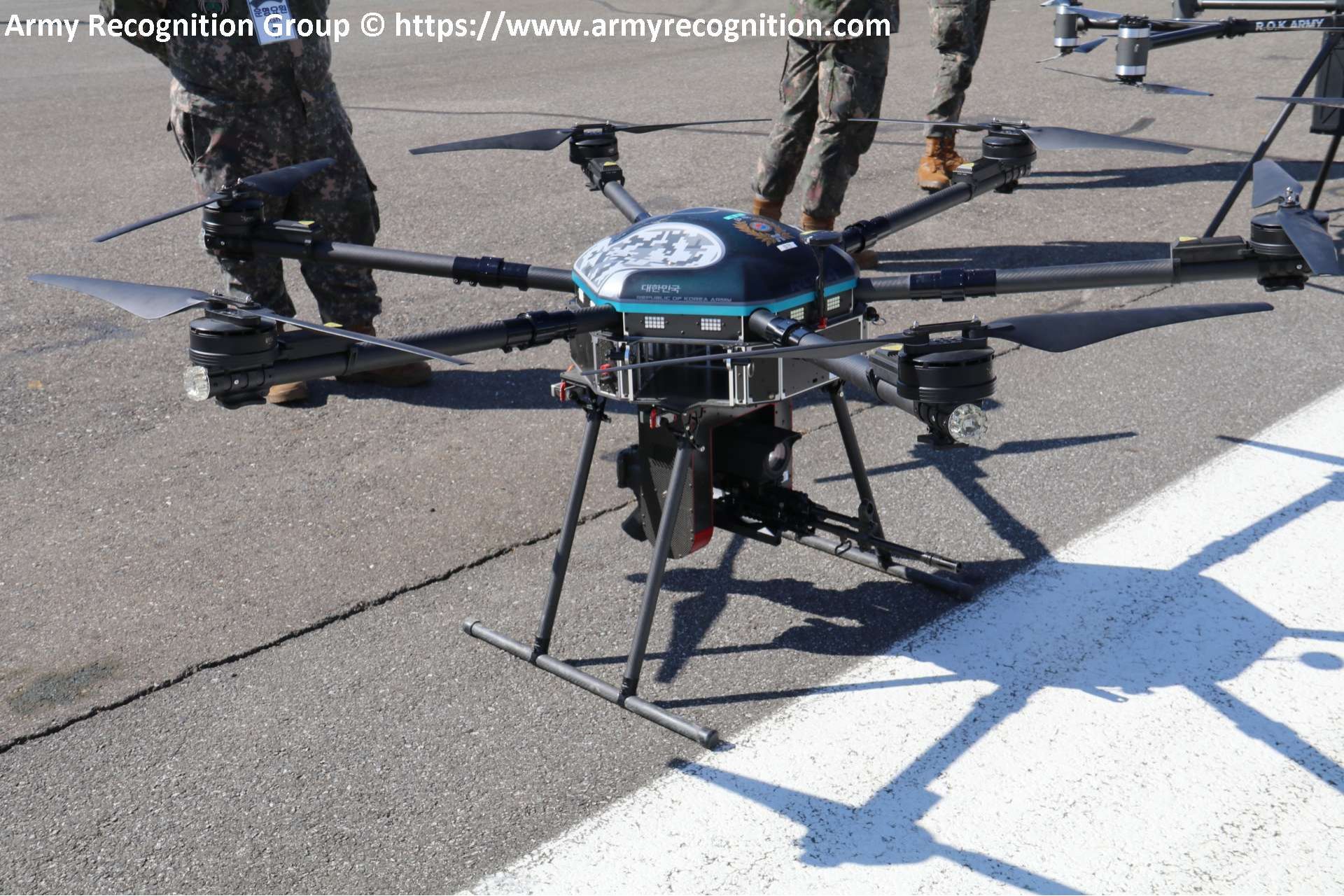
The drone can operate at a maximum altitude of 500 meters, with altitude control adjusted according to the engagement range, between 150 and 250 meters. (Picture source: ArmyRecognition)
The development of this drone highlights South Korea's commitment to integrating advanced technologies into its military equipment to address both current and future threats.
The drone weighs 33.2 kg, with a maximum load capacity of 43 kg, making it capable of carrying additional weapons or other equipment. It can reach a top speed of 80 km/h, while its operational speed during missions is 40 km/h, ensuring rapid intervention in combat scenarios. With an effective firing range of 460 meters, the drone can engage medium-range targets with high precision, thanks to its stability and altitude control technology, which allows it to adapt to varying terrains. It can operate at a maximum altitude of 500 meters, with altitude control adjusted according to the engagement range, between 150 and 250 meters.
One of the key innovations of this system is its assault rifle, allowing it to play a critical role in close support missions. The drone can provide direct support to ground units while minimizing risks for frontline soldiers. Its ability to maintain flight stability even in unstable conditions enables it to engage enemy targets while remaining mobile and difficult to neutralize.
In a context of growing tensions with North Korea, this drone represents an essential component of South Korea's defense system. The constant threat of military provocations, such as special forces infiltrations or surprise strikes, makes this drone particularly suited for enhancing surveillance and rapid response capabilities along the border. It could be used to monitor demilitarized zones, detect enemy movements, and engage targets before they pose a direct threat to South Korean troops.
The company behind this development has not yet been specified, but the South Korean Army is clearly positioning itself as a pioneer in the integration of armed drones into its military strategies. The proliferation of this type of unmanned vehicle could strengthen South Korea's defense capabilities in the context of military modernization. Designed to meet the needs of contemporary battlefields, this drone could play a decisive role in future operations against adversaries like North Korea, providing an autonomous, mobile, and lethal solution for rapid and precise support missions.
Read more: South Korean Army Introduces Assault Rifle Drone for Border Defense at KADEX 2024
- Details
- Written by: Triffaux
- Category: 2024
- Hits: 6747
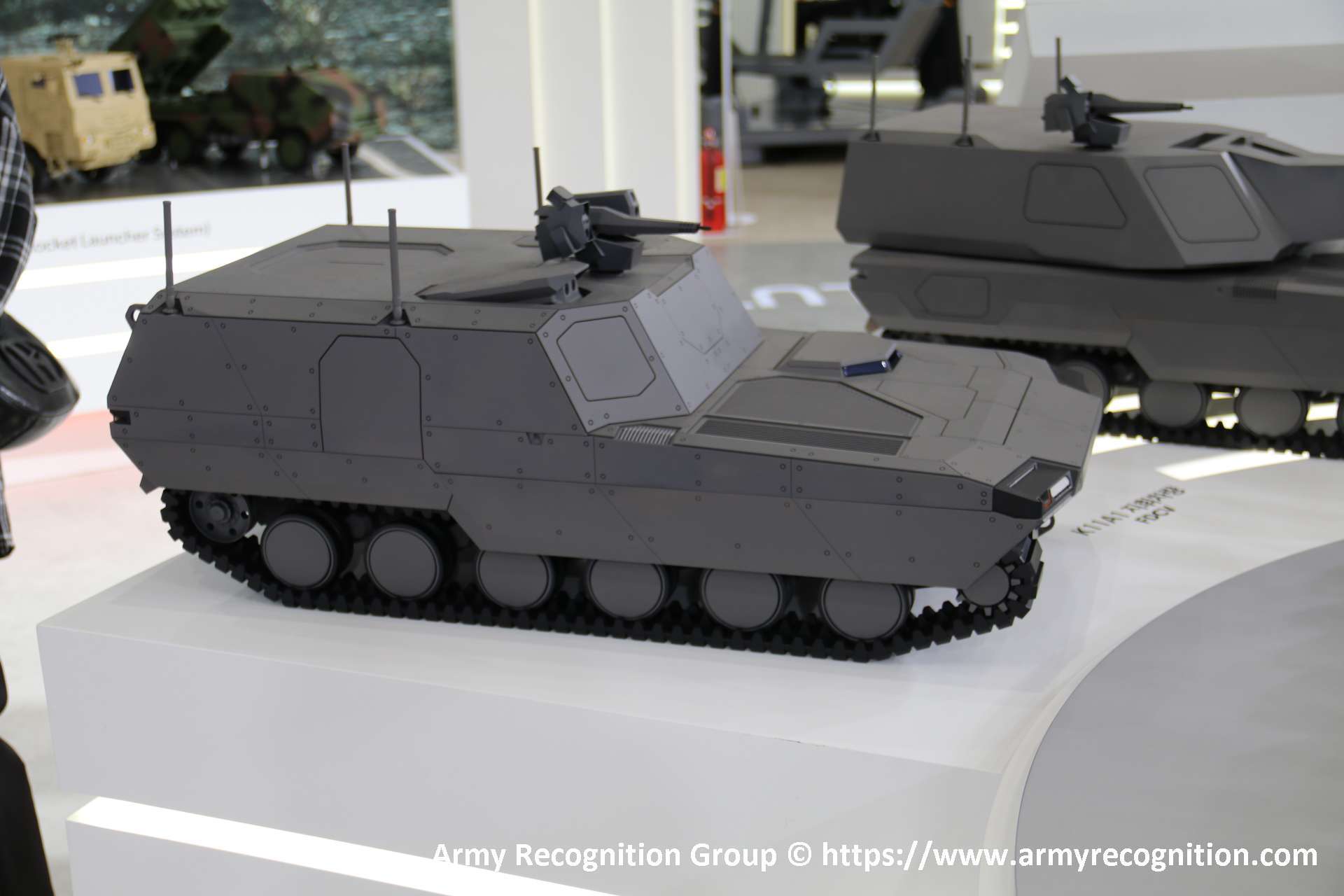
The K11A1 Fire Direction Control Vehicle (FDCV), showcased at KADEX 2024 in South Korea, represents a major advancement in the field of remote artillery control. This vehicle stands out for its ability to remotely operate the K9A3 Self-Propelled Howitzer (SPH), both for firing and driving. Developed from the K9A3 platform, it is designed for MUM-T (Manned-Unmanned Teaming) operations and incorporates improvements in protection and operability through the installation of a Remote Controlled Weapon Station (RCWS) and enhanced armor, ensuring better battlefield survivability.
Hanwha Aerospace Next-Gen K11A1 Fire Direction Control Vehicle (Picture source: Army Recognition)
The K11A1 is built on the tracked chassis of the K9A3 self-propelled howitzer and is inspired by the K10 ARV ammunition resupply vehicle. However, the internal layout has been redesigned to accommodate six control stations, enabling command post personnel to efficiently manage operations.
One of the key strengths of the K11A1 is its ability to operate up to three K9A3s remotely, without human intervention on board. This optimizes artillery support while minimizing risks to troops. This capability is perfectly suited to the demands of network-centric warfare, where personnel protection is paramount.
The K9A3, meanwhile, represents a strategic advancement over the original K9. Fully automated, it is optimized for the use of specialized artillery munitions and shell charges, with a long barrel adapted to modern battlefield needs. The K9A3 is expected to significantly enhance the long-range strike capabilities of field armies.
The K9A3 is part of the ongoing evolution of the K9 platform, already in service in several countries such as South Korea, Poland, Norway, Estonia, Finland, Egypt, India, Turkey, and Australia. Additionally, the K9 is part of artillery acquisition programs in Romania and the United Kingdom. As the K9A2 program nears its final stages, the development of the K9A3 is gaining momentum.
Countries like Poland, India, and Egypt are particularly well-suited to adopt the K9A3, given their needs for long-range artillery systems and their established relationships with the K9 platform. This development marks a major milestone in self-propelled artillery and illustrates Hanwha Aerospace’s commitment to maintaining its leadership in this sector.
With its technical enhancements and considerable export potential, as evidenced by the significant international sales of previous versions, the K9A3 is positioning itself as a key player in the global artillery systems market.
The K11A1, showcased at KADEX 2024, reflects South Korea’s technological innovations in artillery and tactical command systems. This vehicle combines remote operability, enhanced protection, and advanced fire coordination capabilities, making it an essential asset for modern armed forces.
- Details
- Written by: Halna du Fretay
- Category: 2024
- Hits: 4924
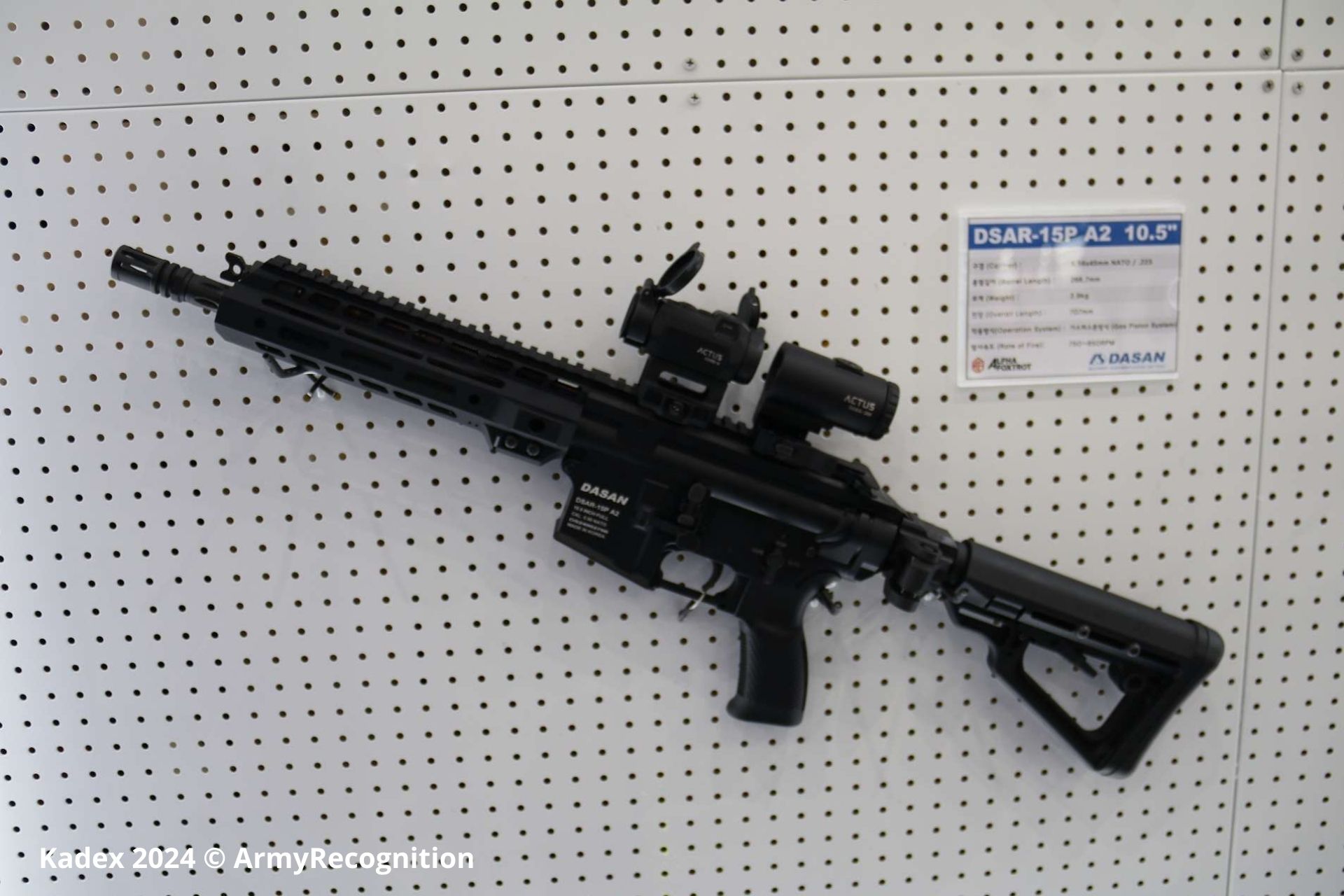
At KADEX 2024 in South Korea, the South Korean manufacturer Dasan Machinery presented its DSAR-15P assault rifle, developed to meet the operational requirements of special forces and law enforcement agencies. Based on the AR-15 platform, this rifle operates with a gas piston system and features a cold-hammer-forged and chrome-lined barrel, ensuring durability and precision in demanding operational conditions.
The DSAR-15P stands out with its rotating bolt and gas operation system, inspired by well-known military models like the HK416 and CAR-816 (Picture source: ArmyRecognition)
The DSAR-15P was conceived as part of a modernization effort for the South Korean Armed Forces, specifically to replace the aging K1A model in service. Two acquisition programs were launched to address this need: the Special Operations Submachine Gun Type-I program, aimed at large-scale deployment, and the Type-II program, focused on rapid procurement of pre-developed systems in smaller quantities. In 2020, the DSAR-15P was selected as the base for the Type-I program after winning a competition against the STC-16 from S&T Motiv. However, allegations of leaked military secrets led to the project's cancellation in 2021, forcing a restart.
The DSAR-15P stands out with its rotating bolt and gas operation system, inspired by well-known military models like the HK416 and CAR-816. It is equipped with a Picatinny rail on the top receiver and both sides of the barrel, allowing for the attachment of various accessories such as panoramic sights, flashlights, and laser pointers. The rifle also features a six-position adjustable stock, making it adaptable to mission-specific needs.
In terms of performance, the DSAR-15P is chambered in 5.56 x 45mm NATO rounds and uses a standard 30-round magazine. It offers three barrel lengths: 11.5, 14.5, and 16 inches. With an effective range of 350 meters, it is suitable for both close-quarters engagements and mid-range operations.
The DSAR-15P has attracted the attention of several international military forces. In Indonesia, units such as the Presidential Security Force and the Bravo Detachment 90 have adopted the rifle for their operations. Similarly, the special forces unit of the Bangladeshi Navy employs the DSAR-15P in their diving and salvage missions. Despite the cancellation of the initial project in South Korea, Dasan Machinery still plans to participate in the revised Type-I program with an improved version of the DSAR-15, featuring a quick-release barrel.
Read more: Dasan Machinery Presents Versatile DSAR-15P Assault Rifle at KADEX 2024
- Korea Defense Industry introduces remote-controlled Mine Spreader-II vehicle with GPS-based mine deployment
- International Defense Partner Extends Contract with BlackSky for Advanced Satellite Capabilities
- Hyundai Rotem and Rainbow Robotics Collaborate on Advanced Multi-Legged Defense Robot for Counter-Terrorism
- Hyundai Rotem Unveils K2 Tank with Active Protection Now World's Most Protected