
- Details
- Written by: Triffaux
- Category: 2024
- Hits: 4821




Breaking news






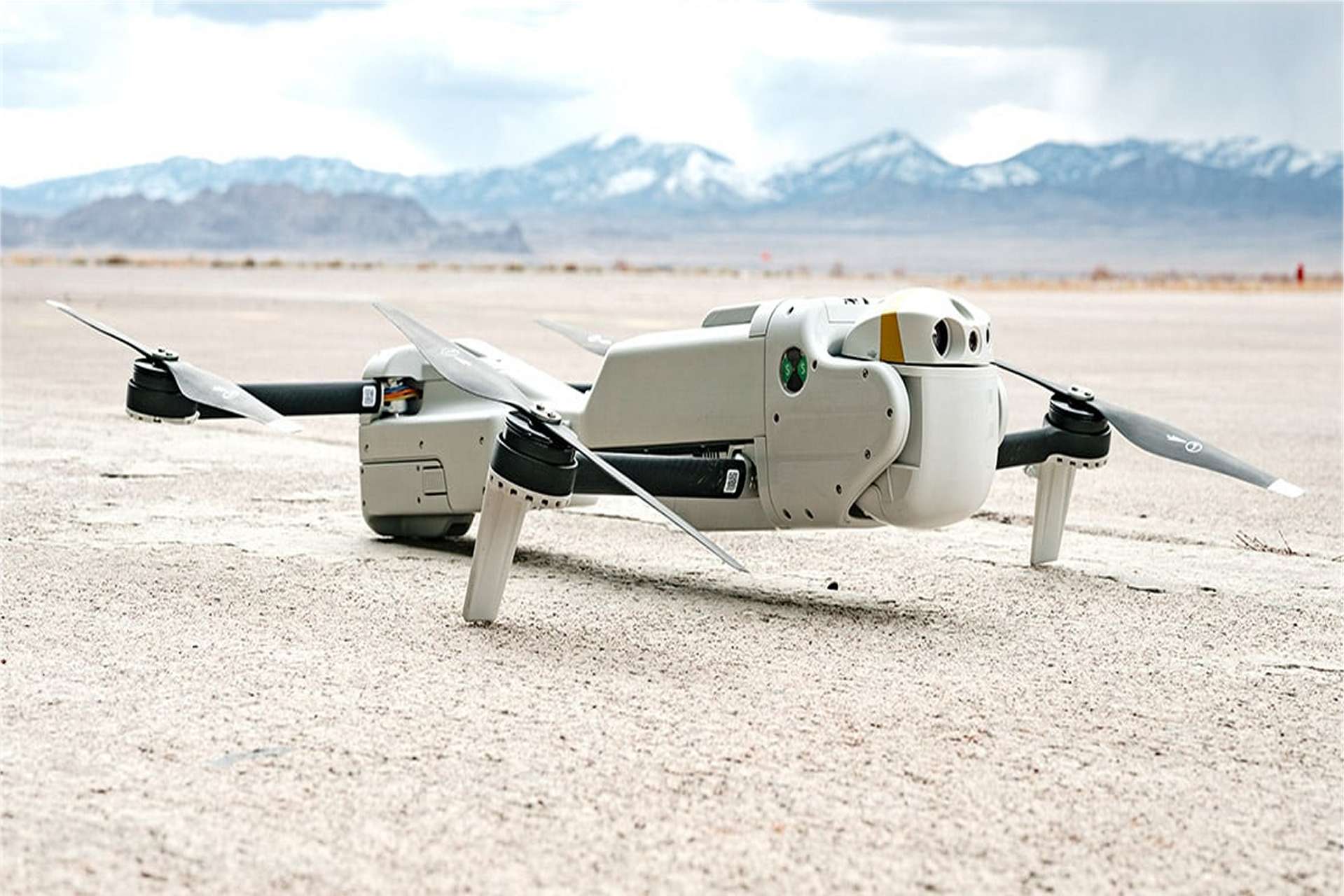
On May 7, 2024, during the Special Operations Forces (SOF) Week convention in Tampa, Teledyne FLIR Defense unveiled its latest innovation in unmanned aerial technology, the Rogue 1 loitering munition system. Known as a "suicide drone," this new system represents a significant advancement in military equipment, designed to carry out high-precision lethal strikes across a variety of battle scenarios.
Follow Army Recognition on Google News at this link
Teledyne FLIR Rogue 1 Next-Generation suicide drone (Picture source: Teledyne FLIR)
The Rogue 1 stands alone in its category, with vertical launch and landing capabilities that enhance its operability in diverse environments. It is engineered to strike targets with surgical precision, making it a reliable tool against both stationary and mobile targets.
Equipped with advanced electro-optical and FLIR Boson 640+ thermal cameras, the Rogue 1 provides exceptional reconnaissance capabilities, both day and night. Its gimballed payload system enables extremely precise targeting, which, combined with a variety of modular payloads, offers adaptability for numerous military tasks. These payloads range from explosively formed penetrators (EFPs) to non-lethal options, catering to different operational needs.
The operational efficiency of the drone is underscored by its 30-minute flight time, speeds exceeding 70 mph, and a range of over six miles. These specifications not only allow it to surpass current systems but also to adapt seamlessly to the evolving dynamics of modern warfare.
During the presentation, Dr. JihFen Lei, Executive Vice President and General Manager of Teledyne FLIR Defense, emphasized the strategic value of the Rogue 1. "This system is designed to provide our troops with an unmatched advantage on the battlefield," said Dr. Lei. "Its integration into the U.S. Marine Corps as part of the Organic Precision Fires-Light (OPF-L) program is a testament to its potential to change the face of military engagements."
The Rogue 1, introduced at SOF Week, enhances modern warfare technology by incorporating advanced sensors for improved reconnaissance, precision targeting systems for accurate strikes, and robust defensive features for increased survivability. This drone is designed to operate in various combat environments, offering flexibility and adaptability in strategic deployments. Its impact on U.S. military operations lies in its ability to execute precise attacks from a distance, reducing risk to personnel and increasing the effectiveness of missions.
Read more: US company Teledyne FLIR unveils Rogue 1 next-gen suicide drone

- Details
- Written by: Vandenbosch
- Category: 2024
- Hits: 4742
Breaking news
The Czech Republic is set to deliver the initial batch of 180,000 artillery shells to Ukraine by early summer, as part of a new initiative to procure ammunition outside of the EU, revealed Czech President Petr Pavel during an interview with German television channel ARD on May 8, 2024.
Follow Army Recognition on Google News at this link
The Czech-led ammunition initiative aims to provide substantial military support to Ukraine. (Picture source: US DoD)
The Czech-led ammunition initiative aims to provide substantial military support to Ukraine by sourcing artillery ammunition from global suppliers outside of the European Union. This initiative was developed in response to the EU's failure to deliver on its promises of artillery shell supplies to Ukraine and the ongoing intense conflict with Russia.
During the interview, President Pavel, alongside Prime Minister Petr Fiala, stated their expectation that the delivery would occur in June, with additional contracts already in place for further substantial ammunition shipments.
President Pavel acknowledged that the initiative was progressing slower than desired but emphasized the urgent need for other nations to enhance their support for Ukraine. He highlighted the importance of reducing Russian hopes of victory to hasten peace talks, noting that minimal Russian expectations of success could prolong the conflict.
President Pavel criticized the West's initially cautious approach to supporting Ukraine, suggesting that more rapid and decisive support could have significantly altered the current situation. He stressed the importance of learning from past hesitations to provide immediate and comprehensive aid to prevent further loss of Ukrainian territory and lives.
Further discussions on the progress of military aid and ammunition procurement between the foreign ministers of Ukraine and the Czech Republic underscore the ongoing collaborative efforts.
In his remarks, Pavel also addressed the ideological divide between Russia and Europe, describing Russia's view of international relations as a zero-sum game where any Russian success necessitates others' losses. He cautioned against any conciliatory approach that might be perceived as naive given the stark differences in values between Russia and European nations.
Earlier this year, Prague initiated the purchase of approximately 800,000 shells for Ukraine from various global sources, with the potential figures now expected to nearly double, according to Czech Foreign Minister Jan Lipavsky.
Initially, the Czech Republic identified potential sources for 800,000 artillery shells, with plans to expand this to up to 1.5 million rounds due to high demand and the critical need in Ukraine. The funding for this initiative comes from multiple international partners, with significant contributions from countries like Germany, Norway, and Sweden, among others, to meet a total estimated cost of around €3 billion.
However, despite securing commitments from 18 countries, there have been challenges in fully funding the initiative. There remains a funding gap that needs to be addressed to purchase and deliver the full cache of ammunition. The initiative highlights broader concerns about the European defense industry's capacity to scale up production and meet urgent military needs.
The Czech government is actively working with various international suppliers to finalize procurement agreements. The first batch of ammunition is expected to arrive in Ukraine in June, indicating a successful initial phase of this ambitious project.
Read more: Czech Republic to Deliver First 180 000 Artillery Shells to Ukraine Next Month
- Details
- Written by: Halna du Fretay
- Category: 2024
- Hits: 6907
Breaking news
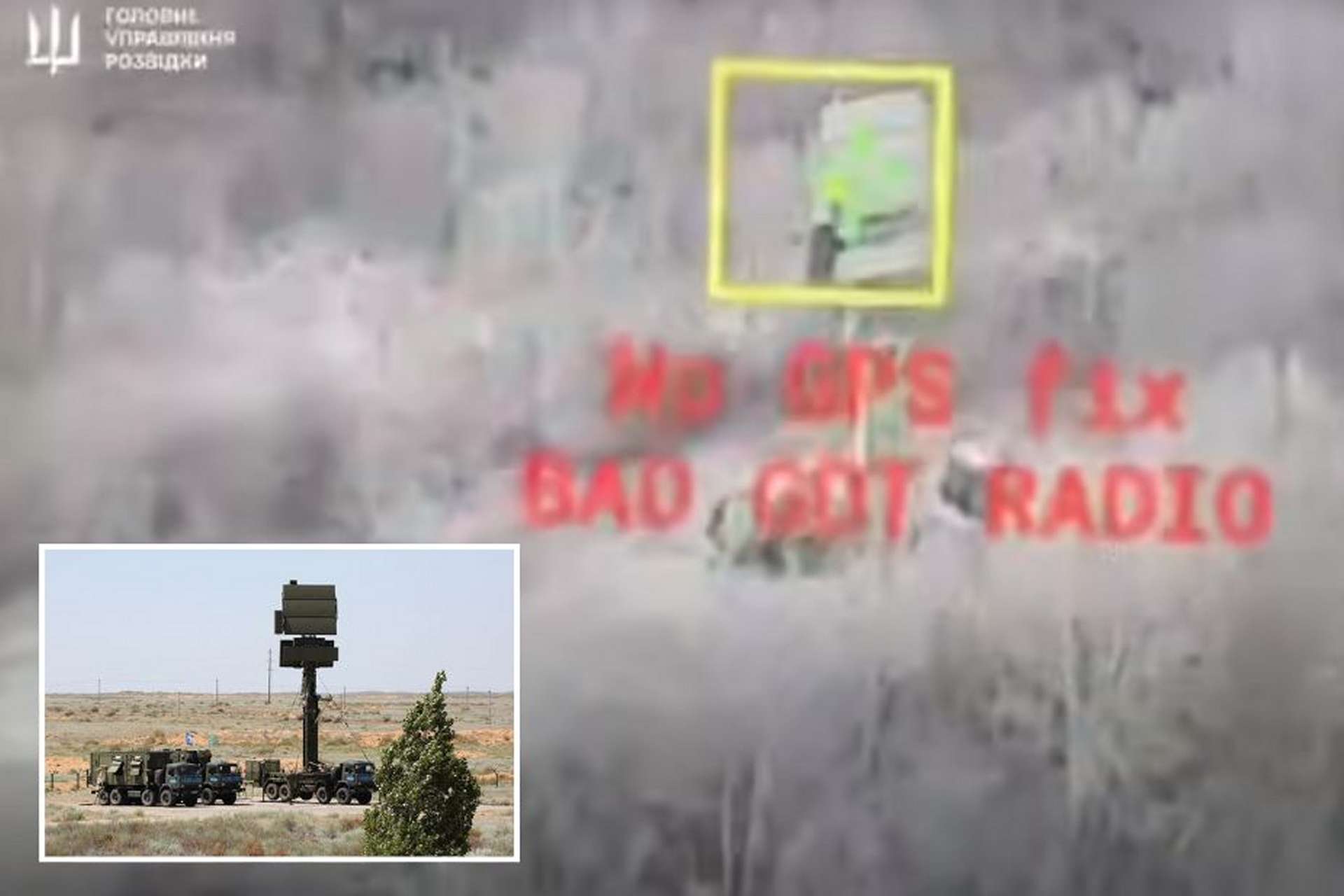
The Ukrainian Ministry of Defense has reported successful operations using Polish Warmate loitering munitions to target and destroy Russian radar systems. The strikes, which occurred on April 27 and 28, 2024, targeted the mobile 48Ya6-K1 Podlet-K1 and the portable Repeynik radars, both crucial to the Russian military's detection capabilities.
The Russian 48Ja6-K1 Podlet-K1 just before being destroyed by Polish Warmate loitering munition drone (Picture source: Ukrainian MoD)
On April 27, the Main Intelligence Directorate of Ukraine (HUR MO) released footage of an attack conducted by the Special Unit Gusy-9 in collaboration with the 15th Independent Artillery Reconnaissance Brigade, known as Black Forest. The operation targeted a Podlet-K1 radar located in the village of Krasnaya Polana in Russia's Belgorod region. This mission involved the deployment of at least two Warmate drones; one drone struck the radar's active antenna while the other hit its command and power supply cabin.
The Podlet-K1 radar, also known as 48Ya6-K1, is a mobile solid-state radar station developed by the Russian defense company "Almaz-Antey". It is specifically designed to detect air targets at low and extremely low altitudes. This three-dimensional radar station employs a circular scan phased-array radar to track flying objects, even in complex interference scenarios. Its primary role is to provide target information to surface-to-air missile systems such as the S-300 and S-400.
Development of the Podlet-K1 began in 2009, followed by state trials in 2010, and it was deployed to the Russian Air Defense Forces in 2015. The radar's capabilities include automated target identification and precise coordinate determination, allowing it to monitor various aerodynamic targets, especially those that are difficult to detect and track.
The Podlet-K1 operates in multiple detection modes suitable for different altitudes and terrains, including a special mode for mountainous areas. Its assembly includes an antenna mast, a control cabin, and an electric generator, each mounted on separate KAMAZ chassis.
Operating within the centimeter wavelength frequency range, the Podlet-K1 can detect up to 200 targets simultaneously, with a detection distance ranging from 10 to 200 km, extendable to 300 km. It achieves a maximum target altitude of 10 km and offers complete 360-degree azimuth coverage. The elevation angle of detection varies from -2 to +25 degrees, which can be adjusted to -7 to +12 degrees in an extended mode. The radar ensures high precision in target localization, with a range accuracy of 200 meters and an azimuth accuracy of 1.6 degrees. It features scanning intervals of 5 or 10 seconds and has a suppression ratio of 50 dB against local object reflections. The deployment or folding of the system is completed in approximately 20 minutes.
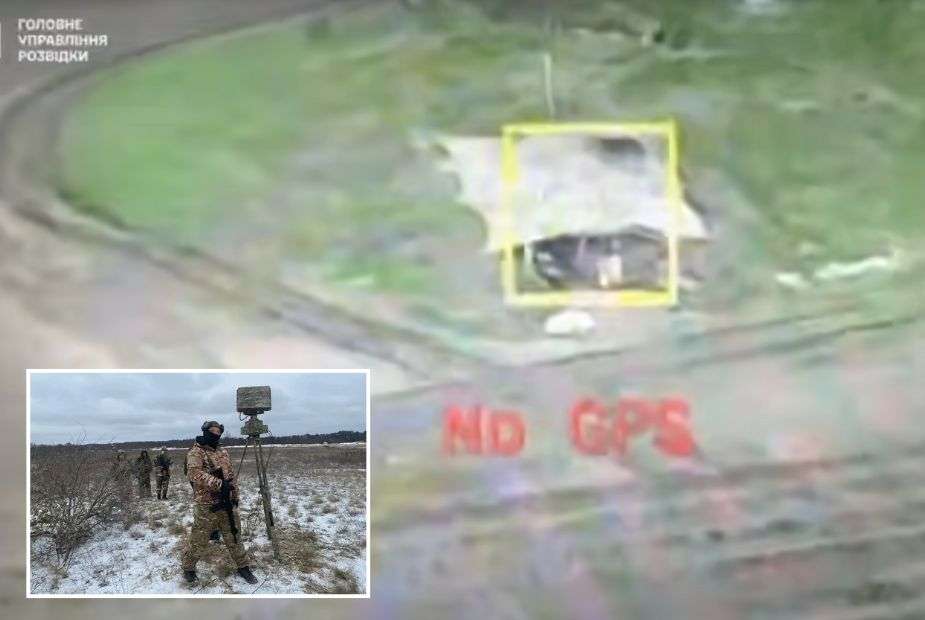
Screenshot of the video showing the destruction of a portable Russian NRLS Repeynik radar (Picture source: Ukrainian MoD)
The second operation took place on April 28, with the Special Unit Gusy-9 again using the Warmate drone to target the portable Repeynik radar. The specific location of this strike was not disclosed. The Repeynik radar, also known as Burdock, is an advanced surveillance system specifically designed to detect and monitor ultra-small objects such as UAVs (Unmanned Aerial Vehicles), capable of operating up to distances of 10 km, altitudes of 5 km, and speeds of 200 km/h. This portable system is tactically autonomous, suitable for use in densely populated combat zones and during security operations. It is designed to be adaptable, able to function across various latitudes and weather conditions, including in coastal maritime regions. The radar components can be camouflaged with different types of paint, including coatings with infrared (IR) emission properties to enhance its stealth capabilities. As of April 2023, only 12 Repeynik radars are in service with the Russian army, having been deployed for combat operations in Ukraine since November 2022.
The Repeynik radar system is compact and easily transportable, featuring a rotating active electronically scanned array (AESA) unit mounted on a tripod for quick deployment and stable operation. The radar antenna, designed as a flat panel, contributes to a low-profile and stealthy operation, capable of 360-degree azimuth scanning with an elevation angle of up to 20°, eliminating blind spots. The entire system weighs approximately 25.5 kg.
The control units and other electronic components are housed in a portable, ruggedized case with an integrated display and control interfaces for straightforward operation. Various cables and connectors indicate compatibility with different power sources and integration with other systems. The radar's narrow scanning beam minimizes the risk of detection by anti-radar missiles, enhancing the survival of assault and reconnaissance teams in hostile territories. The Repeynik radar can be assembled and operational in just 5 minutes and is controlled via a computer with specialized software, adjustable for use at a considerable distance from the antenna, enhancing flexibility in various operational contexts.
The radar's power supply ensures up to 8 hours of intensive use, supported by both 220V electrical networks and 12V automotive systems, offering adaptability in diverse field conditions. Operating in the 9.2-9.5 GHz frequency range, the Repeynik radar emits a narrow beam, which is difficult to detect and capable of detecting objects with a radar cross-section (RCS) as low as 0.01 square meters. It automatically tracks up to 256 objects simultaneously, proving essential for modern tactical operations.
The radar supports intelligence and assault missions, verifying the absence of enemy UAVs before teams cross lines of contact. Detected UAVs can be camouflaged or actively suppressed using portable electronic warfare modules. This strategic application of the Repeynik radar enhances the effectiveness and discretion of operations.
The Warmate drone, developed by WB Group, is a versatile tool for the Ukrainian military, capable of fulfilling both reconnaissance and combat roles. Weighing 4 kg with a fuselage length of 1.1 m and a wingspan of 1.4 m, the Warmate is powered by an electric motor and equipped with an interchangeable warhead. It supports multiple modes of operation, allowing operators to switch between reconnaissance and combat functions based on real-time video feedback. The system's automation features facilitate significant aspects of flight and targeting phases, making it a crucial asset in modern warfare.
These successful strikes reflect the ongoing efforts of Ukrainian forces to reduce the electronic warfare and surveillance capabilities of the Russian military. Previous operations have also seen similar success, such as the destruction of Podlet-K1 radars in 2023 near Lazurne and Olenivka, demonstrating the repeated effectiveness of the Warmate drone in combat scenarios.

The WARMATE combat unmanned aerial vehicle (CUAV) is a multi-role system performing multiple tasks depending on the type of the head installed (Picture source: WB Group)
- Details
- Written by: Vandenbosch
- Category: 2024
- Hits: 4791
Breaking news
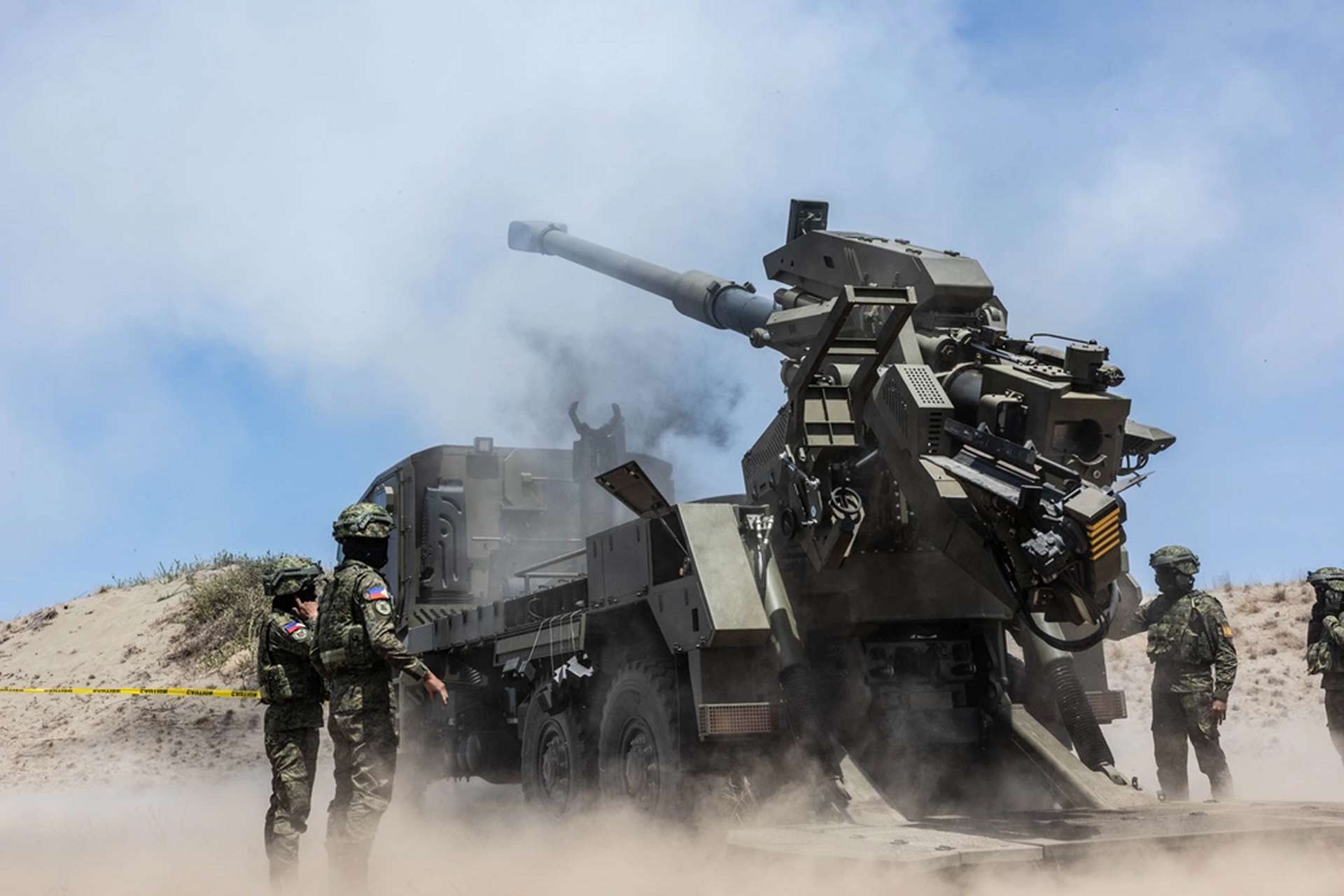
Soldiers from the Philippine Army Artillery Regiment, alongside American military personnel, participated in the annual Balikatan 24 exercise at the La Paz Sand Dunes on May 8, 2024. The exercise showcased precision firing of the ATMOS 155mm self-propelled howitzer, highlighting the advanced artillery capabilities developed and shared between the two allied forces.
Follow Army Recognition on Google News at this link
Philippine Army soldiers assigned to the Philippine Army Artillery Regiment fire the ATMOS 155mm self-propelled howitzer. (Picture source: US DoD)
BK 24 is part of a series of military engagements aimed at improving the interoperability and operational readiness of the Philippine and American armed forces. This exercise not only serves as a platform for tactical training but also strengthens the longstanding partnership and mutual trust that have characterized the defense relations between the Philippines and the United States for decades.
The event was documented by Sergeant Cameron Hermanet of the U.S. Marine Corps, who captured the action as the artillery units demonstrated their proficiency in handling the sophisticated weapon system. The ATMOS 155mm howitzer, known for its precision and mobility, played a central role in the exercise, providing both forces with invaluable practical experience.
This year's exercise focused on rapid deployment and precision in artillery operations, with both nations benefiting from the exchange of techniques and operational strategies. "Exercises like BK 24 are essential for maintaining a high level of readiness and cooperation between our forces," said a senior officer from the Philippine Army. "They allow us to refine our skills and improve our joint capabilities in a controlled, yet realistic environment."
The BK 24 exercise is expected to have lasting impacts on the tactical and strategic levels of both armies, ensuring that the forces remain ready to jointly address any regional challenges that may arise, thereby contributing to regional stability and security.
The ATMOS 2000, developed and produced by Elbit Systems in Israel in 2001, is a truck-mounted, wheel-based self-propelled howitzer system. It can operate with a crew of 2 to 6 people, demonstrating its versatility across various operational contexts. The system offers a weapon traverse of 25 degrees to both the left and right and can elevate up to +70 degrees, providing exceptional agility and targeting accuracy.
This howitzer measures 9.5 meters in length and weighs 23,000 kg in its 52-caliber version, combining significant firepower with substantial mobility. This has made the ATMOS 2000 a popular choice among military forces worldwide, with countries such as Azerbaijan, Botswana, Denmark, Cameroon, Colombia, the Philippines, Thailand, Uganda, and Zambia adopting it.
In the Philippines, the introduction of the ATMOS 2000 to the military began with the signing of a $47 million contract in 2020 with Elbit Systems for twelve units. These were delivered in December 2021 to the Philippine Army's 10th Field Artillery Battalion, also known as "Rolling Thunder," which was activated in June 2022. The units are organized into three batteries, each equipped with four guns, and the induction ceremony was presided over by Secretary José C. Faustino Jr at Fort Bonifacio on September 21.
The procurement process began following a Post Qualification Inspection in December 2019, with contract negotiations concluding in January 2020. The purchase, totaling 2.386 billion PHP, was facilitated through an intergovernmental agreement between the Department of National Defense of the Philippines and the Defense International Cooperation Directorate (SIBAT) of the Israeli Ministry of Defense. The ATMOS 155mm units for the Philippine Army are mounted on truck platforms provided by Germany's MAN, chosen for their extensive service support network in the country.
- Details
- Written by: Triffaux
- Category: 2024
- Hits: 6891
Breaking news
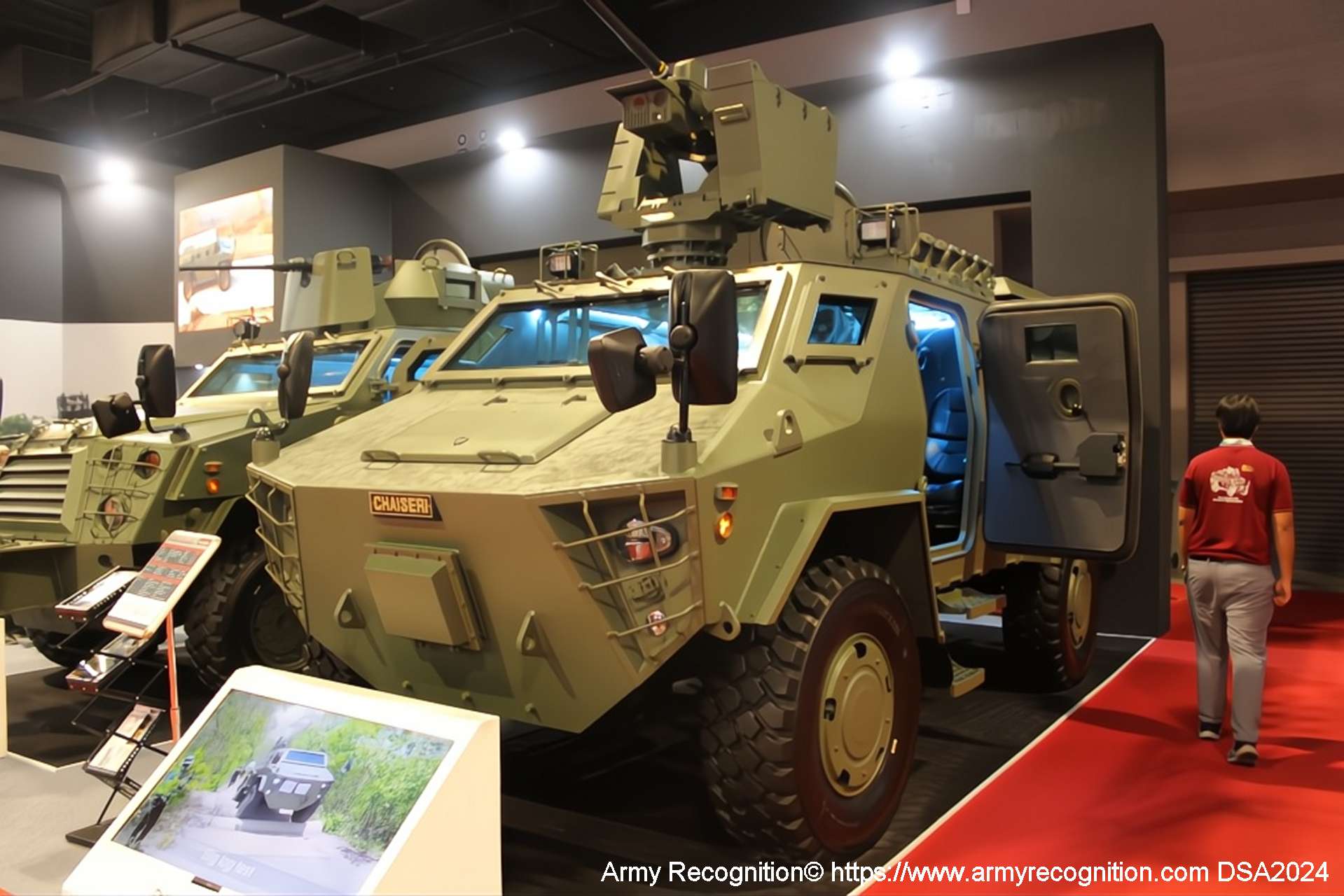
At the DSA 2024 defense expo, Thai manufacturer Chaiseri is showcasing its newest addition to the armored vehicle lineup, the Chaiseri First Win AFV (Armored Fighting Vehicle). This third-generation vehicle from the First Win series features a mine-protected monocoque hull and is powered by a robust engine of at least 330 horsepower, coupled with a 6-speed automatic transmission. Certified by the Ministry of Defence of the Kingdom of Thailand, the vehicle meets all the stringent military standards for performance and bulletproofing pertinent to armored vehicles.
Follow Army Recognition on Google News at this link
Thai company Chaiseri 4X4 First Win Armored Fighting Vehicle (Picture source: Army Recognition)
The vehicle in question is a highly advanced armored platform, designed to offer both robust defensive capabilities and superior firepower. It is equipped with a 340 horsepower engine that ensures permanent all-wheel drive and includes a differential lock, enhancing its maneuverability and reliability across various terrains. The hydraulic power-assisted steering can be adjusted for left-hand or right-hand drive configurations, providing flexibility based on operational needs.
The chassis is built on a monocoque design, which eliminates the need for a traditional chassis frame, resulting in a lighter yet stronger structure. It can comfortably accommodate a crew of nine (eight plus a commander). The curb weight of the vehicle is approximately 13,500 kg, with a gross weight of about 15,000 kg when fully equipped.
Protection features include STANAG 4569 Level 3 ballistic protection at the front, Level 2 on the sides, and optional enhancements to Level 3 mine protection. The vehicle is equipped with a remotely operated weapon station that supports a 30 mm M230 main armament. This station features two-axis gyroscopic stabilization, 360° electrical traverse, and automatic target tracking (ATT), in accordance with MIL-STD-1275B standards.
Additional technological integrations include an electro-optical suite consisting of a thermal camera, a daylight camera with wide and narrow fields of view, and a laser range finder for precise targeting. The vehicle's performance capabilities are impressive, with a maximum speed of 110 km/h, the ability to handle 60% gradients, 30% side slopes, and overcome vertical obstacles up to 500 mm high. It can ford water obstacles up to 1,200 mm and has a combat range of up to 800 km.
Survivability features are enhanced by a self-recovery winch, a run-flat braking system capable of covering 50 km after a flat tire, and an automatic fire suppression system. Situational awareness is bolstered by an integrated suite including day/IR cameras, thermal night driving capabilities, acoustic awareness, a laser warning system, and advanced tactical communication tools, including an intercom system. Optional features also include a central tire inflation system (CTIS) and long-range thermal/day surveillance capabilities, ensuring the vehicle remains versatile and adaptable to various combat scenarios.
Chaiseri is a Defense Company based in Thailand that produces advanced tracked systems including tracks, track shoes, idler wheels, sprocket rings, and support rollers for many combat vehicles from all over the world. Chaiseri is also a manufacturer and producer of Run-Flat systems and wheeled armored vehicles. Chaiseri Defense was established in 1969 and has grown into a company that is recognised around The world for its expertise in military vehicle support and technology As well as supporting the vehicles of the Royal That Army and Navy. Chaiseri has exported its products and services to more than 35 countries in six continents.
Read more: Thai company Chaiseri presents its First Win 4X4 Armored Fighting Vehicle at DSA 2024
- Details
- Written by: Vandenbosch
- Category: 2024
- Hits: 4002
Breaking news
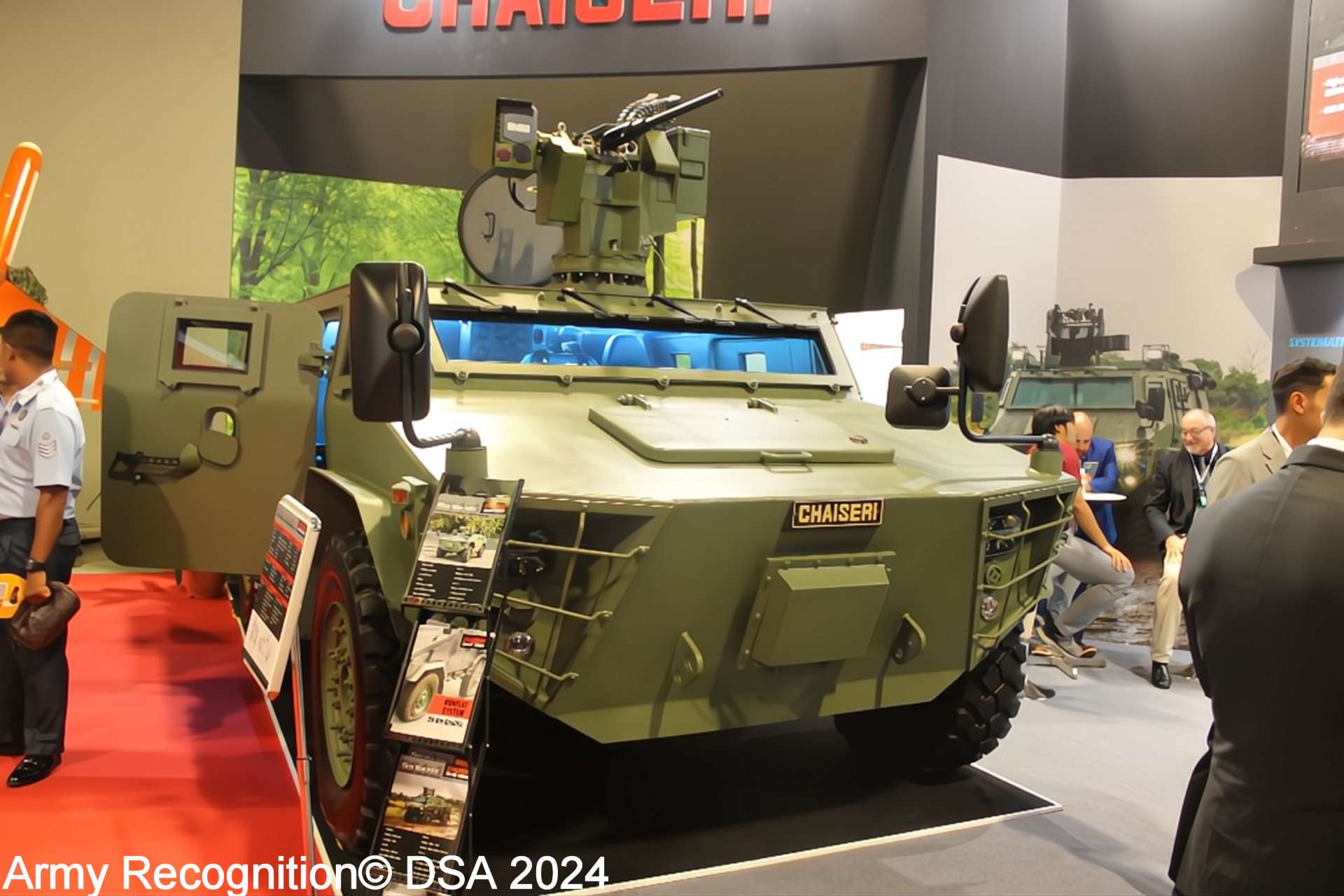
At the Defense Services Asia (DSA) 2024 expo in Malaysia, the Thai company Chaiseri presented the ARV, an armored vehicle previously glimpsed in 2023 during tests by the Malaysian army. A prototype had already been showcased at the Defense & Security 2022 expo, with the current vehicle showing few changes since.
Follow Army Recognition on Google News at this link
The ARV is a Thai armored vehicle presented by Chaiseri at DSA 2024. (Picture source: Army Recognition)
The ARV is powered by a robust 300-horsepower engine, incorporated into a permanent all-wheel drive system with differential lock, ensuring mobility across all types of terrain. The vehicle features hydraulic power steering, adaptable for either left-hand or right-hand drive. It is built on a monocoque chassis which enhances its structural resilience.
The ARV is designed for long-duration missions without frequent refueling with a top speed of 110 km/h and a combat range of 800 km. It can overcome vertical obstacles up to 500 mm and ford water depths up to 1 meter, making it particularly suited for amphibious operations or swampy environments.
For a team of four, crew safety is a top priority for the Thai manufacturer. The ARV is outfitted with ballistic protection compliant with STANAG 4569 levels 2 and 3, with additional options for enhanced mine protection. Its primary armament includes a remote weapon station equipped with a 12.7 mm M2 Browning machine gun, featuring two-axis gyroscopic stabilization, 360° electrical traverse, and automatic target tracking. This station also comes with thermal and daylight cameras, a laser rangefinder, and night driving capabilities, enhancing its operational effectiveness both day and night.
Furthermore, the ARV includes several features aimed at boosting its battlefield survivability. Standard equipment includes an automatic recovery winch, a run-flat system, anti-lock braking, and an automatic fire suppression system. Options such as a tire pressure management system (CTIS), thermal night driving capabilities, acoustic awareness, and a laser warning system complete its advanced safety measures, ensuring superior situational awareness and effective tactical communication through an integrated intercom system.
Founded in 1939, Chaiseri specializes in designing, manufacturing, and upgrading armored vehicles, their subsystems, and track systems. The company is renowned for its "First Win" series of armored vehicles, which have been recognized for their design excellence and have won multiple awards, including the Demark Design Excellence Award and the Prime Minister's Export Award from Thailand.
The ARV garnered attention at DSA 2024, particularly from the host country that had previously tested the vehicle, though no official announcement has been made yet.
Read more: DSA 2024: Chaiseri Thai company displays ARV armored vehicle at DSA 2024 in Malaysia
- Details
- Written by: V.Saint
- Category: 2024
- Hits: 13413
Breaking news
According to Andrei Muraru, Ambassador Extraordinary and Plenipotentiary of Romania to the United States of America, openly discussed, on May 8, 2024, the military aid that Romania provides to Ukraine. The discussion took place a few hours before Romanian President Klaus Iohannis was received at the White House by Joe Biden, the American president
Follow Army Recognition on Google News at this link
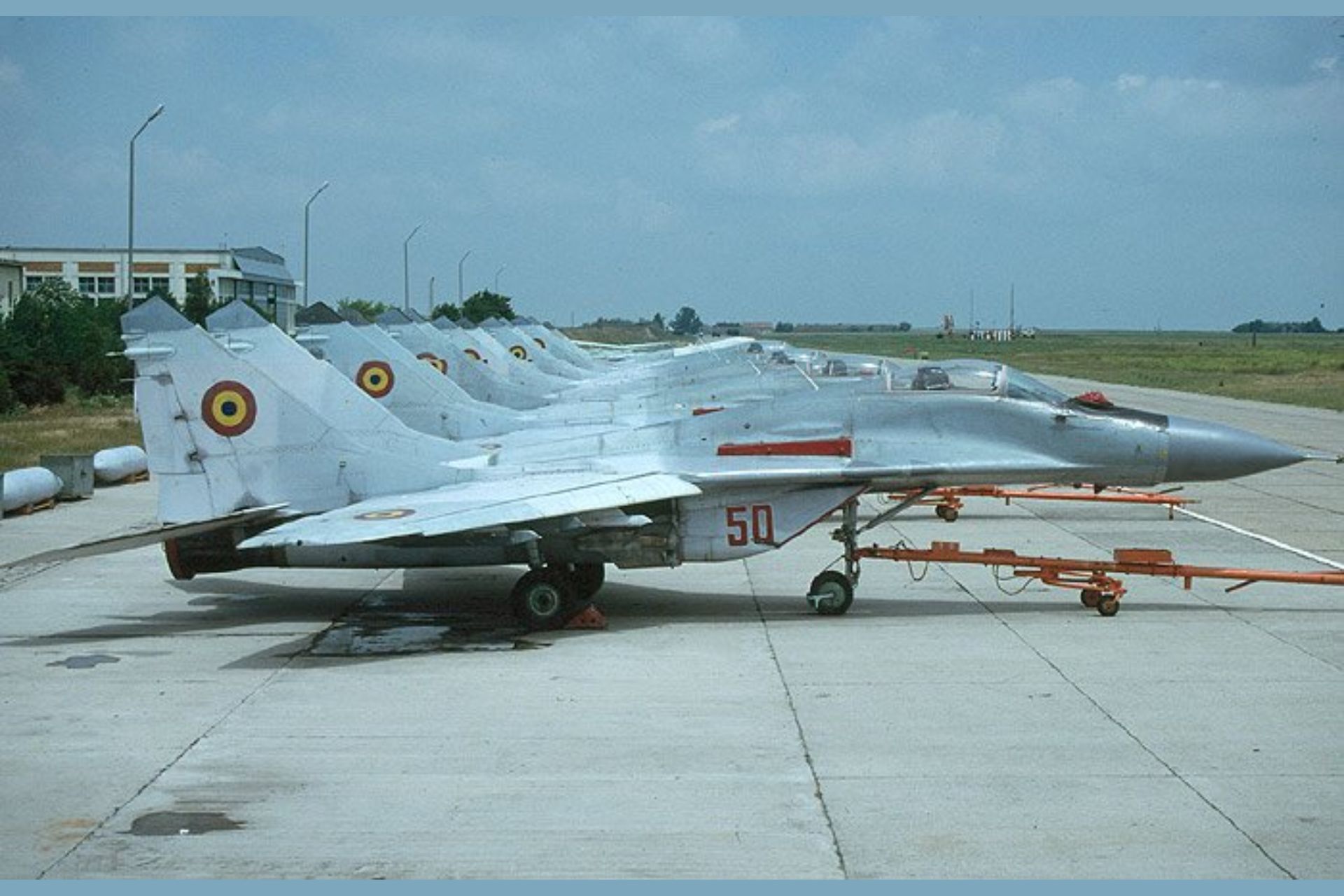
Romanian Air force Mig-29 (Picture source: X/@MisuTanasa)
During a telephone interview on the Antena 3 CNN television channel, Ambassador Andrei Muraru was directly asked if the two presidents would discuss the delivery of Romanian Patriot anti-aircraft defense systems to Ukraine. The Romanian Ambassador to Washington DC emphasized in his response that Romania has provided military support to Ukraine since the first phase of the Russian invasion and will continue to do so.
Ambassador Andrei Muraru stated that the topic of assistance to Ukraine is on President Iohannis's agenda at the White House. The allied framework governs the requests. NATO Secretary General Jens Stoltenberg announced this a few days ago during his visit to Kiev, where he assured President Zelensky and the Kiev cabinet of ongoing support and increased military assistance to Ukraine. Ambassador Muraru also mentioned that Romania, along with other states, has been providing military assistance to Ukraine since the beginning and will continue to do so
Ambassador Muraru is among the few high-ranking Romanian officials who openly admit that Romania provides military aid to Ukraine. We remind you that the military aid provided by our country was classified, with Romania being among the few countries to have resorted to this.
However, if over the past two years Romanian officials have avoided even publicly admitting the aid provided to Ukraine, things seem to be slightly changing recently. At the same time, President Klaus Iohannis, after his meeting with Joe Biden, acknowledged that Romania was open to deploying the Patriot system, under certain conditions.
President Klaus Iohannis admitted after the Oval Office meeting with American President Joe Biden that Romania was willing to offer a Patriot system to Ukraine.
Romania has 4 systems, of which 3 are in the process of being operationalized. Iohannis emphasized that the system to be sent to Ukraine is not the one that is already operational.
The Romanian president emphasized the emergency of supplying air-defense system to Ukraine.
Patriot joins a list of substantial Romanian armaments on the Ukrainian front that include APRA-40 launchers or TAB-71 armored vehicles.
Romania has massively supported Ukraine, both from a humanitarian and military standpoint. It's just that, by political decision, military aid has been classified. The Ukrainians have recently thanked for 15 military aid programs, but Bucharest has never revealed what they were. But we can guess these were munitions and military equipment.
In addition to this aid, Romania will also train Ukrainian F-16 pilots at the training center of Borcea Base 86, the first F-16 center in Europe.
All we know about the presence of Romanian weapons on the front in Ukraine are the images captured on the front and analyzed especially by DefenceRomania.
Among other things, the Ukrainians have received from Romania amphibious armored vehicles TAB-71, howitzers, 122 mm APRA-40 launchers - which also served as the basis for the development of future LAROMs - and numerous quantities of 152 mm and 122 mm ammunition, as well as grenade launchers. AG-7 and AG-9 grenade launchers as well as heavy DshKM 12.7 mm machine guns have also been sent to Ukraine, and much more. The Patriot air defense system would be the first modern Western system that Romania would send to Ukraine."
Read more: Romania unveils list of material supplied to Ukraine since 2022
- Details
- Written by: Halna du Fretay
- Category: 2024
- Hits: 3950
Breaking news
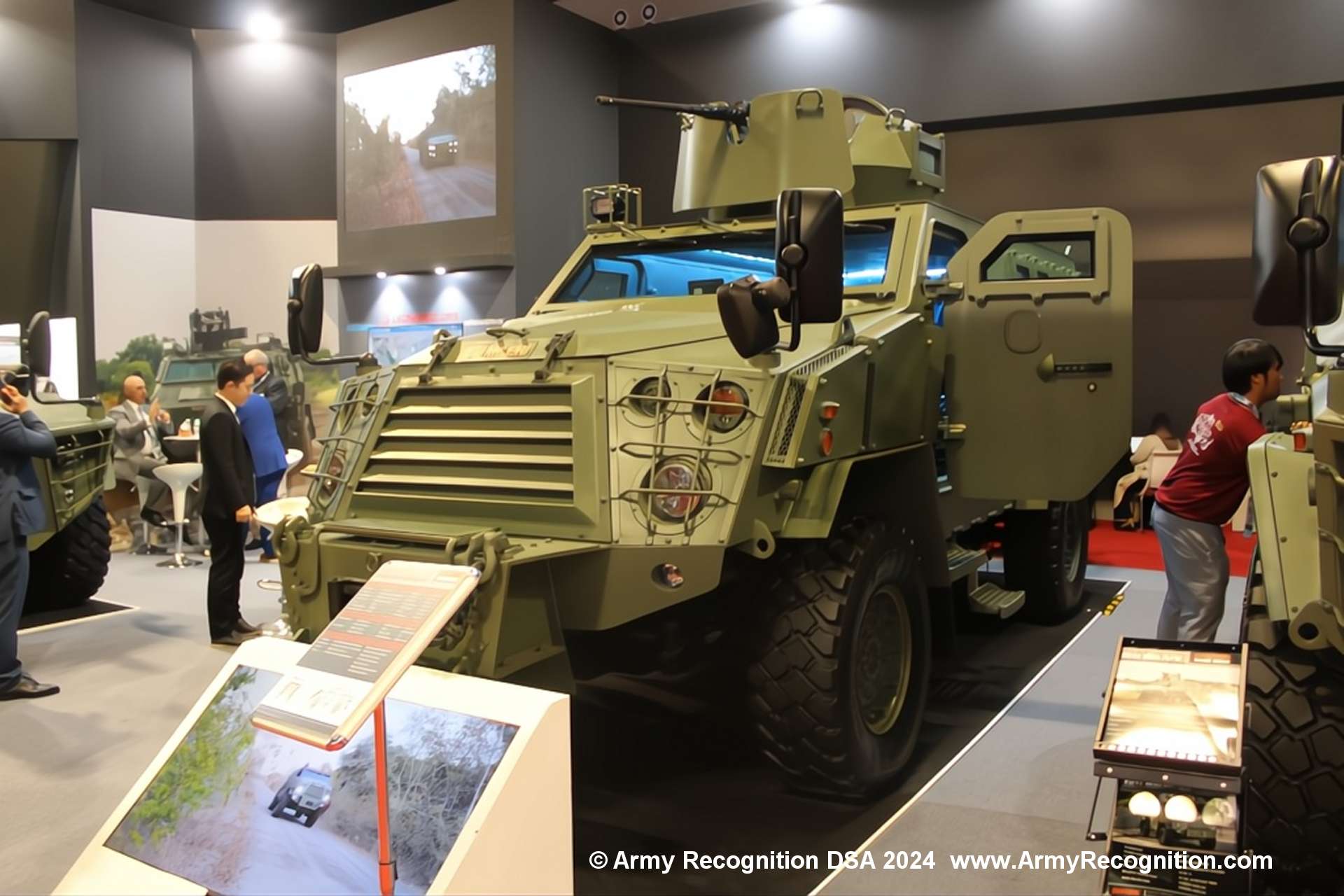
At the Defense Service Asia 2024, the Thai company Chaiseri showcases its Armored Tactical Vehicle (ATV), which features a mine-protected monocoque hull, powered by an engine of over 330 horsepower with a six-speed automatic transmission. This vehicle has been certified by the Ministry of Defense of the Kingdom of Thailand, meeting all standardized performance requirements and bullet resistance as per military standards for Armored Vehicles.
The Armored Tactical Vehicle (ATV) presented by the Thai Company Chaiseri at DSA 2024 (Picture source: ArmyRecognition)
The ATV is equipped with a 300 PS powerpack and all-wheel drive with differential lock, providing exceptional cross-country capability. Its hydraulic power-assisted steering and monocoque body (non-traditional chassis) enhance maneuverability in challenging terrains. With a top speed of 110 km/h and a combat range of 650 km, Chaiseri's ATV can handle gradients up to 60% and side slopes of 30%. It is also capable of overcoming vertical obstacles of 500 mm and trenches up to 800 mm and can ford depths of 1,000 mm.
In terms of protection, the vehicle provides ballistic and mine protection compliant with STANAG 4569 Lv2 standards, with an option for Lv3. The armament includes a Remote Control Weapon Station (RCWS) that can accommodate a 12.7 mm HMG, a 40 mm AGL, or a 7.62 mm MMG, with additional protective options available.
Survivability features include an 18,000 lbs self-recovery winch, a run-flat system capable of functioning 50 km after a puncture, and an ABS braking system. The First Win AFV can transport 9 individuals and has space to integrate equipment based on user requirements. For enhanced situational awareness, the vehicle is equipped with day/IR cameras, a Central Tire Inflation System (CTIS), thermal night driving capabilities, an automatic fire suppression system, VHF tactical communication, and an intercommunication system. Additional options include a Mobile Assault Ramp, a Laser Warning System, and more.
Chaiseri, a Thai company with expertise in Defense Land Systems, specializes in the design, manufacture, reconditioning, and upgrading of armored vehicles and their subsystems. Established in 1968 the company caters to the growing needs of armed forces and internal security organizations worldwide.
Chaiseri's products and services are branded under the name “Chaiseri” and have been delivered across six continents to more than 40 countries, helping to maintain peace and increase land system readiness for defense forces globally. Chaiseri's offerings are categorized into five segments: Armored Vehicles, Track Systems, Reconditioning and Upgrading Military Vehicles, Runflats, and Customized Armored Vehicles for specific missions.
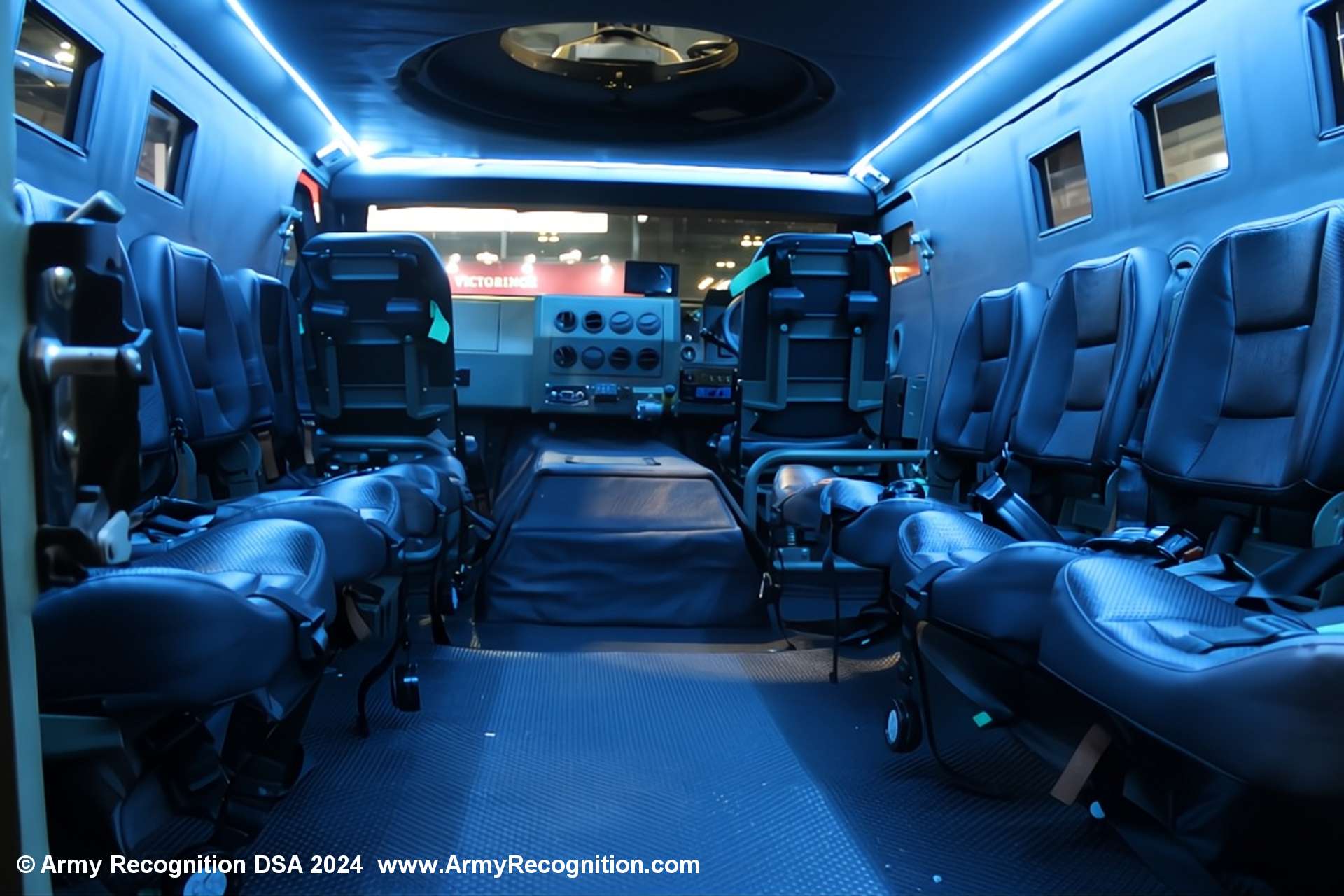
Interior of the First Win Armored Tactical Vehicle (ATV) at DSA 2024 (Picture source: ArmyRecognition)
Read more: DSA 2024: Chaiseri Introduces Its First Win Armored Tactical Vehicle ATV
- Details
- Written by: Jérôme Brahy
- Category: 2024
- Hits: 5780
Breaking news
On May 9, 2024, during a visit to Washington, German Defence Minister Boris Pistorius announced that Germany would finance the procurement of three High Mobility Artillery Rocket Systems (HIMARS) from the United States for Ukraine. These systems, sourced from the current inventories of the US armed forces, represent a significant financial investment by Germany, amounting to tens of millions of dollars.
Follow Army Recognition on Google News at this link
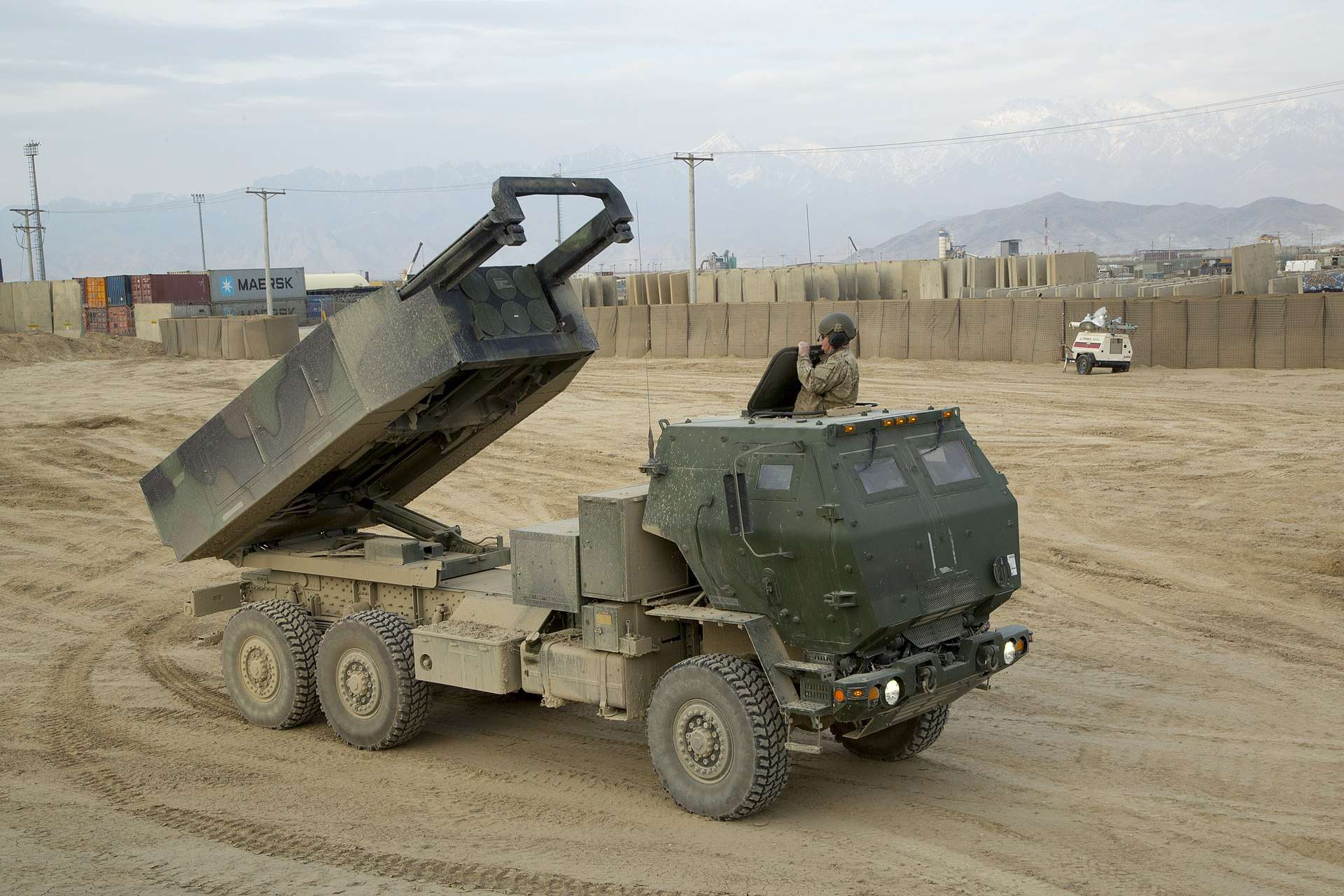
As of May 10, 2024, the United States had already delivered 20 HIMARS to Ukraine and had pledged an additional 19. (Picture source: US DoD)
This announcement was made during discussions with US Defence Secretary Lloyd Austin, and follows delays in the disbursement of $61 billion in US aid to Ukraine, which was approved by Congress in April as part of a national security package. Germany's procurement of HIMARS rocket launcher systems is aimed at supporting Ukraine amid its ongoing conflict, pending the arrival of the approved US aid.
As of May 10, 2024, the United States had already delivered 20 HIMARS to Ukraine and had pledged an additional 19. However, it was reported by open sources that three of these systems had been compromised: one was confirmed destroyed, and two others were damaged, likely undergoing repairs. Germany's funding of three more systems from US stocks could indicate an intention to replace these specific losses, thereby sustaining Ukrainian artillery capacities in its defense efforts against the Russian invasion.
Based on the costs provided for the HIMARS systems and associated munitions by open sources, an estimate can be made for both domestic and export purchases. For domestic purposes, the price of one HIMARS launcher and carrier was $4.4 million in 2023. Consequently, if Germany were able to negotiate the purchase at the same price as the US Army, the total cost for three launchers would be approximately $13.2 million, though this seems unlikely. Additionally, each M31 GMLRS rocket was priced at $168,000 in 2023.
In the more plausible export scenario, the costs are much higher. One HIMARS launcher and carrier was priced between $19 and $20 million in fiscal year 2022, making the cost for three systems range from $57 million to $60 million. Furthermore, each M31ER GMLRS rocket for export was listed at $434,000. These figures reflect the additional expenses associated with exporting systems, which can include logistics, administrative costs, and possibly integrated support and training services.
The M142 High Mobility Artillery Rocket System (HIMARS) is a mobile artillery launcher developed by the United States, operational since 1998. It is based on a standard Army M1140 truck frame, enhancing its mobility. The system can launch multiple types of munitions, including the Guided Multiple Launch Rocket System (GMLRS) and the Army Tactical Missile System (ATACMS), with a range of up to 300 kilometers depending on the munition type. HIMARS carries either a six-pack of rockets or one missile, with the capability for quick reloading to maintain operational tempo in combat scenarios.
The HIMARS is notable for its rapid deployment capabilities, as it can be quickly moved and set up to launch and then relocate before it can be targeted by enemy fire. It is compatible with C-130 and larger aircraft for air transport, facilitating rapid redeployment across diverse operational environments. The system's precision targeting capabilities, facilitated by its fire control system and GPS guidance, aim to minimize collateral damage while engaging targets effectively.
The technology integrated into HIMARS includes a technologically advanced fire control system and communications suite that integrates with various military platforms for coordinated operations. Its GPS guidance system contributes to accuracy, thereby minimizing unintended damage and increasing strike effectiveness. Additionally, its capability to interface with advanced surveillance and reconnaissance systems allows for real-time targeting adjustments, further enhancing operational effectiveness.
For Ukraine, the introduction of HIMARS systems has played a significant role in the conflict with Russia. These systems have provided Ukrainian forces the ability to execute precise, long-range strikes on critical Russian positions and logistical networks, impacting the dynamics of military engagements. The precision and operational range of the American M142 HIMARS enables strategic targeting that conserves civilian areas and reduces risk to Ukrainian forces. The introduction of these systems has also been a significant aspect of international military support for Ukraine.
Read more: Germany and US Army partner to deliver new M142 HIMARS rocket launchers to Ukraine
- Details
- Written by: Administrator
- Category: 2024
- Hits: 15394
Breaking news
On May 8, 2024, the government of Luxembourg announced a historic €2.6 billion investment, the largest in its history, to modernize its armed forces. Defense Minister Yuriko Backes, alongside Army Chief of Staff General Steve Thull, unveiled the new defense bill that will see the acquisition of a fleet of advanced armored vehicles including French-made Griffon, Jaguar and Serval vehicles.
Follow Army Recognition on Google News at this link
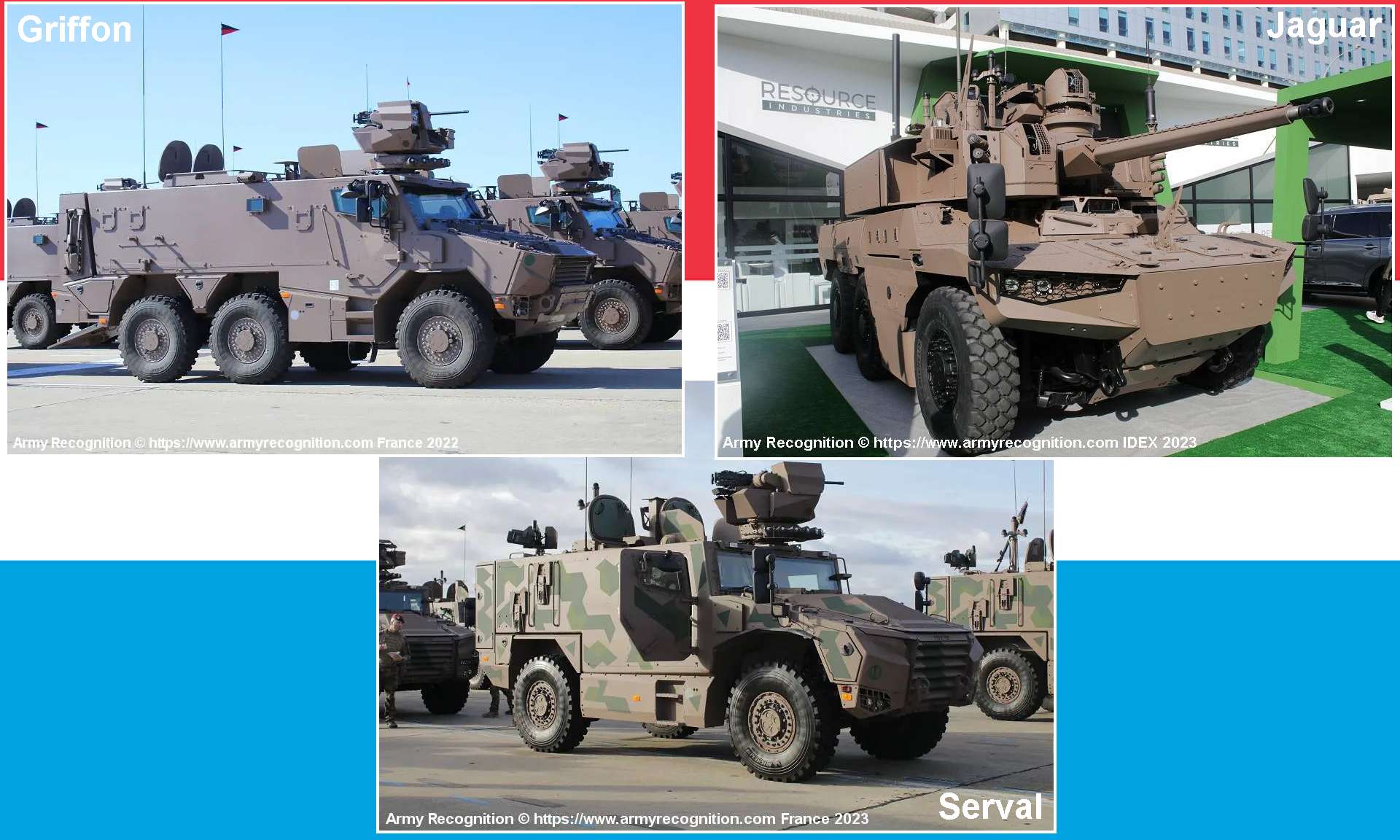
Luxembourg plans to acquire 16 Griffon multi-role armored vehicles, 38 Jaguar armored reconnaissance and combat vehicles, and 5 Serval light multi-role armored vehicles over the next 30 years. (Picture source Army Recognition)
This new investment will provide the Luxembourg army with 16 Griffon multi-role armored vehicles, 38 Jaguar armored reconnaissance and combat vehicles, and 5 Serval light multi-role armored vehicles over the next 30 years. This fleet will enhance the Luxembourgish army's operational capabilities and ensure interoperability with NATO and European Union forces, particularly those of Belgium and France.
Minister Backes emphasized the necessity of the investment, stating it was crucial for Luxembourg to remain a reliable partner within international defense frameworks. The acquisition includes sophisticated weapon, protection, and communication subsystems, tailored to the army's operational needs.
This upgrade is not only about enhancing military strength but also aligning with the Luxembourgish army’s existing assets, like the CLRV vehicles acquired in 2022. The full integration of these new vehicles with existing systems is expected by 2025, aligning with the French Scorpion program to ensure enhanced operational synergy.
The Luxembourgish government's commitment to strengthening its military through this substantial investment marks a pivotal step in its defense strategy, securing its position as a formidable and technologically advanced military force in Europe.
The Luxembourg Army, consisting of approximately 900 soldiers, operates with a focus on flexibility and interoperability within international frameworks. The army's maneuver capabilities are concentrated in its reconnaissance forces, which include two reconnaissance companies. One of these companies contributes to the Eurocorps and a Belgian division, while the other is part of a NATO pool of deployable forces, indicating Luxembourg's active participation in multinational defense collaborations.
Currently, the Luxembourg Army is equipped with 48 Dingo 2 4x4 armored vehicles, showcasing its capacity for protected mobility and reconnaissance tasks. The army's anti-tank capabilities are supported by MANPATS NLAW and TOW missile systems, providing it with potent anti-armor and anti-infrastructure capabilities. Additionally, Luxembourg maintains an artillery component equipped with six 81mm mortars, enhancing its indirect fire support capabilities.
Luxembourg's decision to invest €2.6 billion in military upgrades marks a significant enhancement of its combat capabilities, aligning with a notable increase in its defense spending. From 2021 to 2022, Luxembourg's defense budget saw a substantial rise of 40.01%, increasing to $0.56 billion. This uptick in spending underscores a strategic shift towards strengthening the country's military framework.
This major financial commitment is aimed at procuring advanced armored vehicles and upgrading existing military equipment, thus boosting Luxembourg's operational and strategic defense capabilities. Specifically, the acquisition of new multi-role armored vehicles, reconnaissance and combat vehicles, and light armored vehicles, equipped with modern weapon systems and interoperable communication tools, will significantly augment Luxembourg's defensive and offensive capabilities on various fronts.
Such an investment not only enhances the army's effectiveness in conventional defense roles but also increases its contributions to NATO and EU operations, ensuring Luxembourg remains a reliable and capable ally. The focus on advanced technology and interoperability with other European forces further positions Luxembourg to respond more robustly in joint operations and peacekeeping missions.
Overall, this increase in Luxembourg's defense budget and the targeted investment in military capabilities are indicative of a broader strategy to bolster national security and fulfill its commitments within international defense frameworks.
- Details
- Written by: Administrator
- Category: 2024
- Hits: 2950
Breaking news
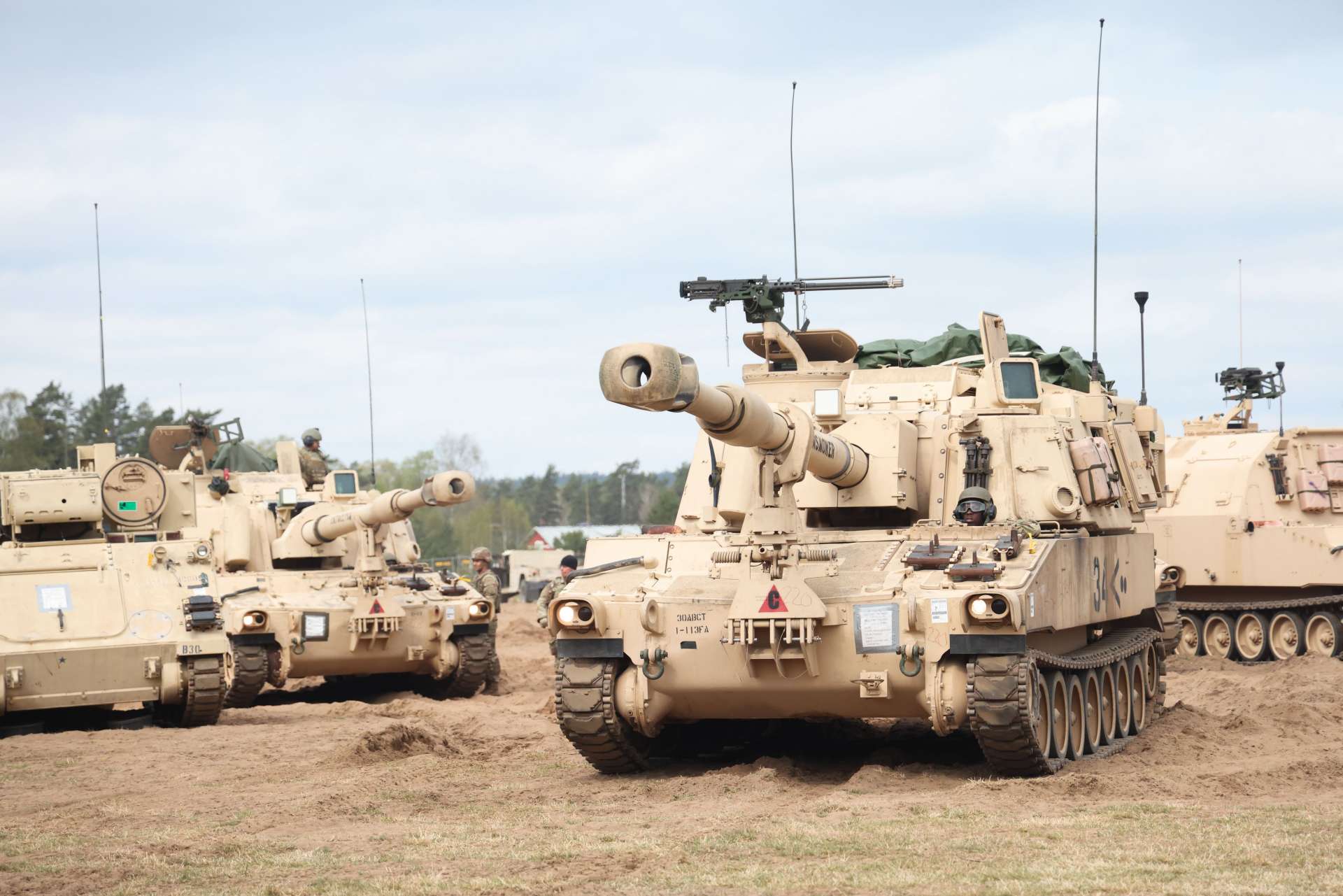
US Army Soldiers from the 214th Field Artillery Regiment, part of the 648th Maneuver Enhancement Brigade, Georgia Guard, have deployed their M109A6 Paladin howitzers for a rigorous field training exercise. The deployment is part of the ongoing Defender Europe's Swift Response exercise held in Skillingaryd, Sweden.
Follow Army Recognition on Google News at this link
US Army M109A6 155mm howitzers from the 214th Field Artillery Regiment, part of the 648th Maneuver Enhancement Brigade, Georgia Guard. (Picture source U.S. Army Europe and Africa )
The exercise, which involves multiple NATO allies and partner nations, aims to strengthen interoperability and tactical proficiency in high-intensity warfighting scenarios. The M109A6 Paladin, a key asset in the U.S. military's artillery arsenal, plays a crucial role in providing sustained and effective artillery support during combat operations.
According to military officials, the field training exercise not only demonstrates the tactical capabilities of the M109A6 Paladin but also enhances the readiness and cooperation among NATO forces. "This exercise allows us to practice the rapid deployment and utilization of our artillery systems in a foreign environment, which is invaluable for our operational readiness," said a senior officer from the 214th Field Artillery Regiment.
The Swift Response exercise is part of a larger series of training operations under Defender Europe, designed to ensure that NATO forces remain ready to respond to any threat. This deployment underscores the U.S.' commitment to the security of Europe and the strength of transatlantic military ties.
The M109A6 Paladin is an advanced version of the M109 self-propelled howitzer, which is extensively used by the United States Army and allied military forces. The M109A6 is distinguished by its superior firepower and rapid mobility, designed to support army divisions in fast-paced battlefield conditions.
The M109A6 Paladin is capable of firing a diverse range of ammunition types, enhancing its versatility on the battlefield. It can deploy conventional high-explosive rounds, rocket-assisted projectiles, and advanced precision-guided munitions such as the Excalibur shell, which is GPS-guided for increased accuracy.
In terms of range, the M109A6 Paladin can effectively engage targets at a considerable distance. With standard projectiles, it has a maximum range of approximately 22 kilometers (about 13.7 miles). However, when using rocket-assisted projectiles, the Paladin's reach extends to about 30 kilometers (nearly 18.6 miles). This extended range allows it to support ground operations from a safer distance, reducing the risk to the crew and increasing the tactical options available to commanders in the field. These capabilities make the M109A6 a highly effective artillery system in both offensive and defensive roles.
A key feature of the M109A6 is its improved accuracy, enabled by an advanced fire control system. This allows for more accurate targeting, essential for the effectiveness of modern artillery in combat scenarios. The fire control system not only enhances the accuracy but also reduces the time between target acquisition and engagement, thus increasing the overall rate of fire.
Moreover, the Paladin incorporates upgraded armor and survivability features to protect the crew against threats on the battlefield. The combination of firepower, accuracy, and protection makes the M109A6 Paladin a critical asset in artillery operations, capable of executing missions with precision and efficiency in diverse combat environments.
- Details
- Written by: Administrator
- Category: 2024
- Hits: 6268
Breaking news
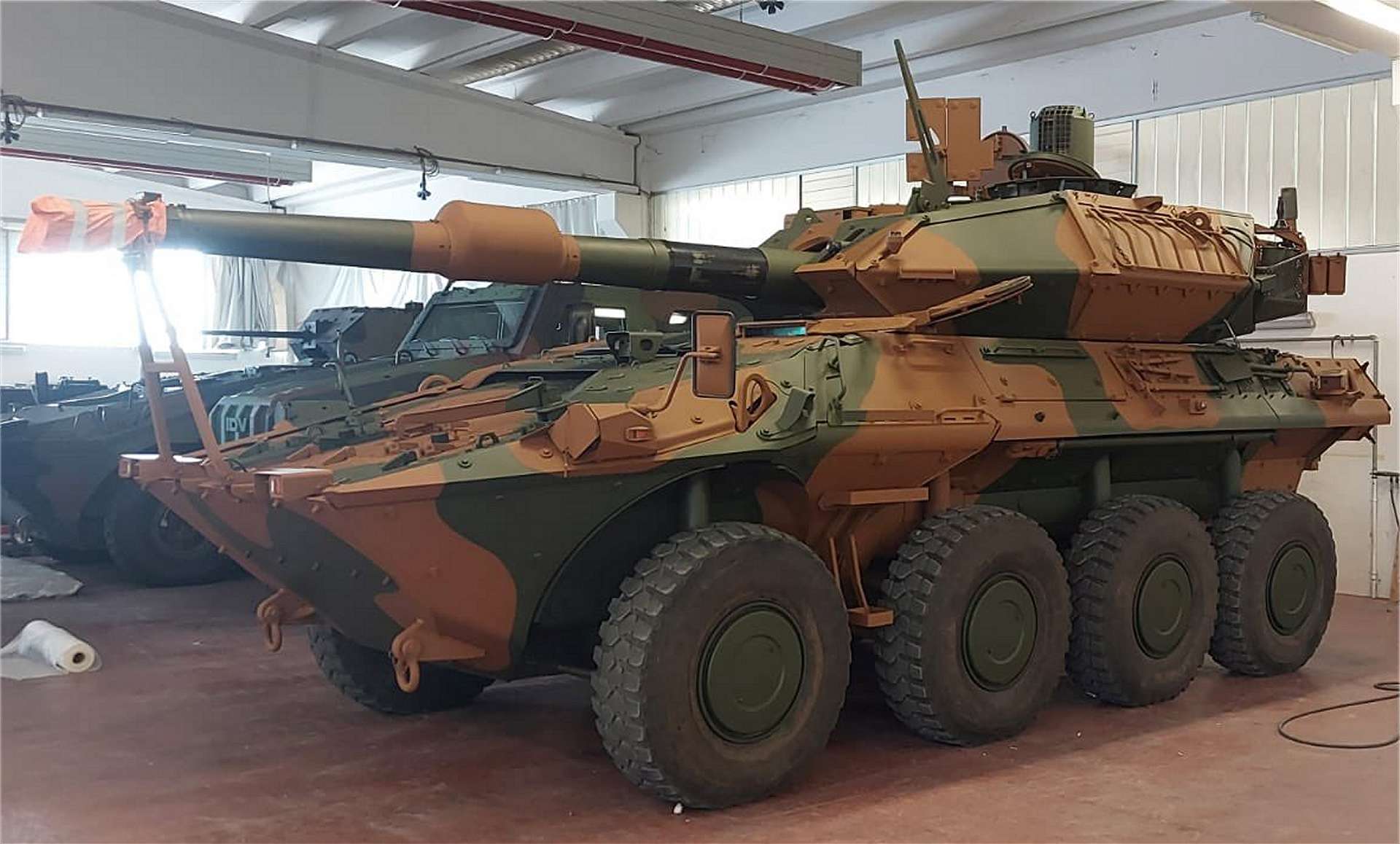
On May 9, 2024, a photograph surfaced on X Social Network, unveiling the first Centauro 2 armoured vehicle designated for the Brazilian Army. This procurement follows the Brazilian Army's announcement on November 25, 2022, by the Comando Logístico (COLOG) / Diretoria de Material, selecting the winner of the competitive bid for an 8×8 armoured combat vehicle. Officially termed as the Viatura Blindada de Combate de Cavalaria Média Sobre Rodas, VBC CAV – MSR 8x8, the selection favored the Centauro II model, equipped with a formidable 120 mm smoothbore gun.
Follow Army Recognition on Google News at this link
First picture of Italian-made Centauro II 8x8 120mm armored vehicle for the Brazilian was released on X Social Network. (Picture source X Social Network)
The Centauro II is produced by the CIO consortium, a collaboration between the Italian companies IDV (formerly Iveco) and Leonardo (formerly Oto Melara), under the joint banner of Consorzio Iveco Oto Melara. The configuration adopted by the Brazilian Army closely mirrors that utilized by CIO’s national Italian customers but introduces several unique adaptations tailored for Brazil. Notably, the Brazilian version will sport a different add-on armour package, details of which remain classified. Additionally, the Brazilian models will forego the semi-automatic ammunition loading system present in the Italian variants, opting instead for manual handling of the 120 mm ammunition akin to most Western main battle tanks (MBTs).
The vehicle’s communication suite is notably robust, incorporating L3Harris RF-7800V VHF radios and supplemented by advanced systems from Thales, ensuring secure and reliable battlefield communications.
This deal follows a contract signed on December 31, 2020, by the Italian Directorate for Land Armaments (Direzione degli Armamenti Terrestri – DAT) with the CIO consortium for the delivery of 86 Centauro 2 systems to the Italian forces, with an option for an additional 10 units. The introduction of the Centauro 2 to the Brazilian Army marks a significant upgrade in their armored capabilities, reflecting both the evolution of military vehicle technology and the growing international collaboration in defense procurement.
The Centauro II armored vehicle marks a significant advancement from its predecessors, the renowned Centauro 105 and 120mm vehicles, which were the first 8x8 wheeled anti-tank vehicles in the world to feature a high-pressure gun.
Equipped with a cutting-edge third-generation 120mm / 45 caliber gun, the Centauro II features an integrated muzzle brake and a semi-automatic loading system. It is capable of firing the latest 120mm NATO standard armor-piercing, fin-stabilized, discarding-sabot (APFSDS) rounds, as well as multi-purpose (MP) ammunition.
The vehicle's ammunition storage is impressively comprehensive, accommodating 12 ready-to-fire rounds for the main gun, 1,000 rounds for the 7.62mm gun, 400 rounds for the 12.7mm gun, and 96 rounds for grenade launchers.
For enhanced defensive capabilities, the turret supports the installation of a Hitrole Light remote-controlled weapon station (RCWS), which can be outfitted with 7.62mm or 12.7mm caliber machine guns and 40mm automatic grenade launchers (AGLs), suitable for various operational scenarios beyond conventional warfare.
The Centauro II boasts a redesigned hull and turret that incorporate additional armor and technical upgrades, achieving AEP 55 level protection. This design protects the crew against direct fire, anti-tank mines, improvised explosive devices (IEDs), and the most recent kinetic munitions.
For increased safety, the vehicle features a dedicated anti-blast compartment for reserve ammunition and additional storage spaces. Its state-of-the-art onboard systems include nuclear, biological, and chemical (NBC) protection, advanced fire-fighting equipment, and anti-explosion mechanisms. Additionally, the vehicle is equipped with a laser warning system to alert the crew to potential threats.
- Lockheed Martin Awarded $861 Million Contract to Expand Production of HIMARS Rocket Launchers Amid Rising Global Demand
- DSA 2024 : Chaiseri presents first prototype of new wildcat special force oriented buggy
- DSA 2024 : Malaysia Firms Mindmatics unveils first loitering munition called TODAK
- US Marine Special Forces Tests New Robot Dogs with Weapon Systems