
- Details
- Written by: Administrator
- Category: 2024
- Hits: 5677




Breaking news






Hanwha Aerospace Company from South Korea has partnered significantly with Romania’s National Institute for Aerospace Research, “Elie Carafoli” (INCAS), for collaborative research and development in weapon systems. The contract was signed on May 22, 2024, during the opening day of BSDA 2024 in Bucharest.
Follow Army Recognition on Google News at this link
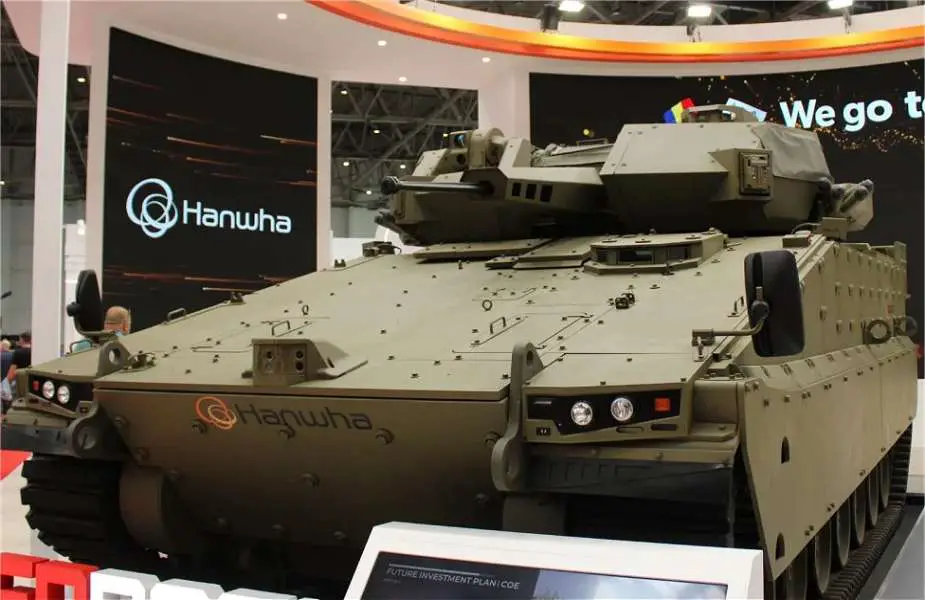
During BSDA 2024, a defense exhibition that was held in Romania from 22 to 24 May 2024, Hanwha Aerospace displayed its AS-21 Redback IFV Infantry Fighting Vehicle. (Picture source: Army Recognition Group)
This agreement underscores Hanwha Aerospace’s commitment to strengthening ties with Romania through localization and joint R&D initiatives. The partnership will involve joint research activities, including wind tunnel tests of precision-guided missiles. Both organizations are also open to expanding their collaboration into the aerospace sector beyond land systems, aiming to create a synergistic effect in aerospace engineering.
With a 75-year tradition in aerospace engineering, fluid dynamics, and applied aerodynamics, INCAS is Romania's leading research institution in aerospace sciences. The institute has been pivotal in major national aeronautical civil and military applications projects. It plays a significant role in EU research and development policy under the FlightPath 2050 vision and the Horizon Europe program.
Romania has recently shown a keen interest in acquiring defense products from South Korea, particularly from Hanwha Aerospace. The most notable development is Romania's near-finalization of a contract to purchase K9 Thunder self-propelled howitzers. This deal, estimated to be worth approximately $751 million, marks Hanwha Aerospace’s first major defense contract with Romania and signifies a significant expansion of Hanwha's presence in the European defense market (Checkpoint Bravo) (DefenseMirror).
This prospective agreement includes the procurement of 54 K9 howitzers, which will be integrated into Romania's military modernization efforts. These howitzers are renowned for their advanced capabilities and have been deployed by several NATO countries, enhancing Hanwha Aerospace’s reputation as a European defense supplier.
Hanwha Aerospace also signed a Memorandum of Understanding (MoU) with Romania’s state-owned defense company Romarm to explore further cooperation. This MoU covers the potential export of not only the K9 howitzers but also the AS-21 Redback Infantry Fighting Vehicles. The Romanian government, represented by high-ranking officials, has strongly supported this collaboration, highlighting the strategic importance of such partnerships for Romania’s defense industry.
These initiatives are part of Romania's broader strategy to modernize its military capabilities and strengthen its defense posture, especially in light of the regional security dynamics. The potential deals and collaborations with Hanwha Aerospace are seen as critical steps towards achieving these objectives, with the Romanian defense ministry actively involved in the decision-making process regarding these procurements.
- Details
- Written by: V.Saint
- Category: 2024
- Hits: 3215
Breaking news
Norway announced on May 23 a new military assistance program for Ukraine worth approximately 150 million pounds ($190 million)., this package including Ammunition, radar, more naval capabilities and boats.
Follow Army Recognition on Google News at this link
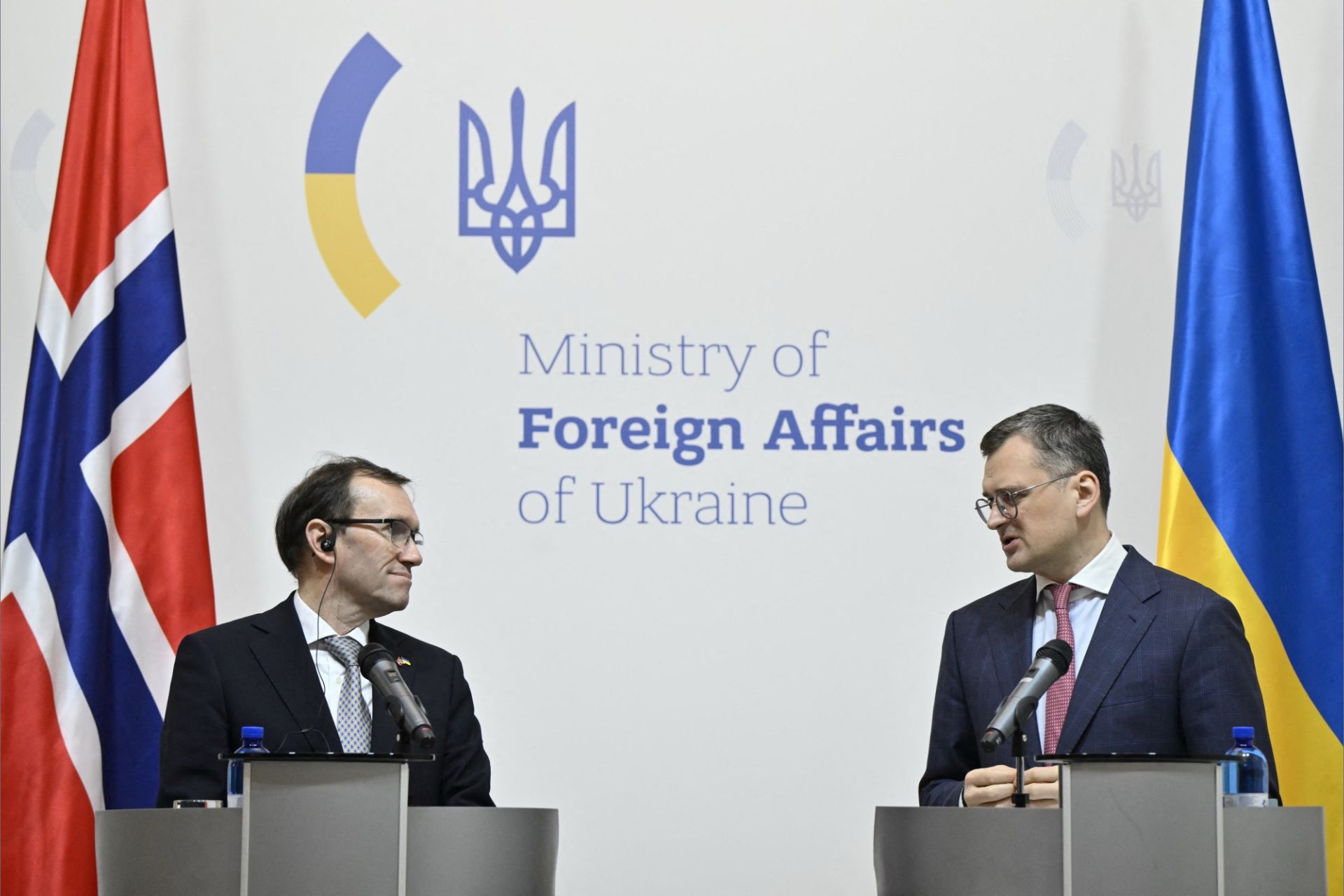
Espen Barth Eide and Dmytro Kuleba hold a joint press conference following their talks in Kyiv on April 15,2024. (Picture source: Genya Savilov/AFP )
This project falls under the auspices of the International Fund for Ukraine (IFU), collectively funded by the United Kingdom, the Netherlands, Norway, Denmark, Sweden, Lithuania, and Iceland. The support will go towards air defense, naval capabilities, radars, anti-drone systems, and boats.
Defense Minister Bjorn Arild Gram stated that Norway will support Ukraine for as long as it takes and added that the Ukrainians urgently need more weapons and military equipment. The support from international funds is one of many significant contributions.
Norway has recently intensified its efforts to increase its defense production, both for its national needs and its aid to Ukraine. Oslo allocated 2 billion Norwegian kroner ($190 million) in January for aid to Ukraine.
Read more: Norway will help ukraine new batch of weapons and ammunition promised
- Details
- Written by: Triffaux
- Category: 2024
- Hits: 4857
Breaking news
In the tense context of the internal armed conflict, Ecuador is taking significant measures to strengthen its national security by training crews to operate its new fleet of MDT-Armor David VBL 4x4 armored vehicles. Specialized courses are currently being provided at the Military School, marking a crucial step in the General Teaching Plan aimed at preparing personnel for effective and strategic field deployments.
Follow Army Recognition on Google News at this link
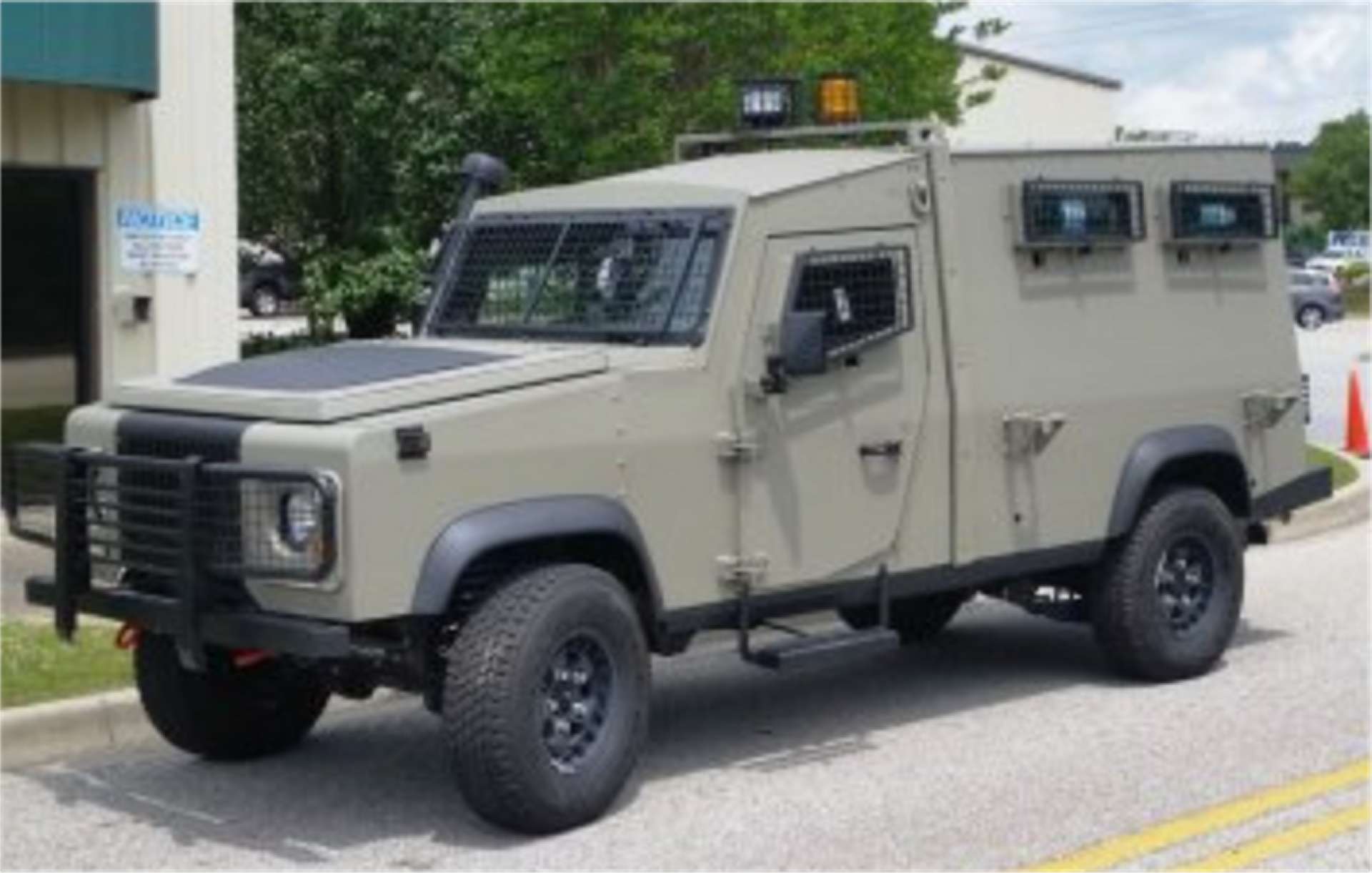
MDT David VBL 4x4 Light Armored Vehicles (Picture source: MDT)
Since acquiring these armored vehicles, Ecuador has received 45 units as part of a total order of 137 vehicles, costing a total of $67,284,313. These robust vehicles, based on the chassis of the Toyota Land Cruiser 79 4x4 MT and weighing 4.5 tons, are designed to transport up to eight passengers. Their design includes side and rear exits, a turret for the use of Browning M2A2 QCB COAX 12.7x99 mm caliber machine guns, and are equipped with Stanag-II type ballistic protection.
The David VBLs are not only war machines but also advanced technological hubs, equipped with a software-defined mobile radio network solution E-LynX, and battle management systems, thus ensuring flawless communication and coordination between units.
The introduction of these armored vehicles into anti-terrorist operations is a welcome development for the Ecuadorian army, as it not only increases the security of forces on the ground but also that of the civilian population against the persistent threats of violence.
This deployment represents an ambitious and strategic effort by Ecuador to maintain peace and security within its borders. The investment in these modern armored vehicles and the intensive training of their personnel illustrate the country's commitment to defending its sovereignty and protecting its citizens against terrorism and internal conflicts.
The David light armored vehicle, designed by MDT, is an economical and effective solution for operations in varied terrains. Based on robust commercial chassis such as the Toyota Land Cruiser, Hilux, or Land Rover Defender, the David is suitable for a wide range of military missions thanks to its modular structure and enhanced protection. This vehicle can accommodate four to eight crew members depending on the desired configuration, thus offering great flexibility for the specific needs of each mission.
The "David" light armored vehicle is an ultra-light, survivable, cost-effective, combat-proven solution that can accommodate four, six, or eight crew members. It is based on the components of a Toyota pickup, which gives it great versatility as well as effective protection while optimizing lifecycle costs. The "David" has a robust armored capsule used by hundreds of IDF units, providing protection up to STANAG II level.
The total allowable weight of the vehicle can reach 4.5 tons. Dimensions include a wheelbase of 3085 mm, an overall length varying between 4870 mm and 5040 mm depending on the version, a width of 1970 mm, and a height of 2230 mm. The ground clearance is 225 mm, allowing excellent maneuverability in varied terrain. The approach and departure angles are 46° and 30°, respectively, optimizing the vehicle's ability to overcome obstacles.
The "David" is equipped with an engine producing 148 horsepower and 408 Nm of torque. It offers manual or automatic transmission options and is equipped with three doors. Options include a roof hatch, and the vehicle can be equipped with air conditioning at the front and rear. The rear seat configuration can vary, allowing for forward-facing or face-to-face arrangements, depending on operational needs.
MDT Armor, based in Auburn, Alabama, offers armored vehicles for military, law enforcement, and civilian applications worldwide, armoring commercial vehicles up to various protection levels, including NIJ Level IV, STANAG Level 3, and CEN B7. MDT adapts to the specific needs of each client in terms of armor level, passenger capacity, and optional equipment.
Read more: Ecuador Conducts Field Maneuvers with MDT David VBL 4x4 Light Armored Vehicles
- Details
- Written by: Vandenbosch
- Category: 2024
- Hits: 7131
Breaking news
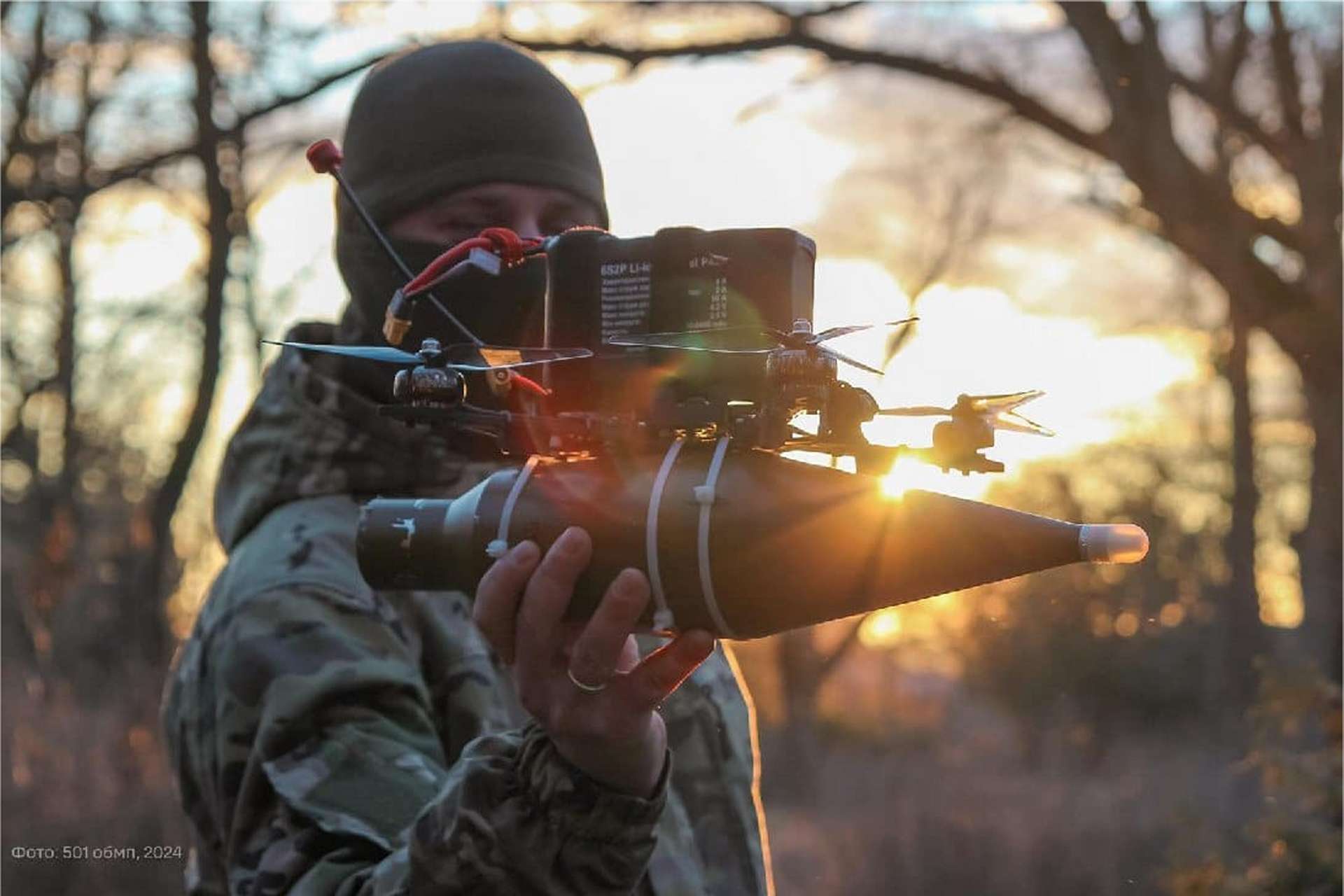
The Czech Republic is preparing to enhance its ground units with small FPV (first-person view) drones for reconnaissance and strike missions. This initiative is part of the newly approved Concept for the Construction of the Army of the Czech Republic (KVAČR), although initial discussions on drone deployment and defense were minimal.
Follow Army Recognition on Google News at this link
The ongoing conflict in Ukraine has highlighted the importance of technology, particularly unmanned vehicles. (Picture source: Ukrainian MoD)
The ongoing conflict in Ukraine has highlighted the importance of technology, particularly unmanned vehicles, in modern warfare. Aware of this, the Czech army plans to extend the use of small drones beyond special forces and paratroopers to all soldiers in the field. Experimental training courses have already begun, with a massive deployment expected within three years. An essential component of this initiative is protecting current and future military equipment against drone threats.
This initiative is driven not only by the conflict in Ukraine but also by the Czech military's involvement in supplying Ukraine with thousands of FPV drones. These drones are assembled in the Czech Republic using primarily Asian components.
Milan Mikulecký, co-founder of the D Group association, explained, "The final assembly takes place in the Czech Republic. We verified that we can produce all the components, but it would not be economically viable, so we import some things from Asia."
General Karel Řehka, the head of the Czech army and honorary chairman of the D Group association, emphasized the benefits of assisting Ukraine, stating, "Thanks to Ukraine’s help and the supply of these drones, we are also gaining the necessary know-how for our army."
Initially, the Czech military intended to acquire large surveillance and attack drones but has since reevaluated this strategy. General Roman Hyťha, director of the army’s intelligence security section, highlighted the need for soldiers at basic tactical levels to have real-time situational awareness, similar to everyday drone users.
The Czech army will procure hundreds of small drones for widespread use to address this. Colonel Magda Dvořáková, the army spokeswoman, explained that extensive preparations, including training courses, are underway to integrate drones into the arsenal across all units.
Soldiers are currently participating in experimental training courses for small tactical attack FPV drones, with plans for early implementation. The army is also exploring loitering munitions, or suicide drones, within a three-year timeframe.
The Czech army is also negotiating with an Israeli supplier for standby ammunition systems, aiming to acquire ten sets and over two hundred missiles, including practice ammunition. Though the supplier's identity remains confidential, it is speculated to be UVision from Israel, which collaborates with Rheinmetall, a German arms manufacturer.
The Czech army's strategy includes not only deploying drones and suicide munitions but also enhancing defense against these threats. This involves modifying tactical and operational procedures, employing camouflage, deceptive targets, advanced detection, and other measures. According to Dvořáková, the army continuously analyzes protection solutions, drawing insights from exercises like the Drone Shield and incorporating these findings into future projects.
Read more: Czech Republic Learns from War in Ukraine and Equips its Army with FPV Drones

- Details
- Written by: Jérôme Brahy
- Category: 2024
- Hits: 26178
Breaking news
On May 22, 2024, reports emerged on Chinese social media about two variants of a new tank spotted in Baotou, China. The vehicles, photographed moving under their own power, sparked considerable interest and speculation among military analysts and enthusiasts. The tanks, covered with camouflage nets, were seen in an urban district, possibly heading towards a test site, which suggests that the motor part of their development is already quite advanced.
Follow Army Recognition on Google News at this link
The primary distinction between the two variants appears to be their armaments, with speculation pointing to different caliber guns, likely 105mm and 125mm. (Picture source: Chinese social media)
The new tank prototypes are believed to belong to the light tank class, as indicated by their narrow tracks and resemblance to components from the serial Type 15 tank (ZTQ-15), which weighs between 33 to 36 tons—comparable to the Soviet-era T-64 medium tank. The visual similarities to the test bench turret and renderings of an earlier tank project, with crew accommodations in the hull and an uninhabited turret, further hint at the prototypes' lineage.
These characteristics align with China's recent trend towards developing lighter alternatives to its main battle tanks, such as the ZTZ-99. Additionally, the test bench turret was also shown at the Baotou training ground, where Norinco, a leading defense manufacturer in China, recently tested a new heavy infantry fighting vehicle (HIFV) based on the Type 59 Main Battle Tank.
By cross-referencing various open-source intelligence (OSINT) sources, including Chinese ones, a clearer picture of these new light tanks emerges. The primary distinction between the two variants appears to be their armaments, with speculation pointing to different caliber guns, likely 105mm and 125mm. Both tanks are believed to be equipped with active protection systems (APS) that provide 360-degree coverage, including the top, and have thermal shrouds on their gun barrels to reduce heat signatures.
Additionally, the tanks are thought to feature an electric auxiliary power unit (APU) for silent assaults, phase-controlled array millimeter-wave radar, Light Detection and Ranging (Lidar) sensors, lighter armor and artillery, an autopilot system, and an AI-automated target determination system. They are also integrated into a comprehensive battlefield information management system.
Further images of the prototypes reveal a six-road-wheel configuration and narrow tracks, reinforcing the perception of a lighter tank compared to traditional main battle tanks. Modular overlays on the tanks may include dynamic protection units and anti-cumulative grilles at the rear. The presence of two front hatches suggests a two-person crew operating an unmanned turret, supported by rotary installations with mortars and several unidentified sensors around the turret. This configuration recalls certain specifications of the new PLZ-05B 155mm self-propelled howitzer.
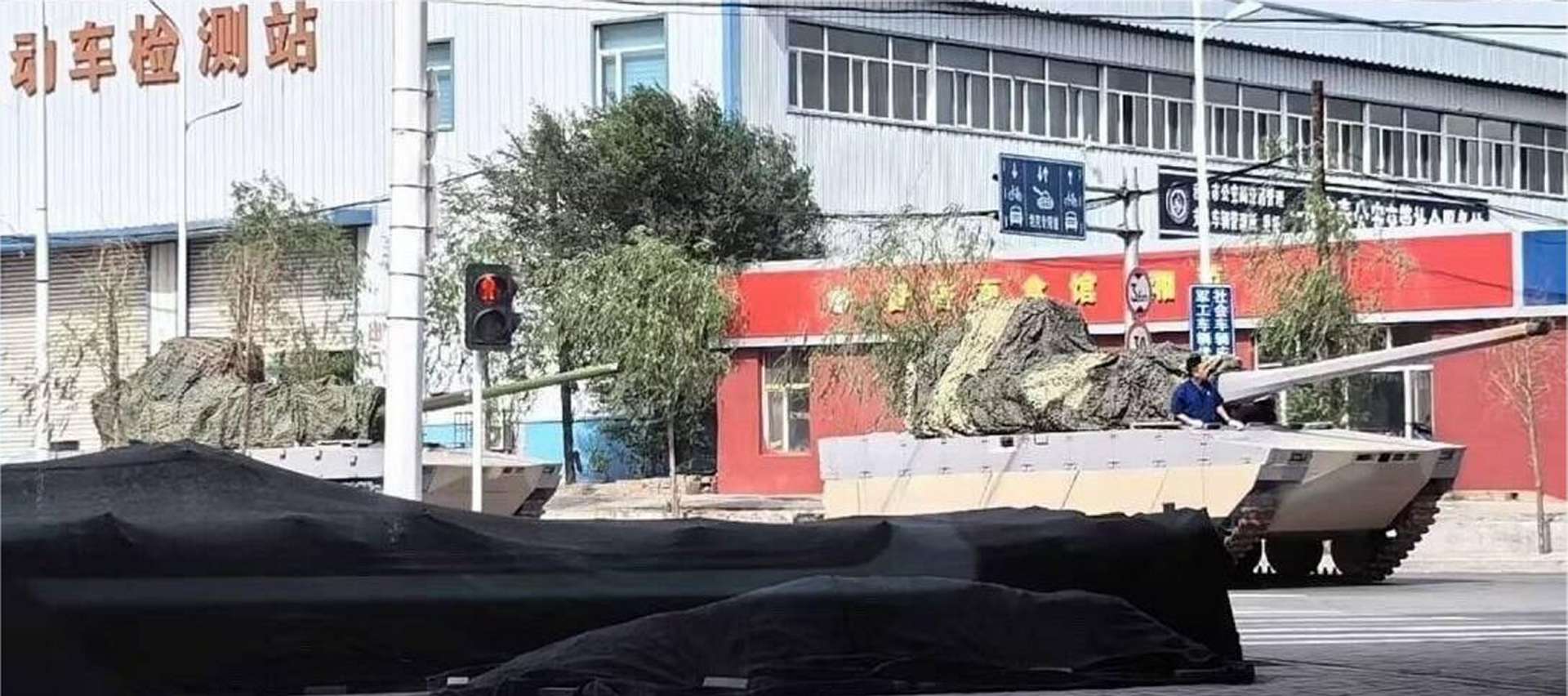
The tanks, covered with camouflage nets, were seen in an urban district, possibly heading towards a test site, which suggests that the motor part of their development is already quite advanced. (Picture source: Chinese social media)
Historical context adds to the narrative. In January 2023, images emerged of a test platform based on the Type 15 light tank chassis with an unmanned turret, undergoing active protection system measurements. By April 2023, Norinco released official conceptual trailers depicting future main battle tanks, highlighting features such as stealth cannon barrels and modular components. Chief Engineer Mao Ming of the Beijing Institute of Technology suggested in a 2023 interview that China's fourth-generation main battle tank would adopt a lightweight design, a two-person crew, and an unmanned turret, with a combat weight around 40 tons. These tanks are expected to feature electromagnetic armor, active defense systems, vehicle-mounted drones, and capabilities for integrated day and night operations.
The modular design allows for various configurations: a 30-ton light version, a 40-ton standard version, and a 50-ton heavy version. To ease the physical burden on the crew, exoskeletons might be provided. The protection systems are expected to include a combination of electromagnetic and reactive armor technologies, enhancing both passive and active defenses.
At the time, media reports indicate that China's fourth-generation main battle tanks could feature highly informationized fire control and data exchange systems, enabling two-person crews to perform tasks typically handled by multiple crew members. This technological advancement suggests significant changes in battlefield information management and efficiency. The tanks are anticipated to feature active defense systems capable of intercepting various projectiles, addressing vulnerabilities such as top attacks. These systems will likely include millimeter-wave radar to detect incoming threats and vehicle-mounted jamming bombs to neutralize them. The fourth-generation main battle tank is expected to have enhanced defensive and offensive capabilities, increasing battlefield survivability.


Further images of the prototypes reveal a potential active protection system (APS) that provide 360-degree coverage, including the top, explosive reactive armor (ERA), anti-RPG grilles, and thermal shrouds on their gun barrels to reduce heat signatures. (Picture source: Chinese social media)
This new light tank, potentially based on the Forward Armored Assault System (FAAS), could therefore represent a significant advancement in Chinese armored vehicle technology, akin to the Russian Armata platform. If reports of ongoing testing are accurate, mass production could begin soon, potentially providing the People's Liberation Army with new equipment advantages, complementing the brand new Type 19 8x8 Infantry Fighting Vehicle (IFV). These developments suggest a new phase in China's military capabilities.
China's fourth-generation tanks, with a tonnage controlled around 40 tons, aim to provide advantages in performance and range compared to traditional 60-ton tanks. They represent an evolution in technology and design, incorporating advanced armor systems, improved mobility, and enhanced firepower. These tanks feature active protection systems (APS) designed to intercept incoming projectiles, unmanned turrets for increased crew safety, and sophisticated targeting systems to improve situational awareness and accuracy. Built for network-centric warfare, these tanks enable better communication and coordination on the battlefield. Modular armor allows for easy updates and customization of protection levels, while improved stealth capabilities reduce the likelihood of detection by enemy forces.
To date, examples of fourth-generation tanks include the Russian T-14 Armata, which features an unmanned turret and advanced armor systems; the German KF-51 Panther, known for its 130mm smoothbore cannon and advanced situational awareness systems; and Japan's Type 10, which emphasizes mobility, modular armor, and sophisticated electronic systems. Additional tanks in this category are the South Korean K2 Black Panther, the Turkish Altay, the American AbramsX, the French-German Main Ground Combat System (MGCS), the Indian Future Main Battle Tank (FMBT), and the British Challenger 3.
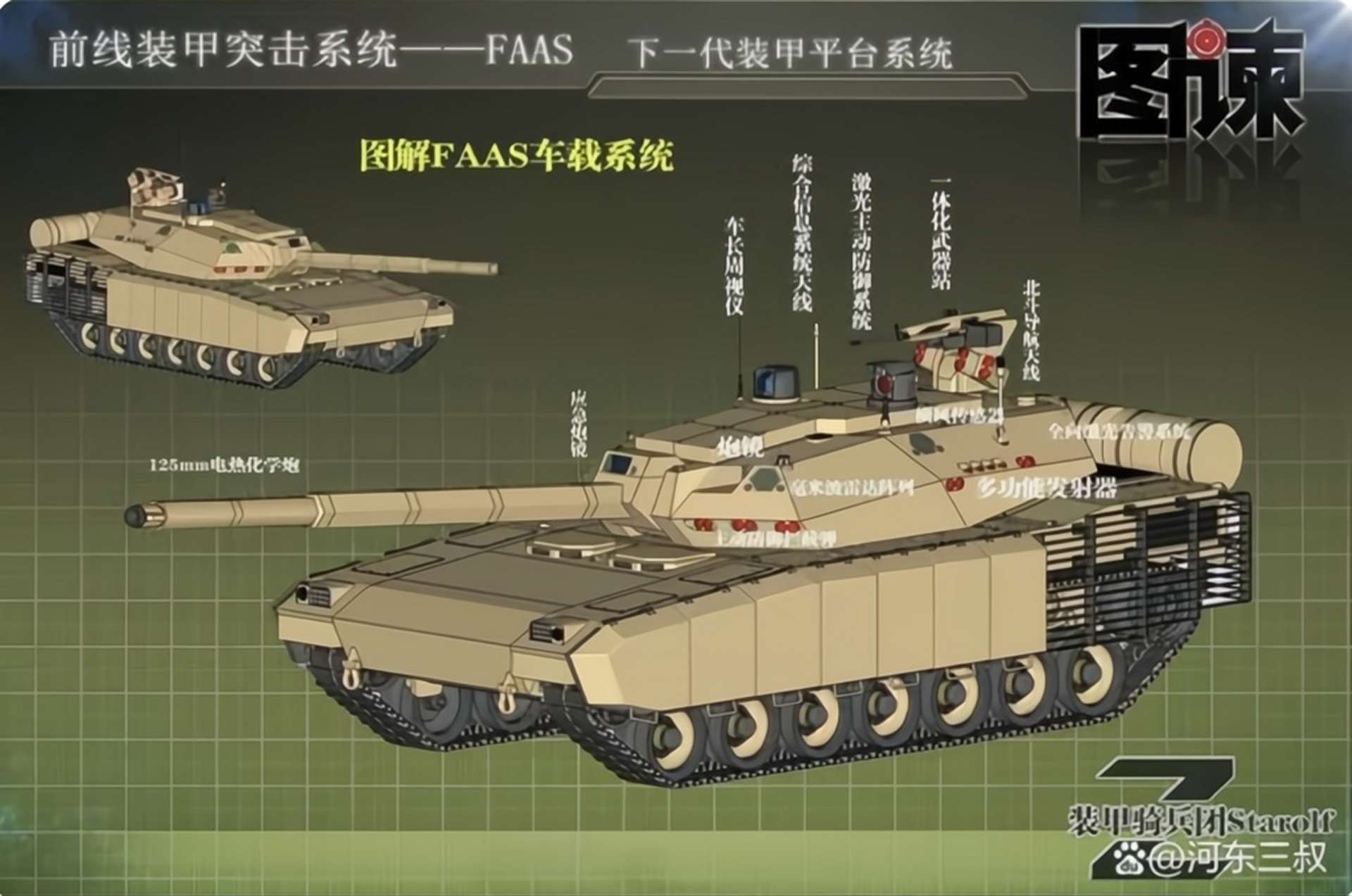
This new light tank is potentially based on the Forward Armored Assault System (FAAS), akin to the Russian Armata platform. (Picture source: Chinese social media)
- Details
- Written by: Triffaux
- Category: 2024
- Hits: 5851
Breaking news
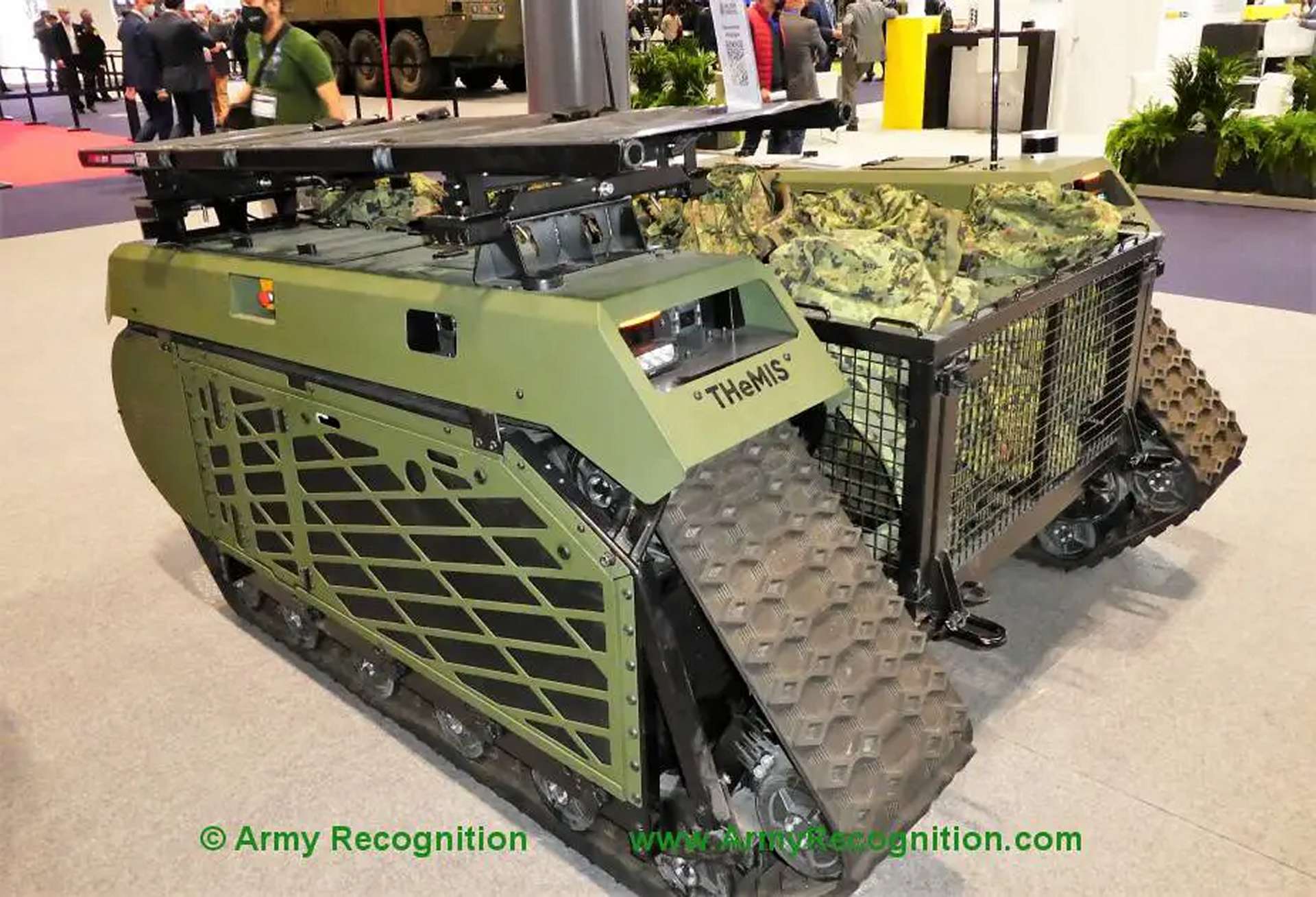
On 23 May 2024, Milrem Robotics, a company specializing in development of robotic and autonomous systems, announced the opening of a new facility in Tallinn, which increases its production capacity fivefold. This expansion will enable the production of 500 units annually of its Unmanned Ground Vehicle (UGV), THeMIS, which is used by 18 countries, including eight NATO members.
Follow Army Recognition on Google News at this link
Milrem Robotics THeMIS Unmanned Ground Vehicle (Picture source: Army Recognition)
The increase in production capacity is in response to a growing demand for intelligent robotic solutions. The THeMIS is involved in military operations, including those supporting Ukrainian forces.
Kuldar Väärsi, CEO of Milrem Robotics, stated that the new facility enhances the company's ability to fulfill large orders. He also noted that the increased use of UGVs in Ukraine demonstrates the importance of these technologies in modern conflicts.
The company is also expanding its prototyping facilities to accelerate the development of new products and has added 1000 square meters of office space to support its growth. Unlike other technology companies that reduced their workforce in 2023, Milrem Robotics continues to expand and plans to hire 100 new employees in Europe.
The expansion is also expected to create indirect jobs among high-tech partners and contribute to the local economy. Kusti Salm, Permanent Secretary of the Ministry of Defense of Estonia, emphasized the positive impact of the expansion on national security and the economy. He stated that Milrem Robotics showcases the ability of Estonia's defense industry to grow and compete internationally, thus contributing to economic development and national defense.
The THeMIS (Tracked Hybrid Modular Infantry System) UGV, developed by the Estonian defense company MILREM, represents a significant advancement in unmanned ground vehicle technology. This versatile platform is designed to support a wide range of military operations, offering modularity, robustness, and advanced capabilities that make it a valuable asset on the modern battlefield.
The THeMIS UGV is a multi-role platform that can be adapted for various missions, including logistics support, reconnaissance, surveillance, and direct combat. Its modular design allows for integrating different payloads and systems, making it highly customizable to meet specific operational requirements. The vehicle is built on a tracked chassis, providing superior mobility across diverse terrains, from urban environments to rugged landscapes.
One of the standout features of the THeMIS is its modularity. The vehicle can accommodate interchangeable payloads, which can be easily swapped out depending on the mission. This includes systems for remote weapon stations, jammers, and sensors for intelligence, surveillance, and reconnaissance (ISR) operations. This flexibility ensures that the THeMIS can be rapidly reconfigured to address evolving battlefield needs, enhancing its utility and operational efficiency.
The THeMIS is equipped with a hybrid diesel-electric powertrain, which provides a significant operational range and allows for silent movement in electric mode, a critical feature for stealth operations. Its robust design includes a low center of gravity, ensuring stability even on difficult terrains and during the transport of heavy loads. The vehicle's tracked system enhances its mobility, allowing it to navigate challenging environments that wheeled vehicles might struggle with.
Regarding autonomy, the THeMIS offers several levels of control, from direct teleoperation to semi-autonomous and fully autonomous modes. Advanced sensors and navigation systems enable the UGV to perform complex tasks with minimal human intervention. For instance, it can follow pre-defined routes, avoid obstacles, and even coordinate with other units on the battlefield.
The THeMIS also features advanced communication systems seamlessly integrating with other military platforms and command structures. This interoperability is crucial for modern network-centric warfare, where real-time data sharing and coordination can significantly enhance operational effectiveness

- Details
- Written by: Jérôme Brahy
- Category: 2024
- Hits: 8236
Breaking news
As reported by New 27 Brigade on May 23, 2024, the M1167 HMMWV TOW missile carriers that Taiwan purchased from the United States have begun to be deployed within military units. These military vehicles, part of the "Hunter Project," are equipped with a new batch of TOW 2B missiles, which have wireless guidance capabilities. The new HMMWVs offer stronger protection and greater mobility compared to the currently active M1045 models in the Taiwanese Army.
Follow Army Recognition on Google News at this link
This delivery and deployment coincide with China initiating a series of military drills around Taiwan, leading to heightened regional tensions, as these exercises, involving various branches of the Chinese military, focus on simulated strikes on key targets in Taiwan. (Picture source: New 27 Brigade)
This delivery and deployment coincide with China initiating a series of military drills around Taiwan, leading to heightened regional tensions. These exercises, involving various branches of the Chinese military, focus on simulated strikes on key targets in Taiwan. The drills feature significant maneuvers by aircraft and naval vessels, aiming to test the military's precision strike capabilities and maintain a strategic stance around the island. This action follows Taiwanese President Tsai Ing-wen's recent visit to the United States, which Beijing views as provocative.
Taiwan has reported detecting numerous Chinese aircraft and ships operating near its territory, with some crossing the median line of the Taiwan Strait, traditionally seen as a buffer zone. In response, Taiwan has heightened its military alertness, deploying assets to monitor and respond to these activities. The United States has called for restraint to maintain peace and stability in the Taiwan Strait, while Japan and other regional actors have expressed concern over potential escalation. These drills underscore the ongoing strategic and political tensions among China, Taiwan, and the US, with China reiterating its claims over Taiwan and reacting strongly against actions perceived as supporting Taiwanese independence.
In 2024, Taiwan is scheduled to receive 81 BGM-71F TOW 2B anti-tank guided missiles (ATGMs) as part of a larger defense package, involving a $14.2 billion backlog in military equipment that the U.S. has agreed to supply to Taiwan since 2019, contributing to its broader defense strategy in response to increasing tensions with China. This arms package also includes various systems such as F-16 fighter jets, Patriot missile system upgrades, Stinger missiles, and deliveries of M1A2 Abrams tanks, which will replace older models in Taiwan's arsenal, such as the M60A3 and CM11 tanks. The first batch of 38 tanks is expected to arrive in 2024, with additional deliveries planned for 2025 and 2026. However, Taiwan has faced delays in receiving some of its purchased equipment, mainly due to problems caused by the Covid-19 pandemic.
This arms deal aims to enhance Taiwan's defense capabilities amid rising military pressure from China. Efforts have been made to expedite the delivery of these arms, reflecting an increased focus on strengthening Taiwan's defensive posture. The U.S. has prioritized the provision of defensive weaponry and sustainment through Foreign Military Sales (FMS) and Direct Commercial Sales (DCS), resulting in a record number of FMS notifications in recent years.
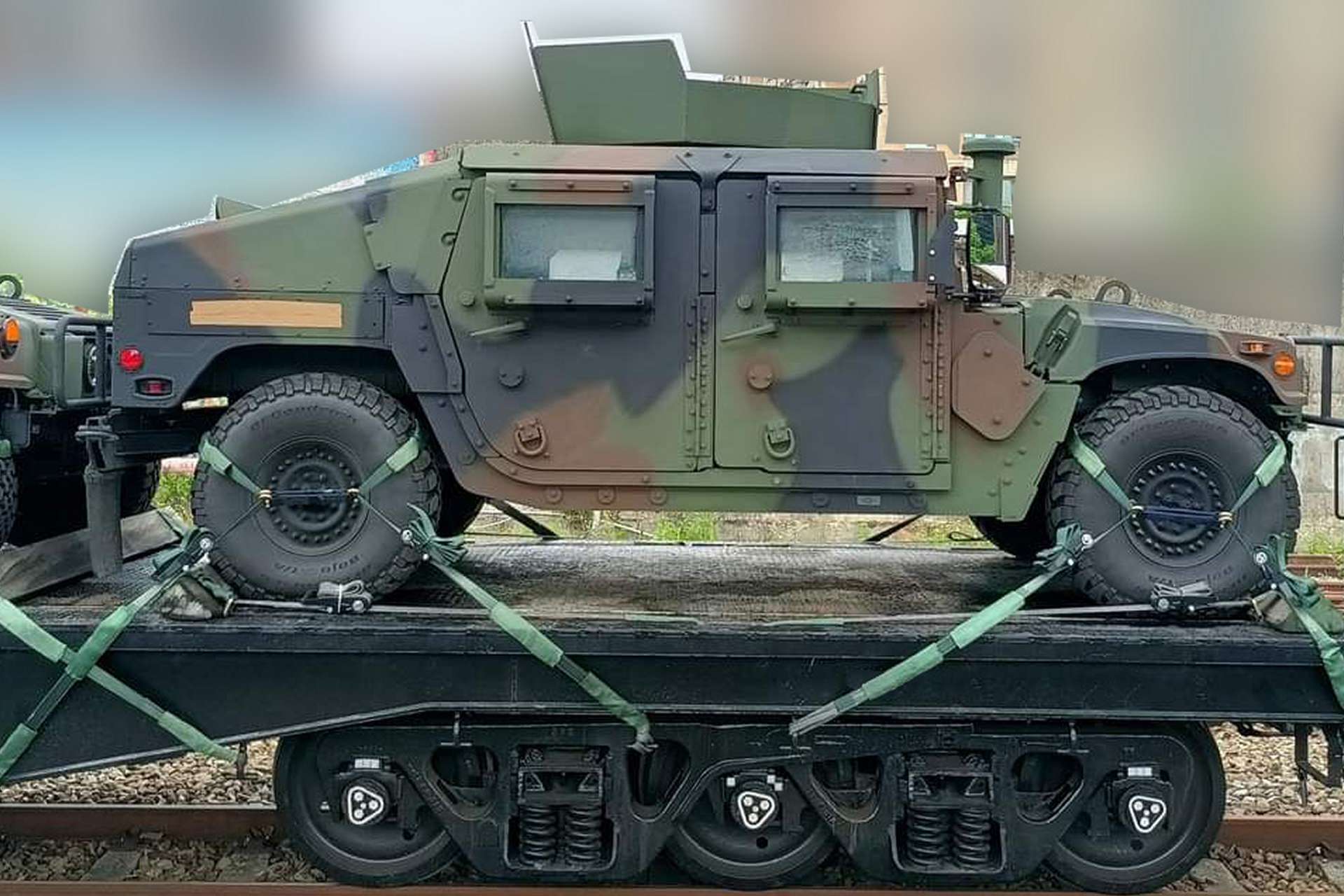
The M1167 is a variant of the High Mobility Multipurpose Wheeled Vehicle (HMMWV), designed primarily as a TOW missile carrier. (Picture source: New 27 Brigade)
The BGM-71F TOW 2B is an anti-tank guided missile developed by Hughes Aircraft (now Raytheon) for the U.S. military. Originating in the 1960s and entering service in 1970, the TOW (Tube-launched, Optically-tracked, Wire-guided) system has seen numerous enhancements. The TOW 2B, introduced in the 1990s, deviates from its predecessors by employing a "fly-over, shoot-down" approach, targeting the more vulnerable top sections of armored vehicles. This version features dual explosively formed penetrator (EFP) warheads, which detonate above the target to direct explosive force downward, enhancing penetration effectiveness.
Technically, the TOW 2B is about 1.5 meters long and weighs approximately 21.5 kilograms. It has a maximum effective range of 3.75 kilometers, extendable to 4.5 kilometers in the TOW 2B Aero variant. Guidance is achieved through a combination of a laser profilometer and a magnetic sensor. The system includes an advanced thermal imaging sight and integrated optical system for precise target acquisition. The TOW 2B can be deployed from various platforms, including ground vehicles, helicopters, and portable launchers.
The M1167 is a variant of the High Mobility Multipurpose Wheeled Vehicle (HMMWV), designed primarily as a TOW missile carrier. It is part of the expanded capacity family of HMMWVs used by the U.S. military, which emphasizes mobility and versatility for carrying and launching anti-tank missiles. This model includes an Integrated Armor Package (IAP) to protect its crew and essential components. The M1167 is equipped with the M41 Improved Target Acquisition System (ITAS), which aids in the precise targeting and launching of TOW missiles. These wire-guided missiles are effective against various armored targets.
The M1167 has a gross vehicle weight of about 13,100 pounds (5,942 kg) and operates with a turbocharged diesel engine designed for diverse terrain performance. It also features a secondary weapons mount for close-range defense, capable of supporting additional weapons like machine guns mounted on a 360-degree ring. This vehicle is used in different tactical situations, providing anti-armor capabilities and supporting ground troops with its offensive functions.
- Details
- Written by: V.Saint
- Category: 2024
- Hits: 3952
Breaking news
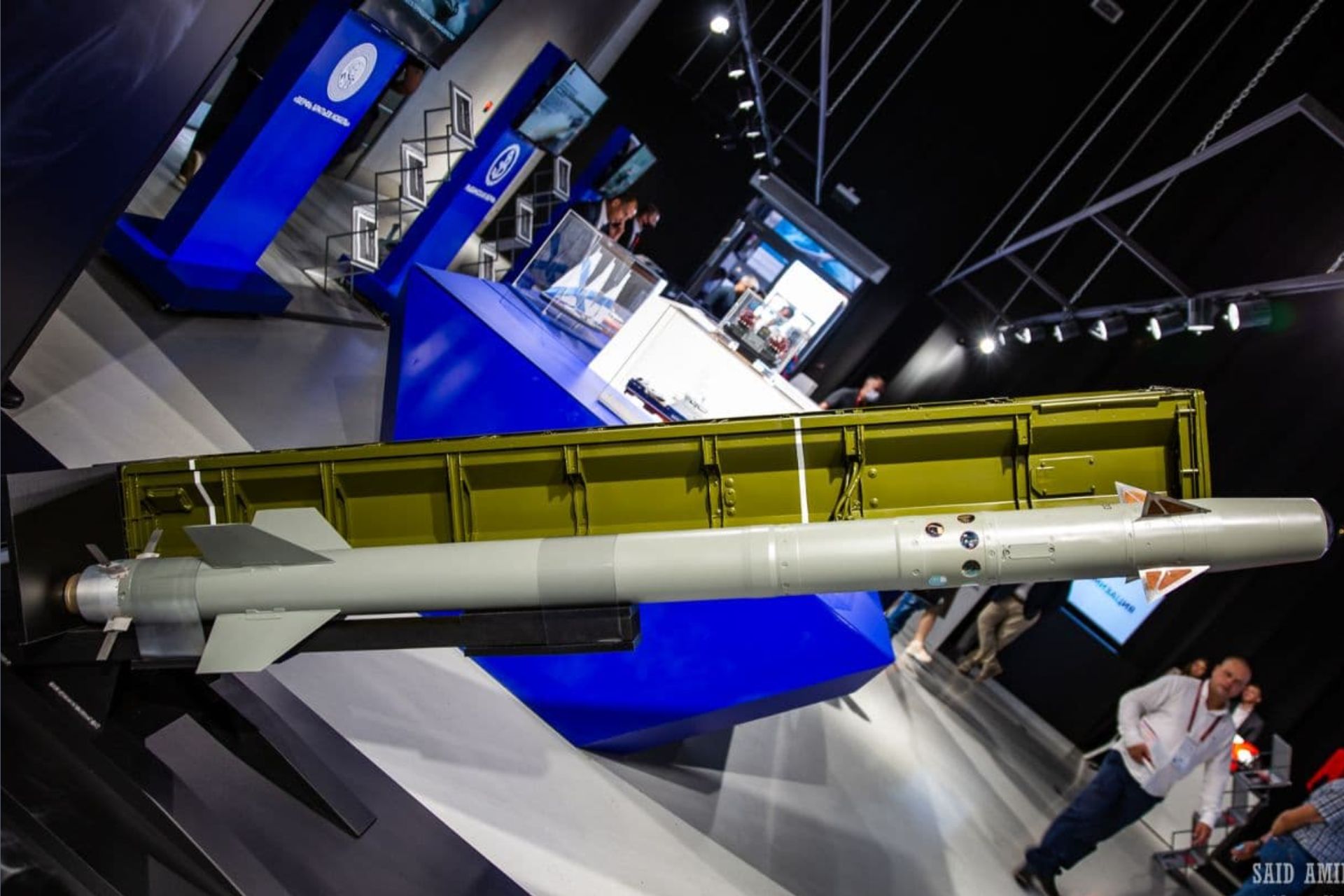
The Kalashnikov Group has delivered a batch of 9M333 guided surface-to-air missiles (SAM) to the army as part of the State Defense Order for 2024, according to the company's press service. This batch could be use as a Russian answer to F-16 arrival in Ukraine field
Follow Army Recognition on Google News at this link
9M333 presented by Kalashnikov (Picture source: Kalashnikov Group )
According to the report, the batch of missiles transferred is very significant, but its parameters have not been disclosed. However, it is noteworthy that despite the increase in state orders for anti-aircraft missiles this year, the group's companies continue to successfully produce and deliver their products to clients.
The high-precision, upgraded 9M333 guided anti-aircraft missile is used in the Strela-10M3 surface-to-air missile (SAM) system. This missile defense system can shoot down helicopters and planes, even with the use of thermal decoys, as well as cruise missiles and drones. The missile's guidance head is multispectral and has three operating modes; the missile was initially designed to hit targets under conditions of optical interference. The Ukrainian theater allows for the assessment of the success and effectiveness of these weapons, currently showing an efficiency rate of 80%. The main targets are Su-25 attack aircraft and helicopters of the Ukrainian armed forces.
The 9M333 guided anti-aircraft missile entered production at the end of 2020, with its modernization carried out by the Kalashnikov company, starting in 2018. The missile has three operating modes for the seeker head: photo-contrast, infrared, and jamming. The 9M333 missile defense system allows for fire-and-forget shooting.
The missile's average speed is 550 m/s, and it can hit targets at a distance of up to 5,000 meters. this is the only data available on this missile for now.
Read more: Russia receive from kalachnikov new batch of 9M333 flares resistant air defense missile
- Details
- Written by: Halna du Fretay
- Category: 2024
- Hits: 2472
Breaking news
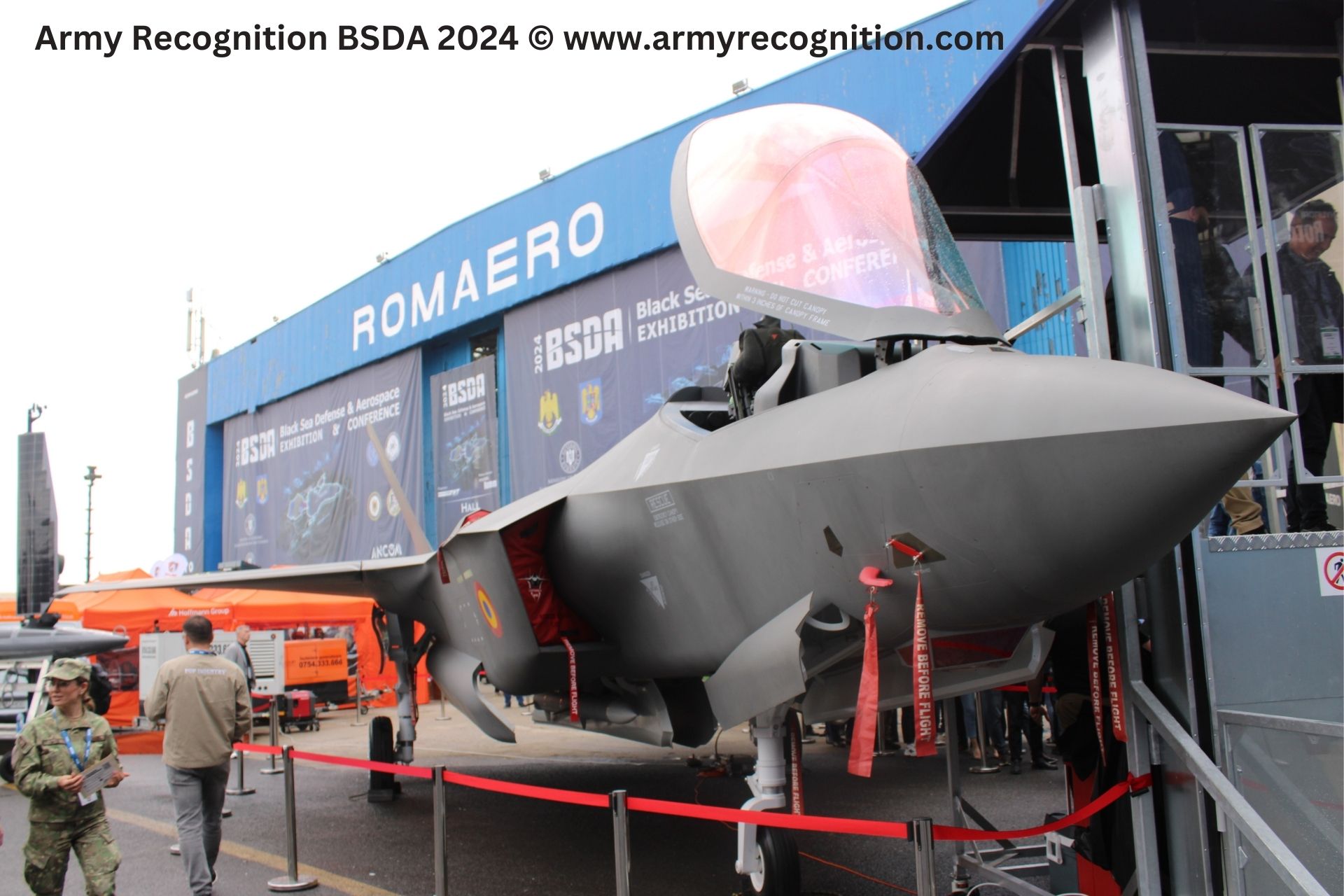
At the Black Sea Defense and Aerospace 2024 exhibition, an F-35 Lightning II in Romanian colors is on display. The Romanian Ministry of Defense had officially sought parliamentary approval to procure 32 F-35 fighter jets at a total cost of $6.5 billion towards the end of 2023.
Follow Army Recognition on Google News at this link
The F-35 Lightning II is engineered for a range of military operations including air-to-air, air-to-surface, and electronic warfare (Picture source: ArmyRecognition)
This ambitious project received the green light in April from the Supreme Council of Defense of the Country (CSAT), opting to secure these stealth multi-role combat aircraft through a government-to-government agreement with the United States. The acquisition plan is structured in two phases: initially, two squadrons totaling 32 jets for the Romanian Air Force, followed by a subsequent purchase of 16 jets for the Army.
The first phase encompasses not just the aircraft but also engines, logistical support, pilot and personnel training, and flight simulators, inclusive of specialized air-to-air and air-to-ground munitions. According to General Daniel Petrescu, Chief of the General Staff of the Romanian Defense Forces, this initiative aims to gradually replace the F-16s, which are expected to be phased out by the 2030s.
Currently, the Romanian Air Force operates 17 F-16s acquired from Portugal and anticipates the delivery of an additional 32 F-16s from Norway by year-end, facilitating the transition to the F-35s. The Norwegian F-16s are anticipated to serve for up to 10 years, while the Portuguese F-16s are mid-life, thus offering a longer operational span.
The F-35s are manufactured by Lockheed Martin, with significant contributions from partners such as Northrop Grumman and BAE Systems. Primarily utilized by the US Air Force and various international allies, the F-35 Lightning II is engineered for a range of military operations including air-to-air, air-to-surface, and electronic warfare. It employs advanced stealth technology to decrease its radar cross-section, thereby enhancing survivability in hostile environments.
Integrated with systems like the Electro-Optical Targeting System (EOTS) and Distributed Aperture System (DAS), the aircraft excels in reconnaissance and situational awareness, which are critical for missile defense and air combat. These features allow the F-35 to identify and engage targets from considerable distances.
Powered by the Pratt & Whitney F135 engine, delivering 43,000 pounds of thrust, the F-35 reaches top speeds of about Mach 1.6, roughly 1,975 km/h. It supports various armaments including AIM-120C air-to-air missiles and GBU-32 JDAM guided bombs, with a standard armament capacity of over 18,000 pounds, which can be increased to 22,000 pounds in a "beast mode" configuration.
Read more: BSDA 2024: F-35 Lightning II Showcases in Romanian Colors for Potential Acquisition

- Details
- Written by: Vandenbosch
- Category: 2024
- Hits: 16009
Breaking news
FN Herstal unveiled a new variant of its FN Minimi on May 23, 2024. The FN Minimi Mk3, the iconic light machine gun designed by the Belgian arms manufacturer FN Herstal, continues to evolve to meet the needs of armed forces worldwide. Already standardized by numerous armies, including several NATO member countries, the FN Minimi is widely recognized for its combat efficiency and reliability.
Follow Army Recognition on Google News at this link
The FN Minimi 7.62 Mk3 is a third-generation light machine gun (Picture source: FN Herstal)
To meet new operational requirements, FN Herstal has introduced a new configuration of the FN Minimi Mk3, featuring a feed cover with a long, 23-notch top rail. This rigid, one-piece rail now allows for the inline mounting of two optics, providing users with more flexible configurations. For example, a non-magnifying day optic can be combined with a magnifying scope or a day optic with a night vision optic, ensuring increased precision and reliability during missions.
This new variant replaces the standard adjustable sight with a non-adjustable flip-up rear sight and includes a retention latch that keeps the cover open during loading or safety operations. This feature compensates for the weight of the optics, ensuring safe and efficient handling.
The FN Minimi 7.62 Mk3, a third-generation light machine gun, combines power and lightness while offering significant improvements in ergonomics and mobility. This weapon is renowned for its proven reliability in numerous combat situations.
This machine gun comes with an adjustable stock offering five length adjustment positions and six cheek rest height adjustment positions, incorporating a hydraulic buffer to reduce recoil. The bipod integrated into the handguard remains usable even with an accessory mounted on the lower rail. The cocking handle allows for cocking with either the strong or weak hand, while the feed tray with belt retaining pawls makes one-handed loading easier.
The FN Minimi 7.62 Mk3 comes standard with a 422 mm barrel. It is available in several variants, including the tactical version with an adjustable stock, the para version with a telescopic stock, and the standard version with a fixed stock. A customized upgrade program is available for users with earlier models of the FN Minimi 7.62. Additionally, a conversion kit is available to fire 5.56x45mm NATO cartridges.
The weapon operates on a gas-operated, rotating bolt principle and measures 1,026 mm in length when extended and 950 mm when collapsed. It weighs approximately 8.8 kg and has a cyclic rate of fire of about 800 rounds per minute. The feeding system can use either a belt or a pouch. A full range of accessories, tested and certified by FN Herstal, as well as various cartridges, are available for this machine gun.
If you are eager to see this new variant of the FN Minimi Mk3, it will be showcased at the Eurosatory exhibition, an international event to be held from June 17 to 21, 2024, in Paris. Army Recognition will be present, and we will undoubtedly provide more coverage of this light machine gun.
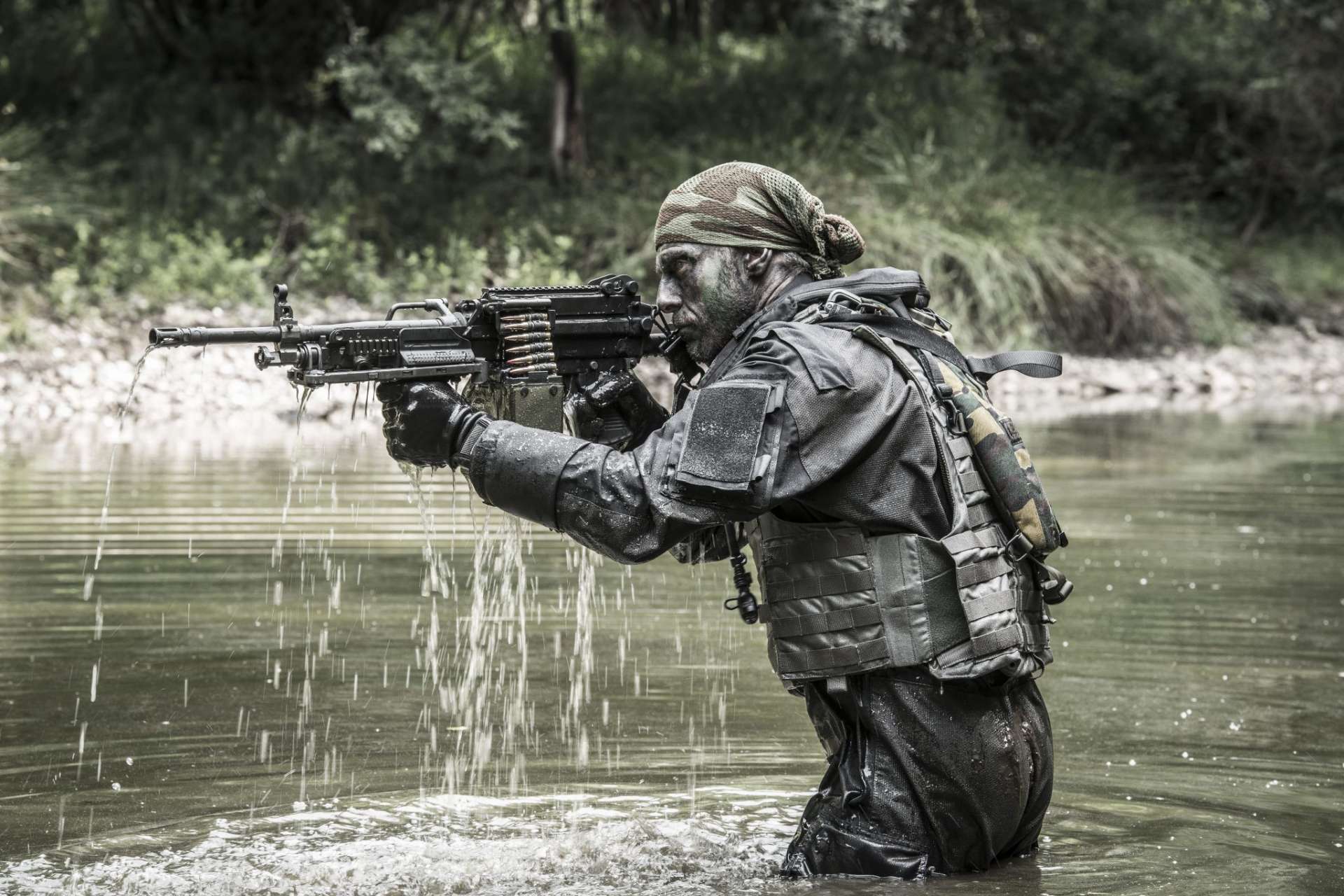
The FN Minimi Mk3 will be showcased at Eurosatory 2024. ( Picture Source: FN Herstal)
Read more: FN Herstal Unveils New Variant of FN Minimi Mk3 Light Machine Gun
- Details
- Written by: Triffaux
- Category: 2024
- Hits: 5499
Breaking news
According to a press article from the Spanish newspaper Infodefensa dated May 23, 2024, Argentina continues its evaluations to modernize its fleet of wheeled armored combat vehicles (VCBR), essential for the mobility and effectiveness of its army in the field. In a context of strengthening its military capabilities, Buenos Aires seems to favor proven models while remaining open to international proposals.
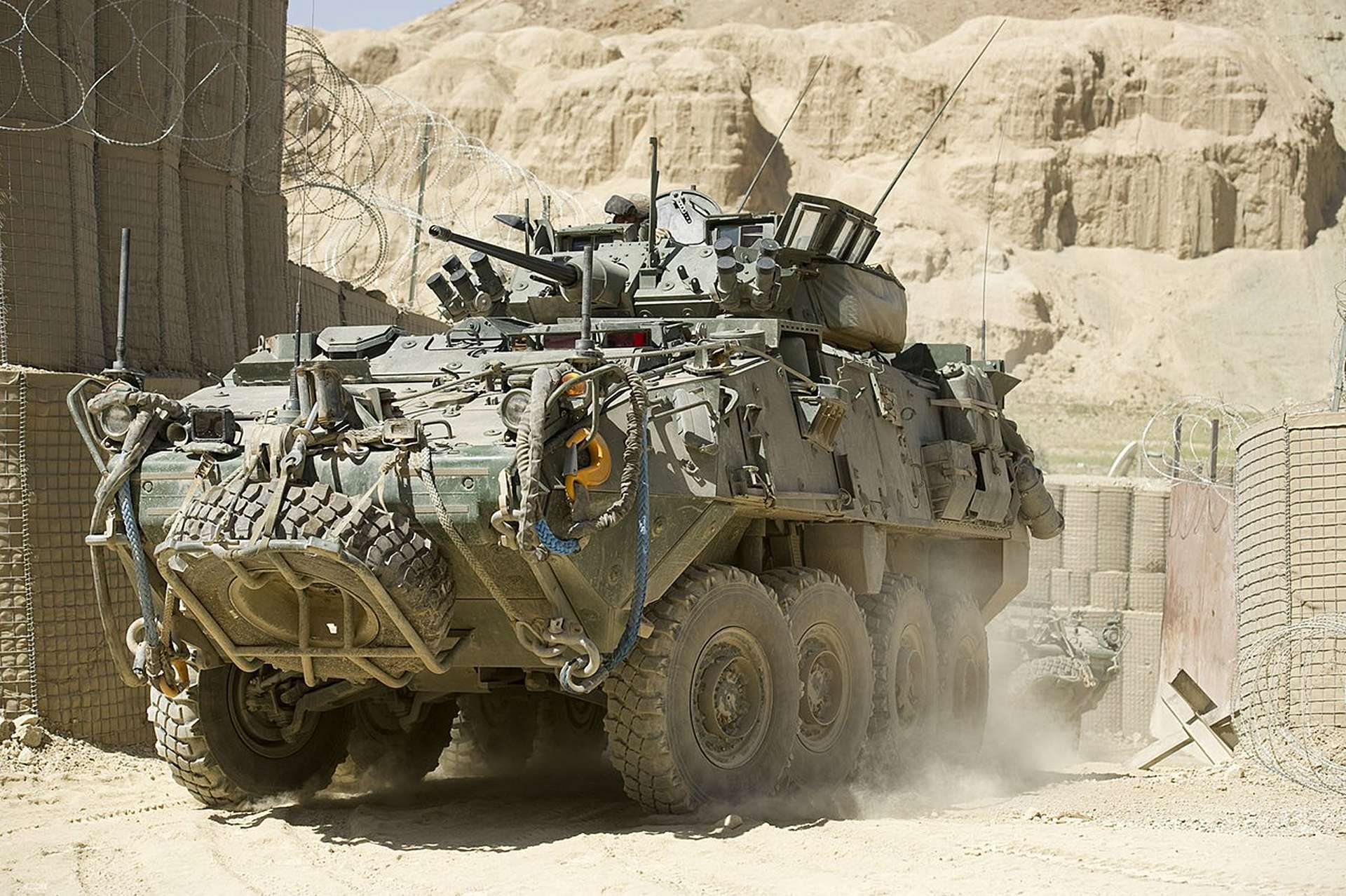
GDLS LAV III Stryker competes for Argentina Army's VCBR Program (Picture source: Wikimedia)
In his annual report presented to the Argentine Senate, Nicolás Posse, Chief of Staff of the Ministers of the Nation, revealed that the country is seriously considering the ACV 8x8 model LAV III/Stryker from the American company General Dynamics. This option would be favored for its recognized performance in various international conflicts. However, the Guaraní ACV 6x6 produced by Brazil also remains in contention, benefiting from geographical proximity and a possible closer regional collaboration.
Initial studies for the acquisition of new ACVs started in 2010 and envisaged the integration of 209 vehicles, including different variants adapted to various roles within the armed forces. The financing of this ambitious project has been approved by the Argentine Congress, testifying to the strategic importance of this renewal for the country.
The final selection will be based on a series of rigorous criteria, including technical and operational aspects, as well as the ability to provide logistical support and interoperability with neighboring armies. The decision will take into account the various proposals received, notably that from Italy, and highlight the importance of the delivery and maintenance conditions that will be negotiated in the final contracts.
The selection process has highlighted particular interest in the Stryker model, deemed superior according to experts consulted by Infodefensa. However, the Brazilian Guarani and proposals from other international suppliers like Norinco are still being considered, reflecting Argentina's open and pragmatic approach in its quest to strengthen its defense capabilities.
Argentina's commitment to modernizing its armed forces is also manifested by technology transfer initiatives, planned in the sales agreements, which should allow the maintenance of ACVs directly on Argentine soil. Buenos Aires' long-term vision is not only to have modern equipment but also to develop a national defense industry capable of supporting and extending the durability of these major investments.
The completion of this renewal program, scheduled over a nine-year period, will mark a significant step in the modernization of the Argentine armed forces and will strengthen its position as a key player in regional security in South America.
Read more: Argentina Evaluates New Proposals for Army's Armored Combat Vehicle Program

- Details
- Written by: Jérôme Brahy
- Category: 2024
- Hits: 6610
Breaking news
On May 24, 2024, Rheinmetall announced a significant contract valued at nearly €300 million from a NATO customer for the supply of artillery ammunition. This contract includes several tens of thousands of 155mm artillery shells and several hundred thousand propellant charge modules, with deliveries scheduled between 2024 and 2028. This order reflects a broader trend to replenish military stockpiles depleted by ongoing conflicts, particularly the war in Ukraine.
Follow Army Recognition on Google News at this link
By 2027, the Rheinmetall group aims to reach an annual production capacity of up to 1.1 million artillery shells. Additionally, there are plans to commence the annual production of up to 1.5 million propellant modules and 3,000 tonnes of RDX explosives starting in 2026. (Picture source: Rheinmetall)
The global ammunition market is projected to grow significantly, with a compound annual growth rate (CAGR) of 6.2% from 2024 to 2034. This growth is driven by factors such as increased military expenditures, rising terrorism, and political instability. Major markets contributing to this growth include North America, Europe, and Asia-Pacific, with the United States, China, and Japan playing significant roles due to their advanced defense industries and technological innovations.
In Europe, there has been an increase in demand for 155mm artillery ammunition, particularly among NATO countries. The ongoing war in Ukraine and related geopolitical tensions have influenced this demand, prompting investments in ammunition production and supply. The European Union has implemented funding initiatives to enhance ammunition production, addressing the critical need for reliable military supplies.
The Act in Support of Ammunition Production (ASAP) is a European initiative aimed at increasing ammunition production capacity within Europe. This initiative responds to the European Council's March 2023 directive for the urgent provision of ammunition and missiles to Ukraine and for EU Member States to replenish their stocks. ASAP addresses challenges and shortages within the defense supply chains, with 31 projects exceeding a total budget of €500 million across five areas: €124 million for explosives, €248 million for powder, €90 million for shells, €50 million for missiles, and €2 million for testing and reconditioning certification.
Technological advancements in the ammunition market include the development of polymer-based bullet cases, which reduce ammunition weight and improve accuracy. These innovations are expected to drive market growth. Additionally, there is a shift towards environmentally friendly practices, with the development of non-toxic lead substitutes for ammunition, addressing environmental and health concerns associated with traditional lead-based ammunition.
The recent contract with Rheinmetall underscores the strategic importance of securing reliable supply chains for military ammunition amidst global shortages and rising production costs. Rheinmetall's capacity to fulfill such a large order reflects its ability to meet the increasing demand for military supplies. Since 2022, Rheinmetall has been working to enhance its manufacturing capabilities.
For example, the company's role as a supplier for the Ukrainian armed forces is likely to increase due to Rheinmetall AG's recent acquisition of all shares in the Spanish company Expal Systems S.A.U. This move enables Rheinmetall to provide a variety of medium- and large-caliber ammunition, including 20mm automatic cannon rounds for the Marder infantry fighting vehicle, 35mm ammunition for the Gepard anti-aircraft vehicle, and 105mm and 120mm tank ammunition for the Leopard 1 and Leopard 2 Main Battle Tanks (MBTs).
The acquisition extends Rheinmetall's involvement in its key business areas of weapons, ammunition, and propellants. The integration into Rheinmetall Expal Munitions brings additional artillery and mortar rounds, medium-caliber ammunition, fuses, and rocket propulsion systems into its product lineup, expanding its presence in the global ammunition market. Additionally, the acquisition of Expal provides Rheinmetall with greater production capabilities, including access to facilities in Spain and an extension into the demilitarization and soil remediation sector in the United States.
By 2027, the Rheinmetall group aims to reach an annual production capacity of up to 1.1 million artillery shells. Additionally, there are plans to commence the annual production of up to 1.5 million propellant modules and 3,000 tonnes of RDX explosives starting in 2026. These actions demonstrate Rheinmetall's response to the increased global demand for artillery ammunition, driven by the growing requirements for military equipment in various countries and the rise in geopolitical tensions.
Read more: Rheinmetall secures NATO contract for €300 Million worth of 155mm artillery shells
- Senop developping next generation night vision google for Finnish army
- Textron Systems and Kodiak Robotics to build autonomous military vehicles
- Rheinmetall showcases Oerlikon Revolver Gun Mk3 turret on an HX Trucks at BSDA 2024
- Rheinmetall presents the Lynx KF41 IFV at the Black Sea Defense & Aerospace 2024