

- Details
- Written by: Halna du Fretay
- Category: 2024
- Hits: 3648










At the DVD 2024 event in Millbrook, Supacat, in partnership with Babcock, unveiled the Jackal 3 HMT Extenda Mk3, which entered production for the British Army in February 2024. This high-mobility vehicle is based on Supacat's proven platform and adopts a modular approach, allowing users to configure the vehicle according to different mission profiles and operational needs. The production of the Jackal 3 HMT Extenda Mk3 addresses a crucial operational requirement for the British armed forces and aligns with the United Kingdom's Land Industrial Strategy.
Follow Army Recognition on Google News at this link
The production of the Jackal 3 HMT Extenda Mk3 by Supacat and Babcock represents an important advancement for the British Army (Picture source: ArmyRecognition)
The Jackal 3 HMT Extenda Mk3, in its 4x4 version, can carry a payload of up to 2,500 kg. Its modularity allows for conversion into a 6x6 version, increasing its payload capacity to 4,000 kg. This flexibility enables the vehicle to be adapted for a wide range of missions. The double-wishbone suspension system with airbags allows for adjustable ride height based on terrain and load, reducing physical impact on the crew and onboard equipment. Additionally, the Jackal 3 HMT Extenda Mk3 is fully compatible with air transport, including by helicopter, ensuring strategic mobility. The vehicle is also equipped with a blast and ballistic protection system, allowing for significant adaptability based on the operational environment.
The production of the Jackal 3 HMT Extenda Mk3 by Supacat and Babcock represents an important advancement for the British Army. Seventy vehicles are currently in production, with 62 being manufactured at Babcock’s facility in Devonport and the remaining eight at Supacat’s facility in Dunkeswell.
The Jackal 3 benefits from more than a decade of development by Supacat, offering significant improvements over the Jackal 2, including enhanced crew protection and increased load capacity. Initially a 4x4 vehicle, the Jackal 3 can be transformed into a six-wheel-drive vehicle to double its carrying capacity.
The production project for the Jackal 3 HMT Extenda Mk3 is one of the first to realize the UK's Land Industrial Strategy. Close collaboration between Babcock, Supacat, the British Army, and the Ministry of Defence's (MOD) Defence Equipment & Support (DE&S) team has ensured that the vehicle's operational and safety requirements are fully met. The production facility in Devonport was specifically developed for this project, incorporating advanced technologies such as the 'Pulse' software, which optimizes efficiency during vehicle assembly. Located in the South Devon Freeport, this facility also benefits from economic advantages to ensure the sustainability of the vehicle production.
The production program for the Jackal 3 HMT Extenda Mk3 directly contributes to the economic development of the Southwest region of the UK, with nearly 50% of the supply chain based in the area. The contract has already created more than 100 new jobs across Babcock and Supacat's sites and includes a focus on workforce skills development. This collaboration enhances future production capacity and demonstrates both companies' commitment to providing cutting-edge vehicles for the British forces.
Major General Darren Crook CBE, Director of the Land Equipment Operating Centre at DE&S, emphasizes that "this collaboration between Supacat and Babcock will provide modern combat vehicles for the British Armed Forces and our allies, while developing and maintaining key land defense engineering skills in a valued part of the Southwest of England."
David Lockwood, CEO of Babcock, also highlighted the importance of this production in the current context of global instability, while Nick Ames, CEO of Supacat, underscored the culmination of 25 years of development and the company's pride in delivering a vehicle that British soldiers can rely on.
Read more: Supacat Presents Jackal 3 HMT Extenda Mk3 Now in Production for British Army at DVD 2024
- Details
- Written by: Halna du Fretay
- Category: 2024
- Hits: 2329
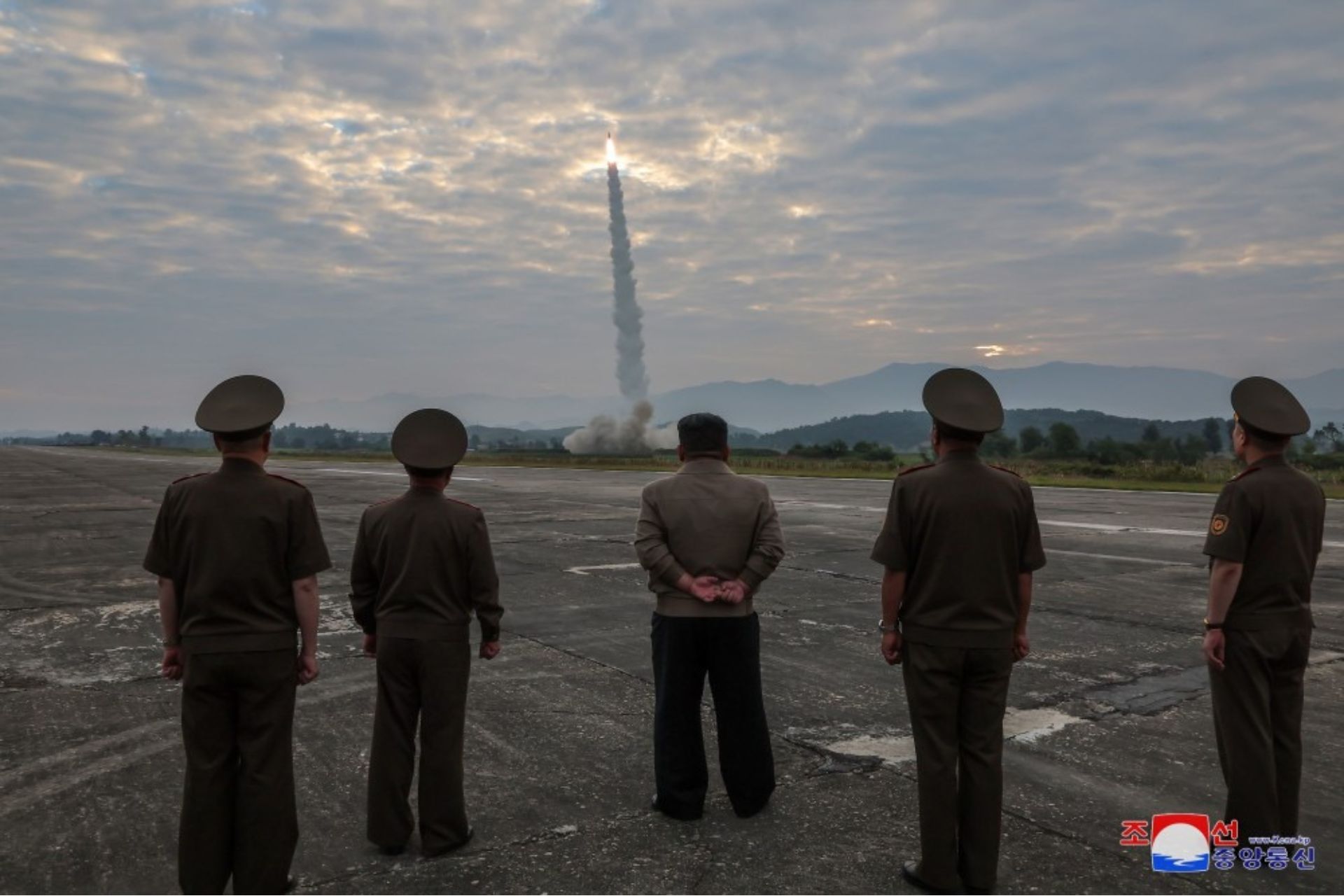
North Korean state media reported on September 19, 2024, that leader Kim Jong Un successfully supervised tests of a new tactical ballistic missile as well as an improved strategic cruise missile. The announcement was made one day after the missile tests, aimed at strengthening the country's military capabilities amid what North Korea perceives as growing threats from external forces.
Follow Army Recognition on Google News at this link
The Korean Central News Agency (KCNA) stated that the new missile, named the Hwasongpho-11 Da-4.5, is designed to carry a 4.5-ton conventional warhead. (Picture source: KCNA)
The Korean Central News Agency (KCNA) stated that the new missile, named the Hwasongpho-11 Da-4.5, is designed to carry a 4.5-ton conventional warhead. The test-firing was conducted to verify the missile's ability to accurately hit targets at a range of 320 kilometers. In addition to the ballistic missile, an upgraded version of a strategic cruise missile was also tested, although specific details about the improvements were not disclosed.
South Korea's military confirmed that North Korea launched short-range ballistic missiles from the Kaechon area in South Phyongan Province, near Pyongyang, on Wednesday. According to South Korean defense authorities, these missiles flew northeastward, covering a distance of about 400 kilometers. This launch is part of North Korea's ongoing efforts to develop and refine its missile capabilities.
The KCNA report cited Kim Jong Un, who emphasized that these tests and the continuous improvement of weapons are "directly related to the grave threat of outside forces to the state security environment of the DPRK." The Democratic People's Republic of Korea (DPRK) continues to assert that its military development is a response to perceived external threats and challenges to its sovereignty.
The test of the Hwasongpho-11 Da-4.5 follows a similar missile launch in July. At that time, another test was planned but ultimately did not take place. The recent test indicates a renewed focus on developing tactical ballistic missile systems, which North Korea views as essential for strengthening its defense capabilities.
Kim Jong Un's presence at the launch underscores the importance that the North Korean leadership places on its missile program. The country's ongoing military activities are closely monitored by neighboring countries and the international community, as they are seen as indicators of North Korea's strategic intentions and its response to regional security dynamics.
Read more: Hwasongpho-11 Da-4.5 North Korea Tests Its New Ballistic Missile
- Details
- Written by: Halna du Fretay
- Category: 2024
- Hits: 4230
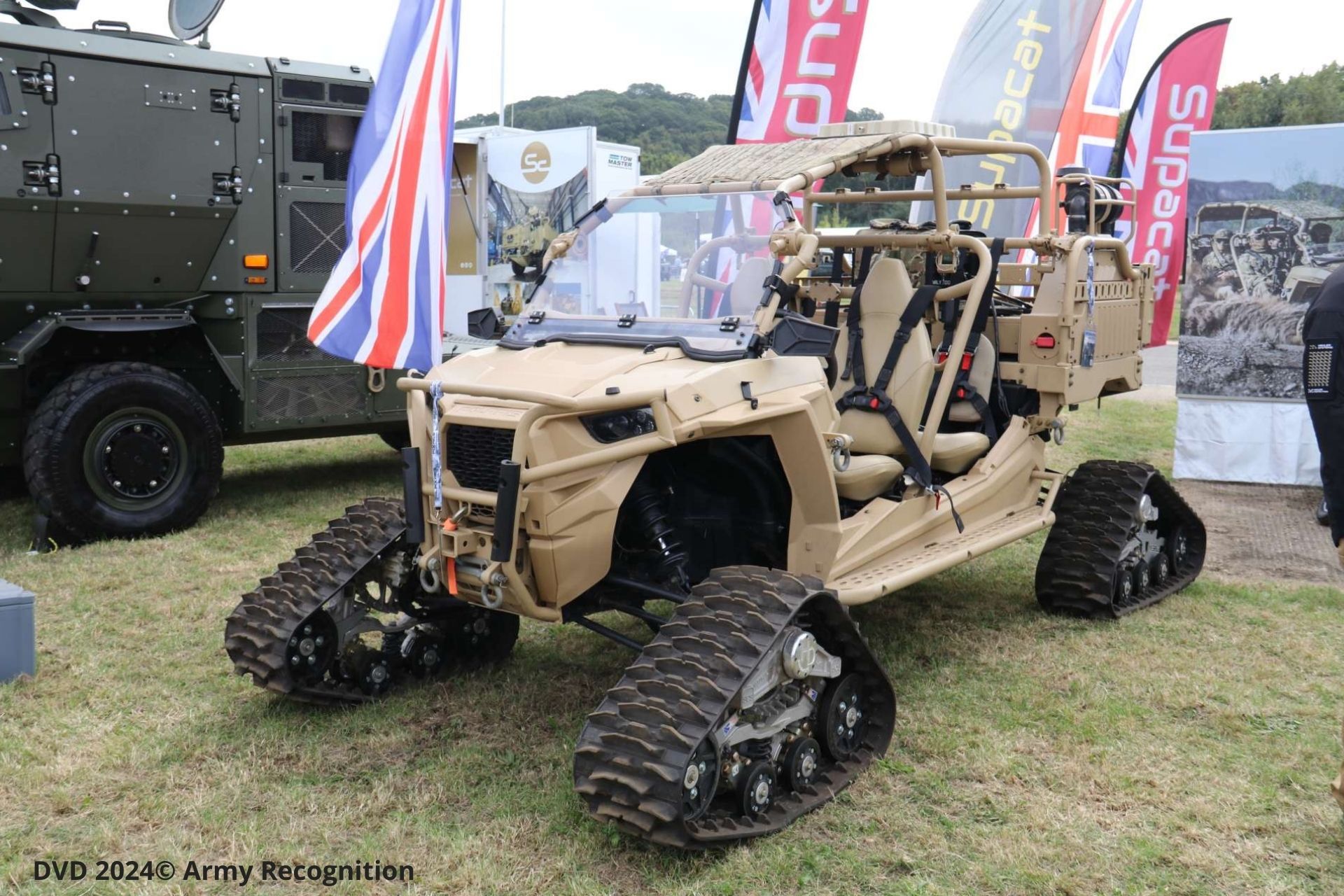
At the DVD 2024 event in Millbrook, Polaris, a military vehicle manufacturer, unveiled its Arctic Mobility Kit designed for the MRZR Alpha, a light tactical vehicle. This kit, developed for operations in Arctic environments, allows forces to convert the MRZR Alpha into a platform capable of traversing extreme conditions, including snowy terrains. This system aligns with the armed forces' aim to enhance operational capabilities in challenging climates such as the Arctic.
Follow Army Recognition on Google News at this link
By equipping the MRZR Alpha with the Arctic kit, units such as the Royal Marines could move rapidly in extreme conditions, improving their mobility and response capabilities to potential activities of rivals like Russia. (Picture source: ArmyRecognition)
The Arctic Mobility Kit includes a new track system that replaces the wheels and a fully enclosed cabin to protect passengers from the elements. Nick Francis, Vice President of Government and Defense at Polaris, emphasized that the MRZR Alpha is an expeditionary and modular vehicle, allowing operators to adapt it for various missions. "The track system and the cab are designed to enable the vehicle to operate in the Arctic environment, primarily on snow, but also on sand, marshes, and other terrain types," explained Francis.
In 2021, Polaris provided the British Royal Marines with the MRZR-D4, a lightweight all-terrain vehicle intended for mobility and agility operations. This vehicle was acquired by the Royal Navy through the NATO Support and Procurement Agency (NSPA) and has been used in exercises such as GREEN DAGGER in California. The British forces are testing the MRZR-D4 as part of their littoral strike operations, enhancing their ability to maneuver rapidly on the battlefield.
The U.S. Department of Defense has also shown increasing interest in acquiring military capabilities tailored for Arctic operations. In its updated 2019 Arctic Strategy, the department highlighted the role of special forces in the region, emphasizing their agile and expeditionary nature. In this context, Polaris’s Arctic Mobility Kit meets the specific needs of these forces.
At DVD 2024, Polaris showcased the MRZR Alpha equipped with the track system. Each wheel was replaced with a track assembly, enabling the vehicle to navigate various terrains without compromising maneuverability. The cab system includes a windshield, doors, a roof, and a rear partition to protect passengers from harsh weather conditions. Additionally, the windshield is fitted with wipers and a defrosting system, enhancing the MRZR Alpha's performance in extreme environments.
Once the kit is delivered, operators can choose to install the track system, the cab system, or both, depending on the mission's requirements. Francis noted that installing or removing the tracks takes less than four hours and that the system is interchangeable, allowing the vehicle to revert to its standard wheels if necessary. The cab, while primarily designed for cold and wet environments, can be used in various conditions and is customizable, as special forces often camouflage their equipment to suit their surroundings.
A specialized version of the MRZR equipped with the track system is also in use at the Cold Region’s Research and Engineering Laboratory (CRREL) of the U.S. Army Engineer Research and Development Center. This laboratory focuses on Arctic research, particularly to improve vehicle performance in winter conditions.
The Arctic kit developed by Polaris for the MRZR Alpha could significantly enhance the British Army’s ability to operate effectively in the Arctic region. With this system, British forces would have a lightweight and modular vehicle capable of navigating snowy terrains and hostile environments, which is crucial for monitoring and protecting the new maritime routes opened by melting ice.
By equipping the MRZR Alpha with the Arctic kit, units such as the Royal Marines could move rapidly in extreme conditions, improving their mobility and response capabilities to potential activities of rivals like Russia. This vehicle, with its enclosed cabin and track system, would allow British troops to operate more safely and efficiently, even in the harshest Arctic conditions. This adaptability would be a strategic asset for the United Kingdom, facilitating training in difficult environments and strengthening collaboration with NATO partners to secure the Arctic region.
Read more: Polaris' Arctic Mobility Kit Enhances British Army's Capabilities in Harsh Climates

- Details
- Written by: Triffaux
- Category: 2024
- Hits: 4868
The Turkish manufacturer Nurol Makina is currently showcasing its armored vehicle, the Ejder Yalcin, to British Army officers at the Millbrook Proving Ground 2024 in the United Kingdom, as part of their evaluation for future tactical vehicle projects under the Protected Mobility Fleet program. Interestingly, this vehicle was fully assembled in England and named Dragon.
Nurol Makina UK Ejder Yalcin 4x4 Tactical Wheeled Armored Vehicle (Picture source: Army Recognition)
As a reminder, as early as 2023, Nurol Makina expanded its operations by establishing Nurol Makina UK in Birmingham, at the heart of the British automotive industry. Nearby, in Coventry, is NP Aerospace, a partner of Nurol Makina since July 2023, working to adapt the Ejder Yalcin for the British market. NP Aerospace, appointed in 2019 as the engineering authority for the British Army's Protected Mobility Fleet program, collaborated in assembling a fully British Ejder Yalcin that is now being presented at DVD 2024.
The Ejder Yalcin, weighing 18 tons and capable of carrying a crew of two plus seven soldiers, is equipped to withstand mines and IEDs according to NATO STANAG 4a/2b standards. It features a V-shaped hull and seats with shock protection. The vehicle also stands out for its high mobility, with a maximum road speed of 120 km/h and superior capabilities in fording, trench crossing, obstacle climbing, and navigating steep slopes.
Powered by a Cummins 8.9-liter diesel engine producing 375 horsepower and a torque of 1,550 Nm, the Ejder Yalcin uses an Allison automatic transmission with six forward gears and one reverse, including a two-speed transfer case that offers continuous all-wheel drive and a lockable central differential.
Designed to adapt to both high-intensity conflicts and lower-scale operations, the Ejder Yalcin can be equipped with manual or remote weapon stations for 12.7 mm and 7.62 mm machine guns, and has also been tested with 25 mm and 30 mm autocannons. Since its initial development in 2012, the vehicle has been adopted by the armed forces of 11 countries and has accumulated over 15 million kilometers, proving its combat effectiveness in areas such as the Turkey-Syria border and in Mali.
The Protected Mobility Fleet program aims to modernize military land transport with better-armed and more versatile vehicles, incorporating advanced technologies for improved protection and increased operational efficiency. Vehicles like the Ejder Yalcin, offering various configurations for diverse missions — including command, surveillance, anti-tank, air defense, and more — exemplify this modernization, providing an adaptable and effective platform to meet the contemporary challenges of warfare and security.
- Details
- Written by: Halna du Fretay
- Category: 2024
- Hits: 3690
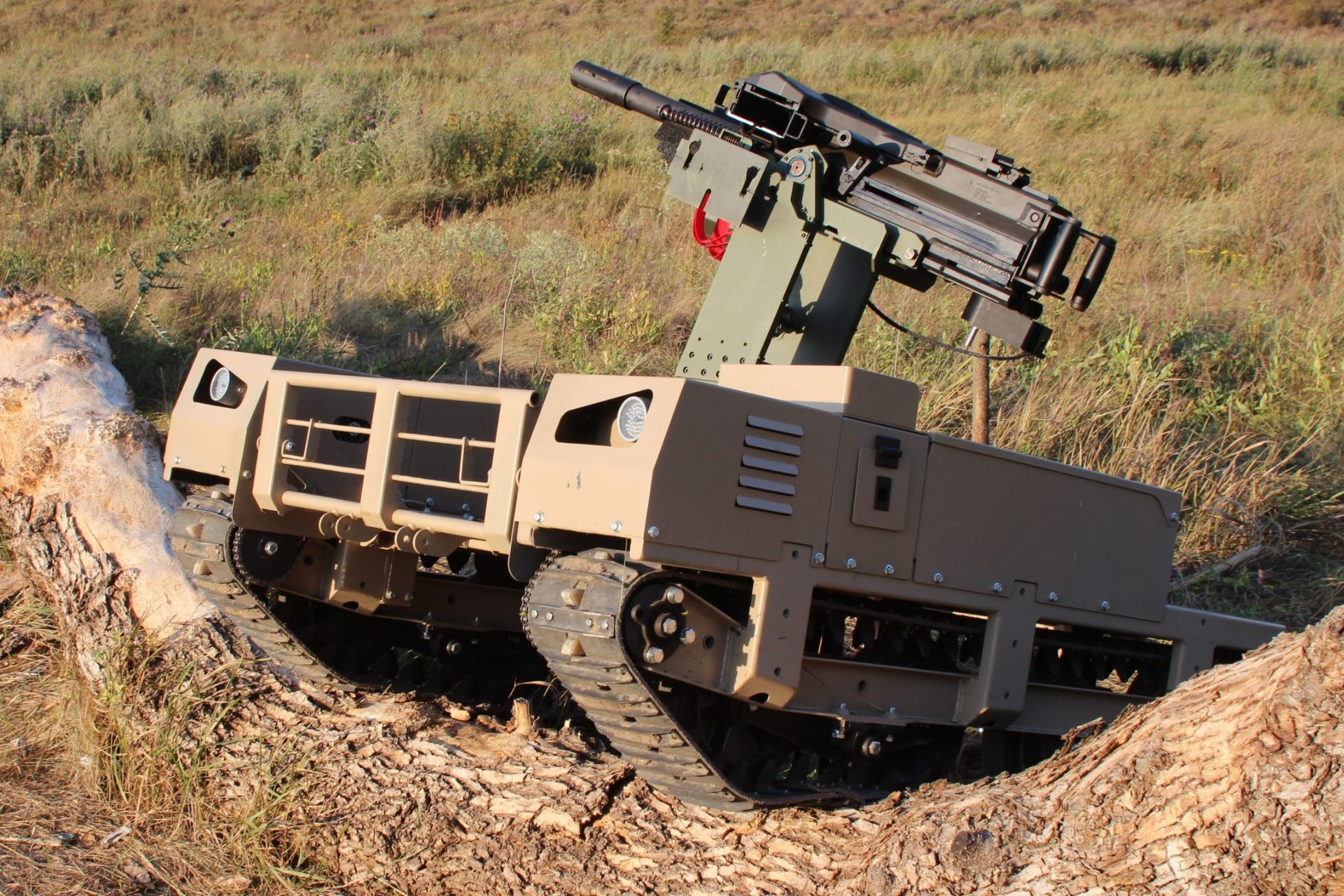
Two developments by Ukrainian manufacturers, the Burya grenade launcher turret from Frontline and the NRK TerMIT ground platform from Tencore, have been successfully integrated into a unified combat system. This new product will allow the Ukrainian Armed Forces to operate the Mk-19 grenade launcher remotely, thereby reducing risks for the operators.
Follow Army Recognition on Google News at this link
By combining the Burya turret and the TerMIT platform, Ukrainian manufacturers have created a new adaptable combat solution to meet the evolving battlefield requirements (Picture source: Frontline)
The TerMIT platform, equipped with a tracked chassis, has a range of 20 kilometers, providing stable communication and maneuverability even in challenging conditions. This combination with the "Burya" turret enhances the system's effectiveness, enabling forces to target and engage various objectives more quickly and precisely.
The "Burya" turret allows for ten times more efficient adjustments and can switch targets within seconds at the operator's command. The system is managed remotely using a control panel or a laptop. To execute a shot, the operator simply points to a location on the map or enters the coordinates, streamlining and accelerating the operation process.
Additionally, the system integrates automatic stabilization, enabling precise firing while in motion at distances of up to 1,800 meters. According to feedback from a military unit that tested the system, the automated targeting of the turret functions very accurately, sometimes even better than a human operator, especially when firing at multiple targets. The turret can also memorize settings, facilitating rapid readjustments between different objectives, ensuring precision within a radius of 20 to 30 meters.
The development of ground robotic systems is one of the priorities for the Ukrainian Armed Forces and the Ministry of Defense. The new combat platform resulting from the integration of "Burya" and TerMIT is currently in the pre-order phase and ready for serial production, meeting the operational needs of military units in the field.
The Burya turret, weighing 47 kilograms, can be deployed manually on a tripod or transported to the operation area using a logistical platform. Equipped with an automated targeting and firing system, it allows for a quick response to threats and precise engagement of targets. The system can be remotely controlled at distances of 50 to 100 meters, with targeting options based on drones or the Kropyva targeting system. A specially developed software enables operators to target easily using a laptop or tablet while staying safely away from the turret.
The TerMIT platform, mounted on a tracked chassis, has a load capacity of 300 kilograms and a range of 20 kilometers. It can carry out various tasks, including logistics, evacuation, mining, and offensive operations.
By combining the Burya turret and the TerMIT platform, Ukrainian manufacturers have created a new adaptable combat solution to meet the evolving battlefield requirements. This combined system enhances the military units' ability to conduct remote operations while minimizing personnel risks and aligns with the ongoing efforts to modernize the Ukrainian Armed Forces' equipment.
- Details
- Written by: Halna du Fretay
- Category: 2024
- Hits: 3043
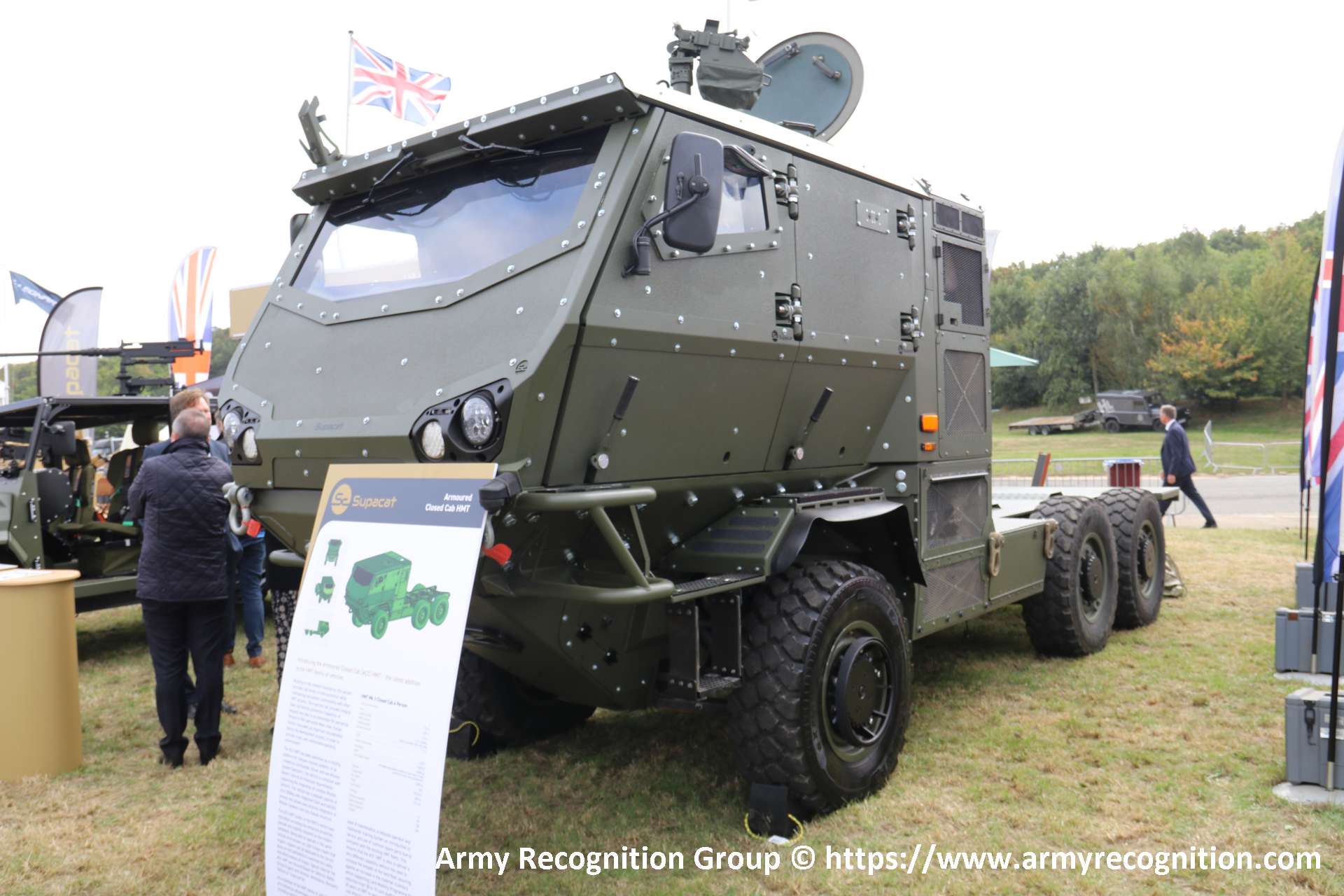
The Devon-based defense engineering company, Supacat, introduced two new defense vehicles at DVD 2024, held at UTAC Millbrook in Bedford. The first is a tactical light mobility vehicle (LMV) designed for high mobility and high readiness forces. The second vehicle is a new variant in the High Mobility Transporter (HMT) family, featuring an armoured closed cab that can accommodate four people.
Follow Army Recognition on Google News at this link
The closed cab HMT builds on the reputation of the HMT series for enhanced protection, improved mobility, and optimized payload capacity (Picture source: ArmyRecognition)
At the DVD 2024 exhibition in Millbrook, Supacat unveiled the Armoured Closed Cab (ACC) HMT, a new addition to the HMT family, designed to provide enhanced crew protection while maintaining the modularity of other HMT variants. This vehicle is equipped to host a four-person crew, with a closed cab that includes blast and ballistic protection, available upon request. The design takes human factors into account to provide a safe and comfortable environment for occupants, whether they are of small stature (5th percentile female) or larger build (95th percentile male).
The armoured closed cab HMT is optimized to function as a mobility platform for complex mission systems. The crew consists of a commander, a driver, and two mission system operators. Compliant with the Generic Vehicle Architecture requirements, the vehicle allows for the integration of various systems directly onto its chassis, offering significant flexibility in operational tasks. The payload capacity is approximately 3,500 kg, including space for mission systems and ballistic protection.
The vehicle is built on over 20 years of operational experience, offering a highly mobile platform known for its off-road performance. Featuring a 4x4 configuration, it can reach a maximum speed of 120 km/h and has a range of 950 kilometers, thanks to its 195-liter fuel tank. Measuring 7.136 meters in length, 2.05 meters in width, and 2.476 meters in height, with a ground clearance of 0.28 meters on-road and 0.38 meters off-road, the ACC HMT is designed to meet various battlefield requirements. Its gross vehicle weight (GVW) is 12,000 kg, with an unladen weight of 8,450 kg. The vehicle can ford water obstacles up to 750 mm in depth and tackle slopes with a maximum gradient of 60%. Its approach and departure angles of 40° and 38°, respectively, provide enhanced maneuverability on rugged terrains. These features make it suitable not only for ground-based air defense missions but also for roles such as an armoured vehicle, ambulance, recovery vehicle, or troop carrier.
The closed cab HMT builds on the reputation of the HMT series for enhanced protection, improved mobility, and optimized payload capacity. Based on the common modular platform of the HMT range, this new variant provides a high level of crew protection while maintaining subsystem compatibility with other HMT models, including the British Ministry of Defence's Jackal and Coyote. The closed cab illustrates the benefits of modular design, enabling the continuous development of new capabilities on an existing platform.
The ACC HMT is designed to be deployed in the same tactical environment as light troops, allowing for logistical support to be brought precisely where needed, maximizing the safety and effectiveness of soldiers. Typically, the armoured closed cab HMT can be used for roles such as ground-based air defense, organic anti-armour support for combat groups, ambulance, recovery vehicle, or troop transport.
As a member of the HMT family, the ACC HMT offers numerous advantages, including operationally proven reliability and ease of maintenance. The reduction in operator and maintenance training requirements during its introduction into service, as well as the use of common spare parts across existing HMT fleets, provide a new capability without increasing the size of the fleet. This reduces the impact on the material inventory of introducing new capabilities while supporting the British Ministry of Defence's Land Mobility Programme, which aims to reduce the British Army’s fleet to 15 core platforms or fewer by 2030.
Phil Applegarth, director and head of Supacat, emphasized that the company is committed to developing military vehicle platforms that are among the most versatile, rugged, and interchangeable in the world. In addition to the ACC HMT, Supacat's new Light Mobility Vehicle – Tactical (LMV-T) is designed specifically for special forces and high readiness units, offering a "fly and drive" capability due to its low weight and compact design. Supacat also highlights that the ACC HMT has the potential to revolutionize the army's ability to sustain operations while significantly reducing logistical, maintenance, and cost burdens.
In conclusion, the Armoured Closed Cab (ACC) HMT presented by Supacat demonstrates the company's ability to address the evolving needs of modern armed forces. With its modular characteristics and robust design, the vehicle is well-positioned to enhance the capabilities of militaries worldwide and establish itself as a versatile platform in the military vehicle market.
- Details
- Written by: Triffaux
- Category: 2024
- Hits: 2656
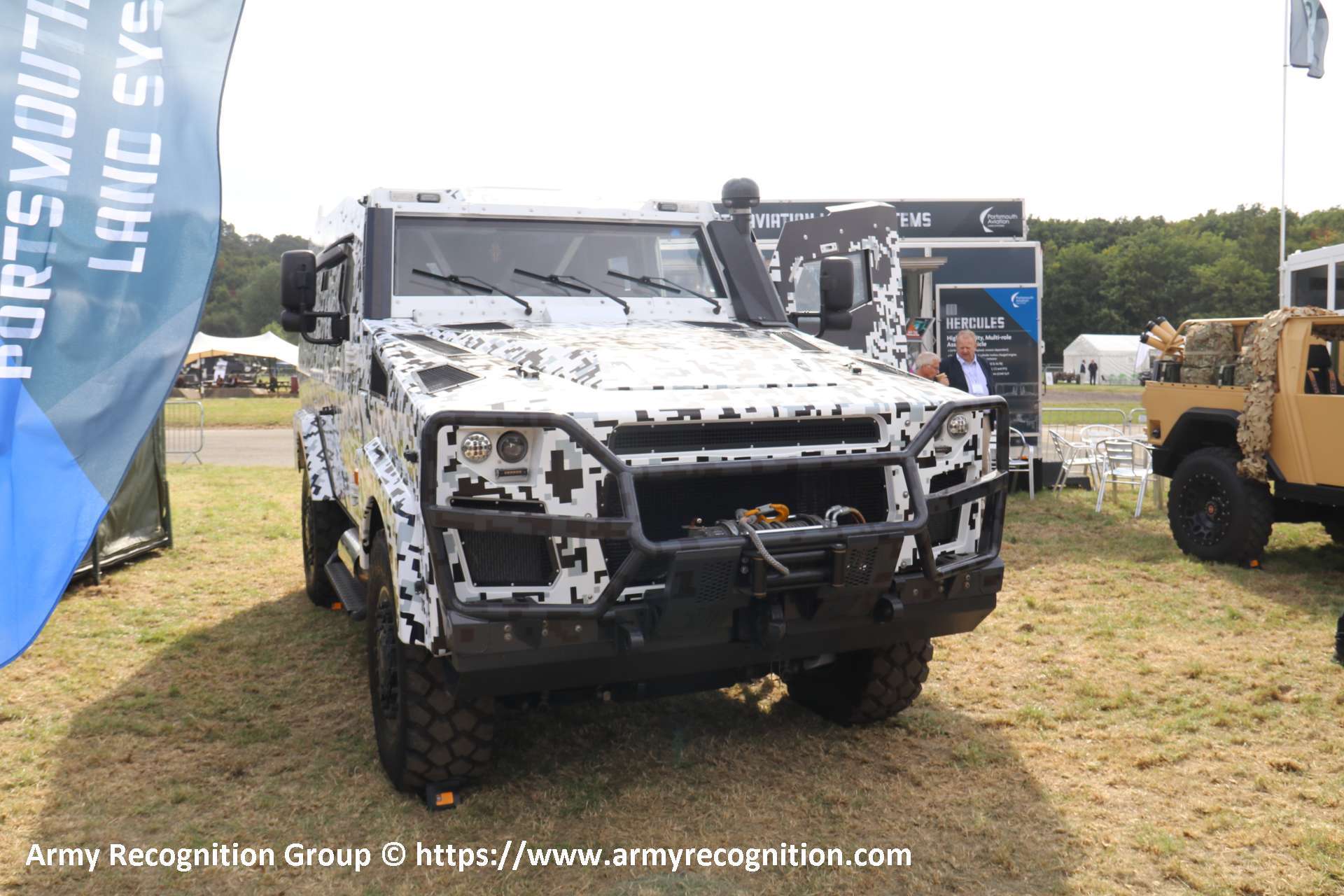
The CERBERUS, a multi-role armored vehicle designed to provide optimal protection against mines and ballistic attacks, is currently being showcased at the DVD 2024 exhibition in Millbrook. This vehicle, which symbolizes British expertise in defense, is developed by Portsmouth Aviation and features a range of advanced technical specifications.
Follow Army Recognition on Google News at this link
Portsmouth Aviation CERBERUS 4X4 Multirole Vehicle (Picture source: Army Recognition)
Designed and manufactured in the UK, the CERBERUS utilizes commercial off-the-shelf (COTS) components to ensure low-cost global service and maintenance. Its configurable platform allows for adaptation to various mission roles, making it ideal for a variety of military and civil defense applications. Performance is ensured by a Daimler engine and an Allison transmission, complemented by Meritor independent suspension axles, providing exceptional maneuverability across different terrains.
The CERBERUS offers base protection compliant with Level 2 of the STANAG 4569 standard against ballistic projectiles and mines, with upgrade options available up to Level 3 for more significant threats. In terms of mobility, it meets the requirements for Improved Medium Mobility (IMM) with an option to upgrade to High Mobility (HM), suitable for more demanding operational conditions.
In addition to its defensive capabilities, the CERBERUS has a gross vehicle weight of 12,000 kg and can support a payload of 3,000 kg, essential for safely transporting equipment and personnel. With a maximum speed of 110 km/h and a range of 800-900 km, this vehicle is well-equipped for long-duration missions.
The CERBERUS illustrates the UK's ongoing commitment to innovation in the defense sector, providing solutions that address contemporary threats while remaining flexible to future developments. Its exhibition at DVD 2024 highlights its potential role in modernizing military vehicle fleets worldwide, offering a robust and adaptable platform to meet the security and mobility requirements of armed forces and security agencies.
The CERBERUS armored vehicle was introduced into the British armed forces in 2022 as part of an effort to modernize the military vehicle fleet and address the challenges posed by increasingly complex operational environments. Its modular design and protective capabilities make it a preferred choice for various military missions.
Read more: Portsmouth Aviation Innovates with CERBERUS 4X4 Multirole Vehicle at DVD 2024
- Details
- Written by: Halna du Fretay
- Category: 2024
- Hits: 2288
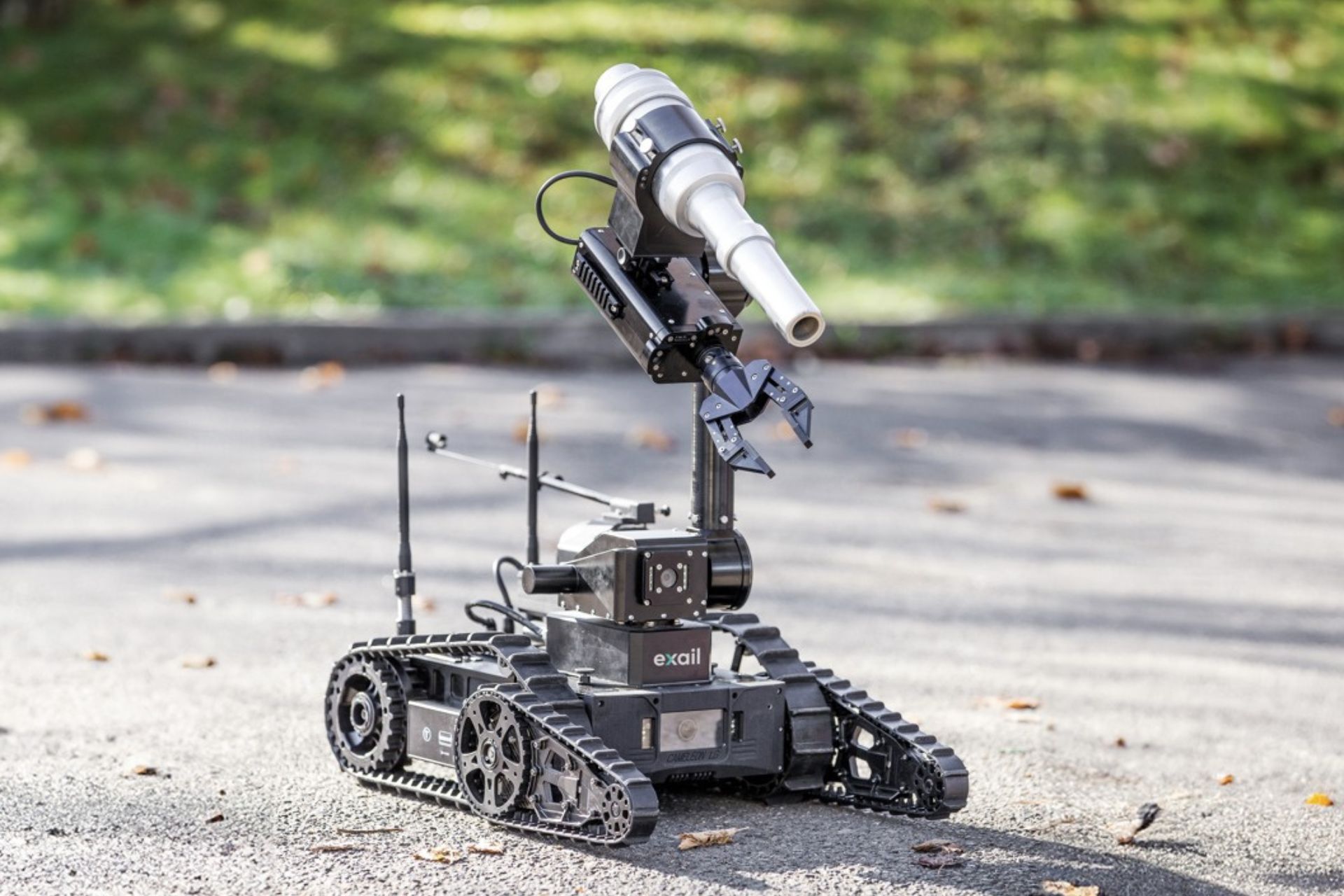
Exail, a global company specializing in autonomous demining solutions, announced on September 18, 2024, the signing of a new contract with the Belgian Combat Engineer platoons and the Engineering School to deliver eight Cameleon LG robots. These systems are specifically designed for demining operations, offering high maneuverability and stability in challenging environments. This strategic partnership reflects the growing need for agile, robust, and adaptable robots to protect human lives while ensuring the precise and efficient execution of missions.
Follow Army Recognition on Google News at this link
The Cameleon LG robots will be used to enhance demining capabilities, a task that remains both dangerous and demanding (Picture source: Exails)
The Cameleon LG is a lightweight and compact unmanned ground vehicle (UGV) designed for rapid deployment during emergency interventions. It provides optimized maneuverability and stability in hostile environments, with remote operation capabilities and real-time hazard detection. This technology reduces the risks for personnel by allowing operators to manage hazardous tasks from a safe distance, thereby enhancing safety and operational efficiency in difficult conditions.
"We would like to thank the Belgian Armed Forces for their continued trust in our solutions. This agreement strengthens the ten-year partnership between Exail and the Belgian Combat Engineers, demonstrating our shared commitment to innovation, safety, and advanced defense solutions in the field. By leveraging Exail's expertise, organizations can significantly enhance both security and operational efficiency. We remain committed to evolving our technology to support our partners in their critical missions," stated Lionel Rosellini, head of demining activities at Exail.
The Cameleon family of robots includes different variants to address various operational needs. The Cameleon LG, delivered under this contract, features remote operation capabilities and real-time threat detection, enhancing the safety of demining operations. Other models, such as the Cameleon C, are designed for military, police, fire services, and other first responders in nuclear, radiological, biological, and chemical (NRBC) missions. The Cameleon LG-E is a mini-UGV dedicated to the disposal of improvised explosive devices (IEDs) and demining missions.
This contract with the Belgian Army reinforces a decade-long partnership between Exail and the Belgian Combat Engineer units. The Cameleon LG robots will be used to enhance demining capabilities, a task that remains both dangerous and demanding. The Cameleon LG's lightweight and compact design, combined with its advanced detection and remote operation capabilities, make it an essential tool for interventions in the most difficult environments.
Exail, whose Belgian division, Exail Robotics Belgium, recently secured a €60 million contract with the NATO Support and Procurement Agency (NSPA) to supply underwater mine disposal vehicles to the Belgian Navy and the Royal Netherlands Navy, continues to expand its presence in demining technologies. Earlier this month, Exail was also selected by Naval Group to provide its Phins inertial navigation systems and Netans data distribution units for the French Navy's patrol vessels.
The current agreement for the delivery of Cameleon LG robots marks an important step in the ongoing collaboration between Exail and the Belgian Armed Forces. It underscores the increasing need for autonomous and adaptable demining solutions to address security requirements in an ever-evolving threat landscape.
Read more: Exail Secures Contract with Belgian Army to Supply Autonomous Demining Technologies
- Details
- Written by: Halna du Fretay
- Category: 2024
- Hits: 3812
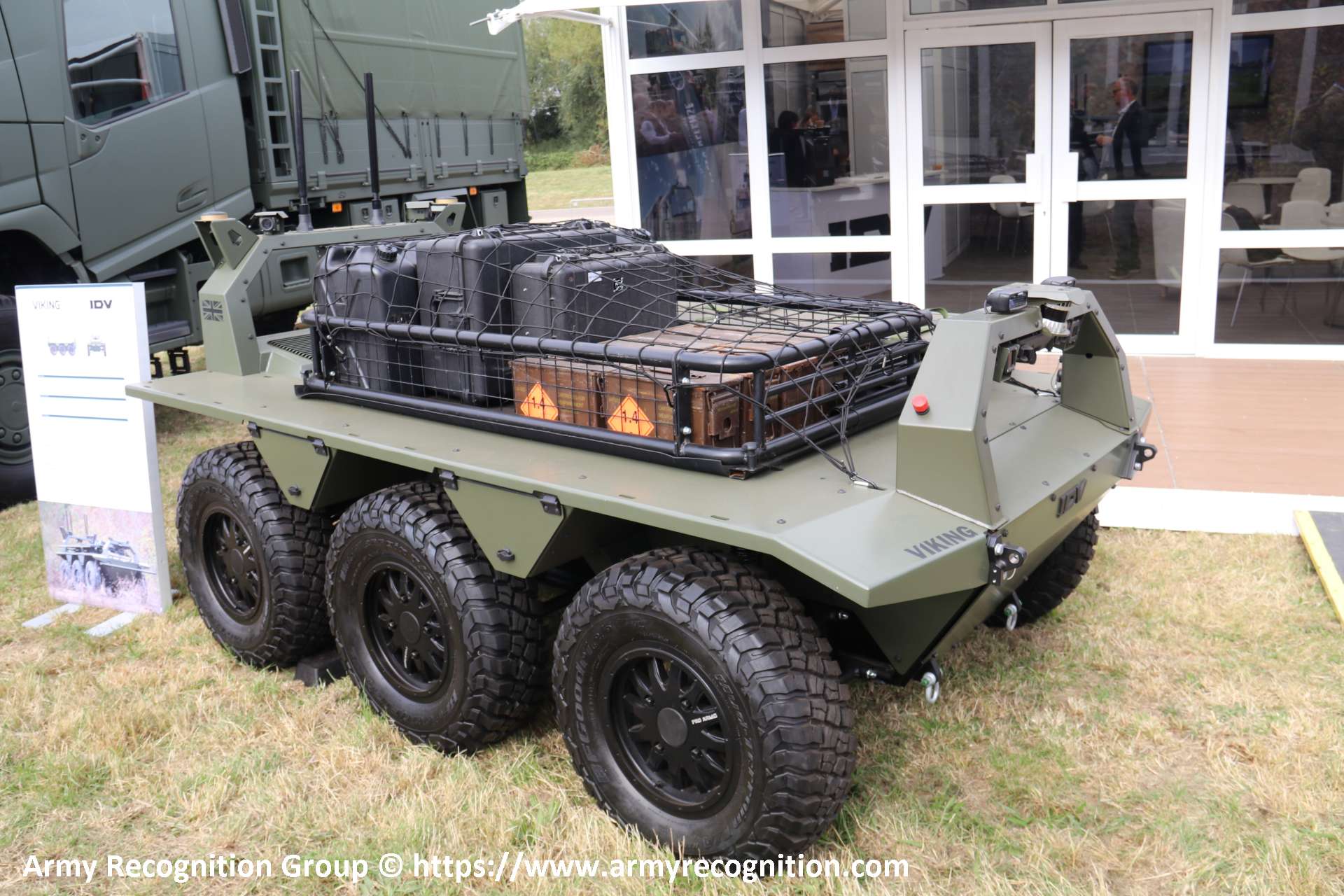
At the DVD 2024 event in Millbrook, the defense industry was introduced to IDV's latest development: the Viking, an unmanned ground vehicle designed to operate in challenging terrains and adverse conditions. This versatile multirole vehicle is well-suited for various military applications, highlighting IDV's focus on providing advanced defense solutions.
Follow Army Recognition on Google News at this link
The Viking can achieve a maximum speed of 45 km/h and ford depths of up to 600 mm, enabling adaptability to various terrains (Picture source: ArmyRecognition)
The Viking is characterized by its compact dimensions, measuring 3,000 mm in length, 1,800 mm in width, and 900 mm in height to the loading surface. This design enables maneuverability in tight spaces while offering a generous loading area of 2,200 x 1,800 mm. With an empty weight of 1,300 kg, the Viking can carry a payload of up to 750 kg, providing flexibility for a range of missions, from logistics support to casualty evacuation.
In terms of performance, the Viking is designed for rugged terrain, featuring a ground clearance of 300 mm and a fording capability of 350 mm. It comes with independent suspension on all wheels and a 6x6 drivetrain with lockable differentials, enhancing its ability to traverse diverse terrains, including slopes up to 60%. The vehicle's steering system offers both 2-wheel and 4-wheel options, with a minimum turning radius of 7 meters, which is advantageous in confined or crowded environments.
The vehicle's propulsion system is based on a parallel diesel-electric drivetrain, offering two operational modes: a 20 km range in electric mode for quieter, more discreet maneuvers and a 250 km range in hybrid mode for extended operations. The Viking can achieve a maximum speed of 45 km/h and ford depths of up to 600 mm, enabling adaptability to various terrains. Additionally, it is designed to operate under all lighting conditions and within a temperature range of -20°C to +39°C, making it suitable for diverse environments.
Beyond its technical capabilities, the Viking is equipped with IDV Robotics' MACE autonomy system. MACE is an open-architecture hardware and software solution that can be integrated with existing vehicles or proprietary platforms like the Viking. This system allows for remote control, tele-operation, and autonomous operation, including features such as a "follow-me" mode for both individuals and other vehicles. The MACE system can also function in environments where GNSS signals are unavailable, utilizing AI-based solutions for navigation, obstacle detection, terrain perception, and location recognition.
In addition to providing robotic control capabilities, MACE facilitates the exchange of platform and situational awareness information, aligning seamlessly with clients' preferred command and control systems. The versatile MACE base station software can be hosted on various devices, including single-handed control systems, phones, tablets, and laptops, delivering a tailored experience. At the system level, MACE also provides command and control for multiple platforms, including unmanned aerial vehicles (UAVs).
An example of MACE’s application is the AGILE (Air and Ground Intelligent Logistics Environment) system, developed by IDV for last-mile resupply missions. This system offers a fully automated solution from resupply request to delivery, operating without human intervention in the decision-making process across multiple ground and air platforms.
The presentation of the Viking by IDV at DVD 2024 represents a significant addition to their range of autonomous tactical vehicles. The combination of versatile payload capacity, off-road performance, and flexible propulsion options makes it a suitable solution for modern defense forces. With capabilities ranging from logistics to surveillance in complex terrains, the Viking is positioned to be a strategic asset for critical missions.
- Details
- Written by: Halna du Fretay
- Category: 2024
- Hits: 2253
NP Aerospace, a global vehicle integrator and armor manufacturer, has been awarded a $88 million contract by the UK Ministry of Defence (MoD) for the Conventional Vehicle Systems Spares and Post Design Services (CVSSP). This four-year contract, with the possibility of two one-year extensions, focuses on the support and maintenance of over 15,000 core vehicles within the UK MoD's fleet. The contract was competitively tendered by the Defence Equipment and Support (DE&S) and involves delivering Post Design Services (PDS), acting as the Design Authority (DA), and providing spare parts procurement.
Follow Army Recognition on Google News at this link
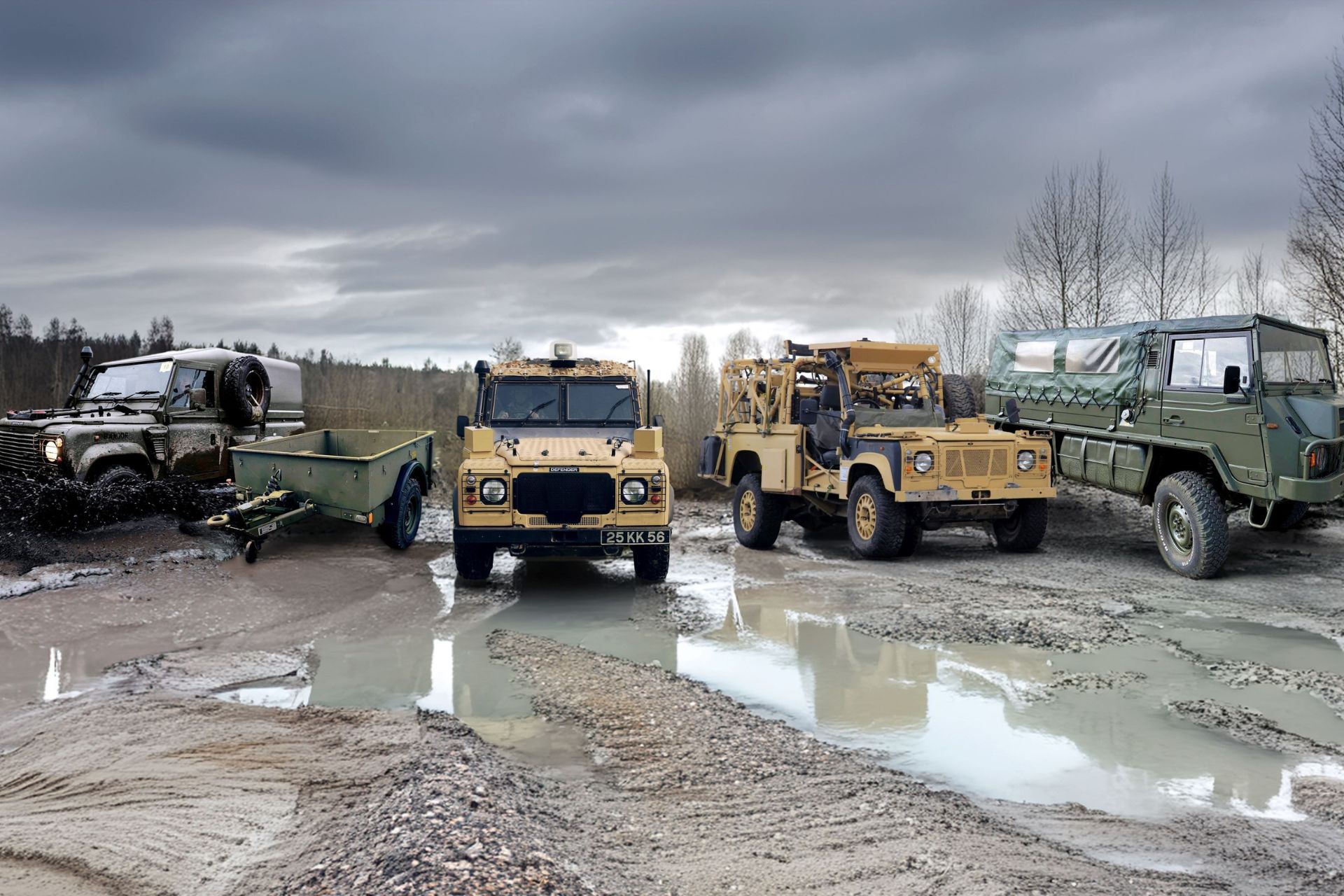
This contract builds on NP Aerospace’s experience, following the successful delivery of the Protected Mobility Engineering & Technical Support (PMETS) contract, awarded in 2019, for supporting over 2,000 Protected Mobility Vehicles (Picture source: NP Aerospace)
The CVSSP contract is a key initiative aimed at consolidating and streamlining previous individual MoD PDS contracts into a single point of contact, enhancing operational efficiency. The range of vehicles covered includes the entire Land Rover fleet, Pinzgauer vehicles, protected Land Rovers, RWMIK, and the Lightweight Trailer fleet. With many of these vehicles being part of ageing fleets, the contract addresses the challenge of obsolescence management to ensure fleet availability meets operational and training requirements.
The announcement of this contract was made jointly by NP Aerospace and the UK MoD during the DVD exhibition held at Millbrook on 18-19 September 2024. NP Aerospace exhibited at the event, showcasing its capabilities in vehicle integration and support services.
This contract builds on NP Aerospace’s experience, following the successful delivery of the Protected Mobility Engineering & Technical Support (PMETS) contract, awarded in 2019, for supporting over 2,000 Protected Mobility Vehicles. The PMETS contract includes various vehicles such as Mastiff, Wolfhound, Ridgback, Foxhound, Jackal, Coyote, Husky, and others. Having gained the confidence of the UK MoD through its effective management of the PMETS contract, NP Aerospace is well-positioned to align the newly awarded CVSSP contract alongside the existing PMETS, utilizing tested procedures for effective fleet support.
The CVSSP contract not only consolidates NP Aerospace’s role in vehicle support for the UK MoD but also has significant implications for its operational facilities. It will create and sustain jobs at the company’s Coventry site, which will be expanded to accommodate the contract’s requirements and ensure seamless delivery.
The UK Minister for Defence Procurement and Industry, Rt Hon Maria Eagle MP, emphasized the importance of the contract for ensuring that the British armed forces are equipped with advanced vehicle capabilities while also boosting economic growth. Brigadier Matt Wilkinson from the Vehicle Support Team at DE&S expressed his satisfaction in continuing the longstanding partnership with NP Aerospace, highlighting that the CVSSP contract aligns with the UK MoD's future Land Industrial Strategy and Land Integrated Operating Services (LIOS) initiatives.
James Kempston, CEO of NP Aerospace, remarked on the significance of the contract win amid strong industry competition. He noted that the award reflects the high regard the UK MoD has for NP Aerospace’s services and its alignment with the MoD’s long-term strategic goals. Kempston pointed out that the CVSSP contract, alongside the existing PMETS agreement, enables NP Aerospace to provide post-design support for a vast majority of the UK MoD's lightweight wheeled utility and protected mobility vehicle fleets.
Read more: NP Aerospace Secures $88 Million Contract for UK MoD Vehicle Support
- Details
- Written by: Halna du Fretay
- Category: 2024
- Hits: 3192
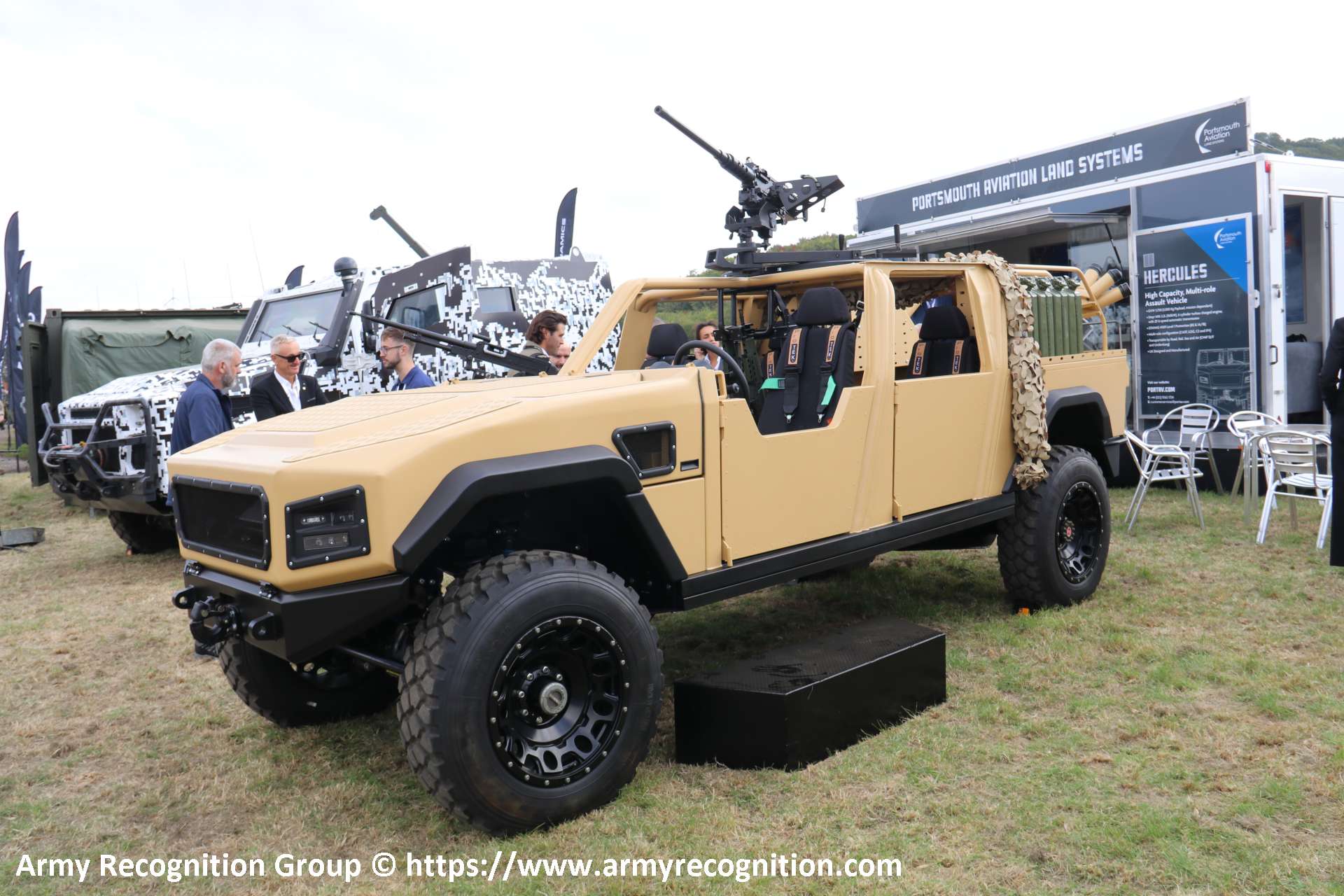
At the DVD 2024 exhibition in Millbrook, Portsmouth Aviation Land Systems presented the Hercules LSA 4x4 (Light Strike Assault Vehicle), a multi-role vehicle designed to meet a variety of military requirements. Manufactured in the United Kingdom, this versatile vehicle aims to enhance operational flexibility for armed forces, offering options for logistics, command and control, casualty transport, and infantry support. Its design emphasizes high mobility, modularity, and adaptability to accommodate different mission scenarios.
Follow Army Recognition on Google News at this link
The Hercules LSA 4x4 is built to meet STANAG 4569 Level 1 protection standards, providing defense against ballistic threats, side explosions, and IEDs (Picture source: ArmyRecognition)
The Hercules LSA 4x4 is equipped with a hybrid diesel-electric powertrain, enhancing its versatility. It features a Steyr M16 3.2L, 6-cylinder turbocharged engine, delivering a power output of 160 kW. A ZF 6-speed automatic transmission with a two-speed transfer case boosts its off-road capabilities, complemented by an open differential for low-range maneuvers. This configuration allows the vehicle to reach speeds of up to 100 km/h and provides a range of over 800 km with an 80-liter fuel tank.
Weighing 2,750 kg, including the STANAG 4569 Level 1b protection kit, the Hercules offers a payload capacity of up to 3,000 kg, depending on mission requirements. It also has a gross train weight (GTW) of 9,250 kg. Measuring 5,030 mm in length, 1,970 mm in width, and 1,835 mm in height, its compact dimensions enable it to operate in a variety of environments. A ground clearance of 309 mm ensures adaptability across different terrains. The Hercules LSA 4x4 is designed to handle slopes of up to 60% when fully loaded and features a turning radius of less than 10 meters, enhancing its maneuverability in confined spaces.
The Hercules LSA 4x4 is built to meet STANAG 4569 Level 1 protection standards, providing defense against ballistic threats, side explosions, and IEDs. Its modular design supports multiple configurations, including roles such as casualty transport (CAST), logistics (LOG), command and control (C2), and as an infantry fighting vehicle (IFV). The vehicle’s architecture includes five doors, with options for open or closed configurations, offering removable doors and windows for weather protection. Additionally, it is equipped with an integrated Roll Over Protection System (ROPS) to ensure safe operation in various climatic conditions.
The vehicle features a 24V 150 Ah battery, a self-recovery winch with a capacity of 3,625 kg, and lashing points compatible with various transport configurations. Its versatility extends to transportability, as it can be deployed by road, rail, sea, and air, including sling-load transport by a CH-47 Chinook helicopter, providing strategic flexibility in diverse operational theaters.
Portsmouth Aviation Land Systems designed the Hercules LSA 4x4 to meet the evolving demands of modern military operations. With its focus on modularity, protection, and adaptability, the vehicle addresses the growing need for highly mobile multi-role combat vehicles. Ongoing testing and preparations for large-scale production indicate that the Hercules is poised to become a significant asset for military forces seeking a versatile operational platform.

- Details
- Written by: Halna du Fretay
- Category: 2024
- Hits: 7975
The British Army is set to double its fleet of M270 Multiple Launch Rocket Systems (MLRS) by the end of the decade. A series of new, modernized launchers are being acquired to build a reinforced fleet that will meet both current and future requirements of the armed forces. Currently, the British Army operates 29 M270 MLRS platforms, equipped with Guided Multiple Launch Rocket Systems (GMLRS) munitions, providing long-range strike capabilities at distances of up to 70 kilometers.
Follow Army Recognition on Google News at this link
In addition to the acquired vehicles, two more launchers are currently in production, and a total of 61 M270 MLRS have already been ordered (Picture source: British MoD)
In September 2022, the United Kingdom announced its intention to acquire additional launchers from allied nations, including decommissioned vehicles from museums or those used as display pieces. It is now confirmed that 31 additional M270 MLRS vehicles have been acquired, sourced through various transfer operations as well as from other countries' fleets.
Among these new vehicles are MLRS launchers promised by Norway to the United Kingdom as part of a trilateral security agreement involving Ukraine. These Norwegian launchers, currently stored in the UK, will soon be sent to the United States for upgrades, likely to the A2 standard. However, these vehicles will require significant modernization efforts to become operational.
In addition to the acquired vehicles, two more launchers are currently in production, and a total of 61 M270 MLRS have already been ordered. Furthermore, 15 additional launchers are expected to be contracted in 2025, bringing the total number of platforms to 76 to meet the British Army's requirements. The full delivery of these M270 MLRS is planned by the end of 2029.
This significant increase in the number of M270s in the British Army could lead to a substantial restructuring of the country's long-range artillery units, particularly following the donation of more than half of its AS90 Braveheart 155mm self-propelled howitzers to Ukraine. To bridge this gap, the UK temporarily acquired 14 Archer 155mm self-propelled howitzers from Sweden, though this remains a limited solution while awaiting the delivery of the future RCH 155, developed in collaboration with Germany.
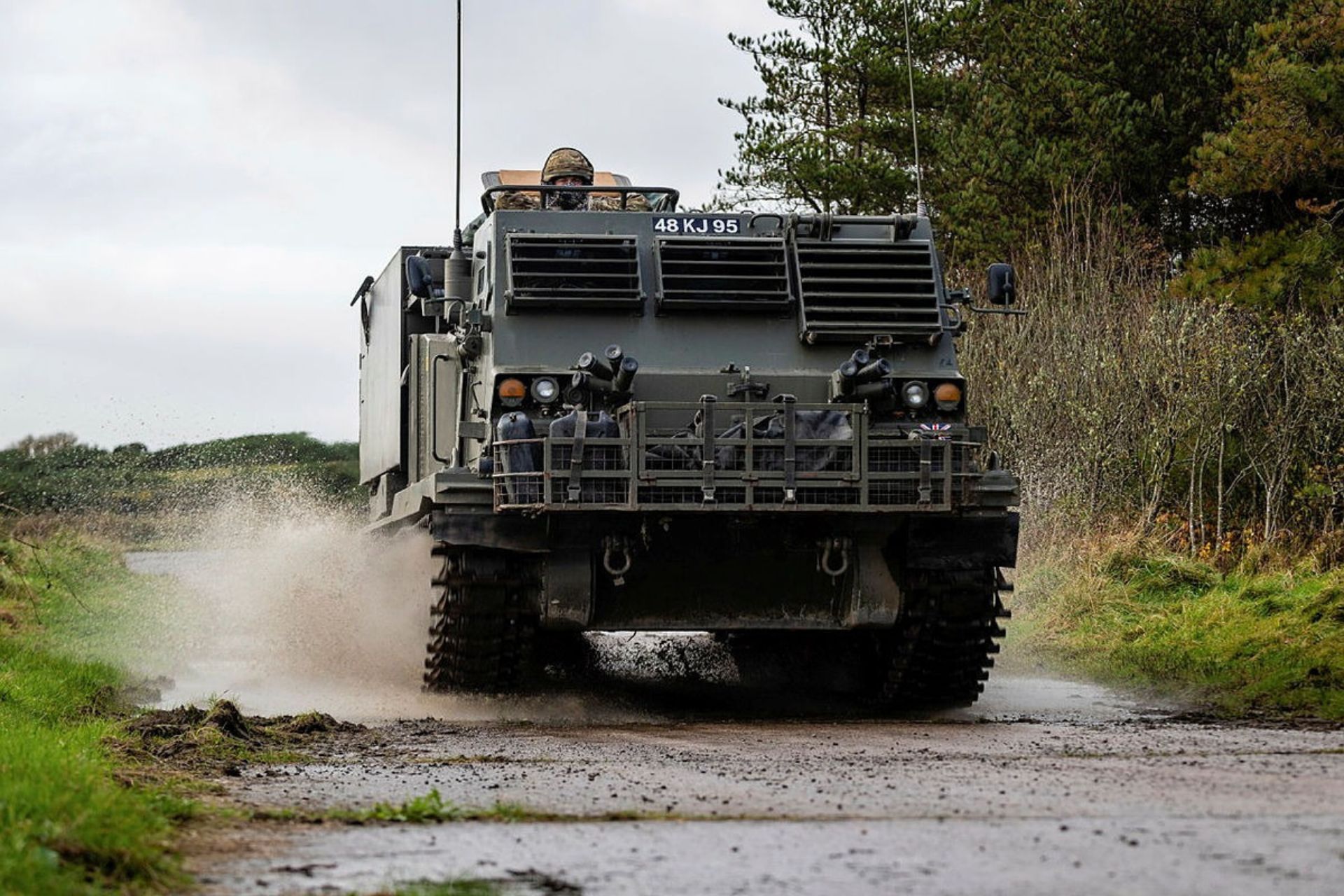
The M270 MLRS, often described as a tracked version of HIMARS with double the payload capacity, carries 12 rockets housed in two pods of six rockets each (Picture source: British MoD)
With the expansion of the M270 MLRS fleet, the British Army could find itself in a more favorable position regarding its indirect fire capabilities. These efforts to strengthen long-range strike capacity echo NATO's concerns in recent years, especially in light of observations from the conflict in Ukraine. The need to bolster long-range strike fleets, including both 155mm artillery and MLRS systems, has been widely acknowledged.
It was previously announced in 2022 that the UK would upgrade nine of its M270 MLRS launchers to the A2 variant, as part of a $32 million contract. This upgrade process includes installing a new engine and redesigning the cabin, bringing it in line with the M142 High Mobility Artillery Rocket Systems (HIMARS). That same year, Lockheed Martin, the original manufacturer of the M270, indicated that the modernization of an unspecified number of British MLRS would be completed by 2026.
The M270 MLRS, often described as a tracked version of HIMARS with double the payload capacity, carries 12 rockets housed in two pods of six rockets each. Mounted on a stretched Bradley chassis, this launch system features self-loading and autonomous aiming capabilities. The crew, consisting of three members (driver, gunner, and section chief), can launch 12 rockets in less than 60 seconds without leaving the enclosed cabin. Initially entering service in 1990, the British Army's modernized M270s are now expected to remain operational until at least 2050.
Additionally, the United States maintains a significant reserve of non-operational M270A0 MLRS launchers at its Red River storage facility, which has also been used for the U.S. Army's own M270 fleet modernization program.
Read more: British Army to Double Its Fleet of M270 MLRS by 2029
- High-mobility Quad Ermine by Rheinmetall Offers New Tactical Solutions for Armies at DVD 2024
- Rheinmetall Designs CARACAL 4x4 Light Assault Vehicle for Special and Airborne Forces
- Colombian Army Deploys LAV III Vehicles for Counter-Insurgency in Valle del Cauca
- Boxer Bridge-Layer An Essential Solution for Emergency Situations at DVD 2024