
- Details
- Written by: Administrator
- Category: 2024
- Hits: 4704










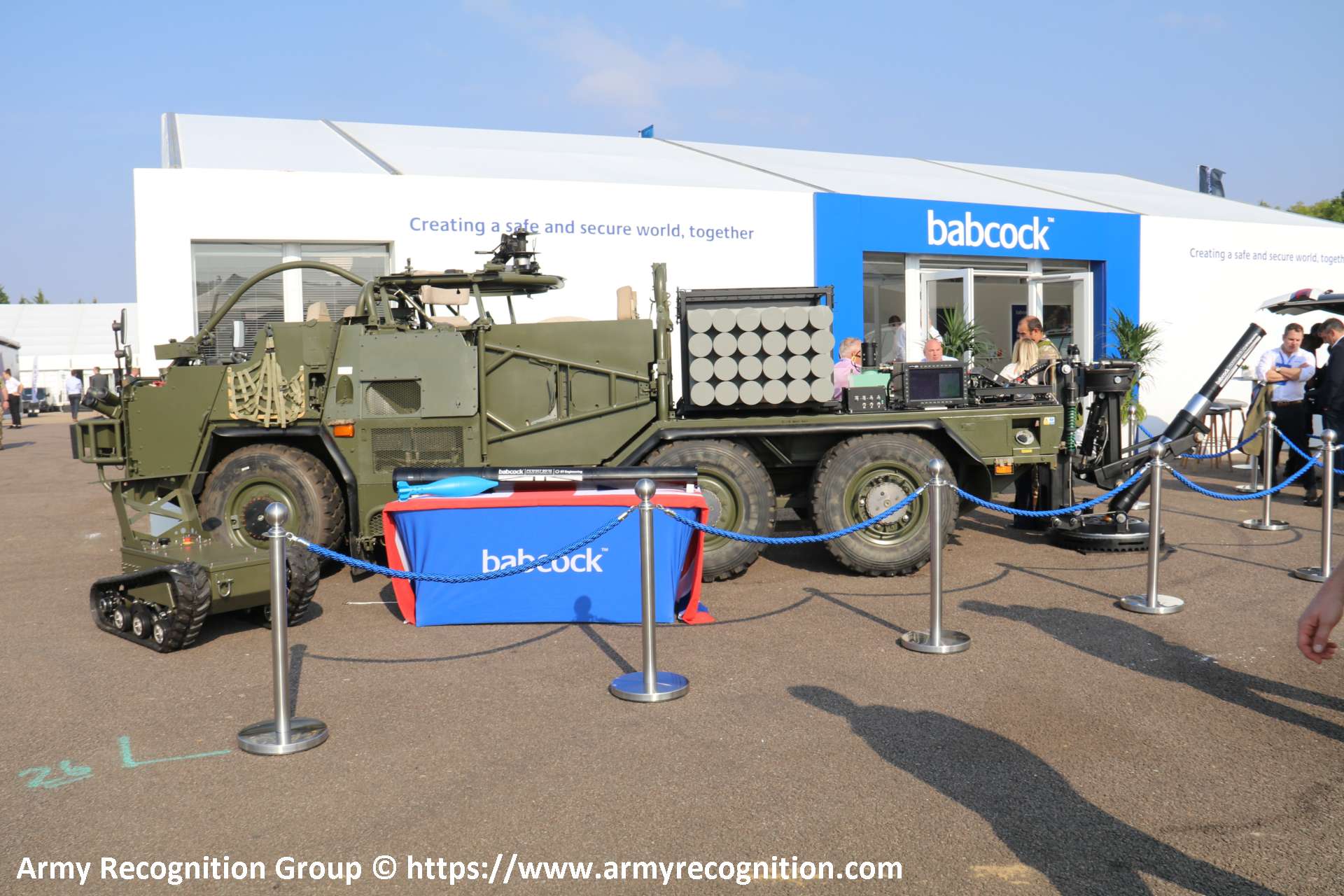
In collaboration with Singapore-based defense company ST Engineering, the British Company Babcock has showcased its latest military innovation, the 120mm Ground Deployed Advanced Mortar System (GDAMS), at DVD 2024. Mounted on a Supacat HMT 6x6 vehicle platform, the system is designed to significantly enhance the UK Armed Forces' indirect fire capabilities with increased mobility, firepower, and precision.
Follow Army Recognition on Google News at this link
British Company Babcock, in collaboration with ST Engineering from Singapore, displays its new self-120mm propelled mortar carrier at DVD 2024 in Millbrook, United Kingdom. (Picture source: Army Recognition Group)
Developed in collaboration with ST Engineering, a leading Singaporean defense company, the system combines advanced firepower and operational flexibility. Production will take place at Babcock’s facility in Devonport, Plymouth, utilizing a UK-based supply chain. This project represents the first UK-manufactured 120mm mortar system in decades. If selected for the UK’s indirect fires program, it could deliver substantial economic benefits to the South West region, creating up to 70 skilled jobs and strengthening the local supply chain.
The 120mm GDAMS (Ground Deployed Advanced Mortar System ) can be operated by a two-person crew and boasts rapid deployment and stowage times of just 15 seconds, providing unmatched mobility and responsiveness in high-tempo operations. Its hinged mortar system is vehicle-agnostic, allowing it to be mounted on various platforms, including in-service vehicles like the Jackal, Coyote, and Foxhound. The GDAMS is compatible with a wide range of standard smoothbore munitions, including high explosive, illumination, infrared (IR) illumination, and smoke rounds. It also features precision and extended range capabilities, reaching up to 9km, and supports manual, electronic, and smart fuzes, making it a versatile choice for various mission profiles.
The 120mm GDAMS is further equipped with advanced fire control and targeting systems, enhancing accuracy and effectiveness while reducing the time to engage targets. A patented blast diffuser minimizes noise exposure, improving stealth and ensuring crew safety. The system's fully digitalized communication system speeds up operations and reduces the risk of human error when inputting coordinates, resulting in faster deployment and more precise adjustments.
Tom Newman, Chief Executive of Babcock’s Land sector, emphasized the importance of GDAMS, stating, "The Babcock 120mm GDAMS can help support the modernization of the British Army with increased firepower while also improving the availability, affordability, and capability of critical equipment.
Brigadier General (Ret.) Jin Kiat Chua, Head of ST Engineering’s International Business, described GDAMS as "the pre-eminent tactical firing solution that pushes power to the edge and increases firepower." He highlighted the partnership's role in delivering a sovereign solution aligned with the UK’s Land Industrial Strategy.
Mounted on the highly mobile Supacat HMT 6x6 platform, GDAMS offers unrivaled versatility on the battlefield. Its Devonport-based production facility in the South Devon Freeport Zone also opens future export opportunities, strengthening defense collaborations with allied nations while advancing the UK’s defense industry.
- Details
- Written by: Administrator
- Category: 2024
- Hits: 4899
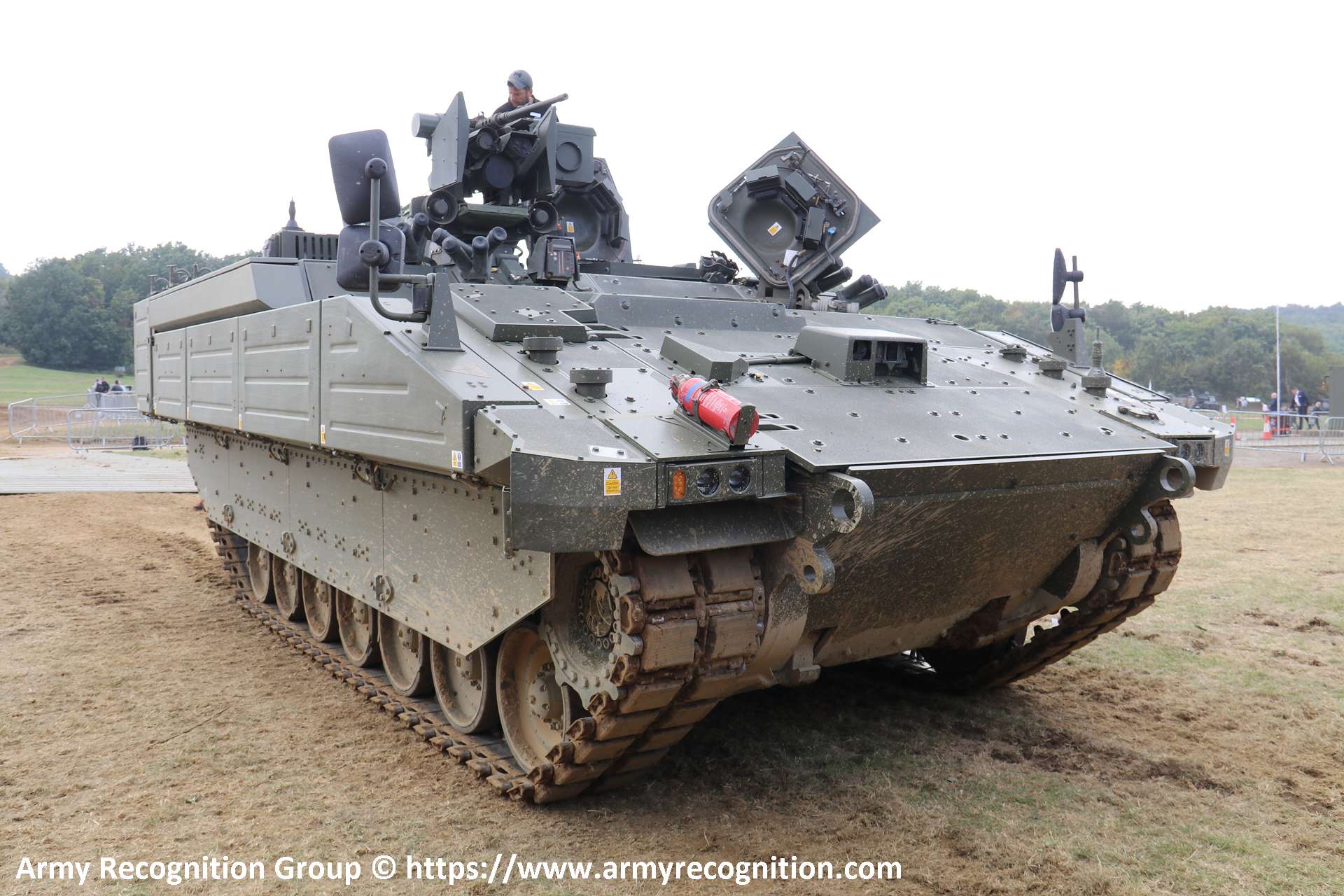
The third installment in this series on the British Army's Ajax family of armored reconnaissance tracked vehicles turns its attention to the ARES variant. While the Ajax 40mm variant is designed as the mainstay fighting and reconnaissance vehicle, the ARES serves a different but complementary role within the family. The ARES is an armored personnel carrier (APC), optimized for transporting soldiers on the battlefield and providing support in a reconnaissance role.
Follow Army Recognition on Google News at this link
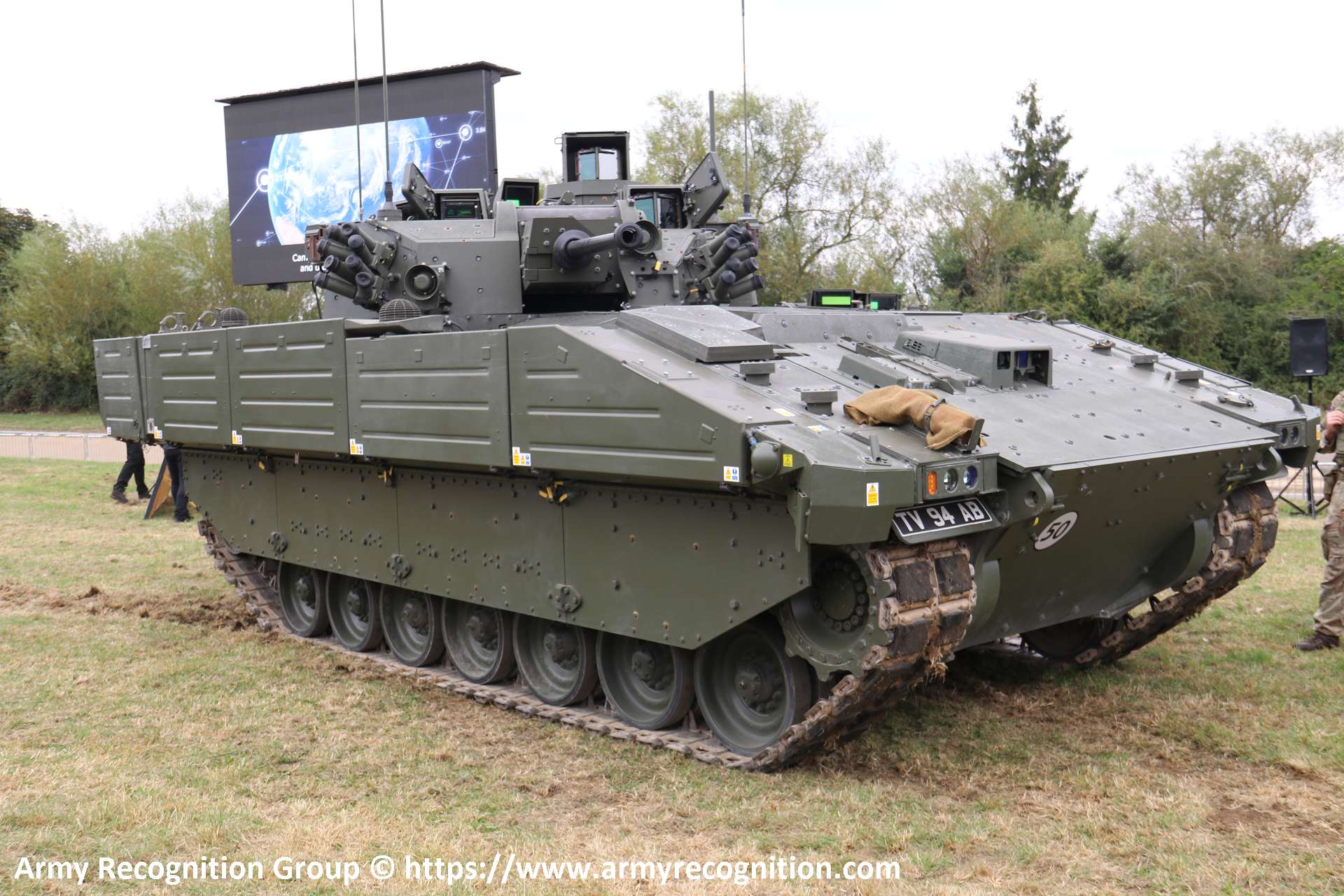
The ARES APC Armored Personnel Carrier in the AJAX family of reconnaissance armored tracked vehicles was demonstrated in a live demonstration during the DVD 2024. (Picture source: Army Recognition Group)
The ARES Armored Personnel Carrier (APC), developed by General Dynamics UK, is part of the British Army's advanced reconnaissance fleet, designed to replace the aging Spartan CVRT. Built on the common platform shared by all vehicles in the Ajax family, the ARES benefits from the same high levels of mobility and protection. Its design aligns with the specific mission needs of reconnaissance units, offering versatility and security in both troop transport and support roles.
The ARES is powered by an MTU V8 199 TE21 diesel engine, developing 800 horsepower. This reliable and high-performance engine is coupled with a Renk 6-speed automatic transmission, allowing the vehicle to perform efficiently across various terrains. The ARES maintains mobility during fast-paced reconnaissance operations with a top speed of 70 km/h (43 mph) on roads and off-road solid capabilities. Its engine and advanced suspension system enable the vehicle to navigate rough terrains, ensuring that troops can be deployed and extracted swiftly.
Designed to carry a crew of two—a driver and a commander—the ARES also transports up to six dismounted infantry soldiers. These troops can be quickly deployed for various tasks, such as reconnaissance, patrols, or combat support. While the ARES does not carry heavy armament like the Ajax variants, it is equipped with a Kongsberg Protector Remote Weapon Station (RWS), typically armed with a 12.7mm machine gun. It can also be fitted with a 7.62mm machine gun or a 40mm automatic grenade launcher depending on mission requirements. The RWS allows the gunner to focus clearly on targets with the Detached Line of Sight (DLOS) system, which works independently of the vehicle’s movement, ensuring precision in dynamic combat environments.
The ARES also features advanced protection systems, offering enhanced ballistic and mine protection, safeguarding its occupants from threats such as IEDs and small arms fire. Its surveillance and reconnaissance systems are state-of-the-art, incorporating acoustic detectors, laser warning systems, and a local situational awareness system. The vehicle also includes a thermal imager, dual field-of-view daylight cameras, and a sophisticated digital architecture that supports secure communications, data sharing, and battlefield management systems. This enhances real-time coordination with other military assets, improving overall operational effectiveness.
In addition, the ARES is equipped with a mobile camouflage system, a fire detection system, and an NBC (nuclear, biological, chemical) protection system, making it adaptable to a range of mission environments. It serves a vital role in delivering and supporting specialist troops across the battlefield, enabling coordinated combined arms maneuvers with SCOUT-equipped troops. Once the infantry dismounts from the vehicle, they are fully prepared and briefed to undertake various tasks, including dismounted surveillance, observation posts, and close target reconnaissance, all within a protected and fully integrated platform.
In summary, the ARES provides essential troop mobility and support for reconnaissance units, offering advanced protection, mobility, and integrated digital systems to ensure its effectiveness on modern battlefields.
Read more: Ajax Family Series Report 3: British Army ARES Armored Personnel Carrier at DVD 2024

- Details
- Written by: Administrator
- Category: 2024
- Hits: 8595
In a stunning demonstration of firepower, German Company Rheinmetall has showcased the destructive capabilities of the new L55 caliber 120 mm smoothbore gun mounted on the Challenger 3 main battle tank, designed for the British Army. According to military expert Nicholas Drummond, who shared the news on his X (formerly Twitter) account, the test involved using a real Russian T-72B3 tank as the target, simulating a real-world battlefield scenario.
Follow Army Recognition on Google News at this link
New Challenger 3 main battle tank prototype at DVD 2024, defense exhibition in Millbrook, United Kingdom. (Picture source: Army Recognition Group)
The L55 smoothbore gun, known for its enhanced range and accuracy, fired a DM63 APFSDS (Armour-Piercing Fin-Stabilized Discarding Sabot) round against the Russian T-72B3 tank. The results were devastating. The round penetrated the tank’s glacis plate—its heavily armored front slope—punched through the crew compartment, tore through the engine block, and exited the rear of the vehicle. This level of penetration demonstrates the lethality of the Challenger 3’s armament against modern armor, especially against Russian tanks, which are frequently encountered in conflict zones.
The L55 gun is a 120mm smoothbore cannon developed by German Company Rheinmetall as an upgraded version of the L44, designed primarily for main battle tanks like the Leopard 2A6. It features a longer barrel compared to its predecessor, which improves muzzle velocity and enhances the gun's overall accuracy, range, and armor-piercing capability. This increased length allows the L55 to fire more advanced and powerful kinetic energy rounds, making it more effective against modern armored threats.
Initially introduced to equip the Leopard 2A6 and subsequent variants, the L55 has been adopted by several NATO countries. Its improved performance allows tanks to engage targets at greater distances with higher precision and increased penetration power, making it a crucial advancement in tank armament, particularly against heavily armored opponents.
The DM63 APFSDS (Armor-Piercing Fin-Stabilized Discarding Sabot) is a modern kinetic energy tank round developed by Rheinmetall for 120mm smoothbore guns, such as those found on the Leopard 2 and other NATO tanks. It is designed to penetrate advanced armor by using a long, dense tungsten penetrator that discards its outer sabot upon firing, allowing the dart-like core to maintain speed and accuracy. The DM63 features a temperature-independent propellant, ensuring consistent performance in varying climates, and is optimized for use with both the L44 and L55 guns, offering enhanced penetration power against modern armored threats.
The T-72B3 tank is a modernized version of the Soviet-era T-72 MBT (Main Battle Tank), designed to enhance its capabilities and keep it relevant on the modern battlefield. The tank has seen extensive use in Ukraine, where it is one of the most common armored vehicles employed by Russian forces. Its durability, ease of production, and various upgrades have made it a staple in Russia's armored fleet.
The armor on the T-72B3 is a combination of composite and reactive technologies, intended to provide protection against a wide range of modern anti-tank weapons. The base armor of the T-72B3 is composed of composite materials, which combine layers of steel with non-metallic substances, such as ceramics. This setup improves the tank’s resistance to kinetic energy penetrators, such as armor-piercing fin-stabilized discarding sabot (APFSDS) rounds, as well as high-explosive anti-tank (HEAT) warheads, which rely on explosive force to punch through armor.
In addition to the composite armor, the T-72B3 is equipped with explosive reactive armor (ERA) blocks, typically the Kontakt-5 system. These ERA blocks are placed on the tank's turret and hull and work by detonating upon impact, disrupting the penetrating jet or projectile from a HEAT round or significantly reducing the effectiveness of kinetic energy rounds. The combination of ERA and composite armor gives the T-72B3 considerable protection against the most common threats on the battlefield, although it is still vulnerable to modern anti-tank guided missiles (ATGMs) and advanced APFSDS rounds.
Despite these upgrades, the T-72B3's armor is not on par with the latest Western tanks, such as the Challenger 3 or the M1A2 Abrams, which feature more advanced composite armor arrays and reactive systems. In tests like the one conducted by Rheinmetall, the Challenger 3's 120 mm L55 cannon with the DM63 APFSDS round was able to penetrate the T-72B3, highlighting its vulnerabilities when facing cutting-edge Western armor-piercing technology.
German Company Rheinmetall’s demonstration underscores the strategic advantage the Challenger 3 will bring to the British Army, offering enhanced firepower, mobility, and survivability. The tank is part of the UK's broader effort to modernize its armored forces, ensuring they remain a formidable force on the battlefield.
This live-fire test not only highlights the effectiveness of modern Western tank technology against Russian designs but also provides a clear signal of the Challenger 3’s battlefield dominance in future conflicts. With this demonstration, the Challenger 3 is poised to become one of the most powerful tanks in NATO’s arsenal.
- Details
- Written by: Administrator
- Category: 2024
- Hits: 3666
On September 20, 2024, Polish newspaper "Rzeczpospolita" reported that South Korea’s armed forces are planning to sign a significant contract for the acquisition of Polish-designed Warmate suicide drones. These drones are developed by WB Electronics, a leading Polish company in the field of unmanned systems. The deal is set to be finalized during the Korea International Defense Industry Exhibition (KADEX 2024), which will take place from October 2 to 6, 2024.
Follow Army Recognition on Google News at this link
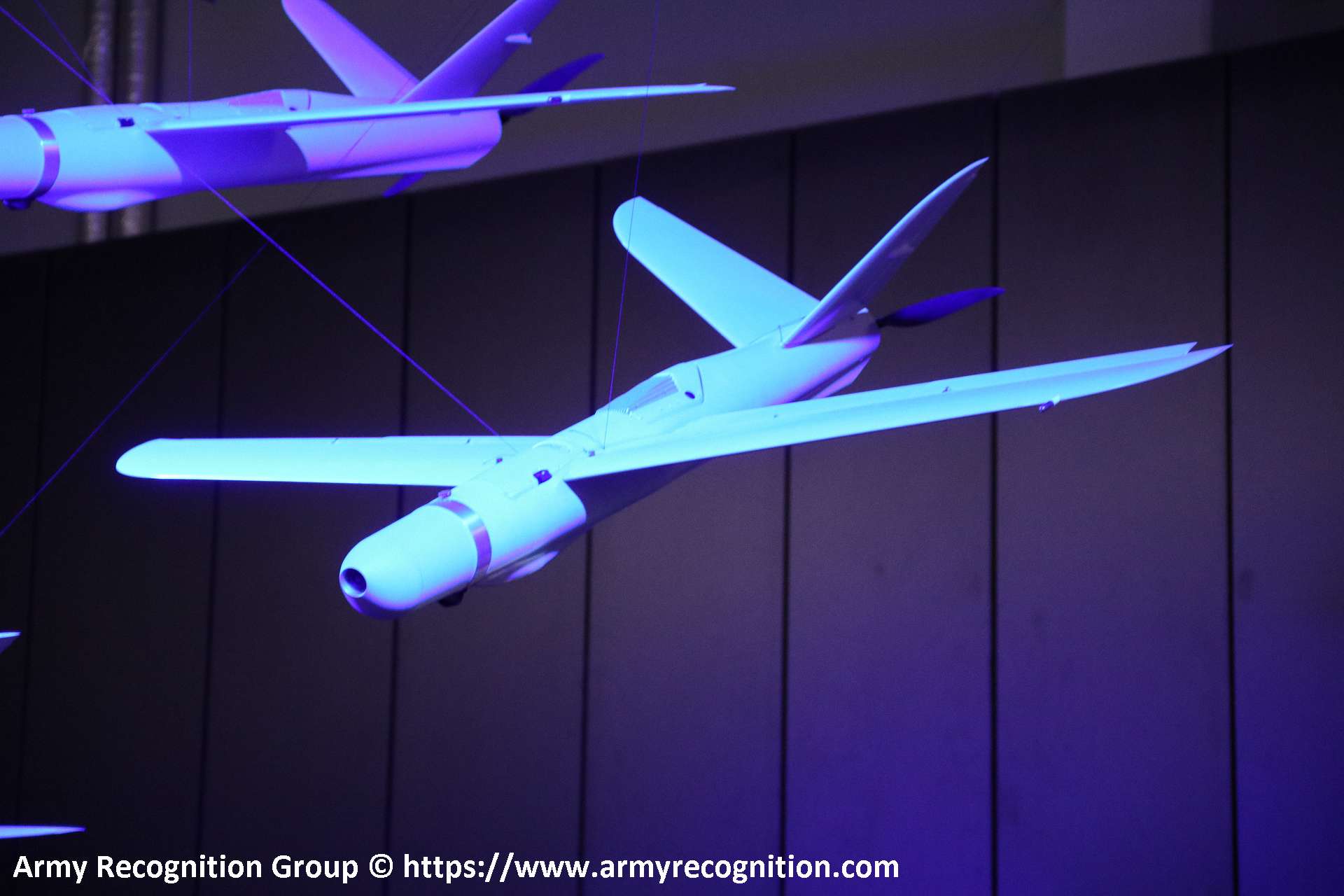
The Warmate is a lightweight, portable loitering munition developed by the Polish Company WB Electronics. It functions as both a reconnaissance and attack drone. (Picture source: Army Recognition Group)
The upcoming contract will see the delivery of approximately 200 Warmate loitering munition also called suicide drones to South Korea by the end of this year, with more expected to follow in the near future. This signals a growing partnership between the two nations in the defense sector and marks a strategic move by South Korea to bolster its defense capabilities with cutting-edge drone technology.
The Warmate loitering munition, developed by the Polish company WB Electronics, is an advanced unmanned aerial system designed for precision strikes. It functions as a versatile loitering munition, also known as a suicide drone, capable of hovering in the air before engaging high-value targets with pinpoint accuracy. Lightweight and portable, the Warmate is designed for easy deployment by ground troops or from vehicles, and it can be used in a variety of mission profiles, including surveillance, reconnaissance, and direct attack operations. The system’s real-time video transmission allows operators to identify and engage targets effectively while minimizing collateral damage.
What makes the Warmate unique is its ability to switch between reconnaissance and attack modes, offering flexibility in the battlefield. It can be equipped with various warheads, including high-explosive or anti-tank payloads, depending on mission requirements. With a range of approximately 30 km and an endurance of up to 70 minutes, the Warmate is ideal for both tactical and strategic operations. Its modular design allows for integration into larger systems or operations, and it can be used in coordination with other military assets, making it a valuable tool in modern asymmetric warfare.
The contract is anticipated to expand in scope beyond the initial 200 units, with the potential for hundreds more drones to be purchased in the future. This would further cement the defense collaboration between Poland and South Korea, as both nations are increasingly focusing on advanced technological solutions to meet their security needs.
KADEX, is an international defense exhibition that will take place in South Korea. The event is expected to see numerous high-profile contracts and showcases from international defense companies. South Korea’s interest in the Warmate system highlights the growing global recognition of Polish defense technology and WB Electronics' expertise in drone warfare systems.
This development also reflects South Korea's ongoing efforts to modernize its military forces in response to evolving threats in the region, particularly amid rising tensions in East Asia. Warmate drones will add a new dimension to South Korea's unmanned aerial capabilities, enhancing its ability to conduct precise and efficient operations in a variety of conflict scenarios.
Both nations are expected to make official announcements regarding the agreement during the KADEX exhibition, further outlining the details of their collaboration and future plans for drone procurement.
Read more: South Korea Armed Forces to Purchase Polish Warmate Suicide Drones

Rheinmetall Successfully Conducts First Firing Tests with New Skyranger 35 Mobile Air Defense System
- Details
- Written by: Administrator
- Category: 2024
- Hits: 5410
Rheinmetall, a leading German defense company, has successfully conducted the first firing tests of its Skyranger 35 air defense system mounted on a Leopard 1 tank chassis. Reported on September 20, 2024, by the "OSINTtechnical" account on X (formerly known as Twitter), the Skyranger 35 was observed firing a stream of 35mm shells at a proving ground. This marks a significant milestone in Rheinmetall's development of a new, cost-effective self-propelled anti-aircraft gun (SPAAG).
Follow Army Recognition on Google News at this link
The German Company Rheinmetall has conducted first firing test with its Skyranger 35 air defense system mounted on Leopard 1 tank chassis. (Picture source: OSINTtechnical)
The Skyranger 35 is designed to provide highly mobile air defense against a variety of aerial threats, including drones, helicopters, and low-flying aircraft. By integrating the system onto the Leopard 1 chassis, Rheinmetall aims to enhance mobility and operational flexibility while keeping costs down. The Leopard 1, despite being an older platform, remains robust and reliable, making it an ideal choice for such upgrades. Its widespread availability allows countries with existing Leopard 1 fleets to enhance their air defense capabilities without investing in entirely new platforms.
The Skyranger 35 is equipped with a 35mm Oerlikon Revolver Cannon that can fire at a nominal rate of 1,000 rounds per minute, with a rapid single-shot mode of 200 rounds per minute. Its effective range extends up to 4,000 m, and it is capable of engaging small, unmanned aerial targets with precision, especially in loitering or diving attack scenarios.
What sets the Skyranger 35 apart is its integration with advanced targeting systems, including a 360-degree AESA search radar and a Ku-band tracking radar. These sensors work alongside a fully stabilized electro-optical sensor unit, providing seamless detection and tracking of highly agile targets. When combined with Oerlikon Ahead air-burst ammunition, the system can effectively engage even the smallest aerial targets, making it particularly suited for countering drone swarms. With 252 rounds of ready-to-fire ammunition, the Skyranger 35 ensures sustained firepower and quick reaction times in dynamic combat situations.
This combination of high mobility, precision targeting, and rapid-fire capabilities makes the Skyranger 35 an indispensable tool for modern air defense, particularly against emerging unmanned aerial threats that are becoming increasingly common in today's battlefields.
During the tests, the Skyranger 35 demonstrated its ability to accurately engage aerial targets. Its 35mm revolver gun can fire up to 1,000 rounds per minute and utilizes advanced targeting systems. Equipped with ammunition types like the Ahead airburst rounds, it effectively neutralizes fast-moving threats by dispersing a cloud of sub-projectiles.
Rheinmetall's strategic move to utilize existing platforms reflects a focus on providing cost-effective solutions without compromising performance. This approach reduces production and maintenance expenses and offers scalable options for militaries to upgrade their defensive capabilities. The successful testing underscores the company's commitment to addressing the evolving landscape of aerial threats, especially with the increasing use of unmanned aerial vehicles (UAVs) and the need for rapid response to air attacks.
The advancement of the Skyranger 35 on the Leopard 1 chassis is expected to accelerate its path to full operational deployment. Potential customers may include nations seeking to upgrade their air defense systems efficiently and economically. As aerial threats become more sophisticated, the development of versatile and responsive air defense solutions like the Skyranger 35 will be crucial in strengthening global defense readiness.
Rheinmetall AG, with over a century of experience, continues to innovate in response to modern defense challenges. Specializing in automotive and defense technologies, the company has been instrumental in developing cutting-edge military equipment, including armored vehicles, weapons systems, and ammunition. This latest achievement not only enhances Rheinmetall's product portfolio but also contributes to providing integrated solutions that meet the diverse needs of armed forces worldwide.
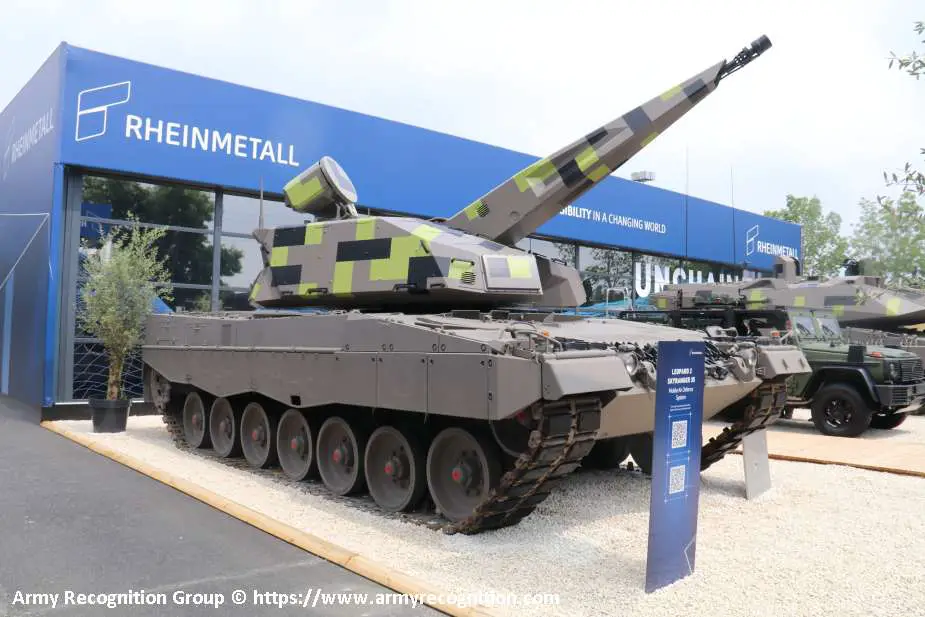
The new mobile air defense system Skyranger 35 turret mounted on Leopard 1 tank was unveiled in June 2024 during the defense exhibition in Paris, France. (Picture source Army Recognition Group)
- Details
- Written by: Administrator
- Category: 2024
- Hits: 4772
In the second installment of our series on the British Army's Ajax family of reconnaissance tracked armored vehicles, we turn our focus to the Ajax 40mm variant—the mainstay fighting and reconnaissance vehicle armed with one 40mm automatic cannon showcased at the Defense Vehicle Dynamics (DVD) 2024 event. Building on our initial report that provided an overview of the Ajax family, this report delves into the specifics of the Ajax 40mm's capabilities, features, and its pivotal role in modernizing the British Army's armored reconnaissance forces.
Follow Army Recognition on Google News at this link
Ajax 40mm Fighting and Reconnaissance Vehicle on display at DVD 2024, showcasing its advanced turret system and intelligence-gathering capabilities. (Picture source: Army Recognition Group)
Equipped with a two-man turret armed with one 40mm automatic cannon, the Ajax tracked reconnaissance armored vehicle is designed to engage targets while on the move at high speeds. This capability provides a significant tactical advantage on the battlefield, allowing for rapid response to emerging threats. The 40mm cannon utilizes advanced cased telescoped ammunition technology, enabling a more compact design without compromising firepower or effectiveness. This innovation reduces the turret's overall size and enhances the vehicle's maneuverability and stealth profile.
Beyond its formidable firepower, the Ajax is engineered to serve as a comprehensive intelligence-gathering platform. It is outfitted with state-of-the-art sensor suites, including high-resolution electro-optical cameras, thermal imaging systems, and laser rangefinders. These systems enable the crew to detect, identify, and track targets over long distances, both during the day and at night, under various weather conditions. The vehicle's advanced communication systems are integrated into the Army's digital network, allowing for real-time sharing of reconnaissance data with other units and command centers. This seamless flow of information enhances situational awareness and enables coordinated tactical operations across the battlefield.
The British Army's commitment to the Ajax program, underscored by the procurement of 245 vehicles, is a significant step towards modernization. These units, expected to replace older reconnaissance platforms, will provide a substantial upgrade in capability. The fleet, distributed among reconnaissance regiments, will enhance the Army's operational readiness and effectiveness in diverse mission scenarios. The Ajax vehicles, anticipated to undergo rigorous testing and evaluation, will set a new standard for modern military operations, instilling optimism about the Army's future.
Recent developments highlighted in the report include successful field trials that tested the Ajax's performance across various terrains and operational conditions. Feedback from these trials has been instrumental in refining the vehicle's systems and addressing any challenges, such as improving crew comfort and reducing noise and vibration levels within the cabin. Modifications have been implemented to enhance the overall user experience without compromising the vehicle's combat capabilities.
The collaboration between the British Army and industry partners has been a critical factor in the progress of the Ajax program. General Dynamics Land Systems–UK, the primary contractor, has worked closely with the Army to incorporate cutting-edge technologies and innovations into the vehicle design. This partnership has also had a positive economic impact, supporting jobs across the UK defense sector and fostering advancements in engineering and manufacturing.
As the Ajax 40mm moves closer to full operational deployment, it is poised to enhance the British Army's reconnaissance and combat capabilities significantly. The vehicle's combination of firepower, advanced sensors, and communication systems positions it as a key asset in addressing contemporary security challenges. The Army's focus on modernization through programs like Ajax reflects a broader strategic commitment to maintaining a robust and adaptable military force.
Looking ahead, the integration of the Ajax vehicles into the Army's operational structure will involve comprehensive training programs for crews and maintenance personnel. These programs are designed to ensure that soldiers are proficient in the use of the vehicle's advanced systems and can fully leverage its capabilities in the field. The successful deployment of the Ajax is expected to set a new standard for armored reconnaissance vehicles and may influence future developments in military vehicle technology.
The detailed insights provided in Report No. 2 at DVD 2024 underscore the significant advancements made in the Ajax program. The focus on the Ajax 40mm variant highlights its essential role in the future of the British Army's reconnaissance and combat operations. As these vehicles are integrated into service, they are expected to enhance operational effectiveness and contribute to the Army's readiness to meet the challenges of modern warfare.
Read more: Ajax Family Series Report 2: British Army Ajax 40mm Fighting Vehicle at DVD 2024.
- Details
- Written by: Jérôme Brahy
- Category: 2024
- Hits: 4582
In an interview with Army Recognition on September 16, 2024, Daniel du Plessis, Marketing and Communications Director of the South African company Milkor, outlined plans to increase the annual production of its Milkor 380 unmanned combat aerial vehicles (UCAVs). Responding to growing interest in the Milkor 380, currently the largest UAV produced in Africa and expected to rank among the world's top ten Medium Altitude Long Endurance (MALE) UAVs in operational capability, Milkor plans to double its production rate from 8 to 16 units per year by 2026.
Follow Army Recognition on Google News at this link
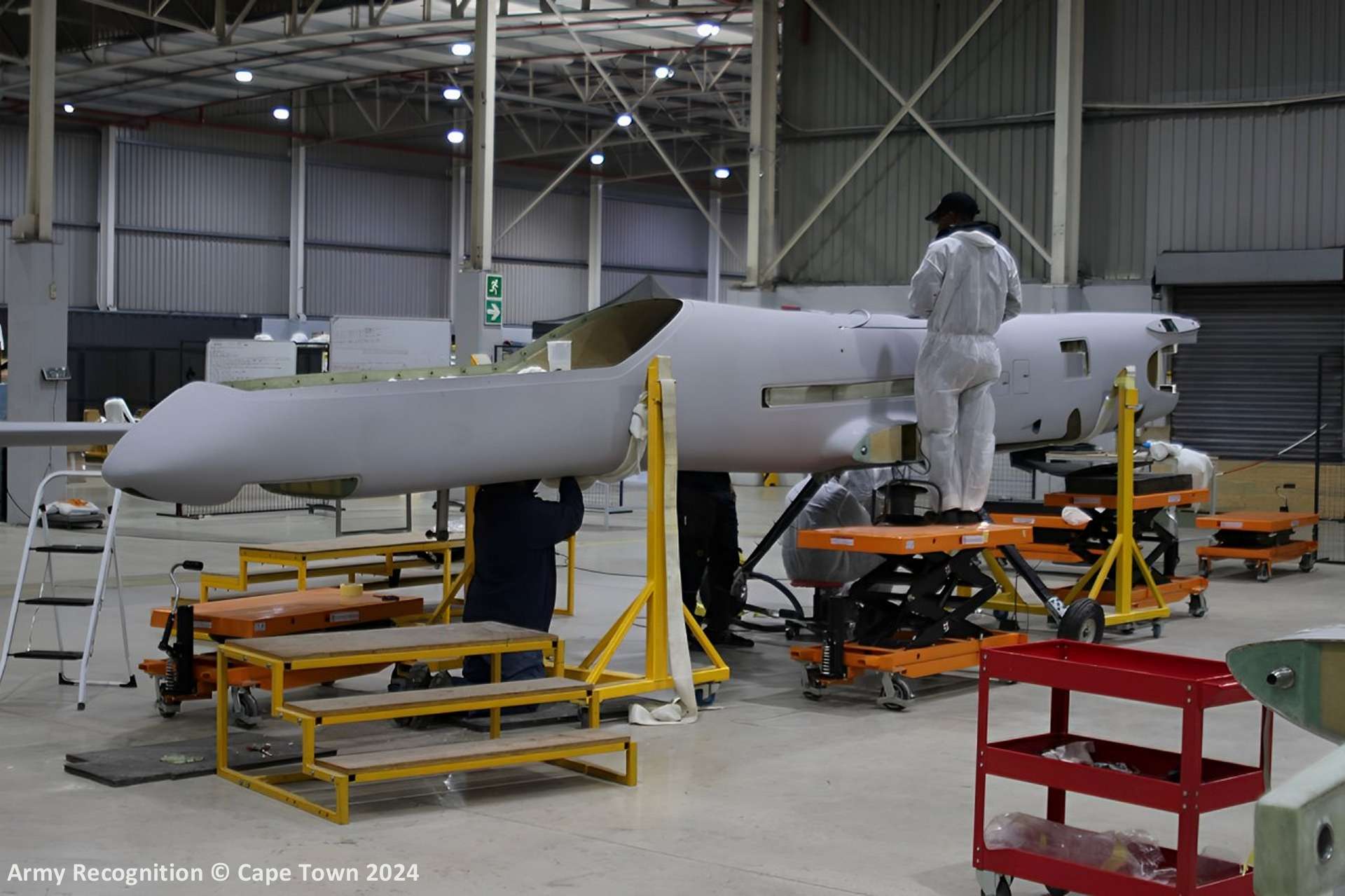
Milkor’s new facility In Cape Town, South Africa, has allowed to increase the 380 production capacity from 8 to 16 units annually. (Picture source: Army Recognition)
The development of the Milkor 380 began in 2021, with taxi testing in early 2023 and its first flight on September 19, 2023. To support the program, Milkor recently expanded its facilities in Cape Town, South Africa, by introducing a new 10,000-square-meter building. This expansion is designed to consolidate all previous research and development (R&D) functions and create new areas for offices, production, testing, and subsystem integration.
The Cape Town location offers logistical advantages for the production and development of the UAV due to its proximity to several South African Air Force bases, such as Air Force Base Langebaanweg, Air Force Base Ysterplaat, and Overberg Air Force Base. These bases provide essential infrastructure for pilot training, aircraft operations, and weapons testing. Additionally, Cape Town's infrastructure, including its harbor and international airport, facilitates access to necessary raw materials.
As highlighted in this interview, the new facility has enabled the company to increase its production capacity to 8 units annually, with a potential production capacity of up to 16 units by 2026, aligning with projected future demand.
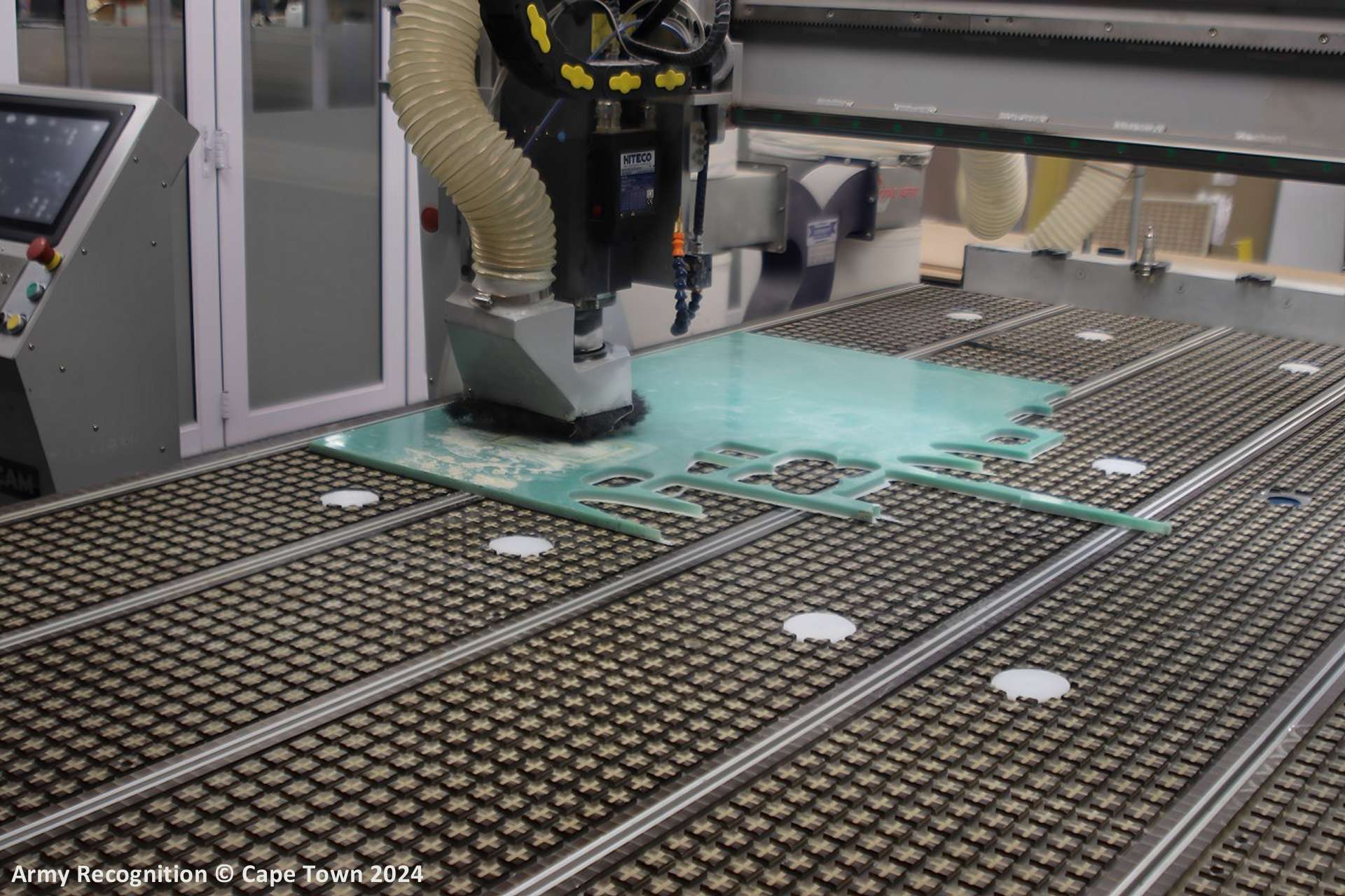
Milkor has developed several key components of the Milkor 380 internally, including communications, avionics, automation, and control systems. (Picture source: Army Recognition)
Milkor has developed several key components of the Milkor 380 in-house, including its communications, avionics, automation, and control systems, as over the past five years, the team has expanded to 350 employees, 80% of whom are engineers.
The Milkor 380 is equipped with dual redundant Line of Sight (LOS) and satellite communication capabilities to enable continuous data exchange over long distances. It is compatible with existing Command, Control, Communications, Computers, Intelligence, Surveillance, and Reconnaissance (C4ISR) systems to facilitate real-time data transfer and mission coordination.
The Milkor 380, intended for use in Intelligence, Surveillance, and Reconnaissance (ISR) missions as well as for precision strikes, comes equipped with optical systems for high-definition, infrared, and multispectral imaging, which are designed to provide real-time situational awareness and enhance surveillance and reconnaissance effectiveness.
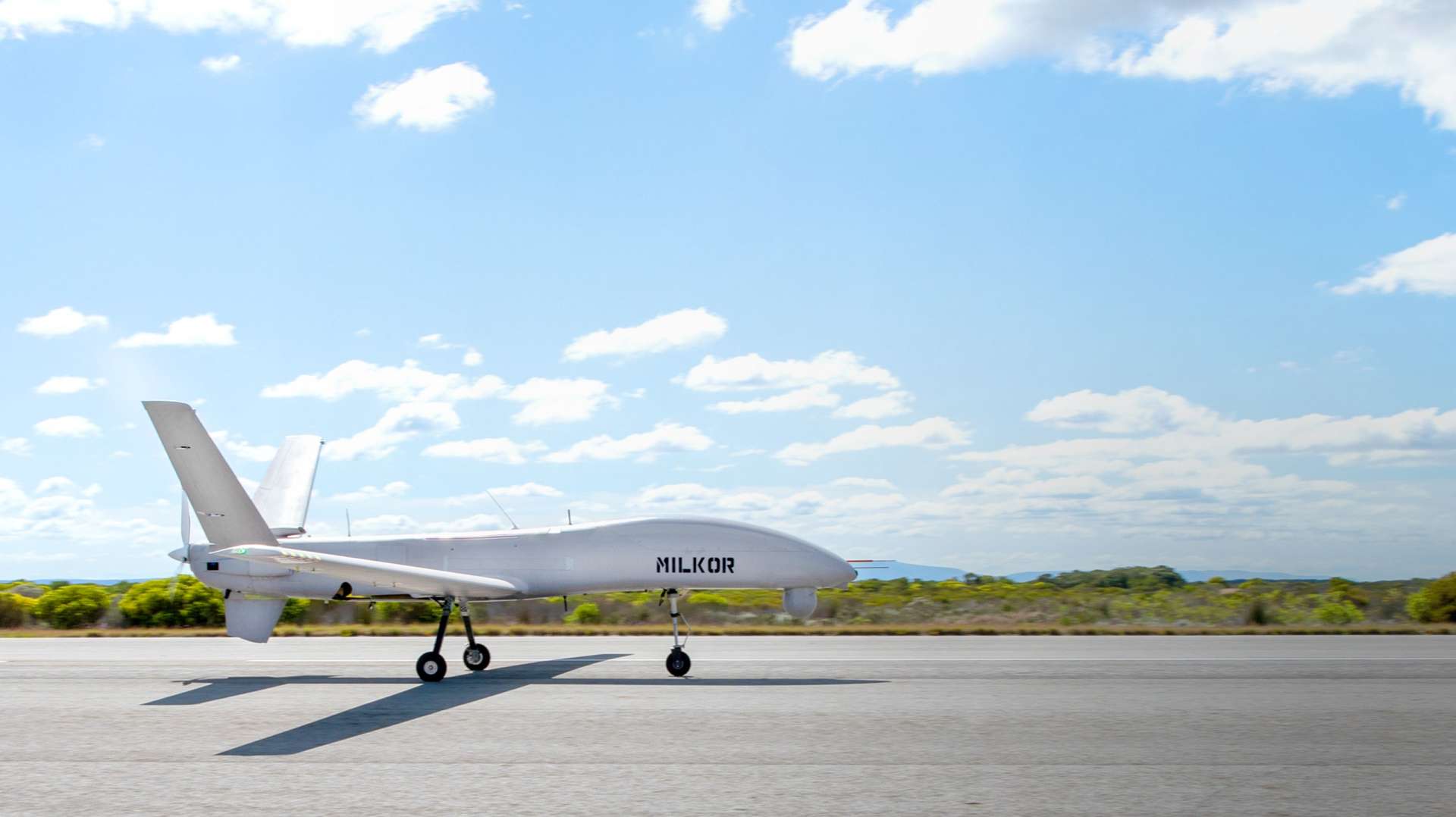
The development of the Milkor 380 began in 2021, with taxi testing in early 2023 and its first flight on September 19, 2023. (Picture source: Milkor)
The adaptable airframe is also equipped with five hardpoints that can carry various payloads, such as sensor pods, electronic warfare systems, glide bombs, precision-guided munitions, and missiles, to suit different mission requirements. For instance, the AeroForce 380, developed in collaboration with the German company Aerodata AG, is a new variant specifically optimized for maritime surveillance and suitable for Navy or Coast Guard monitoring operations.
Incorporating modern technologies such as Synthetic Aperture Radar (SAR) and Inverse Synthetic Aperture Radar (ISAR), the Milkor 380 features a flight control system capable of autonomous operations, including take-offs, flights, and landings, reducing the need for human involvement in these processes. Additionally, two types of Ground Control Stations (GCS) are available for the Milkor 380: the Strategic GCS (SGCS) for permanent installations and the Tactical GCS (TGCS) for rapid deployment.
Read more: Milkor to double annual production of Africa's largest combat drone
- Details
- Written by: Halna du Fretay
- Category: 2024
- Hits: 8657
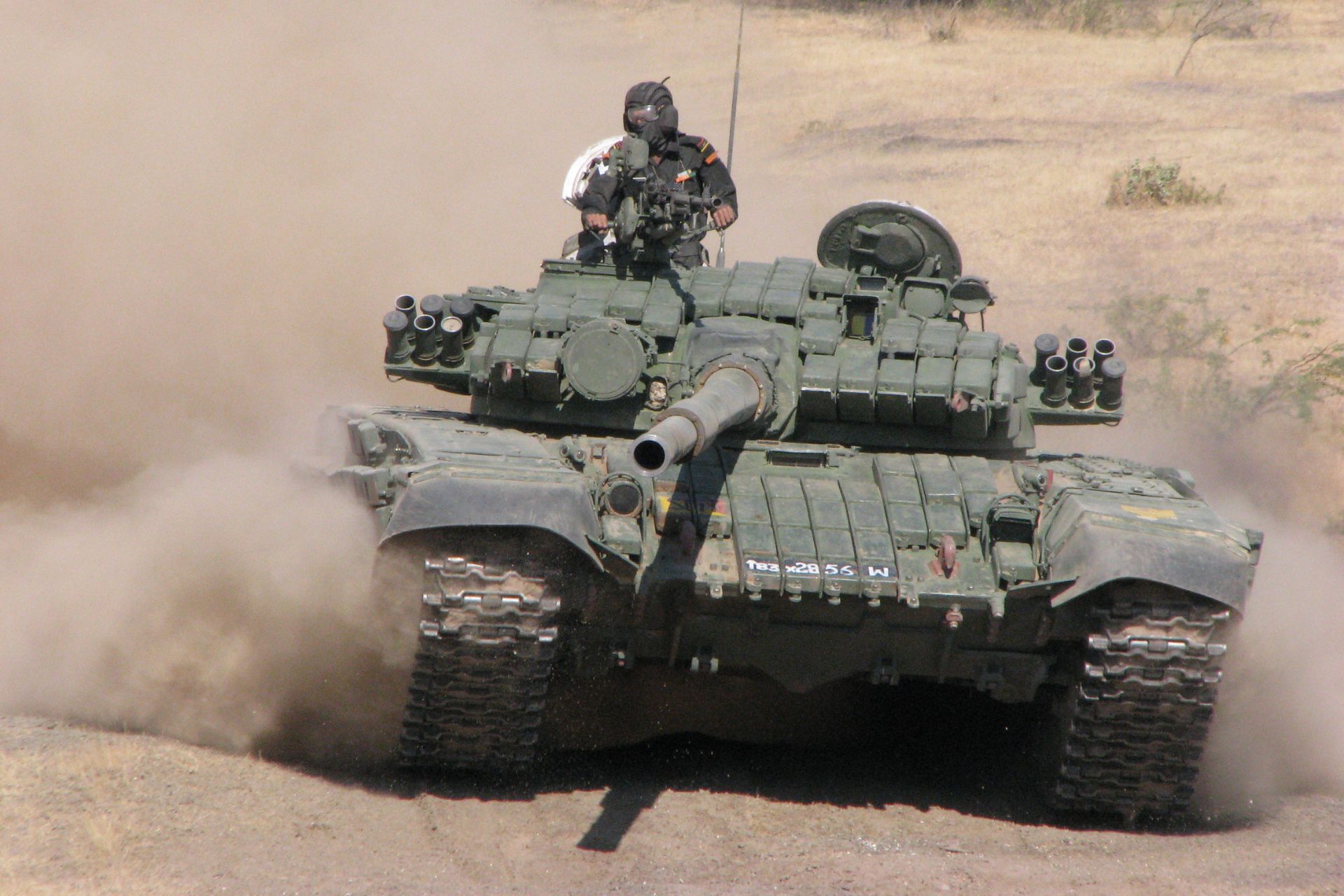
India has decided to modernize its fleet of Russian-origin T-72 tanks with the intention of exporting the upgraded models to international markets, particularly targeting potential buyers in Africa, the Middle East, and East Asia. This decision represents a strategic collaboration between the Indian and Russian defense industries, aimed at extending the lifespan of the T-72 tanks by refurbishing them for prospective clients.
Follow Army Recognition on Google News at this link
The Heavy Vehicles Factory in Avadi, which has since produced upgraded T-90 tanks, will now be used as the base for modernizing the T-72 tanks destined for export (Picture source: Flickr Channel Cell105)
According to a senior defense official involved in the partnership between the two nations, the modernization process will take place in India before the tanks are exported to countries interested in acquiring these combat vehicles. The Indian Army currently operates approximately 2,500 T-72 tanks, which have served as its main battle tanks since their introduction in the 1970s. Demand for these tanks remains strong, particularly from countries in Africa, the Middle East, and Southeast Asia. Many nations have expressed interest in acquiring the T-72 as India prepares to gradually replace them with more advanced models.
Production of the T-72 tanks in India began in the 1980s at the Heavy Vehicles Factory in Avadi, near Chennai. Before that, India had purchased 500 units directly from the Soviet Union. This same facility, which has since produced upgraded T-90 tanks, will now be used as the base for modernizing the T-72 tanks destined for export. Indian and Russian technical experts are working closely to ensure the success of this modernization process.
The T-72 has been a reliable and durable combat vehicle in the Indian Army’s inventory, equipped with a 125 mm main gun, an anti-aircraft gun, and a machine gun. It can reach speeds of 60 km/h on roads and 35 km/h off-road, and it is capable of fording rivers up to 1.2 meters deep. During the 2020 tensions with China, India deployed these tanks to the high-altitude region of Ladakh, marking the first time the T-72 was stationed in such challenging terrain.
In addition to the T-72, the Indian Army operates around 1,000 T-90 tanks and approximately 100 indigenous Arjun tanks. Despite the modernization efforts, the T-72 remains the most numerous tank in the Indian Army’s arsenal.
If the initiative proves successful, India may explore the possibility of exporting other Russian-origin military vehicles, such as BMP-2 infantry fighting vehicles, which are also scheduled for upgrades. The modernization of the T-72 for export could represent a new opportunity for India to expand its presence in the global defense market, offering cost-effective solutions to countries in need of reliable armored vehicles.
As India looks to the future, this modernization effort is part of a broader strategy to revamp its military capabilities by gradually phasing out older equipment while potentially boosting the export of surplus hardware. The collaboration between the Indian and Russian defense sectors will be crucial in achieving these goals.
Read more: India Seeks to Export Modernized Russian T-72 Tanks to African and Asian Markets
- Details
- Written by: Halna du Fretay
- Category: 2024
- Hits: 2835
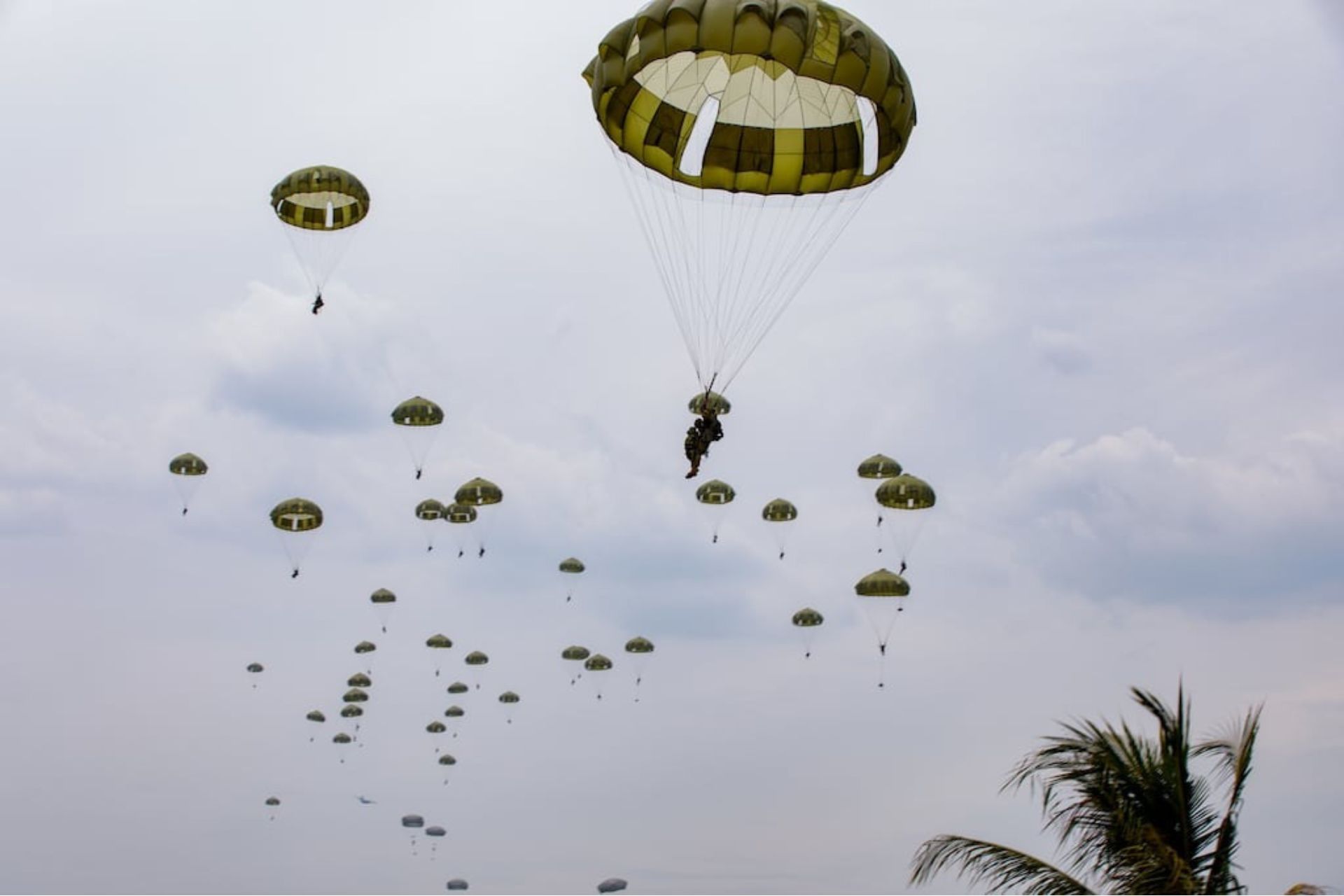
The U.S. Army, the National Indonesian Armed Forces, and allied partners recently completed a complex airborne assault mission in South Sumatra as part of the Super Garuda Shield exercise, marking the first time such an operation took place in the region. The exercise, which wrapped up earlier this month, showcased a significant expansion in scope and complexity.
Follow Army Recognition on Google News at this link
U.S. Army Soldiers with Bison Troop, 1st Squadron, 40th Cavalry Regiment drop from the sky during Super Garuda Shield 2024 in Indonesia, Aug. 29, 2024 (Picture source: US DoD)
A battalion from the 11th Airborne Division, based in Alaska, conducted the airborne assault, which was one of several operations spread across Indonesia, with a majority centered in Java. Brig. Gen. Kevin Williams, the commanding general for operations of the U.S. Army’s 25th Infantry Division, emphasized the operational reach, describing how the coordination required four hours of flight to command and control the airborne mission. According to Williams, this exercise highlighted the inter-theater operational capability of the forces involved.
In previous iterations of Super Garuda Shield, forces focused on single locations, such as Java or Sumatra, but this year's exercise tested command and control across multiple areas with joint forces and partner nations. Japanese and Indonesian troops also participated in the airborne assault to evaluate joint entry operations, further demonstrating the multilateral nature of the exercise.
The exercise also saw a considerable increase in participation compared to earlier years. Williams noted that in 2015, only 200 Indonesian soldiers and 300 U.S. soldiers participated, with Williams himself being one of them. This year, over 2,500 U.S. service members participated, nearly doubling the number of partner nation forces involved. The exercise now includes eight fully participating nations—Australia, Canada, France, Japan, Singapore, South Korea, the United Kingdom, and New Zealand—not counting the U.S. and Indonesia. Additionally, twelve other nations sent observers who participated in a staff exercise.
New to this year's Super Garuda Shield was the introduction of U.S. Air Force assets such as C-130 aircraft, and the deployment of a Combat Aviation Brigade from the 25th Infantry Division, equipped with CH-47F Chinook helicopters. These resources contributed to the formation of a fully combined Aviation Task Force, which played a critical role in pushing the logistics tail throughout the Indonesian archipelago.
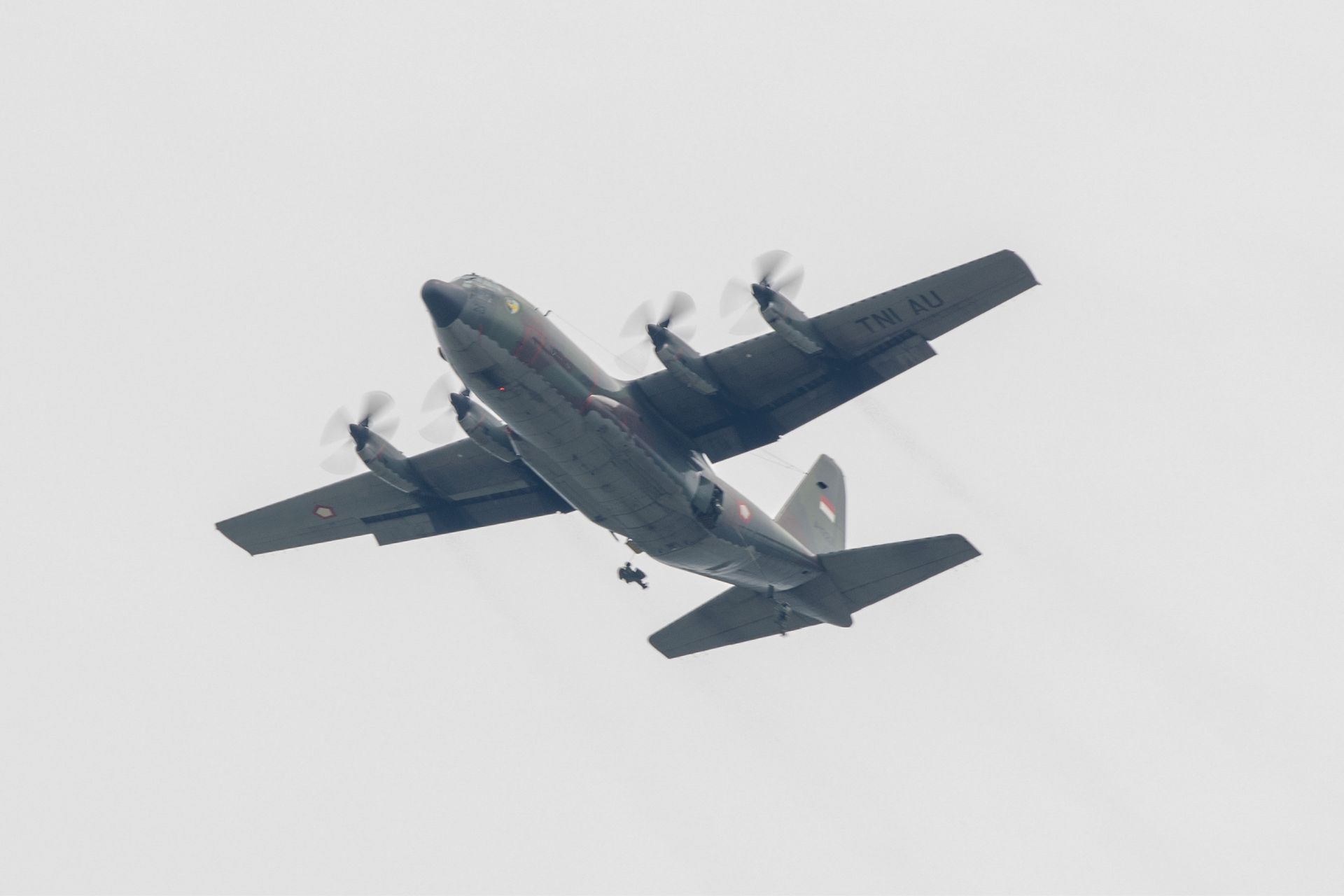
An Indonesian National Armed Forces C-130 Super Hercules drops soldiers during an airborne operation at Super Garuda Shield 2024, in Indonesia, Aug. 29, 2024 (Picture source: US DoD)
A major focus of the exercise was the establishment of a Combined Task Force Operations Center to enhance interoperable command and control across the joint force. The introduction of the U.S. Army’s Integrated Tactical Network and additional mission command nodes provided a clearer operational picture for all participants.
Participants also tested logistics capabilities, over-the-horizon communication systems, and the ability to integrate and synchronize assets across multiple domains. In Java, a joint strike exercise saw the U.S. Army deploying its High Mobility Artillery Rocket System (HIMARS), alongside U.S. Marine Corps attack aviation, F-16 fighter jets from partner nations, and other missile systems. This allowed forces to evaluate sensor-to-shooter capabilities across air, land, and sea platforms in targeting operations.
Amphibious operations were also highlighted during the exercise. The U.S. Marine Corps, in conjunction with Indonesian, Japanese, and Singaporean forces, conducted an amphibious assault using three platforms, including an assault craft from Singapore and the amphibious transport dock USS Green Bay. Long-range fires and reconnaissance were coordinated to set the conditions for the beachhead assault, followed by an air assault operation using the Marine Corps V-22 Osprey aircraft to insert ground forces, which were later extracted as part of the exercise.
In preparation for the exercise's final phase, the U.S. Army conducted a combined arms live-fire operation, integrating ground maneuvers with partner forces in a complex scenario. This exercise was part of the U.S. Army’s broader Operation Pathways initiative, which has expanded significantly across the Indo-Pacific in recent years. Operation Pathways is designed to strengthen relationships with regional allies and ensure the ability to conduct complex joint operations in the event of conflict or other contingencies.
Brig. Gen. Williams highlighted that exercises like Super Garuda Shield build crucial readiness and interoperability between allied forces, reinforcing trust among partners and ensuring preparedness for any situation. "It really just provides capable, ready land forces that allow us to be positioned throughout the Indo-Pacific. It bolsters our allies and partners with that trust, and it really ensures we and Indonesia are prepared for any contingency or conflict or disaster that comes along," Williams concluded.
- Details
- Written by: Triffaux
- Category: 2024
- Hits: 3251
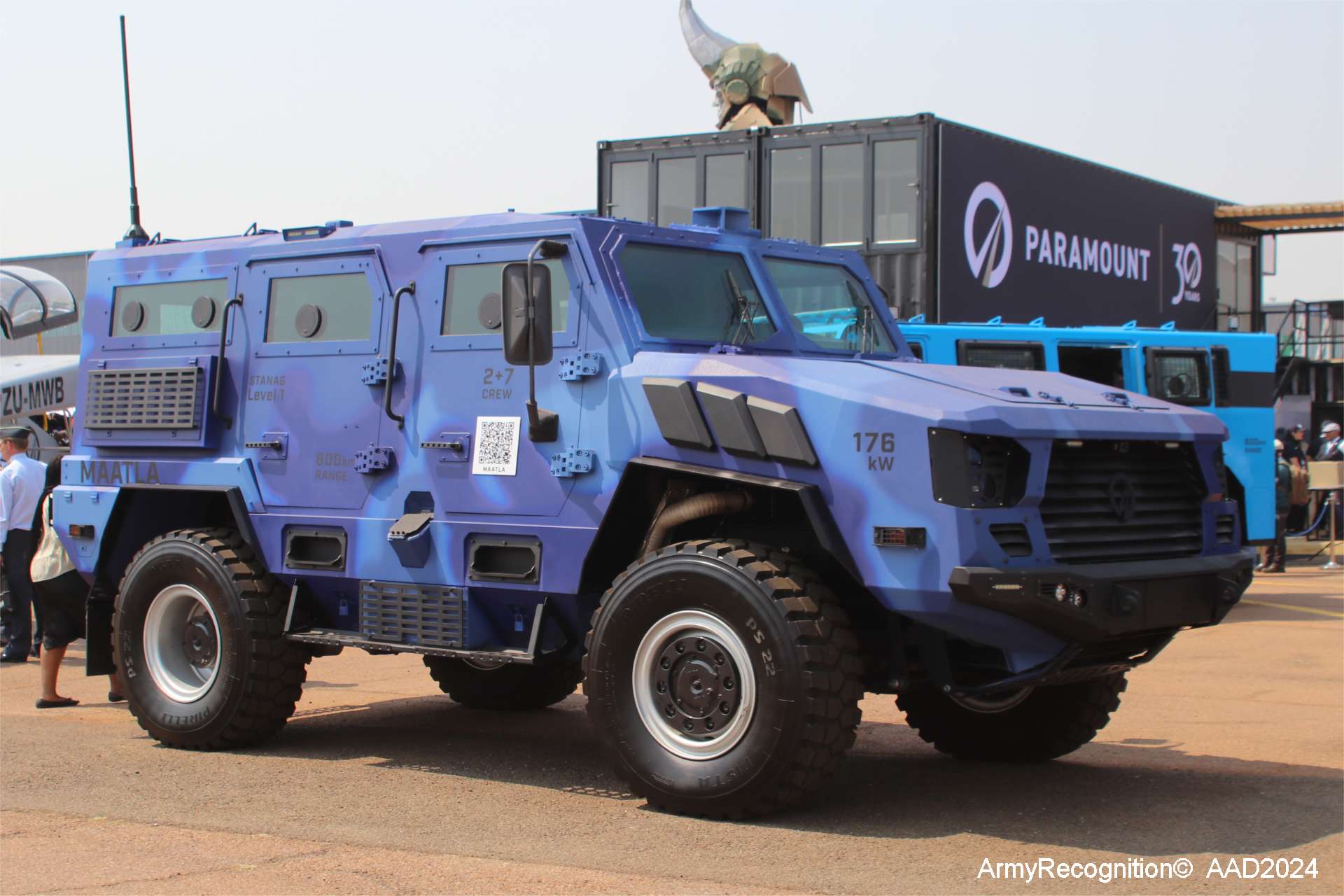
The Maatla all-terrain vehicle, designed to meet the needs of armed forces and security units, is one of the main attractions at the Africa Aerospace and Defence (AAD) 2024 exhibition, taking place in South Africa from September 18 to 22, 2024. Presented as a new-generation vehicle, the Maatla stands out for its ability to adapt to a wide range of missions and terrains, while offering effective protection and great modularity thanks to its advanced features.
Follow Army Recognition on Google News at this link
Paramount Group Maatla All-Terrain Vehicle (Picture source: Army Recognition)
The Maatla is built on a commercial vehicle chassis, known for its reliability and proven performance in the most demanding environments. Designed to carry up to nine personnel, it is equipped with "Smart Floor" technology, which allows the internal configuration to be quickly modified. In just a few minutes, the vehicle can be transformed into an ambulance, a mobile command post, or adapted for border patrol, military support, or peacekeeping missions. This modularity makes the Maatla a key asset for defense forces, enabling them to adapt it to various operational scenarios. Additionally, night vision devices and extra sensors can be installed to ensure 24/7 operability.
With a maximum speed of 100 km/h and a range of 600 km at 80 km/h, the Maatla is designed for long-distance travel on both roads and challenging terrain. Thanks to its two-speed transfer case and three differential locks, it can overcome complex obstacles while maintaining excellent maneuverability. The vehicle is also capable of fording up to 750 mm without any preparation and can operate in extreme conditions, with temperatures ranging from -10°C to +55°C.
In terms of protection, the Maatla meets STANAG 4569 Level 1 standards, providing resistance to small-caliber rounds, including 5.56 x 45 M193, 5.56 x 45 NATO SS109, and 7.62 x 51 NATO BALL. Its underbody is also protected against explosions equivalent to a M26 grenade. These features make the Maatla capable of ensuring the safety of its crew in conflict zones, while maintaining its mobility.
The Maatla is powered by a 240-horsepower 6-cylinder turbo-diesel engine with a six-speed manual transmission (plus reverse). This powerful engine allows it to navigate the toughest terrains while maintaining fuel efficiency. With a payload capacity of 2,000 kg and a maximum gross vehicle weight of 10,000 kg, it can transport a crew of two in the cabin and six additional passengers in the rear compartment.
One of the Maatla's key strengths is its customizability. The vehicle can be equipped with additional ballistic protection kits to enhance the safety of the crew and the engine compartment. Other options include RPG (rocket-propelled grenade) net protection, specific protections for mirrors, hinges, and windows, as well as a range of devices to optimize its use for military or law enforcement missions.
For command missions, the Maatla can be equipped with a full C4I (Command, Control, Communications, Computers, and Intelligence) communication suite, VHF and HF radios, as well as an intercom system. Specific equipment such as weapon, ammunition, or radio racks can also be installed, along with lighting systems for police missions, an electric recovery winch, or even a front bulldozer blade.
With its modularity, off-road performance, and ability to effectively protect its crew, the Maatla is positioned as a must-have vehicle for armed forces and security units worldwide. Its launch at AAD 2024 highlights its potential to meet the current challenges of military and peacekeeping missions. Thanks to its multiple customization options, it can be quickly adapted to various scenarios, offering unparalleled flexibility and efficiency on the field.
The Maatla represents a significant advancement in the design of light armored vehicles, drawing on proven technologies while offering innovations that meet modern operational needs. Its presentation at AAD 2024 demonstrates the manufacturers' commitment to providing modern and reliable solutions for security forces around the globe.
Read more: Paramount Group Innovates with Maatla All-Terrain Vehicle at AAD 2024
- Details
- Written by: Halna du Fretay
- Category: 2024
- Hits: 8223
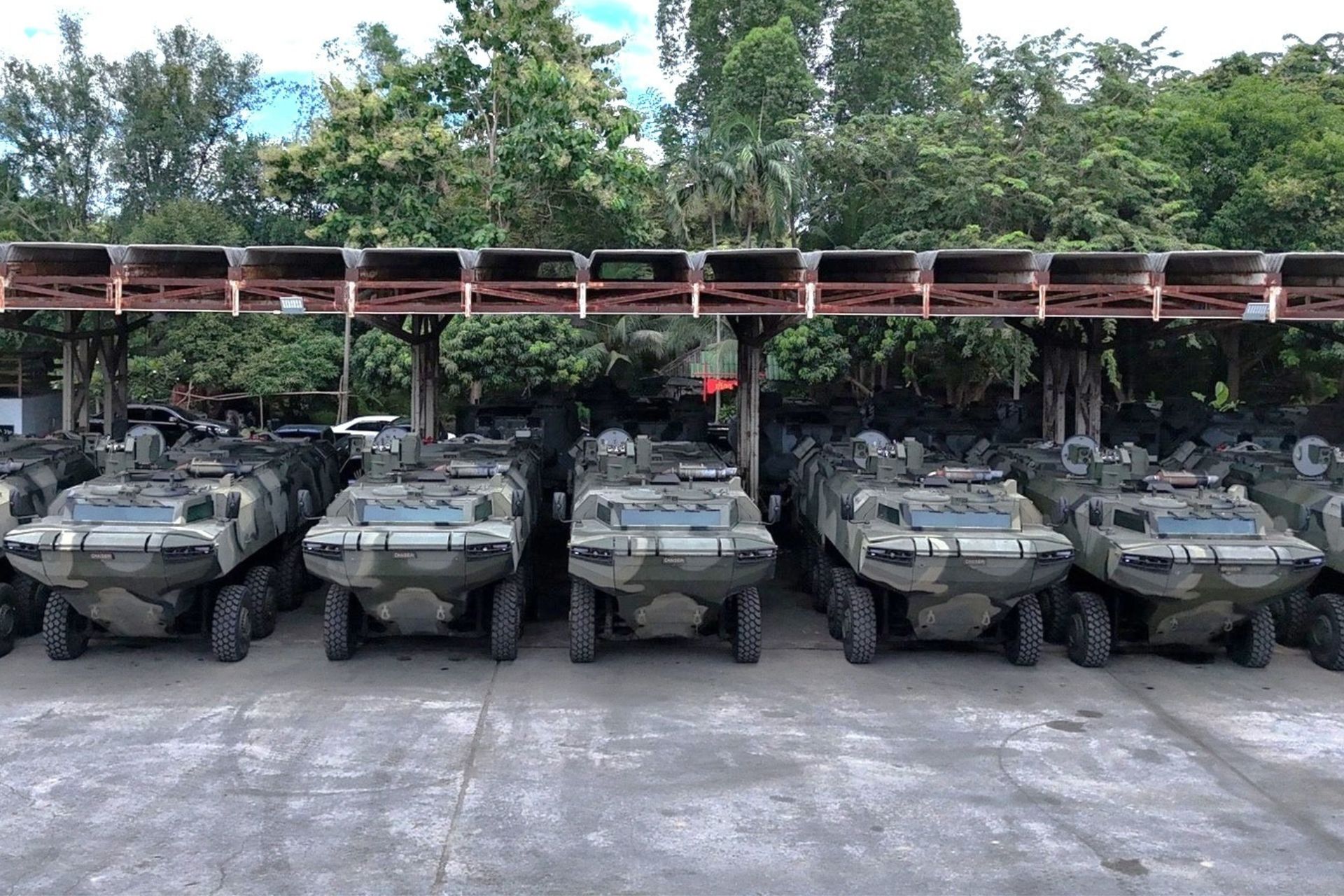
Chaiseri Metal & Rubber Co. Ltd. successfully completed the delivery of seven new 8x8 Armoured Wheeled Amphibious Vehicles (AWAV) for the Royal Thai Marine Corps (RTMC) of the Royal Thai Navy (RTN) in September 2024, as reported by AAG. This delivery marks the conclusion of a procurement process that began on August 3, 2023, with a budget of 448 million baht (approximately $12.9 million). The contract included the development, construction, testing, and delivery of the vehicles, which were completed within a year as scheduled.
Follow Army Recognition on Google News at this link
The seven amphibious vehicles delivered to the Marine Assault Amphibian Vehicle Battalion of the Marine Division were modified from the initial prototype (Picture source: Royal Thai Marines)
The Thai AWAV 8x8 amphibious armoured vehicle is designed for optimal performance on both land and water. It measures 9.2 meters in length, 3.1 meters in width, and 3 meters in height, and weighs 23.2 tonnes. Powered by a 711-horsepower diesel engine, the AWAV can reach a maximum speed of 105 km/h on land and 10 km/h in water, with a combat range of 600 kilometers. The vehicle can carry 11 personnel in addition to three crew members, including the driver, gunner, and commander. It is also equipped with a Guardian 1.5 remote weapon station (RWS) from the Spanish company Escribano Mechanical and Engineering (EM&E), which includes a 12.7mm heavy machine gun and a 76mm smoke grenade launcher.
The seven amphibious vehicles delivered to the Marine Assault Amphibian Vehicle Battalion of the Marine Division were modified from the initial prototype. These changes include adjustments to the vehicle's front to improve its suitability for marine operations, particularly in beachhead areas, preventing mud and sand from reaching the rear. The driver’s station is equipped with large-caliber ballistic glass, providing clear visibility during both land and sea maneuvers. These AWAV 8x8 vehicles will be used alongside the AAV7A1 RAM/RS amphibious vehicles already in service with the Royal Thai Marine Corps, which are also being modernized by Chaiseri.
With performance capabilities similar to the AAVP7A1 amphibious transport vehicle, the AWAV 8x8 will operate from the Royal Thai Navy’s landing platform docks (LPDs), HTMS Angthong and HTMS Chang, alongside the VN16 amphibious assault vehicles. Each AWAV underwent rigorous testing before delivery, including 200 kilometers of continuous road testing, two hours of uninterrupted marine operation, and obstacle courses designed to simulate challenging terrains. Despite its size, the AWAV 8x8 is capable of climbing slopes up to 60 degrees, meeting the performance criteria established by the Marine Corps.
The AWAV 8x8 is designed for rapid adaptability, capable of transitioning seamlessly between land and marine operations without requiring changes in driving mode. Its powerful water jet propulsion system, designed by Chaiseri’s engineering team, allows it to operate stably in marine environments, with performance comparable to the AAV-7A1 amphibious vehicle. Additionally, the vehicle’s turret system, remotely controlled from inside, demonstrated high accuracy during tests, with an average of 90% of shots hitting the target.
In conclusion, the successful delivery of these seven AWAV 8x8 vehicles represents a significant milestone in the modernization efforts of the Royal Thai Marine Corps. These vehicles will enhance the amphibious operational capabilities of the Marine Division, strengthening the fleet’s readiness for both land and marine missions. The vehicles were showcased during a parade rehearsal for a ceremonial event, marking their official introduction into service.
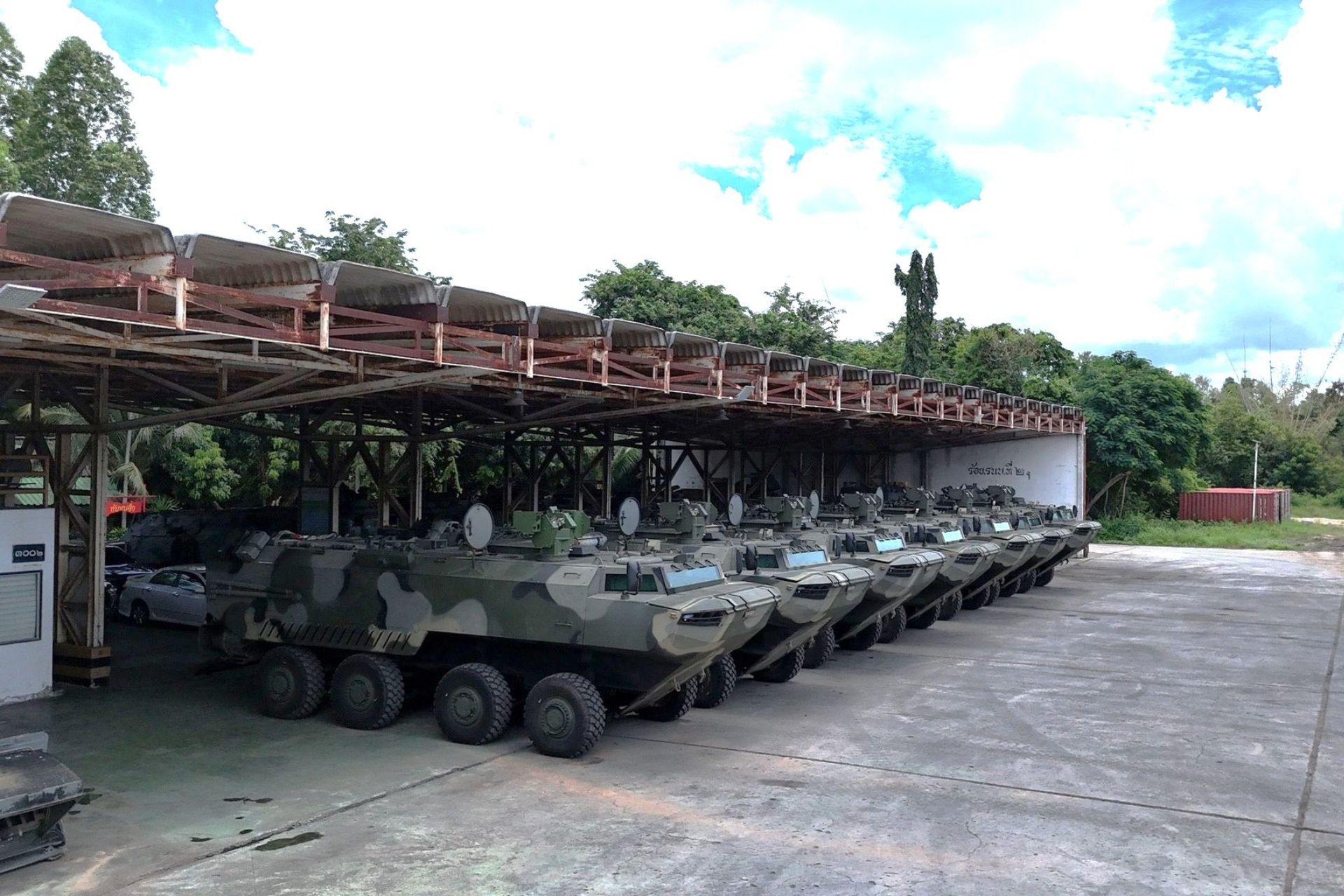
With performance capabilities similar to the AAVP7A1 amphibious transport vehicle, the AWAV 8x8 will operate from the Royal Thai Navy’s landing platform docks (Picture source: Royal Thai Marines)
Read more: Chaiseri Thailand Delivers Seven AWAV 8x8 Amphibious Vehicles to Royal Thai Marines

- Details
- Written by: Triffaux
- Category: 2024
- Hits: 5460
On September 19, 2024, Babcock International Group, in collaboration with Supacat, announced the signing of a new contract aimed at strengthening the British Army's land capabilities through the production of 53 additional Jackal 3 High Mobility Transporter (HMT) vehicles. These vehicles will be built at Babcock's manufacturing facility in Devonport, UK.
Follow Army Recognition on Google News at this link
Babcock Jackal 3 High Mobility Transporter (Picture source: Army Recognition)
This new order focuses on the enhanced version of the Jackal 3, the six-wheeled variant known as the Jackal 3(E) for "Extenda." This model has been designed to offer increased load capacity while maintaining the exceptional mobility of the original vehicle, widely recognized for its proven combat performance. Having been deployed in critical missions in Afghanistan, the Jackal has become a key asset in the British Army's reconnaissance, patrol, and logistics operations.
The Jackal 3(E) stays true to the initial design developed by Supacat, while benefiting from significant improvements. This high-mobility vehicle can move quickly over rough terrain, with a top speed of 120 km/h, while supporting an increased load thanks to the addition of an extra axle. Although originally designed for missions in Afghanistan, the Jackal has proven its versatility as a weapons platform adaptable to the modern army's needs.
Capable of conducting deep reconnaissance missions, rapid assaults, and convoy protection operations, the Jackal 3(E) further expands the operational scope of the British Army. This improved variant will offer increased flexibility, essential for meeting the demands of contemporary conflicts.
This new contract follows the earlier production of 70 Jackal 3s, which began earlier this year under the UK's Land Industrial Strategy, aimed at supporting the British Army while boosting the local economy.
Tom Newman, Babcock's Land Sector Chief Executive, hailed this important milestone: “This contract delivers a critical boost to the British Army with a vehicle that is the most capable and versatile in its class. Babcock is here to ensure that the British Army is ready to fight and win wars on land while also creating jobs in the South West and delivering on the Land Industrial Strategy.”
Production of the Jackal 3(E) is set to begin in early 2025, with the first deliveries expected in early 2026. Nearly 50% of the supply chain will come from the South West of England, directly contributing to the local economy while ensuring that the vehicles are predominantly built from British-made components.
Supacat, a specialist in designing high-performance military vehicles, plays a key role in this program. Its Managing Director, Phil Applegarth, expressed his satisfaction with the project's impact: “We are enormously proud that Supacat’s Jackal 3 ‘Extenda’ is now adding to the British Army's land fleet, supporting the goal of increasing lethality with a modular high-mobility platform. Our partnership with Babcock continues to bring significant benefits not only to the UK but also to local economies.”
With its high mobility and modular capabilities, the Jackal 3(E) is set to become an indispensable asset for the British Army, capable of adapting to the growing demands of modern military operations. Through this contract, Babcock and Supacat not only enhance the British Army's operational capabilities but also contribute to supporting the national industry, aligned with the strategic vision of the UK government.
- South Africa's homegrown Olifant Mk2 tank takes center stage at AAD 2024
- British FATV Vehicle: A New Asset for United Kingdom's Armed Forces
- MBDA develops Wolfram new anti-tank vehicle using land version of Brimstone air-to-surface missile
- New Boxer 8x8 Mortar Carrier Fitted with NEMO 120mm Mortar System Debuts at DVD 2024