

- Details
- Written by: Vandenbosch
- Category: 2024
- Hits: 5634










The Caracal platform has presented an innovative solution to the demands of modern military mobility. Starting on June 17, 2024, the Caracal will demonstrate its exceptional agility twice daily in the demonstration area at Eurosatory 2024, even in difficult terrain. This demonstration will use a new synthetic fuel created from hydrogen, CO2, and electricity specifically for military use.
Follow Army Recognition on Google News at this link
The synthetic fuel used by the Caracal and presented during Eurosatory 2024. (Picture source: Army Recognition)
The synthetic fuel used by the Caracal is produced through a process involving hydrogen, carbon dioxide, and electricity. This method, part of the Giga-PtX project vision, is a collaboration between Rheinmetall and its technology partner, INERATEC. The goal is to develop a war-ready energy source using synthetic fuels, providing a sustainable and reliable alternative to traditional fossil fuels. This approach not only addresses environmental concerns but also improves energy security for military operations.
Specialized journalists had the opportunity to witness this synthetic fuel-powered demonstration on June 16, 2024. Additionally, at Rheinmetall's stand at Eurosatory 2024, a variant of the Caracal equipped with a launcher for Hero-120 loitering munitions is on display.
However, the concept of synthetic fuel is not entirely new. Historically, these fuels date back to the early 20th century with innovations such as coal hydrogenation patented by Friedrich Bergius in 1918. During World War II, Germany extensively used synthetic fuels produced via the Fischer-Tropsch synthesis for its military needs, marking a significant development point.
Post-war, despite the abundance of oil, the United States and other countries continued research on synthetic fuels, especially in response to the 1970s oil crisis. Modern methods include biomass gasification, the use of renewable electricity to produce e-fuels, and solar heat to create solar fuels. These processes convert syngas into liquid fuels like diesel and kerosene, which are compatible with existing infrastructure and help reduce CO2 emissions.
Nonetheless, the production of synthetic fuels remains energy-intensive and costly, requiring technological improvements and political incentives to become economically viable. Synthetic fuels offer a promising solution to reduce dependency on fossil fuels and decarbonize sectors that are difficult to electrify, such as aviation, maritime transport, and especially the military sector.
This presentation of synthetic fuel is intriguing and promising, and we look forward to learning more about it in the coming months or years. We will keep you updated with any new information by the end of Eurosatory 2024.
Read more: Eurosatory 2024: Rheinmetall Surprises With New Synthetic Fuel
- Details
- Written by: Jérôme Brahy
- Category: 2024
- Hits: 20215
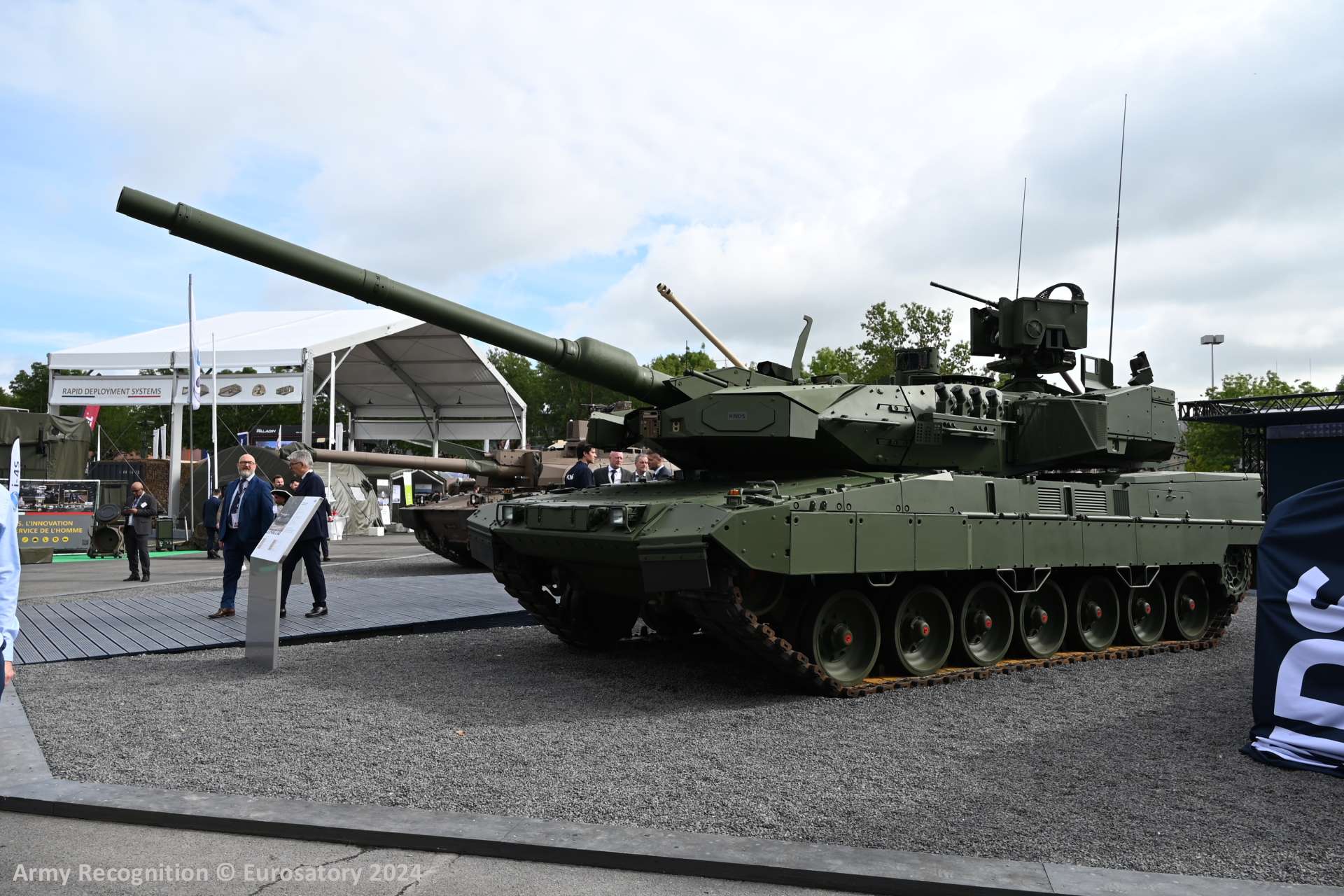
On June 17, 2024, KNDS showcased the production model of the Leopard 2A8 main battle tank for the first time at the Eurosatory 2024 exhibition. The tank displayed at Eurosatory is equipped with an omnidirectional observation system, an upgraded suspension system, an engine with additional cooling systems, an optional laser beam radiation warning system, and a remotely controlled weapon system with a machine gun.
Follow Army Recognition on Google News at this link
The Leopard 2A8 tank displayed at Eurosatory is equipped with features such as an omnidirectional observation system, an optional laser beam radiation warning system, and a remotely controlled weapon system with a machine gun. (Picture source: Army Recognition)
Initially unveiled as a prototype in May 2023 at the International Defence and Security Technologies Fair (IDET) in Brno, Czech Republic, the Leopard 2A8 Main Battle Tank (MBT) is the latest variant in the Leopard 2 series, developed by the German companies Krauss-Maffei Wegmann (KMW) and Rheinmetall. Based on the Leopard 2A7+ with upgrades in armor and firepower, this tank features an advanced armor protection system, incorporating the latest generation of multi-layered armor that combines steel, tungsten, composite filler, and ceramic components. Additionally, it is equipped with the EuroTrophy Active Protection System (APS), an adaptation of the Israeli Trophy system, which provides 360-degree radar coverage and intercepts incoming projectiles.
The demonstrator vehicle displayed at Eurosatory 2024 has a turret with an active protection system, improved PERI with a laser rangefinder, and a 360° local situational awareness system combined with a laser warning system. This vehicle has been used for testing various components and overall configurations.
The primary armament of the Leopard 2A8 is an improved 120 mm/L55 A1 smoothbore gun, an enhancement over the L44 gun, allowing for higher muzzle velocities and improved accuracy, range, and penetration. It can fire various munitions, including the DM11 programmable ammunition, which can detonate at specific points in its trajectory for effectiveness against different targets such as lightly armored vehicles, infantry, and fortifications. This main gun is supported by secondary armaments including a coaxial MG 7.62 mm and a multi-purpose 76 mm grenade launcher.
The design of the Leopard 2A8 is consistent with previous models, featuring a four-man crew of driver, gunner, loader, and commander. It has enhanced armor on the turret and hull, especially in areas like the turret roof and underbelly. Also featuring mine protection, the Leopard 2A8’s passive armor kit and APS provide protection against anti-tank guided weapons and rocket-propelled grenades, allowing for a 360° coverage.
Powered by a 1,500 hp engine, the Leopard 2A8 can reach speeds up to 65 km/h and has an operational range of approximately 400 kilometers. Its torsion bar suspension system, ground clearance of 500 mm, and durable tracks allow the tank to navigate difficult terrains, including steep gradients and water obstacles.
According to KNDS, the Leopard 2 A8 weighs less than 69 tons and measures 8.05 meters in length (11.17 meters with the gun), 4.00 meters in width, and 2.72 meters in height at the turret roof (3.11 meters with PERI).
The Leopard 2A8 includes advanced optics and fire control systems, such as third-generation thermal imaging for the commander and gunner, and a fire control system that enhances targeting accuracy. This system comprises a laser rangefinder and ballistic computer, allowing engagement of moving targets with precision. Additionally, the tank features a crew compartment cooling unit with a capacity of up to 10 kW, and an auxiliary power unit (APU) with a 20 kW output stabilized by ultracapacitors for running systems and charging the battery when the main engine is off, an NBC overpressurization system, and a comprehensive fire protection system, ensuring operational functionality and crew safety in various conditions.
Additionally, the running gear is reinforced, the cooling unit for the power pack is improved, and the ergonomics and slew-to functions are enhanced. Optional features include a remote-controlled weapon station (RCWS) and a laser warning system.
Procurement of the Leopard 2A8 has been extensive. Germany's Federal Acquisition Office signed a framework agreement for up to 123 tanks. Norway committed to acquiring 54 Leopard 2A8s, equipped with the Trophy APS, with deliveries expected between 2026 and 2031. Italy finalized an agreement with KNDS and Leonardo to procure 300 Leopard 2A8 tanks, aiming to replace its Leopard 1 and C1 Ariete tanks. More recently, the Czech Republic approved a plan to purchase up to 77 Leopard 2A8s, indicating broad interest in modernizing armored forces across Europe with this model of tank.
Read more: World Premiere: first Leopard 2A8 tank production model unveiled at Eurosatory 2024
- Details
- Written by: V.Saint
- Category: 2024
- Hits: 3435
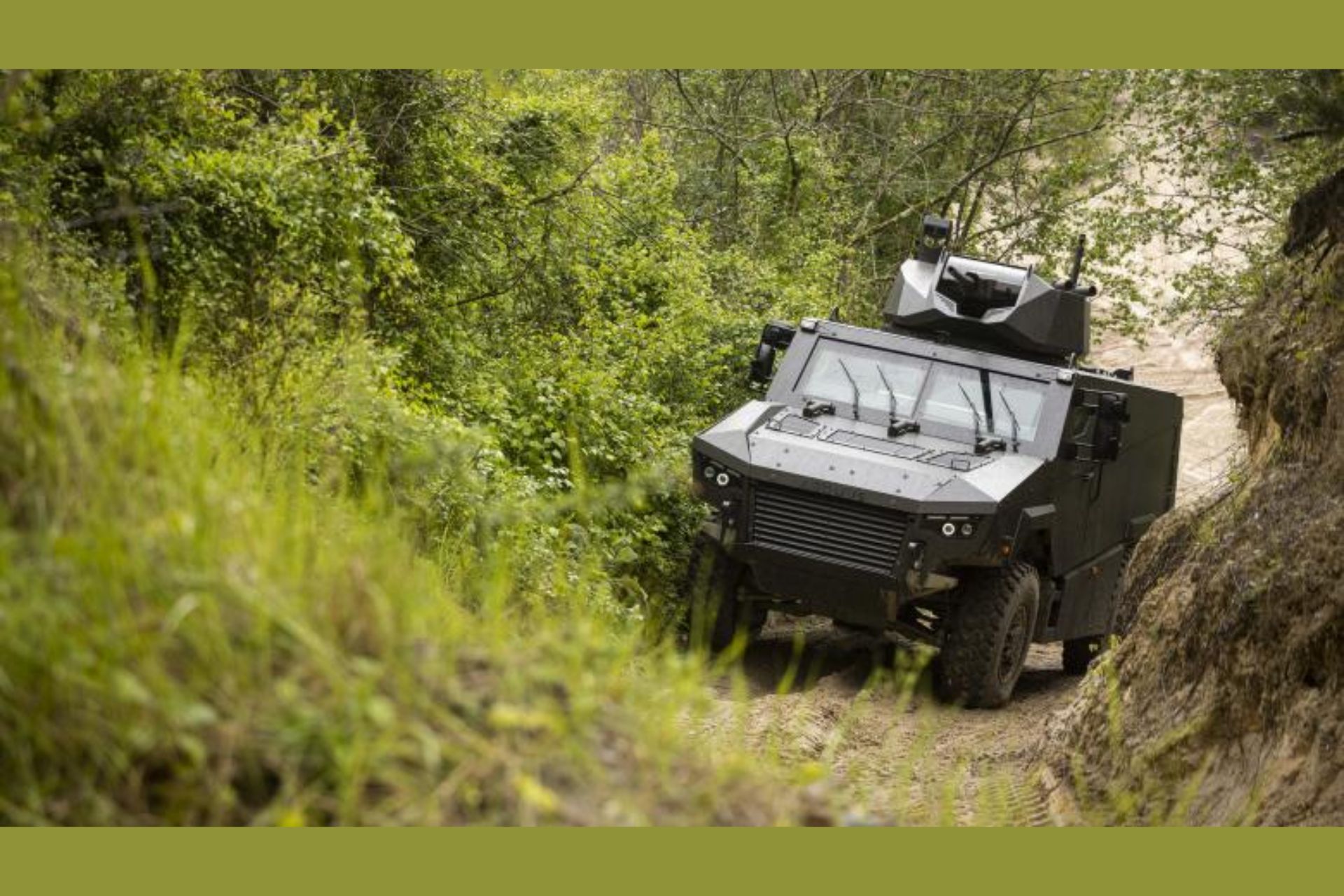
In response to high intensity scenarios, Arquus unveils the prototype of its new 4x4 multi role armored vehicle, combining significant payload capacity, high protection, and medium caliber armament while maintaining excellent mobility: MAV Rx is a true frontline vehicle.
Follow Army Recognition on Google News at this link
MAV'RX APC on test drive (Picture source: Arquus )
This versatile multi mission platform benefits from Arquus's globally recognized expertise in wheeled mobility. Equipped with independent wheel suspensions and a 400hp engine coup led with a 7 speed automatic transmission, MAV ’Rx delivers impeccable performance and handling across all terrains.
THE HIGHEST STANDARDS OF PROCTION
The interior design allows for seamless communication among personnel, and thermal comfort is ensured for extreme conditions.
Controls and information are strategically distributed to reduce crew cognitive load. The BATTLENET system provides the vehicle commander with enhanced tactical awareness and quicker response times.
With protection corresponding to LVL 4 of the STANAG 4569 standards for mines and bullets, the MAV'RX is better protected than its counterparts.
WIDE RANGE OF ON-BOARD SYSTEMS
MAV'Rx is capable of integrating medium caliber weapon s. At Eurosatory, it is showcased with JCD's CPWS turret (25mm) and can accommodate other weapon systems like the self defense HORNET RCWS .
Arquus, as an expert in system integration, ensures MAV ’Rx is optimized for high intensity operations.
From its inception, MAV’Rx has been designed with battlefield maintenance and support constraints in mind to ensure maximum operational availability.
MAV'Rx offers the highest levels of comfort and ergonomics. Air conditioning and heating are designed for all climatic environments. Interior space and access have been designed to the highest ergonomic standards.
Arquus Battlenet (C4) ensures the connectivity of the vehicle's various systems, while reducing the crew's cognitive load and saving time in decision-making. All of thoses evolutions, allows to define this MAV'Rx APC as the new reference for future armored vehicle
Read more: World premiere, arquus presents MAV'Rx future of all APC

- Details
- Written by: Jérôme Brahy
- Category: 2024
- Hits: 20945
On June 17, 2024, KNDS unveiled a new variant of the E-MBT main battle tank, the EMBT-ADT 140, at the Eurosatory 2024 exhibition. The EMBT-ADT 140, which features a 140mm AscalonR gun, a coaxial 102mm gun, along with a Remote Controlled Weapon Station (RCWS) with a 30mm gun, is scheduled for a firing-on-the-move demonstration in 2025.
Follow Army Recognition on Google News at this link
The new variant of the E-MBT main battle tank, the EMBT-ADT 140, features a 140mm AscalonR gun, a coaxial 102mm gun, along with a Remote Controlled Weapon Station (RCWS) with a 30mm gun (Picture source: Army Recognition)
The E-MBT (European Main Battle Tank) is a collaborative project between the French company Nexter and the German company Krauss-Maffei Wegmann (KMW), under their joint venture KNDS. Announced in 2018, the E-MBT project aims to develop a next-generation main battle tank to replace the French Leclerc and the German Leopard 2 tanks. The E-MBT prototype incorporates a hybrid design, using a modified Leopard 2 chassis and a Leclerc turret, combining technologies and expertise from both companies. This project is part of broader European defense initiatives to enhance military interoperability and technological advancement within Europe. The E-MBT is a precursor to the Main Ground Combat System (MGCS), which is expected to be a more advanced platform designed to meet the future requirements of European armed forces.
This new variant of the E-MBT, the EMBT-ADT 140, features the Ascalon Demonstrator Turret (ADT 140), a remotely-operated turret equipped with a 140mm AscalonR gun. The turret's development is part of KNDS' efforts to anticipate the Main Ground Combat System (MGCS), aiming to confirm their firepower capabilities and demonstrate the integration of future technologies such as sensor fusion, integral hemispheric active protection, AI, cyber capabilities, and hybrid energy applications.
The EMBT-ADT 140 main battle tank is scheduled for a firing-on-the-move demonstration in 2025. The tank's technical characteristics are notable, particularly regarding its firepower. The turret includes a 140mm, 48-caliber smoothbore gun with an autoloader that can hold up to 22 rounds. Additionally, it features a coaxial 20x102mm automatic gun with 300 rounds ready to fire, a Remote Controlled Weapon Station (RCWS) ARX30 with a 30mm x 113 gun, which has 150 rounds ready to fire, and a colinear 7.62mm machine gun with 200 rounds ready to fire.
The EMBT-ADT 140 is equipped with various systems to enhance its operational capabilities. The unmanned turret includes a multi-purpose sensor suite with six APS/Anti-UAS radars, four laser warning and missile warning sensors, an acoustic gunshot detector, and a 360-degree local situation awareness system.
Survivability features of the EMBT-ADT 140 include complete armored protection that is regenerative and modular, integral top-attack protection, and an anti-UAV RCWS with an optronic and radar sensor suite. The tank employs a distributed APS concept for full hemispheric protection and includes hemispheric soft-kill coverage with 22 countermeasure launchers.
In terms of mobility, the EMBT-ADT 140 achieves a road speed of approximately 65 km/h, powered by a 1,100 kW (1,500 hp) powerpack. It has a range of over 450 km on road and a ground clearance of 450 mm, facilitating effective maneuverability in various terrains.

- Details
- Written by: Jérôme Brahy
- Category: 2024
- Hits: 23127
On June 17, 2024, at the Eurosatory 2024 exhibition, Rheinmetall introduced the Panther Evo Upgrade, a new hybrid main battle tank. As previously reported by Army Recognition, this model combines the chassis of the Leopard 2A4 with the turret of the KF51 Panther, which includes a 130mm gun. This new tank could serve as an upgrade for existing Leopard 2 fleets or compete with other tanks such as KNDS's Leopard 2 A-RC 3.0.
Follow Army Recognition on Google News at this link
As previously reported by Army Recognition, the new Panther Evo Upgrade combines the chassis of the Leopard 2A4 with the turret of the KF51 Panther, which includes a 130mm gun. (Picture source: Army Recognition)
The Panther Evo Upgrade utilizes the turret from the KF51 Panther, which offers an extensive array of weaponry. Its primary weapon, the 130mm Rheinmetall Future Gun System (FGS), is reported to exceed the performance of standard 120mm NATO guns, offering a 50% longer effective range, implying engagement distances potentially over 4 kilometers. The FGS includes an autoloader capable of a rate of fire of about 11.25 rounds per minute, aided by conveyor-based magazines that hold ten rounds each. During tests, the autoloader fired three rounds in 16 seconds. The FGS is capable of firing various munitions, including Kinetic Energy (KE) rounds such as Armor-Piercing Fin-Stabilized Discarding Sabot (APFSDS) for penetrating armor, Programmable Airburst Ammunition for infantry and light vehicles with programmable fuses, and Practice Projectiles for training. These features enable the Panther Evo Upgrade to engage a wide spectrum of threats on the battlefield.
The tank is also equipped with a 12.7mm coaxial machine gun, intended for use against infantry, light vehicles, and other soft targets. This machine gun is coaxially mounted, meaning it is aligned with the main gun and integrated into the same targeting systems, allowing the crew to switch between the main and secondary armaments efficiently. The 12.7mm machine gun provides additional firepower for scenarios where the main gun's use is either unnecessary or impractical, thus broadening the engagement capabilities of the tank.
Furthermore, the KF51 Panther supports configurations for Remote Controlled Weapon Stations (RCWS), such as the Rheinmetall Natter RCWS armed with a 7.62mm machine gun. These systems are designed for close-in defense and anti-drone operations, adding a critical layer of protection against emerging threats. The Natter RCWS can elevate from -15° to +85°, allowing for a wide range of targeting angles, including aerial threats. This flexibility helps ensure the Panther Evo Upgrade can defend itself against various close-range and airborne threats, enhancing its overall battlefield survivability.
The KF51 Panther is also equipped with HERO 120 loitering munitions, which extend its strike capabilities. These munitions enable the tank to engage targets beyond direct line-of-sight, providing precision strikes at extended ranges. The HERO 120 can be launched from the tank to hit high-value targets, offering indirect fire support and complementing the direct fire capabilities of the main gun. This integration allows the Panther Evo Upgrade to engage a broader range of targets, including those concealed or located at a distance, thereby increasing its operational effectiveness and versatility in different combat scenarios.
Read more: Eurosatory 2024 sees launch of Rheinmetall's new Panther Evo Upgrade hybrid tank

- Details
- Written by: Halna du Fretay
- Category: 2024
- Hits: 9111
Rheinmetall, the renowned German arms manufacturer, showcases the Lynx 120, a medium battle tank at the Eurosatory 2024 defense exhibition in Paris. This armored vehicle is designed to meet the demands of modern armed forces in high-intensity conflict scenarios.
Follow Army Recognition on Google News at this link
the company announced the Lynx 120, a fire support variant of the Lynx KF41 platform featuring a Lynx KF41 hull equipped with a large-calibre crewed turret armed with a derivative of Rheinmetall's 120 mm smoothbore gun family (Picture source: ArmyRecognition)
Based on the KF-41 Lynx platform, which has already been selected by Hungary and is under consideration in Australia and the United States, the Lynx 120 is moderately armored and features a 120 mm smoothbore cannon, akin to that used on the Leopard 2 tank. It is enhanced with an automatic loading system and the latest targeting and battlefield surveillance technology.
Additionally, the tank incorporates Rheinmetall's developed Active Defense System (ADS) to counter threats from rockets and anti-tank missiles, along with modular composite armor that can be adapted to meet operational requirements.
The Lynx 120 is powered by a robust Liebherr turbo-diesel engine that can deliver up to 1,140 horsepower, enabling a potential total weight of 40 tons. This power provides the tank with an exceptional power-to-weight ratio and superior mobility, allowing it to evade enemy fire effectively. The advanced vetronics system also contributes to its operational capabilities on the field.
Its modular nature is a critical feature, facilitating the easy addition of various equipment based on strategic needs, supported by a significant reserve of motor and electrical power. This flexibility, combined with its firepower, positions the Lynx 120 as a prime candidate for prominence in international defense markets.
Rheinmetall continues to solidify its global market presence with the Lynx 120, demonstrating its commitment to innovation in the defense sector. The Lynx platform exemplifies the company's ability to foresee and adapt to the complex evolving dynamics of 21st-century battlefields. With this new model, Rheinmetall asserts itself not only as a leader in defense technology but also as a key player in the proliferation of modular armored vehicles worldwide.
Read more: Rheinmetall Displays the Lynx 120 Medium Battle Tank at Eurosatory 2024
- Details
- Written by: Jérôme Brahy
- Category: 2024
- Hits: 8865
On June 17, 2024, KNDS unveiled its new Leopard 2 A-RC 3.0 Main Battle Tank at the Eurosatory 2024 exhibition. This tank features an unmanned turret, a modular autoloader with a high loading rate, and a comprehensive sensor suite for enhanced situational awareness.
Follow Army Recognition on Google News at this link
The Leopard 2 A-RC 3.0 has an adaptable turret capable of accommodating various main calibers, ranging from 120 to 140 mm, while its modular autoloader system features a rack capable of loading three rounds in ten seconds. (Picture source: Army Recognition)
KNDS has introduced the Leopard 2 A-RC 3.0, an advanced iteration of the Leopard 2 tank, incorporating unmanned turret technology. This enhancement includes a three-man crew configuration consisting of a commander, gunner, and driver, all positioned within the chassis. The unmanned turret design ensures no intrusion into the chassis, facilitated by a gun laying system. This results in an extremely flat turret design, which improves crew protection by reducing the occupied vulnerable area by 30% and arranging the crew lower in a compact compartment.
The Leopard 2 A-RC 3.0 has an adaptable turret capable of accommodating various main calibers. The modular autoloader system, with a high loading rate, features a modular rack capable of loading three rounds in ten seconds. The armament set is configurable for both 3D Line of Sight (LOS) and Non-Line of Sight (NLOS) engagements. The tank is equipped with a sensor suite that enhances tactical and situational awareness, including UxV control, optronics, and multiple detection systems such as laser warners, optics detection, and drone detection.
The Leopard 2 A-RC 3.0's digital mission-control system and 4D-fire-control system integrate with its X-by-Wire control mechanism, reflecting modern technology in armored vehicle systems.
Weighing less than 60 tons, depending on the configuration, the tank measures 7.95 meters in length, extending to 11.17 meters with the gun, 3.77 meters in width, and 2.44 meters in height to the turret roof, reaching 2.84 meters with the PERI. Its engine, generating 1,100 kW (1,500 HP), propels the tank to speeds exceeding 65 km/h and provides a range of 460 km on the road. The ground clearance of 500 mm ensures the tank can navigate various terrains effectively.
The Leopard 2 A-RC 3.0 is armed with a NATO 120 mm L55 or L44 smoothbore gun, which can be interchanged with 130 mm or 140 mm guns. Its secondary armament includes a multi-purpose smoke and grenade launcher. Additionally, it features a Remote Controlled Weapon Station (RCWS) with a NATO 30x113 mm gun capable of countering UAV threats and a multi-purpose LOS/NLOS guided missile system. The tank's protection is further reinforced with polyvalent protection layers, including an Active Protection System (APS), providing defense against diverse threats.

- Details
- Written by: Triffaux
- Category: 2024
- Hits: 24610
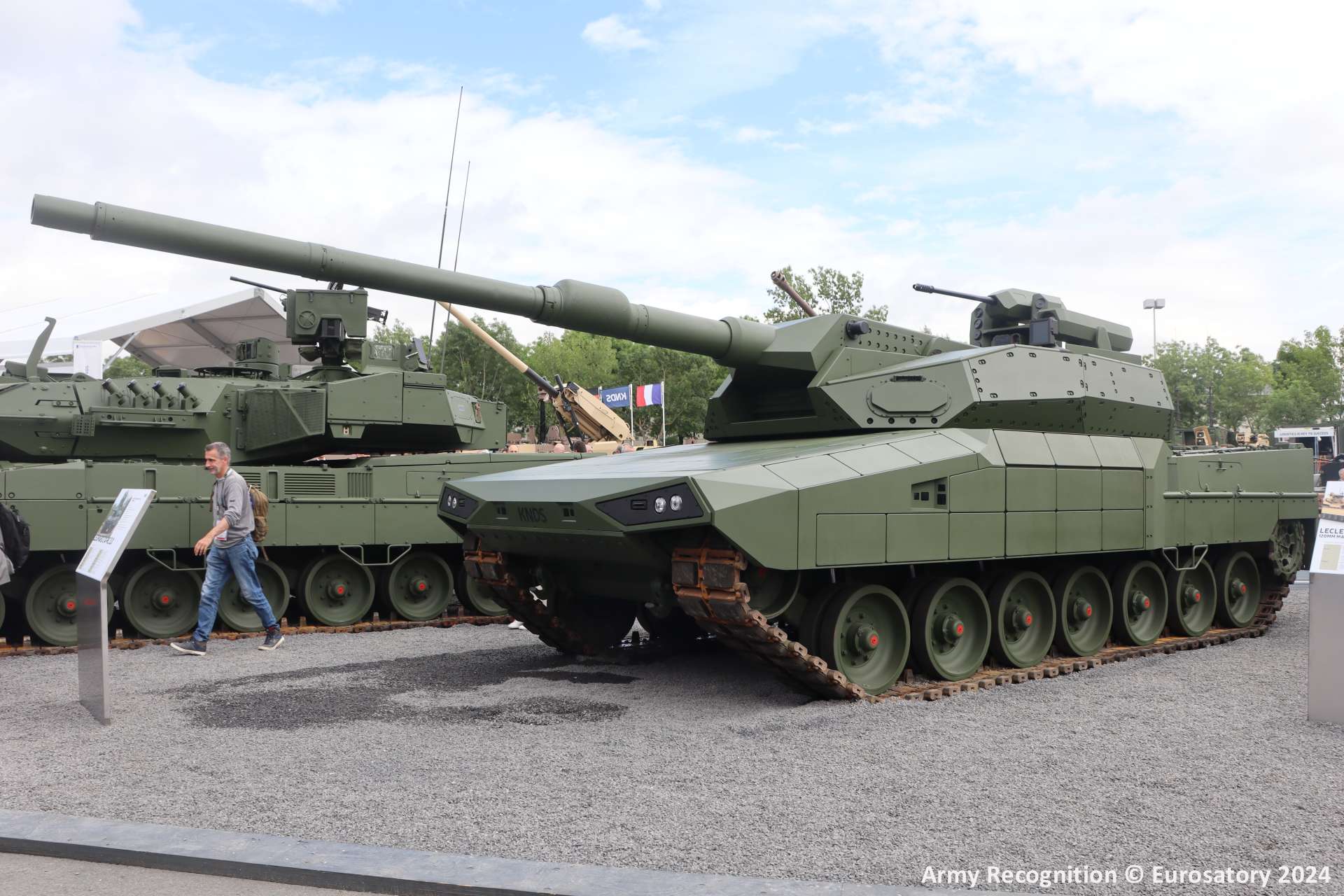
KNDS is presenting at Eurosatory 2024, the global defense and security exhibition, its latest advancement in armored warfare technology, the Leclerc Evolution Main Battle Tank (MBT). This high-tech tank is currently under development and represents a new milestone in the capabilities of modern armored vehicles.
Follow Army Recognition on Google News at this link
KNDS Leclerc Evolution fitted with 120mm AscalonR Cannon (Picture source: Army Recognition)
The Leclerc Evolution is designed to enhance the effectiveness and survivability of ground forces with a manned turret equipped with a 120mm AscalonR cannon, which can be upgraded to a 140mm variant. This main armament is supported by an innovative autoloader capable of holding 22 rounds, streamlining operations, and reducing the crew's workload.
A key feature of the Leclerc Evolution is the integration of the ARX 30 Remote Controlled Weapon Station, providing a secondary armament specifically designed for anti-Unmanned Aerial Vehicle (UAV) warfare. Additionally, the tank includes a loitering ammunition launcher capable of deploying three intermediate-range munitions, significantly extending its range on the battlefield.
The tank is operated by a four-person crew, with a deputy commander stationed in the chassis to manage an extensive array of sensors and effectors. This setup aims to reduce the commander’s workload and enhance the tank’s situational awareness capabilities.
From a survivability standpoint, the Leclerc Evolution offers comprehensive protection with its modular armor system, including the Galix close protection system that dispenses smoke and anti-penetration rounds. An Active Protection System (APS) enhances its defenses against incoming threats, while a CBRN (Chemical, Biological, Radiological, and Nuclear) filtration system ensures the crew's safety in hostile environments.
The Leclerc Evolution also excels in mobility. Powered by a 1,100 kW (1,500 hp) engine, it can reach speeds of up to 68 km/h, with a road range of 470 kilometers and a ground clearance of 475 mm, allowing it to navigate challenging terrain effortlessly.
As KNDS continues to develop the Leclerc Evolution, the defense community at Eurosatory 2024 has shown keen interest in the MBT's potential to redefine battlefield dynamics with its versatile firepower and enhanced protective measures.
- Details
- Written by: Halna du Fretay
- Category: 2024
- Hits: 5360
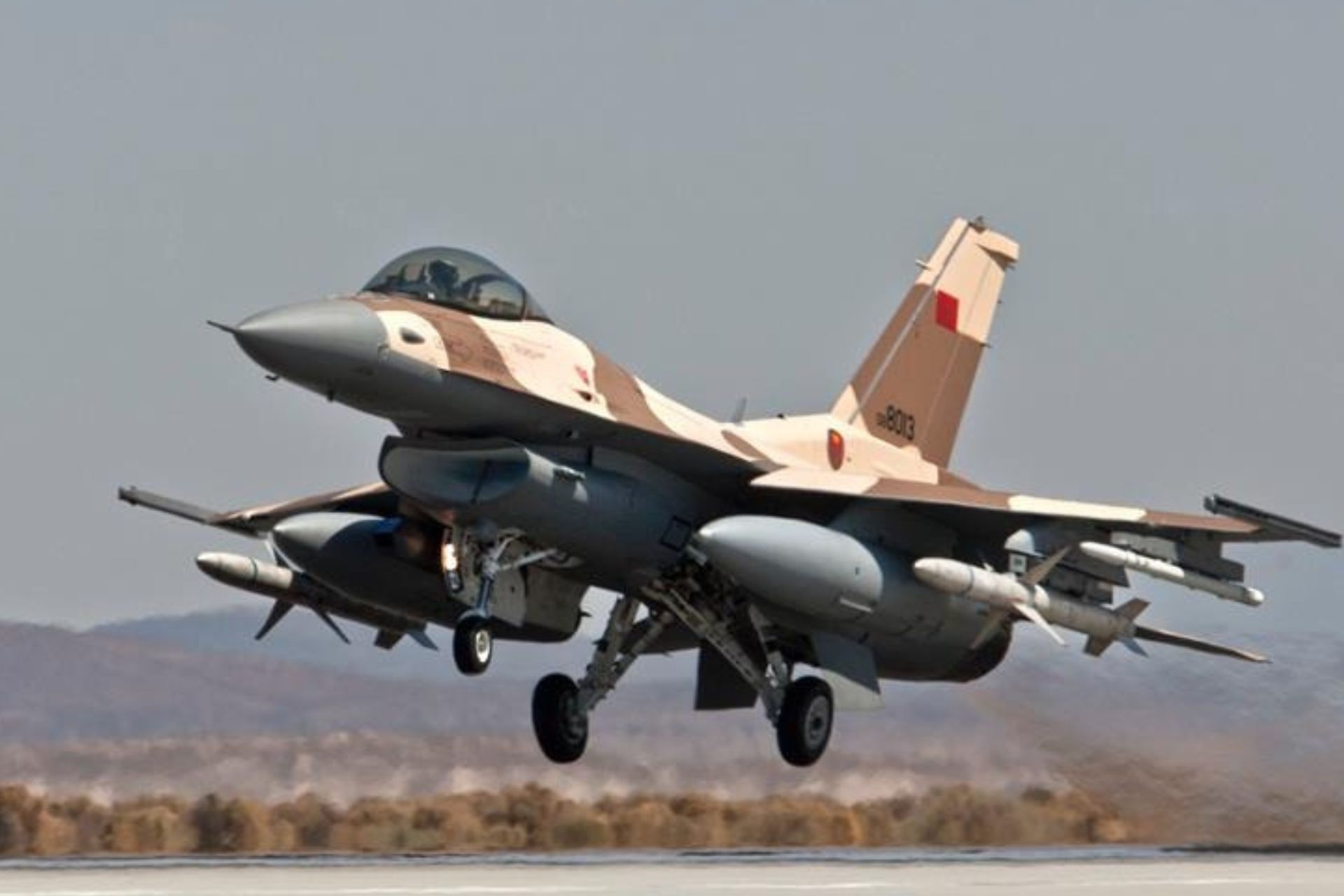
The Kingdom of Morocco has recently announced the acquisition of ten Harpoon Block II anti-ship missiles and SLAM-ER cruise missiles from Boeing. This move is part of an ongoing effort to enhance the capabilities of the Royal Moroccan Air Force by integrating these missiles into the F-16 Viper combat aircraft. A total of 24 advanced-version jets are expected to be delivered by 2026.
Follow Army Recognition on Google News at this link
Additionally, Morocco will enhance the offensive capabilities of its F-16s with BRU-57/A weapon release units, doubling the number of smart bombs each aircraft can carry (Picture source: Morocco Air Forces)
The A/U/RGM-84 Harpoon is an all-weather, over-the-horizon missile system used for both aerial and naval launches. Its warhead is designed to ensure high efficiency and survival through active radar guidance, a low-altitude cruise trajectory, and sea-skimming or pop-up maneuvers. The Harpoon Block II, carrying a 525 kg explosive payload with a range of 280 km, can precisely target hostile maritime assets. This acquisition was announced in April 2020 as part of a $62 million agreement.
The sale of these missiles was approved by the U.S. State Department on April 14, 2020, following an announcement by the Defense Security Cooperation Agency (DSCA). The transaction also includes containers, spare parts, support and test equipment, publications, technical documentation, personnel training, training materials, engineering services, logistical support, and other related logistical elements.
It should be noted that the Harpoon missiles destined for Morocco are specifically adapted to limit their coastal targeting capabilities, in line with a political decision not to engage land targets. These missiles are equipped to effectively detect enemy ships even in near-shore or congested waters, thanks to enhanced GPS navigation. This feature is part of the ongoing upgrades to the Harpoon system, as confirmed by Jim O’Neill, Boeing's General Manager for Navy Missile Systems.
Additionally, Morocco will enhance the offensive capabilities of its F-16s with BRU-57/A weapon release units, doubling the number of smart bombs each aircraft can carry. In December 2022, L3Harris Technologies secured a $29 million contract to supply these systems to air forces in the Middle East and North Africa.
This expansion of military capabilities occurs within a broader context of enhancing the Moroccan armed forces and increasing control over its maritime domain. It reflects the recent approval of legislative projects by the Ministerial Council to strengthen the defense sector, under the leadership of King Mohammed VI. This series of developments marks a step toward Morocco's autonomy as a defense industrialist, affirming its commitment to bolster its defensive and strategic posture in the region.
Read more: Royal Moroccan Air Force to Integrate Harpoon Boeing Missiles into F-16 Fleet

- Details
- Written by: Triffaux
- Category: 2024
- Hits: 8825
At Eurosatory 2024, the prestigious international defense exhibition in Paris, German defense technology Rheinmetall is presenting the latest development in their Lynx family of next-generation combat vehicles. This new offering, the Lynx equipped with the HITFACT MkII turret, represents an important step forward in the mechanized fire support capabilities of the Lynx KF41 Infantry Fighting Vehicle (IFV).
Follow Army Recognition on Google News at this link
Rheinmetall Lynx KF41 IFV fitted with Leonardo HITCAFT MKII Turret (Picture source: Army Recognition)
The HITFACT MkII turret, designed by Leonardo, is a high-tech turret system currently in production and NATO-qualified. With over 500 units already in service worldwide, the MkII variant is renowned for its advanced features. It incorporates a fully digital optronic sensor suite and electric turret drives, which enhance both the safety and performance of the turret. The upgraded survivability features ensure robust protection in various combat scenarios.
The flexible design of the HITFACT MkII turret allows it to accommodate either a 105/52 mm rifled or a 120/45 mm smoothbore gun with low recoil force, enabling the use of any NATO standard ammunition as well as advanced kinetic energy and multipurpose rounds. The turret's integration capabilities extend to command and control systems, advanced navigation, and net-centric communications, significantly boosting situational awareness for its operators.
This turret is designed for a crew of two or three and offers optional features such as an automatic loader for 120 mm rounds. Its armor provides top-tier protection, and its fully digitalized architecture is tailored to meet emerging C4ISTAR (command, control, communications, computers, intelligence, surveillance, targeting acquisition, and reconnaissance) requirements. Secondary armament options include a 7.62 mm coaxial machine gun or a 12.7 mm machine gun, which can be pintle-mounted or remotely operated using the HITROLE Remote Weapon Station (RWS).
The integration of the HITFACT MkII turret on the Lynx KF41 chassis enhances the vehicle’s overall effectiveness and versatility. The Lynx KF41 itself is renowned for its modular multi-layered protection system, which shields against threats such as improvised explosive devices (IEDs), mines, both direct and indirect fire, cluster munitions, and anti-tank-guided weapons. This ensures the Lynx KF41 provides comprehensive protection and high mobility, enabling it to conduct complex military operations across a wide range of threat environments.
The combination of the Lynx KF41's modular design and the advanced capabilities of the HITFACT MkII turret positions this platform as a formidable contender in modern warfare, adaptable to meet both current threats and future challenges. This integration underscores Rheinmetall’s commitment to advancing military technology and providing innovative solutions to armed forces around the world.
As global military dynamics evolve, the Lynx equipped with the HITFACT MkII turret is set to play a pivotal role in shaping the future of armored warfare.
- Details
- Written by: Halna du Fretay
- Category: 2024
- Hits: 3456
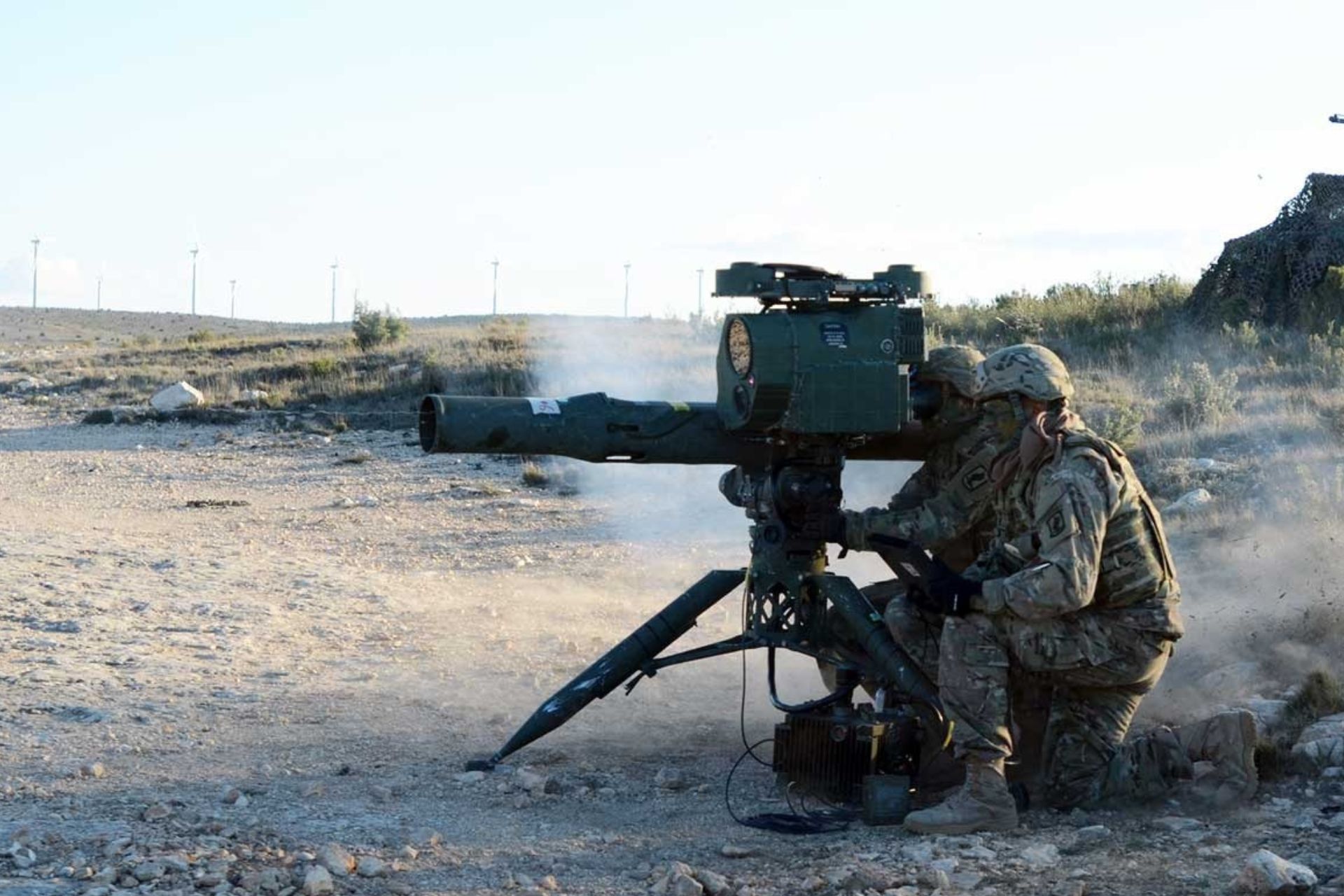
On June 17, 2024, and after a series of significant delays, Taiwan is set to receive a complete order of 1,700 TOW 2B anti-tank missiles and 100 launchers from the United States by the end of this year, according to the nation's defense minister. This delivery, initially scheduled to commence in 2022, has been postponed due to the weapons failing U.S. Army testing requirements, but they have now passed these tests, ensuring their arrival within the year.
Follow Army Recognition on Google News at this link
The TOW Improved Target Acquisition System (ITAS) enhances target recognition and engagement distances, supports all current TOW missile variants, and is adaptable for future missile upgrades. (Picture source: Raytheon)
During a legislative session on Monday, Wellington Koo, the defense minister, addressed inquiries from Wang Ting-yu, a lawmaker from the ruling Democratic Progressive Party, regarding the timing of the weapon's arrival. The Taiwanese government had originally earmarked NT$11.81 billion (approximately US$364 million) for this purchase over the fiscal years 2018-2025, highlighting the strategic importance of this acquisition.
The TOW 2B is an advanced anti-tank missile system developed by Raytheon, now part of Raytheon Technologies, designed to enhance ground forces' capability to defeat armored threats. The missile entered service in the 1990s, serving as an upgrade to earlier TOW missile variants with significant improvements in targeting and lethality. Unlike its predecessors, the TOW 2B is equipped with a dual-warhead system designed to attack armored vehicles from the top, exploiting their thinner armor, making it particularly effective against modern tanks.
The missile system has been widely adopted and remains in service in numerous armed forces worldwide. While the exact number of TOW 2B missiles in service globally is classified, the system has seen extensive use in various conflicts, underscoring its reliability and effectiveness. Its guidance system allows for operation in both day and night conditions, and it can be launched from a variety of platforms, including vehicles, helicopters, and ground launchers, providing flexibility in deployment and use in diverse combat scenarios.
The TOW 2B missiles, designed to target the most vulnerable parts of armored vehicles, are part of Taiwan's broader defensive strategy to deter potential aggression. These missiles are one of three major arms packages that Taiwan has secured from the U.S., which also include 66 F-16Vs and AGM-154 air-to-ground missile systems, both noted for their precision capabilities in air-to-surface operations. While the delivery of these systems has also faced delays, the U.S. has committed to sending two F-16V prototypes to Taiwan for further testing later this year, with all 66 jets expected by the end of 2026.
The procurement of these advanced defense systems comes at a critical time for Taiwan, as emphasized by Michael McCaul, chair of the U.S. House Foreign Affairs Committee, during his visit in May. McCaul highlighted that approximately US$20 billion worth of arms are pending delivery to Taiwan, with delays primarily attributed to industry-related issues. As Taiwan strengthens its military capabilities, these acquisitions are seen as pivotal in ensuring the island's security and readiness in the face of potential threats.
Read more: Taiwan Expected to Receive Full Delivery of Anti-Tank Missiles from U.S. by Year-End
- Details
- Written by: Tkuhn
- Category: 2024
- Hits: 2966
Eurosatory 2024 opened its doors with a dynamic press day, offering an immersive experience that highlighted the prowess of French and international defense and security manufacturers. The event featured a series of live demonstrations, each showcasing the latest advancements in military and security technology.
Follow Army Recognition on Google News at this link
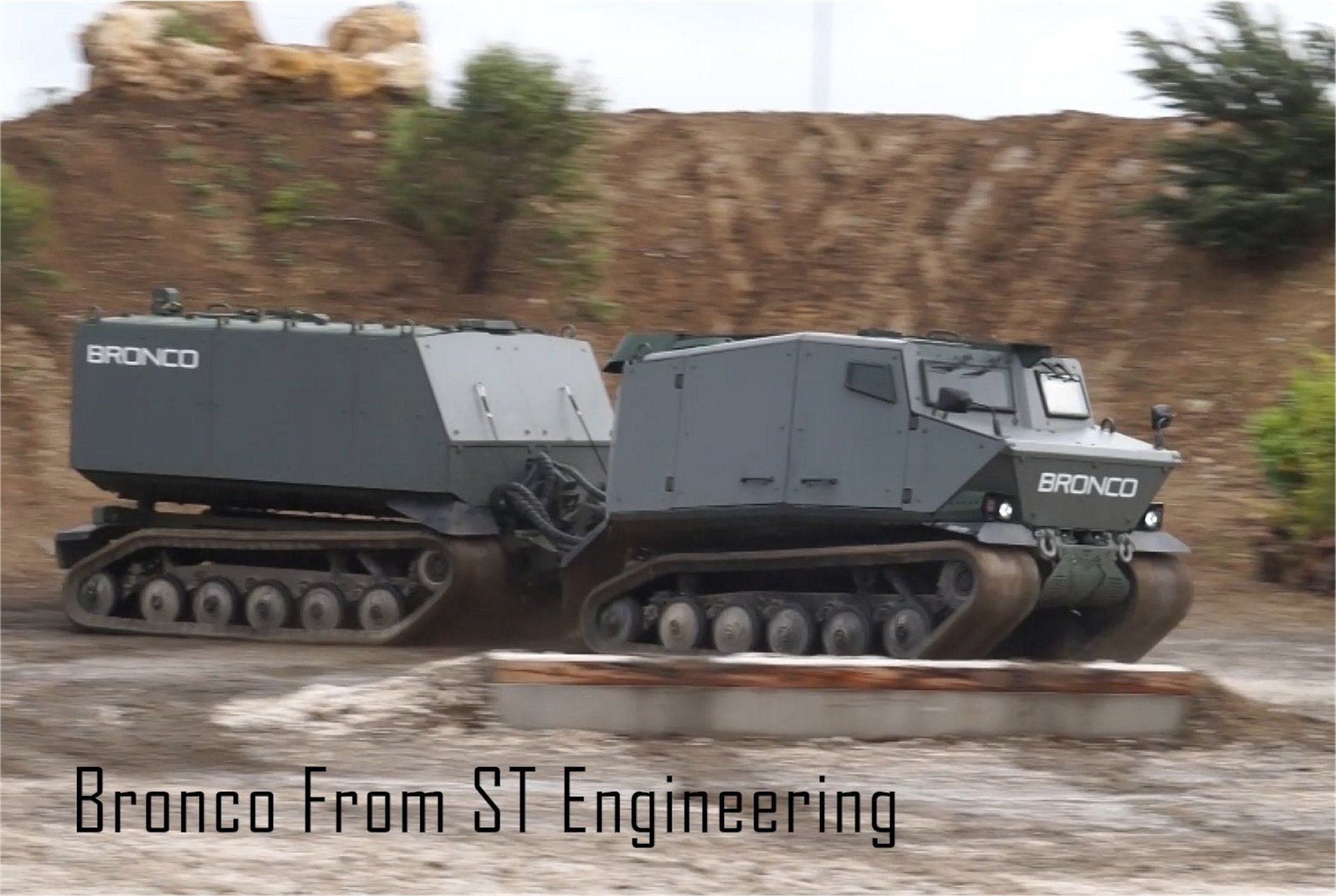
Demonstration of the ST Engineering's Bronco All Terrain Tracked Carrier. (Picture source: Army Recognition)
UNAC – RIDER: Vehicles and Trailers
UNAC presented its RIDER series, a versatile line of vehicles and trailers designed to meet the demanding needs of modern military operations. The RIDER vehicles demonstrated their adaptability and robustness, essential qualities for any mission-critical equipment.
TECHNAMM – FENNEC and MASSTECH T6
TECHNAMM introduced the FENNEC, a light vehicle tailored for rapid deployment and high maneuverability in diverse terrains. Alongside it, the MASSTECH T6, a rustic transport vehicle, displayed its capability to endure harsh environments while providing reliable transport solutions.
ARQUUS – FORTESS MK2
ARQUUS unveiled the FORTESS MK2, an armored transport vehicle designed to offer enhanced protection and mobility for troops. Its advanced armor and state-of-the-art technology make it a formidable asset in any conflict zone.
ST ENGINEERING – BRONCO 3
The BRONCO 3 tracked vehicle from ST Engineering was a highlight, showcasing its superior versatility and off-road performance. The BRONCO 3 is built to traverse the most challenging terrains, making it an invaluable tool for both military and humanitarian missions.
KNDS – ESSENTIAL DECON
KNDS demonstrated the ESSENTIAL DECON, a decontamination truck designed for rapid and effective response to chemical, biological, radiological, and nuclear (CBRN) threats. This vehicle is crucial for maintaining safety and operational integrity in contaminated environments.
ARMORIC HOLDING – CENTURION D14 and D14 P4x4 FIRE AND RESCUE
ARMORIC HOLDING showcased the CENTURION D14, a robust law enforcement vehicle, and the D14 P4x4 FIRE AND RESCUE, a specialized fire truck. Both vehicles highlighted the company's commitment to enhancing public safety and emergency response capabilities.
DOCULUS – ARTUS
The ARTUS robotic platform from DOCULUS attracted significant attention for its innovative approach to automation in defense operations. This versatile platform can be deployed for a variety of tasks, from reconnaissance to logistics support, showcasing the potential of robotics in modern military strategy.
Read more: Eurosatory 2024: Showcasing Excellence of French and International Defence Manufacturers
- Patriot Missile Aids Ukraine in Downing Russian A-50 AWACS Confirms US Colonel at Fires Symposium
- EUROSATORY French Army presents newly in use Anti-Drone VAB
- Eurosatory 2024: Fennec 2 from Technamm Reinvents Light Tactical Vehicle
- SIDES Launches D14 Fire&Rescue Truck Designed for Rural and Suburban Emergencies at Eurosatory 2024