

- Details
- Written by: Administrator
- Category: 2024
- Hits: 2579










According to information published by France 24 on June 19, 2024, Ukrainian pilots are currently undergoing training at an air base in southern France. This development represents a crucial advancement in enhancing Ukraine's air capabilities amid ongoing regional tensions.
Follow Army Recognition on Google News at this link
Ukrainian pilots undergo training on Dassault/Dornier Alpha Jet aircraft at a southern French air base, enhancing their skills in group flights, air-to-ground weapons deployment, air combat tactics, and missile interception as part of a six-month intensive program. (Picture source: X Account Ukraine Front)
The team of Ukrainian Air Force consisting of ten young pilots aged between 21 and 23, is undergoing an accelerated training program. Typically, French cadets require 18 months to complete their training, but the Ukrainian pilots will finish in just six months. This expedited schedule is designed to integrate these pilots into advanced training programs across Europe quickly.
The training regimen emphasizes several critical areas: group flights, air-to-ground weapon deployment, air combat tactics, and missile interception. These skills are vital for modern aerial warfare and will significantly enhance the operational readiness of the Ukrainian Air Force.
The Ukrainian cadets are currently training on Dassault/Dornier Alpha Jet aircraft, known for their versatility and effectiveness in preparing pilots for frontline service. Upon completing this phase, they will advance to training on the F-16 fighter jets in another European country, further honing their combat and operational skills.
This initiative is part of broader international efforts to support Ukraine by enhancing its defense capabilities through rigorous training and advanced equipment. The cooperation between France and Ukraine exemplifies the strategic partnerships being formed in response to the evolving security landscape in Eastern Europe.
In a significant show of support for Ukraine amidst its ongoing conflict with Russia, several European countries have pledged to donate F-16 fighter jets to enhance Ukraine's defense capabilities. The Netherlands has committed up to 42 F-16s, providing a substantial boost with these technologically advanced aircraft. Denmark has promised 19 F-16 jets, with the first deliveries expected in the summer of 2024. Although older, Norway is contributing 22 F-16s, which have been upgraded with modern electronics and sensors to ensure their effectiveness in combat operations.
Belgium has also joined this collective effort, although specific details about the number of jets or the timeline for their delivery have not been disclosed. These contributions are part of a broader international initiative to support Ukraine, which includes not only the provision of aircraft but also extensive training for Ukrainian pilots and the supply of necessary armaments and support equipment. This coordinated effort underscores the solidarity within the European community and their shared commitment to enhancing Ukraine's military strength in the face of ongoing threats.
The F-16 fighter jets offer significant advantages over the older Soviet-era aircraft currently in service with the Ukrainian Air Force, such as the MiG-29 and Su-27. These advantages include advanced avionics and radar systems that provide superior targeting and situational awareness, robust electronic warfare capabilities that enhance survivability by jamming enemy radar and communications, and a more versatile weapons platform capable of carrying a wide range of air-to-air and air-to-ground munitions. Collectively, these features enable the F-16s to perform more effectively in modern combat scenarios, offering greater precision, better defensive measures, and overall improved combat effectiveness compared to the existing Ukrainian aircraft.
Read more: Ukrainian Pilots Undergo Intensive Training in Southern France
- Details
- Written by: Vandenbosch
- Category: 2024
- Hits: 3732
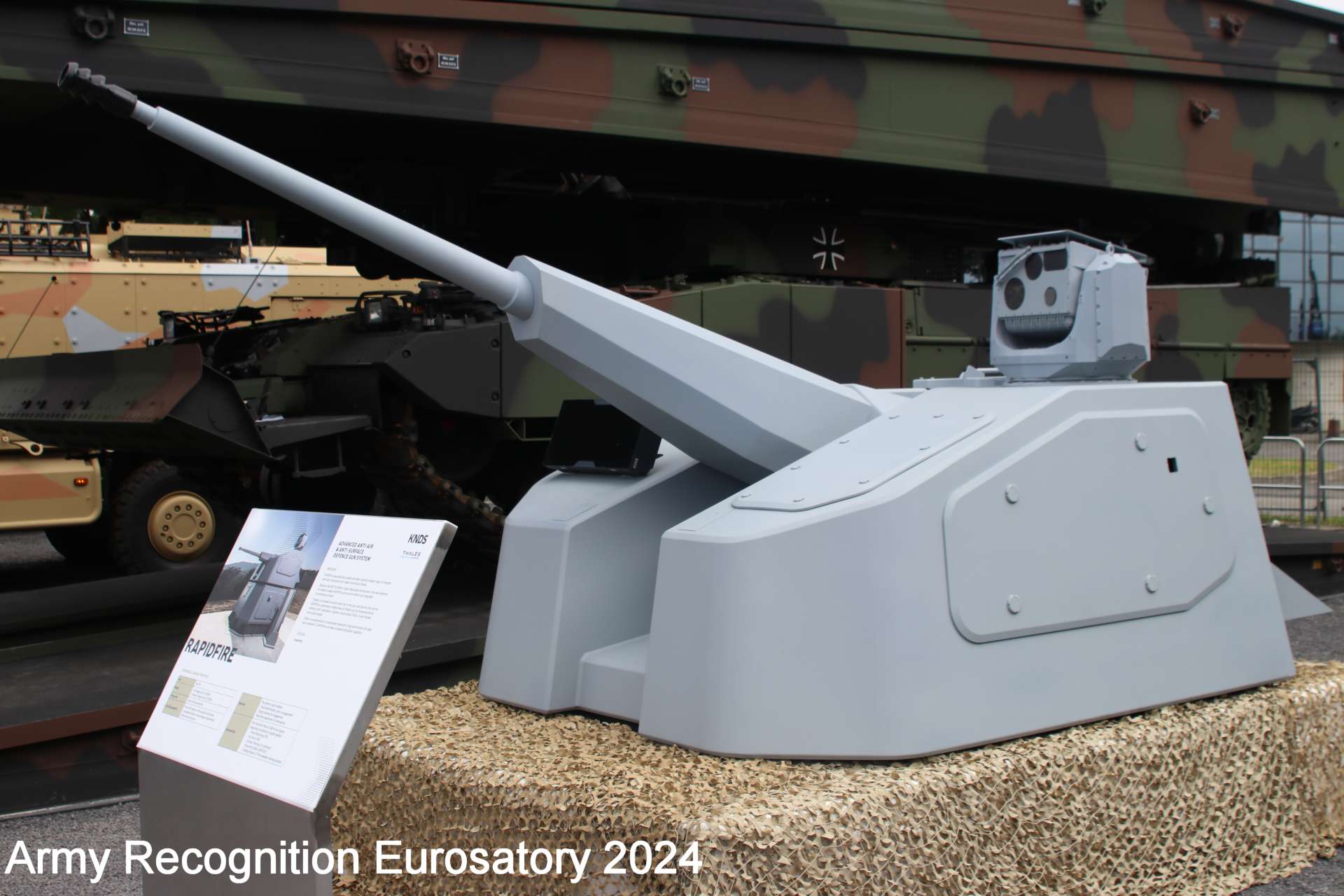
At the Eurosatory 2024 exhibition, KNDS unveiled the advanced RAPIDFire defense system, developed in partnership with Thales. Designed to address modern and future threats, this system offers a light, compact, multi-role solution adaptable for naval and land applications.
Follow Army Recognition on Google News at this link
The RAPIDFire defense system has already been acquired by several countries, including France, the United Kingdom, and Belgium. (Picture source: Army Recognition)
RAPIDFire is based on the 40mm Cased Telescoped Ammunition (40CTA). This system can operate in both integrated and autonomous modes, providing maximum flexibility for armed forces. With its powerful and precise "all-in-one" gun coupled with optronic fire control, RAPIDFire is optimized to counter various aerial threats such as drones (UAVs), helicopters, ground attack aircraft, cruise missiles, and surface targets.
One of the standout features of RAPIDFire is its anticipation capability, achieved through its autonomous or coordinated operating modes. When paired with a high-performance 3D radar and a versatile command and control (C2) system, RAPIDFire can detect, identify, and engage threats with precision.
The system is currently in service, demonstrating its maturity and effectiveness. Among its technical characteristics, the 40mm (40CTA) gun boasts a firing range of up to 4,000 meters for aerial targets and up to 2,500 meters for surface targets. With a firing rate of up to 200 rounds per minute, the system holds 70 or 140 ready-to-fire rounds in the turret, with additional rounds stored in the turret structure's compartment.
The integrated optronics plays a crucial role in RAPIDFire's ability to visually identify targets before engagement, track targets during an engagement, and assess interceptions in real time. The types of ammunition used include anti-aircraft airburst (A3B) shells, point detonating (PD) shells, airburst (AB) shells, armor-piercing fin-stabilized discarding sabot (APFSDS) shells, and training practice (TP) rounds for operator training.
The RAPIDFire defense system, developed by the consortium formed by Thales and Nexter, has already been acquired by several countries, including France, the United Kingdom, and Belgium. The presence of RAPIDFire at Eurosatory by KNDS and Thales might herald new contracts, as the companies have two more days at the Eurosatory exhibition to convince potential clients.
Read more: Eurosatory 2024: KNDS Presents RAPIDFire Defense System
- Details
- Written by: Tkuhn
- Category: 2024
- Hits: 1814
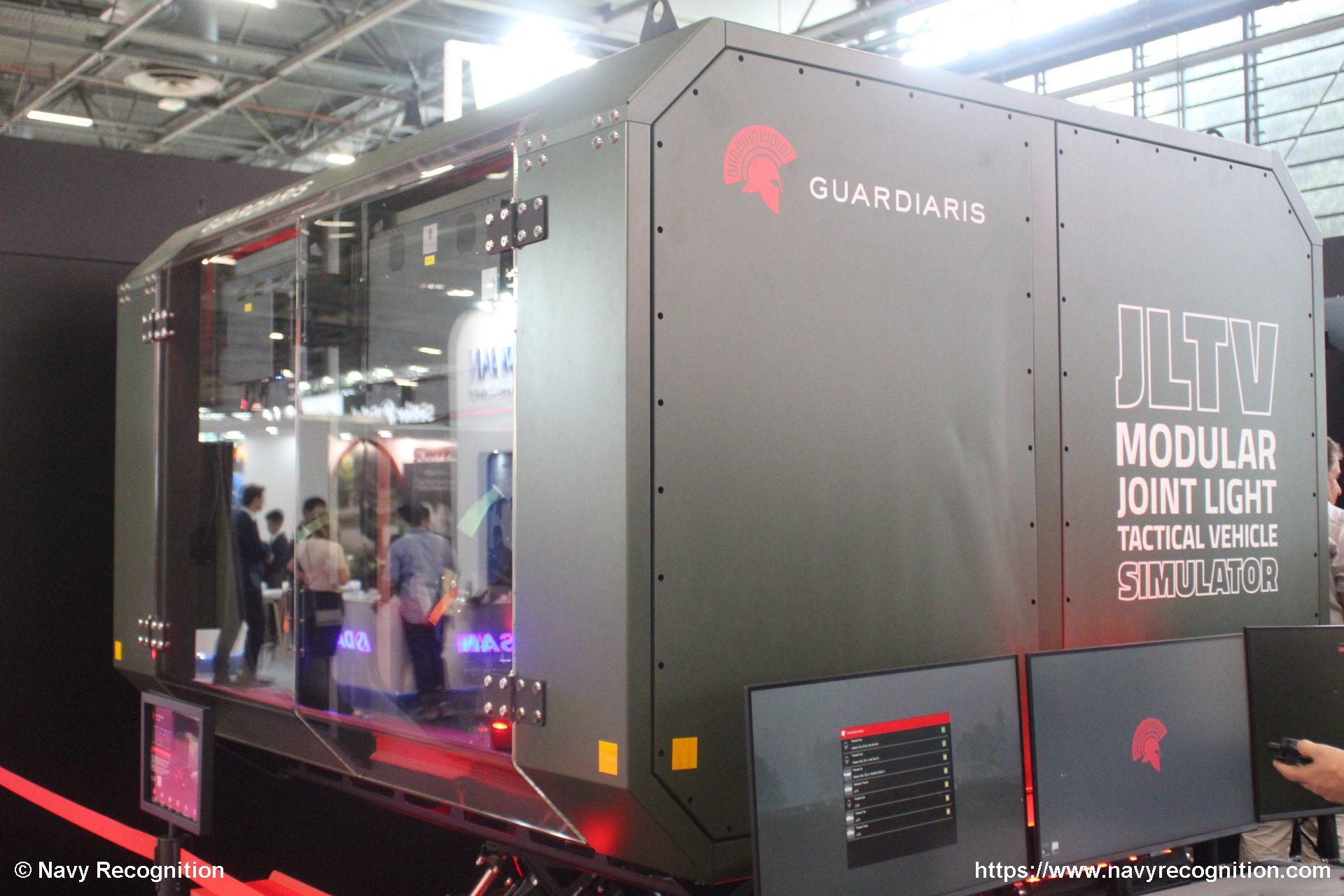
Guardiaris has unveiled its latest innovation, the Modular Joint Light Tactical Vehicle (JLTV) Crew Trainer, at the defense expo.
Follow Army Recognition on Google News at this link
Modular Joint Light Tactical Vehicle at Eurosatory 2024. (Picture source: Army Recognition)
This advanced simulator provides customizable training for four crew members—commander, gunner, driver, and a fourth operator—offering a mechanical, functional, and procedural digital replica of the actual JLTV 4x4 vehicle. Mounted on a six degrees of freedom (DoF) motion platform, the simulator ensures a highly realistic training experience.
In addition to the JLTV Crew Trainer, Guardiaris is showcasing its flagship Small Arms Mobile Trainer (SAMT™). This versatile, laserless mobile system features an LED wall and is capable of integrating small arms, anti-tank weapons, military vehicles, remote weapon stations, and portable air-defense systems.
SAMT™ is designed to provide comprehensive training for individuals and squads, offering a synthetic environment with exceptional freedom of movement and high-quality graphics that deliver instant feedback. This system meets the needs of the new generation of soldiers and leaders seeking immersive and responsive training solutions.
Guardiaris is also located at the Slovenian Pavilion, Booth HALL 6, K95, where they are presenting their latest development projects. These initiatives are co-funded by the Ministry of Defence of the Republic of Slovenia and the Slovenian Armed Forces, underscoring the collaborative efforts to advance military training technologies.
- Details
- Written by: V.Saint
- Category: 2024
- Hits: 3509
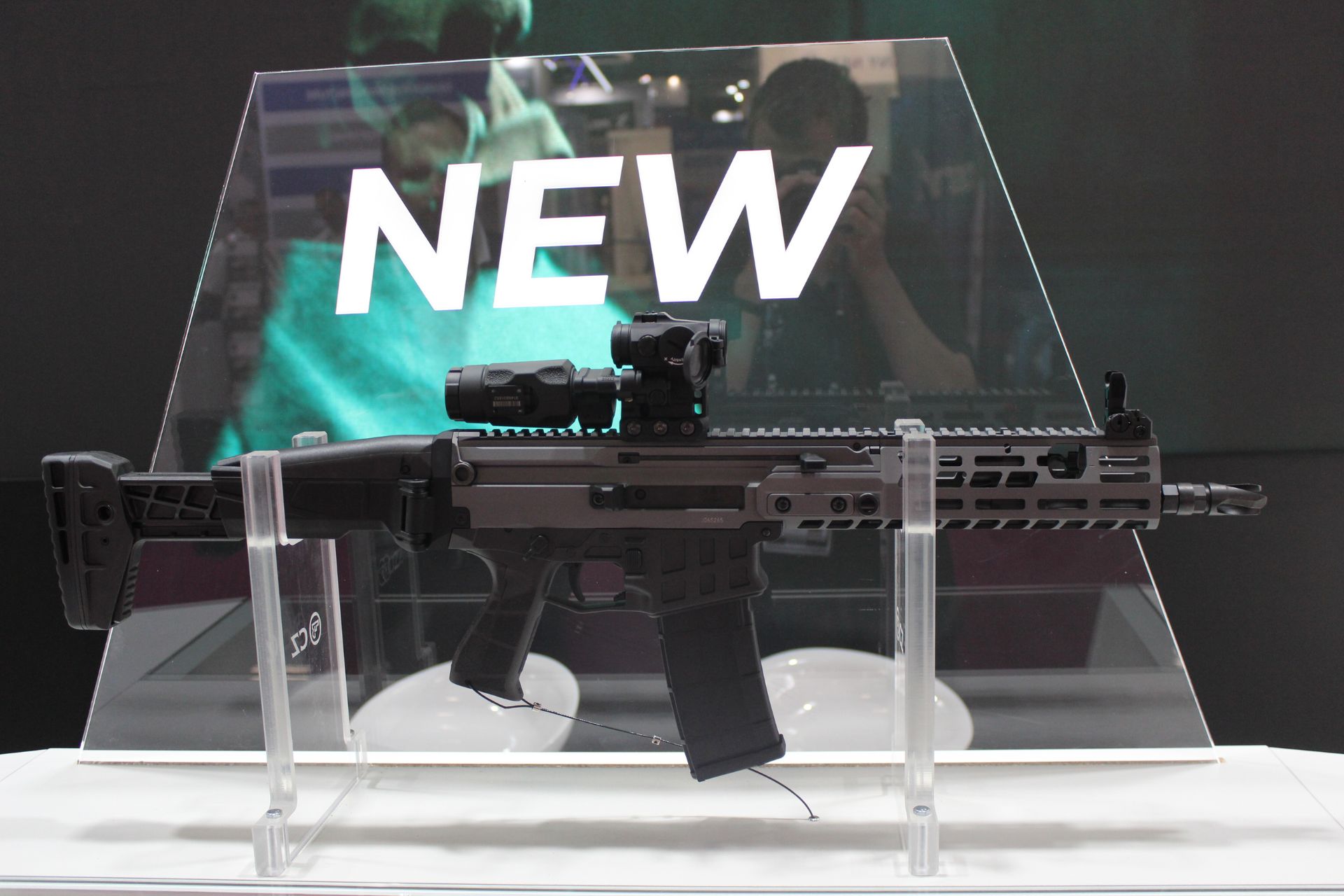
At eurosatory, CZ presents the new bren, the Czech company's legendary assault rifle. Based on feedback from models sent to Ukraine, and fully modular, CZ guarantees a quality assault rifle for this first presentation
Follow Army Recognition on Google News at this link
CZ presents Bren 3 new rifle (Picture source: Army recognition)
The BREN 3 rifle is an evolution of the famous CZ BREN 2. One of the main modifications is the gas extraction system, which can be adapted to the various constraints associated with the use of the weapon, particularly in very cold and muddy conditions.
the internal system has taken several parameters into account, in particular by adding double extractor. This means that when using poor-quality ammunition, or ammunition that has been tampered with, the case can be forcibly extracted without any shooting incidents.
The firing chamber also makes it possible to use 5.56x45 NATO ammunition, as well as 300 AAC black out versions, without having to change magazines or barrels.
On the outside, the stock is inspired by the latest-generation Bren 2 (BR stock), with a multitude of strap attachment points. What's more, the stock is now fixed by an aluminum bracket, which represents a real step forward in terms of reliability.
Still on the outside, the front handguard is fixed to a reinforced part of the frame, enabling the weapon to resist structural changes due to temperature.
The weapon is available with an optional integrated suppresor, and different barrel lengths such as 14", 16" or 7" for PDW use.
In addition, the cocking lever is ambidextrous and fully customizable for and by the user, and is normally supplied folding to limit the risk of accident, but can be supplied in a more conventional way.
The development of this rifle, the third in the series, is geared to the conflicts that are emerging, and focuses on high-intensity conflicts in a variety of conditions.
Read more: World premiere for Czech rifle BREN 3 at Eurosatory

- Details
- Written by: Vandenbosch
- Category: 2024
- Hits: 4829
The Armed Forces of Ukraine will bolster their artillery capabilities with 54 of the latest RCH 155 wheeled self-propelled howitzers, according to the press service of the French-German defense conglomerate KNDS (KMW+Nexter Defense Systems). However, the company has not disclosed further details of the agreement.
Follow Army Recognition on Google News at this link
The RCH 155 is a self-propelled howitzer, designed in Germany. (Picture source: KNDS)
In February, the German government announced that Ukraine would receive 36 RCH 155s by 2027 as part of its military assistance program. The funding source for the additional 18 units remains uncertain, with speculation that the German government might also cover this cost.
The RCH 155 is a sophisticated self-propelled howitzer, designed in Germany, combining firepower and advanced technology. It is armed with a 155mm/L52 cannon, capable of delivering precise long-range strikes. This advanced weapon system is used by Germany, Ukraine, and the United Kingdom, demonstrating its reliability and effectiveness on the battlefield.
The RCH 155 is equipped with an automatic electrical gun laying system, a computerized fire control system, and a radio data transmission connection, ensuring optimal coordination of operations. For the comfort and safety of its two-person crew, it features air conditioning, an NBC (Nuclear, Bacteriological, and Chemical) protection system, and a fire extinguishing system in the engine compartment.
In terms of protection, the vehicle’s chassis complies with STANAG 4569 Level 4 standards, offering robust defense against ballistic threats and artillery shell splinters. The turret is also reinforced to withstand small arms fire and artillery shell fragments.
Weighing 39,000 kg, the RCH 155 is a heavy but fast machine, capable of reaching speeds of 100 km/h and covering a distance of 700 km without refueling. Its impressive dimensions—10.5 meters in length, 2.99 meters in width, and 3.6 meters in height—give it a significant presence on the field, while allowing remarkable operational mobility and flexibility.
Ukraine is the first country to receive these state-of-the-art howitzers. The initial batch of 18 units was ordered at the end of 2022, funded by the German Federal Government at a cost of €216 million. In February 2024, Germany announced that a second batch of 18 howitzers would be delivered as part of ongoing military aid.
As KNDS prepares the 155-mm RCH 155 howitzers for delivery, the exact timeline for their transfer to the Ukrainian army remains unknown.
Read more: Ukraine to Receive 54 RCH 155 Self-Propelled Howitzers from KNDS

- Details
- Written by: Triffaux
- Category: 2024
- Hits: 3970
At the Eurosatory 2024 defense and security exhibition, Netherlands Company Defenture BV presented the Mammoth, a new multirole military vehicle with a maximum weight capacity of 8.8 tons. The vehicle employs the Central Spine Chassis Principle (CSCP) used in Defenture's previously developed GRF platform. The design allows for various configurations to meet specific military needs.
Follow Army Recognition on Google News at this link
Defenture BV Mammoth Next-Gen Air Transportable Vehicle (Picture source: Army Recognition)
The Mammoth 8.8-ton vehicle is based on the proven Groundforce platform, which serves, among other things, as the basis for the lighter Air Transportable Tactical Vehicle (ATTV) vehicle class introduced in the Dutch Special Forces in 2017 under the name Versatile Expeditionary Commando Tactical Off Road (VECTOR).
The Mammoth features a multifuel engine, four-wheel steering, and an advanced suspension system, aimed at providing high mobility across different operational environments. Its driveline supports high payload capabilities, with a gross vehicle weight of 8,800 kg and a payload capacity of up to 3,500 kg, depending on the configuration.
The vehicle can reach a maximum speed of 110 km/h, with a range of 800 km per fuel tank, and operates in temperatures ranging from -40°C to +49°C. It includes features such as an 8-speed automatic gearbox, hydraulic brakes with ABS and ESP, power-assisted steering, and independent suspension.
Defenture highlights the Mammoth’s modular design, which enables customization in bodywork and integration of various subsystems. The vehicle also includes modular ballistic protection and is compatible with air transport by C130, A400, and C17 aircraft.
The Mammoth is designed to offer a versatile platform for military operations, emphasizing adaptability, mobility, and operational efficiency.

- Details
- Written by: Vandenbosch
- Category: 2024
- Hits: 4278
During the 2024 edition of the Eurosatory trade fair, the governments of Denmark, Hungary, and Germany formalized a new step in their cooperation within the European Sky Shield Initiative (ESSI). This commitment was formalized through the signing of a letter of intent at the Rheinmetall stand.
Follow Army Recognition on Google News at this link
The signing ceremony was attended by Carsten Stawitzki, Director of Armaments of the German Federal Ministry of Defence, Laszlo Tömböl, National Armament Director of Hungary, and Claus Lundholm Andersen, Deputy National Armament Director of Denmark. (Picture source: Rheinmetal)
The signing ceremony was attended by Carsten Stawitzki, Director of Armaments of the German Federal Ministry of Defence, Laszlo Tömböl, National Armament Director of Hungary, and Claus Lundholm Andersen, Deputy National Armament Director of Denmark. This partnership aims to enhance short-range air defense by acquiring Rheinmetall's Skyranger 30 system, an innovative and adaptable air defense system.
The Skyranger 30 is designed to offer effective protection against short-range aerial threats. Capable of integrating onto a variety of platforms, including 6×6 or 8×8 wheeled vehicles, as well as tracked vehicles, this defense system is modular to meet the specific requirements of each country.
This system is particularly valued for its flexibility and its ability to be deployed in various operational environments. By integrating the Skyranger 30, Denmark, Hungary, and Germany are strengthening their capacity to protect their airspace against drones, helicopters, and other low-altitude aerial threats.
The ESSI, a crucial project for collective security in Europe, benefits from this new cooperation. The pooling of efforts between these three countries underscores the importance of unity and solidarity within the European Union in the face of contemporary security challenges.
The Eurosatory Trade Fair, recognized as the world's largest international land and air-land defense and security exhibition, provides an ideal setting for such announcements. This 2024 edition once again demonstrates its central role in the development and promotion of technological innovations in the field of defense.
The agreement signed at Eurosatory 2024 between Denmark, Hungary, and Germany for the acquisition of the Skyranger 30 marks a significant step in European military cooperation. By choosing this advanced air defense system, these nations demonstrate their determination to enhance their defense capabilities and to collaborate closely for collective security.

- Details
- Written by: Triffaux
- Category: 2024
- Hits: 5178
BAE Systems is showcasing its TRIDON Mk2 air defense system at the Eurosatory 2024 exhibition, which is taking place from June 13 to 17 in Paris. For this exhibition, the TRIDON Mk2 is mounted on a Scania G460 8X8 truck.
Follow Army Recognition on Google News at this link
BAE Systems TRIDON Mk2 Air Defense System (Picture source: Army Recognition)
The TRIDON Mk2 is equipped with the Bofors 40 Mk4 gun and is designed for rapid deployment. It can engage drones, cruise missiles, aircraft, and armored vehicles thanks to its modular design which facilitates easy integration of new technologies.
This system utilizes an optronic fire control unit and Bofors 3P programmable ammunition, capable of reaching targets up to 12,500 meters with a maximum elevation of 80° and a firing rate of 300 rounds per minute.
Stefan Röstlund, TRIDON Mk2 Program Manager at BAE Systems Bofors, reported that initial tests were conducted using a commercial truck. Subsequent tests confirmed that the system can operate on a 6x6 military truck platform without the need for external stabilizers. These tests were carried out at the Bofors Test Centre in Karlskoga and included engagements against UAVs of various sizes.
The TRIDON Mk2 has been designed to be compatible with various types of vehicle platforms, allowing flexibility in deployment options. Additional tests are planned to confirm compatibility with other platforms and to ensure the system's performance under different conditions.
BAE Systems is currently in discussions with several potential international clients and anticipates a production lead time of 15 months from contract signing. The TRIDON Mk2 aims to meet current and future air defense needs.
Read more: Eurosatory 2024: BAE Systems displays its New Tridon Mk2 Air Defense System
- Details
- Written by: Halna du Fretay
- Category: 2024
- Hits: 3255
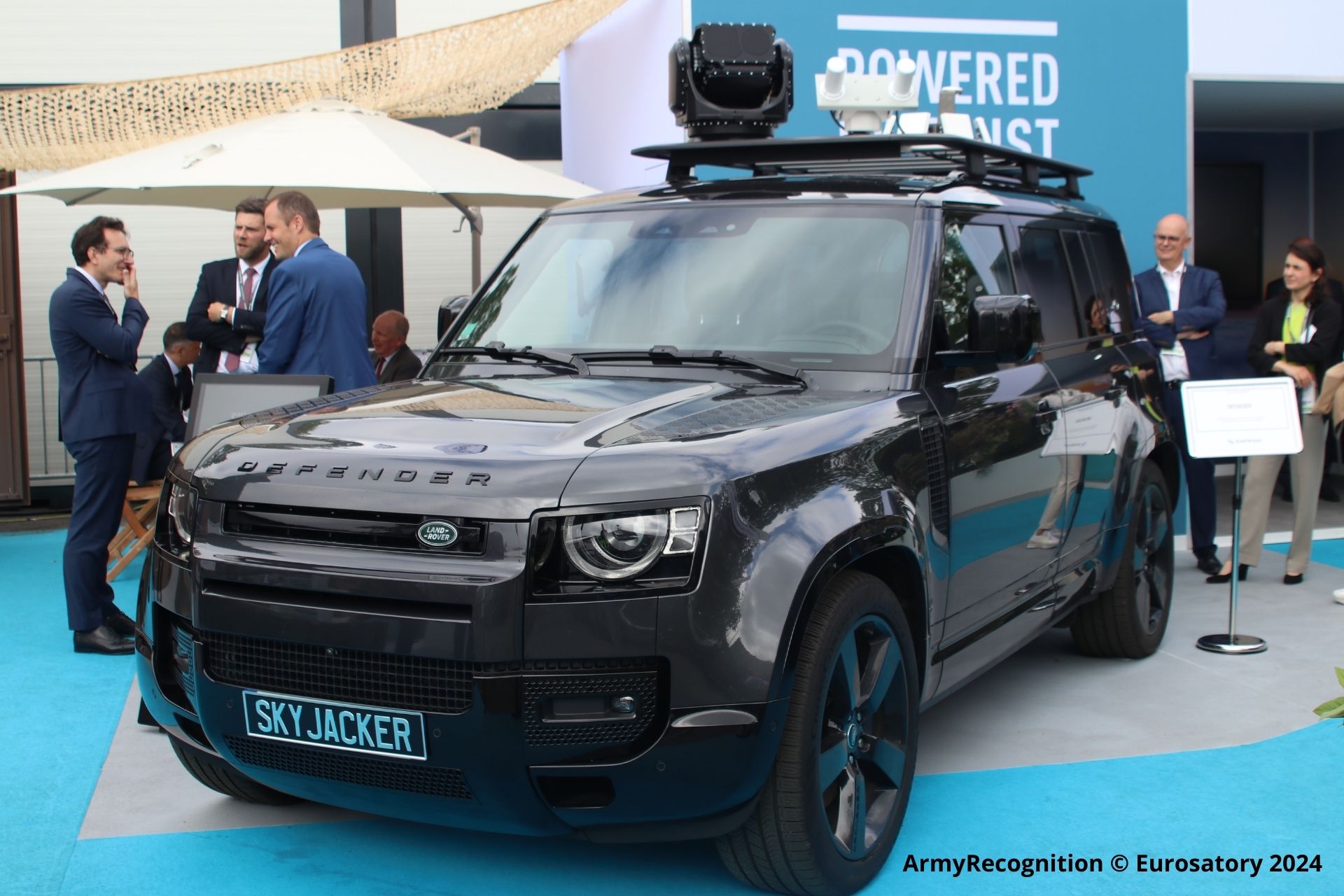
At Eurosatory 2024, Safran Electronics & Defense announced the launch of its Skyjacker counter-drone solution, a significant advancement in addressing the growing threat posed by drones in the battlespace and at sensitive installations. Skyjacker's strength lies in its unique spoofing capability, which alters the trajectory of a drone to neutralize the threat it represents by simulating GNSS signals that ensure guidance toward its target. Coupled with radar detection and optronic identification, Skyjacker can efficiently neutralize both isolated drones and drone swarms in land and naval environments.
Follow Army Recognition on Google News at this link
Skyjacker's modular design incorporates a command and control (C2) unit to manage the entire system, along with one or more spoofing transmitters (Picture source: ArmyRecognition)
Skyjacker replaces hostile drone satellite guidance signals with modified signals designed to deceive the drone about its position, thereby disrupting or interrupting its mission. This system is particularly well-suited for countering saturation attacks, such as swarming drones. It can also neutralize isolated drones remotely piloted by an operator and deliver effects at ranges from 1 to 10 kilometers (over 6 miles).
Skyjacker's modular design incorporates a command and control (C2) unit to manage the entire system, along with one or more spoofing transmitters. It can be coupled with a wide array of sensors, such as optronic sights, radars, and radiofrequency detectors, as well as with lasers, communication jammers, and other effectors. Skyjacker can be deployed as a mobile version or interconnected with existing surveillance and fire control systems on land vehicles or naval vessels.
To deliver an initial mobile version of Skyjacker, Safran Electronics & Defense teamed with Hologarde, which designed the Bassalt anti-drone system for the French Air and Space Force to protect major events like the Paris Olympic Games, the G7 summit, and the Bastille Day parade. The effectiveness of Skyjacker was demonstrated at the Coubertin LAD II exercise organized by the Air Defense and Air Operations Command (CDAOA) of the French Air and Space Force at Air Base 107 in Vélizy-Villacoublay, near Paris, in March 2024.
Alexandre Ziegler, Executive VP of the Defense Global Business Unit of Safran Electronics & Defense, stated that they are now working to deploy Skyjacker as part of the counter-drone protection capability for the Paris 2024 Olympic and Paralympic Games. He also mentioned that trials with the French Navy have proven particularly conclusive, confirming Skyjacker's suitability as a highly effective, cost-controlled protection solution for frontline vessels.
Safran's launch of Skyjacker at Eurosatory 2024 marks an important step forward in counter-drone technology, addressing the critical need for advanced solutions in modern defense and security operations.
Read more: Safran introduces Skyjacker to combat growing drone threats at Eurosatory 2024
- Details
- Written by: Jérôme Brahy
- Category: 2024
- Hits: 7675
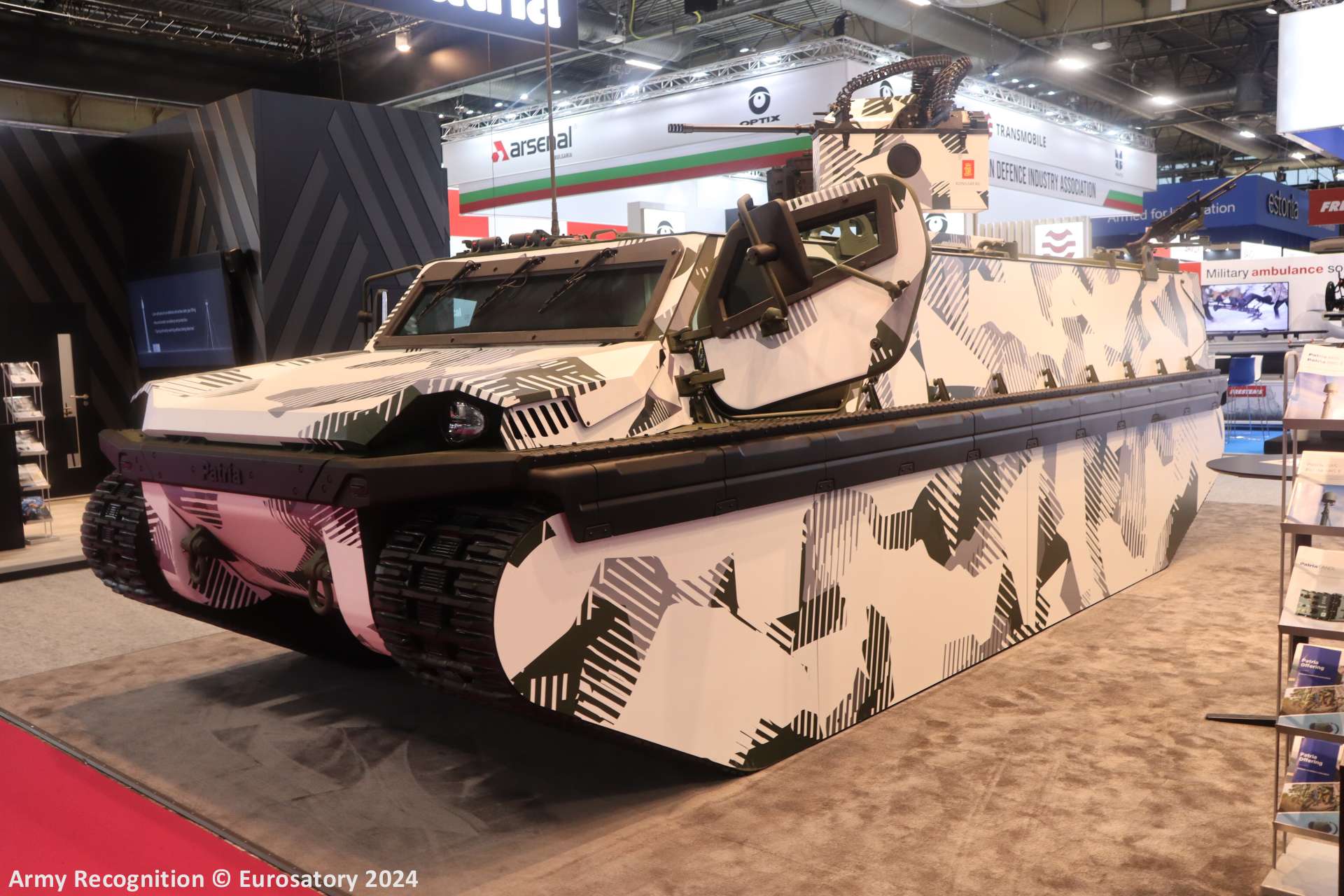
On June 17, 2024, at the Eurosatory 2024 exhibition in Paris, the Finnish company Patria unveiled a new concept for an all-terrain tracked vehicle developed under the European FAMOUS (Future Highly Mobile Augmented Armoured Systems) program. This vehicle is designed for extreme operational conditions and could serve as a modern, cost-effective alternative to traditional articulated and light tracked vehicles, complementing the BvS10 Beowulf.
Follow Army Recognition on Google News at this link
Unlike the BvS10 Beowulf, which uses articulated parts to navigate sharp curves, the FAMOUS ATV vehicle is engineered to push through obstacles. (Picture source: Army Recognition)
The FAMOUS (Future Highly Mobile Augmented Armoured Systems) ATV vehicle, distinct from the Beowulf, features a single, elongated structure measuring approximately nine meters in length. Unlike the BvS10 Beowulf, which uses articulated parts to navigate sharp curves, the FAMOUS ATV vehicle is engineered to push through obstacles, a capability emphasized by Simo Saukko, the vehicle’s research-and-development manager. Patria plans to have a prototype ready for testing by the end of 2024.
Following feedback, the vehicle will be refined over the next few years, and will be followed by a second prototype armed with a Protector RS6 remote weapon station from Kongsberg to conduct live fire trials in Finland. Targeting completion between 2026 and 2027, The FAMOUS program will likely replace aging tracked vehicles such as the MT-LB, M113, M548, and Saurer 4K 4FA.
Juha Lahteenmaki, the director of the vehicle's technology portfolio, explained that the engine's central positioning behind the drivers and the front transmission configuration adjust the center of gravity, making the vehicle behave like a boat. This setup enhances its ability to traverse snow in Arctic conditions. The initial version of the FAMOUS vehicle will serve as a personnel carrier, accommodating ten troops, based on Patria’s 6x6 armored personnel carrier. Future adaptations could include roles as an ambulance, command-and-control center, or mortar carrier.
The FAMOUS ATV concept, weighing 15 tons with a payload capacity of 3.5 tons, can accommodate a crew of two and transport ten troops. Powered by a 250 kW engine, it reaches speeds up to 80 km/h and has an operational range of 600 km. It is designed to function in extreme temperatures ranging from -46°C to +44°C and complies with STANAG K1 and M1 protection standards for light armored personnel carriers (APCs). The vehicle also has amphibious capabilities, allowing water operations at speeds of 4 km/h with a fording depth of two meters.
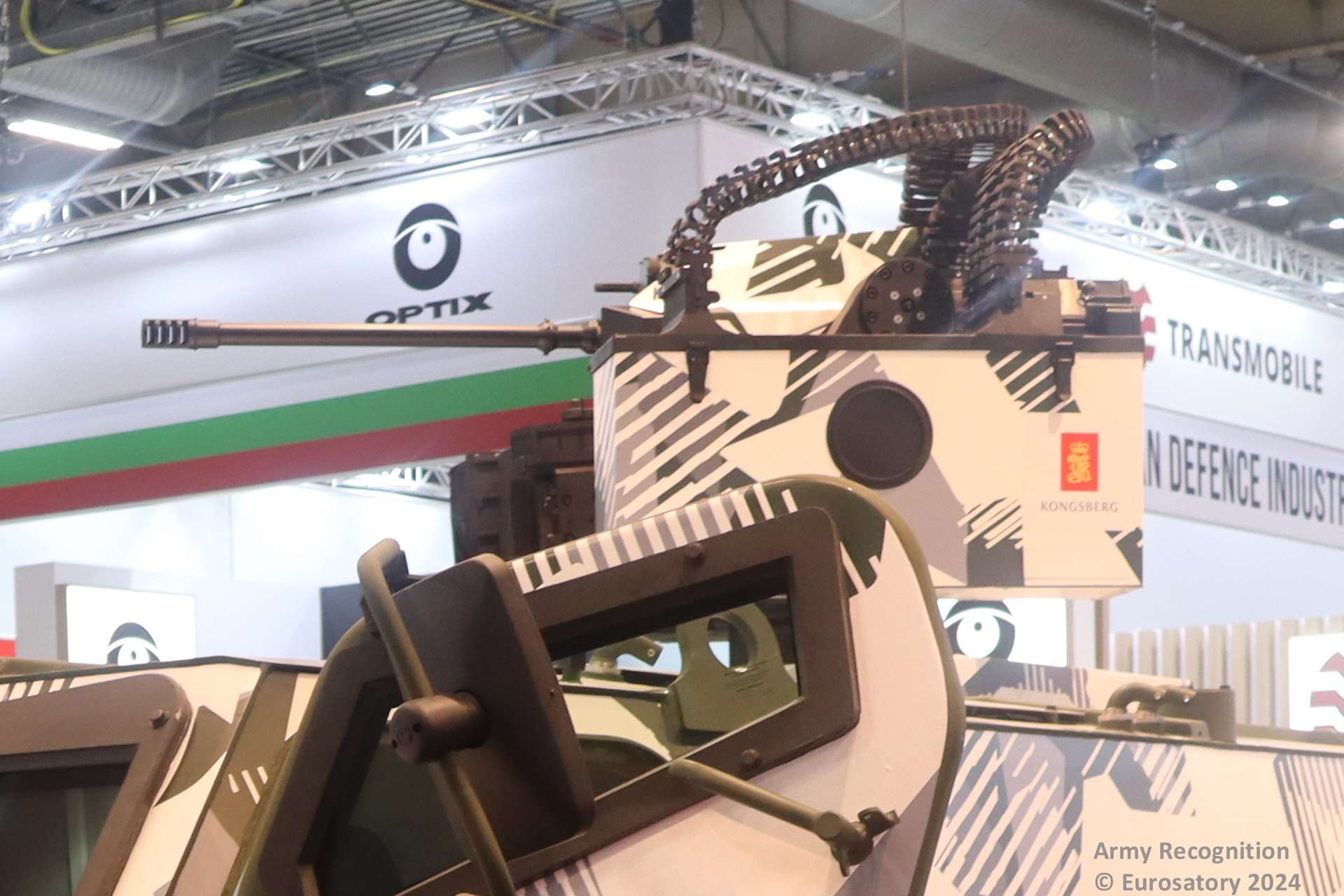
At the Eurosatory exhibition, the concept featured a Protector RS6 remote-controlled weapon station (RCWS) from Kongsberg armed with a 30mm cannon from KNDS, and equipped with optics from Escribano. (Picture source: Army Recognition)
Part of the European Defence Industrial Development Programme (EDIDP), the EDF FAMOUS 2 project, currently in its implementation phase from 2022 to 2026, focuses on the development, prototyping, and verification testing of next-generation armored vehicles to improve ground combat capabilities. Finland, with Patria as the industrial coordinator, leads the program, responsible for design, system integration, and prototype manufacturing. Funded by 95 million euros from the EU, with an additional 19 million euros co-funded by member states, the project involves a consortium of nine countries and 35 companies.
Coordinated by Patria, this consortium includes major defense companies from across the European Union, such as KNDS, John Cockerill, Indra, Diehl Defence, Arquus, and Millog. At the Eurosatory exhibition, the concept featured a remote-controlled weapon station with a mount from Kongsberg, a weapon from KNDS, and optics from Escribano. However, details about the vehicle's tracks, essential for movement through snow and water obstacles, were not disclosed.
Key focus areas of the FAMOUS program include enhancing the tactical and operational mobility of vehicles in diverse environments, such as urban, arctic, and mountainous terrains. The development of hybrid operation systems aims to ensure efficient performance in various conditions. Additionally, the program emphasizes power generation and energy storage to support extended operational durations. Advanced situational awareness systems, cybersecurity measures, and comprehensive C4I (Command, Control, Communications, Computers, and Intelligence) solutions are integral to enhancing military personnel's awareness and secure communications.
Incorporating robotics and autonomous systems is another significant aspect, aimed at reducing risks to human personnel and increasing operational efficiency. The development of modern weapon systems and comprehensive life cycle support solutions is also a priority to ensure the long-term effectiveness of these advanced armored vehicles.
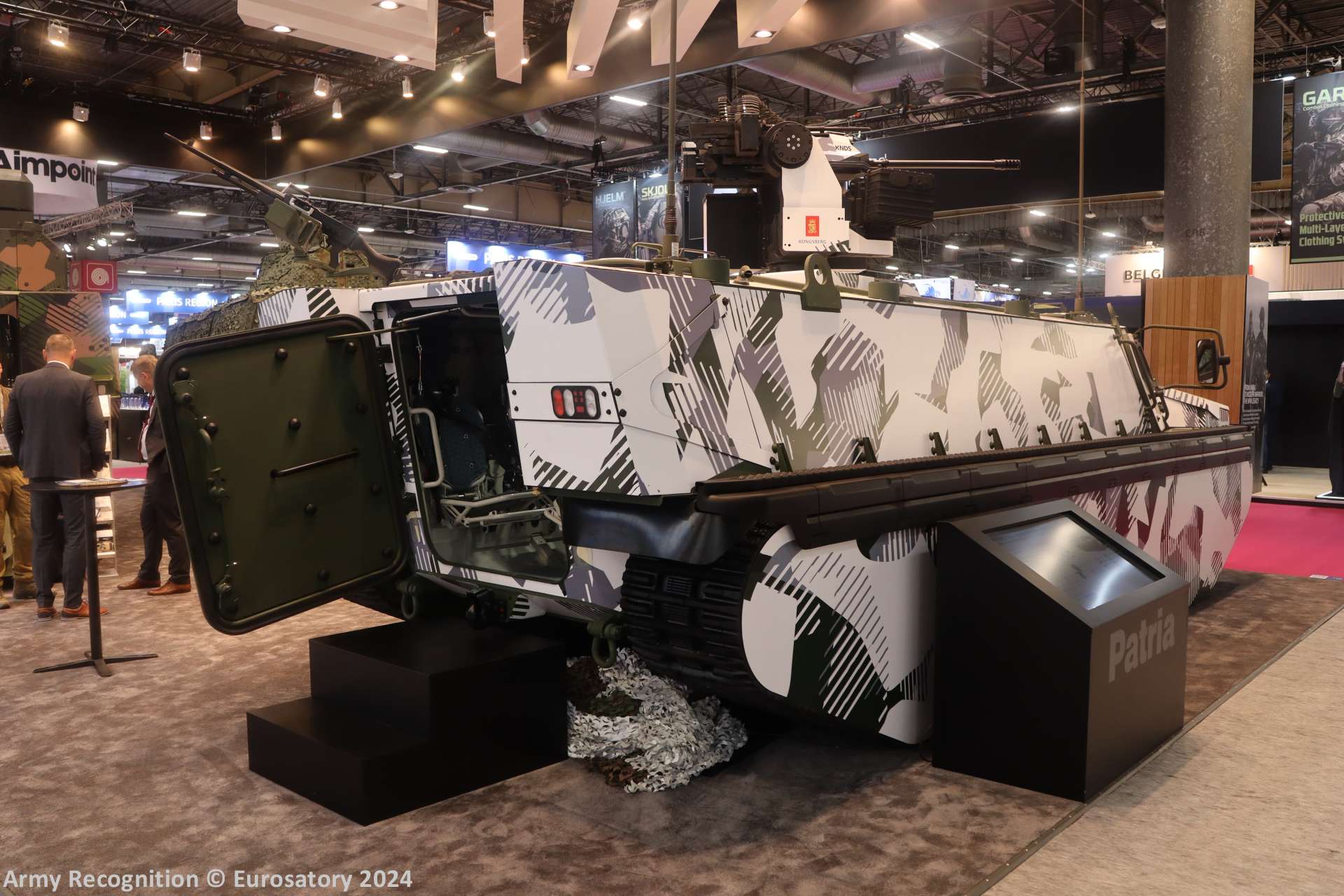
The FAMOUS ATV concept, weighing 15 tons with a payload capacity of 3.5 tons, can accommodate a crew of two and transport ten troops. (Picture source: Army Recognition)
Read more: Eurosatory 2024: Patria unveils FAMOUS ATV all-terrain concept for Arctic operations

- Details
- Written by: Jérôme Brahy
- Category: 2024
- Hits: 8959
At Eurosatory 2024, the US Army is showcasing a range of its armored vehicles, including the M1A2 Abrams Main Battle Tank, the M2A3 Bradley Infantry Fighting Vehicle, and the M109 Paladin self-propelled howitzer. The M1A2 Abrams, a third-generation main battle tank, is known for its firepower, capable of engaging enemy tanks and fortified positions at ranges up to 4,000 meters.
Follow Army Recognition on Google News at this link
The primary armament of the M1A2 Abrams is a 120mm M256 smoothbore cannon that fires a variety of ammunition types, including armor-piercing fin-stabilized discarding sabot (APFSDS) rounds and high-explosive anti-tank (HEAT) rounds. (Picture source: Army Recognition)
The M1 Abrams has several variants, with the primary combat models being the M1, M1A1, and M1A2. The M1A1 introduced a 120mm gun and improved armor, while the M1A2 added advanced electronics and a commander's independent thermal viewer. The M1A2 SEP (System Enhancement Package) models include upgrades such as improved armor, electronics, and the addition of an auxiliary power unit. Other variants include the M1A2 SEPv3 and the M1A2K for the Kuwaiti Army.
The M1A2 Abrams, named after General Creighton Abrams, is a variant of the M1 Abrams main battle tank. The M1 Abrams series, developed by Chrysler Defense (now General Dynamics Land Systems), began replacing the M60 tank in 1980. The M1A2, approved for production in 1990, includes numerous technological advancements over its predecessors. These tanks were first used in combat during the Gulf War and have been involved in subsequent conflicts such as the Iraq War and the War in Afghanistan.
The primary armament of the M1A2 Abrams is a 120mm M256 smoothbore cannon that fires a variety of ammunition types, including armor-piercing fin-stabilized discarding sabot (APFSDS) rounds and high-explosive anti-tank (HEAT) rounds. These munitions enable effective engagement of enemy tanks and fortified positions at ranges up to 4,000 meters. Secondary armaments include a .50 caliber M2 heavy machine gun and two 7.62mm M240 machine guns.
The M1A2 Abrams has demonstrated high effectiveness and survivability in combat situations. During Operation Desert Storm, Abrams tanks achieved a high kill ratio against Iraqi armor with minimal losses. The advanced fire control system, which includes a laser rangefinder and ballistics computer, plays a crucial role in this effectiveness. The tank's composite armor, enhanced with depleted uranium layers in later models, offers significant protection against kinetic and chemical energy threats.
The M1A2 Abrams weighs approximately 62 metric tons and is powered by a Honeywell AGT1500 gas turbine engine, producing 1,500 horsepower (1,120 kW). It can reach speeds up to 67 km/h on roads and 40 km/h off-road. The operational range is around 426 km on roads and 150 to 200 km cross-country. The crew consists of four members: commander, gunner, loader, and driver. Features include a sophisticated fire control system, advanced thermal imaging, and an NBC (nuclear, biological, chemical) protection system.
The M1A2 Abrams is used by the United States Army and has been exported to several allied nations, including Australia, Egypt, Iraq, Kuwait, Poland, and Saudi Arabia. Each country customizes its Abrams tanks to meet specific operational needs, ensuring the platform continues to serve effectively in diverse combat environments worldwide.
Read more: US Army displays M1A2 Abrams Main Battle Tank and more at Eurosatory 2024
- Details
- Written by: Tkuhn
- Category: 2024
- Hits: 3277
At the prestigious Eurosatory 2024 defense exhibition, Singapore’s leading technology and defense firm, ST Engineering, presented a compelling narrative of innovation and strategic ambition.
Follow Army Recognition on Google News at this link
ST Engineering's Terrex S5 Infantry Fighting Vehicle. (Picture source: Army Recognition)
ST Engineering’s defense sector is divided into two primary businesses: Land Systems and Digital Systems. In the Land Systems business, the firm is renowned for its robust fighting platforms, advanced weaponry, and ammunition solutions designed to enhance combat capabilities and survivability in various terrains.
Meanwhile, the Digital Systems business excels in creating sophisticated network and system architectures, ensuring seamless communication and operational efficiency, and leveraging cutting-edge satellite communication technology for secure and reliable connectivity in challenging environments.
The Terrex 8x8 Infantry Fighting Vehicle S5, a state-of-the-art vehicle boasting enhanced mobility, protection, and firepower, was a highlight. Designed to meet the evolving needs of modern warfare, the Terrex S5’s advanced features and modular design make it a formidable asset on the battlefield.
The Bronco All-Terrain Tracked Carrier also garnered significant attention. Known for its versatility and reliability, the Bronco performs well in extreme conditions, from arctic tundras to tropical jungles. Its adaptability and ruggedness were key highlights during the presentation. Additionally, ST Engineering showcased their latest ammunition technologies, emphasizing accuracy, efficiency, and lethality, designed to meet the highest standards of modern military operations.
Read more: ST Engineering Unveils Terrex S5 and Bronco at Eurosatory 2024
- Eurosatory 2024: New Rheinmetall's Panzerjaeger concept integrates AI for long-range anti-tank defense
- Signing of the "Defense Aerial Drone Pact" for New Collaborative Methods Between the State and Industry at Eurosatory 2024
- New CAESAR Mk2 self-propelled howitzer debuts at Eurosatory 2024 with full CAESAR lineup
- MORANA 155mm Howitzer: Excalibur’s Artillery Innovation at Eurosatory 2024