
- Details
- Written by: Triffaux
- Category: 2024
- Hits: 4790










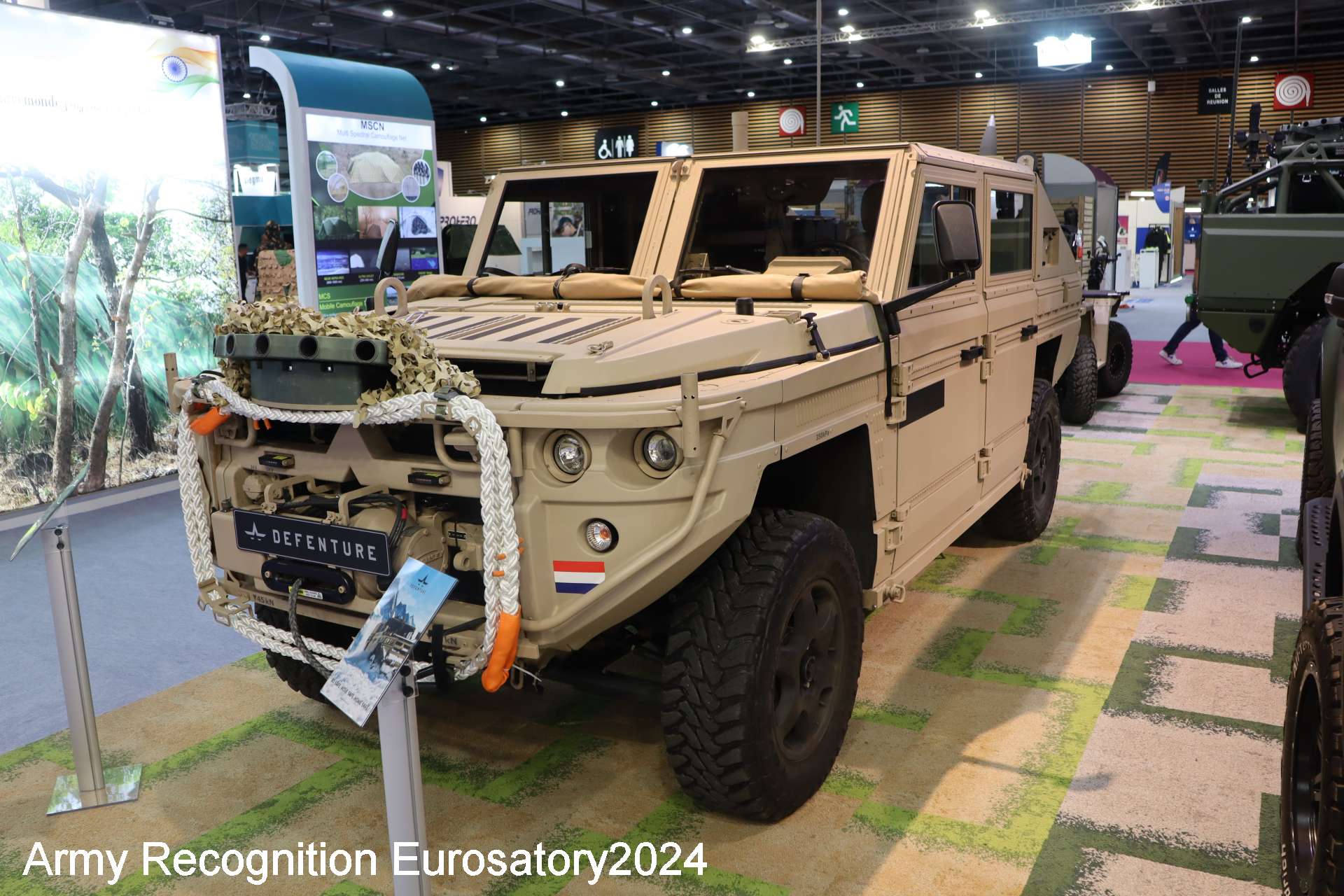
The Dutch special forces mobility specialist, Defenture, unveiled its latest vehicle, the Viper 120, at Eurosatory 2024—an innovative mortar carrier equipped with a 120mm mortar capable of firing on the move. This vehicle is specifically designed to enhance the mobility and survivability of fire support units in modern combat contexts.
Follow Army Recognition on Google News at this link
Defenture Viper Light 120mm Mortar Carrier Vehicle (Picture source: Army Recognition)
Military experts believe that the effectiveness of fire support forces largely depends on their ability to move quickly after opening fire, a concept often summarized by the term "shoot and scoot." Inspired by lessons learned from the conflict in Ukraine, the Viper allows its operators to leave an exposed position in less than three minutes after firing, thus drastically reducing the risk of counterattacks.
The Defenture GRF vehicle is a tactical mobility platform designed to meet the stringent requirements of modern military operations. Fully air transportable, it can be loaded inside or underslung by helicopters such as the CH-47 Chinook, thereby facilitating rapid and flexible deployment in the field. With its deep fording capability of 860mm and four-wheel steering system, the GRF offers exceptional maneuverability in various environments, from rugged terrains to compact urban areas. Its compliance with STANAG 4370 and AECTP 500 standards ensures proven resistance to electromagnetic interference, essential for operating near advanced electronic devices. Additionally, the vehicle's modularity allows for customization according to specific mission needs, including modular ballistic protection. This combination of transportability, robustness, and configurational flexibility makes the Defenture GRF a predominant choice for special forces and airborne units seeking a platform that can quickly adapt to the dynamic demands of modern combat.
The mobile mortar system integrated into the Defenture GRF vehicle is a cutting-edge solution designed to provide exceptional control and precision during battlefield operations. Thanks to its advanced fire control system, the system allows operators to effectively manage all phases of the firing mission. Crucial information such as targets, points of interest, and coordinates can be input via USB or directly on an interactive digital map, ensuring quick and accurate adaptation to changing battlefield conditions.
The system also takes into account weather conditions, which play a crucial role in aiming and ballistic calculations. Combined with the mortar's automatic deployment and retraction capabilities, these features enable rapid and precise actions, minimizing exposure time to enemy fire. Zonal shooting is another innovative feature that effectively covers defined sectors, thus optimizing the effectiveness of salvos and ammunition management. This integration of advanced technologies makes the Defenture GRF's mobile mortar system an indispensable tool for modern armed forces, significantly enhancing their ability to respond quickly and accurately in various combat situations.
The Viper incorporates a mortar system that, unlike traditional systems requiring fixed installation, is directly mounted on the vehicle. This system can be hydraulically deployed directly to the ground, allowing significant recoil forces to be transferred directly into the soil rather than the vehicle chassis, thereby extending its durability and reducing technical complexity.
This mortar system, developed in collaboration with Spanish company Escribano Mechanical & Engineering, can be mounted on any GRF chassis in a few hours without permanent modifications. This partnership illustrates Defenture's commitment to providing a customizable and tailored solution to armed forces, while maintaining a strong European footprint in the supply chain.
The Viper is armed with a Thales 2R2M mortar tube and can carry up to 20 rounds of 120mm mortar ammunition. It has a maximum range of 13 kilometers with enhanced range munitions, thus providing significant strike capability. Efficiency and speed are at the heart of the Viper's design: the weapon system can be ready to fire in 15 seconds and retracted just as quickly, allowing the vehicle to promptly leave the firing position.
Designed specifically to meet the needs of the Dutch armed forces, the Viper can also be configured to accommodate other 120mm or 81mm mortar systems, depending on customer requirements. This vehicle is not just a simple mortar carrier; it is an advanced mobility platform, built on the GRF chassis, which has already proven itself with the Dutch special forces and other international military units.
With its robust and versatile design, the Viper is engineered for modern combat operations, offering an unmatched combination of mobility, firepower, and operational safety. Its unveiling at Eurosatory marks a turning point for fire support technologies and promises to be a crucial asset for special forces and airborne units engaged in high-intensity operations worldwide.
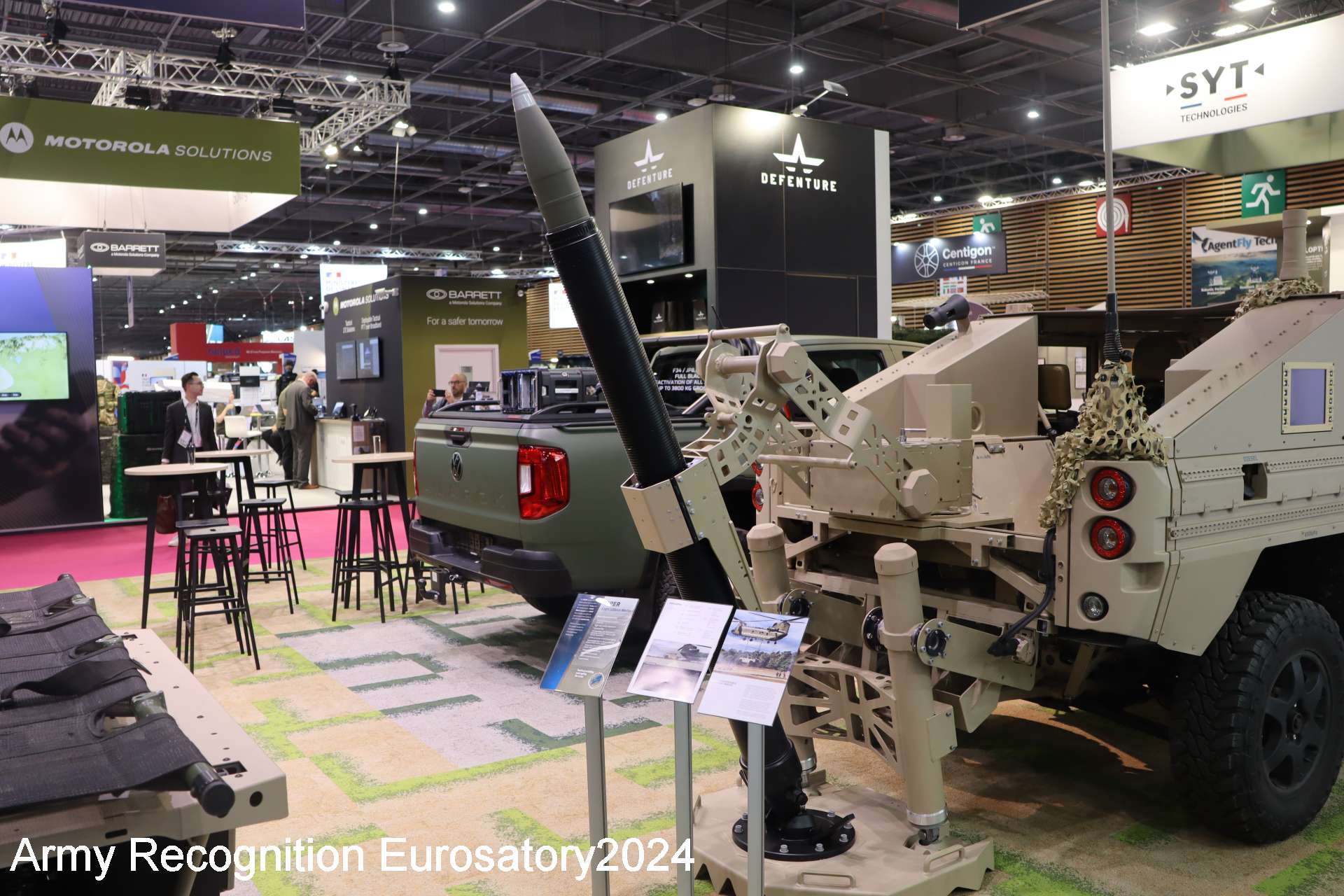
Defenture Viper Light 120mm Mortar Carrier Vehicle (Picture source: Army Recognition)
- Details
- Written by: Halna du Fretay
- Category: 2024
- Hits: 3063
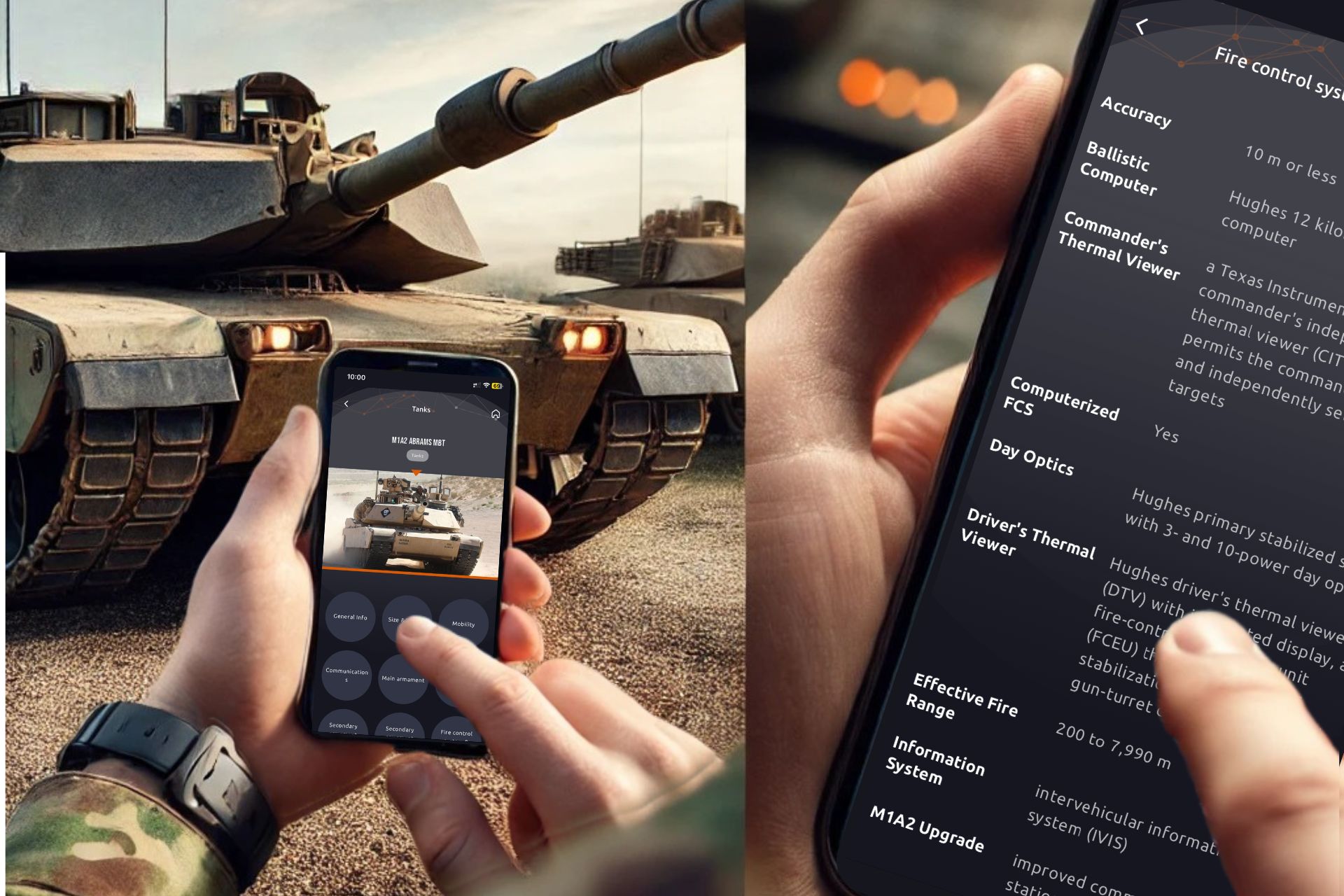
Since the Russo-Ukrainian conflict began, the crucial role of artificial intelligence (AI) and robotics in military operations has highlighted the urgency to update operational practices and military doctrines. The battlefield has transformed into a complex, multidimensional arena where AI and robotics are integral, particularly in command and control centers and weaponry systems. The MEGA-Army app demonstrates AI's practical use in military contexts, allowing users to upload photos of military equipment and receive detailed information about their types, origins, and capabilities. This functionality is vital for reconnaissance and combat operations, where fast and accurate identification of military equipment can critically impact tactical and operational decisions. Follow Army Recognition on Google News at this link
The MEGA-Army (Military Equipment Guide App for Land Forces Equipment) is a mobile application designed to identify land military equipment using advanced Artificial Intelligence (AI) (Picture source: IDDEA)
The rising prominence of drones has not only been pivotal in the Ukrainian context but has also reflected in other recent conflicts, fundamentally altering traditional military operations. This trend raises concerns about the vulnerability of heavy armors, like tanks, now highly susceptible to drone attacks. Proposed modernizations should include enhanced protection for these vehicles, including the development of drone systems for missile defense and remote operation to minimize crew risks.
Moreover, integrating AI into decision-making processes of command and control promises to expedite and refine military responses. AI is set to transform the art of warfare, affecting every dimension of combat from underwater to outer space, integrating cybernetics and the full electromagnetic spectrum. In the short term, it will improve strategy, operational planning, tactical maneuvers on the ground, and logistical support, enhancing the speed and efficiency of target neutralization while reducing collateral damage.
The MEGA-Army app perfectly illustrates the practical integration of AI in military operations. By identifying and analyzing military equipment through image recognition, MEGA-Army delivers actionable intelligence on the battlefield in real time. Users can capture or upload photos of military equipment, which AI then processes to identify types, origins, capabilities, and other relevant data. This tool is particularly useful in reconnaissance missions, training scenarios, and real combat situations, where rapid and precise identification of military equipment can significantly influence tactical decisions and operational outcomes.
AI and robotic military systems have become essential for intelligence, surveillance, and reconnaissance, enabling advanced data analysis and processing. These technologies facilitate target identification and tracking, optimize response systems, and enhance decision-making quality.
In conclusion, the integration of artificial intelligence and robotics into military operations, as exemplified by tools like the MEGA-Army app, represents a revolutionary shift in contemporary conflict management. AI technologies dramatically transform combat strategies, offering precise reconnaissance and engagement capabilities previously unimaginable.
As the Russo-Ukrainian conflict continues to demonstrate the effectiveness of these technologies on the ground, it is imperative for nations to continue investing in these areas to remain competitive on the global stage. AI and robotics systems not only shape current battlefields but also redefine the principles of future warfare. Thus, the race for military technological innovation, including the adoption and continuous improvement of AI, becomes a central issue for global security and military supremacy.
Read more: Integration of AI on the Modern Battlefield: Insights from the Ukraine War
- Details
- Written by: Vandenbosch
- Category: 2024
- Hits: 4102
The Canadian company Roshel, renowned for its armored vehicles, plans to open a factory in Ukraine to produce Senator armored personnel carriers (APCs) to meet the growing demand due to the Russo-Ukrainian conflict. This information was made public at the beginning of June 2024.
Follow Army Recognition on Google News at this link
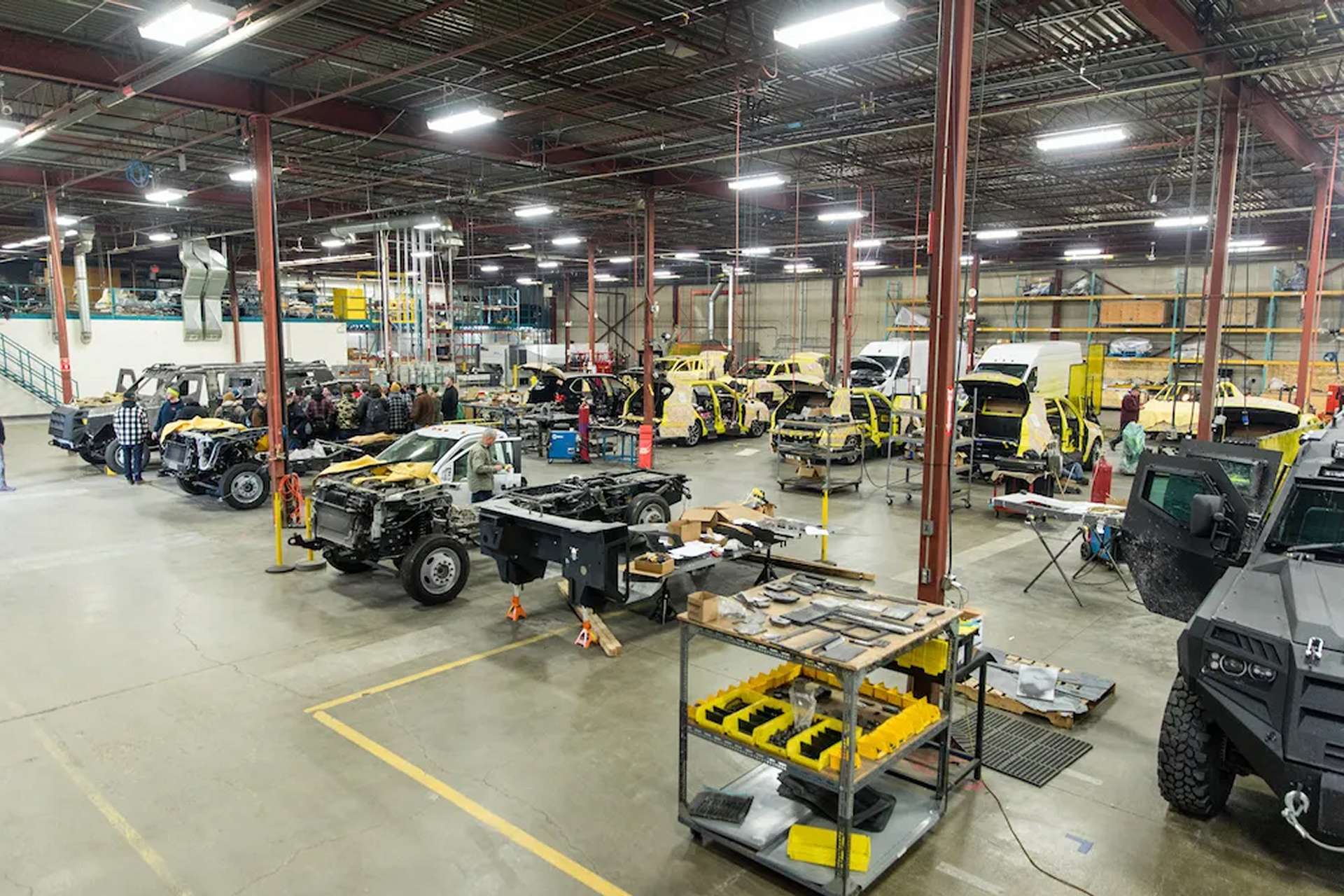
A Roshel plant producing Senators in Canada. (Picture source: Roshel)
Roshel initially produced armored vehicles for commercial purposes, but with the war in Ukraine, its Senator vehicles have been adapted for combat operations. In response to the effectiveness and demand for these vehicles, Roshel decided to establish itself in Ukraine. Currently, half of Roshel's production is destined for the Ukrainian Armed Forces and security agencies. Additionally, one-third of Roshel's workforce consists of Ukrainian refugees.
To date, 1,140 Senator vehicles have been delivered to Ukraine, making it one of the most used models in the ongoing war. Roshel has not only established strong partnerships in Ukraine but its vehicles have also gained significant combat experience.
Roshel plans to invest tens of millions of dollars in the new Ukrainian factory, creating hundreds of jobs, some of which will be filled by Ukrainian refugees currently working in Canada. This initiative is part of Roshel’s broader plans to formally integrate into the Ukrainian defense industry, thereby contributing to the national economy.
Roshel’s CEO, Roman Shimonov, is convinced that the future factory will not only be able to compete with local producers in the Ukrainian market but also export armored vehicles to Europe, thus generating foreign currency for Ukraine. To meet the needs of the Ukrainian market, Roshel's Senator vehicles have been transformed into Mine-Resistant Ambush Protected (MRAP) vehicles. This adaptation involved thousands of design modifications based on feedback from Ukrainian operators.
The Senator MRAP is built on the civilian Ford F550 chassis and offers STANAG 2 ballistic protection and STANAG 3 blast protection. These vehicles have been tested according to NATO standards, ensuring their effectiveness in combat situations.
Roshel maintains a stock of 100 armored vehicles ready for rapid delivery to Ukraine. As of May 2024, Roshel was producing 140 armored vehicles per month, with half of this production sent to Ukraine. The demand for these vehicles is driven by needs for medical evacuation, personnel movement, cargo delivery, and military assaults.
In March 2024, the company announced a $65 million investment in new facilities in Canada. It also seeks to expand into the U.S. and European markets, particularly aiming for a German contract for 400 armored vehicles for Ukraine.
Competing with local Ukrainian producers is a challenge, but Roshel sees Ukraine as a favorable environment for defense industry investments due to its strong infrastructure and skilled workforce. Shimonov believes that post-war Ukraine will become a major regional player, attracting significant investments.
Roshel’s new Ukrainian factory will not only provide local jobs but also open doors to the European market. The company takes precautions to secure its operations against potential threats, particularly Russian strikes.
Roshel's establishment in Ukraine aims to strengthen the local economy and the country’s defense capabilities, setting a model for future foreign investments in the Ukrainian defense industry.
Read more: Canada’s Roshel to Build Factory in Ukraine to Produce Senator Armored Vehicles
- Details
- Written by: V.Saint
- Category: 2024
- Hits: 2833
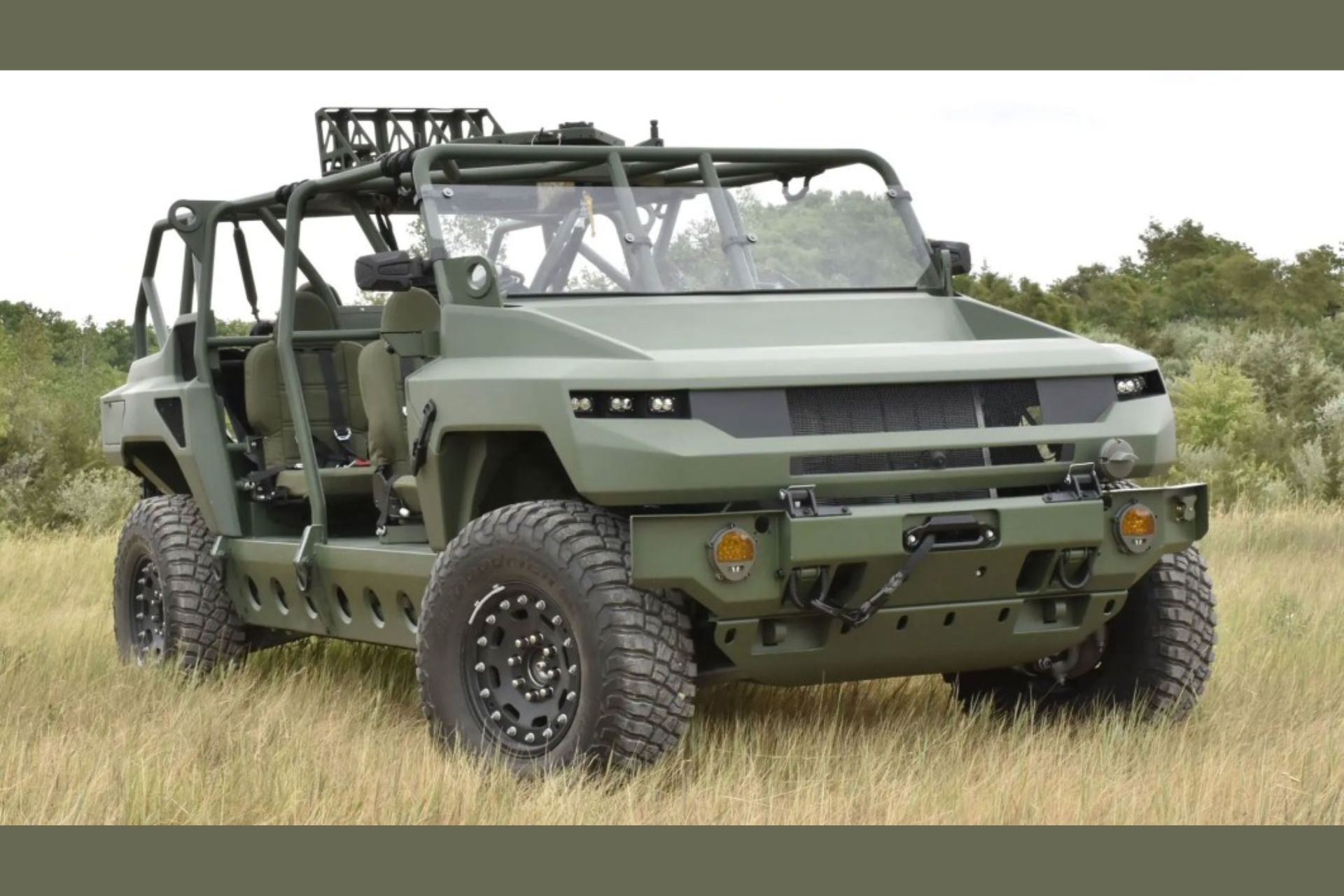
In a move to capitalize on General Motors' resurgent commercial presence in Europe, GM Defence is eyeing the lucrative European military vehicle market, potentially worth over $1 billion. The company aims to challenge the dominance of established players like Mercedes-Benz by offering agile, adaptable, and potentially electrified tactical vehicles.
Follow Army Recognition on Google News at this link
As an illustration, GM presents Electric version of Hummer EV (Picture source: GM)
Leveraging Commercial Success for Military Expansion
Speaking ahead of the Eurosatory defense trade show in Paris, Bradley Watters, Vice President of International Development at GM Defence, highlighted the company's strategy. The recent opening of Cadillac showrooms in Zurich and Paris reflects GM's renewed commitment to the European market, a factor that Watters believes will resonate with potential military customers.
This renewed presence paves the way for GM Defence to showcase its military offerings. The company plans to leverage the familiarity and trust associated with the GM brand, as well as the assurance of readily available spare parts and competitive pricing, to attract European buyers.
Agile Platforms for Modern Warfare
At the heart of GM Defense's strategy are its Infantry Squad Vehicle (ISV) and Light Tactical Wheeled Vehicle (LTWV). These vehicles are based on popular GM truck platforms, the Colorado and Silverado, respectively. While the ISV is already in service with certain units of the U.S. Army, including the 82nd Airborne Division, the LTWV positions itself as a slightly larger and more versatile option for international clients.
GM Defence emphasizes agility and speed as key selling points, in contrast to heavily armored military vehicles. For example, the ISV is designed with minimal armor, prioritizing rapid deployment and maneuverability in challenging environments. This focus on mobility over heavy protection reflects a shift in military thinking towards avoiding direct confrontation as much as possible.
Electrification as a Battlefield Advantage
Further differentiating its offerings, GM Defence is promoting the potential for electrification of its military vehicles. Watters highlighted the tactical advantages of electric drivetrains, including reduced sound signatures for stealth operations and the ability to operate silently on short bursts. These features, combined with the potential for electric vehicles to serve as mobile power sources, are likely to be attractive propositions for special operations forces.
Targeting Key European Markets
GM Defense has identified Denmark, Spain, and the United Kingdom as key markets for its vehicles, with ongoing tenders in these countries representing a significant opportunity. As the U.S. Army begins the early stages of ISV deployment, GM Defense aims to secure direct commercial sales in Europe, bypassing the often lengthy process of foreign military sales facilitated by the U.S. government.
The Road Ahead
While established players dominate the European military vehicle market, GM Defence is confident that its brand recognition, proven platforms, and innovative technologies will resonate with potential clients. The company's focus on agility, adaptability, and electrification could provide an interesting alternative to traditional armored vehicles, potentially reshaping the regional military mobility landscape.
.
Read more: GM comes back on European military market with electric troops carrier
- Details
- Written by: Jérôme Brahy
- Category: 2024
- Hits: 4960
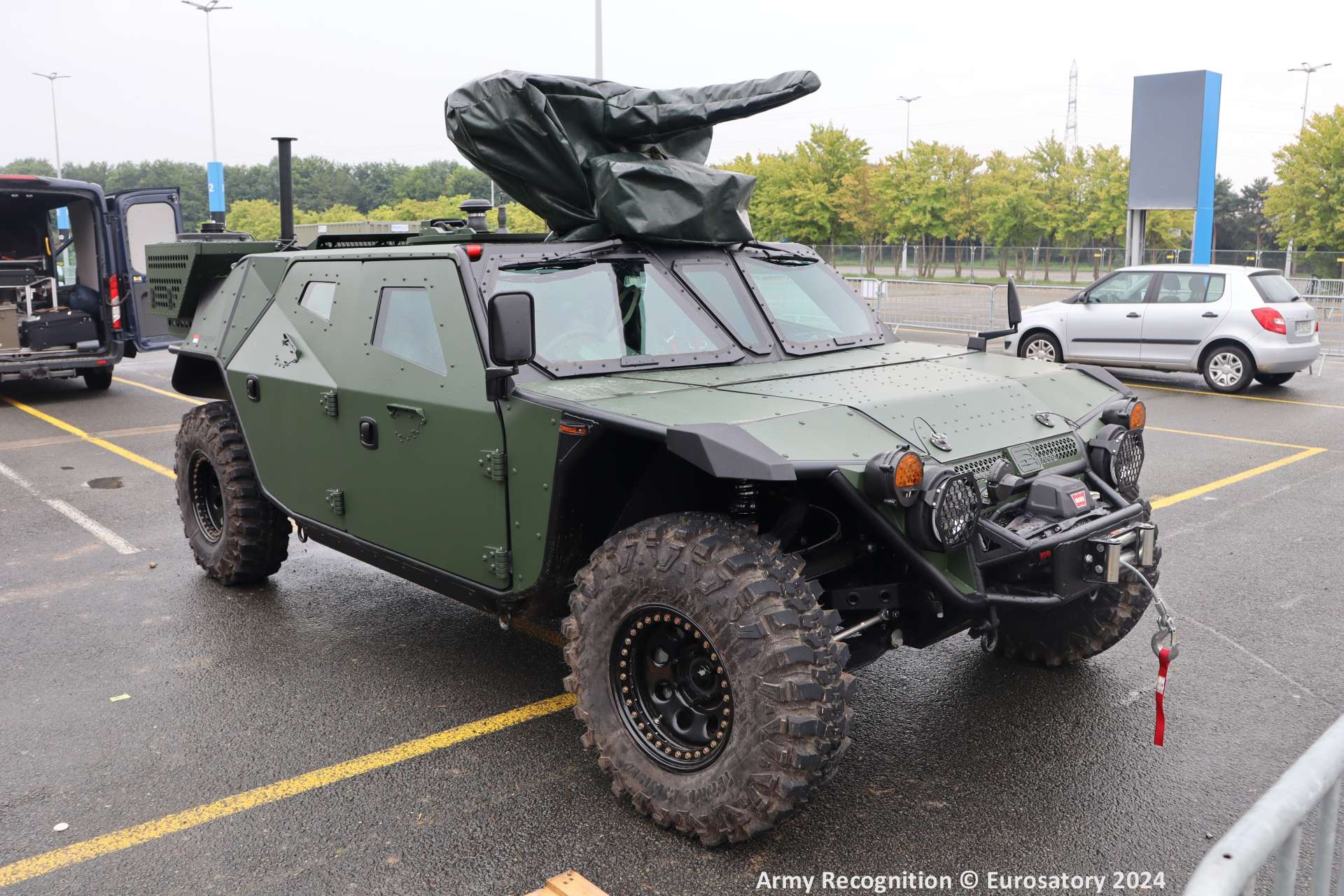
At the Eurosatory 2024 exhibition, the Indonesian company SSE Defence demonstrated the capabilities of its P6 ATAV V3 all-terrain tactical vehicle. Known for its STANAG Level 1 ballistic protection, 142 horsepower turbo diesel engine, and adaptability to diverse environments, this vehicle is utilized by various units within the Indonesian Armed Forces, such as the Special Forces or the Marine Corps.
Follow Army Recognition on Google News at this link
The V3, first introduced at the Indo Defence exhibition in 2016 as part of SSE Defence's P6 ATAV series, is classified by the Indonesian military as a light strike vehicle, known locally as rantis (kendaraan taktis). (Picture source: Army Recognition)
The SSE P6 ATAV V3 is an all-terrain tactical vehicle designed and manufactured by PT Sentra Surya Ekajaya (SSE Defence), an Indonesian company engaged in the production of military vehicles and defense equipment. SSE Defence's vehicles are utilized by various units within the Indonesian Armed Forces, including Kopassus (Army Special Forces), Paskhas (Air Force Special Forces), and Taifib (Marine Corps Reconnaissance). The company focuses on developing lightweight, high-mobility vehicles equipped with advanced armament and protection systems, suitable for diverse operational requirements.
The V3, first introduced at the Indo Defence exhibition in 2016 as part of the P6 ATAV series, is classified by the Indonesian military as a light strike vehicle, known locally as rantis (kendaraan taktis). The P6 ATAV V3 features an open-top design with a tubular frame made from high-grade steel and dual aluminum. The vehicle does not have doors or windows, enhancing its lightweight and high mobility. The design is influenced by other tactical vehicles such as the Singaporean Light Strike Vehicle and the General Dynamics Flyer. The vehicle's dimensions are 4.6 meters in length, 2.3 meters in width, and 1.5 meters in height, with a weight of 2.5 tons. It is powered by a 4-cylinder turbo diesel engine with a 2,300 cc capacity, producing 142 horsepower at 3,400 RPM and 343 Nm of torque at 2,800 RPM.
The P6 ATAV V3 has a top speed of 120 km/h and an operational range of 500 km on a full 120-liter fuel tank. Its independent suspension system enhances its off-road capabilities, and it is equipped with run-flat tires and a self-recovery winch to improve its operational resilience.
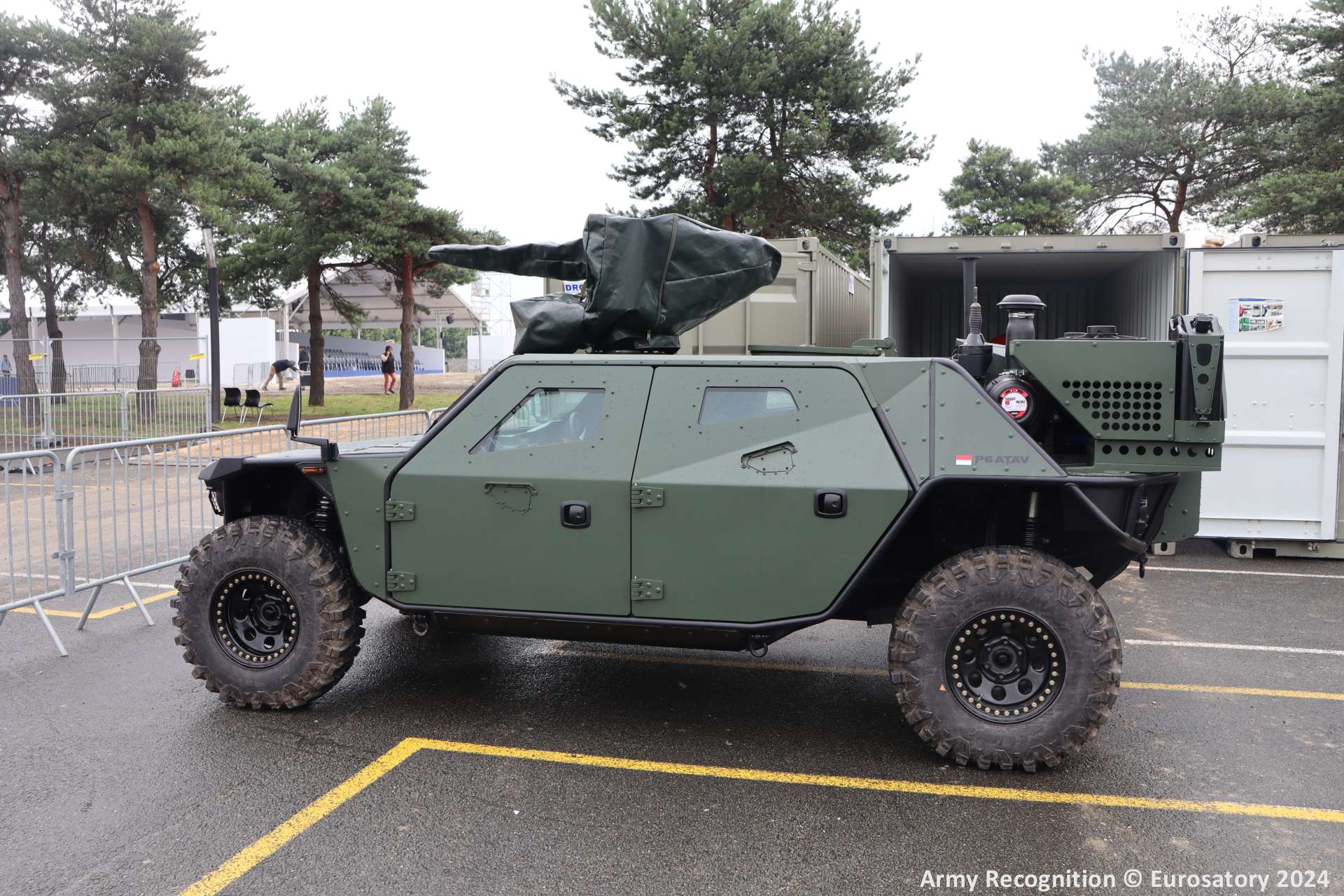
The design of the P6 ATAV is influenced by other tactical vehicles such as the Singaporean Light Strike Vehicle and the General Dynamics Flyer. (Picture source: Army Recognition)
This variant is equipped with a Remote Controlled Weapon Station (RCWS) that can be armed with 7.62 mm or 12.7 mm machine guns. Additionally, it has mounting points for other weapons such as anti-tank and anti-aircraft missiles. The V3 version provides STANAG Level 1 ballistic protection, including bullet-proof glass and an armored body designed to withstand small arms fire and shrapnel, while maintaining a relatively low weight to ensure agility and speed.
The vehicle can carry up to five personnel, with seating arrangements including two seats in the front and three in the rear. The P6 ATAV V3 is used by several units within the Indonesian Armed Forces, such as the Kopassus (Army Special Forces), Paskhas (Air Force Special Forces), and Taifib (Marine Corps Reconnaissance). It is suitable for various environments, including urban and jungle warfare.
Standard equipment on the P6 ATAV V3 includes a run-flat tire system, a Metravib PILAR gunshot detection system, and a front-mounted self-recovery winch. The vehicle is also designed to be easily transported, with two units fitting into a C-130 Hercules aircraft, facilitating rapid deployment.
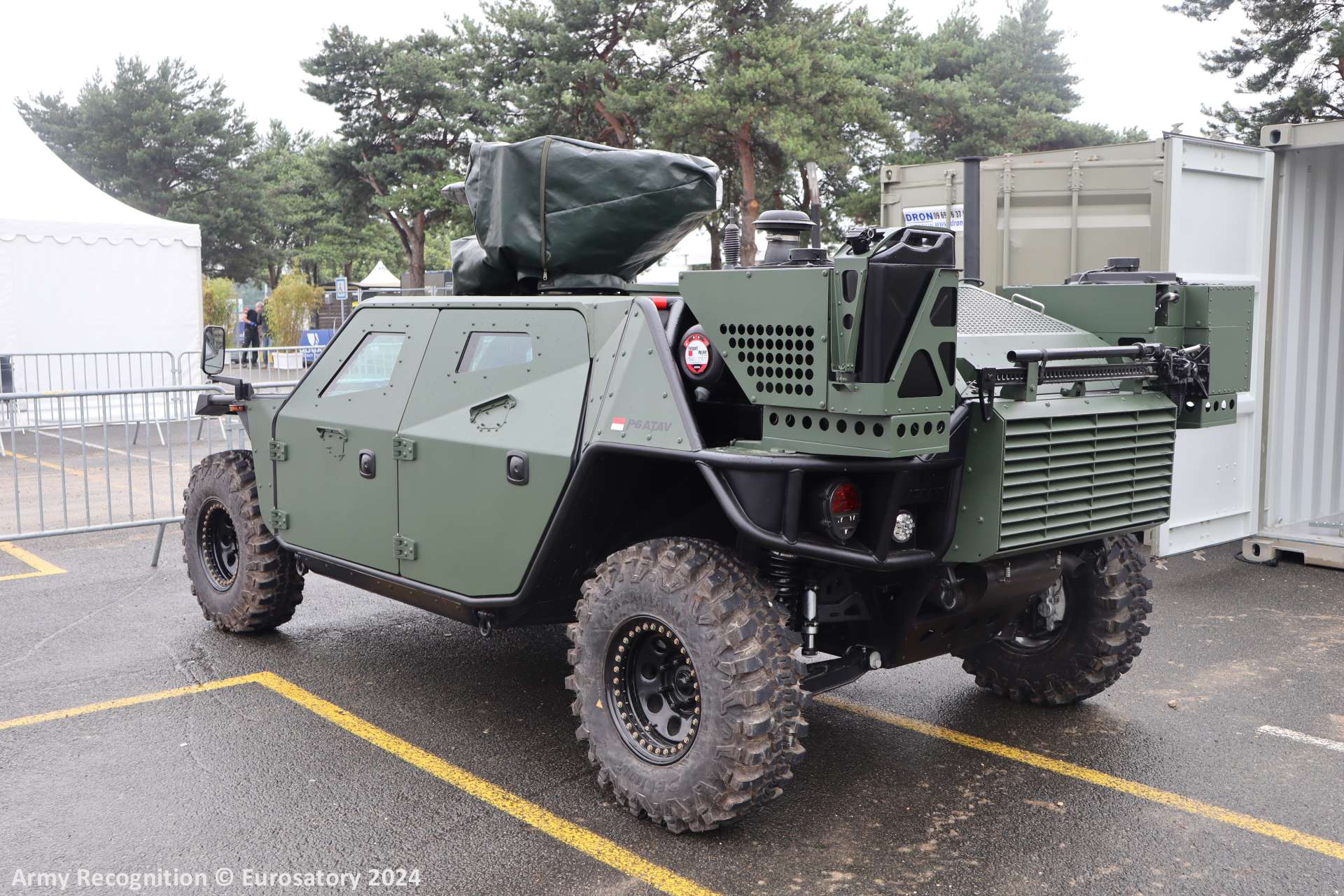
This variant is equipped with a Remote Controlled Weapon Station (RCWS) that can be armed with 7.62 mm or 12.7 mm machine guns. Additionally, it has mounting points for other weapons such as anti-tank and anti-aircraft missiles. (Picture source: Army Recognition)

- Details
- Written by: Triffaux
- Category: 2024
- Hits: 13617
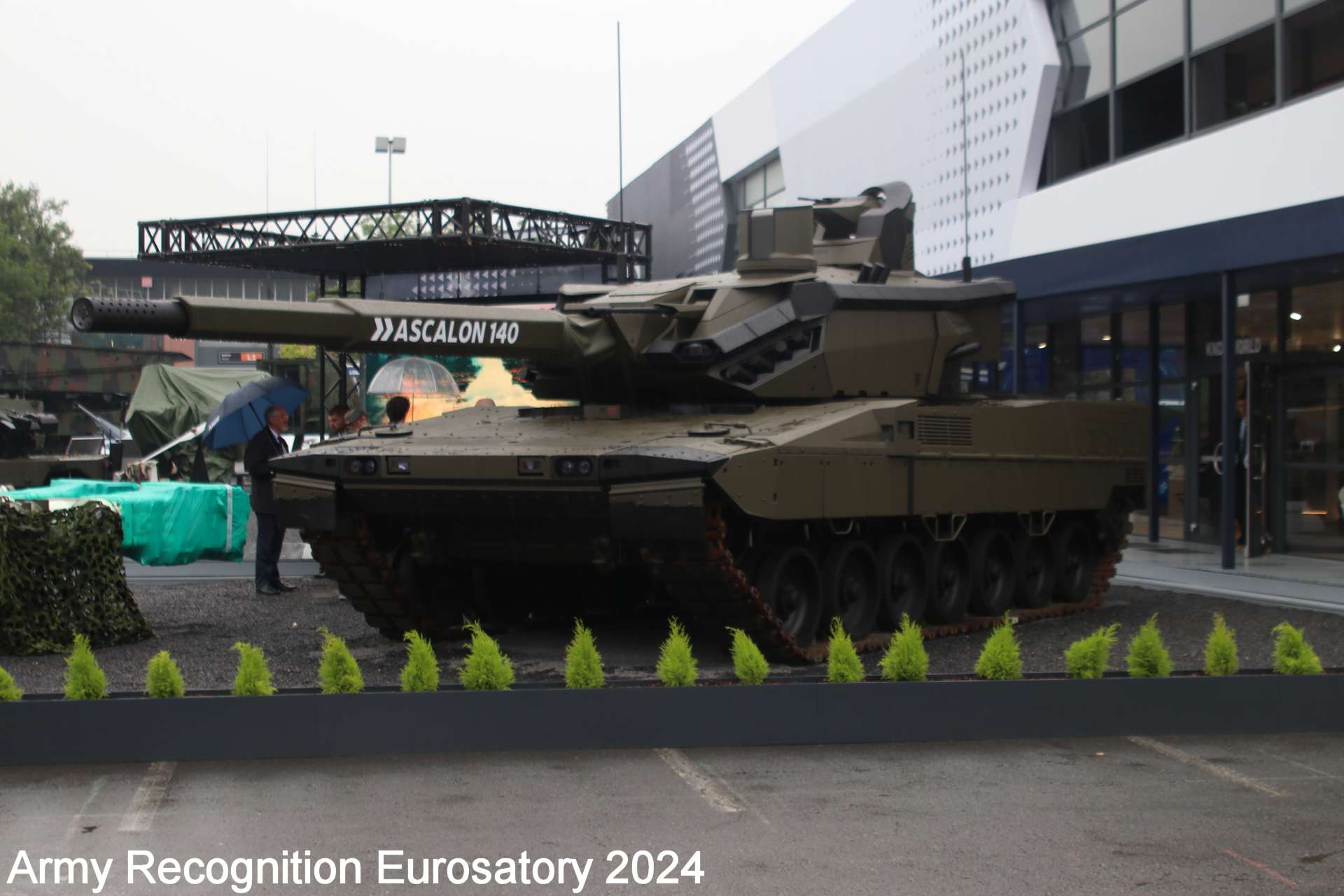
This is the fifth episode study of main battle tanks at Eurosatory 2024: the French-German defense conglomerate KNDS has taken center stage with the unveiling of their groundbreaking fifth-generation main battle tank (MBT), the EMBT-ADT 140. This marks the debut of the first tank equipped with the new ASCALON 140 mm cannon, a high-tech weapon system designed to deliver unparalleled firepower and precision. This announcement follows the introduction of KNDS Leclerc Evolution with its formidable 120 mm cannon, marking another milestone in the evolving landscape of MBTs.
KNDS New Generation EMBT-ADT 140 Main Battle Tank (Picture source: Army Recognition)
The E-MBT (European Main Battle Tank) is a collaborative project between the French company Nexter and the German company Krauss-Maffei Wegmann (KMW), under their joint venture KNDS. Announced in 2018, the E-MBT project aims to develop a next-generation main battle tank to replace the French Leclerc and the German Leopard 2 tanks. The E-MBT prototype incorporates a hybrid design, using a modified Leopard 2 chassis and a Leclerc turret, combining technologies and expertise from both companies. This project is part of broader European defense initiatives to enhance military interoperability and technological advancement within Europe. The E-MBT is a precursor to the Main Ground Combat System (MGCS), which is expected to be a more advanced platform designed to meet the future requirements of European armed forces.

E-MBT prototype incorporates a hybrid design, using a modified Leopard 2 chassis and Ascalon Demonstrator Turret (ADT 140), a remotely-operated turret equipped with a 140mm AscalonR gun (Picture source: Army Recognition)
This new variant of the E-MBT, the EMBT-ADT 140, features the Ascalon Demonstrator Turret (ADT 140), a remotely-operated turret equipped with a 140mm AscalonR gun. The turret's development is part of KNDS' efforts to anticipate the Main Ground Combat System (MGCS), aiming to confirm their firepower capabilities and demonstrate the integration of future technologies such as sensor fusion, integral hemispheric active protection, AI, cyber capabilities, and hybrid energy applications.
The EMBT-ADT 140 main battle tank is scheduled for a firing-on-the-move demonstration in 2025. The tank's technical characteristics are notable, particularly regarding its firepower. The turret includes a 140mm, 48-caliber smoothbore gun with an autoloader that can hold up to 22 rounds. Additionally, it features a coaxial 20x102mm automatic gun with 300 rounds ready to fire, a Remote Controlled Weapon Station (RCWS) ARX30 with a 30mm x 113 gun, which has 150 rounds ready to fire, and a colinear 7.62mm machine gun with 200 rounds ready to fire.
The EMBT-ADT 140 is equipped with various systems to enhance its operational capabilities. The unmanned turret includes a multi-purpose sensor suite with six APS/Anti-UAS radars, four laser warning and missile warning sensors, an acoustic gunshot detector, and a 360-degree local situation awareness system.
Survivability features of the EMBT-ADT 140 include complete armored protection that is regenerative and modular, integral top-attack protection, and an anti-UAV RCWS with an optronic and radar sensor suite. The tank employs a distributed APS concept for full hemispheric protection and includes hemispheric soft-kill coverage with 22 countermeasure launchers.
In terms of mobility, the EMBT-ADT 140 achieves a road speed of approximately 65 km/h, powered by a 1,100 kW (1,500 hp) powerpack. It has a range of over 450 km on road and a ground clearance of 450 mm, facilitating effective maneuverability in various terrains.

Ascalon Demonstrator Turret (ADT 140) fitted with 140mm AscalonR gun
As a reminder, KNDS has recently completed successful testing of the new Ascalon 140mm gun at a testing facility. This gun exhibits significant firepower and firing rate, but its standout feature is its modularity, allowing the barrel diameter to be switched to 120mm within just an hour. This adaptability introduces a new dynamic to cavalry doctrines. Currently, this 140mm gun is not yet installed on a tank turret, but KNDS plans to conduct the first tests on a fully equipped turret in 2025. The 140mm gun is expected to be integrated into the Main Ground Combat System (MGCS).
KNDS is committed to demonstrating the readiness of the ASCALON 140mm gun and its ammunition. The most recent firing tests in May 2024 highlighted the impressive capabilities of both the 140mm and 120mm barrels, along with the maturity of the APFSDS rounds. The ASCALON® program encompasses several hundred firings of 120mm and 140mm barrels, scheduled from May 2022 through December 2025. A crucial upcoming milestone is the 2025 firing tests from a main battle tank (MBT).
The recent KNDS demonstration showcased the firing of a 140mm ASCALON barrel, swiftly followed by a conversion to a 120mm ASCALON barrel, and then further firings using 120mm ammunition. This campaign demonstrated the ASCALON system's flexibility, which allows for quick adaptations between barrels ranging from 120mm to 140mm on the same mount within less than an hour.

KNDS New Generation EMBT-ADT 140 Main Battle Tank (Picture source: Army Recognition)
- Details
- Written by: Vandenbosch
- Category: 2024
- Hits: 4703
Polish Defense Minister Władysław Kosiniak-Kamysz has suggested that Poland might join the Franco-German initiatives to develop a European fighter jet and tank. This statement was made during a press conference following his meeting with French Defense Minister Sébastien Lecornu and German Defense Minister Boris Pistorius in Paris on June 24, 2024.
Follow Army Recognition on Google News at this link
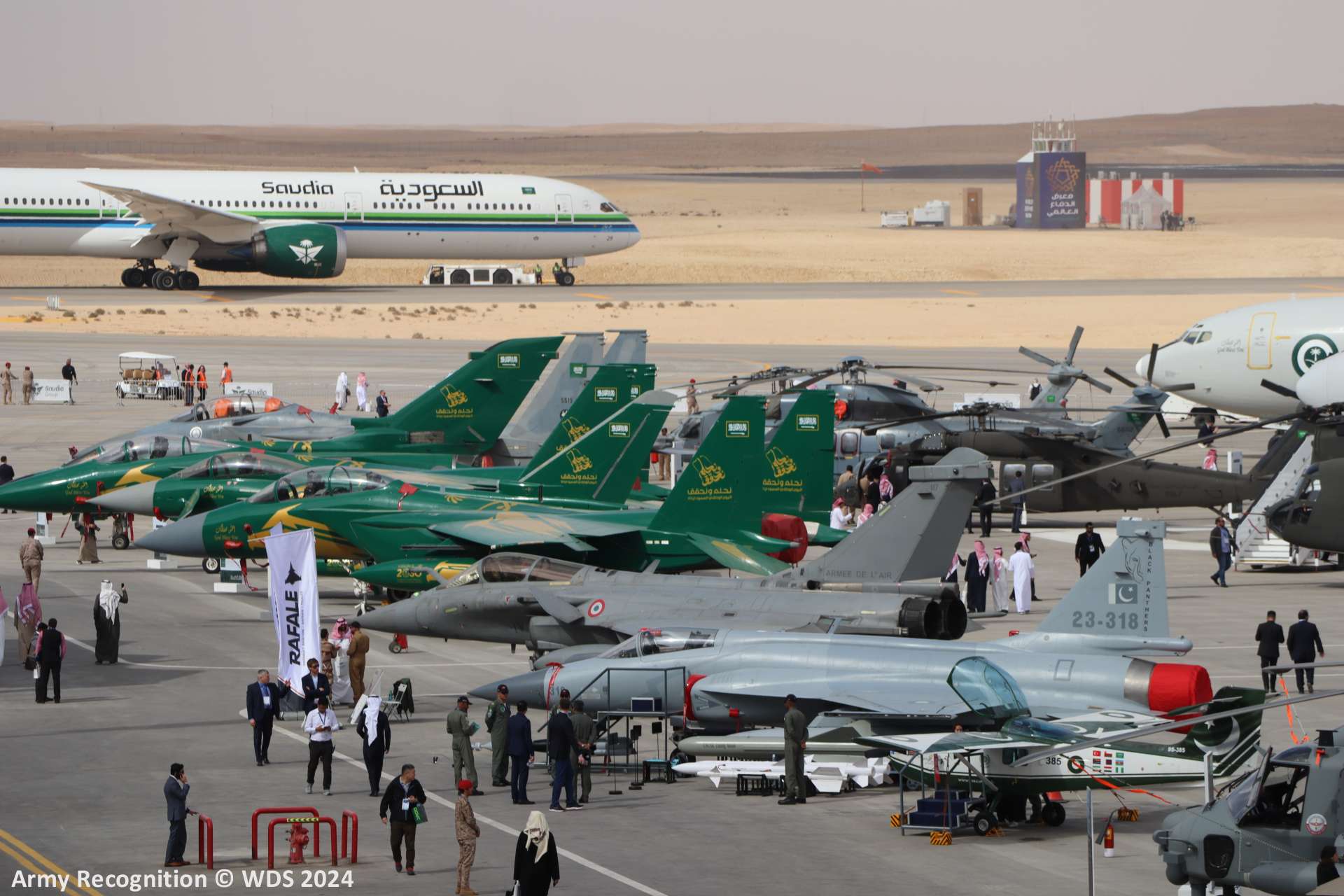
The EMBT ADT-140, which was presented at Eurosatory 2024, is an idea of what the MGCS could look like in the future. (Picture source: Army Recognition)
While Kosiniak-Kamysz did not directly confirm this intention, his remarks have sparked speculation about Poland's potential involvement in the 'Future Combat Air System' (FCAS) and 'Main Ground Combat System' (MGCS) projects. These projects aim to create a next-generation fighter jet and a new tank to enhance the future capabilities of European armed forces.
Kosiniak-Kamysz expressed his willingness to strengthen ties with France and Germany, emphasizing Poland's interest in collaborating within the 'Weimar Triangle'. This development follows months of speculation and increased cooperation since Donald Tusk's return as Polish Prime Minister.
During the press conference, Kosiniak-Kamysz said, "Regarding extensive weapon systems, at the initiative of France and Germany, I expressed openness today. I am open to our allies in the Weimar Triangle strengthening their ties in all these areas." He also highlighted the importance of closer ties in the defense industry, noting, "We have wasted years where cooperation was not good, and we are now interested in strengthening ties."
Previously, German Defense Minister Boris Pistorius had hinted that Poland might participate in the MGCS project during the signing of a memorandum of understanding in April with his French counterpart, Sébastien Lecornu. Pistorius emphasized the importance of including other partners, mentioning Italy and specifically noting the significance of Poland's new government.
The FCAS (Future Combat Air System) project aims to replace the Rafale in France and the Eurofighter Typhoon in Germany. It is also supported by Spain and includes the development of a Next Generation Weapon System (NGWS) composed of next-generation fighters, remotely piloted carriers (drones), and a "combat cloud" for integrating various platforms in cross-domain missions.
This ambitious project is currently in its Phase 1B, with funding of 3.2 billion euros shared between France, Germany, and Spain. Phase 1B includes the development of demonstrators for the next-generation fighter and remote carriers, which are expected to fly for the first time in 2028 or 2029. The final goal is to introduce these new capabilities into the armed forces by 2040, although some experts believe the date could be pushed to 2042-2044 due to technological challenges and internal tensions.
FCAS is distinguished by a "system of systems" approach where various elements collaborate in real-time via the "combat cloud", facilitating coordination between air, land, maritime, and cyber units. This approach aims to ensure operational superiority and Europe's sovereignty in defense.
The MGCS (Main Ground Combat System) project, on the other hand, aims to replace the French Leclerc and German Leopard 2 tanks. After uncertain beginnings, MGCS has recently progressed with the signing of a memorandum of understanding between France and Germany, initiating the technological development phase. Like FCAS, MGCS is expected to see its first operational units around 2040.
These projects are essential for maintaining and strengthening Europe's strategic autonomy in the face of growing threats and the rapid evolution of military technologies.
Read more: Poland Considers Joining Franco-German Tank and Fighter Jet Projects
- Details
- Written by: Jérôme Brahy
- Category: 2024
- Hits: 3632
Following the success of its second edition in February 2024, the World Defense Show 2026 has registered significant early demand from international exhibitors, with floorspace for the event already 50 percent sold on June 18, 2024. This news comes twenty months ahead of the event, highlighting the growing interest and significance of the show. The third edition of the World Defense Show (WDS) is set to take place from February 8-12, 2026, in Riyadh, Saudi Arabia, and expects greater demand from exhibitors, visitors, and delegations.
Follow Army Recognition on Google News at this link
In its 2024 edition, the World Defense Show saw a record number of 773 exhibitors showcased on an expanded floorspace, which sold out six months before the event opened. (Picture source: Army Recognition)
In its 2024 edition, the World Defense Show saw a record number of 773 exhibitors showcased on an expanded floorspace, which sold out six months before the event opened. The rapid selling of floorspace for the 2026 edition indicates a faster pace compared to previous years. Andrew Pearcey, Chief Executive Officer of the World Defense Show, mentioned that just four months after the second edition closed, 50 percent of the floorspace for the third edition had already been sold. Many leading multi-domain businesses booked their stands for 2026 during the 2024 event. Pearcey believes that World Defense Show 2026 will be a critical event for global companies across the defense supply chain.
The WDS team was present at Eurosatory, held from June 17-21, 2024, at the Paris Nord Villepinte Exhibition Centre, to meet potential exhibitors and provide more information about the 2026 event. This opportunity allows exhibitors to book their space while it is still available. Pearcey noted that this development further establishes WDS's position as an emerging global hub for the defense industry, highlighting growth in the size of the event, the number of exhibitors and visitors, and the expertise and influence of those taking part in panels, presentations, and discussions.
He added that the show serves as a gateway to partnership and collaboration with the Saudi Arabian defense industry and as a global networking and policymaking event. The World Defense Show welcomes senior delegations from around the world to meet with representatives of the international defense industry in a confidential and impartial setting.
WDS 2026 will see the return of many networking features and programs, including the 'Meet the KSA Government' program. This program shares the latest developments on the Kingdom’s business guidelines, investment requirements, and partnership processes. The Delegations Program will also return, having previously matched high-ranking officials from 441 delegations representing 112 countries to exhibitors looking to expand into their specific markets. The extended B2B Connect will once again facilitate meetings between buyers and suppliers across the supply chain.
Other signature features and new show themes and networking opportunities will be announced for WDS 2026 over the coming months.
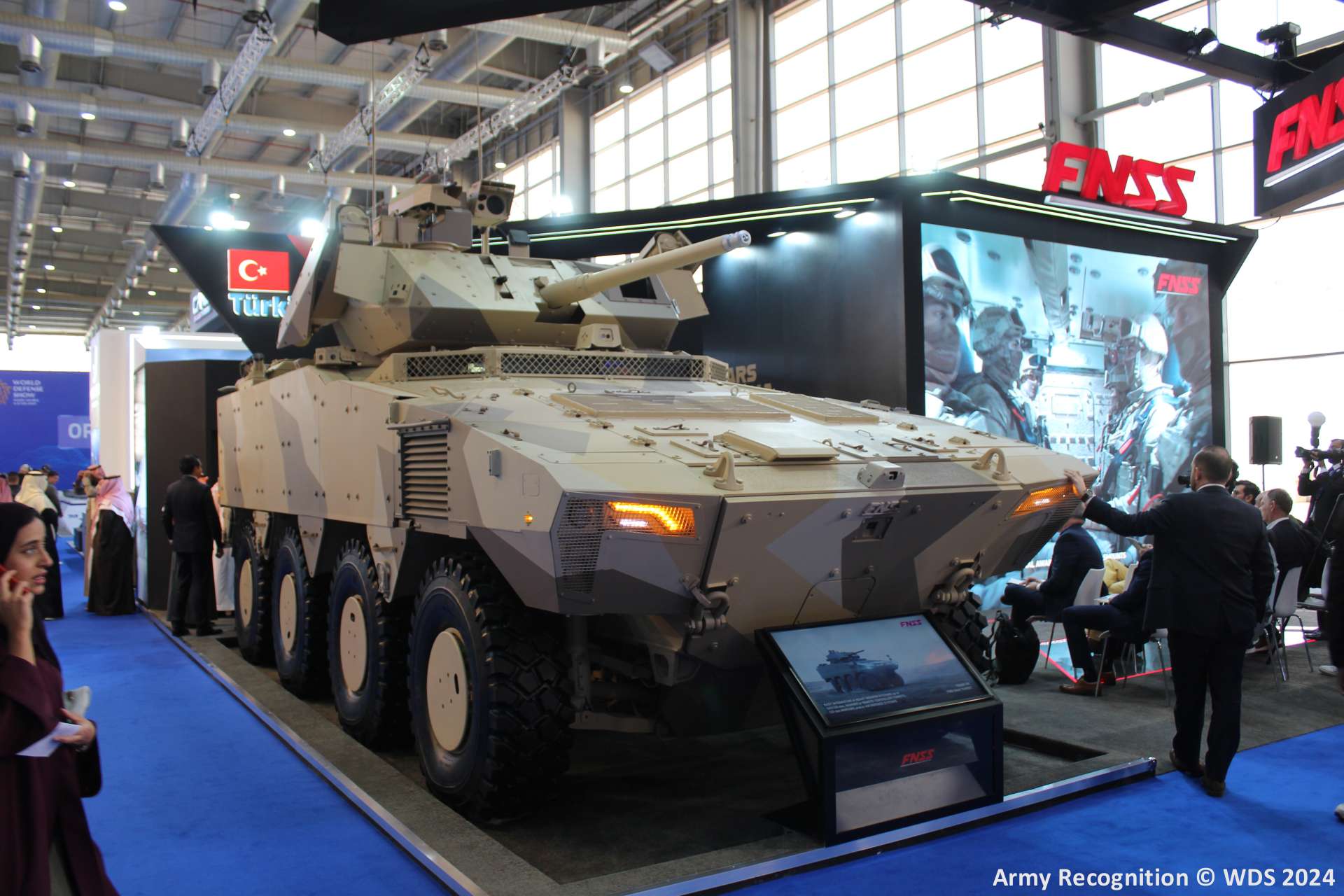
Organized by the Saudi General Authority for Military Industries, the World Defense Show 2024 featured over 773 exhibitors and attracted 106,000 visitors from 76 countries. (Picture source: Army Recognition)
Founded by Saudi Arabia’s defense industry regulator, the General Authority for Military Industries (GAMI), the World Defense Show serves as a global stage for innovation and technological advancement in the defense industry across four key domains: air, land, sea, and security. The event, covering every sector and tier of the defense industry, will deliver networking programs with high-profile attendees, live air and ground displays of advanced defense solutions, and knowledge-sharing segments that will generate opportunities for local and global military industries sectors at the center of the global supply chain. The show will be held in the presence of Saudi Arabia’s key leadership, international delegations, and prominent industry decision-makers from around the world.
GAMI, the founder of the World Defense Show, is responsible for domestic defense sector development in line with KSA’s commitment to Vision 2030. This vision aims to localize 50 percent of domestic defense equipment and services expenditure by 2030.
The World Defense Show 2024, held from February 4-8 in Riyadh, Saudi Arabia, marked its second edition with significant international participation. Organized by the Saudi General Authority for Military Industries, the event featured over 773 exhibitors and attracted 106,000 visitors from 76 countries. The show provided a platform for showcasing defense technologies and fostering international collaboration. Key highlights included live demonstrations of land and air defense systems, featuring displays like the Eurofighter Typhoon, Dassault Rafale C, and various unmanned systems. The event also saw deals and agreements, including a Memorandum of Understanding (MoU) between HAVELSAN, the Saudi Ministry of Investment, and GAMI.
Additionally, the World Defense Show 2024 emphasized the growing importance of multi-domain operations and advanced defense technologies. This included a focus on counter-drone systems, reflecting the global security landscape influenced by conflicts such as the Ukraine war. Companies like MARSS and BAE Systems highlighted their innovations in this field. The show also showcased a wide array of unmanned ground and aerial vehicles, along with advanced naval technologies, underscoring the event's comprehensive coverage of the defense sector. The significant international presence, including a delegation from China, highlighted the event's role in promoting global defense collaboration and innovation.
During the World Defense Show 2024, several world premieres highlighted the event, showcasing innovative technologies and defense solutions. Notably, the China State Shipbuilding Corporation unveiled the Thunderer A2000, a new medium unmanned surface vessel (USV) designed for combat, marking an addition to China's naval capabilities.
Additionally, the event featured the Defense Space Arena, which debuted as a central attraction, providing an introduction to space defense developments. This new feature included interactive exhibits and discussions on the critical role of space in future military operations, with contributions from industry players like BAE Systems, Boeing Space, and Lockheed Martin. The show also saw the premiere of several new unmanned ground vehicles and anti-drone systems, reflecting the latest advancements in defense technology.
Read more: 50% of World Defense Show 2026 space is already sold to exhibitors 20 months ahead
- Details
- Written by: V.Saint
- Category: 2024
- Hits: 4897
ST Engineering announced on June 17, 2024, that its Land Systems division secured contracts for 155 mm NATO-standard ammunition from new clients in Europe. These contracts were awarded through competitive tenders and signify a major expansion of ST Engineering’s presence in the ammunition sector.
Follow Army Recognition on Google News at this link
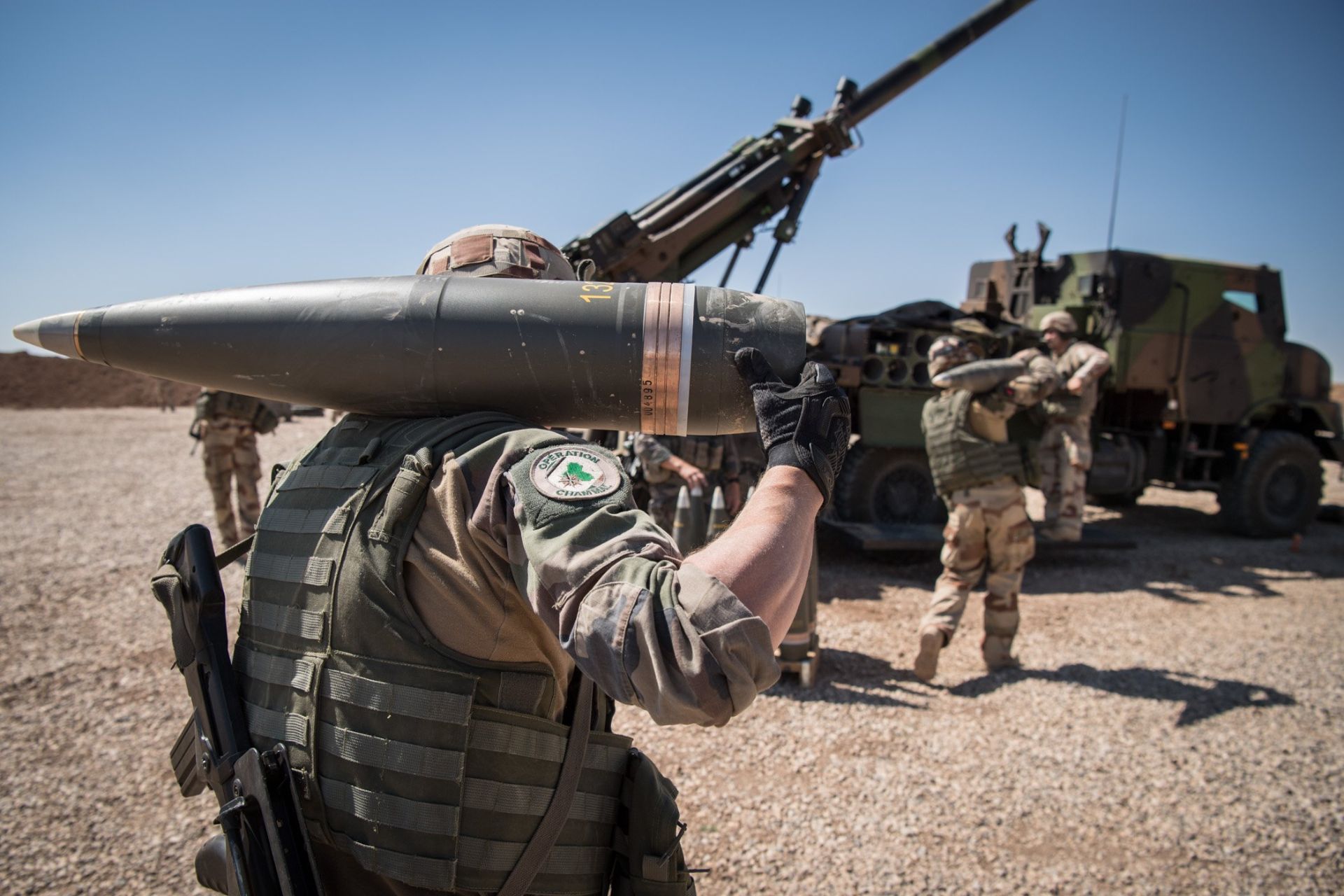
Ceasar Canon Crew reloading a 155mm HE Shell during chammal operation against ISIS . (Picture source: French MOD)
In a press release, the company highlighted that its 155 mm munition system is noted for its high-explosive extended-range projectile and modular charge system, designed for 155 mm caliber 39 and 52 howitzers/cannons. These contracts not only underscore ST Engineering’s competitive edge in the ammunition segment but also the growing trust of global defense forces in its cutting-edge solutions.
Besides the 155 mm munitions, ST Engineering also received orders for 40 mm ammunition from European clients. The company noted that its catalog, which includes over 58 variants and its engineering capability to customize ammunition to meet the unique operational needs of its clients in more than 40 countries, affirms ST Engineering’s position as a leading provider of 40 mm solutions.
The contracts, valued at over 100 million SGD (approximately 69 million EUR), were finalized between April and early June 2024.
Lim Kok Ann, President of Land Systems at ST Engineering, stated in the company’s press release, that These new contracts reflect not only our status as a trusted partner within the NATO community but also demonstrate our defense expertise in meeting the evolving needs of modern artillery operations.
The war in Ukraine and the remilitarization of Europe have ushered in a new golden era for artillery, traditionally referred to in France as "le dernier argument des Rois" (the last argument of kings). Recent experiences have underscored the necessity for long-range strike capabilities, as the extended routes and maneuver times demand strategic flexibility. Indeed, from a strategic standpoint, it is often more cost-effective to mechanize an infantry unit and allow it to maneuver before engaging in combat. This is why France has recently initiated a program to modernize its ground missile launching capabilities.
A key feature of ST Engineering’s 155 mm munitions is their strict adherence to the NATO Ballistic Memorandum of Understanding and Standardization Agreement (STANAG) requirements. This compliance ensures interoperability and reliability, critical factors for NATO forces. The 155 mm munition system from ST Engineering can engage targets up to 30 km away with standard NATO 155 mm/39 caliber guns or up to 39 km with 155 mm/52 caliber guns.
Read more: ST engineering produces 155mm artillery shell for NATO
- Details
- Written by: V.Saint
- Category: 2024
- Hits: 10408
As announced by the Slovenian Ministry of Defense on its official website, the official tests of the Mangart 25 anti-aircraft system began in early June. The armed forces' tests will be conducted at the Bač firing range in collaboration with a consortium of Slovenian companies led by Valhalla Turrets.
Follow Army Recognition on Google News at this link
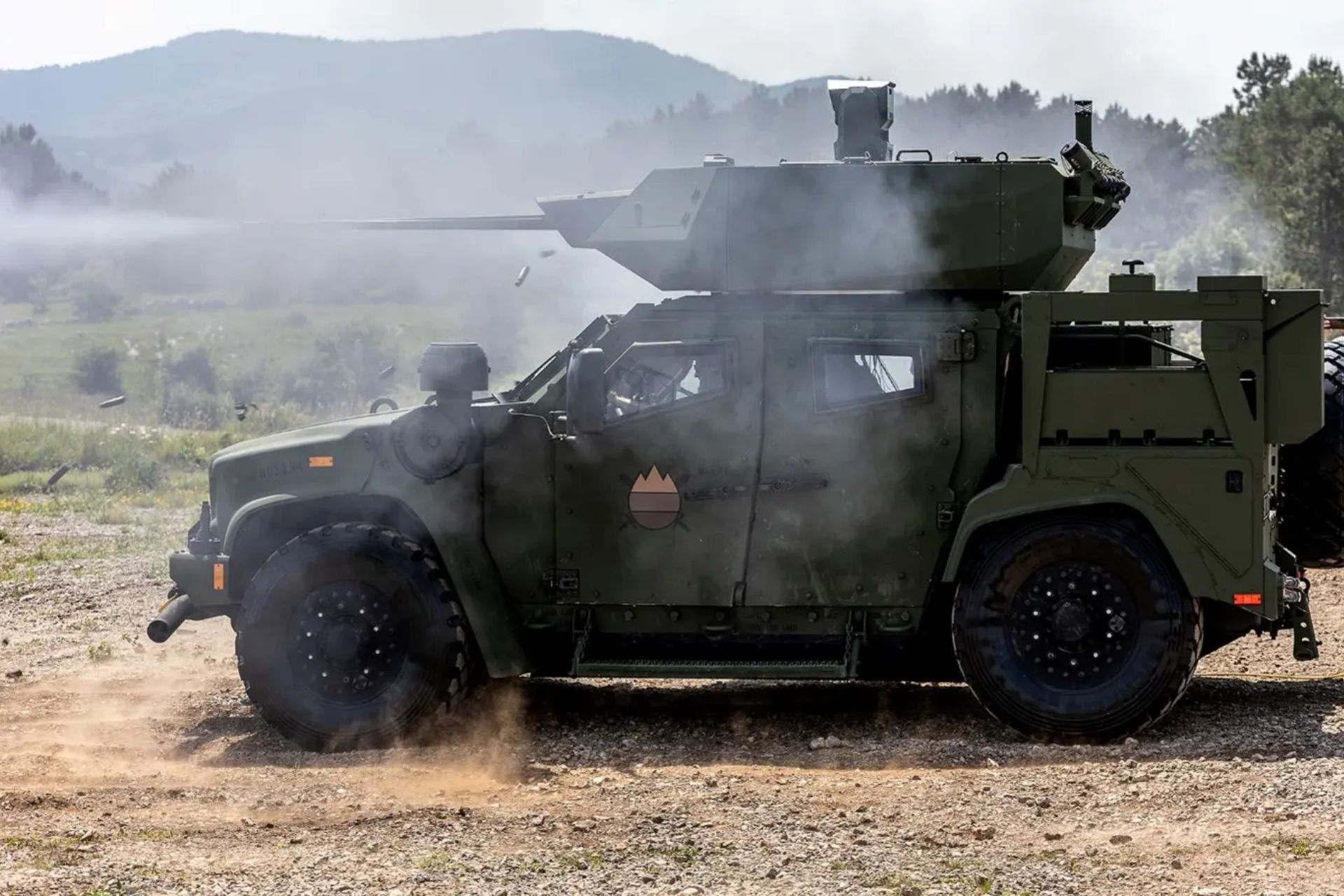
JVTL vehicle with Mangart 25 turret for live anti-aircraft firing. (Picture source: Slovenian Ministry of Defense)
For this purpose, the Mangart 25 air defense system has been integrated into the OSKOSH JLTV protected multifunctional vehicle. At the same time, the light and compact Loki 762 weapon station has been equipped and also tested on a Cobra 4×4 CBRN light reconnaissance vehicle. Loki is intended to replace the outdated weapon station of the CBRN detection vehicle.
The Mangart 25 is equipped with Rheinmetall's KBA 25 x 137 mm single-barrel automatic cannon. The system can be used against drones, helicopters, low-flying aircraft, and other ground-based aerial targets, as well as ground targets up to three kilometers away. It is equipped with an AESA radar and an electro-optical (EO/IR) system for target detection and tracking. There is also an IR warning system (BANS). Future capabilities will include a laser designator, an acoustic shot detection system, tank and anti-aircraft missiles, drones, and artificial intelligence (AI) for faster and better target detection, identification, and tracking.
The remotely operated weapon (RCW) Loki 762 also comes from Valhalla Turrets. The main mechanical, optical, and electronic components are manufactured in Slovenia. It is one of the most compact and lightweight remotely operated weapon stations and is currently the only one on the market available in three calibers: 5.56 mm, 7.62 mm, and 12.7 mm. The Slovenian Armed Forces participated in the final development phase, and its use in the 7.62 mm caliber is planned for Cobra 4×4 CBRN reconnaissance vehicles as well as the Rheinmetall MAN HX 8×8 truck with a swap loading system.

The Mangart 25 anti-aircraft turret, shown here with the LOKI side weapon station as secondary armament. here a MAG 58, from FN herstal is mounted (Picture source: Slovenian Ministry of Defense)

- Details
- Written by: Administrator
- Category: 2024
- Hits: 7797
During Eurosatory 2024, the International Defense Exhibition held in Paris, France, the German company FFG Flensburger Fahrzeugbau Gesellschaft presented its new Armoured Combat Support Vehicle (ACSV) G5. This cutting-edge vehicle stands out due to its adaptable design, enabling it to easily meet a wide array of military needs.
Follow Army Recognition on Google News at this link
At Eurosatory 2024, the German Company FFG presented its new development of tracked multirole armored vehicle. ACSV G5 (Picture source: Army Recognition Group)
The ACSV G5, a product of meticulous engineering, was conceived to incorporate various mission-specific equipment sets on a highly protected and extremely mobile platform. Utilizing ISO container industry standards, FFG has ensured that the vehicle's modules can be exchanged within a matter of hours, allowing for rapid reconfiguration to address new operational requirements. This design philosophy ensures that the ACSV G5 is versatile enough to be deployed across various tasks.
Technologically, the ACSV G5 is equipped to meet the stringent demands of modern military operations. The vehicle adheres to NATO Generic Vehicle Architecture (NGVA) standards and boasts advanced electromagnetic compatibility (EMC). Enhanced data security is achieved through consistent red-black network separation, ensuring secure communications and operations in the field. Additionally, a CAN bus system facilitates swift data flow among vehicle components, enabling rapid diagnostics and maintenance.
One of the ACSV G5's most impressive features is its exceptional mine protection, a testament to its robust design that incorporates a significant proportion of readily available Military-Off-The-Shelf (MOTS) and Commercial-Off-The-Shelf (COTS) products. This approach not only enhances the vehicle's versatility and reliability but also simplifies maintenance and spare parts management, ensuring a superior price-performance ratio throughout the vehicle's lifecycle.
At Eurosatory, German Company FFG demonstrated the ACSV G5's multifunctional capabilities by showcasing its transformation into an all-in-one air defense system. In collaboration with Kongsberg, the vehicle was displayed equipped with sensors and effectors, effectively converting it into a highly protected short-range air defense system armed with Sidewinder missiles. This demonstration highlighted the ACSV G5's modularity and potential for diverse modern warfare applications.
The Armoured Combat Support Vehicle (ACSV) G5 serves as a versatile base platform for a broad family of specialized modular tracked vehicles. Designed to provide adaptable battlefield support to all combat units, the ACSV G5 is the result of FFG's extensive experience in vehicle upgrades and service life extension projects. With over 1600 upgraded vehicles and the recent creation of the PMMC G5 technology demonstrator, FFG has crafted the ACSV G5 to embody the pinnacle of modern tracked vehicle technology.
The ACSV G5 incorporates cutting-edge technologies, featuring an electric and electronic layout based on NATO Generic Vehicle Architecture (NGVA), meeting stringent electromagnetic compatibility (EMC) standards. Its components communicate via a CAN bus system, enabling flexible and rapid system-wide diagnostics.
Equipped with a comprehensive Composite Rubber Track system, the ACSV G5 minimizes vibrations and noise, enhancing comfort for soldiers and reducing wear on equipment. This track system also ensures low ground pressure, providing exceptional mobility in challenging terrains.
Powered by an all-German powerpack, the ACSV G5 includes a battle-proven MTU engine and ZF transmission, representing the latest advancements in military vehicle technology. Together, these features make the ACSV G5 an exemplary model of innovation and reliability in the realm of armoured combat support vehicles.
The ACSV G5 represents a significant advancement in the field of protected combat support vehicles, offering unparalleled flexibility, protection, and technological sophistication. As FFG continues to push the boundaries of military vehicle design, the ACSV G5 is poised to become an invaluable asset to armed forces worldwide, capable of adapting to the ever-evolving demands of the battlefield.
- Details
- Written by: Jérôme Brahy
- Category: 2024
- Hits: 7457
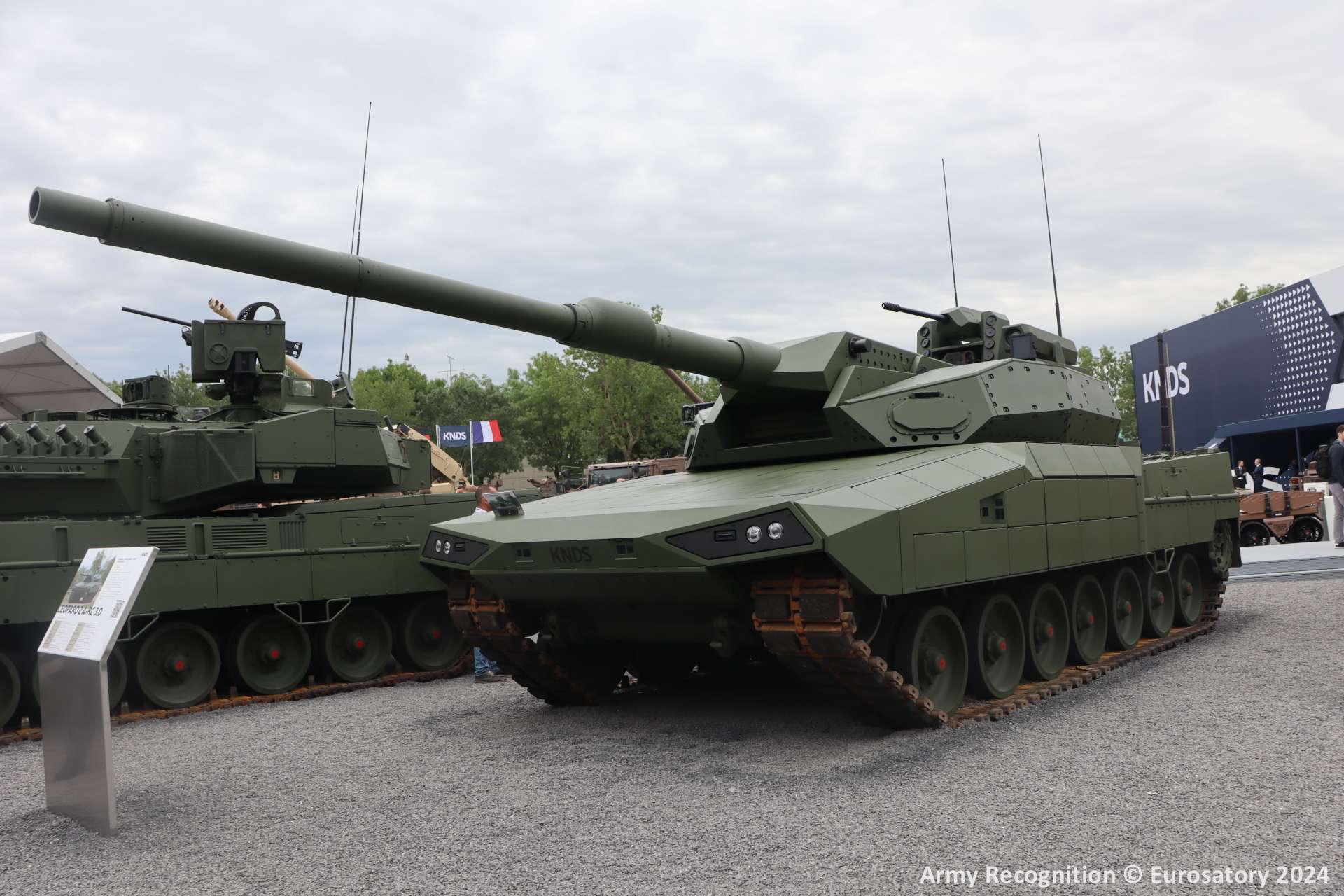
In this fourth episode of our series on the main battle tanks showcased at the Eurosatory 2024 exhibition, we will focus on one of the most awaited tanks of the show: the Leopard 2 A-RC 3.0 from KNDS Germany, a tank intended to serve as a transitional Main Battle Tank before the Main Ground Combat System (MGCS) becomes operational in the late 2030s. Representing a notable upgrade over its predecessors within the Leopard 2 series, this tank possesses features such as an unmanned turret, a modular autoloader system, and an AI-powered sensor suite designed to enhance battlefield effectiveness.
Follow Army Recognition on Google News at this link
The turret's design includes two pivot points, known as trunnions, ensuring the gun remains level above the chassis at all times. This results in a flat turret design that reduces the occupied vulnerable area by 30%. (Picture source: Army Recognition)
The shift to an unmanned turret was a deliberate choice, as explained by Dr. Axel Scheibel, KNDS Germany's Chief Technology Officer, during the unveiling ceremony. This configuration, based on components previously seen on the Tracked Boxer, removes the need for a basket, thereby increasing the available space within the chassis to position the three-man crew (commander, gunner, and driver) under the turret, as it does not intrude into the chassis. Artificial intelligence (AI) algorithms and robotic systems replace the fourth crew member in handling simpler issues and reduce workload by providing only necessary information relative to the situation. Dr. Scheibel noted the implementation of degraded modes to ensure the tank remains operational even when systems fail.
The turret's design includes two pivot points, known as trunnions, which allow for gun rotation without intrusion, ensuring the gun remains level above the chassis at all times. This results in a flat turret design that reduces the occupied vulnerable area by 30%. This configuration enables a 10° depression and approximately 25° maximum elevation. The Leopard 2 A-RC 3.0's turret is also designed to accommodate various main gun calibers, ranging from 120 to 140 mm, making it compatible with all current and future NATO tank guns, including the 120 mm L44 and L55 smoothbore guns, Rheinmetall's Rh-130/51 mm gun (used by the KF-51 Panther), and the KNDS Ascalon gun system, either in 120 or 140 mm. This adaptability ensures that armies can start with existing 120 mm smoothbore guns and upgrade to larger calibers in the future without purchasing a completely new fleet of tanks.
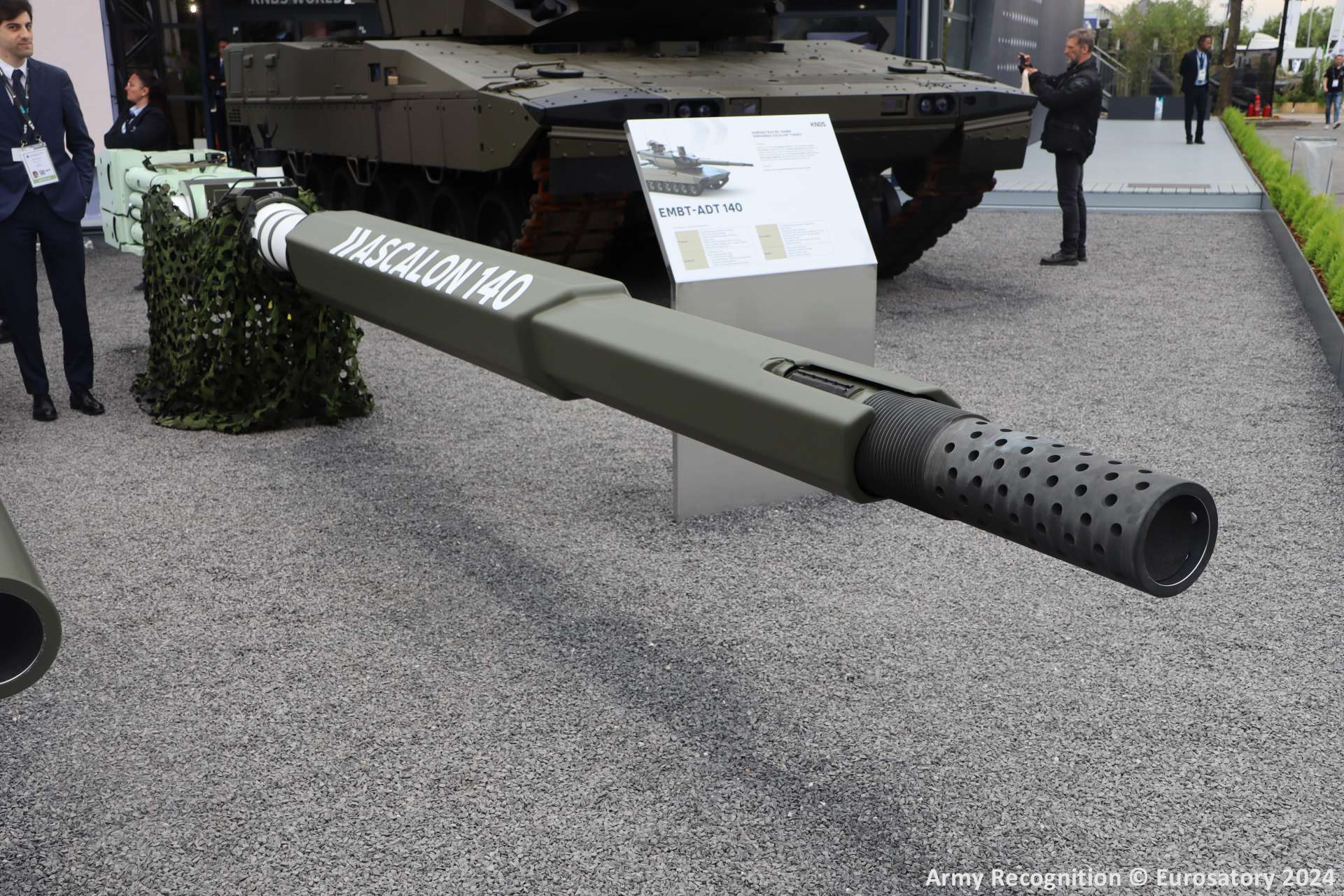
The Leopard 2 A-RC 3.0 is compatible with all current and future NATO tank guns, including the 120 mm L44 and L55 smoothbore guns, Rheinmetall's Rh-130/51 mm gun (used by the KF-51 Panther), and the KNDS Ascalon gun system, either in 120 or 140 mm. (Picture source: Army Recognition)
For the Leopard 2 A-RC 3.0, KNDS Deutschland developed a modular autoloader system inspired by soda bottle dispensers, with the ramming system at the center and rows of ammunition on either side. This system can feed three initial rounds to the barrel within 10 seconds, providing a quicker reloading rate compared to current systems used by Western tanks. Housed within the turret, the autoloader hosts 20 rounds in two rows of 10 each, ensuring balanced turret weight distribution and operational efficiency during engagements.
Secondary armament includes eight multi-purpose smoke and grenade launchers, with four on each side, and a Remote Controlled Weapon Station (RCWS) armed with a NATO 30x113 mm gun capable of countering UAV threats. The RCWS also includes the commander’s panoramic sight for improved cost efficiency. For longer-range engagements, a multi-purpose guided missile system for both line-of-sight (LOS) and non-line-of-sight (NLOS) scenarios is installed on the left side of the turret and is raised only when necessary, a solution seen on the TOW missile launcher from the American Bradley Fighting Vehicle.
Dr. Scheibel stated that the unmanned turret allowed for the optimization of the protection package, considering new threats like drones and loitering munitions with a top-down attack profile. The crew's relocation inside the hull, mostly under the turret, enhances shielding against top attack threats, creating three defeating lines: the turret ceiling, the space within the turret, and the chassis roof. The hull roof has also been raised by around 100 mm to improve ergonomics, with a flat roof extending from the rear to the front glacis. The crew accesses the tank via two sliding hatches located at the front, with an emergency exit available in the floor, similar to previous Leopard 2 models.
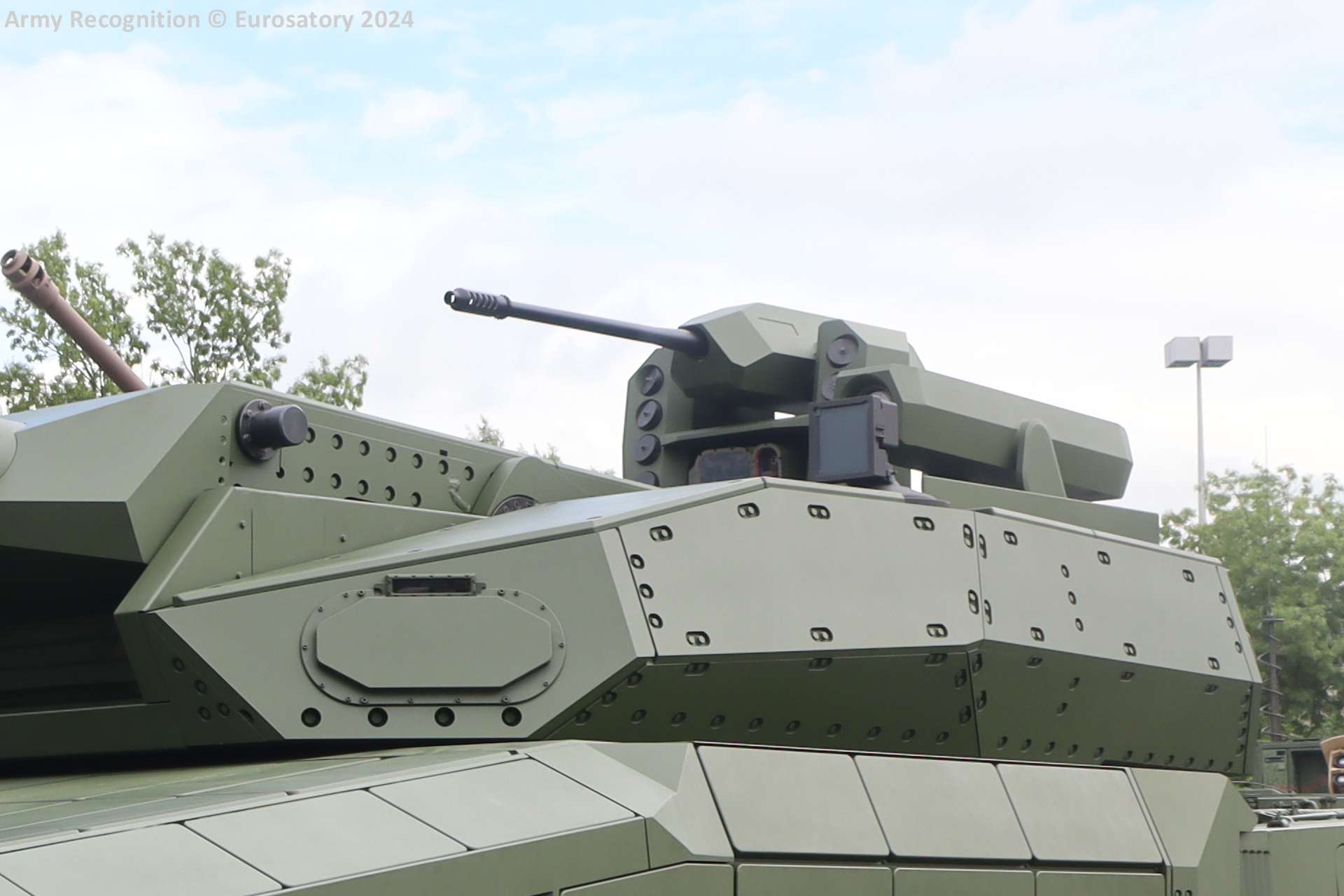
Secondary armament includes eight multi-purpose smoke and grenade launchers, a Remote Controlled Weapon Station (RCWS) armed with a 30 mm gun, and a multi-purpose guided missile system for both line-of-sight (LOS) and non-line-of-sight (NLOS) engagements. (Picture source: Army Recognition)
The Leopard 2 A-RC 3.0 can withstand hits from 57 mm rounds, including from the side, addressing the direct fire threat from the latest Russian infantry fighting vehicles like the BMP B-19. The tank's protection is further reinforced with a Trophy active protection system (APS) to counter missiles and RPGs, with ongoing developments to expand its capability against UAV threats. The Leopard 2 A-RC 3.0 is also equipped with a multispectral sensor suite that enhances tactical and situational awareness, including UxV control, optronics, and multiple detection systems such as laser warning, optics detection, and drone detection.
Weighing less than 60 tons due to the unmanned turret module, the Leopard 2 A-RC 3.0 measures 7.95 meters in length, extending to 11.17 meters with the gun, 3.77 meters in width, and 2.44 meters in height to the turret roof, reaching 2.84 meters with the PERI. Its MTU 873 diesel engine, generating 1,100 kW (1,500 HP), coupled with a Renk HSWL 354 gearbox, allows the tank to reach speeds exceeding 65 km/h and a range of 460 km on the road. The ground clearance of 500 mm ensures effective navigation across various terrains.
Looking ahead, KNDS Deutschland aims to showcase a fully operational demonstrator of the Leopard 2 A-RC 3.0 by 2026, refining its chassis design based on feedback from potential users such as the German armed forces (Bundeswehr). KNDS Deutschland aims to offer this new variant as an update to existing Leopard 2 models, from the A4 to the A8 standard. The turret will be replaced by the new design, while the rear part of the hull remains unchanged, and the front part will be modified to accommodate the new crew positions.
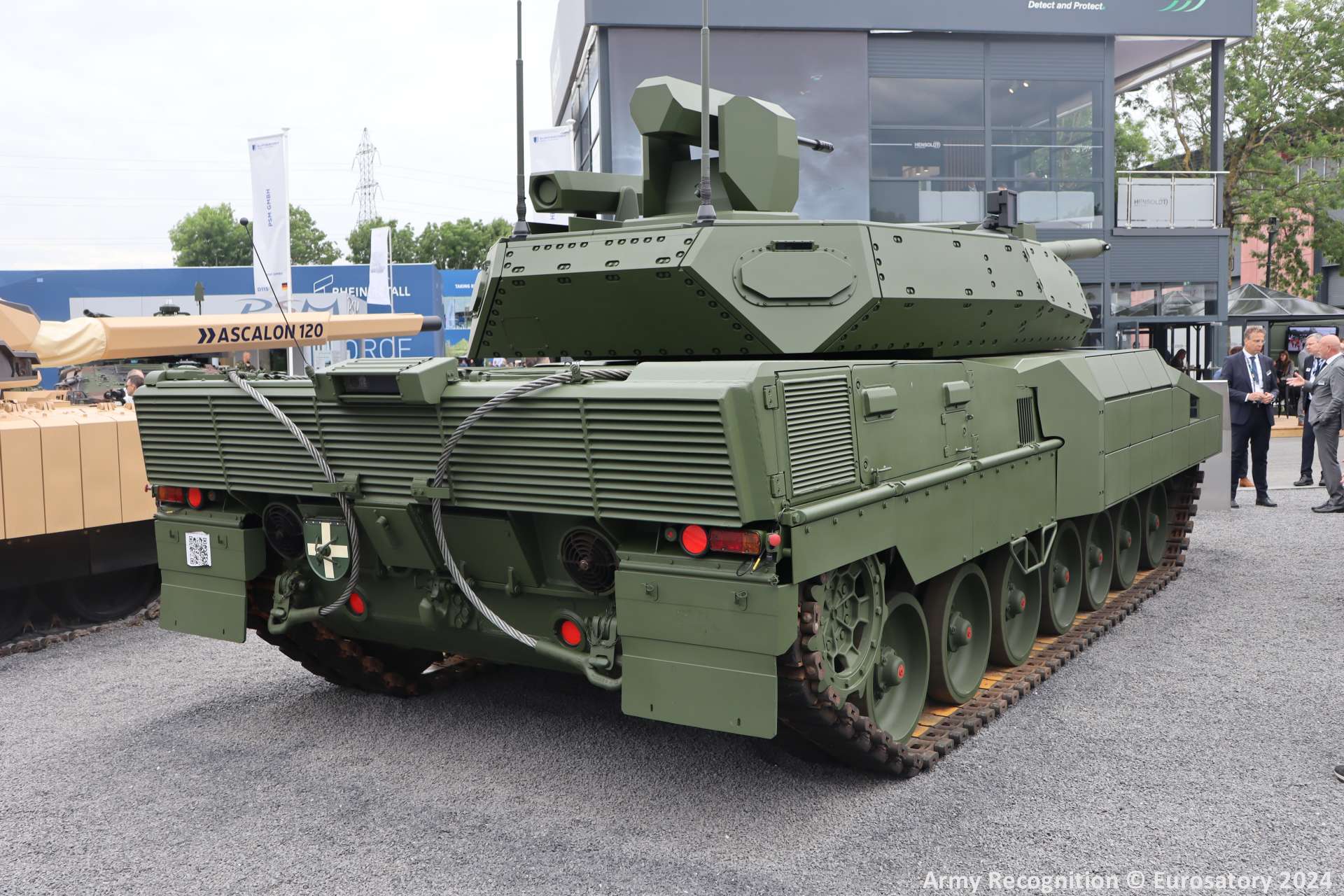
KNDS Deutschland aims to showcase a fully operational demonstrator of the Leopard 2 A-RC 3.0 by 2026, refining its chassis design based on feedback from potential users such as the German armed forces (Bundeswehr). (Picture source: Army Recognition)
- Ukraine Announces Home-Made Production of DOK-ING MV-10 Mine Clearance System
- Serbia counts 800 millions euros of ammo exported in Ukraine with help of Europe
- Ukraine validate more than 40 western given vehicles to fight against Russia
- Spanish Leopard 2A4 Main Battle Tanks and Patriot Air Defense System Arrive in Ukraine