

- Details
- Written by: Vandenbosch
- Category: 2024
- Hits: 7194










The German parliament has approved the purchase of four Patriot missile defense units. This is the second such contract this year, with the first one approved in March. The new acquisition also includes additional PAC-2 GEM-T and/or PAC-3 MSE missiles.
Follow Army Recognition on Google News at this link
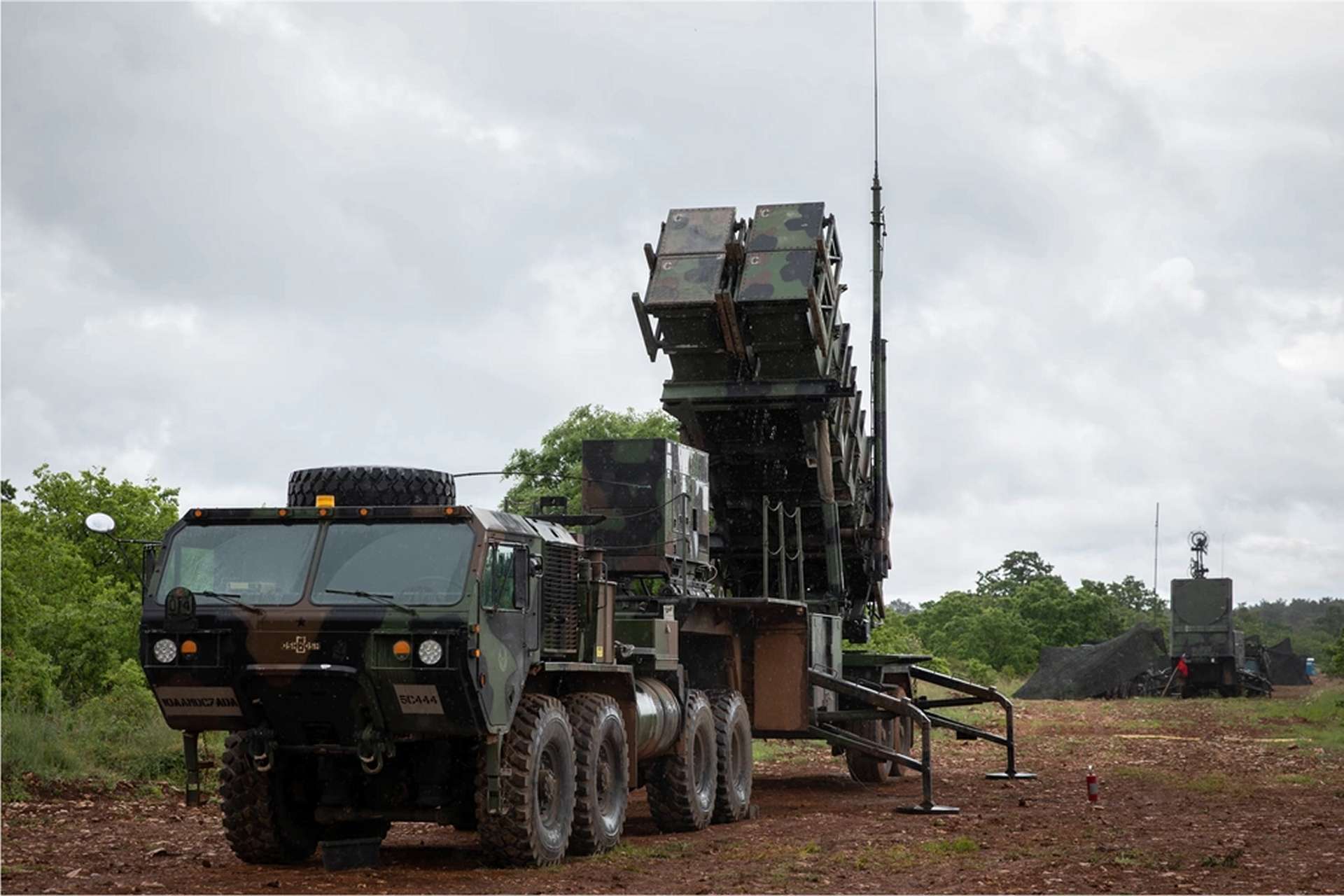
The Patriot PAC-3 is a long-range, all-altitude, all-weather missile defense system. (Picture source: US DoD)
Germany has thus approved the purchase of four new Patriot missile defense units, which include additional PAC-2 GEM-T and/or PAC-3 MSE missiles.
Before the full-scale war in Ukraine, Germany had 12 operational PAC-3 Patriot batteries, three of which were transferred to Ukraine. The new contract will slightly increase Germany’s defense capabilities compared to the pre-2022 level. The new batteries are expected to be in the standard PAC-3+ configuration, and the GEM-T missiles might be produced in Germany through a collaboration between MBDA Deutschland and Raytheon. However, sources differ on which specific missiles Germany has decided to purchase.
In the 1990s, Germany had up to 36 operational Patriot batteries in older configurations. Of these, 24 were financed by the United States and provided under a 1983 agreement. Germany agreed to supply the crews and operational support for the U.S.-provided Patriots and protect selected U.S. bases with Roland's short-range systems. Eventually, all the Patriots provided by the Americans became the property of Germany. Berlin then transferred most of these older PAC-2+ systems to other countries, including South Korea (8), Spain (3), Israel (4), and Jordan (3 or 4).
The Patriot PAC-3 is a long-range, all-altitude, all-weather missile defense system. Used by many countries, including Germany, Israel, Japan, Poland, and the United States, this air defense missile is designed by the United States. The missile itself weighs approximately 700 kg (1,540 lbs) and is about 5.2 meters (17 feet) long.
It can destroy targets at distances between 20 and 35 km (12 to 22 miles). Unlike other missiles that use explosive warheads, the PAC-3 uses a hit-to-kill method. This approach relies on the kinetic energy generated by the impact of the missile with its target to destroy it, eliminating the need for explosives.
The PAC-3 reaches a top speed of Mach 5, approximately 3,836 mph (6,173 km/h). It is equipped with an active radar seeker in its nose to guide the missile to its target, allowing it to track and engage targets autonomously. This guidance system is enhanced by mid-course updates from ground-based radar and the missile’s onboard inertial navigation system. The radar used for this update is the AN/MPQ-65, which plays a crucial role in the precise tracking and guidance of the PAC-3 missiles.
Strengthening air defense has become a priority for most European countries following the war in Ukraine. Germany is no exception, especially since it has significantly aided Ukraine and thus needs to bolster its own defenses. These purchases make a lot of sense for the German military.
Read more: Germany Buys 4 New Patriot Long-range Air Defense Missile System

- Details
- Written by: V.Saint
- Category: 2024
- Hits: 6819
The United States has sold 108 M1 tanks to Taiwan. Currently, about 40 tanks have left the factory. The first batch of 38 tanks will be delivered to Taiwan in the fourth quarter of this year. At the same time, the army is preparing for the long-term use of the M1 tanks. 460 M60A3 tanks are undergoing a life extension and performance improvement plan. According to the latest information, after purchasing 460 new engines for the M60A3 tanks from foreign companies, an additional investment of 836 million yuan has been made to purchase M60A3 tanks from Factory 202 of the Armament Administration.
Follow Army Recognition on Google News at this link
M60A3 during live fire exercises in 2023 (Picture source: Taiwan Ministry of Defense )
The United States has sold 108 M1 tanks to Taiwan. Currently, about 40 tanks have left the factory. The first batch of 38 tanks will be delivered to Taiwan in the fourth quarter of this year. At the same time, the army is preparing for the long-term use of the M1 tanks. 460 M60A3 tanks are undergoing a life extension and performance improvement plan. According to the latest information, after purchasing 460 new engines for the M60A3 tanks from foreign companies, an additional investment of 836 million yuan has been made to purchase M60A3 tanks from Factory 202 of the Armament Administration.
The M60A3 and CM11 tanks currently in service in the military are equipped with 105mm tank guns, while the M1 tank uses a 120mm tank gun. The M60A3 has been in service for nearly 30 years. The degree of wear on the tank's gun barrel depends on the actual number of shots fired from each tank. Not all M60A3 tanks need their barrels replaced.
The M60A3 tank constitutes the main armored force of the active service Taiwanese army. A photo shows dozens of M60A3 military tanks rapidly assembling in Wude, Penghu, during the Hanguang exercise, where they vigorously attacked enemy targets. The artillery fire at the scene was shockingly intense.
Military sources have indicated that the number of tank guns required for the M60A3 purchased from Factory 202 of the Armament Administration represents about a third of the number of tanks. The contract took effect in the middle of this month and is expected to be completed by the end of 2028. The delivery of all the tank guns is now finished, and this timeline also corresponds to the purchase and updating of the tank engines.
The army command confirmed today that to effectively maintain the security of the M60A3 combat vehicle, Factory 202 of the Armament Bureau has been tasked with producing "gun barrels" to meet manufacturing and combat readiness needs. Currently, the signing of the commission agreement is completed, and all progress is on schedule.
As part of the life extension and performance improvement plan for the M60A3 tank, in addition to replacing the power system and the gun barrel, the gun control, firing, and targeting systems will also be fully renovated. The M60A3's fire control and targeting system has been upgraded. It will be equipped with a new digital fire control, fully electric gun control, and a high-resolution targeting system, which can resolve the issue of disappearing sources, improve firing accuracy, shorten engagement times, and enhance the success rate of first launches. Additionally, the commander will have an independent targeting system, which will enable direct observation and firing to conduct effective strikes.
A previous report submitted by the National Defense Ministry to the Legislative Yuan stated that the primary target of the M60A3 was the Type 05 amphibious assault vehicle, the main force of the Chinese Communist Party's landing operations. The vehicle weighs 26 tons and is equipped with a 105mm cannon. To cross floodwaters and capture beach speeds, the vehicle's body is made of aluminum alloy armor without any external armor, so protection is low during the beach-coast combat phase. The 105mm tank gun of the Chinese army's M60A3 relies on the DM63 stable discarding sabot projectile, which can penetrate 450mm of homogeneous steel armor and effectively destroy the Type 05 series amphibious combat vehicles.
Read more: Taiwan modernizes old M60A3 with new barrel, while waiting for M1 MBT
- Details
- Written by: Halna du Fretay
- Category: 2024
- Hits: 2918
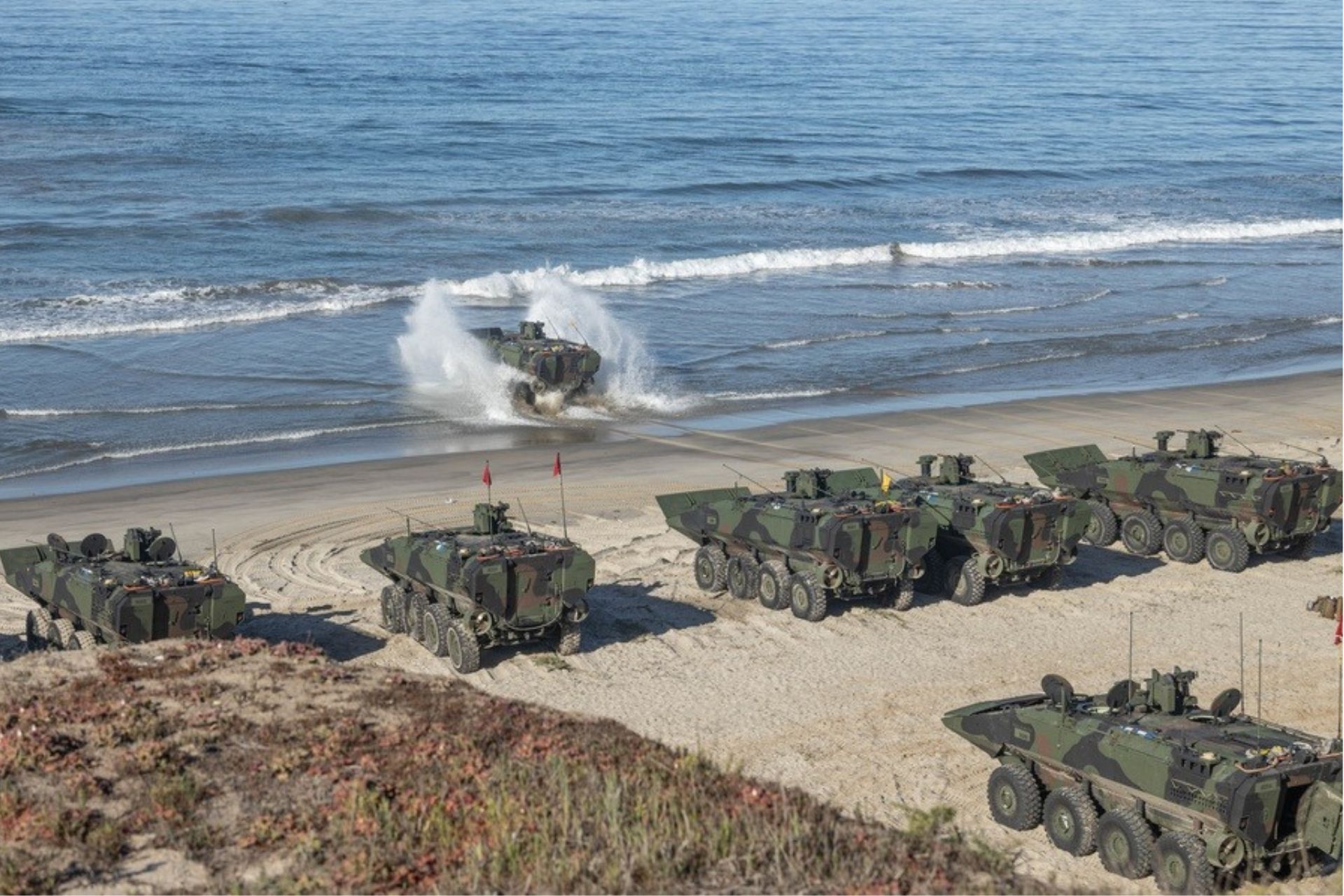
The United States Marine Corps has enhanced its capabilities in the Pacific with the arrival of new Amphibious Combat Vehicles (ACVs) in Okinawa, Japan. This deployment, involving the ACV-P personnel variant, took place on June 29 at the Naha Military Port and is a critical element in the Marines' strategy to improve ground and amphibious combat readiness amid rising tensions in the Indo-Pacific region.
Follow Army Recognition on Google News at this link
Manufactured by BAE Systems, these ACVs are replacing the aging Assault Amphibious Vehicles (AAV) that have been in service since the early 1970s (Picture source: US DoD)
These vehicles, part of the modernization of the Marine Corps' assets in the Pacific theater, are aimed at bolstering preparations for potential high-intensity conflicts, particularly in scenarios that involve island-hopping operations that could arise due to increasing geopolitical tensions with China. The 4th Marine Regiment, part of the III Marine Expeditionary Force stationed at Camp Schwab, is the first recipient of these vehicles. A total of 12 ACV-Ps, which are the basic personnel carriers of the Marines' new ACV fleet, have been allocated for delivery this month, according to Tim Hough, the commanding officer and program manager of Advanced Amphibious Assault (PM AAA).
Manufactured by BAE Systems, these ACVs are replacing the aging Assault Amphibious Vehicles (AAV) that have been in service since the early 1970s. The new vehicles are expected to provide improved operational capabilities, including higher speeds on land and similar amphibious speeds to the AAVs. Notably, the ACV features a V-shaped hull designed to reduce the risk from mines and improvised explosive devices, a significant safety enhancement over the flat-bottomed AAVs.
The recent deployment of these vehicles follows their first use during training exercises with the 15th Marine Expeditionary Unit at the White Beach training area in Okinawa earlier this month. This fleet includes several mission-role variants: the ACV-C for command and control, the ACV-R for recovery, and the newly developed ACV-30, which is equipped with a 30mm Mk 44 Stretch Bushmaster cannon, marking the largest gun on a mechanized vehicle in the Corps’ inventory following the divestment of Marine M1 Abrams tanks.
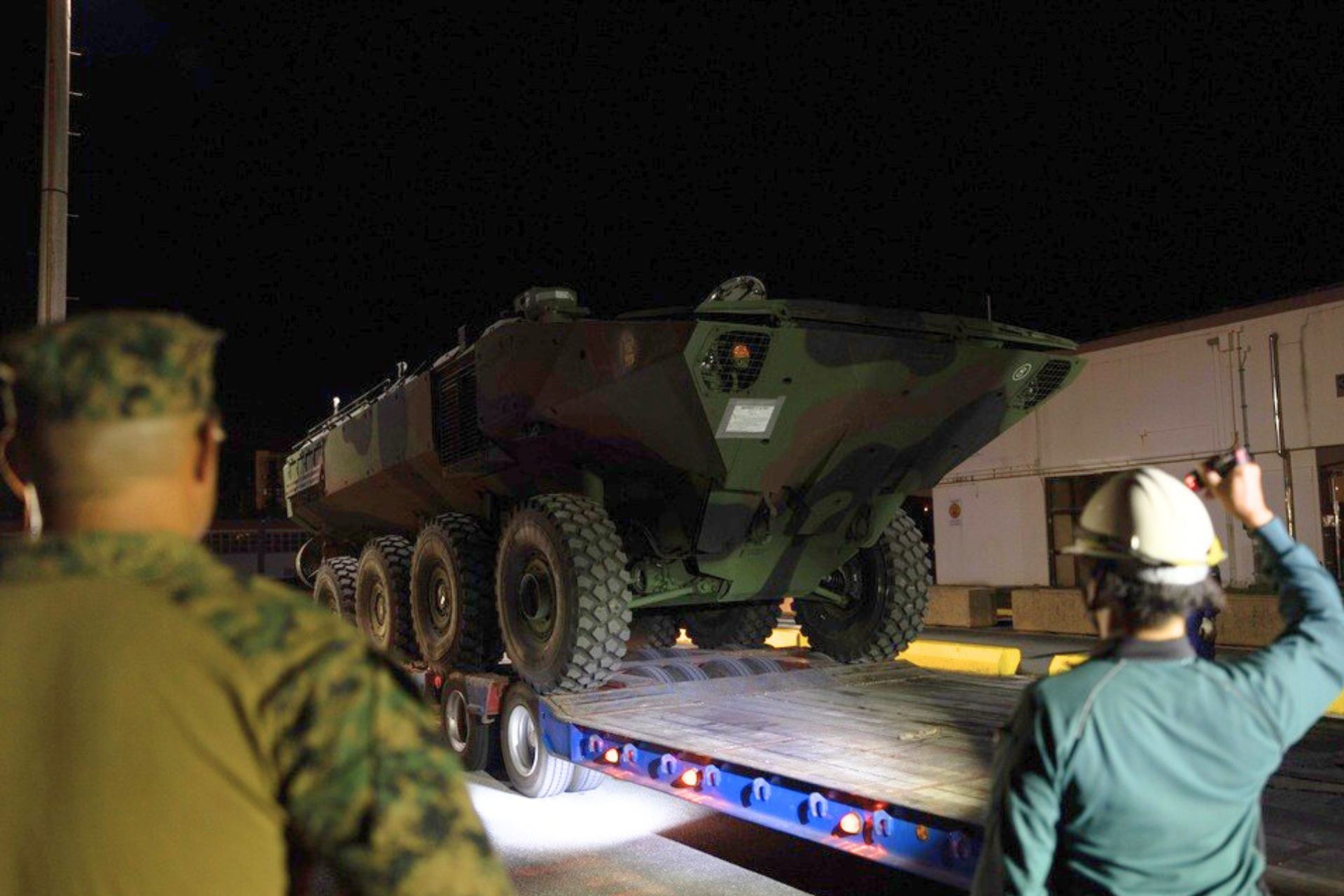
U.S. Marine Corps Sgt. Jack Kanta disembarks an Amphibious Combat Vehicle at Naha Military Port, Okinawa, Japan, June 29, 2024 (Picture source: US DoD)
The arrival of the ACVs is part of a broader shift by the Marine Corps towards a more mobile and responsive force structure, suited to the unique demands of the vast maritime landscape of the Indo-Pacific. This strategy is intended to ensure readiness for rapid deployment across the region's numerous islands, enhancing the USMC's ability to conduct operations in conjunction with allies and effectively manage emerging threats.
This strategic deployment not only emphasizes the USMC's commitment to maintaining a robust presence in the Pacific but also enhances its capabilities to conduct amphibious operations, a critical element given the geographical challenges of the region.

- Details
- Written by: Halna du Fretay
- Category: 2024
- Hits: 10879
On July 2, 2024, the Islamic Republic of Iran's Army unveiled an upgraded version of the M60 tank, now named "Soleiman-402," as reported on X by @IranDefense. This significant upgrade incorporates a range of advanced technologies designed to enhance the tank's survivability and operational effectiveness on modern battlefields.
Follow Army Recognition on Google News at this link
The tank includes systems similar to the Shtora electro-optical "jammers" used on many T-72S tanks, known for their ability to disrupt enemy missile guidance (Picture source: @IranDefense on X Channel)
The Soleiman-402 features several notable modifications. Firstly, the tank is equipped with a new Remote Weapon Station (RWS) that includes a thermal sighting system and a meteorological sensor, thereby increasing its accuracy and responsiveness under various environmental conditions. Additionally, it is fitted with Explosive Reactive Armor (ERA) across the turret and the lower front part of the hull (LFP), and possibly a type of composite armor known as SLERA on the upper front part (UFP).
Another significant improvement is in the area of electro-optical countermeasures. The tank includes systems similar to the Shtora electro-optical "jammers" used on many T-72S tanks, known for their ability to disrupt enemy missile guidance. However, unlike the Karrar tank, which uses smaller, more modern jamming devices that also incorporate a laser warning receiver (LWR), the "Soleiman-402" opts for a larger and potentially less modern version of these systems.
Observers have also noted differences between the displayed prototypes, suggesting ongoing trials of various configurations. For example, one prototype featured an unusual gun sleeve not present on another, indicating ongoing adjustments in armor design or armament.
This upgrade appears to be an attempt by NEZAJA to enhance the resilience of its M60 tanks against contemporary threats by adapting existing technologies rather than developing new vehicle platforms. Although the technological choices may seem eclectic, they reflect a strategy of maximizing available resources. The operational outcomes of these enhancements remain to be seen, but they clearly demonstrate a significant commitment to advancing Iran's ground combat capabilities.
Read more: Significant Update to Iranian M60 Tanks: Introduction of Soleiman-402 Model
- Details
- Written by: Vandenbosch
- Category: 2024
- Hits: 6855
The Baltic nations of Estonia, Latvia, and Lithuania, as well as Poland and Morocco, are set to benefit from the long-range missile capabilities of the Army Tactical Missile System (ATACMS) thanks to a contract from the United States Department of Defense (DoD), thereby fulfilling earlier agreements aimed at enhancing their military capacities.
Follow Army Recognition on Google News at this link
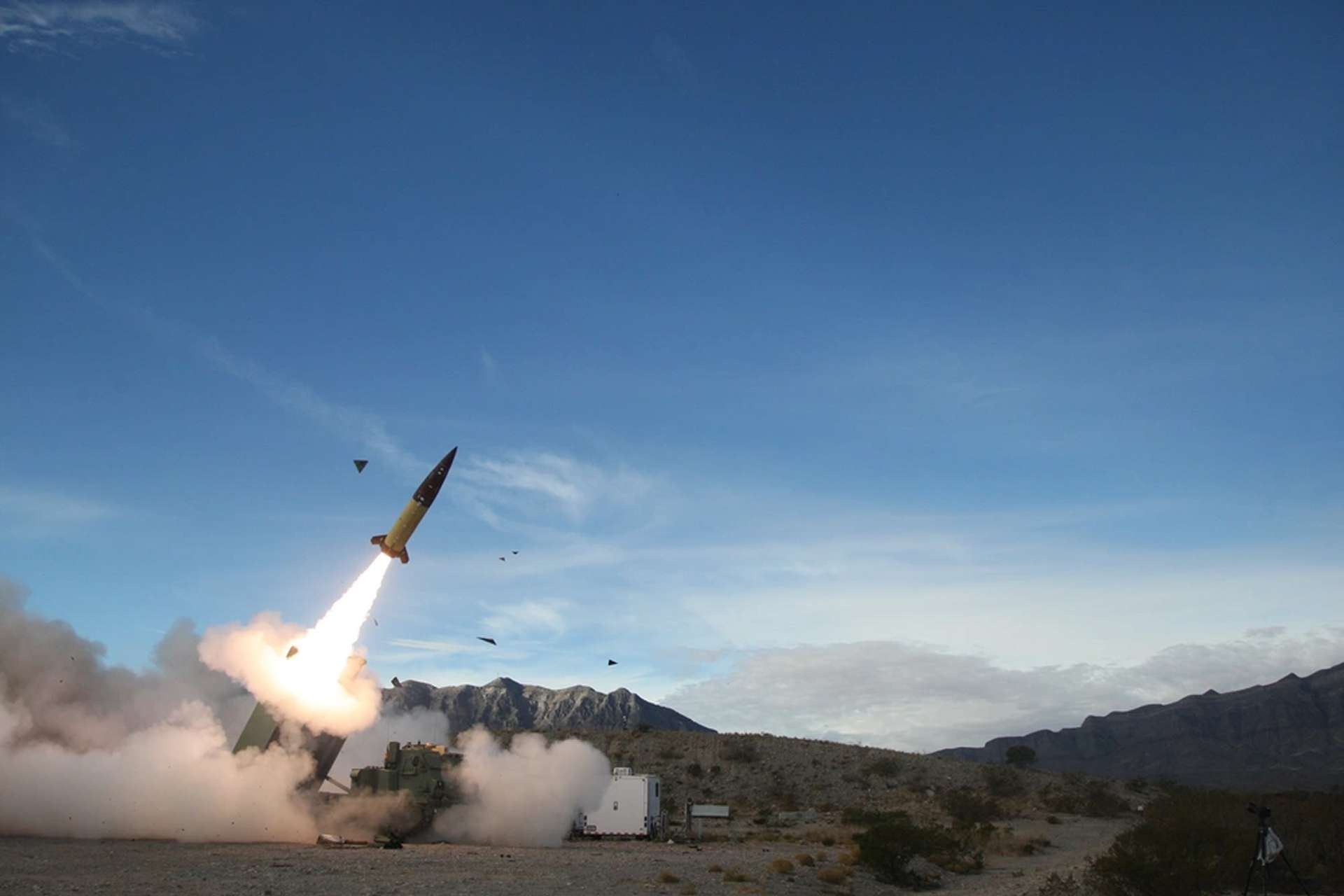
The ATACMS (Army Tactical Missile System) is a short-range tactical ballistic missile (Picture source: US DoD)
The ATACMS tactical missile will be produced under a $226.8 million hybrid contract awarded to Lockheed Martin. This contract, announced by the DoD on July 2, 2024, covers the procurement of missiles and launch systems under the Foreign Military Sales (FMS) program, with work expected to continue until December 2028.
Currently, Estonia, Latvia, Lithuania, and Morocco do not operate the M142 High Mobility Artillery Rocket System (HIMARS) or the M270 Multiple Launch Rocket System (MLRS), which are the launch vehicles for the ATACMS missile. However, Poland, which received five M142 HIMARS vehicles in 2023, plans to expand its fleet to 506 systems.
In October 2023, Latvia requested six HIMARS platforms and associated ATACMS missiles. Lithuania received approval in November 2022 to purchase eight M142 HIMARS and ATACMS munitions, a transaction valued at $492 million. Estonia also finalized a deal for HIMARS launchers in 2022. In April 2023, Morocco requested 18 HIMARS launchers and 40 M57 ATACMS, along with 36 M31A2 unitary guided MLRS (GMLRS) rounds and 36 M30A2 GMLRS alternative warheads, for a total package valued at $524.3 million.
Manufactured by Lockheed Martin, the ATACMS is a long-range guided missile that can be launched from the MLRS family of systems, including the M142 HIMARS, and M270. The missile is designed to resemble standard MLRS payloads to conceal its capabilities from adversaries. It features enhanced GPS guidance and a 500 lb (230 kg) WDU18 blast fragmentation warhead, ensuring precision and effectiveness over a range of 300 km.
The ATACMS (Army Tactical Missile System) is a short-range tactical ballistic missile with impressive accuracy, capable of hitting targets with a margin of error of about 10 meters or less. Designed and used by the United States, this missile weighs between 1,600 and 2,300 kg, depending on the specific variant. It can reach a speed of approximately Mach 3, or around 3,700 km/h.
The guidance system of the ATACMS relies on a combination of GPS and inertial navigation systems (INS), enabling it to hit targets at distances ranging from 160 to 300 km. The launch vehicles for this missile are the M270 Multiple Launch Rocket System (MLRS) and the M142 High Mobility Artillery Rocket System (HIMARS).
In terms of dimensions, the ATACMS measures 5.75 meters in length, 2.49 meters in width, and 2.4 meters in height. These technical characteristics make the ATACMS a powerful and precise tool for the US armed forces, capable of striking strategic targets at long distances with high efficiency.
The inclusion of ATACMS in the arsenals of these nations significantly enhances their strike capabilities. The missile’s range and accuracy have been highlighted following its deployment by Ukrainian forces for long-range strikes against Russian targets. This development marks a shift in US policy, which had previously been reluctant to send such long-range munitions to Ukraine to avoid escalating the conflict. However, this stance softened after the United Kingdom and France supplied Storm Shadow/SCALP cruise missiles to Ukraine.
Read more: United States Approves ATACMS Missile Sale to Baltic Countries Poland and Morocco
- Details
- Written by: Halna du Fretay
- Category: 2024
- Hits: 4222
As we said yesterday here, On July 3, 2024, Leonardo and Rheinmetall signed a memorandum of understanding to form a new equal partnership aimed at fostering a European industrial and technological approach in the field of ground defense systems. The collaboration is set to develop two new vehicles: a Main Battle Tank and a Lynx platform for the Armored Infantry Combat System, primarily for the Italian Army with prospects for international export.
Follow Army Recognition on Google News at this link
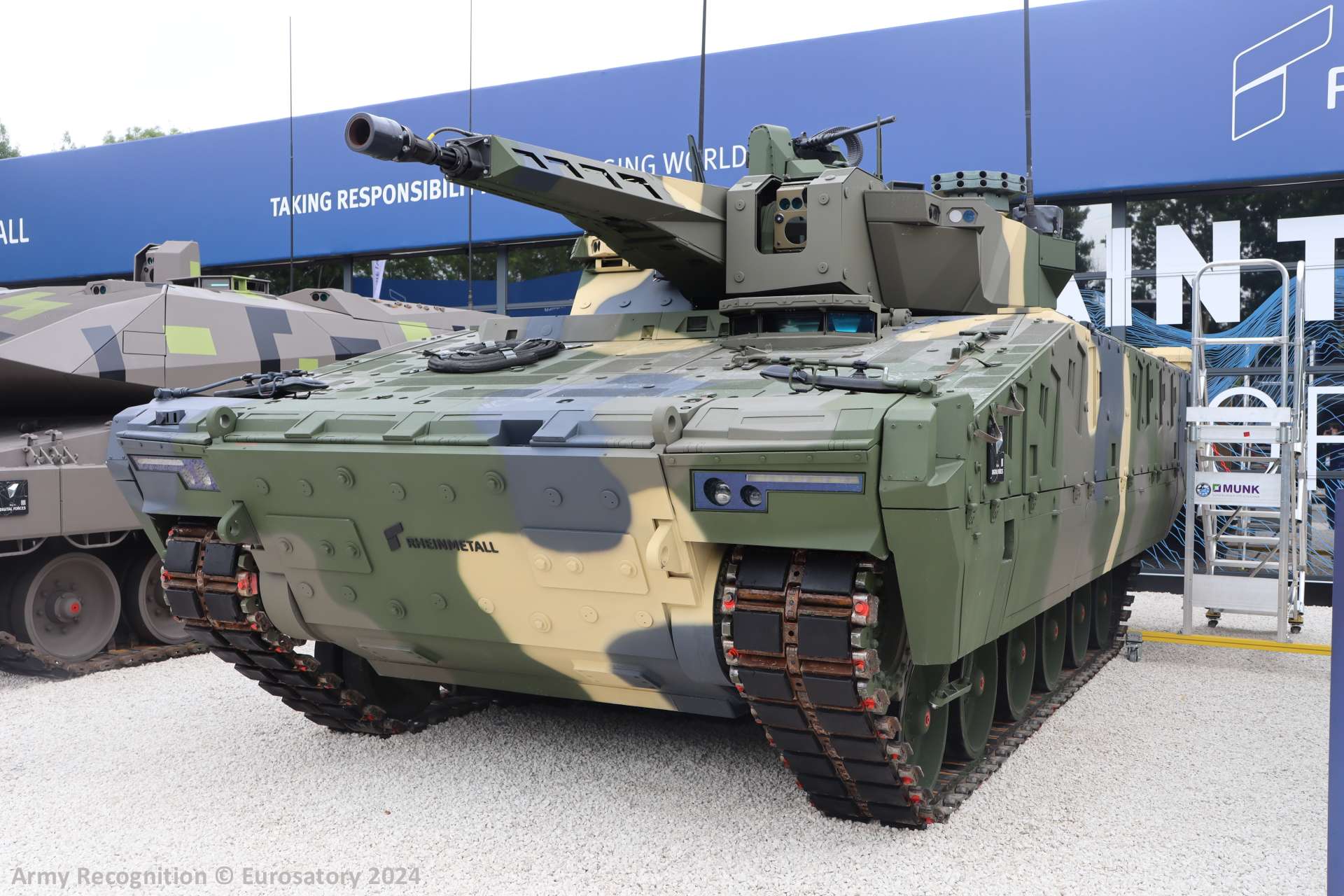
At Eurosatory 2024, Rheinmetall presented their Lynx KF-41 infantry fighting vehicle, now featuring a HITFACT MkII turret (Picture source: ArmyRecognition)
Based in Italy, the joint venture will act as the lead system integrator and prime contractor for the Italian programs involving the Main Battle Tank and the Armored Infantry Combat System. It will also outline the roadmap for participation in the future European Main Ground Combat System (MGCS).
Leonardo will handle the development and production of mission systems, electronic suites, and weapons integration according to the needs of the Italian client. These technologies will also lay the foundation for the future European Main Battle Tank (MGCS) and new versions intended for international markets. Rheinmetall will provide the core technology for the programs, featuring the newly developed Panther main battle tank and the new Lynx infantry fighting vehicle.
Final assembly lines, homologation testing, delivery activities, and logistic support will all take place in Italy, with an Italian workshare of 60%.
The implementation of the memorandum signed today is subject to approval by relevant regulatory authorities, including the European Commission and national competition authorities.
This partnership between two of Europe’s leading defense technology suppliers aims to set new standards and lead the development of a new generation of state-of-the-art combat vehicles in and for Europe, targeting the Italian market and other partner countries that require modernization of their combat systems.
Read more: Leonardo and Rheinmetall Announce Partnership to Develop Ground Defense Systems
- Details
- Written by: Vandenbosch
- Category: 2024
- Hits: 3291
The Polish Ministry of Defense announced that the United States will provide Poland with a $2 billion (8.1 billion zlotys) loan to finance the acquisition of American air and missile defense systems. This announcement was made on July 1, 2024.
Follow Army Recognition on Google News at this link
U.S. Army Patriot Missile Systems. (Picture source: US DoD)
This loan marks the second of its kind under the Foreign Military Financing (FMF) program, following a similar agreement last September. The ministry described this loan as "an expression of the continuously developing strategic relationship between Poland and the United States."
These loans are granted "only to selected US allies with whom the United States maintains close defense cooperation," according to the ministry, which also highlighted the favorable terms of the agreement, although specific details were not disclosed.
The acquisition of these air and missile defense systems is a priority for the Polish armed forces in light of current threats, the ministry added.
In February, Poland signed a $2.5 billion contract with the United States for an advanced air defense system. Additionally, the US State Department approved the sale of four radar reconnaissance airships to Poland for $1.2 billion, capable of detecting airborne targets.
These purchases are part of Poland's significant defense procurement efforts, primarily from the United States and South Korea, following Russia's invasion of Ukraine. Poland has been NATO’s highest relative spender on defense, allocating around 4% of its GDP over the past two years.
The Polish Embassy in the United States tweeted on July 1, 2024, "Poland and the United States have signed a direct loan agreement under the Foreign Military Financing program for $2 billion. The funds will be used to further strengthen Poland's defense capabilities through the purchase of air and missile defense systems from the American side."
The Polish Ministry of National Defense also tweeted, "Poland and the United States have signed a direct loan agreement under the Foreign Military Financing program for $2 billion. The funds obtained will be used to further strengthen Poland's defense potential through the purchase of air and missile defense capabilities from the American side."
"The United States remains our main foreign partner in the modernization of the Polish armed forces," stated the Ministry of Defense. Washington has not yet commented on this latest Foreign Military Financing agreement with Poland.
Read more: US to Loan Poland $2 Billion for Purchase of Air Defense Systems
- Details
- Written by: Halna du Fretay
- Category: 2024
- Hits: 6218
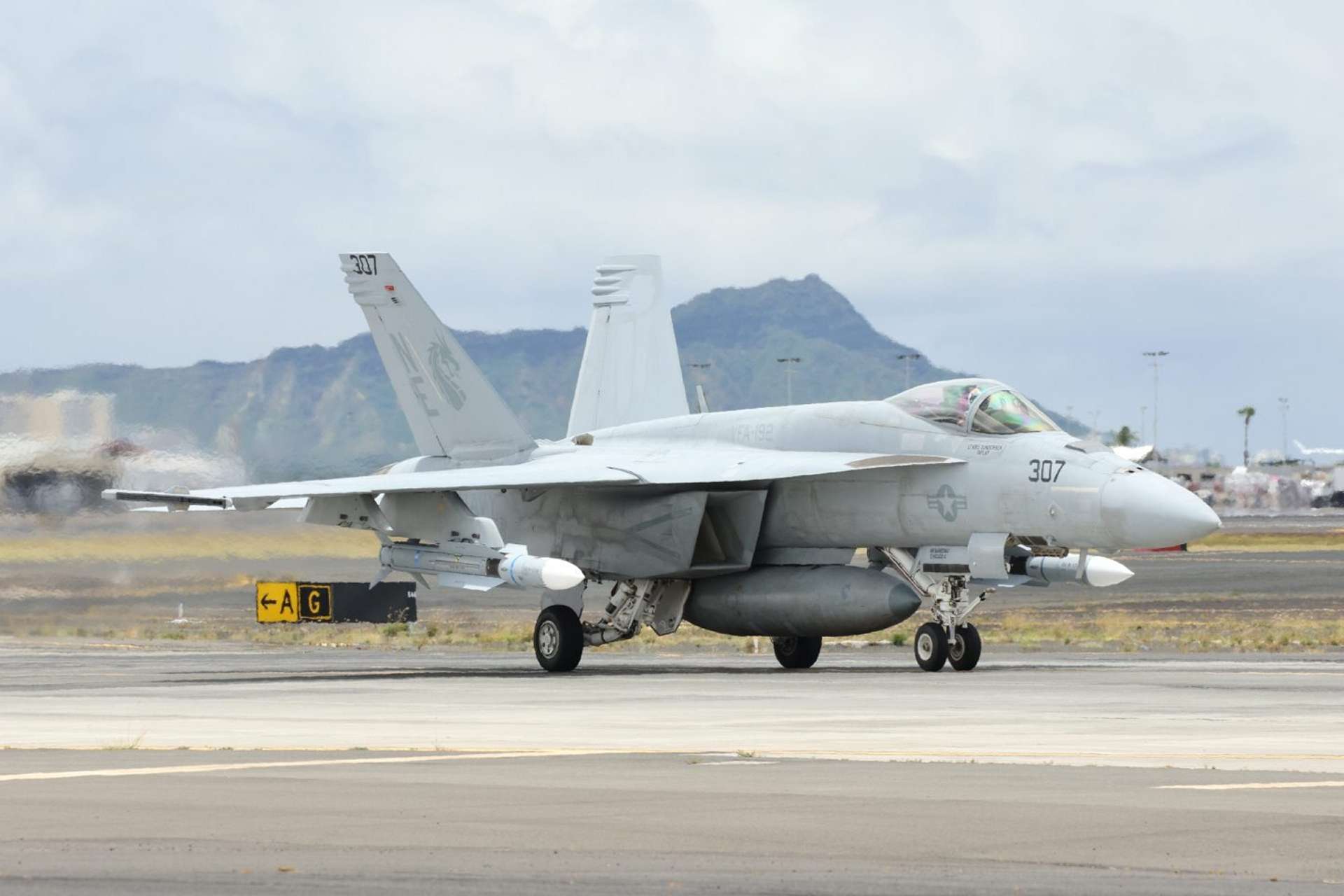
The air-launched version of the SM-6 missile, designated AIM-174B, was unveiled at the Rim of the Pacific (RIMPAC) exercises in Hawaii, as revealed in a photo by @aeros808 on Instagram. Previously shrouded in secrecy and unconfirmed officially, the existence of the missile on U.S. Navy F/A-18E/F Super Hornets marks a significant operational development with extensive tactical implications.
Follow Army Recognition on Google News at this link
An F/A-18E from Strike Fighter Squadron 192, known as the "Golden Dragons," equipped with XAIM-147B missiles, stationed at Joint Base Pearl Harbor-Hickam, Hawaii (Picture source: @aeros808)
The AIM-174B missiles are identified by their long-range capabilities and also have the potential to target high-value ground and naval assets, functioning similarly to a quasi-ballistic missile. This broadens the strategic options of the U.S. Navy, enabling precise strikes on distant targets whether in the air, on land, or at sea.
Currently featured on Super Hornets carrying inert training rounds, these aircraft are participating in RIMPAC 2024, the largest international maritime exercise, which hosts 29 nations and over 25,000 participants. The presence of these missiles may suggest tactical testing or preparation for live-fire drills, potentially involving the sinking of the decommissioned USS Tarawa during the exercise.
The AIM-174B shares several features with its surface-launched counterpart, the SM-6, designed to counter long-range aerial threats and ballistic missiles in their terminal flight phase. Integrated into the Aegis Combat System, the AIM-174B could play a crucial role in networked maritime air defense, allowing engagements beyond the radar range of the launch platforms.
The operational integration of the AIM-174B not only advances the U.S. Navy's air-to-air combat capabilities but also addresses the increasing threats such as hypersonic missiles and anti-access/area denial systems. Its ability to integrate targeting data remotely makes it a strategic complement to stealth aircraft like the F-35 and radar planes like the E-2D Advanced Hawkeye, enhancing the integrated naval combat network.
The emergence of the AIM-174B from a conceptual phase to an operational reality signifies a major leap in long-range strike capabilities for the U.S. Navy, bolstering its strategic posture in potential future conflicts, especially in the Pacific where long-range 'kill chains' are a major military focus.
Read more: Air-Launched SM-6 Missile Unveiled on Super Hornets During RIMPAC Exercises in Hawaii

- Details
- Written by: Vandenbosch
- Category: 2024
- Hits: 2467
Smith & Wesson has announced an expansion to their Model 1854 series, introducing two new models chambered in .45 Colt. These additions retain the robust features and modern improvements of their .44 Magnum counterparts, making them versatile for various applications, from hunting to home defense.
Follow Army Recognition on Google News at this link
The new Smith & Wesson lever-action rifle chambered in .45 Colt. (Picture source: Smith & Wesson)
The Smith & Wesson Model 1854 finds its roots in American firearms history. In 1854, Horace Smith and Daniel B. Wesson patented their first lever-action pistol, known as the "Volcanic." This innovative model used a fully encapsulated cartridge, a revolutionary concept at the time. Although the original company was rebranded as Volcanic Repeating Arms Company after investors like Oliver Winchester joined, the Volcanic design laid the groundwork for future lever-action rifles developed by Winchester. The Smith & Wesson Model 1854, unveiled at the 2024 SHOT Show, is a modern homage to this heritage. It is available in two variants: a standard version in stainless steel with synthetic furniture and a limited edition in polished walnut.
By revisiting the lever-action design, Smith & Wesson has not only honored its history but also adapted this iconic design to meet modern shooters' needs. The Model 1854 stands out with its 9+1 round capacity, smooth action, and robust construction, making it a top choice for hunting, recreational shooting, and home defense.
The two new models in .45 Colt offer a 9+1 ammunition capacity, providing ample firepower for any situation. The rifles are equipped with a 19.25-inch threaded barrel, allowing for the easy addition of suppressors or other muzzle devices. They also feature a large lever loop for smooth handling, even when wearing gloves, and a flat trigger for improved shooting control.
The rifles are available with either M-LOK synthetic furniture or classic checkered walnut furniture. The M-LOK system allows for the easy attachment of accessories, enhancing the rifle's tactical versatility. For those preferring a more traditional look, the walnut furniture offers a timeless aesthetic combined with modern functionality.
The Model 1854 series is designed to blend the classic aesthetic of the American lever-action rifle with contemporary features. This includes a side loading gate and side ejection for efficient reloading and a removable magazine tube for safe unloading. The rifles are fitted with XS Sights adjustable ghost ring rear sight and a gold bead front sight, ensuring quick target acquisition and accuracy.
Additionally, these models come with a Picatinny rail for mounting optics, further enhancing their adaptability for various shooting scenarios.
Smith & Wesson's Model 1854 series pays homage to the company's long-standing legacy in firearm manufacturing. The original Volcanic lever-action firearm, patented in 1854 by founders Horace Smith and Daniel Wesson, laid the groundwork for these modern iterations. The new Model 1854 rifles embody the craftsmanship and reliability that have been hallmarks of Smith & Wesson for over 170 years. Priced at a recommended retail price of $1,279, this model is referenced under SKU 13814.
This lever-action rifle model, designed to meet various needs from hunting to home defense, perfectly embodies Smith & Wesson's commitment to quality in firearm design. The Model 1854 has received a warm welcome from firearm enthusiasts, and there is no doubt that this new caliber will also be highly appreciated.
Read more: Smith & Wesson Expands Model 1854 Series with New .45 Colt Chambered Rifles
- Details
- Written by: V.Saint
- Category: 2024
- Hits: 7131
Potential espionage bases suspected of being linked to China have been discovered in Cuba, one of which is near the US Naval Base at Guantánamo Bay, according to a report from the Washington DC-based Center for Strategic and International Studies. This information originally comes from the analysis of satellite images obtained near the MAXAR contractor
Follow Army Recognition on Google News at this link
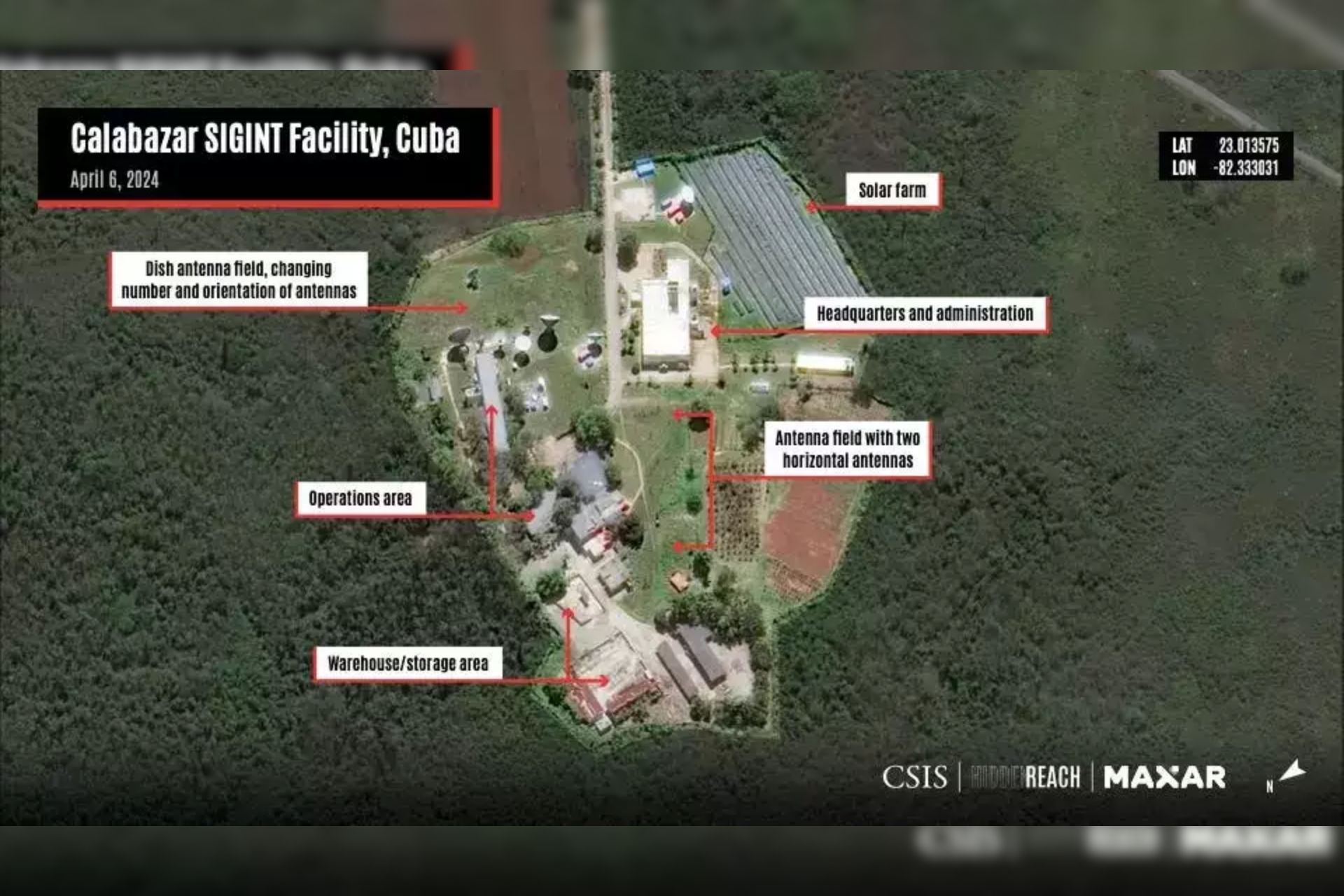
Satellite image of a SIGINT facility in Calabazar, Cuba, on April 6, 2024. (Picture source: CSIS/Hidden Reach/Maxar 2024)
CSIS analysts examined satellite images and open-source information and identified four 'active' sites in Cuba that they believe are capable of conducting electronic surveillance operations.
One of these is a previously unknown building located about 70 miles from the US Naval Base at Guantánamo Bay, according to the report.
These four sites are among the most likely to support China's efforts to spy on the United States," it said. Last year, several media outlets – citing officials knowledgeable of sensitive intelligence – reported that China wanted to establish a spy base in Cuba.
Two anonymous US officials told Politico at the time that Beijing and Havana were negotiating the construction of a station about 100 miles off the coast of Florida, perhaps to gather information on the signals from military sites in that area.
Anonymous US officials also told the Wall Street Journal last year that China and Cuba had agreed in principle to a multi-billion dollar project to develop the base.
CNN and the New York Times also reported on the agreement and planned facilities. At the time, the Department of Defense and the White House had dismissed these reports. An anonymous US official also told the Associated Press last year that China has been operating in Cuba since at least 2019.
Chinese espionage bases in Cuba
CSIS analysts claim to have located four bases on the island of Cuba: at Bejucal, El Salao, Wajay, and Calabazar. CSIS provided satellite images of each site from March and April 2024, showing how they have undergone upgrades over the last decade.
Bejucal, located south of Havana and identified by CSIS as the largest active Cuban facility, has seen the construction of a new 'mysterious' radome that, according to CSIS, could include a radar or ELINT device.
In the meantime, at Wajay, a complex has 'gradually' expanded over the past two decades, from a single antenna and several small buildings in 2002 to 12 antennas of various sizes and orientations, significant operational and support facilities, and even a small solar farm, it said.
Calabazar, a small Cuban military complex, now has two visible antenna networks on poles and more than a dozen parabolic antennas of various sizes scattered in a closed area, the images suggest.
The number, position, and direction of the antennas have changed significantly, likely in response to changes in the site's mission, the report indicates.
CSIS analysts also discovered a new, previously unreported installation at El Salao, south of Cuba, near the US Naval Base at Guantánamo Bay, a vital American military base in the region.
The alleged Chinese espionage bases in Cuba are multiplying, including one near a US naval base. 'These are active sites with a set of evolving missions,' Matthew Funaiole, a senior fellow at the China Power Project at CSIS and the lead author of the report, told the Wall Street Journal.
A strategic location for espionage
Some of the systems believed to be installed in Cuba, including antennas, can collect intelligence by intercepting signals – a practice known in the defense community as signal intelligence, or SIGINT.
The capabilities and functions of these systems are determined by their size, quantity, orientation, and arrangement, according to the CSIS report.
The proximity of Cuba to the United States offers China a significant intelligence window that is inaccessible from Chinese territory, the CSIS report states. Neither the White House nor the Pentagon immediately responded to a request for comment. The Cuban Ministry of Foreign Affairs declined to make a statement.

Satellite image of a CDAA site in El Salao, Cuba, on March 2, 2024.. (Picture source: CSIS/Hidden Reach/Maxar 2024)
Read more: Alarm Bells Ring as China Multiplies Spy bay Close to Guantanamo Bay in Cuba

- Details
- Written by: Jérôme Brahy
- Category: 2024
- Hits: 9040
On July 3, 2024, the Belarusian army showcased for the first time the Iranian Shahed-136 kamikaze drone as part of its arsenal during the Independence Parade in Minsk. This event marked the 80th anniversary of Belarus' liberation from Nazi occupation. These drones, referred to as Geran-2 in Russian nomenclature, were introduced as a "new domestic development" in Belarus, now named Nomad.
Follow Army Recognition on Google News at this link
These Shahed-136 kamikaze drones, referred to as Geran-2 in Russian nomenclature, were introduced as a "new domestic development" in Belarus, now named Nomad. (Picture source: Russian social media)
The Independence Day parade in Minsk featured over 6,000 participants, including servicemen from Russia, Azerbaijan, Kazakhstan, Kyrgyzstan, China, Tajikistan, and Uzbekistan. The event displayed more than 300 units of military equipment, including the first appearance of Russian-origin Iskander-M systems. The presence of radiation hazard signs on the Iskander systems indicated Belarus' potential possession of non-strategic nuclear weapons or the systems' capability to use nuclear missiles.
Since 2016, Belarusian President Alexander Lukashenko has aimed to update the country's military capabilities, expressing interest in the Iskander-M systems. In June 2022, Russian President Vladimir Putin announced that these missile systems, including both conventional and nuclear-capable versions, would be transferred to Belarus. The transfer process began later that year, with the first systems officially handed over to Belarus by April 2023.
During the parade, at least four Geran-2/Shahed-136/Nomad loitering munitions were transported on SUVs, indicating Belarus' ability to ensure the Nomad's mobility and deployment readiness. Belarus had previously sought to purchase ready-made drones from Iran and acquire the technology for domestic UAV production. The announcer's reference to these drones as "Geran-2" and a "new domestic development" suggests possible localized production in collaboration with Iranian or Russian specialists.

The parade included the first appearance of Russian-origin Iskander-M systems, and the presence of radiation hazard signs on the Iskander systems indicated Belarus' potential possession of non-strategic nuclear weapons or the systems' capability to use nuclear missiles. (Picture source: Russian social media)
The Shahed-136, known as Geran-2 in Russian service, is an Iranian-designed loitering munition developed by the Iran Aircraft Manufacturing Industrial Company (HESA). It is designed for precision attacks on ground targets, featuring a delta-wing shape with a length of 3.5 meters and a wingspan of 2.5 meters. The drone is powered by a Mado MD550 piston engine, allowing it to reach a maximum speed of 185 km/h and an operational range of up to 2,500 kilometers.
A notable characteristic of the Shahed-136 is its affordability, with each unit costing between $20,000 and $60,000. This cost range makes it accessible for Iran and its allies, including Russia, which has renamed it Geran-2 for use in Ukraine. The drone is launched using a rocket-assisted takeoff system, with its piston engine taking over post-launch. It carries a warhead of approximately 40 kilograms and is capable of evading air defenses by launching in swarms.
The Shahed-136 has been used in various conflicts, such as the Yemeni Civil War and the Russian invasion of Ukraine. Wreckage parts indicate that its design incorporates components from several countries, including the United States, China, and Switzerland, showing Iran's ability to bypass sanctions and produce effective military hardware. Despite its basic technology, the drone's role in overwhelming enemy defenses and its application in modern asymmetric warfare underscore its strategic value to Iran and its partners.
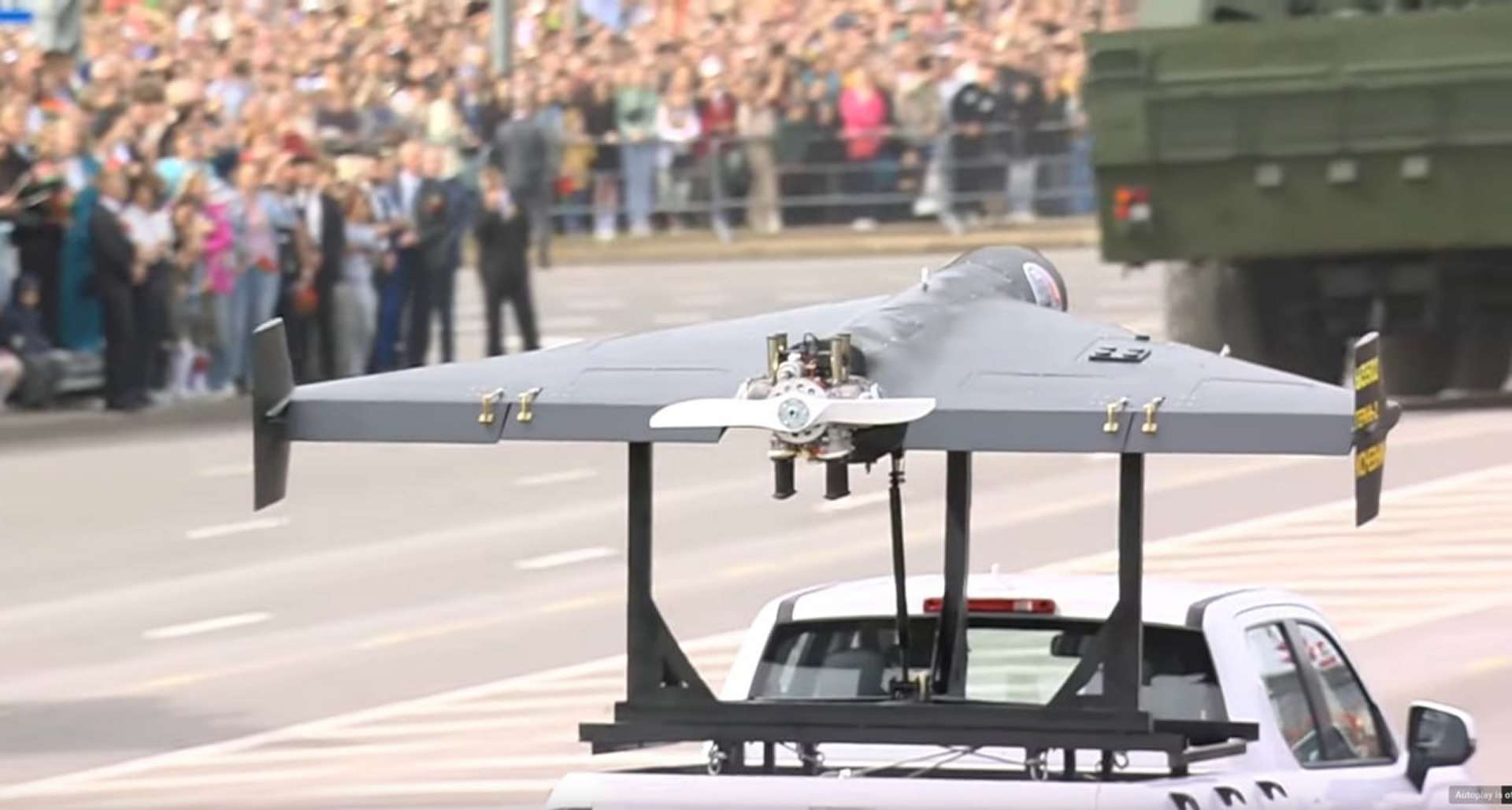
A notable characteristic of the Shahed-136 is its affordability, with each unit costing between $20,000 and $60,000. This cost range makes it accessible for Iran and its allies, including Russia, which has renamed it Geran-2 for use in Ukraine. (Picture source: Russian social media)
Read more: Belarus starts local manufacturing of Iranian Shahed-136 drones as Nomad

- Details
- Written by: Triffaux
- Category: 2024
- Hits: 5192
Rheinmetall Military Vehicles (RMMV) and the Slovak company Torsus announced a strategic partnership at the Eurosatory 2024 in Paris to develop variants of the MAN TGE and Torsus Terrastorm for special forces. The two companies showcased the mission-specific customization options for the Terrastorm HD 4×4 with a double-row cabin and a covered loading platform.
Follow Army Recognition on Google News at this link
Rheinmetall 4X4 MAN TGE Terrastorm Special Forces Vehicle
(Picture source: Rheinmetall)
The Terrastorm was developed in Slovakia based on the chassis and drivetrain of the Volkswagen Crafter/MAN TGE 4Motion, focusing on extreme off-road capability and adaptability. It is equipped with a Euro VI D 2.0-liter biturbo diesel engine producing 103 kW of power with 340 Nm of torque, or 130 kW with 410 Nm, available with a six-speed manual or eight-speed automatic transmission.
The basic commercial model has been pushed beyond normal off-road capability limits, to transport personnel and materials to the most inhospitable regions of the world. Torsus utilized its experience from developing the Praetorian, claimed to be the world's first mass-produced off-road bus. The Terrastorm was also tested on the famous Tatra test ground to evaluate its off-road capability while verifying its utility and comfort as a road vehicle.
Rheinmetall MAN Military Vehicles, in collaboration with its Czech partner TORSUS, unveiled the Terrastorm for the first time at Eurosatory 2024 in Paris. The Terrastorm, based on the MAN TGE crew cab, has been significantly enhanced by TORSUS for military use. Until now, light commercial vehicles in the 3.5 to 5.5-ton weight classes were primarily seen as supply vehicles or 'white fleets' for tasks close to the site. However, with the evolution of all-wheel-drive technology and the emergence of new fields of application such as drone control and anti-drone defense, these vehicles are increasingly used in operational areas.
The Terrastorm can be used close to the site, for supply tasks in the civil-military sector, but also for purely military operations, e.g., EOD tasks. Thanks to robust bodywork, a highly efficient off-road suspension setup, and large off-road tires, the versatile vehicle known as the 'Terrastorm' is well-suited for off-road areas.
In its panel van form, it has already proven itself as an ambulance during flood operations in Italy with its fording depth, raised axle vents, and air intake. With three different lengths in the panel van, it can be used for everything from compact rapid response units (communication, logistics, emergency units, drones and counter-drone) to evacuation tasks (several injured people lying down or sitting down) or drone control units—with drones on board. TORSUS has a wealth of experience here with numerous solutions for various UAV systems, which have been successfully used in Ukraine since the start of the conflict.
With two different wheelbases in the chassis solution, combined with single or double cabs, the utilization window is significantly extended: flatbeds, flatbeds with cranes (e.g., recovery of unexploded ordnance or air defense debris), or box bodies allow access to all-around utilization. From site tasks (range control, shooting range maintenance) to transport and supply tasks of all kinds to emergency vehicles, whether for the military fire service, communications, or evacuation, can also be presented with national bodybuilder partners for a local value-added share.
In addition to the above-mentioned applications, use in homeland defense brigades is also conceivable. TORSUS also has numerous solutions for this and offers complete, ready-to-use solutions. With the impending tightening of troop transport regulations, which will see numerous armies banning the transport of personnel on flatbeds with seats installed at right angles to the direction of travel, such 'Terrastorm' vehicles are emerging as a modern and cost-benefit-optimized solution.
With the second appearance of the MAN TGE, RMMV thus sharpens its portfolio and rounds off the lower weight classes. Further steps, such as all-wheel drive for the weight class up to 5.5 tons and other military-specific requirements like camouflage lighting or usability in extreme climate zones, are being sought.
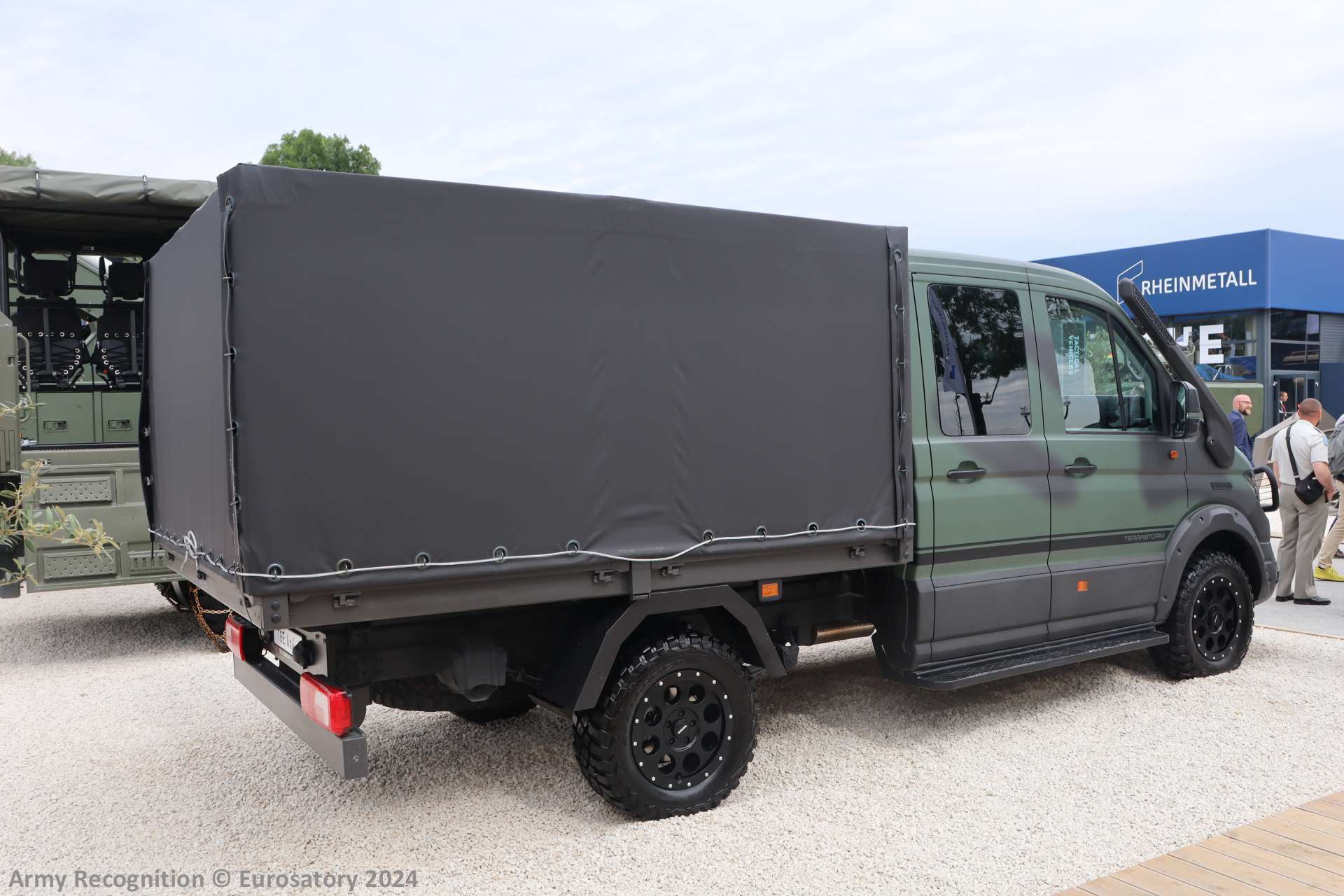
Rheinmetall 4X4 MAN TGE Terrastorm Special Forces Vehicle (Picture source: Army Recognition)
Read more: Rheinmetall Man and Torsus Develop New 4X4 TGE Terrastorm Special Forces Vehicle