

- Details
- Written by: Vandenbosch
- Category: 2024
- Hits: 5953










A Russian-Indian collaboration, Indo-Russian Rifles Private Limited, has successfully produced and delivered 35,000 Kalashnikov AK-203 assault rifles to the Indian Ministry of Defense. This joint venture, based in India, includes Rosoboronexport and Kalashnikov Concern under Russia's Rostec State Corporation. This information was shared by Rostec on 5 July 2024.
Follow Army Recognition on Google News at this link
The AK-203 assault rifle is a modern firearm originating from Russia, designed by the renowned engineer Mikhail Kalashnikov between 2007 and 2010. (Picture source: Rostec)
The AK-203, tailored for the Indian Army, is a variant of the AK-200 series chambered for the 7.62×39 mm cartridge. It retains the reliability and ease of maintenance characteristic of Kalashnikov rifles.
"Rostec's extensive range of proven weaponry, including advanced small arms, is exemplified by the production of the AK-203. India, as the first international customer, has initiated local production under the Make In India and Self-Sufficient India programs, which include technology transfer and aim for 100% localization," stated Sergey Chemezov, CEO of Rostec State Corporation.
These AK-203 rifles are produced in India using proprietary Russian technologies and certified equipment, ensuring high product quality and adherence to specifications.
Alexander Mikheev, Director General of Rosoboronexport, remarked, "The completion of the first phase of the AK-203 manufacturing project by Indo-Russian Rifles Private Limited is a testament to the robust cooperation between Russia and India. Essential equipment was sent to the Korwa Ordnance Factory in Amethi, Uttar Pradesh, enabling the timely production and delivery of 35,000 rifles to the Indian Army as per the agreed schedule with the Ministry of Defense."
The AK-203 assault rifle is a modern firearm originating from Russia, designed by the renowned engineer Mikhail Kalashnikov between 2007 and 2010. Manufactured by Kalashnikov Concern and Indo-Russia Rifles, the AK-203 represents an evolution of the Kalashnikov rifle series, incorporating contemporary technologies and materials.
Weighing 3.8 kg, this rifle measures between 880 and 940 mm in length with the stock extended, while its barrel is 415 mm long. The AK-203 uses 7.62×39mm cartridges, known for their power and efficiency. Its mechanism is based on a gas-operated action with a rotating bolt, allowing a firing rate of approximately 700 rounds per minute.
With an initial velocity of 715 m/s, the AK-203 offers an effective firing range between 400 and 800 meters, depending on sight adjustments. The weapon is fed by a 30-round detachable box magazine, although a 50-round quad-column magazine can also be used for increased capacity.
The AK-203 is equipped with adjustable iron sights, and picatinny rails allow the addition of various optical sighting systems, providing great flexibility and adaptability on the battlefield. This rifle, designed to combine robustness and performance, continues the legacy of Kalashnikov while meeting the demands of modern armed forces.
Ongoing and future Russian-Indian military-technical cooperation projects are highly focused on technological collaboration, reinforcing the strategic partnership between the two nations in the defense sector.
Read more: Russia Delivers 35,000 AK-203 Assault Rifles to Indian Army
- Details
- Written by: Halna du Fretay
- Category: 2024
- Hits: 11591
Since May 2024, Ukraine's air force has claimed that American Patriot systems have intercepted every Russian Kinzhal missile. With this weapon system, ardently requested by President Zelensky, the country has increasingly managed to thwart Russian bombardments. Their effectiveness is likely to increase Ukraine's desire for more of these highly coveted anti-ballistic systems.
Follow Army Recognition on Google News at this link
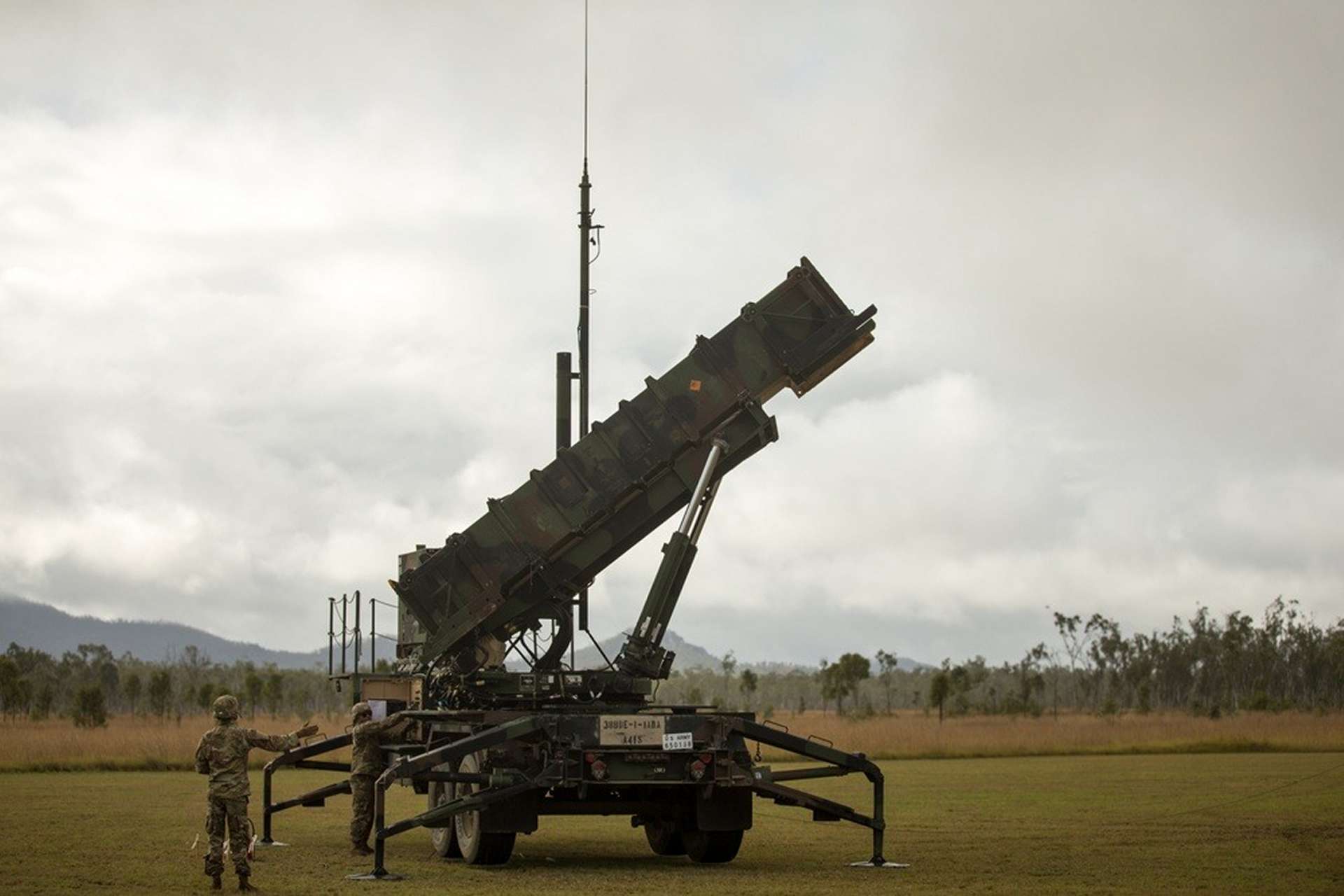
Army Patriot Launching Station Enhanced Operators, raise the MIM-104 Patriot launching station on July 14, 2021, at Camp Growl in Queensland. (Picture source: US DoD)
In an interview with Ukrinform, the national news agency, Air Force Colonel Serhii Yaremenk stated, "All the Kinzhals launched at the Ukrainian capital since the announcement of the Patriot air defense system being put into service have been successfully intercepted." He added, "Since the beginning of May 2023, no ballistic missile has reached its target in our country's capital. More than 20 Kinzhals were launched at Kyiv, and all were successfully intercepted."
Kinzhal missiles, translating to "dagger" in Russian, were considered a significant asset for the Russian military in its bombardments of Ukrainian cities. However, they have not lived up to their promises in Ukraine thanks to the Patriot systems acquired by Zelensky. The MIM-104 Patriot, manufactured in the U.S. by defense contractor Raytheon, is considered one of the most advanced air-defense systems in the world. Ukraine currently possesses at least two of these systems, one donated by the U.S. in May and the other provided in partnership by Germany and the Netherlands.
The Kinzhal missile, also known as the Kh-47M2 Kinzhal, is a Russian air-launched hypersonic ballistic missile. It was developed by Russia and unveiled to the public in 2018 by President Vladimir Putin. This missile was designed to be launched from fighter jets, notably the MiG-31K, giving it significant range and impressive speed. The Kinzhal entered operational service the same year and was presented as a major advancement in Russian military capabilities.
The Kinzhal's capabilities include a flight speed of up to Mach 10, making it extremely difficult to intercept with current missile defense systems. It has an estimated range of about 2,000 kilometers, allowing it to strike long-distance targets with high precision. The missile can carry conventional or nuclear warheads, making it a versatile tool for various strategic missions. Its launch from MiG-31K aircraft, which can operate at high altitudes, further extends its effective range.
Currently, the exact number of Kinzhal missiles in service remains classified, but they are deployed in sufficient quantities to be considered a key component of Russia's deterrence strategy. The MIM-104 Patriot is an air-defense and anti-missile system developed by the American defense contractor Raytheon. Production began in the 1970s, and it was officially put into service by the U.S. Army in 1982. Designed to replace the Nike Hercules and HAWK systems, the Patriot has evolved over the decades to become one of the most sophisticated air-defense systems in the world.
The Patriot system can detect, track, and intercept various aerial threats, including tactical ballistic missiles, cruise missiles, and aircraft. It uses radar-guided interceptor missiles to engage targets at distances up to 160 kilometers and altitudes up to 24 kilometers. The central element of the system is its AN/MPQ-53 or AN/MPQ-65 radar, capable of tracking up to 100 targets simultaneously and guiding multiple interceptors. Before Ukraine, the Patriot proved its combat effectiveness during the Gulf Wars and more recently in Middle Eastern conflicts.
Zelensky has consistently lobbied for more high-tech anti-ballistic systems to be sent to Ukraine, arguing that they are necessary to counter the 3,000 projectiles Russia launches at the country each month. "Ukraine needs seven systems – this is the bare minimum," the president said in an April address. This request was scaled back from an initial demand for 25 Patriot systems, which Zelensky deemed necessary to completely cover Ukraine.
In April, Germany pledged to send another Patriot to Ukraine, followed by Biden's approval of the deployment of a second system in June. At the end of June, Romania also promised to send a Patriot system to Ukraine, although Bucharest's donation included the condition that the U.S. compensate for the difference. "This donation is made on the condition that our country continues negotiations with allies, especially with an American strategic partner, to obtain a similar or equivalent system... At the same time, it is necessary to find a temporary solution to cover the operational vulnerability created in this way," read the announcement on President Klaus Iohannis's website.
On Wednesday, the Department of Defense announced a $2.2 billion aid package to upgrade Ukraine's air defenses, including additional surface-to-air missiles for the country's existing Patriot systems. Given their success in reducing Russian bombardments, it is no surprise that Ukraine is so eager to obtain more Patriot systems to safeguard its skies.
Read more: Ukraine Air Force Reports Patriot Systems Intercept All Russian Kinzhal Missiles

- Details
- Written by: Jérôme Brahy
- Category: 2024
- Hits: 5666
On July 4, 2024, the German company Hensoldt secured contracts to support the air defense capabilities of Latvia and Slovenia under the German-led 'European Sky Shield Initiative' (ESSI). As part of an order from Diehl Defence worth over 100 million euros, Hensoldt will supply its TRML-4D radars, including maintenance and training packages, to these two countries. These radars will be deployed as part of the IRIS-T SLM air defense system.
Follow Army Recognition on Google News at this link
Deployed as part of the IRIS-T SLM air defense system, the TRML-4D radar has demonstrated effective detection capabilities in Ukraine and performed well during live tests in Latvia. (Picture source: Army Recognition)
Hensoldt CEO Oliver Dörre highlighted the substantial demand for enhanced air defense systems in Europe and noted the company's progress in expanding production capacity to meet this demand, as Hensoldt now has over 80 air defense radars under contract within the ESSI initiative. The TRML-4D radar has demonstrated effective detection capabilities in Ukraine and performed well during live tests in Latvia. Utilizing AESA (Active Electronically Scanned Array) radar technology, the TRML-4D can detect and track up to 1,500 targets within a 250-kilometer radius. It is designed to identify various air targets, including cruise missiles, rockets, drones, and aircraft.
Hensoldt has extensive experience with radar systems for air defense and continues to develop technologies in this field. Its portfolio includes the Spexer short-range radar, the Twinvis passive radar, and radars for securing ship and air traffic. Both the TRML-4D and the Spexer radars are part of the German Armed Forces' NNbS air defense system for close and short-range protection, initiated in January. Additionally, Hensoldt supplies radars for the German Navy’s new frigates and corvettes, airspace surveillance, and approach control at military airfields.
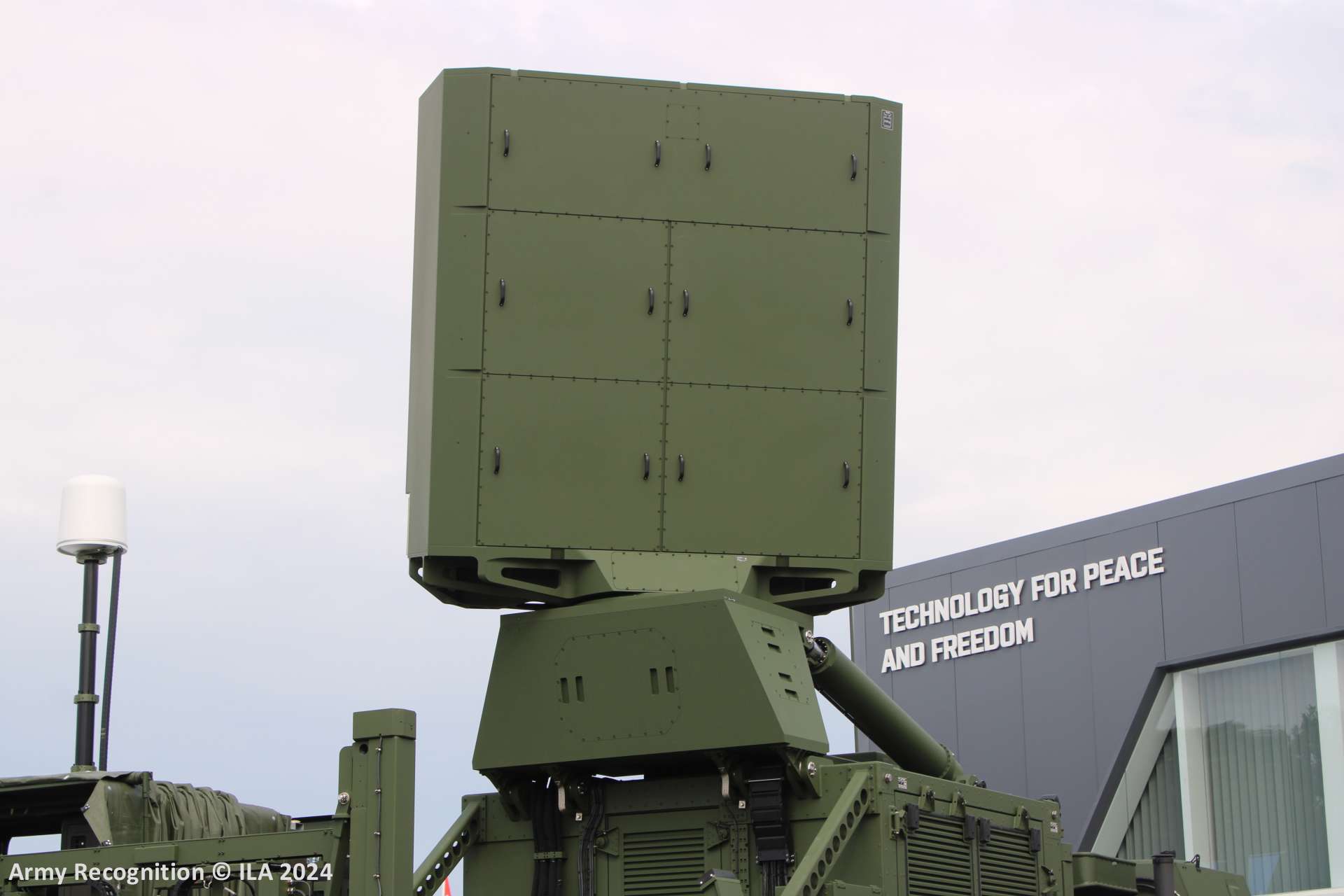
The radar's features include high accuracy in the C-band, robust track ranges, and an AESA look-back feature for rapid track initiation and robust weapon support. (Picture source: Army Recognition)
The TRML-4D, part of Hensoldt's C-band (NATO G-band) radar family, is designed for remote-controlled, ground-based air defense. It is a software-defined sensor system, allowing for future operational flexibility. Its features include high accuracy in the C-band, robust track ranges, and an AESA look-back feature for rapid track initiation and robust weapon support. The system can be deployed and redeployed within 10 minutes, offering survivability in congested combat environments, especially when used with Hensoldt's Twinvis Passive Radar. It also includes dedicated ECCM features and integrated Identification Friend or Foe (IFF) systems.
Technically, the TRML-4D radar operates in the C-band (IEEE designation) and G-band (NATO), using Pulse Doppler and GaN Solid State AESA technologies. It has a range of up to 250 kilometers, a height detection capability of 40 kilometers, and can track targets with radar cross sections as small as 0.01 square meters. The minimum range is less than 200 meters, with elevation coverage from -2° to 70°, extendable to -10° electronically. It supports 3D tracking for over 1,500 targets, with confirmed track ranges of over 120 kilometers for fighter aircraft and over 60 kilometers for supersonic missiles. The radar’s track accuracy includes less than 0.2° in azimuth, less than 0.3° in elevation, and less than 15 meters in range. Scanning capabilities include mechanical azimuth scanning with 360° continuous rotation and electronic elevation scanning with AESA stacked beam and electronic stabilization. Operational functions encompass target categorization, cued search and tracking, own weapon tracking, kill indication, and overflight tracking.
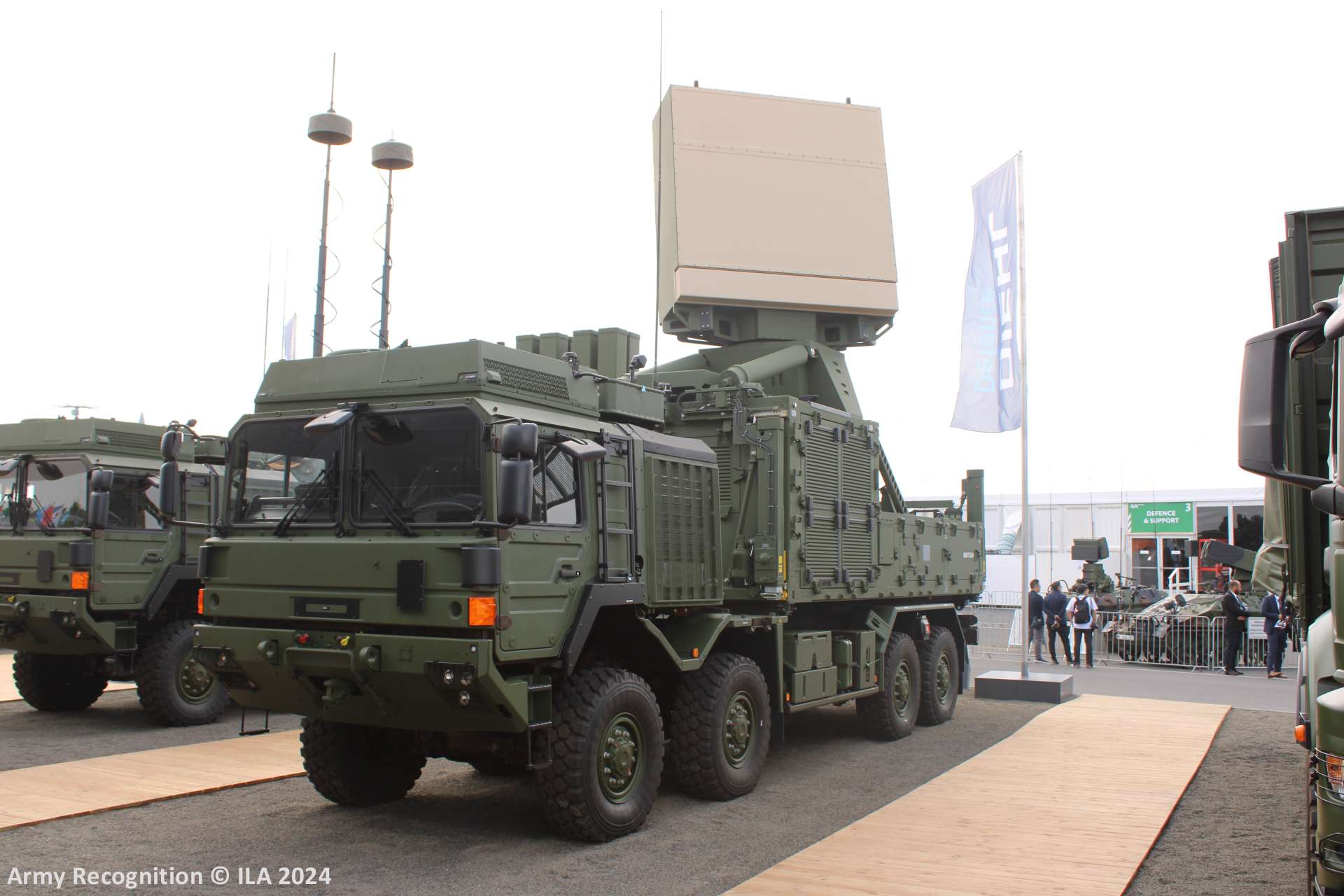
The TRML-4D radar supports 3D tracking for over 1,500 targets, with confirmed track ranges of over 120 kilometers for fighter aircraft and over 60 kilometers for supersonic missiles. (Picture source: Army Recognition)
Read more: German company Hensoldt to supply TRML-4D radars to Latvia and Slovenia
- Details
- Written by: Halna du Fretay
- Category: 2024
- Hits: 2543
On July 4, 2024, the Australian government announced a strategic partnership with Amazon Web Services (AWS) to strengthen the country's cybersecurity capabilities with a planned investment of 2 billion Australian dollars over the next decade. This initiative aims to create a Top Secret classified cloud to meet Australia's critical security and defense needs.
Follow Army Recognition on Google News at this link
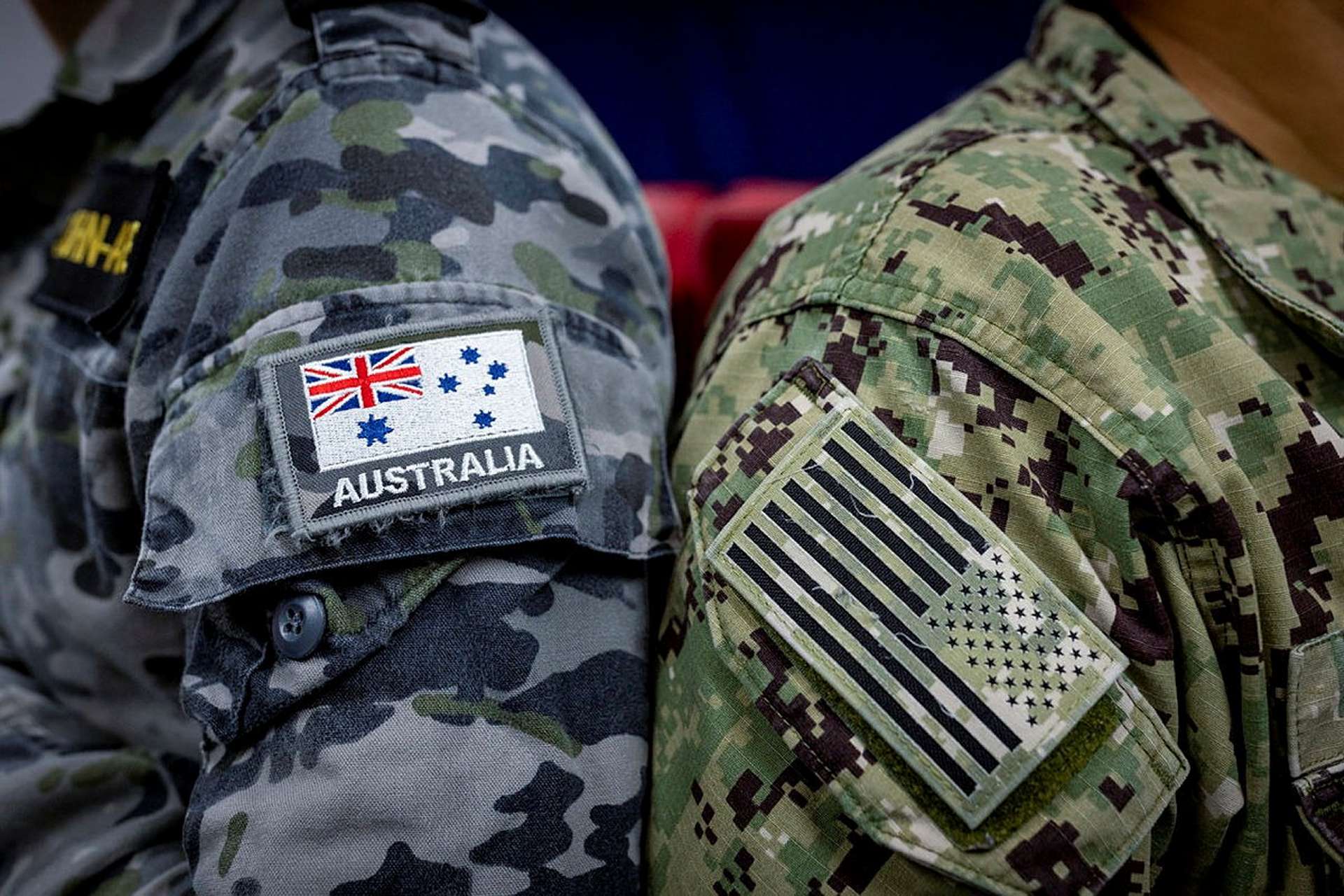
Australian Navy ensign and United States Navy ensign, side by side during Exercise Cyber Sentinels 23 (Picture source: Australian MoD)
This significant partnership will enable AWS to establish a sovereign Top Secret cloud in Australia to deliver resilient information, communication, and technology (ICT) services to the Australian government, which is expected to generate up to 2000 local jobs. AWS, known for its expertise in classified cloud services and its long-standing presence in Australia, will bring global-level security, reliability, and resilience to the project.
The Top Secret cloud will be specifically designed for Australian defense and national intelligence agencies, allowing secure hosting of the country’s most sensitive information. It will enhance the ability to quickly and extensively share and analyze the nation’s most classified data and provide opportunities to utilize cutting-edge technologies such as artificial intelligence and machine learning.
This infrastructure will not only support the resilience of Defense communication networks but will also play a crucial role in supporting the military operations of the Australian Defence Force. It will further facilitate greater interoperability and deeper collaboration with the United States.
This partnership represents a major investment by the Albanese government and marks an important step in implementing the 2024 National Defence Strategy. This substantial investment is part of the 15-20 billion dollars by 2033-34 to enhance Defense's cybersecurity capabilities and the 8.5-11 billion dollars to strengthen Defense's enterprise data and ICT announced in the 2024 Integrated Investment Program.
The joint initiative will provide significant opportunities for the Australian industry, with AWS engaging Australian businesses to design and build the Top Secret cloud, fostering innovation and job creation in cybersecurity, data analytics, and cloud computing. Australia's defense industry will also benefit from new opportunities to deliver and integrate new capabilities using these cloud services.
The Top Secret cloud builds on AWS's planned 13.2 billion Australian dollar investment in Australian infrastructure until 2027 – the largest technological investment in Australia's history, supporting the creation of 11,000 local jobs. This is in addition to the 9.1 billion Australian dollars AWS has already invested in Australian infrastructure since its launch in 2011.
The issue of data sovereignty in the cloud is particularly thorny in the defense domain, where classified information requires maximum protection. With the increasing adoption of cloud solutions by defense and intelligence agencies worldwide, the ability to ensure the security and sovereignty of sensitive data has become a major concern. The challenge lies in the ability of nations to maintain exclusive control over the access and management of their most critical data while benefiting from the technological advantages of modern cloud infrastructures.
The solution often lies in the establishment of sovereign clouds, where data is stored and processed within national territory under strict legal jurisdictions and by government-approved entities. These clouds must be designed with robust architectures that not only secure data against cyberattacks but also prevent unauthorized access, including by cloud service providers and third parties. This requires a delicate balance between the use of advanced technologies provided by international partners and the imperative need to protect national sovereignty and the security of classified data.
Read more: Australia Partners with Amazon to Build a Top Secret Cloud for Australian Spies
- Details
- Written by: Vandenbosch
- Category: 2024
- Hits: 3327
South Korea is poised to continue its success in defense exports to Poland this September, with new contracts anticipated from the Polish Ministry of National Defence (MND) at the upcoming MSPO defense exhibition. This was highlighted on Targi Kielce's website on June 21, 2024.
Follow Army Recognition on Google News at this link
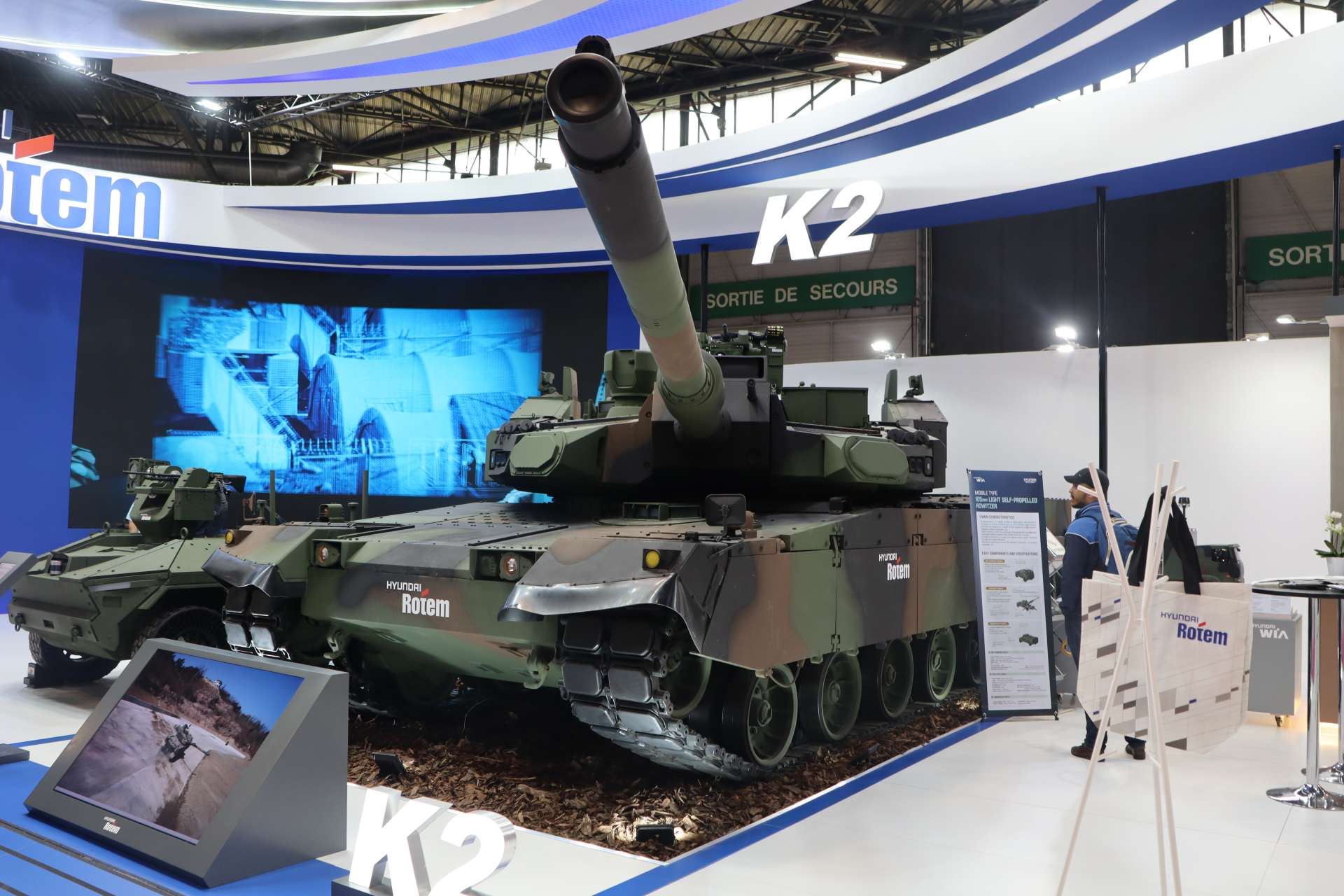
A K2 Black Panther Main Battle Tank at Eurosatory 2024. (Picture source: Army Recognition)
This announcement followed a meeting between Polish Deputy Prime Minister and Minister of National Defence Władysław Kosiniak-Kamysz and his South Korean counterpart Shin Won-Sik in Warsaw. During a joint press conference, Kosiniak-Kamysz emphasized that their discussions focused on industrial collaboration in defense and equipment acquisitions for the Polish Army.
Kosiniak-Kamysz indicated that additional contracts for South Korean defense equipment could be finalized at the MSPO exhibition, with negotiations on financing – particularly for up to 180 additional Hyundai Rotem K2 main battle tanks (MBTs) – nearing completion.
In 2022, Poland committed to acquiring up to 1,000 K2 MBTs, with the first 180 tanks, produced by Hyundai Rotem in South Korea, scheduled for delivery from late 2022 through 2025. Future batches are expected to be customized to Polish requirements under the K2PL designation and produced locally in Poland, starting in 2026. The first 180 South Korean-built K2 MBTs will also be upgraded to the K2PL standard.
The previous Polish administration signed an executive contract for the first batch of 180 K2 MBTs from South Korea for $3.4 billion. Delivery began in December 2022, with over 40 tanks delivered to the Polish Army by early 2023, some diverted from stock initially intended for the Republic of Korea Army (RoKA).
The second batch of Polish K2 MBTs is expected to include domestically manufactured tanks, with a long-term goal of local production for future batches. Shin reaffirmed South Korea's readiness to transfer technical know-how and production technologies to Polish defense companies, enabling local manufacturing and maintenance of the tanks.
The discussions also explored Polish defense exports to South Korea, including passive radar systems, self-propelled Rak 120mm mortars, remote weapon stations, and various unmanned aerial vehicles (UAVs).
The K2, also known as the Black Panther, is a main battle tank designed in South Korea. It is equipped with impressive armament, including a 120 mm gun, a 7.62 mm coaxial machine gun, and a 12.7 mm heavy machine gun. For its protection, the K2 uses composite armor reinforced with explosive reactive armor (ERA) blocks, offering robust defense against various types of threats.
Currently used by South Korea and Poland, this tank weighs approximately 55 tons. Its maximum speed reaches 70 km/h, allowing it to move quickly on the battlefield. In terms of range, the K2 can travel up to 450 km without refueling.
The K2 is also equipped with advanced technologies. Its sophisticated fire-control system, active protection system, and NBC (nuclear, biological, and chemical) protection system ensure high efficiency and safety. It also has day/night vision capabilities, thermal vision, and an automatic fire suppression system. Additionally, the tank is equipped with a snorkel for deep water operations.
With a crew of three, the K2 measures 10.7 meters in length, 3.6 meters in width, and 2.4 meters in height. These dimensions, combined with its technical capabilities, make the K2 a highly efficient and versatile main battle tank, capable of meeting modern battlefield requirements.
Read more: South Korea Ready to Secure More Defense Contracts at MSPO 2024
- Details
- Written by: Halna du Fretay
- Category: 2024
- Hits: 2144
Following a deadly missile attack on the Ukrainian city of Dnipro, the United States announced a substantial military aid package totaling over $2.3 billion on July 3, 2024. This new support is aimed at strengthening Ukraine's air defense capabilities amid ongoing Russian aggression. The announcement was timely, coinciding with Ukraine's Anti-Aircraft Missile Troops Day, highlighting the strategic emphasis on improving aerial defensive measures.
Follow Army Recognition on Google News at this link
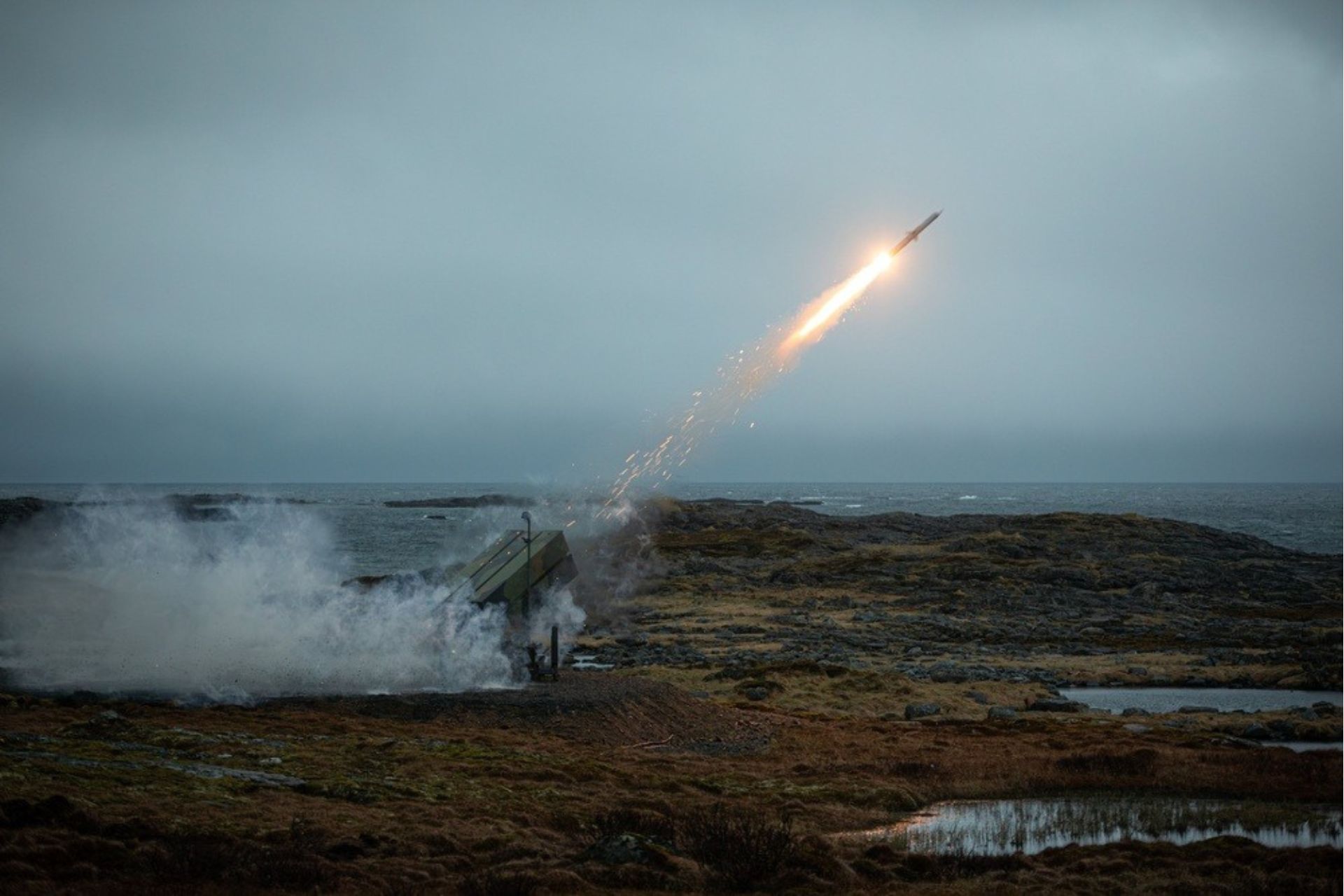
The Norwegian Army fires a National Advanced Surface-to-Air Missile System (NASAMS) from the Andøya Space Range in Andøya, Norway against a simulated threat in support of exercise Formidable Shield 2023, May 10, 2023 (Picture source: US DoD)
The package includes $2.2 billion from Ukraine Security Assistance Initiative (USAI) funds, allocated for future acquisitions of essential air defense interceptors for systems such as the Patriot and National Advanced Surface-to-Air Missile Systems (NASAMS), which have been pivotal in defending Ukrainian skies. This funding decision follows the U.S. administration’s recent strategy to prioritize munition deliveries to Ukraine and Taiwan, ensuring rapid replenishment of Kyiv’s arsenal in response to urgent needs.
An additional $150 million from the Presidential Drawdown Authority (PDA) will cover immediate transfers of existing U.S. military equipment. This portion includes various munitions that enhance Ukraine’s artillery capabilities, such as 155mm and 105mm artillery shells, and rockets for the High Mobility Artillery Rocket Systems (HIMARS). Other critical supplies provided include air defense missiles for HAWK systems, TOW missiles, Javelin and AT-4 anti-armor systems, small arms ammunition, grenades, tactical vehicles, and air navigation systems among other auxiliary equipment.
On the ground in Ukraine, despite continuous combat, there have been no significant shifts in the front lines, with both sides making incremental advances in certain sectors. Notably, Russian forces have intensified their operations around the towns of Vovchansk and Chasiv Yar, with minor positional changes reported. The fighting in Donetsk and Luhansk oblasts continues along established lines, with neither side achieving decisive breakthroughs.
The military aid announcement followed reports of at least five deaths and numerous injuries resulting from the recent Russian missile attack on Dnipro. Social media footage revealed significant damage to the Yuzhny Machine-Building Plant, a critical facility in Ukraine's defense manufacturing sector, which has been a repeated target in the conflict.
This latest U.S. commitment marks the 60th package of military aid to Ukraine since August 2021, reflecting a sustained effort to support Ukraine’s defense against Russian military actions. The continued provision of such aid underscores the strategic importance the U.S. places on supporting Ukraine while addressing the evolving dynamics of modern warfare, where air defense capabilities are increasingly crucial.
- Details
- Written by: Jérôme Brahy
- Category: 2024
- Hits: 10255
According to Rishav Gupta on July 4, 2024, India's Armoured Vehicle Nigam Limited (ANVL) is set to license produce the Russian K-53949 Typhoon-K, a 4x4 Mine-Resistant Ambush Protected (MRAP) vehicle developed by Remdiesel, a subsidiary of KamAZ. This follows the completion of trials, and the project is now awaiting official orders. Official photographs show the Typhoon-K MRAP in India within a convoy, alongside other ANVL Mines Protected Vehicles (MPVs) in both 4x4 and 6x6 variants.
Follow Army Recognition on Google News at this link
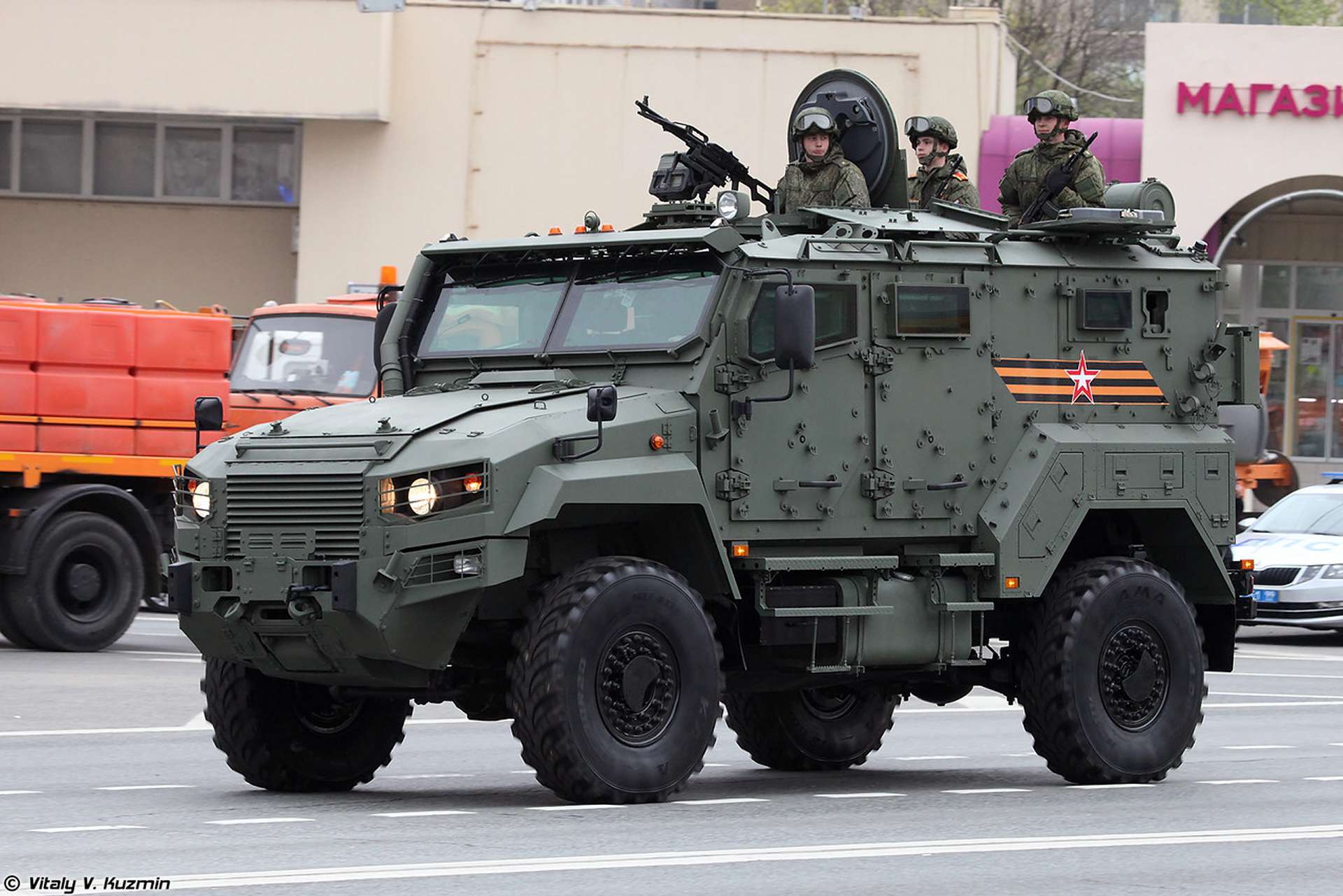
The K-53949 Typhoon-K is a 4x4 mine-resistant ambush protected (MRAP) vehicle developed for the safe transportation of troops and military cargo in areas with a high risk of mines. (Picture source: Vitaly Kuzmin)
Therefore, the K-53949 Typhoon-K 4x4, one of the newest members of the Typhoon family of armored vehicles currently deployed by Russian Military Forces, could become a potential candidate to fulfill the Indian military's armored vehicle requirements, competing with the Mahindra ASLV and the potentially forthcoming TATA LAMV. The Indian Army is set to acquire 800 Light Armoured Multipurpose Vehicles (LAMVs) to meet the needs of the Mechanised Infantry and Armoured Corps. Companies such as Ashok Leyland, Kalyani Strategic Systems Ltd, Tata, and Mahindra have submitted bids. The LAMVs are expected to feature high mobility, modern protection, and the ability to carry significant payloads, all requirements potentially fitted for the Typhoon-K.
Recently, a contract worth Rs 1,056 crore ($126.5 million) was signed with Mahindra Defence Systems for 1,300 Armoured Light Specialist Vehicles (ALSVs). These vehicles will be delivered over four years and will be used to carry medium machine guns, automatic grenade launchers, and anti-tank guided missiles. The ALSVs offer comprehensive protection against small arms fire and IEDs. The Indian Army has also ordered Kalyani M4 4x4 armored vehicles for emergency procurement. These vehicles are designed for high-altitude and harsh terrain operations, featuring advanced protection and mobility. These acquisitions are part of a broader strategy to modernize and indigenize the Indian Army's vehicle fleet, which includes the production of Russian vehicles under license by AVNL.
Armoured Vehicles Nigam Limited (AVNL), a state-owned defense public sector undertaking in India, was established in 2021 and is headquartered in Avadi, Chennai. AVNL has become a key player in India's defense sector, and is expected to roll out its Futuristic Infantry Combat Vehicle (FICV) prototype in 2024, which boasts a 600 hp engine, automatic transmission, and STANAG level four protection. This vehicle is designed to accommodate 11 fully armed troops and is equipped with advanced weaponry including a 30 mm automated grenade launcher, remote-controlled weapon station, and fifth-generation anti-tank guided missiles. Additionally, AVNL is diversifying its portfolio by developing 4×4 protective mobility vehicles, focusing on eco-friendly power sources such as electric and hydrogen-powered powerpacks, to align with the Indian Army's modernization efforts.
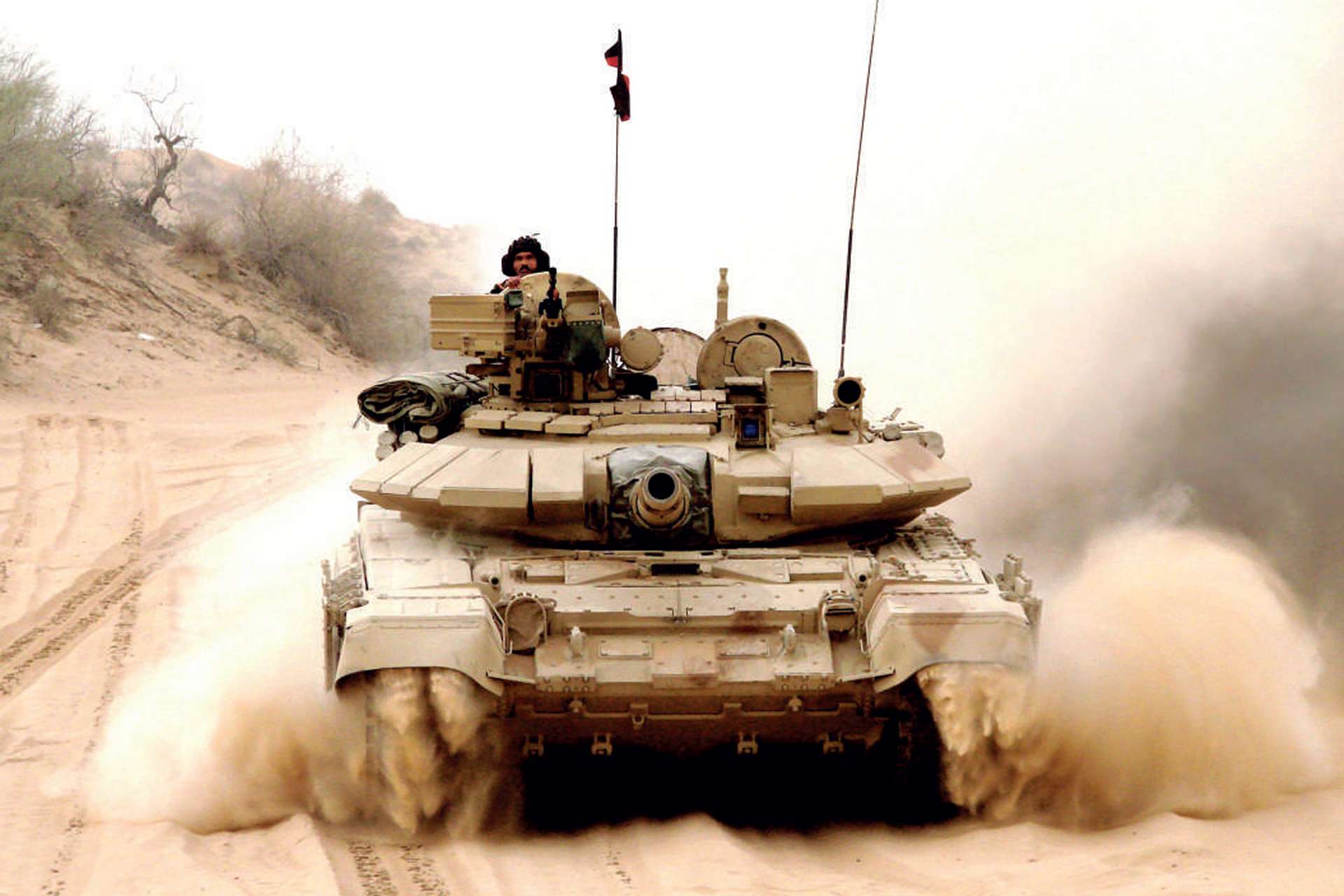
The Indian company has previously manufactured several Russian-designed military vehicles, including the T-90 Bhishma Main Battle Tank. (Picture source: Indian MoD)
In addition to the Futuristic Infantry Combat Vehicle (FICV), Armoured Vehicles Nigam Limited (AVNL) offers a diverse range of military products aimed at strengthening India's defense capabilities. These include the Main Battle Tank (MBT) Arjun, known for its superior firepower and protection, and the Armoured Recovery Vehicle (ARV), designed for the recovery and repair of damaged armored fighting vehicles on the battlefield. AVNL is also expanding its portfolio with the development of 4×4 Protective Mobility Vehicles (MPVs), similar to the Humvee used by the US Army, which are designed to operate in various challenging terrains while providing enhanced protection to personnel. Furthermore, AVNL is integrating advanced technologies into its products, such as loitering munitions, remote-controlled weapon stations, and active protection systems to ensure the highest level of combat readiness and effectiveness.
ANVL's track record with Russian-origin military vehicles adds weight to this possible new venture with the Russian industry. The Indian company has previously manufactured several Russian-designed military vehicles, including the BLT T-72, a bridge-layer tank based on the T-72 platform, the T-72 Ajeya, the T-90 Bhishma, and numerous vehicles derived from the BMP series. This extensive experience positions ANVL as a capable and reliable producer of Russian-origin armored vehicles for the Indian Army, enhancing its credibility in undertaking the production of the Typhoon-K APC.
The K-53949 Typhoon-K is a 4x4 mine-resistant ambush protected (MRAP) armored vehicle developed by Remdiesel, a subsidiary of KAMAZ. It is designed for the safe transportation of troops and military cargo in areas with a high risk of mines. The vehicle can also be configured for various roles including command post, ambulance, and logistics support. It features a V-shaped hull to deflect blast impacts, protecting occupants from explosions. The Typhoon-K is powered by a 350-horsepower Cummins diesel engine coupled with a six-speed automatic transmission, achieving speeds up to 105 km/h and a range of approximately 1,000 km.
The Typhoon-K can be equipped with a remotely controlled weapon station capable of mounting various machine guns, including 7.62mm, 12.7mm, and 14.5mm calibers, as well as 30mm automatic grenade launchers. Its armor protects against 14.5mm armor-piercing rounds and can withstand explosions of up to 10 kg of TNT under the wheels and 8 kg under the floor. The vehicle includes systems such as all-around video surveillance, automatic fire extinguishing units, and optional night vision and CBRN protection. Recent upgrades have added net armor to improve defenses against rocket-propelled grenades.

Official photographs show the Typhoon-K MRAP in India within a convoy, alongside other ANVL Mines Protected Vehicles (MPVs) in both 4x4 and 6x6 variants. (Picture source: Twitter/Rishav Gupta)

- Details
- Written by: Jérôme Brahy
- Category: 2024
- Hits: 7329
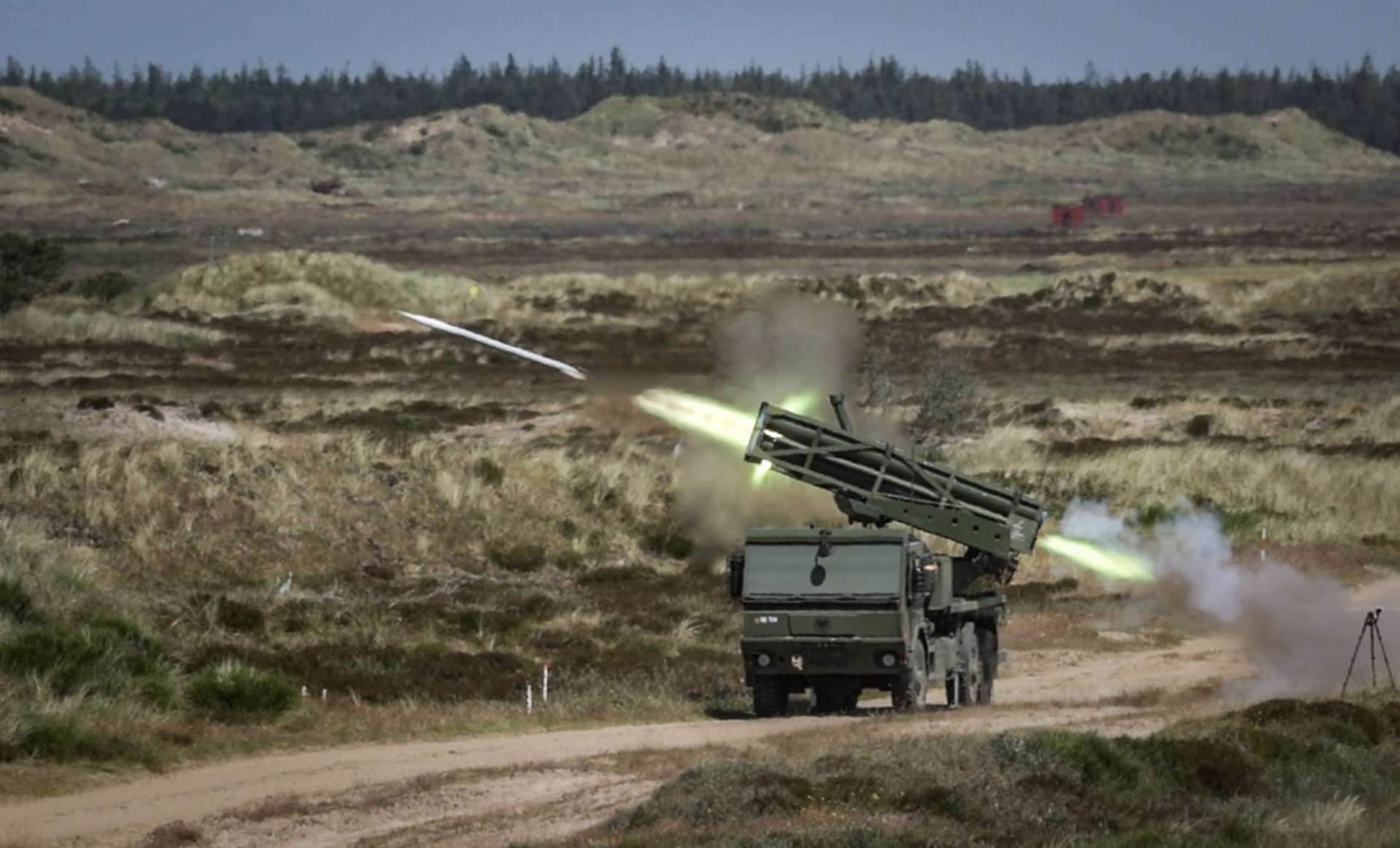
On July 2, 2024, Denmark's new Israeli PULS rocket launcher system was tested and fired on Danish soil for the first time. The initial launch occurred at 10:05 AM at the Oksbøl Shooting and Training Range. From its position at Oksbøl, the rocket was launched approximately 10 kilometers into the North Sea, where it landed as planned without any explosive payload. This event marks a notable step in the integration of the system and the training of the Danish soldiers who will operate these launchers.
Follow Army Recognition on Google News at this link
The initial launch occurred at 10:05 AM at the Oksbøl Shooting and Training Range. From its position at Oksbøl, the rocket was launched approximately 10 kilometers into the North Sea, where it landed as planned without any explosive payload. (Picture source: Danish MoD)
The preparations for this event spanned several months, involving extensive planning and training with the new system. The first PULS systems arrived in Denmark about a year ago. Since then, soldiers from the Army and technicians from the Defence Acquisition and Logistics Organization (DALO) have collaborated closely with technicians from the supplier, Elbit, to integrate the PULS system into the Danish Army. Brigadier General Henrik Lyhne, Deputy Commander of the Army, noted that the system works as intended and produces a significant sound. He mentioned that the Army had been missing such a system, which now provides increased firepower and range. The system's flexibility, capable of firing various types of missiles, was also highlighted.
The integration of new equipment is a time-consuming process. The test firing continued throughout the day, with precise measurements taken for each launch and rocket. These live-fire tests were also used to measure the noise levels produced by the PULS systems and to assess the amount of exhaust gases in the cabin where the crew operates. Lieutenant Colonel Henrik Hvilsom, Head of the Combat Support Division at DALO, described the firing as the result of a considerable effort from all involved, including the Danish Artillery Regiment, the Defence Maintenance Service, Elbit, and DALO. He noted that a rocket could leave the launcher just nine days after the rockets arrived in Denmark.
The head of the Danish Artillery Regiment, Colonel Michael A. Villumsen, emphasized the importance of this milestone, noting that the first test firing was a significant day for the regiment. Soldiers in the Danish Artillery Regiment had been anticipating this event for some time. The acquisition of the rocket launcher system has been largely carried out as planned, with support from the Israeli manufacturer. The regiment now looks forward to training the soldiers on the new weapon system in Latvia in an appropriate operational setting.
Brigadier General Henrik Lyhne, Deputy Commander of the Danish Army, noted that the Army had been missing such a system, which now provides increased firepower and range. (Picture source: Danish MoD)
The PULS system, mounted on Tatra 815-7 Force 6x6 trucks like the Dutch systems, is expected to be ready for operational use by 2026. As of May 2024, Denmark has received all its Precise and Universal Launching System (PULS) multiple rocket launchers (MRLs) along with most of the ordered PULS munitions, allowing for training to begin.
A spokesperson for the Danish Ministry of Defence's (MoD's) Defence Acquisition and Logistics Organisation (DALO) previously said that 19 ATMOS were scheduled to be delivered from the first to the fourth quarter of 2024 and eight PULS systems from the second quarter of 2023 to the first quarter of 2024, with full operational capability planned for 2025. In addition to a missile package, the PULS procurement includes a command post and supply vehicles. Elbit Systems tweeted in August 2023 that Denmark had received its first ATMOS and PULS. The tweet included a video of one ATMOS on an 8×8 platform and two PULSs on 6×6 platforms being delivered to a Danish port.
The Precision Fires Launcher System (PULS), developed by Elbit Systems, is a mobile artillery rocket system recognized for its precision and flexibility. This system, presenting potential benefits for contemporary military operations, has been sold to various countries. Notably, Spain has expressed interest in the PULS under the High Mobility Rocket Launcher System (SILAM) program, along with Germany and Denmark within Europe.
Equipped with two pods, each intended for specific rocket types, the PULS launcher enhances its versatility. These rocket variants include the Accular 122mm (featuring 18 rockets with a range of up to 35 kilometers), the Accular 160mm (offering 10 rockets with a range of up to 40 kilometers), EXTRA (comprising 4 rockets with a range of up to 150 kilometers), and the Predator Hawk (including 2 rockets with a range of 300 kilometers). This range of rocket options enables the system to address various threats, from close-range tactical targets to distant strategic objectives.
Designed for rapid mission execution, the PULS system can initiate and complete a standard firing mission in less than one minute. This quick response time ensures timely fire support on the battlefield. Furthermore, its adaptability allows seamless integration with various military vehicles, whether tracked or wheeled, with minimal modifications required. This adaptability could potentially reduce implementation and maintenance costs, providing a practical solution for achieving advanced rocket and missile launching capabilities.
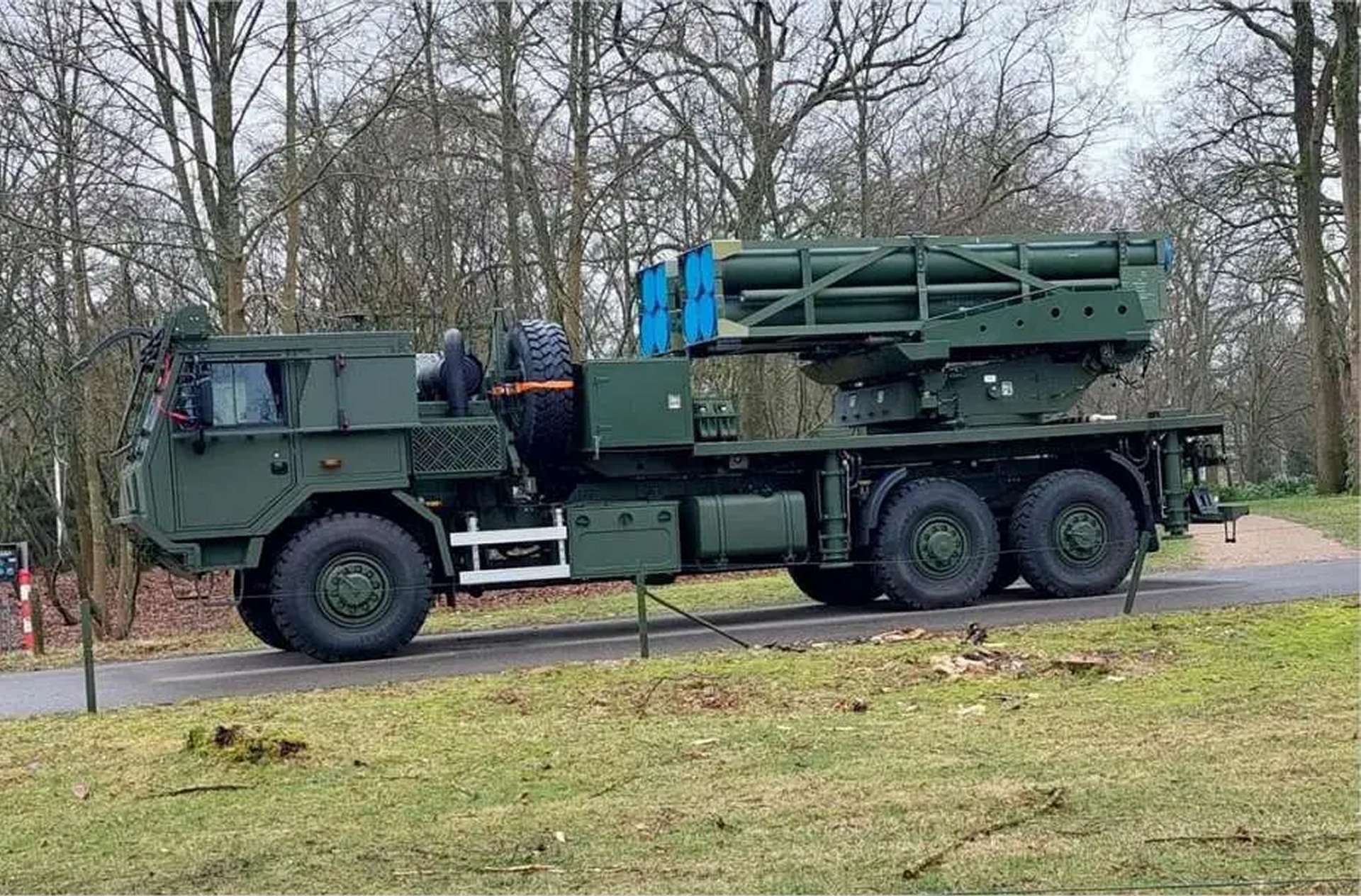
While the current Dutch systems are also mounted on Tatra 815-7 Force 6x6 trucks, plans are in place to transfer them to Scania Gryphus trucks equipped with armored cabins. (Picture source: Venator News)
Read more: Denmark conducts the first test of its Israeli PULS rocket system
- Details
- Written by: Jérôme Brahy
- Category: 2024
- Hits: 7792
According to recent updates from Mason on July 3, 2024, indicate that the 'Redback-eX' is under consideration in South Korea as their next Infantry Fighting Vehicle (IFV) program, ahead of the development of a new IFV (K-NIFV). The Redback-eX includes several significant features, such as SNT Dynamic's 'CTA' cannon, which utilizes various 40mm Cased Telescoped Ammunition (CTA) from Poongsan Corporation.
Follow Army Recognition on Google News at this link
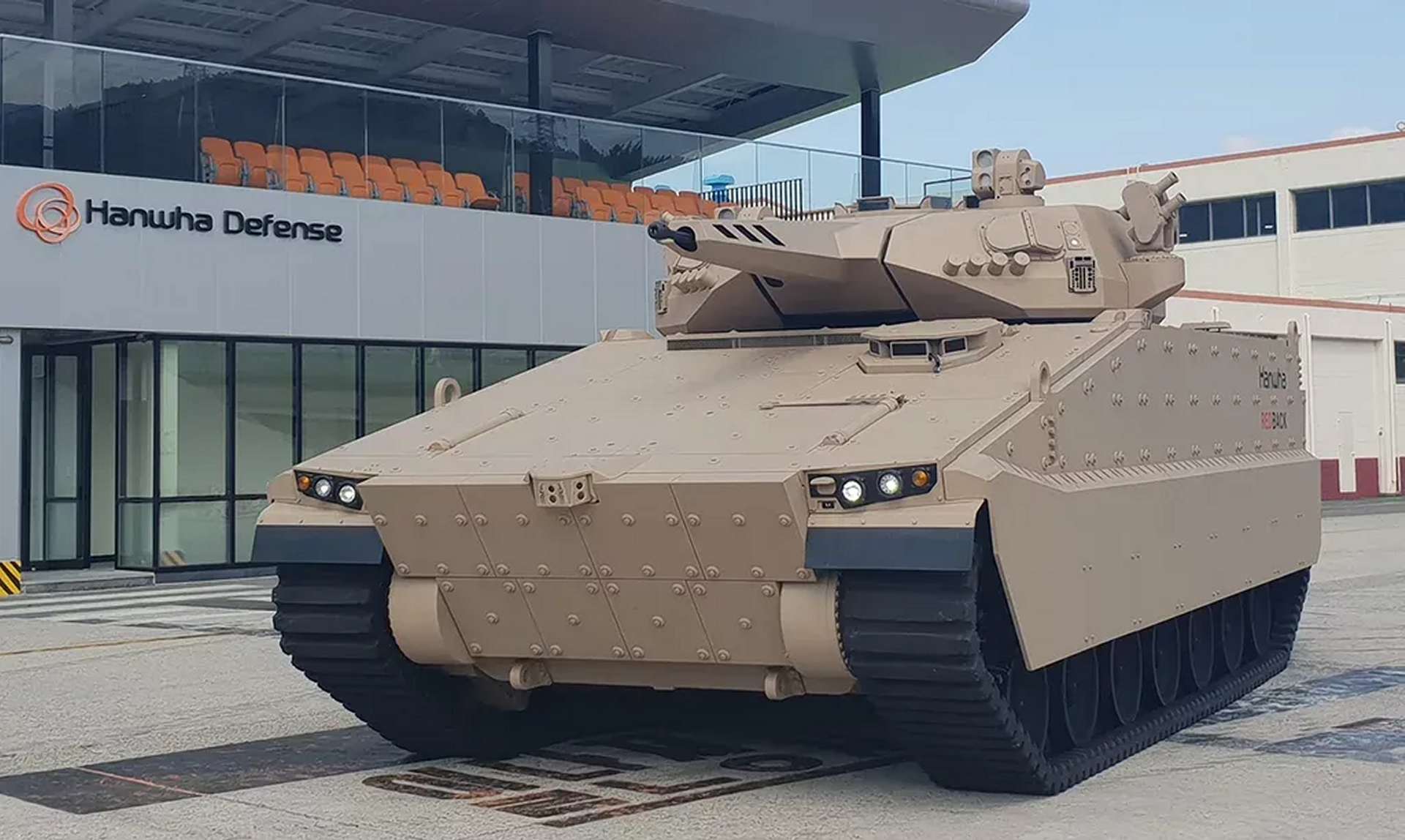
The prototype of the AS-21 Redback IFV was unveiled at the Seoul International Aerospace & Defense Exhibition 2019 (ADEX 2019) held in South Korea. (Picture source: Hanwha Defense)
The 40mm CTA ammunition features a cylindrical cartridge case that houses the warhead inside, differing from traditional 40mm cartridges where the warhead protrudes. This design reduces the ammunition volume by 30%, allowing for a higher payload capacity. Additionally, the CTA uses a rotary chamber that simplifies cartridge ejection and improves reliability and maintainability by reducing the number of loading and extraction cycle parts by 50%.
The development of 40mm wing-stabilized armor-piercing shells, practice shells, and CTA guns involves the South Korean Agency for Defense Development, SNT Heavy Industries, and Poongsan. These efforts began with projects from 2009 to 2015, focusing on CTA gun design technology. The ongoing project, "Warhead-Built Multipurpose High-Explosive Shell Design Technology," aims to complete test evaluations and standardization by 2024, with a follow-up Test and Development project scheduled from 2025 to 2028.
The reduced volume of the 40mm CTA ammunition leads to a decreased propellant charge. Despite a 20% reduction in chamber volume compared to existing 40mm ammunition, the design maintains performance using a high-energy composition propellant that increases gas discharge speed. Initially, a double-component JA2 propellant was used, but due to safety concerns, a propellant with better insensitivity characteristics was developed by adding RDX to nitrocellulose, resulting in the RAN3 composition. The RAN3 propellant offers similar thrust to JA2 but with a lower flame temperature, extending the gun barrel's lifespan. The 40mm CTA machine gun is designed to withstand higher chamber pressures, elevated to 70,000 psi to 74,000 psi, and features chrome plating for durability.
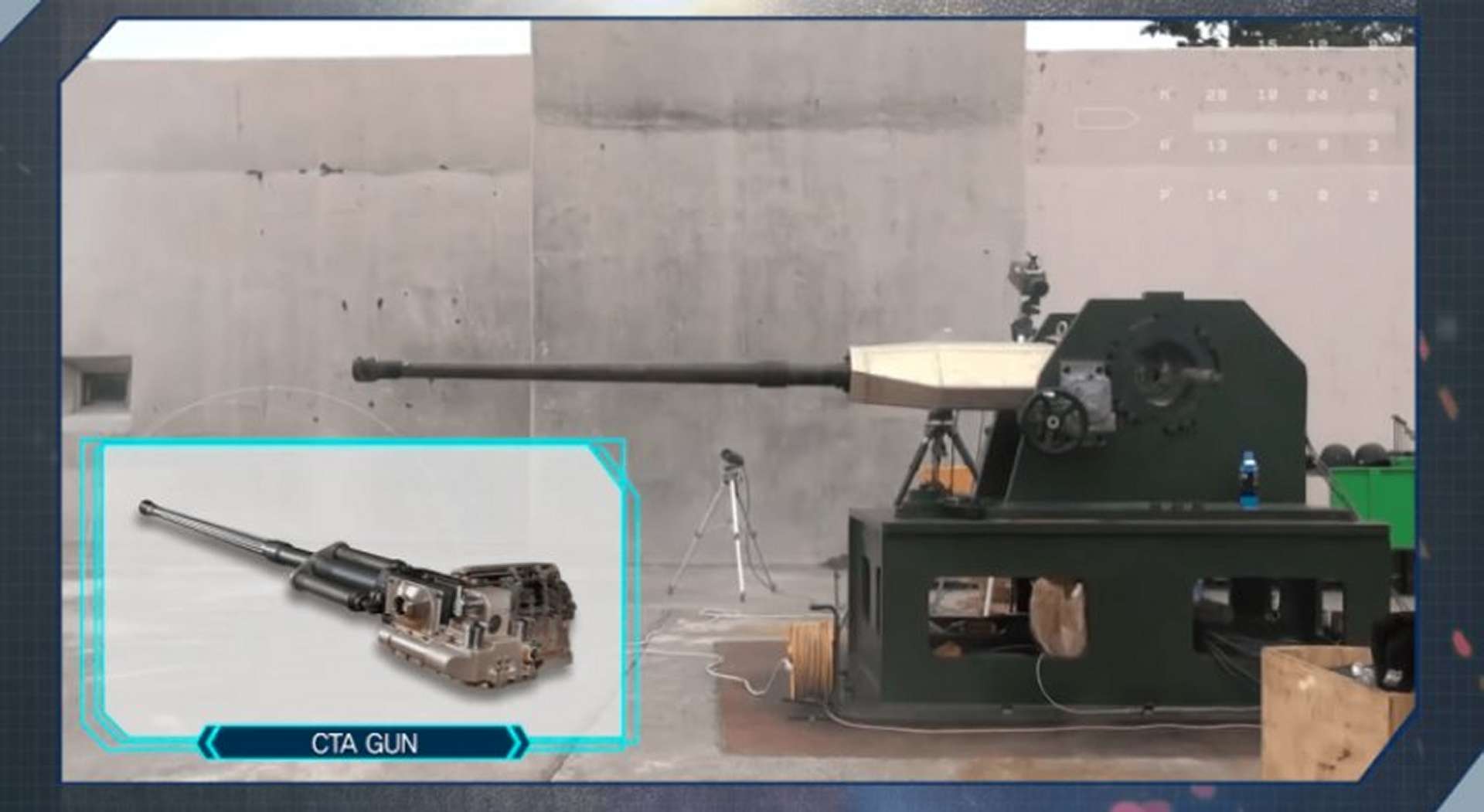
The 40mm CTA ammunition used by SNT Dynamic's 'CTA' cannon features a cylindrical cartridge case that houses the warhead inside, differing from traditional 40mm cartridges where the warhead protrudes. (Picture source: Twitter/Mason)
According to Mason, the Redback-eX also features an unmanned turret, likely sourced from Elbit Systems, chosen by Hanwha Aerospace for its prompt bid response time. This turret is intended to incorporate an enhanced Korean Active Protection System (APS) and a highly intelligent Remote Controlled Weapon Station (RCWS).
Another notable feature is the TAipers missile, a lightweight, air-launched guided anti-tank missile with a lock-on before launch (LOBL) capability. This missile employs a dual-mode seeker combining visible and infrared imagery, guided by an optical fiber data link. It consists of four main sections: the seeker, propulsion system, control mechanism, and battery, with an optical fiber cable at the rear.
Powered by a smokeless solid-propellant rocket motor, the TAipers missile achieves a cruise speed of about 200 m/s and a maximum striking range of 8 km. Hanwha states that the missile can penetrate up to 1,000 mm of rolled homogeneous armor (RHA).
The TAipers missile is set to replace the BGM-71 TOW missiles in the military stocks of the Republic of Korea starting in 2024. For comparison, the BGM-71 TOW 2A weighs 22.7 kg, reaches a maximum speed of 310 m/s, has a range of 3.75 km, and can penetrate 900 mm of armor.
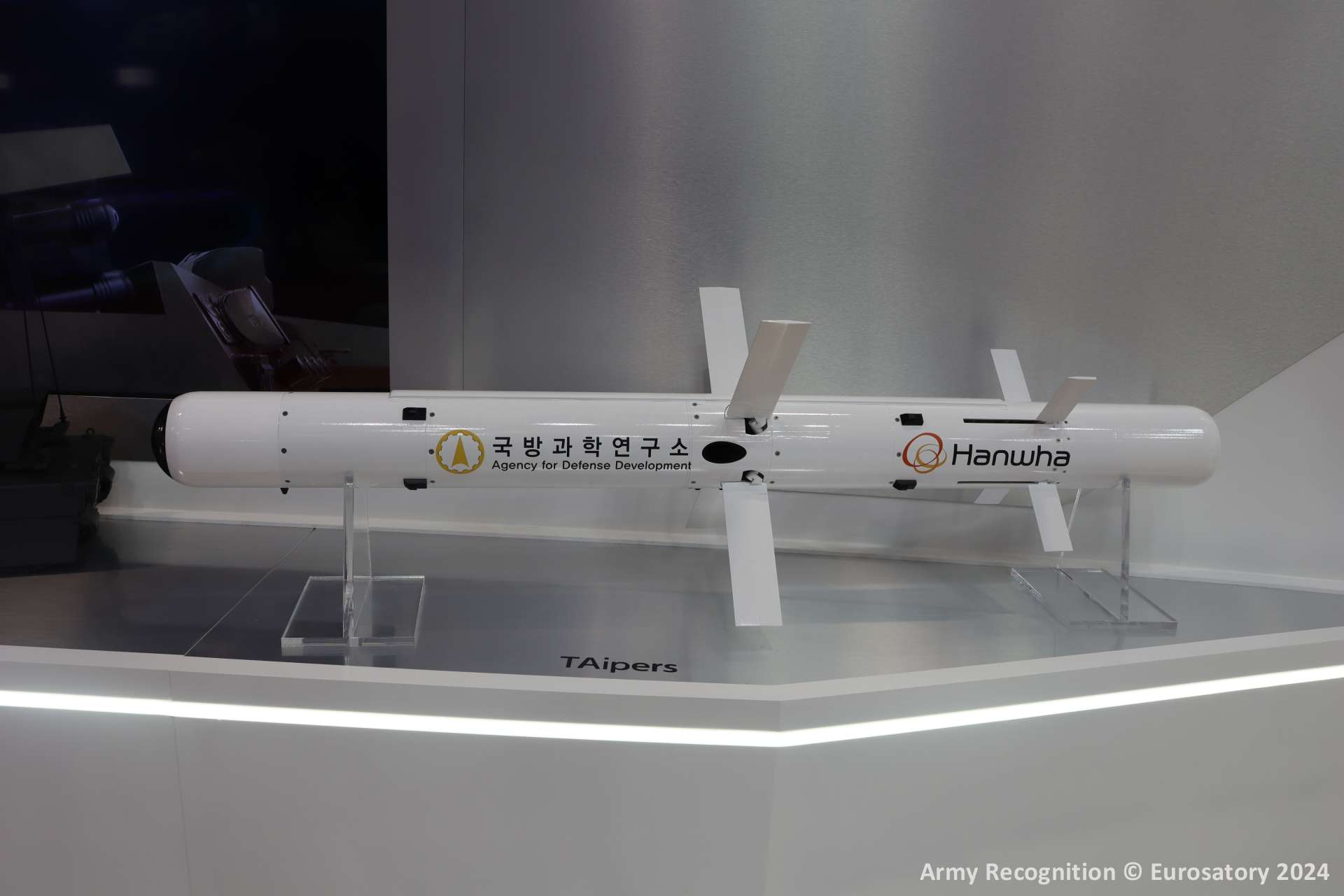
The TAipers missile is a lightweight, air-launched guided anti-tank missile with a lock-on before launch (LOBL) capability. (Picture source: Army Recognition)
Given the high standards expected of the K-NIFV, Hanwha Aerospace and the Republic of Korea Army are likely to select the Redback-eX as their secondary IFV. The Redback, already adopted by the Australian military and sharing components with the K9 artillery, is positioned for mass production. Additionally, the Redback is currently participating in the Romanian IFV acquisition program, indicating its growing international presence and appeal.
The Korean New Infantry Fighting Vehicle (K-NIFV), developed by Hanwha Aerospace, was introduced at ADEX 2023 as a successor to the K21 IFV. This vehicle aims to replace older infantry fighting vehicles within the Republic of Korea Army (ROKA). It features a hybrid propulsion system, which includes a diesel engine, batteries, and electric motors situated at the front. This configuration aims to improve performance, reduce vibrations, and save weight through the use of rubber tracks. The vehicle's combat weight is projected to be between 42 to 45 tonnes, necessitating at least 1,000 hp for adequate performance.
The K-NIFV is equipped with advanced weaponry and defensive measures. It includes a new 40mm cased telescoped ammunition cannon by SNT Dynamics and a remotely controlled weapon station with a 12.7mm machine gun. The turret design integrates the TAipers anti-tank missile system, which has a range of 10 km and a dual-seeker system. Additionally, it incorporates Elbit Systems' Iron Fist active protection system to enhance defense against various threats. This configuration is intended to meet the requirements of modern combat and improve the capabilities of South Korea's armored vehicle fleet.
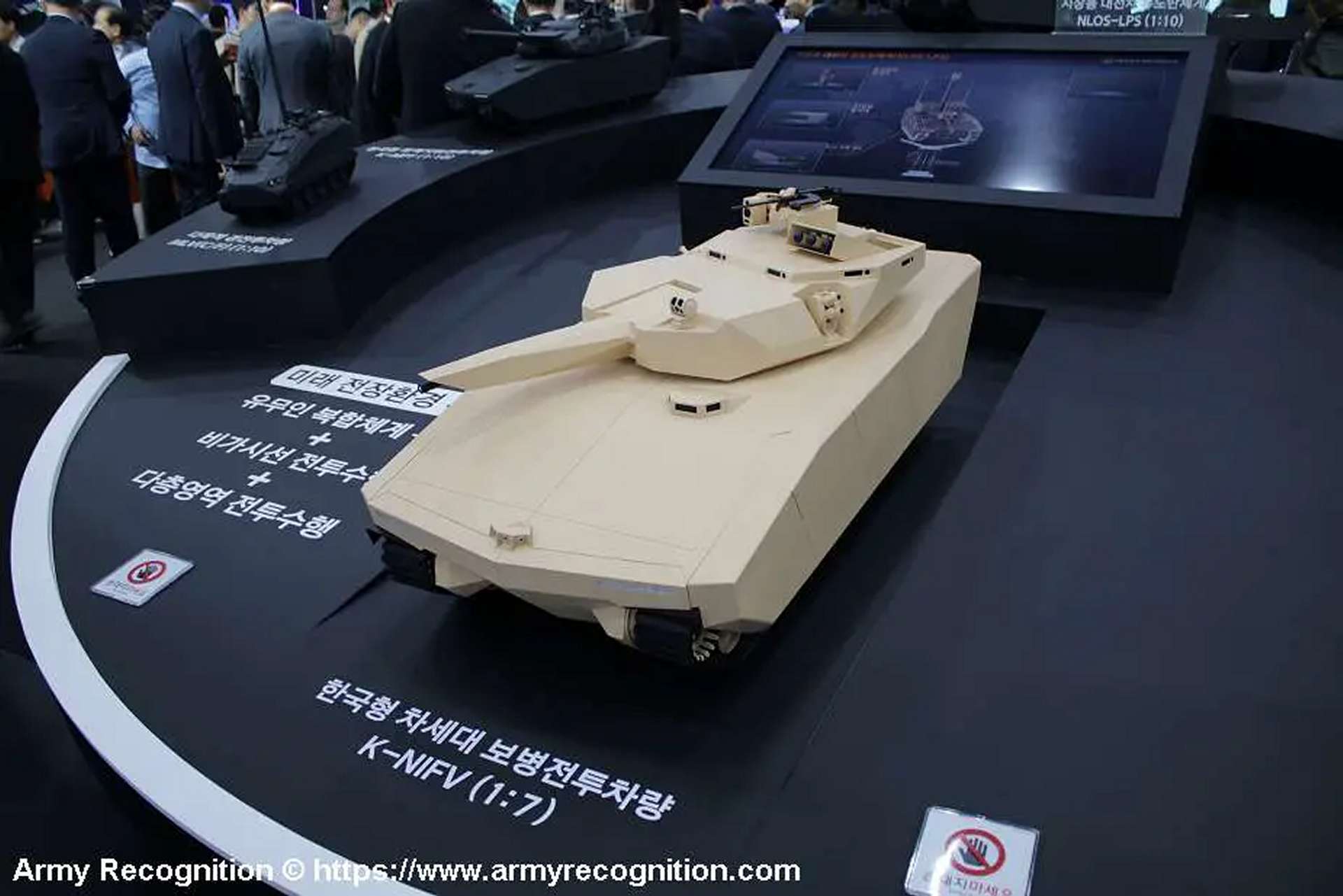
The Korean New Infantry Fighting Vehicle (K-NIFV), developed by Hanwha Aerospace, was introduced at ADEX 2023 as a successor to the K21 IFV. (Picture source: Army Recognition)
The AS-21 Redback is an infantry fighting vehicle (IFV) developed by South Korea's Hanwha Defense. It is a candidate for the Australian Army's LAND 400 Phase 3 project, intended to replace the M113 armored personnel carriers. The vehicle is armed with a Mk44S Bushmaster II 30mm chain gun, which can be upgraded to a 40mm variant, a 7.62mm coaxial machine gun, and SPIKE LR2 anti-tank guided missiles. It also includes the Iron Fist active protection system to counter guided anti-tank missiles and projectiles, with capabilities for threat detection and mitigation.
The AS-21 Redback has a combat weight of 42 tons, a maximum speed of over 65 km/h, and a range of 520 km. Its in-arm hydro-pneumatic suspension system aids maneuverability and crew comfort. The vehicle accommodates a crew of three and can transport eight soldiers. Its modular armor provides protection levels ranging from STANAG Levels 2 to 6 and includes systems to mitigate blasts from mines and improvised explosive devices. Additionally, the Iron Vision system by Elbit Systems offers 360-degree situational awareness.
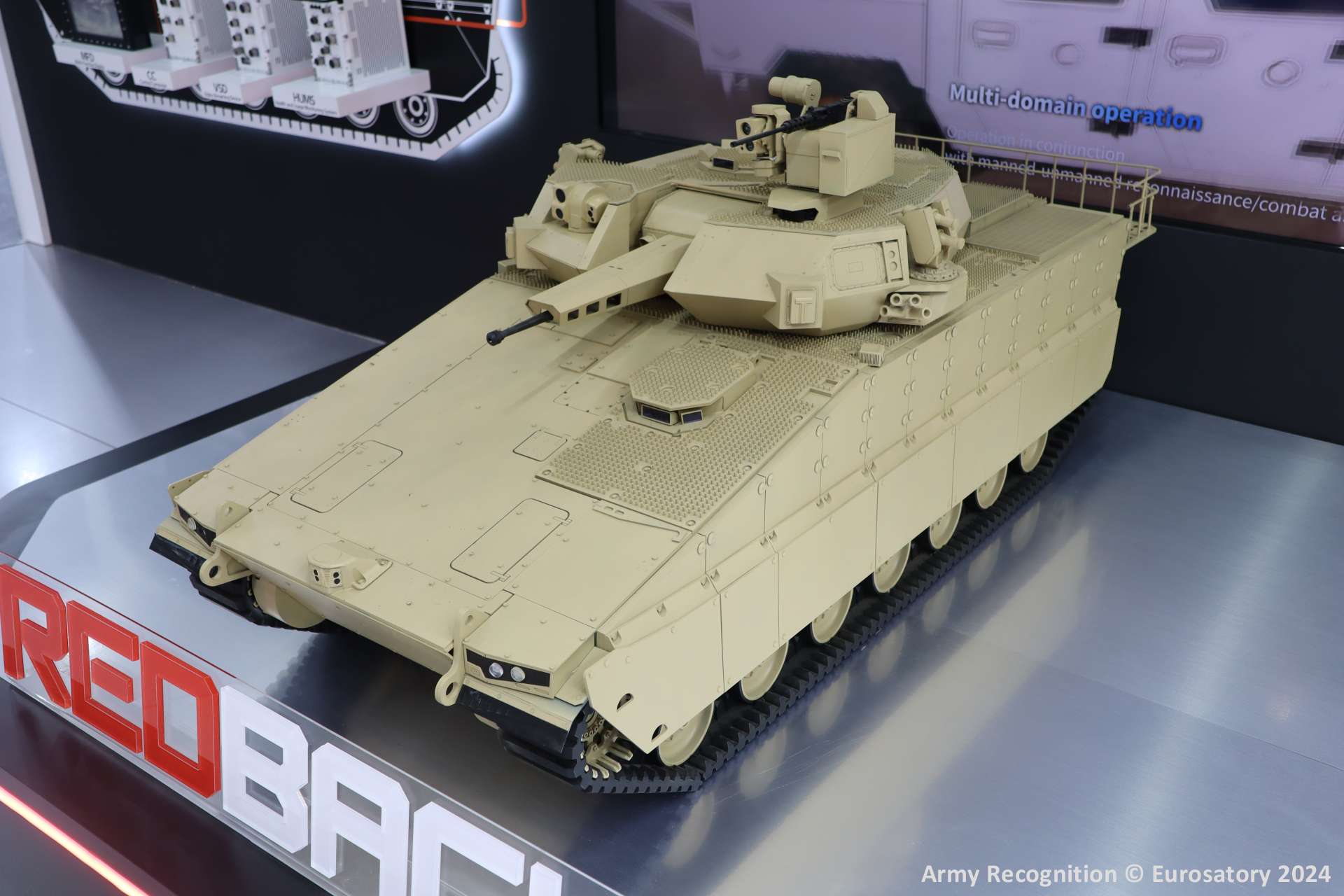
The AS-21 Redback is armed with a Mk44S Bushmaster II 30mm chain gun, which can be upgraded to a 40mm variant, a 7.62mm coaxial machine gun, and SPIKE LR2 anti-tank guided missiles. (Picture source: Army Recognition)
Read more: Will South Korea choose the Redback-eX for its next IFV program?

- Details
- Written by: Vandenbosch
- Category: 2024
- Hits: 14941
The Philippine Air Force (PAF) showcased its new medium-range surface-to-air missile system, SPYDER, during a capability demonstration marking the PAF's 77th anniversary. This event highlighted the integration of this advanced defense technology into the country's arsenal, emphasizing the ongoing modernization efforts of the PAF.
Follow Army Recognition on Google News at this link
The SPYDER (Surface-to-Air Python and Derby) system was developed by Rafael Advanced Defense Systems in Israel. (Picture source: Philippines Media)
The SPYDER (Surface-to-Air Python and Derby) system, developed by Rafael Advanced Defense Systems in Israel, represents an enhancement of the Philippines' air defense capabilities. The PAF has acquired three batteries of the SPYDER-MR ground-based air defense system, each equipped with Python-5 and Derby missiles. These missiles are designed to counter a variety of aerial threats, ranging from aircraft and helicopters to unmanned aerial vehicles and precision-guided munitions.
President Ferdinand R. Marcos Jr. underscored the importance of these new systems for strengthening national security. The SPYDER-MR system is operated by the 960th Air and Missile Defense Group of the PAF, based at Basa Air Base, Pampanga. This deployment is part of the broader efforts under the Horizon 2 phase of the PAF's modernization program, aimed at improving the country's defense infrastructure and capabilities.
The SPYDER-MR system is notable for its mobility, rapid deployment capabilities, and advanced radar and command and control technologies. The system's 3D EL/M-2106 ATAR surveillance radar can detect and track targets at significant distances and altitudes, providing a comprehensive air defense shield. Its vertical launch capability and 360-degree engagement coverage ensure high effectiveness against multiple threats.
The integration of the SPYDER-MR system not only strengthens the PAF's defensive posture but also signifies the Philippines' commitment to protecting its airspace amid evolving regional security challenges. The recent AJEX DAGITPA 2023 exercise provided a platform to demonstrate the operational readiness of the SPYDER-MR, showcasing its ability to protect critical installations and support combined arms operations across the Philippine military.
The SPYDER is a family of new-generation mobile air defense systems, offering combat-proven capabilities for over 15 years. Chosen by eight of the world's most sophisticated armed forces, including the Czech Republic, the first NATO member to deploy these systems, the SPYDER has demonstrated its effectiveness repeatedly. The SPYDER family includes several configurations tailored to specific needs, such as the SPYDER SR (Short Range), SPYDER MR (Medium Range), SPYDER LR (Long Range), SPYDER ER (Extended Range), and the latest SPYDER All-in-One. These systems are designed to rapidly neutralize aircraft, UAVs, and precision-guided munitions and are now equipped to counter tactical ballistic missiles (TBM).
The SPYDER is a flexible and customizable system, transportable by aircraft, and based on an open architecture that integrates advanced sensors, effectors, and launcher configurations. The SPYDER's precision interceptor missiles, the PYTHON 5 with dual-band Infra-Red (IIR) and CCD seeker, and the I-DERBY ER with a two-pulse rocket motor for longer ranges, can be tailored to operational and mission requirements.
Among the key benefits of the SPYDER are its operational and combat-proven systems, its ability to engage and destroy a wide spectrum of hostile threats, its reconfigurable open architecture, on-the-move detection, and instant firing after halt. The system also features dual-use missiles for air-to-air and surface-to-air engagements, and a unique combination of two missile types equipped with IIR or RF seekers, making the SPYDER extremely versatile and effective.
As the PAF celebrates its 77th anniversary, the integration of the SPYDER-MR system marks a crucial step in enhancing the country's air defense strategy, reflecting a continued commitment to modernize and adapt to new security dynamics. Happy 77th anniversary to the Philippine Air Force!
Read more: Philippine Air Force Presents Its New SPYDER-MR Missile System

- Details
- Written by: V.Saint
- Category: 2024
- Hits: 7938
A new heavy infantry fighting vehicle (IFV), reportedly based on the T-72 main battle tank platform, has been spotted in Nizhny Tagil, Russia. This brief video footage, captured near the Uralvagonzavod test site, where Russian T-72, T-90, and T-14 Armata tanks are produced, has sparked interest and speculation among defense analysts.
Follow Army Recognition on Google News at this link
Unnammed vehcile near Uralvagonzagod in Russia (Picture source: OSINT)
This tracked infantry fighting vehicle resembles the T-15 IFV but features a different tracked base with only six road wheels per side, in contrast to the T-15 chassis on the Armata platform.
The development of this new armored vehicle is likely driven by the need to mass-produce heavy infantry fighting vehicles to supply the Russian military forces. On the battlefield, armored vehicles face a multitude of threats, and heavy armor can provide essential protection to the crew.
The choice of the T-72 chassis reflects the Russian defense industry's focus on cost-effectiveness, scalability, and ease of maintenance in the context of ongoing economic challenges.
Opting for the T-72 platform makes sense given the current state of the Russian defense industry. It allows for simpler production and maintenance processes while providing the necessary protection in combat scenarios. This decision seems to address the need to optimize limited resources and leverage existing infrastructure. Despite significant losses, the simplified production and maintenance of T-72s allow the Russian army to maintain a steady flow of armored vehicles to the front, crucial for supporting their ongoing offensives in areas like Donbass. Additionally, the T-72 has been produced in large quantities, making the platform conversion very advantageous for Russia.
The emergence of this new infantry fighting vehicle underscores Russia's ongoing efforts to improve its fleet of armored vehicles in response to the demands of modern warfare, currently experienced in Ukraine. On the ground, it is noted that soldiers suffer from a lack of so-called liaison vehicles, which can transport them from point A to point B while ensuring speed, mobility, and protection.
Read more: New Russian IFV based on T-72 spotted on testing area

- Details
- Written by: V.Saint
- Category: 2024
- Hits: 2428
Russia continues to advance in the Donbass, taking advantage of its diversion towards Kharkiv. After the fall of Avdiivka in mid-February, Ukraine retreated further west behind several lines of fortifications. The Russian army managed to breach the first of these lines at the end of April near the town of Ocheretyne, west of Avdiivka.
Ukraine's President Volodymyr Zelenskiy inspects new fortifications for Ukrainian servicemen, amid Russia's attack on Ukraine, near Russian border in Kharkiv region, Ukraine, April 9, 2024. (Picture source: Ukrainian Presidential Press Service)
Since then, the Russian army has been slowly gaining more territory. The Ukrainian army deployed its 47th mechanized brigade to delay this progression, but it seemed inevitable. In recent days, new villages have been captured, such as Novopokrovské on Tuesday, and the Russian army is now in front of the second line of Ukrainian defense.
Significant losses favoring Ukraine
"The Russian Center Army Group has reached the second line of Ukrainian defense near Pokrovsk," observes @Escortert, a reliable observer of the conflict, on X. "They are at the gates of Toretsk, Chasiv Yar, and Siversk," three key cities for controlling the Donbass, a region Vladimir Putin is determined to conquer. In mid-June, he indicated that this second defensive line must be "the stopping line, otherwise the Donbass will fall."
The fighting there is intense, and Russian losses are severe. According to Ukrainian observations, the ratio of human losses (killed and injured) is 3 to 1 in favor of the Ukrainians. The ratio of material losses is 2.5 to 1, also in favor of Ukraine. This observation is nevertheless uncertain.
For the past few weeks, Russian infantrymen have been advancing on foot or by motorcycle. The Russian soldiers attack without protection and with little offensive equipment. Footage shot in the village of Novooleksandriivka, four kilometers northwest of Ocheretyne, shows Russians being heavily hit by Ukrainian tanks at almost point-blank range. "Russian infantrymen appear to be lacking anti-tank weapons," notes @Escortert.
Two Russian Objectives
The current Russian offensive is the largest launched since February 22, 2022. On Tuesday, July 2, 189 ground attacks were recorded, a record. Two-thirds of these occurred in the Donbass region, with only 10% in the Kharkiv region. To carry out this offensive towards Pokrovsk, concentrated over a few dozen kilometers, the Russian army relies on the 30th, 55th, 74th, and 137th brigades. In response, the Ukrainian army has deployed several mechanized brigades (the 23rd, 47th, 31st, and 110th) and several infantry brigades.
The Russians aim to reach the strategic city of Pokrovsk, a logistics center for the Ukrainian army located 30 km west of Ocheretyne. The Russian army also wants to cut the highway connecting Pokrovsk to Chasiv Yar to disrupt the logistics of this city, which is barely withstanding Russian assaults. On Wednesday, July 3, the Russian army claimed to have taken a first neighborhood in this city, located on the eastern bank of the canal, which serves as a natural fortification for the Ukrainian army.
On the Ukrainian side, the defensive lines are particularly controversial, especially after the Russian attempted offensive in the Kharkiv region. This offensive revealed that these paid fortifications were never built. The question today is whether the Donbass defense line, currently under Russian attack, is fully completed and if it can withstand and serve as the stopping line as expected.
Read more: Ukraine Fighting for her last defense line will it survive Russian massives assaults
- Germany Buys 4 New Patriot Long-range Air Defense Missile System
- Taiwan modernizes old M60A3 with new barrel, while waiting for M1 MBT
- Strategic Update of US Marines in Indo-Pacific with Arrival of New Amphibious Combat Vehicles in Japan
- Significant Update to Iranian M60 Tanks: Introduction of Soleiman-402 Model