
- Details
- Written by: Vandenbosch
- Category: 2024
- Hits: 2454










Canada is poised to unveil its strategy to meet NATO's defense spending target of 2% of GDP, according to senior government sources. This announcement, expected on Thursday, July 11, 2024, comes after months of increasing pressure on the Canadian government. Currently, Canada is the only NATO member without a timeline to reach this target, with defense spending projected to be 1.37% of GDP this year. In comparison, 23 of the 32 NATO member countries are on track to meet or exceed the 2% target by 2024.
Follow Army Recognition on Google News at this link
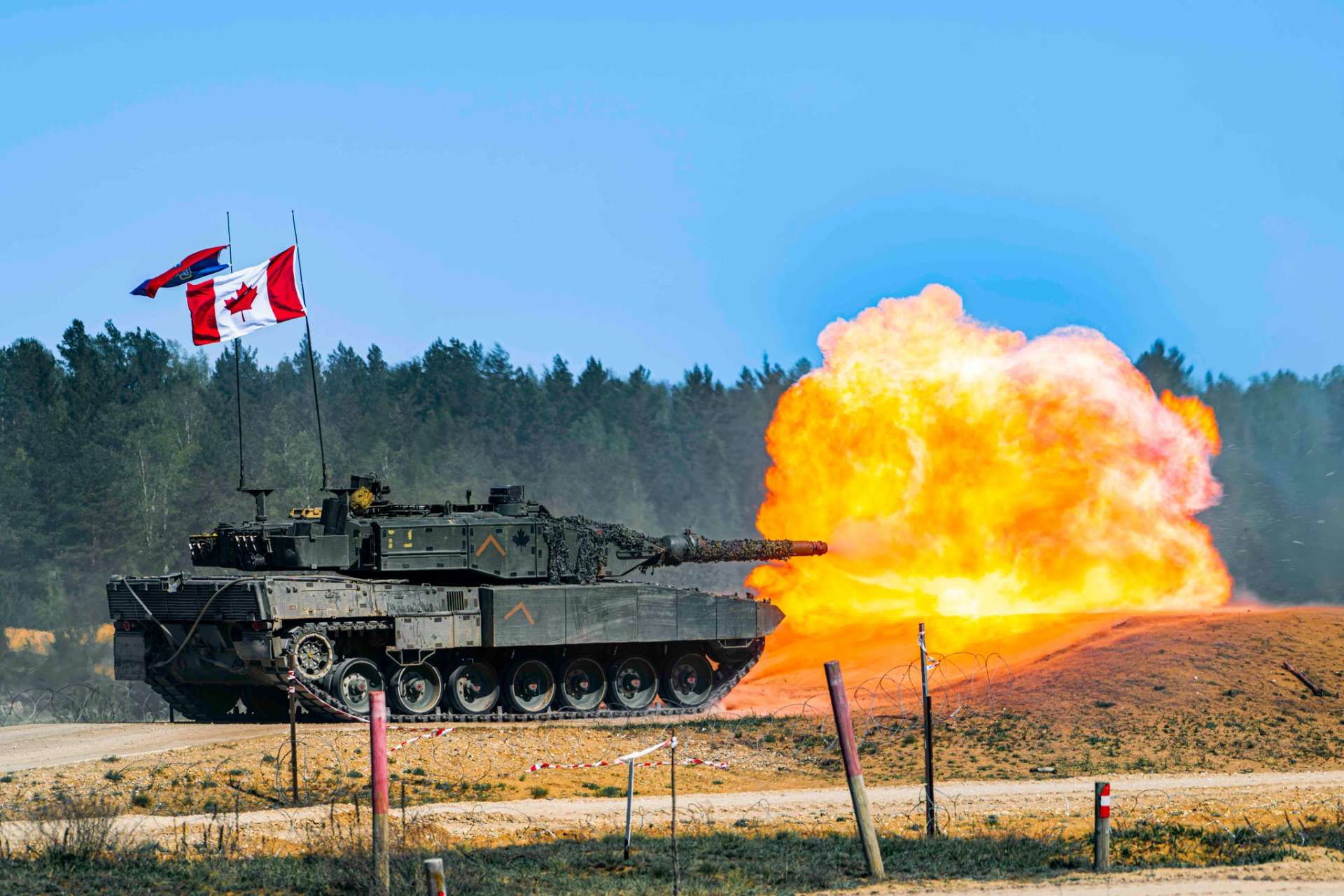
A Canadian Leopard 2A5 Main Battle Tank. (Picture source: Canada MoD)
Defense Minister Bill Blair, attending the NATO summit in Washington with Prime Minister Justin Trudeau, emphasized Canada's commitment to meeting and potentially exceeding the 2% pledge. Speaking at various forums, Blair indicated that Canada would collaborate with NATO allies such as Norway and Germany to enhance production and achieve these goals.
In April, the federal government introduced a defense policy aiming to increase military spending to 1.76% of GDP by 2030, along with an investment of $8.1 billion over five years and $73 billion over 20 years. However, no specific target was set to reach the 2%.
Canada has faced criticism from NATO and U.S. politicians for its insufficient defense spending. NATO Secretary-General Jens Stoltenberg and U.S. Speaker of the House Mike Johnson have both called on Canada to increase its contributions, with Johnson describing Canada's current spending as "shameful."
As part of its commitment, the federal government announced plans to purchase 12 new submarines to replace its aging fleet. This acquisition is part of Canada's broader strategy to reach the 2% GDP defense spending target. The new fleet aims to bolster Canada’s sovereignty and contribute to the security of NATO allies.
In 2024, a record number of 23 NATO member countries have met or exceeded the 2% GDP defense spending target set by the alliance. Among these countries, the United States continues to spend well above this target, allocating approximately 3.5% of its GDP to defense. Poland, concerned about instability on its eastern border, has increased its defense spending to 3.9% of GDP. Greece spends about 3% of its GDP on defense, while Estonia allocates around 2.7%.
The Baltic states, including Latvia and Lithuania, have also met this target, dedicating 2.3% and 2.5% of their GDP to defense, respectively. The United Kingdom has maintained its defense spending at approximately 2.1% of GDP. Additionally, Finland and Denmark reached the 2% threshold in 2023. Nations such as Germany, the Netherlands, Norway, and Turkey have achieved this target for the first time in 2024, reflecting a significant increase in defense spending among European allies and Canada. This increase underscores a growing commitment to the collective security of the alliance, thereby strengthening NATO's defense posture against contemporary threats.
This plan represents an important step for Canada in responding to international expectations and enhancing its military capabilities in collaboration with NATO partners. However, nothing has been officially published yet, so stay tuned today to learn more about Canada's new plan.
Read more: Canada Set to Announce Plan to Meet NATO Defense Spending Target
- Details
- Written by: Jérôme Brahy
- Category: 2024
- Hits: 4792
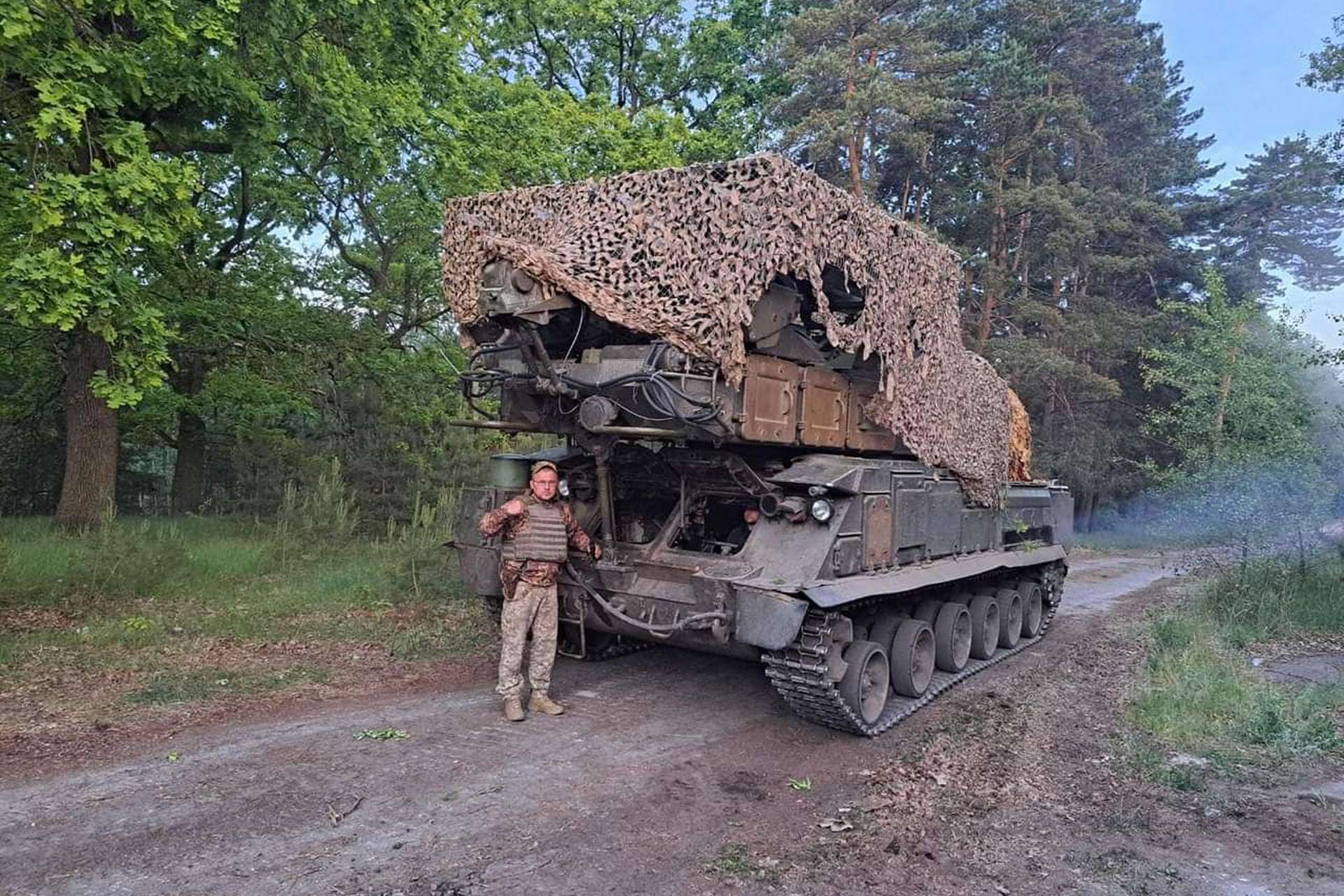
On July 8, 2024, the US Senate Armed Services Committee proposed that the U.S. Air Force consider adapting the FrankenSAM air defense system, initially developed for Ukraine, for use in protecting its own air bases. The FrankenSAM projects originated from a need to rapidly enhance Ukraine's air defenses by combining modern Western missiles with retrofitted Soviet-era launchers and radars. There are three known FrankenSAM systems: one integrating Buk launchers with Sea Sparrow missiles, another combining Soviet radars with Sidewinder missiles, and a third that pairs Patriot missile components with domestic radar systems.
Follow Army Recognition on Google News at this link
The first FrankenSAM, which combines a Buk-M1 launcher with RIM-7 Sea Sparrow missiles, was spotted on Ukrainian soil in March 2024. (Picture source: Twitter/UkraineNewsLive)
In July 2024, the Committee on Armed Services of the United States Senate released the National Defense Authorization Act (NDAA) for Fiscal Year 2025. This act authorizes appropriations for military activities of the Department of Defense (DOD) and military construction, and prescribes military personnel strengths for the fiscal year, among other purposes. A key component of the act is the need for a mobile short-range air defense system that could be quickly developed and adopted, like the FrankenSAM systems developed to be used in Ukraine.
According to the document, the standard budget and acquisition processes of the DOD often do not allow for the rapid development and procurement of modern solutions required to respond to emerging problems. This requirement was evident in fiscal year 2023 when the U.S. Air Force identified the need for a mobile short-range air defense solution that could be developed and fielded quickly and affordably for use in Ukraine.
Originally initiated in Ukraine to enhance its air defense capabilities, the unconventional program, known as the FrankenSAM initiative, has garnered support from the US Department of Defense and the US Air Force. This project encompasses a family of mobile air defense systems intended to defend against both manned and unmanned aerial threats using a ground launch system that integrates an existing supply of air-to-air missiles into an open-architecture fire control backbone.
The US lawmakers revealed that this system includes communication towers, passive infrared camera systems, early warning radar trailers, and small form factor communication kits, which together create a networked air defense architecture. The open-architecture system was designed, built, and successfully completed live fire testing within eight months from the contract award, allowing for fielding by the end of 2023. Once deployed, the first FrankenSAM demonstrated its full range of capabilities within two months, requiring less than two weeks of operator training.
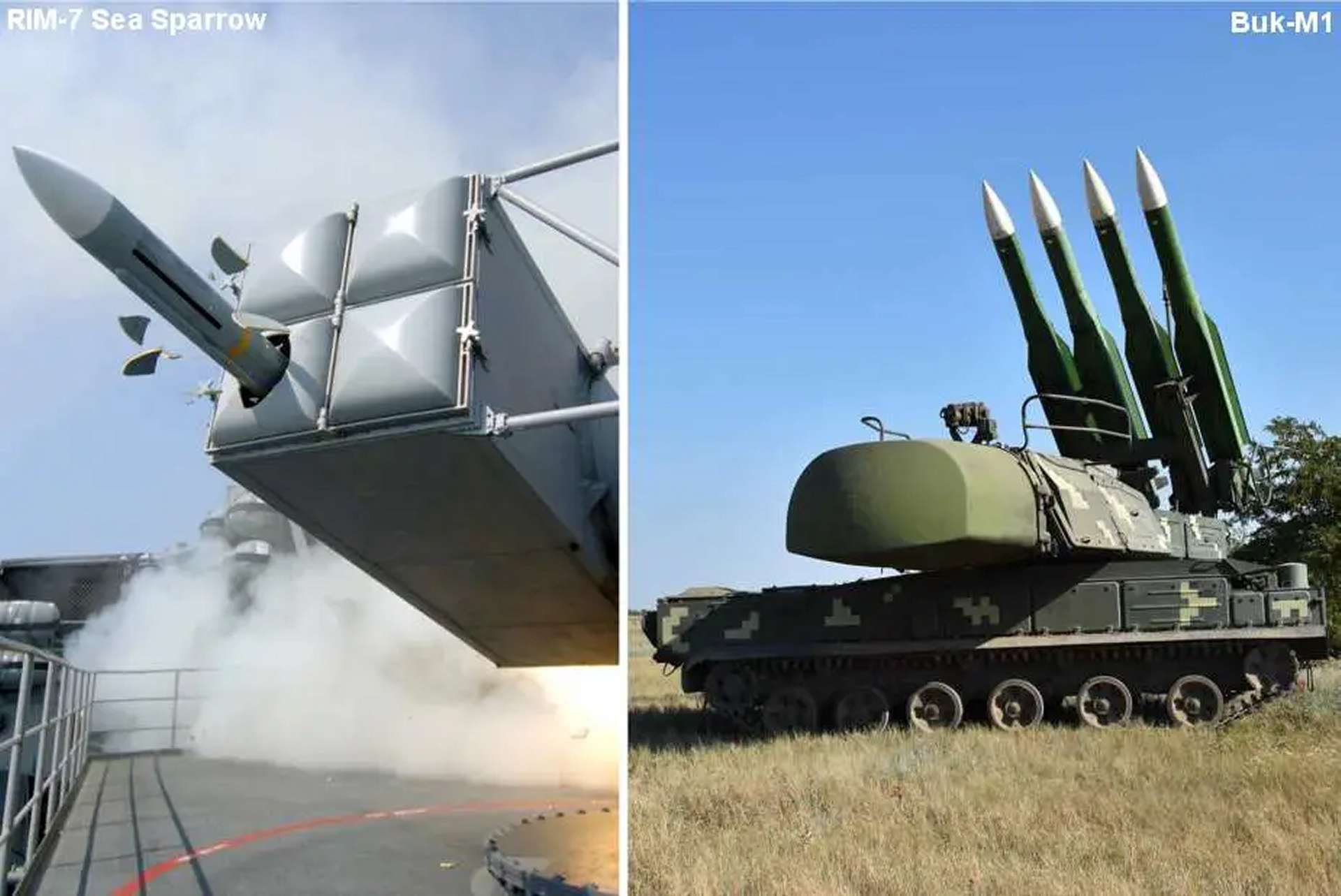
The origins of this program trace back to late 2022 when Ukrainian officials sought assistance from their allies to find suitable missiles for approximately 60 Soviet-era Buk launchers, such as the RIM-7 Sea Sparrow, and radars that were in Ukraine's possession but not in active use. (Picture source: US DoD and Yandex)
As reported by Army Recognition on November 14, 2023, there are three known FrankenSAM systems combining modern Western surface-to-air missiles with retrofitted Soviet-era launchers and radars already in Ukraine's military inventory: one integrating Buk launchers with Sea Sparrow missiles, another combining Soviet radars with Sidewinder missiles, and a third that pairs Patriot missile components with Ukraine's domestic radar systems.
The origins of this program trace back to late 2022 when Ukrainian officials sought assistance from their allies to find suitable missiles for approximately 60 Soviet-era Buk launchers and radars that were in Ukraine's possession but not in active use. Due to challenges in acquiring Russian-manufactured munitions compatible with the Buk systems, the Ukrainians proposed adapting the launchers to accommodate NATO-caliber antiaircraft missiles donated by the United States.
Recognizing the pressing need to enhance air defenses, particularly for the approaching winter season and the potential for Russian exploitation of this situation to target energy infrastructure, Ukrainian officials initially offered to modify the weapons themselves. However, American engineers took on the task, and over seven months of testing and approval of the hybrid systems followed the Pentagon's agreement in January to provide Sea Sparrow missiles for the project.
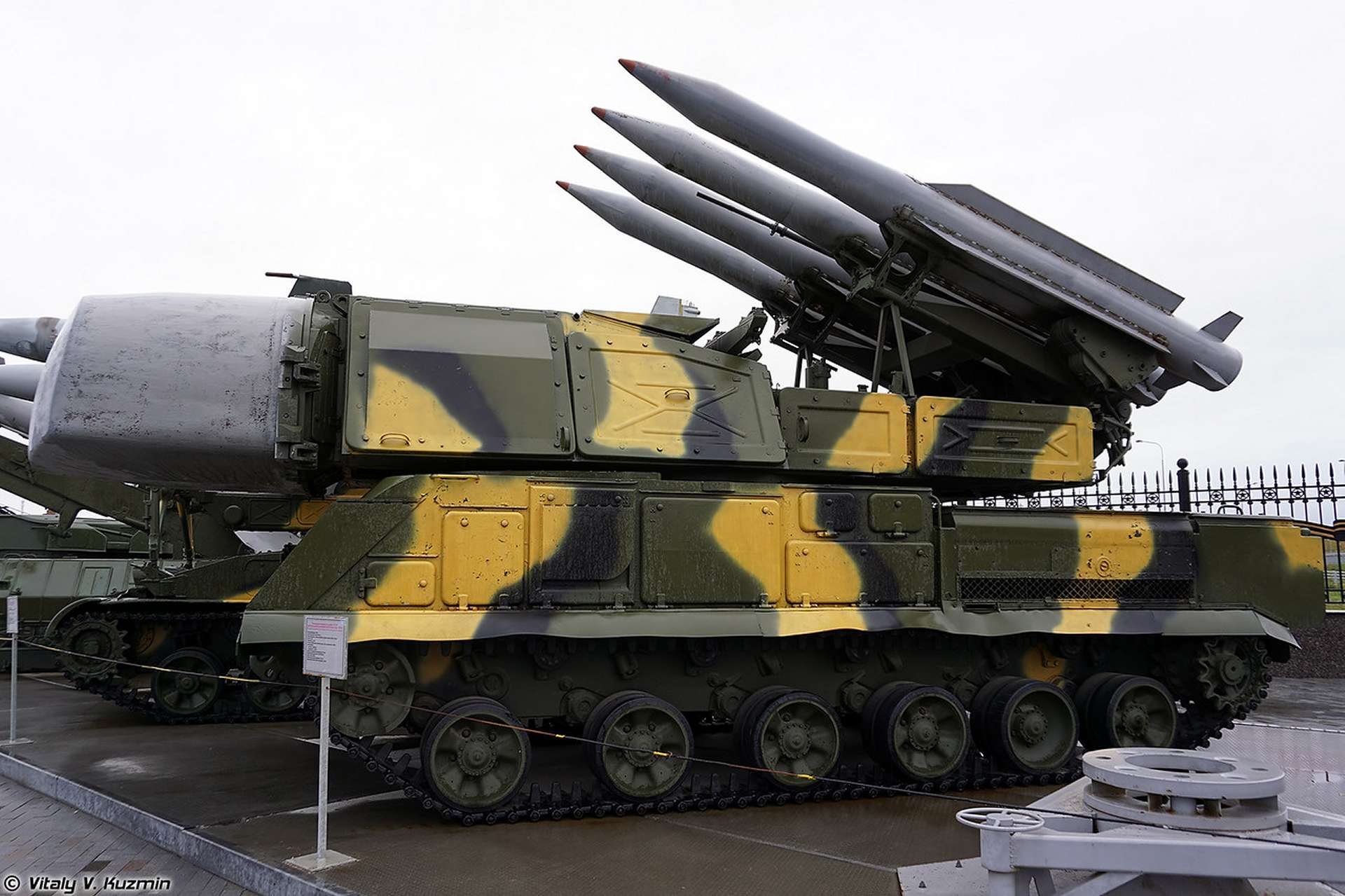
Both the Buk-M1's 9M38 and RIM-7 missiles rely on semi-active guidance to lock onto targets, allowing them to be used with the 9S35 Fire Dome tracking and illumination radar used in the Buk system. (Picture source: Vitaly Kuzmin)
The first system involves retrofitting Soviet-era Buk-M1 systems with American RIM-7 Sea Sparrow missiles to address the shortage of Soviet 9M38 missiles. This hybrid system combines the transporter erector launcher (TELAR) known as 9A310 from the Buk-M1 with Sea Sparrow missiles. Both the 9M38 and RIM-7 missiles rely on semi-active guidance to lock onto targets, allowing them to be used with the 9S35 Fire Dome tracking and illumination radar used in the Buk system. While this FrankenSAM may necessitate the installation of a new radar, there is potential for frequency and modulation compatibility.
Oleksandra Ustinova, a member of the Ukrainian Verkhovna Rada, has provided information regarding the progress of this project. According to her, five launchers have already been converted in the United States, and the first units have already arrived in Ukraine. There are plans for an additional 17 launchers to undergo retrofitting soon, which may be completed before winter concludes. The retrofitting of these launchers with RIM-7 Sea Sparrow missiles appears to be progressing efficiently, as the five units were converted within a month.
On November 12, 2023, Yuriy Ignat, spokesperson for the Air Force of the Armed Forces of Ukraine, announced in an interview with Radio NV that the Buk-M1 air defense system had been modified to accommodate American RIM-7 Sea Sparrow missiles as part of the FrankenSAM project. He also revealed that these adapted air defense systems underwent successful testing at a training ground in the United States, as confirmed by Western partners. Subsequently, leaked photos from Ukrainian soldiers, reported on Twitter on May 28, 2024, showed the presence of FrankenSAM systems in Ukraine's defense arsenal.
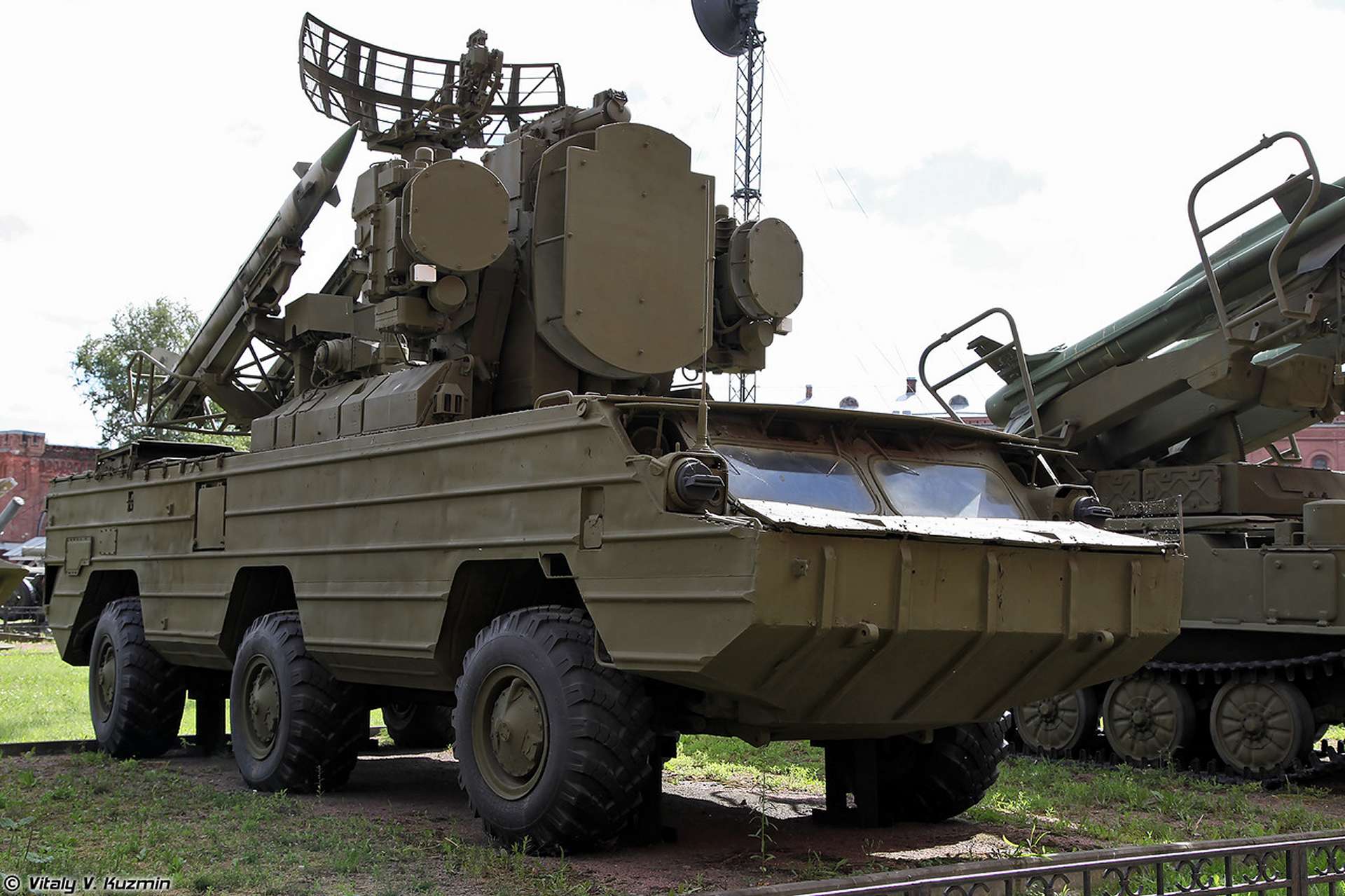
Another consideration for the second FrankenSAM is integrating the AIM-9M into an existing air defense system, such as the 9K33 OSA, where the surveillance radar would primarily focus on target detection. (Picture source: Vitaly Kuzmin)
The second hybrid air defense system solution is under development in Ukraine, which involves integrating Soviet-era radars with American AIM-9 Sidewinder missiles. This approach is based on the AIM-9M Sidewinder missile's adaptability, requiring only minor modifications for integration, which can simplify target engagement and enhance air defense capabilities. Unlike the RIM-7 Sea Sparrow, the Sidewinder does not require a tracking and illumination radar.
The AIM-9M missile, equipped with an infrared homing head, reduces the operator's role in guiding the missile toward the target, launching the homing head, and initiating the missile's pursuit upon the target lock. In principle, the AIM-9M air defense system shares similarities with the Soviet Strela-10 or the American MIM-72 Chaparral systems, especially when the AIM-9D variant was minimally modified to engage targets at ranges of up to 5 km and altitudes of up to 4 km.
The AIM-9M launcher's chassis presents minimal challenges due to the missile's manageable dimensions, making it compatible with various platforms. Additionally, there are indications that data from the Soviet radar may be integrated into the system, providing real-time information to the operator about the target's type, course, height, and speed. Such an approach has been implemented previously in the United States with systems like the AN/TWQ-1 Avenger, which simplifies the operator's tasks. Another consideration is integrating the AIM-9M into an existing air defense system, such as the 9K33 OSA, where the surveillance radar would primarily focus on target detection.
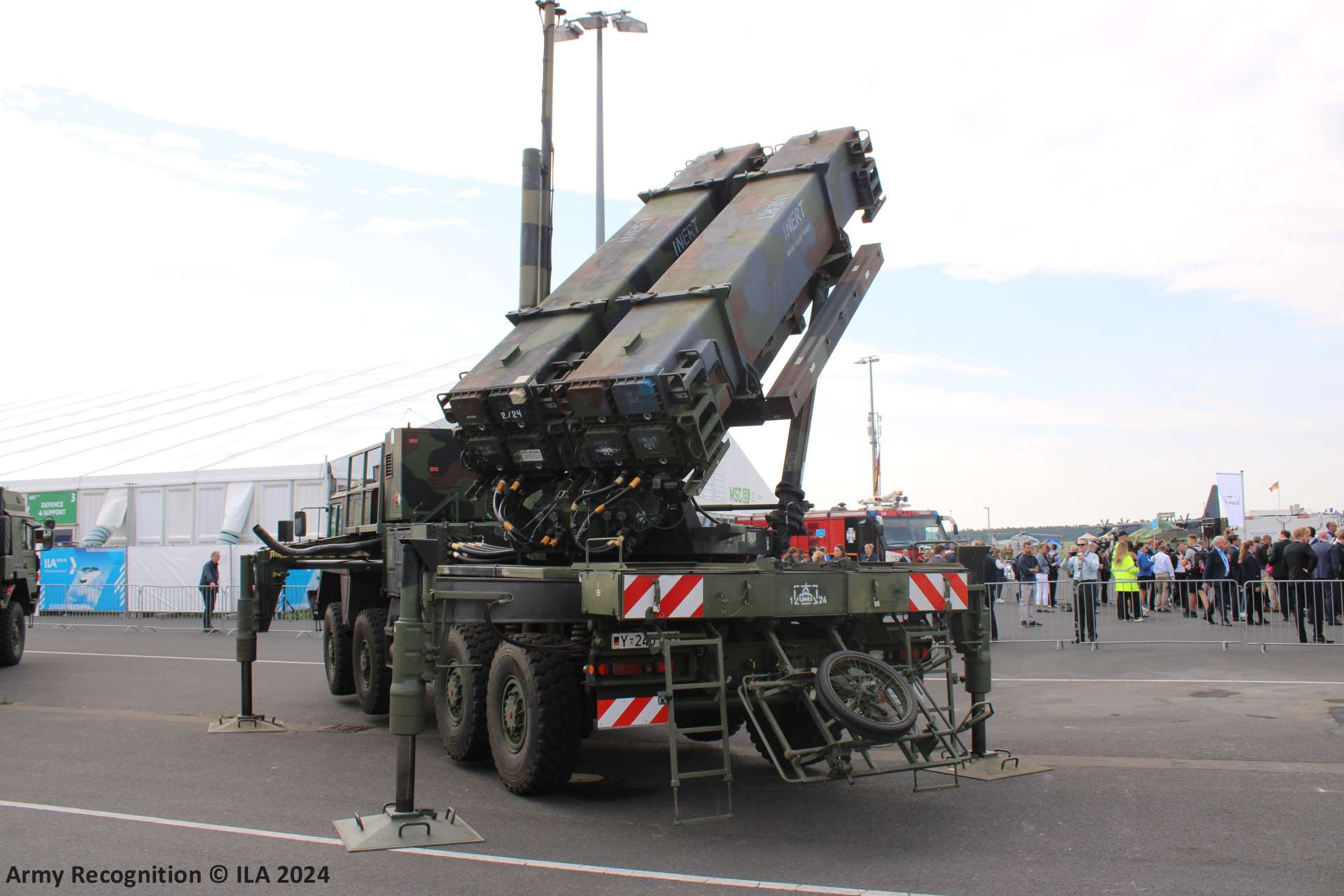
The third FrankenSAM system, which will be the most powerful of the three hybrid systems, combines Patriot missile components with domestically produced radar systems. (Picture source: Army Recognition)
The third FrankenSAM system, which will be the most powerful of the three hybrid systems, combines Patriot missile components with domestically produced radar systems. Currently in the testing phase, it is anticipated that this system will be delivered to Ukraine during the winter season, along with donated Patriot missiles and additional components from various allies.
The initial live firing tests for this third FrankenSAM project have yielded positive results, with the system successfully destroying a target drone. Although specific details are limited, it is reported that this system can deploy Patriot missiles "with Ukraine’s older, domestically made radar systems." The integration of these advanced components is expected to make this SAM system one of the most potent in development. The first operational unit is scheduled to arrive in Ukraine in the upcoming winter, accompanied by donated missiles and other Patriot parts.
Patriot missiles, including the GEM-T for aerodynamic targets and the CRI/MSE for anti-missile interceptors, require radio command guidance in the initial stages of engagement. To achieve this, they rely on radars such as the AN/MPQ-53, AN/MPQ-65, or the newer LTAMDS. In the terminal stage, the CRI and MSE kinetic interceptors utilize their own active radar. The GEM-T, on the other hand, incorporates a radar that operates concurrently with a semi-active mode, transmitting target data to the system's main radar, which then sends commands to the missile.
The integration of Patriot launchers with the Remote Interceptor Guidance-360 (RIG-360) system and Ukrainian radars, such as the 80K6KS1 Phoenix, may offer a viable solution. This approach addresses a significant challenge, as the transfer of complete Patriot systems is logistically complex due to their scarcity. While Western countries have provided various air defense systems to Ukraine over the past 20 months, including Patriot and IRIS-T systems, this latest development, involving Patriot missiles and domestically produced radar systems, aims to further enhance Ukraine's air defense capabilities.
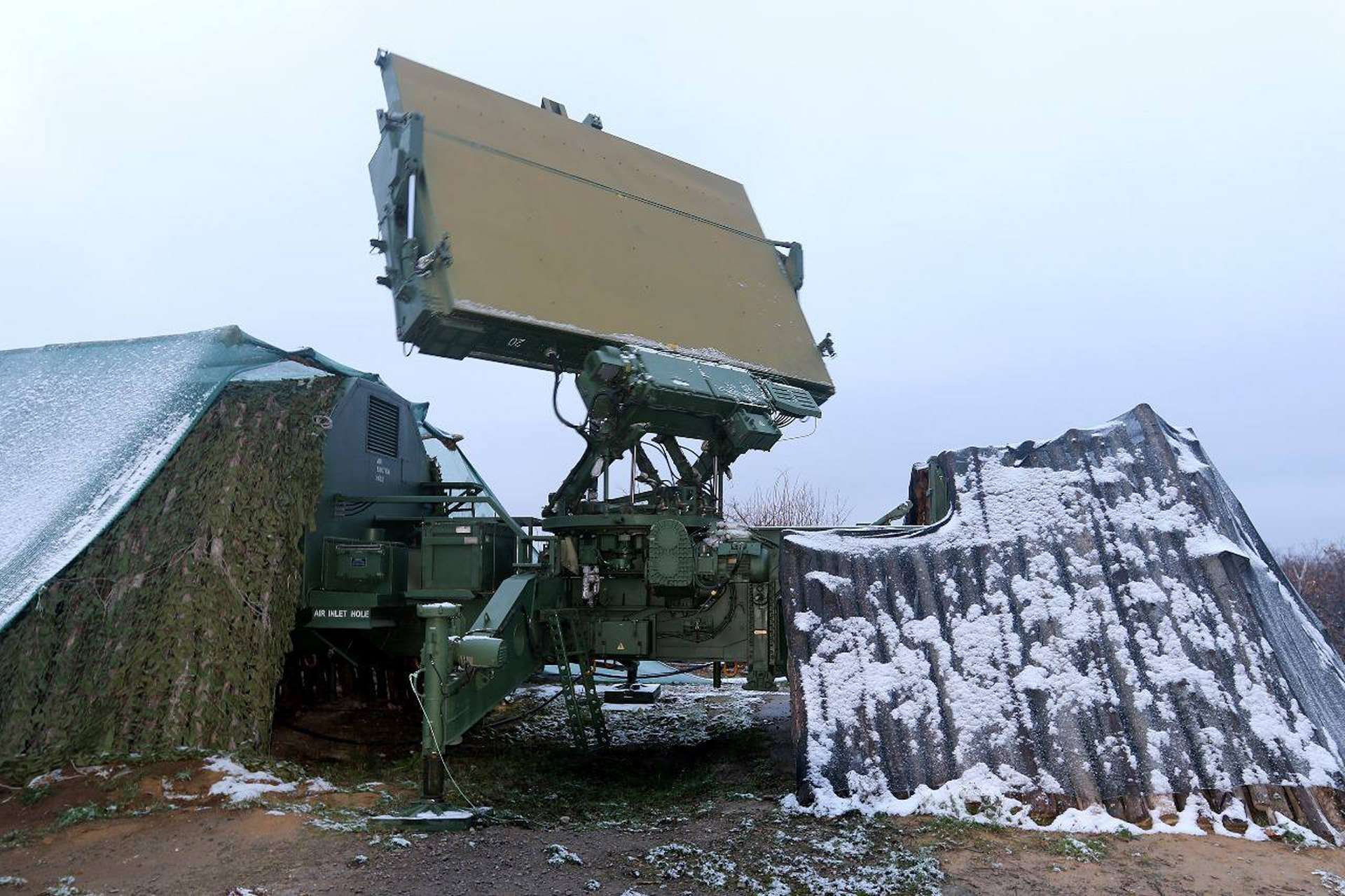
The three-coordinate detection radar station 80К6КS1 possesses a radius of 400 km and was put into service only in 2021, making it one of the most modern Ukrainian radars to date. (Picture source: Ukrainian Air Force)
In recognition of FrankenSAM's potential, the Senate committee has directed the US Secretary of Defense to provide a briefing to congressional defense committees by March 31, 2025. This briefing will address how the DOD and Ukraine have utilized the FrankenSAM system in contingency operations, what additional resources may be required to expand and improve the system, and how the DOD can leverage this capability for quick reaction or extended use in other theaters. This directive aims to ensure that the DOD can address immediate and future threats through innovative and agile defense solutions.
The FrankenSAM program illustrates how Ukrainian and American industries can collaborate to quickly produce effective solutions for critical missions like air defense when necessary. The system leverages easy-to-use, proven technologies that reduce dependence on component development timelines while emphasizing the integration of existing and new equipment into an open-architecture system.
The FrankenSAM's modular approach allows for quick integration into existing air defense systems to address protection gaps or provide stand-alone point defense in areas without a comprehensive air defense system. While currently mounted on a mobile truck, FrankenSAM could be adapted for use on palletized or fixed-base platforms, suitable for various shore, ship, or land-based environments. Additionally, the system reduces costs by being effector agnostic and utilizing surplus munitions from U.S. or partner inventories.
Read more: Will the United States adopt Ukraine's FrankenSAMs for its national air defense?
- Details
- Written by: Administrator
- Category: 2024
- Hits: 10438
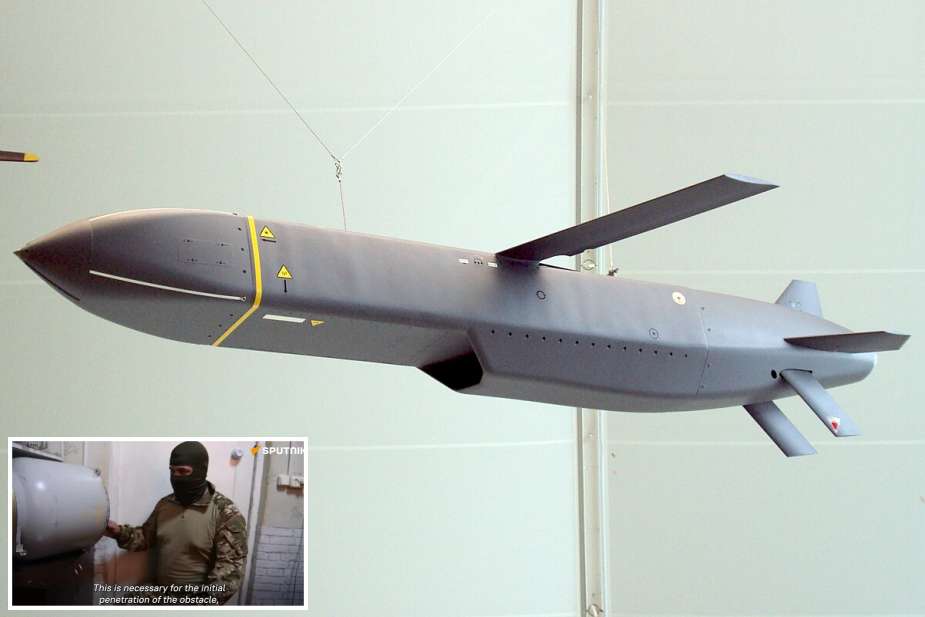
Following a report by the Army Recognition editorial team on July 9, 2024, concerning the study of the US ATACMS missile, Russian specialists have now successfully extracted parts of the control and guidance system from downed Storm Shadow/SCALP cruise missiles, according to an engineer and weapons expert cited by Russian media.
Follow Army Recognition on Google News at this link
According to a video published on the Russian news website Sputnik, Russian engineers are studying the technology of the Storm Shadow/SCALP missile (Picture source: Sputnik).
The Storm Shadow/SCALP cruise missiles are renowned for their advanced technology, offering several critical capabilities that enhance their effectiveness in modern warfare. One of their standout features is precision guidance. These missiles utilize a combination of GPS, inertial navigation systems (INS), and terrain reference navigation (TRN) to achieve exceptional accuracy in targeting. This multi-faceted guidance system ensures that the missiles can strike their intended targets precisely, even under adverse weather conditions or when GPS signals are being jammed.
In addition to their precision, the Storm Shadow/SCALP missiles boast stealth features designed to minimize detection. They have a low radar cross-section (RCS) and are capable of flying at low altitudes, which helps them evade enemy radar systems. This stealth capability significantly increases their chances of successfully penetrating sophisticated air defense networks, making them a formidable asset in any military arsenal.
The study of these missiles' control equipment and guidance systems provides crucial insights into the overflight and operational parameters of the Storm Shadow/SCALP missiles. According to an unnamed engineer and weapons expert cited by Russian media, "A thorough examination of the downed Storm Shadow/SCALP missiles continues. At this point, the control equipment … has been dismantled. This data provides objective control of the missile overflight system, possible air defense countermeasures systems to better counter these targets."
The implications of this examination are far-reaching. By understanding the guidance and control mechanisms, Russian defense systems can potentially develop more effective countermeasures against these sophisticated missiles. This could enhance the defensive capabilities of Russian air defense systems, providing a strategic advantage in neutralizing potential threats posed by these missiles.
Furthermore, the detailed study of the fuse schemes and warhead design of the Storm Shadow missiles is underway. The expert noted, "These are necessary works for neutralization [of missiles]. In order to carry out transportation of these combat units and destroy them outside populated areas." This aspect of the study underscores the importance of safely handling and disposing of unexploded ordnance, thereby minimizing risks to civilian populations.
The extraction and analysis of these missile components highlight the ongoing technological arms race and the efforts by military specialists to adapt and enhance defense capabilities. As missile technology continues to evolve, so too does the need for robust countermeasures and strategic responses to emerging threats.
This development not only underscores the importance of missile technology in modern warfare but also the critical role of intelligence and reverse engineering in maintaining a strategic edge. The information gleaned from the Storm Shadow/SCALP missiles By Russian engineers could potentially reshape defense strategies and influence future military engagements.
Read more: Russian Engineers Unlock Secrets of Cutting-Edge Storm Shadow Scalp Missile
- Details
- Written by: Administrator
- Category: 2024
- Hits: 3497
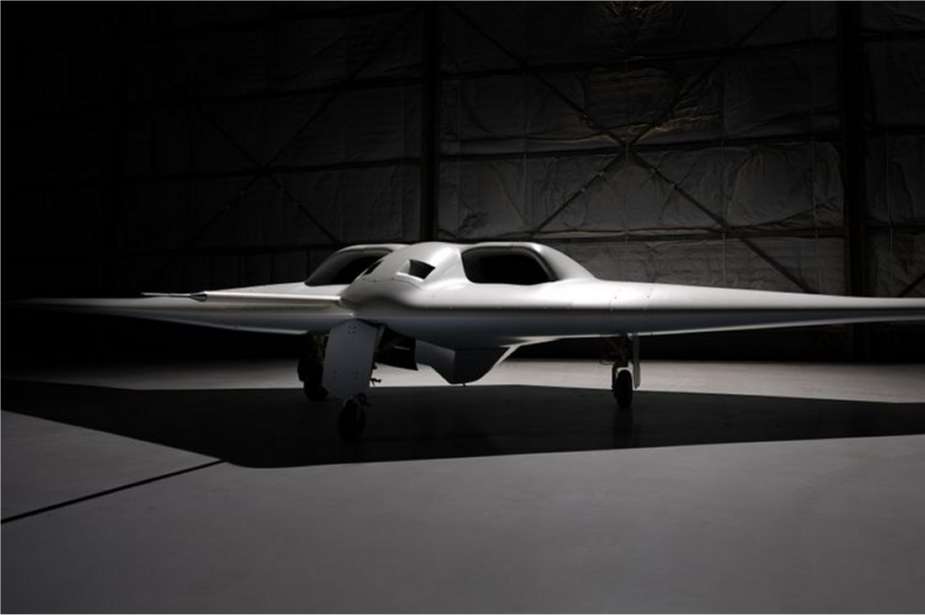
On July 10, 2024, Northrop Grumman Corporation announced the design and construction of a groundbreaking new uncrewed aerial vehicle (UAV) under the Series Hybrid Electric Propulsion Aircraft Demonstration (SHEPARD) program. This innovative aircraft, now officially designated as the XRQ-73, is set to revolutionize long-endurance missions with its advanced hybrid electric propulsion system.
Follow Army Recognition on Google News at this link
The newly unveiled XRQ-73, Northrop Grumman's groundbreaking hybrid electric UAV, poised to revolutionize long-endurance aerial missions for military forces. (Picture source: Northrop Grumman)
In a strategic collaboration with its subsidiary Scaled Composites, Northrop Grumman has developed the XRQ-73 for the U.S. Defense Advanced Research Projects Agency (DARPA). The XRQ-73 is a critical part of DARPA's "X-prime" initiative, aimed at leveraging cutting-edge hybrid electric architecture and component technologies to quickly mature and deploy mission-focused aircraft.
Weighing in at 1,250 pounds (567 kilograms), the XRQ-73 UAV is designed to be powered by a state-of-the-art hybrid-electric engine, with its maiden flight anticipated before the end of 2024. This project builds on the technological advancements from the earlier AFRL/IARPA Great Horned Owl (GHO) project, aiming to mitigate system-level integration risks and accelerate the deployment of new aircraft designs for the Department of Defense (DoD).
"The idea behind a DARPA X-prime program is to take emerging technologies and burn down system-level integration risks to quickly mature a new missionized long-endurance aircraft design that can be fielded quickly," explained Steve Komadina, SHEPARD program manager. "The SHEPARD program is maturing a specific propulsion architecture and power class as an exemplar of potential benefits for the Department of Defense.”
The DARPA SHEPARD team is a coalition of experts from the Air Force Research Laboratory (AFRL), the Office of Naval Research (ONR), and various branches of the U.S. military. The prime contractor, Northrop Grumman’s Aeronautics Systems sector, is leading the initiative from its headquarters in Redondo Beach, California.
Scaled Composites, known for its pioneering work in aviation, is a major contributor to the XRQ-73 project. Other key partners include Cornerstone Research Group, Inc., Brayton Energy, LLC, PC Krause and Associates, and EaglePicher Technologies, LLC, each bringing specialized expertise to ensure the success of the SHEPARD program.
The XRQ-73's hybrid electric propulsion system promises enhanced efficiency, extended endurance, and reduced operational costs, marking a significant step forward in UAV technology. As Northrop Grumman and its partners continue to push the boundaries of innovation, the XRQ-73 is poised to become a cornerstone of the U.S. DoD's future aerial operations.
Read more: Northrop Grumman Begins Construction of Revolutionary XRQ-73 Hybrid Electric Aerial Drone

- Details
- Written by: Halna du Fretay
- Category: 2024
- Hits: 4110
BAE Systems, during the latest Eurosatory trade show, showcased an enhanced version of its Armored Multi-Purpose Vehicle (AMPV) 30mm Prototype, also indicating its ambitions for exporting the successor to the M113. The UK-based firm plans to increase production from 130 to 220 vehicles per year significantly. This expansion will include a broader range of specialized versions, such as anti-drone warfare and command variants, which are expected to be in high demand in the market.
Follow Army Recognition on Google News at this link
The Armored Multi-Purpose Vehicle AMPV 30mm prototype at Eurosatory 2024 (Picture source: Army Recognition)
The AMPV program was initiated to provide a more survivable and modern replacement for the M113. Production has focused on supplying various specialized versions tailored to the needs of the U.S. Army. The first vehicles were delivered to the U.S. Army around 2015, following the approval of the design and initial manufacturing stages.
The AMPV is designed for survivability, mobility, and versatility. It incorporates technologies from the Bradley combat vehicle and the Paladin M109A7 Integrated Management program, ensuring compatibility with current military operations. It features enhanced armor protection, under-vehicle blast protection, and an advanced fire suppression system to improve crew survivability in combat scenarios.
The U.S. Army, which has begun deploying the AMPV, has already planned five different configurations for the vehicle, with the potential for additional versions, including one for remote operation for Robotic Combat Vehicles. Thanks to the External Mission Equipment Package (ExMEP), the AMPV can integrate over thirty different systems without major modifications to the vehicle's architecture. This flexibility could make the AMPV particularly attractive to many armed forces looking to adopt a modular platform based on a single chassis.
Each variant of the AMPV is designed to seamlessly integrate with existing and future systems of the Armored Brigade Combat Team (ABCT), ensuring that all vehicles can achieve the required mobility, protection, and mission effectiveness. The versatility and modular design of the AMPV family allow for the integration of additional technologies and capabilities as mission requirements dictate.
The anti-drone variant is still under development. In January 2024, BAE Systems announced it had successfully demonstrated an anti-drone capability on the AMPV. The anti-drone system prototype was developed in collaboration with Moog and was capable of detecting, tracking, identifying, and defeating or disabling both stationary and moving ground and aerial targets.
Read more: Is BAE Systems' AMPV Ready for International Export?
- Details
- Written by: Vandenbosch
- Category: 2024
- Hits: 6637
On June 28, 2024, Finland announced its 24th military aid package to Ukraine, valued at €159 million, according to the Finnish Ministry of Defense. This decision was approved by President Alexander Stubb following a government proposal.
Follow Army Recognition on Google News at this link
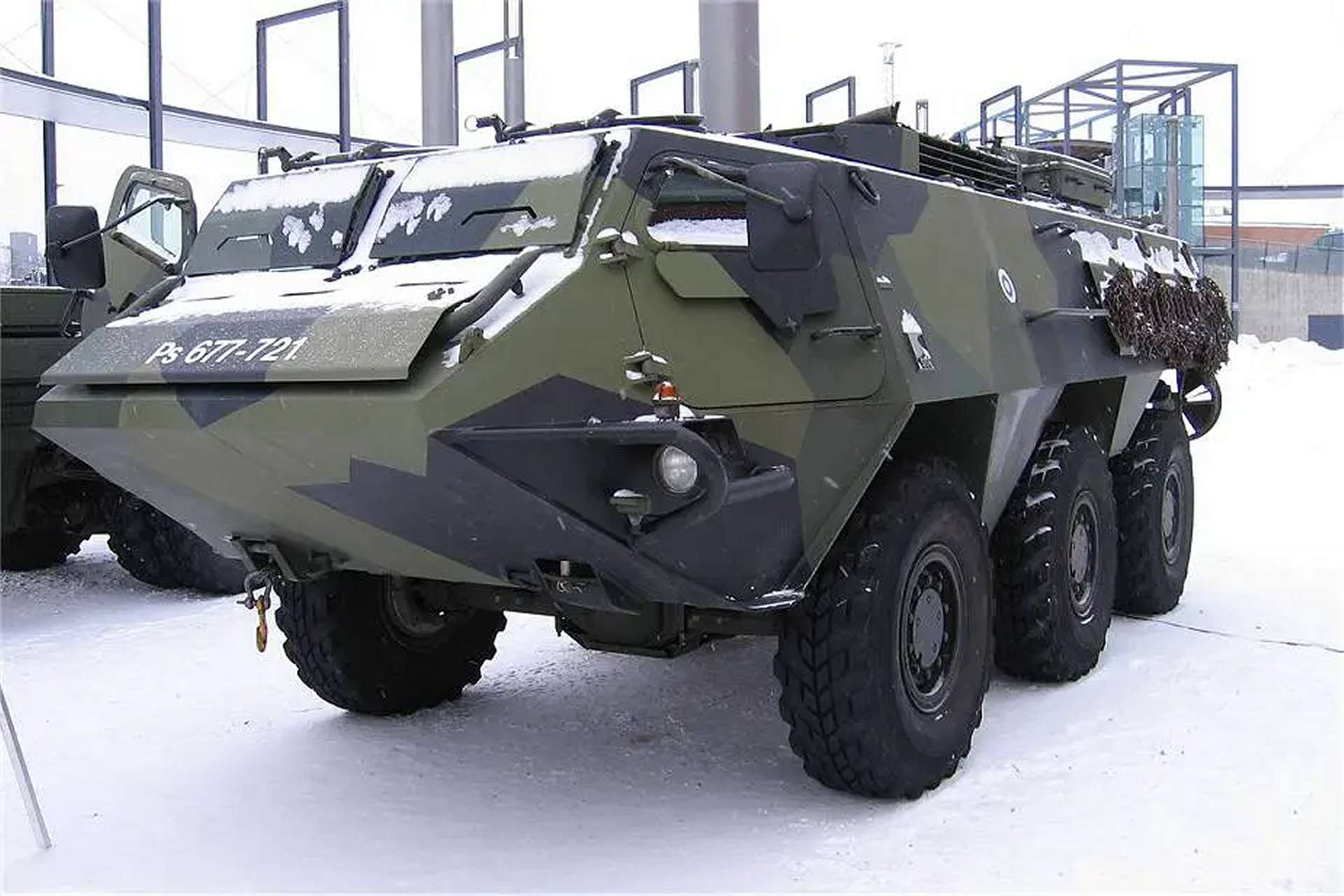
Finland has already sent XA-185s to the Ukrainian armed forces. (Picture source: Wikimedia)
However, the Finnish Ministry of Defense did not specify the contents of the aid, nor the mode or date of delivery.
"Finland is determined to support Ukraine in its fight against Russia's unjust aggression. This is not just about Ukraine, but about the right of all free peoples to fully exist. We Finns understand the importance of this issue from our history," stated Defense Minister Antti Häkkänen.
The total value of Finland's military aid to Ukraine has now reached €2.2 billion. Finland is part of the tank support coalition led by Poland, Germany, and Italy, as well as the IT coalition led by Estonia and Luxembourg. Additionally, Finland has joined the Czech initiative to purchase ammunition for the Ukrainian Armed Forces.
Over time, Finland has sent various types of military equipment to Ukraine to help resist the Russian invasion. This includes heavy artillery, ammunition, anti-aircraft systems, and various military equipment. For example, in May 2024, Finland announced a shipment of €109 million in anti-aircraft weapons and ammunition.
In April 2024, a ten-year security agreement was signed between Finland and Ukraine, providing an additional €188 million in military aid, including air defense systems and ammunition. Since the beginning of the Russian invasion in 2022, Finland has steadily increased its military support, from €190 million in the first year to €1.4 billion the following year.
Among these deliveries, armored personnel carriers such as the Sisu XA-185 were sent in September 2022. For combat engineering needs, Finland delivered six Leopard 2R mine-clearing tanks before June 2023.
In terms of self-propelled artillery, Finland provided 122mm PSH 74 (2S1 Gvozdikas) self-propelled guns in August 2023. Additionally, it sent 152mm 152 K89 (2A36 Giatsint-B) towed artillery pieces in April 2023 and 130mm 130 K54 (M-46) guns before September 2023. Heavy mortars of 120mm 120 Krh 85 92 were also delivered in August 2022.
Regarding anti-aircraft weapons, 23mm 23 ITK 61 'Sergei' (ZU-23) guns were sent in August 2022. For anti-tank weaponry, 1,500 66 KES (M72 LAW) anti-tank weapons were delivered in March 2022, followed by 112mm RSKES APILAS before April 2023.
In terms of small arms, Finland supplied 12.7mm 12,7 ItKK 96 heavy machine guns in September 2022 and 2,500 assault rifles in March 2022. These shipments demonstrate Finland's ongoing commitment to support Ukraine against Russian aggression with a wide range of sophisticated and varied military equipment.
Finland continues to play an active and crucial role in military support for Ukraine, in collaboration with other European nations, to ensure Ukraine's defense against Russian aggression.
Read more: Finland Provides 24th Military Aid Package to Ukraine
- Details
- Written by: Jérôme Brahy
- Category: 2024
- Hits: 7606
On July 8, 2024, Military Informant reported that a new Unified Gliding and Correction Module (UMPK) is being developed for the Russian FAB-3000 bomb. This initiative aims to enhance the bomb's accuracy and range, addressing the identified inadequacies of the current UMPK version. These inadequacies include the inability to manage the mass-inertial characteristics of the three-ton FAB-3000, resulting in significant misses due to insufficient rudder control for final trajectory adjustments—a problem not observed with the smaller FAB-1500 bomb. Consequently, the new UMPK will feature larger rudders and more powerful drives specifically designed for the FAB-3000.
Follow Army Recognition on Google News at this link
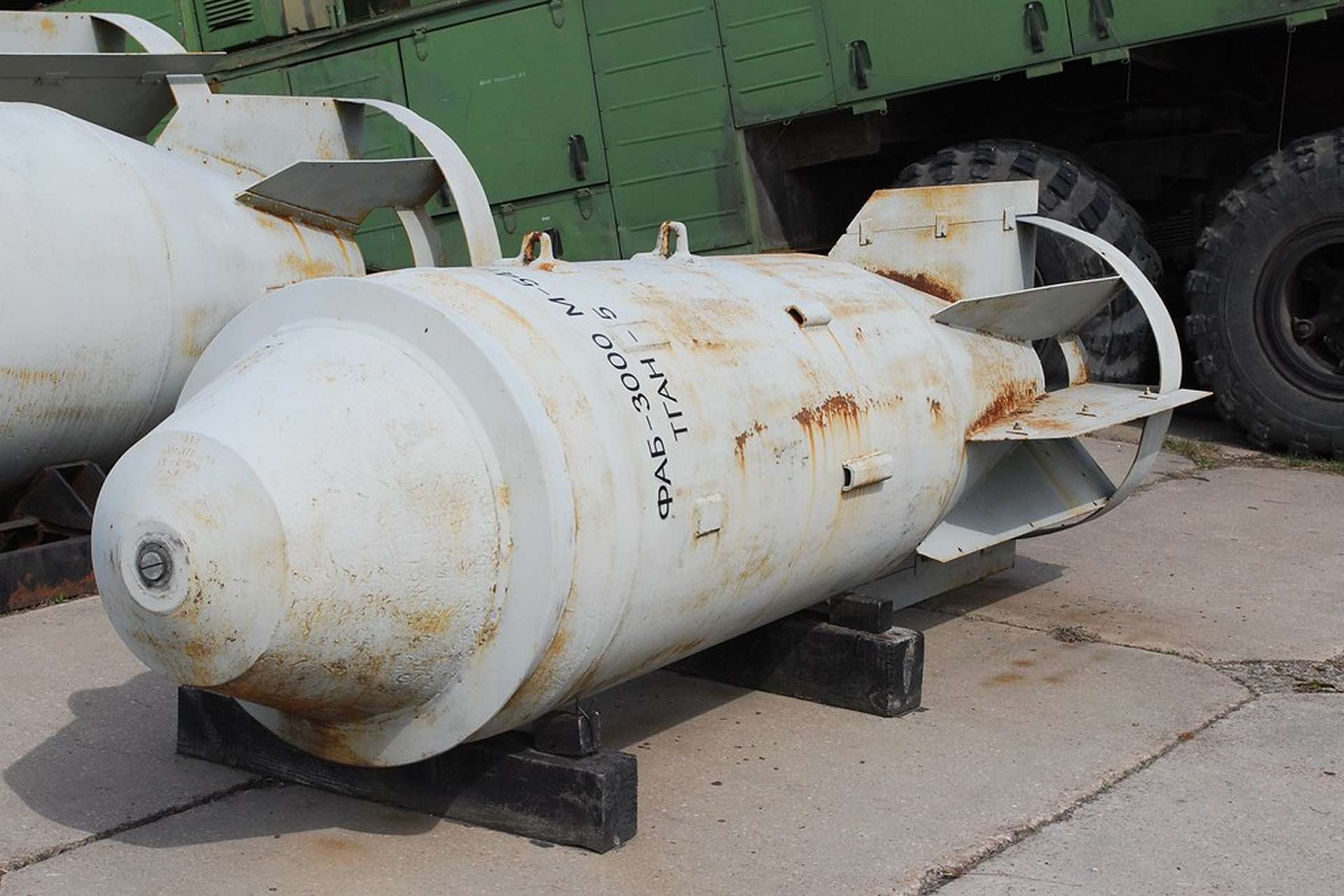
The FAB-3000 bomb weighs approximately 3,000 kg and carries approximately 1,400 kg of TNT. Measuring 3,067 mm in length, this bomb features a maximum penetration capacity of 183 mm, an armor destruction radius of 42 m, and a fragment dispersion radius of 260 m. (Picture source: Russian social media)
Initially, the original developer suggested the need for a specialized UMPK for heavier ordnance. However, due to military urgency and rapid progress in troop equipment deployment, the existing kit was prematurely utilized. Observed shortcomings necessitated a return to the design phase for an improved modification. The anticipated enhancements in the updated UMPK are expected to enable the FAB-3000 to perform with greater precision and effectiveness in future operations in Ukraine.
On March 21, 2024, Russian Defense Minister General of the Army Sergei Shoigu announced the commencement of mass production of the FAB-3000 during a visit to an aviation bomb production facility in the Nizhny Novgorod region. This development marks an expansion in Russia's military capabilities, particularly in the context of the ongoing conflict in Ukraine. Alongside the FAB-3000, the production of the FAB-1500 will be doubled, and there will be an increase in the manufacture of FAB-500 bombs. The newly developed FAB-3000M-54, designed for strategic use by the Tu-22M3 Heavy Bombers, highlights its role in current conflict dynamics.
The FAB-3000 bomb weighs approximately 3,000 kg and carries approximately 1,400 kg of TNT. Measuring 3,067 mm in length, this bomb features a maximum penetration capacity of 183 mm, an armor destruction radius of 42 m, and a fragment dispersion radius of 260 m. Designed for strategic bombing, the bomb can penetrate reinforced structures before detonating to cause direct, significant damage to large, fortified targets such as bunkers, bridges, and industrial facilities, due to its blast and shockwave. Typically deployed by heavy bombers due to its significant weight and size, the fragment dispersion radius of the FAB-3000 denotes the wider area over which bomb fragments scatter, posing lethal risks to personnel and causing secondary damage. The deployment of such munitions raises concerns over their humanitarian and infrastructural impact, especially in densely populated or strategically vital areas as Russia intensified its aerial bombardment campaigns.
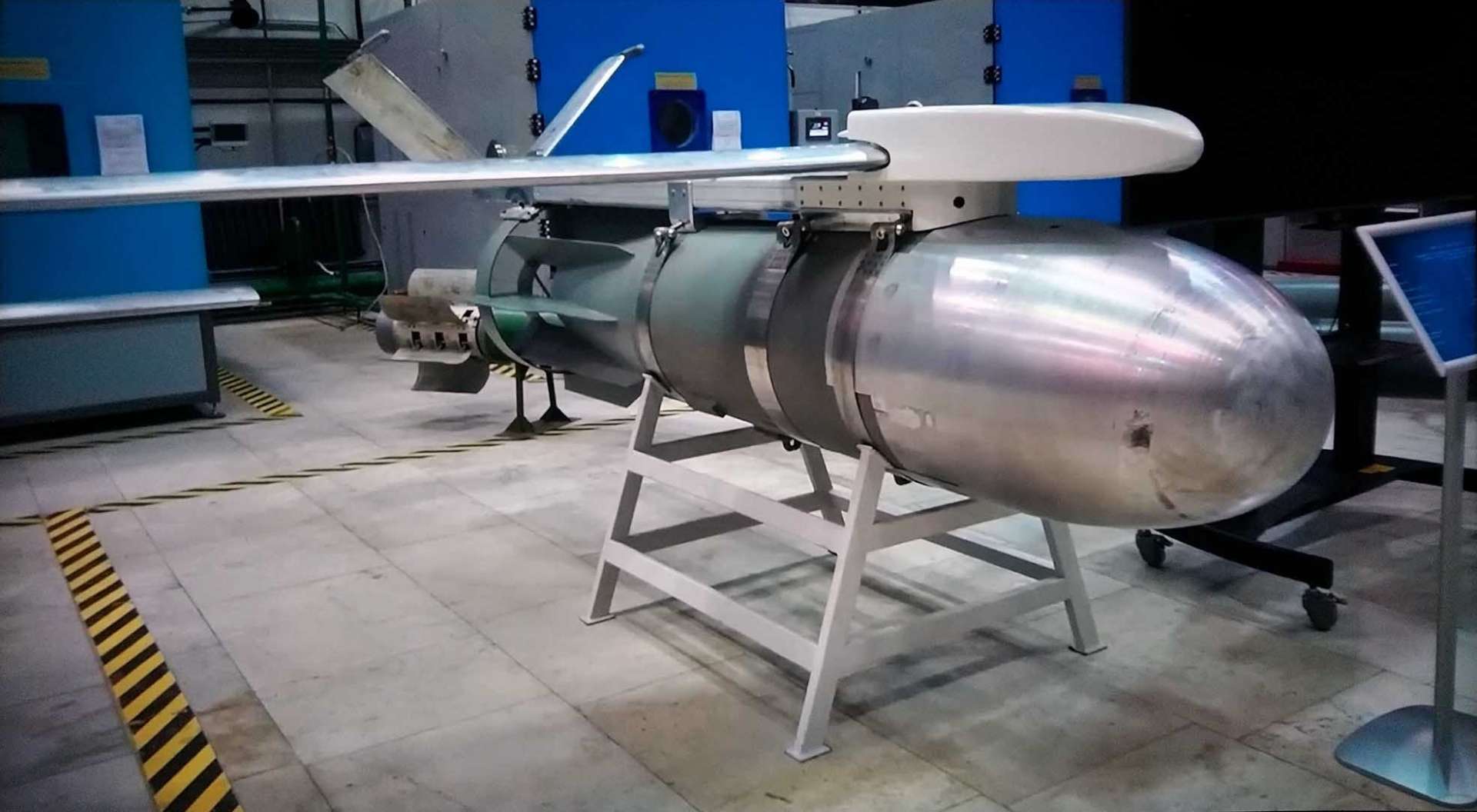
The UMPK gliding module can be mounted on various Russian bombs, such as the FAB-1500-M54. (Picture source: Russian MoD)
The UMPK is a Russian-developed kit that converts traditional unguided bombs into precision-guided munitions by attaching a set of wings and a guidance system. This allows the bomb to glide towards its target with improved accuracy. The UMPK kit includes foldable wings and tail fins, enabling the bomb to glide over long distances. It incorporates a satellite navigation system, typically relying on GLONASS, to guide the bomb accurately to its target. Designed to be compatible with various types of bombs, primarily those from the Soviet era, the UMPK extends the range of bombs, allowing them to glide up to 70 kilometers from the release point. This enables aircraft to drop bombs without entering heavily defended airspace.
Since their introduction, UMPK-equipped bombs have been increasingly used in the ongoing conflict in Ukraine. These bombs are relatively inexpensive to produce, costing less than $20,000 each, making them a cost-effective solution compared to more sophisticated precision-guided munitions like cruise missiles. By retrofitting existing bombs, Russia can use its stockpiles of Soviet-era munitions, extending their utility and reducing waste.
Despite their effectiveness, operational issues such as occasional failure to detonate and malfunctions have been observed. Ukrainian forces face significant challenges in countering these bombs due to their extended range and precision. Enhanced air defenses and Western-supplied systems like the Patriot have played a role in intercepting the delivery aircraft, although their limited numbers often mean they are reserved for protecting key areas.
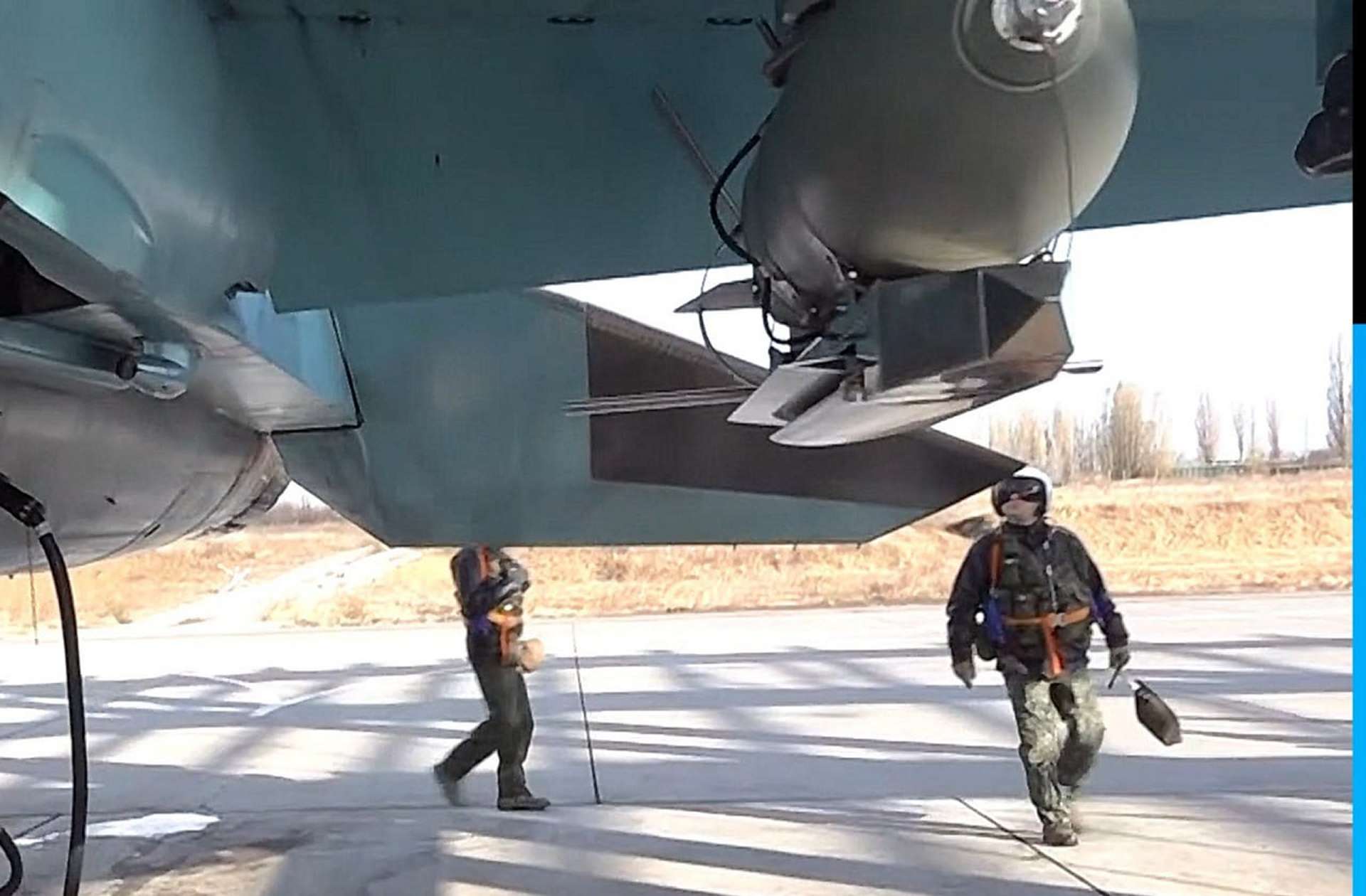
The UMPK gliding module is typically mounted after the bomb has been attached to the plane, such as this FAB-500-M62 on a Su-34 jet. (Picture source: Twitter/Andrei_bt)
- Details
- Written by: Jérôme Brahy
- Category: 2024
- Hits: 7283
On July 9, 2024, President Joe Biden made a significant announcement during his remarks at the 75th anniversary of NATO, held at the Andrew W. Mellon Auditorium in Washington, D.C. Biden revealed that NATO allies, including the U.S., Germany, the Netherlands, Romania, and Italy, will provide Ukraine with a vital air defense package. President Biden emphasized that Ukraine will receive this assistance before any other country and that dozens of additional interceptors will be delivered over the next year to help protect Ukrainian civilians from Russian missile attacks.
Follow Army Recognition on Google News at this link
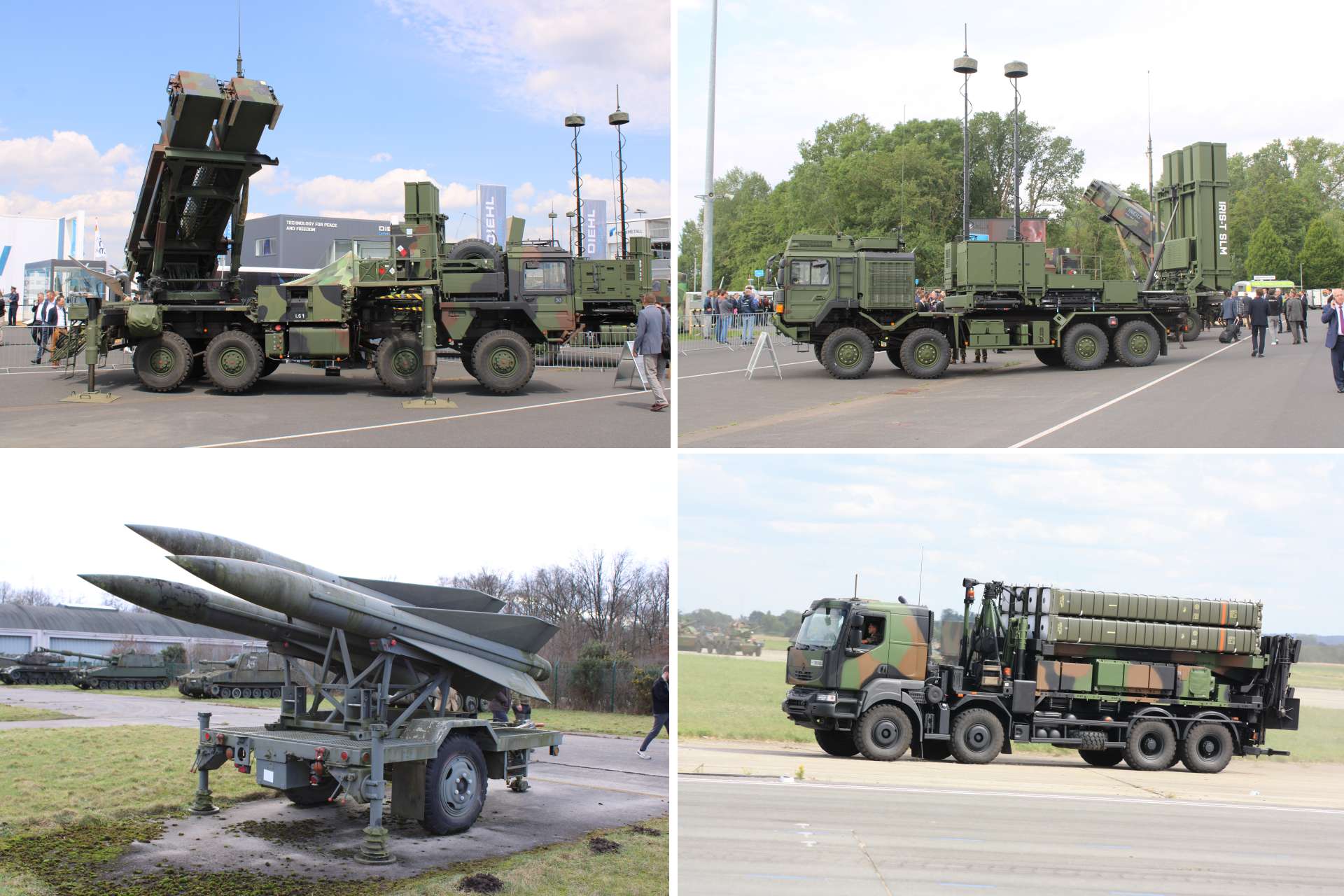
Previous donations of air defense systems to Ukraine included the Patriot, the IRIS-T SLM, the MIM-23 Hawk, and the SAMP/T. (Picture source: Army Recognition)
This new package follows a White House announcement last month that the U.S. would redirect air defense missiles initially contracted for other countries to Ukraine, responding to Kyiv's request for at least seven Patriot missile systems. During the NATO summit, Politico reported on July 9, 2024, that NATO allies will announce the delivery of nine more "Patriot-like" air defense systems to Ukraine by the end of the year. Ukrainian Deputy Prime Minister Olha Stefanishyna confirmed that at least four additional air defense systems are coming, beyond the initial five to be announced. These systems include a Patriot battery from Spain and components for another Patriot from Sweden. Stefanishyna also mentioned that allies will make further announcements on Patriot interceptors and Stinger missiles.
Based on these statements by President Biden and previous articles, Army Recognition can attempt to break down the aid by each named country:
Germany has been actively supporting Ukraine's air defense capabilities. On July 5, 2024, Martin Jaeger, the German Ambassador to Ukraine, announced the arrival of the third Patriot air defense system from Germany. This system is designed to protect Ukraine's population and infrastructure from aircraft, drones, and missiles. On June 14, 2024, the German Ministry of Defense confirmed the delivery of two more IRIS-T air defense missile systems to Ukraine, including one IRIS-T SLS and one IRIS-T SLM.
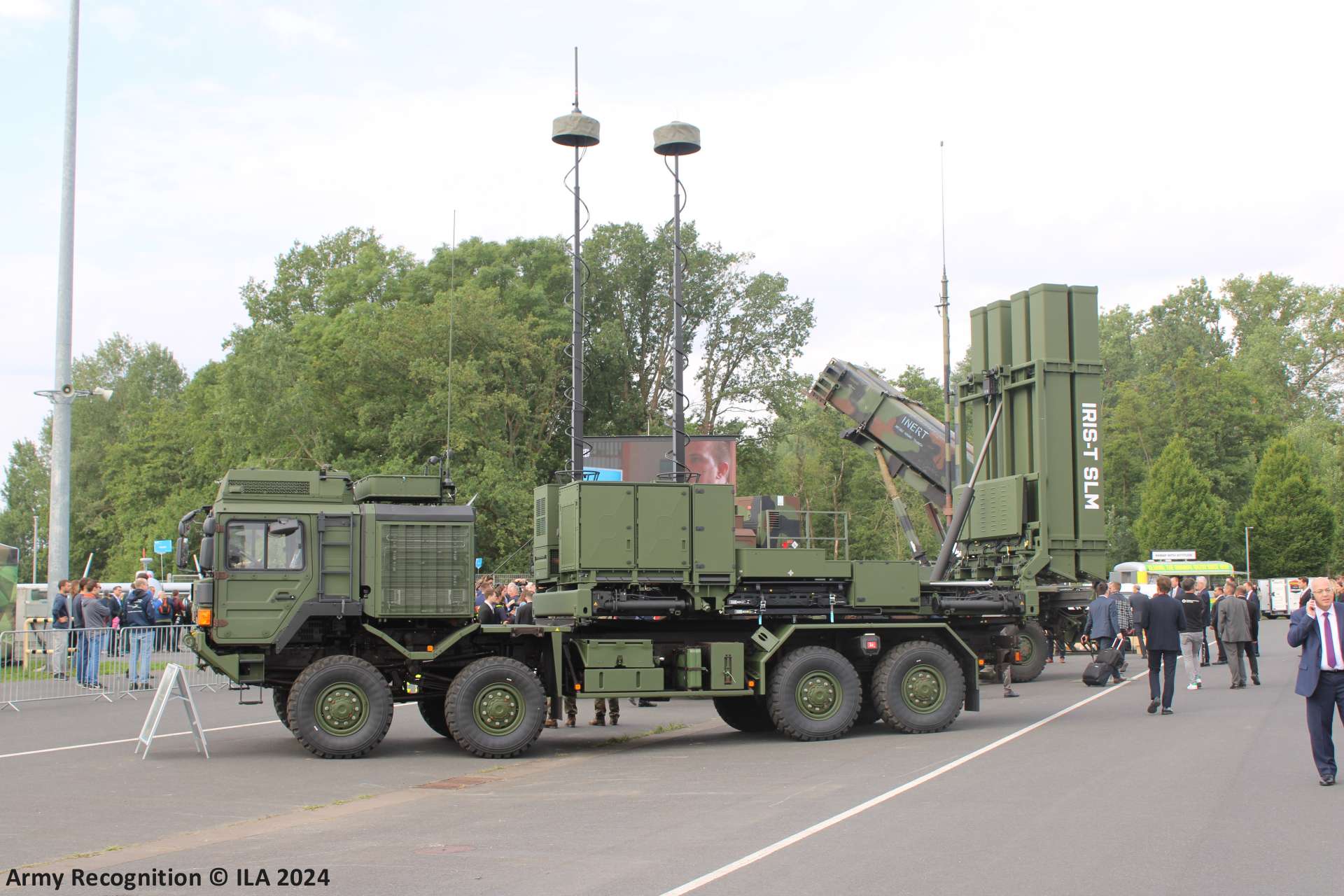
Germany's ongoing and planned military support to Ukraine includes eight IRIS-T SLM and ten IRIS-T SLS air defense systems. (Picture source: Army Recognition)
Additionally, during a visit to Germany on June 12, 2024, the German Defense Minister announced the donation of 100 Patriot missiles to Ukraine during a training session for Ukrainian soldiers on the Patriot defense system. There are also rumors of a fourth Patriot system being delivered by Germany to Ukraine in the near future.
The Netherlands has also committed to enhancing Ukraine's air defense capabilities. On June 11, 2024, Dutch Prime Minister Mark Rutte announced via their X account (formerly Twitter) that the Netherlands will supply Ukraine with one Patriot AN/MPQ-53/65 Radar and three additional missile launcher units. This contribution is part of a broader effort to provide a complete Patriot missile battery to Ukraine. The Netherlands has called for international partners to contribute additional critical components, such as an Engagement Control Station, Antenna Mast Group, and Electrical Power Plant, to complete the system.
Romania has pledged to donate a Patriot missile defense system to Ukraine. On June 20, 2024, during a meeting of the Supreme Council of Defense presided over by President Klaus Iohannis, it was decided to donate a Patriot missile defense system to Ukraine. The Romanian Air Force's 74th Patriot Regiment operates both PAC-2 GEM-T and PAC-3 MSE Patriot missile systems. Romania received its first Patriot surface-to-air missile system in September 2020 and completed the delivery of four systems by 2023.
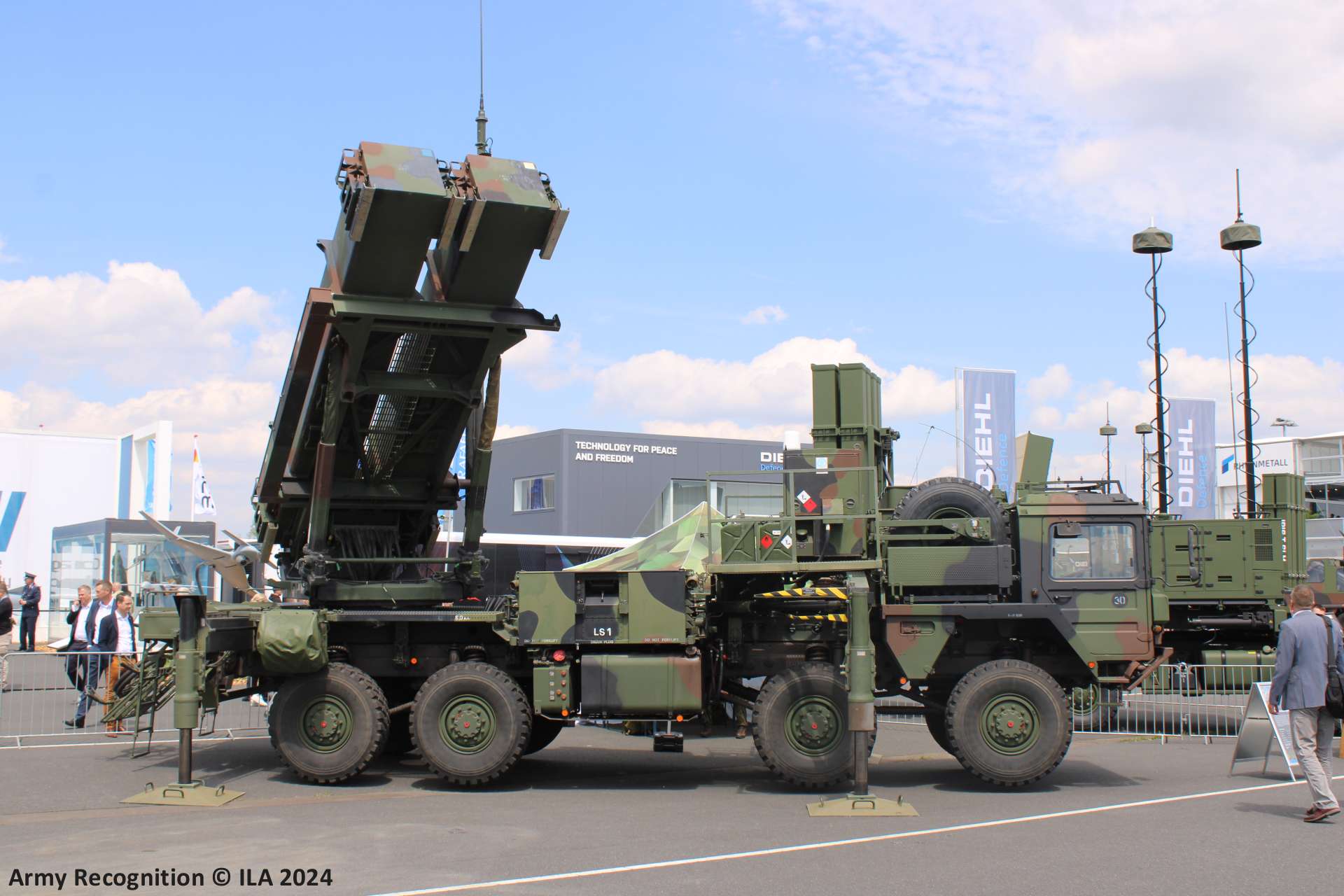
Several NATO countries have provided Ukraine with complete Patriot air defense systems, battery subsystems, and missiles, including the United States, Germany, the Netherlands, Romania, and Spain. (Picture source: Army Recognition)
Italy has also announced its intention to send a second SAMP/T air defense system to Ukraine in response to Kyiv's appeals for enhanced protection against Russian missile strikes. Foreign Minister Antonio Tajani confirmed this decision during a radio interview on June 3, 2024. This announcement follows earlier media reports and confirms that the SAMP/T will be included in a ninth package currently in preparation. Italy, along with France, had previously delivered the first SAMP/T system to Ukraine in 2023, and Ukraine has continued to request additional air defense support in the face of escalating missile attacks targeting its cities and energy infrastructure.
On July 3, 2024, following a missile attack on the Ukrainian city of Dnipro, the United States announced a military aid package totaling over $2.3 billion. This new support aims to strengthen Ukraine's air defense capabilities amid ongoing Russian aggression. The package includes $2.2 billion from the Ukraine Security Assistance Initiative (USAI) funds, allocated for future acquisitions of air defense interceptors for systems such as the Patriot and National Advanced Surface-to-Air Missile Systems (NASAMS). Additionally, $150 million from the Presidential Drawdown Authority (PDA) will cover immediate transfers of existing U.S. military equipment. This portion includes various munitions that enhance Ukraine’s artillery capabilities, such as 155mm and 105mm artillery shells, rockets for the High Mobility Artillery Rocket Systems (HIMARS), air defense missiles for HAWK systems, TOW missiles, Javelin and AT-4 anti-armor systems, small arms ammunition, grenades, tactical vehicles, and air navigation systems.
President Biden is set to meet with Ukrainian President Volodymyr Zelensky on Thursday, and his remarks highlight the ongoing commitment of the U.S. and its allies to ensure that Ukraine can effectively defend itself against Russian aggression. Biden's statements underline the resolve of NATO allies to provide comprehensive support to Ukraine in its time of need.
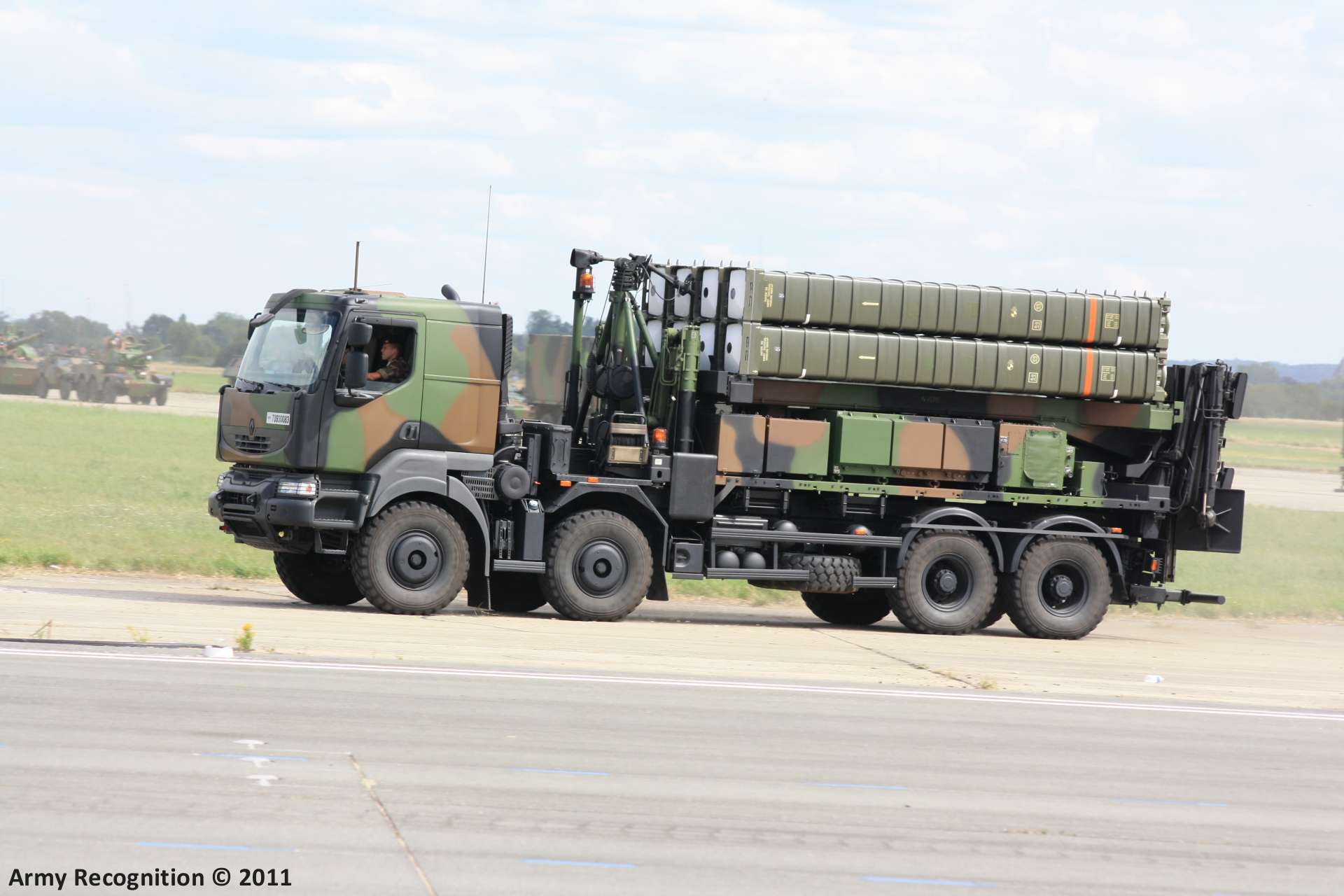
Italy and France delivered at least two SAMP/T air defense systems, also known as Mamba, to Ukraine. (Picture source: Army Recognition)
Ukraine's air defense capabilities have recently been augmented with multiple Patriot air defense systems from the United States and Germany, as well as NASAMS interceptors, in response to increased Russian missile and drone attacks. The Patriot systems are essential for countering Russian guided glide bombs, which have targeted Ukrainian infrastructure and frontline positions. Despite these additions, Ukraine continues to experience shortages in air defense missiles and systems, prompting urgent requests for additional support from Western allies.
The Ukrainian Armed Forces utilize a combination of short, medium, and long-range air defense systems. Short-range defenses include Buk-M1 and Stinger missiles, while medium-range capabilities are supported by S-300 systems, MIM-23 Hawk, and NASAMS. The long-range defense is primarily reliant on the Patriot systems. These varied systems are crucial for mitigating damage from Russian missile strikes, which have targeted both military and civilian infrastructure. Effective integration and deployment of these systems remain a significant challenge.
Russia's missile usage in the conflict has been extensive, employing a mix of guided and unguided glide bombs, cruise, and ballistic missiles to strike Ukrainian targets. The recent introduction of the FAB-3000 M-54 bomb, a large glide bomb, adds a new dimension to the threat landscape due to its potential for substantial destruction. This increased missile activity underscores Ukraine's ongoing need to enhance its air defense capabilities. Despite receiving considerable military aid, Ukraine's air defense systems are under significant strain, highlighting the need for sustained international support to counter Russia's missile campaigns.
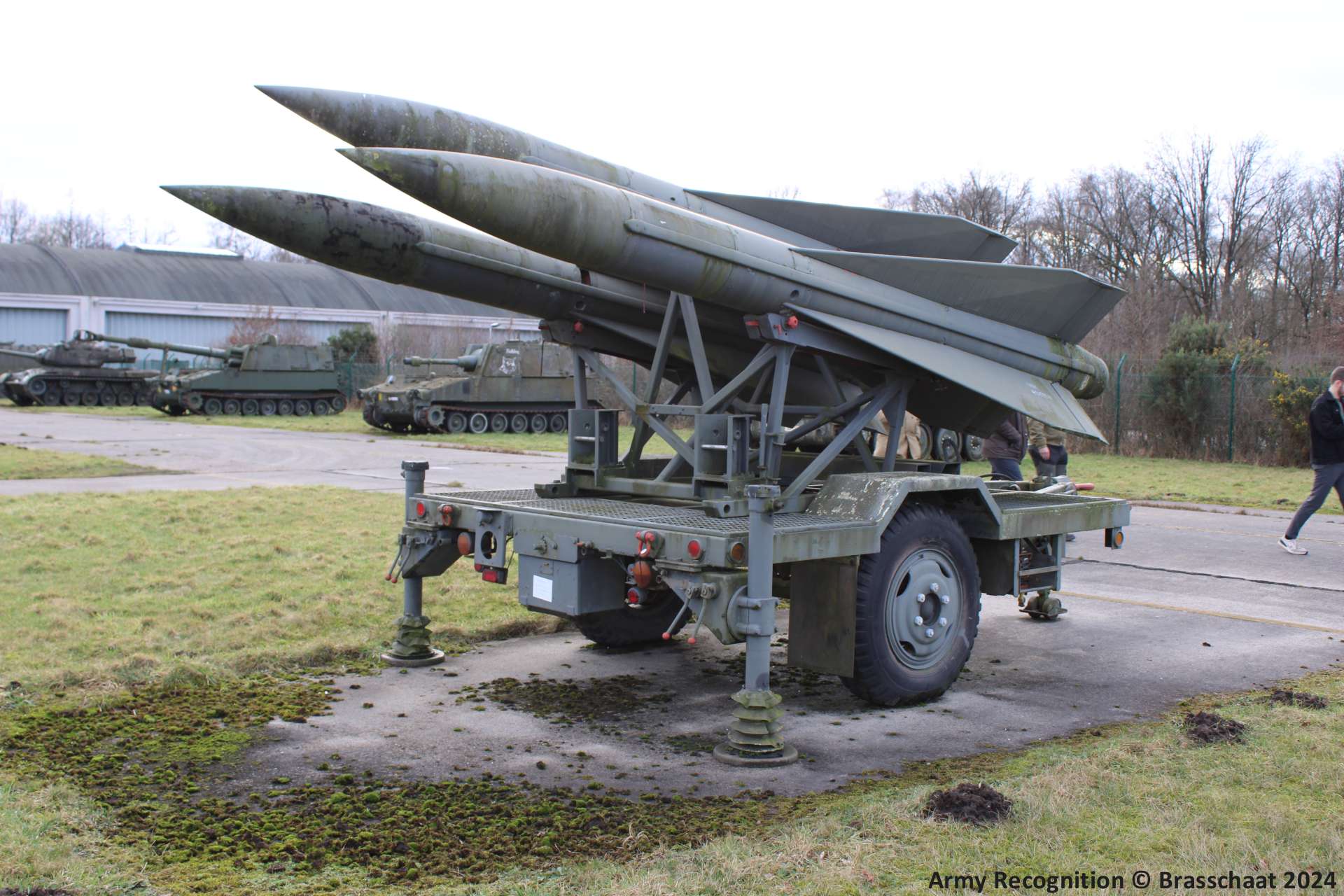
Ukraine also received medium-range air defense systems from NATO countries, such as the MIM-23 Hawk. (Picture source: Army Recognition)
Read more: Ukraine to receive 9 additional air defense systems from NATO countries
- Details
- Written by: Administrator
- Category: 2024
- Hits: 5428
Germany's Minister of Defence, Boris Pistorius, announced on July 9, 2024, at the NATO anniversary summit in Washington that Italy has supplied a SAMP/T air defence system to Ukraine. This delivery is part of the German-led Immediate Action on Air Defence (IAAD) initiative.
Follow Army Recognition on Google News at this link
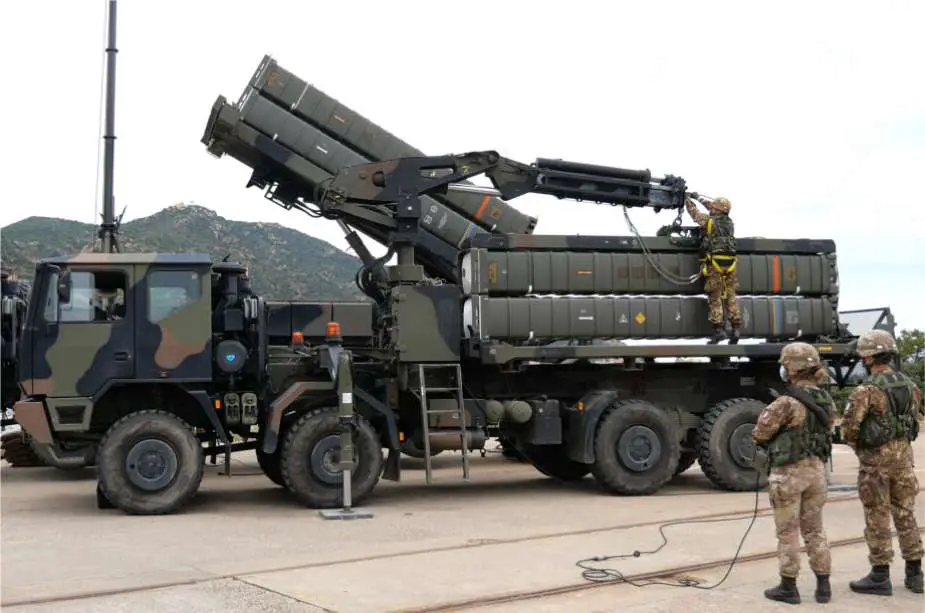
The SAMP/T is an air defense missile system in service with the Italian armed forces. (Picture source: Ifattoquotidiano.)
The IAAD initiative, spearheaded by the German Ministry of Defence in collaboration with the Federal Foreign Office, aims to rapidly enhance air defense measures. As a first step, the initiative seeks to source air defense systems and ammunition from industrial stocks or inventories within the EU, NATO, and third countries.
Several nations have joined this concerted effort, including Germany, Italy, Lithuania, Belgium, France, the United Kingdom, Romania, Spain, and the United States. This collective contribution underscores a united front in support of Ukraine amid ongoing threats from Russian missile attacks.
Italy's commitment to Ukraine's defense is evident in its delivery of two SAMP/T air defense systems. The first system was dispatched in 2023, with the second arriving as part of a military aid package confirmed in mid-2024. These systems are critical in enhancing Ukraine's ability to protect key installations and civilian lives from missile threats.
France also played a pivotal role by delivering the first SAMP/T system to Ukraine in 2023. French President Emmanuel Macron announced that the system was deployed and operational, significantly contributing to Ukraine's defense infrastructure.
The IAAD initiative represents a proactive and immediate response to Ukraine's urgent defense needs. By pooling resources and expertise from multiple nations, the initiative aims to provide a robust and effective shield against aerial threats, reflecting the solidarity and commitment of the international community to Ukraine's sovereignty and security.
The SAMP/T (Sol-Air Moyenne Portée/Terre), also known as MAMBA, is a sophisticated ground-based medium-range surface-to-air missile system developed by France and Italy. This system is designed to intercept a wide array of aerial threats, making it a critical component in modern air defense.
A typical SAMP/T battery includes several critical components. The primary interceptors are Aster missiles, specifically the Aster 30 Block 1 missiles. These are mounted on truck-based launcher vehicles, each capable of carrying up to eight missiles. The system also features a self-propelled radar unit for detection and tracking, and a command post that coordinates the battery's operations.
The Aster 30 Block 1 missile is equipped with a modified seeker, fuse, signal processing, and a directional blast warhead, which directs larger fragments towards the target. It has a tandem first-stage solid propellant booster motor, which is jettisoned after launch and turn-over before the mid-course phase. The missile uses inertial mid-course guidance, with guidance correction update data being transmitted from the ground-based fire control center via the Arabel multifunction radar's uplink data channel. The maximum speed of Aster 30 missiles is 1.4 km/sec.
In terms of combat capabilities, the SAMP/T system is highly versatile and effective. It is designed to counter a variety of aerial targets, including cruise missiles, tactical ballistic missiles, and both manned and unmanned aircraft. The system's radar can detect targets at high altitudes and over long distances, ensuring early warning and effective interception.
The SAMP/T system's engagement range is up to 100 kilometers for aircraft flying above 3 kilometers in altitude and 50 kilometers for aircraft flying below 3 kilometers. The engagement altitude ranges from as low as 50 meters up to 20 kilometers, providing comprehensive air defense coverage.
In summary, the SAMP/T system is a vital asset for modern air defense, offering robust protection against a wide array of airborne threats through its advanced missile technology and integrated detection and command systems. Its deployment in Ukraine underscores its strategic importance and effectiveness in safeguarding critical installations and areas under threat from aerial attacks.
Read more: Italy Delivers Second SAMP/T Air Defence System to Ukraine Under German-Led Initiative
- Details
- Written by: Halna du Fretay
- Category: 2024
- Hits: 5357
The United Kingdom has reaffirmed its stance on the autonomous use of Storm Shadow missiles provided to Ukraine, according to Bloomberg. Speaking to reporters while en route to a NATO summit in Washington on July 9, 2024, a UK representative emphasized that Ukraine has the final say in how these long-range missiles are deployed against military targets within Russia. This policy continuation aligns with the prior UK government's approach to supporting Ukraine in the Russia-Ukraine conflict.
Follow Army Recognition on Google News at this link
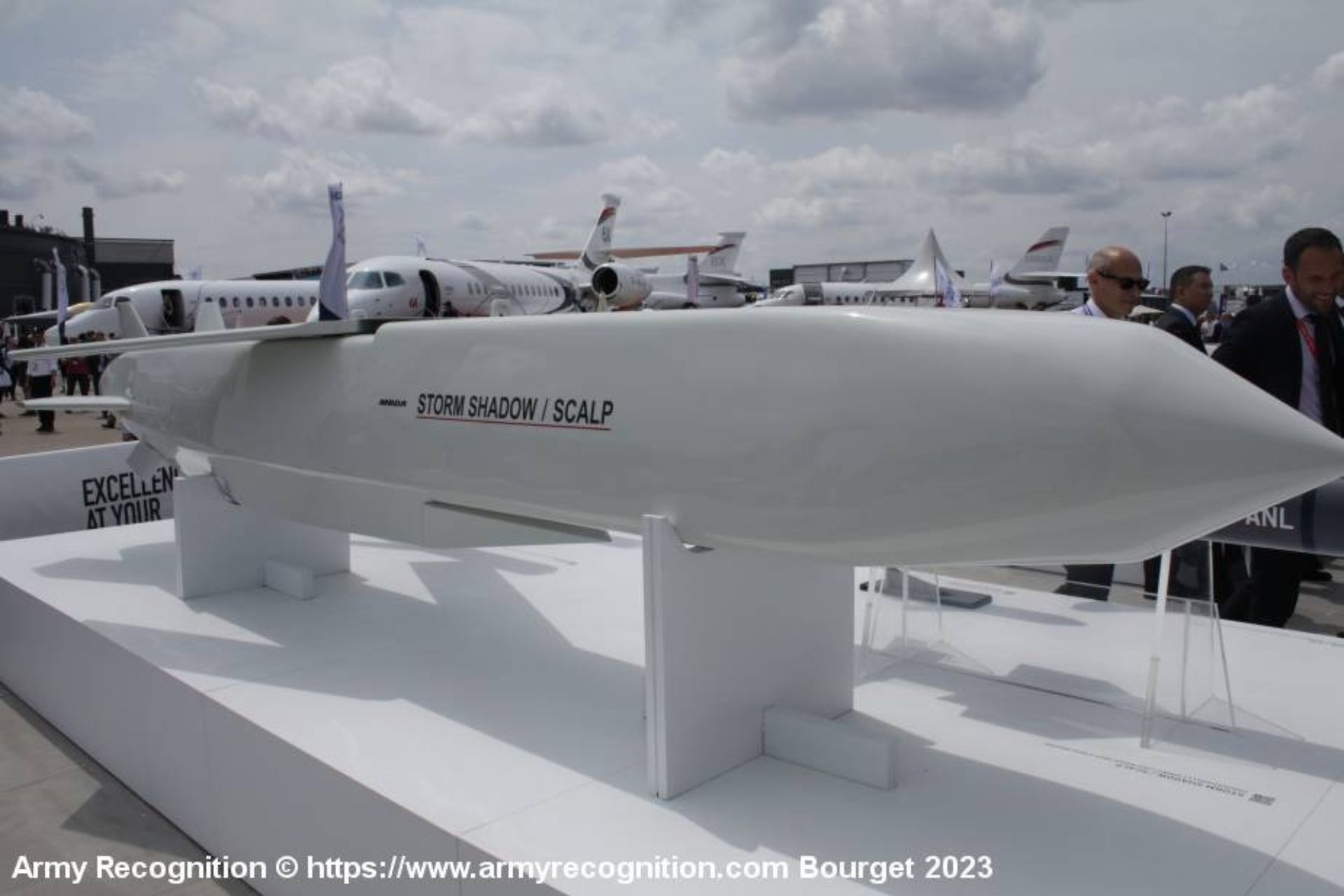
The Strom Shadow missile boasts a range of approximately 560 kilometers, enabling it to be launched far from enemy air defenses (Picture source: ArmyRecognition)
The Storm Shadow missile, known as SCALP in France, is an air-launched cruise missile developed by the multinational company MBDA in the late 1990s and early 2000s. It entered service primarily with the UK's Royal Air Force and the French Air Force. Known for its precision in striking fixed, fortified targets, the missile integrates advanced guidance systems that utilize GPS and terrain reference data, allowing it to operate effectively in various weather conditions.
The missile boasts a range of approximately 560 kilometers, enabling it to be launched far from enemy air defenses. It can be deployed from multiple aircraft types, including the Eurofighter Typhoon, Tornado, Mirage 2000, and Rafale, and is equipped with a powerful tandem warhead, enhancing its effectiveness in conflict zones like Iraq and Libya.
Storm Shadow variants include the Black Shaheen for the UAE, adjusted to meet international treaty limitations, and the MdCN (Naval Cruise Missile) for French warships. The advanced SCALP-NG variant offers enhanced range and targeting capabilities.
Since May 2023, the UK has repeatedly announced the provision of Storm Shadow missiles to Ukraine within broader weapon packages. This has been part of ongoing international military support dynamics, ensuring continuity in global defense aid strategies.
A Times report on July 8, 2024, revealed a Russian state agency video that showed an engineer with an intact Storm Shadow missile, suggesting that Russian forces had captured one. Previously, NATO Secretary-General Jens Stoltenberg had granted Ukraine permission to use Western-supplied weapons, including the UK-donated Storm Shadow missiles, for defensive operations inside Russian territory.
This broad endorsement by countries like the US, Germany, and France allows Ukraine to use advanced Western weaponry for strikes within Russia, aiming to curb Russian military advantages and protect Ukrainian territories from further aggression.
Read more: UK Confirms Ukraine's Power to Strike Storm Shadow Missiles in Russian Territory

- Details
- Written by: Jérôme Brahy
- Category: 2024
- Hits: 17323
On July 9, 2024, the South Korean company Hanwha Aerospace signed a contract with the Romanian Ministry of National Defence valued at approximately 1.4 trillion won ($1,011,319,540). The contract includes 54 K9 self-propelled howitzers, 36 K10 ammunition resupply vehicles, ammunition, and various support vehicles, both tracked and wheeled. This agreement makes Romania the 10th country to purchase the K9 self-propelled howitzer, indicating its widespread use and reliability.
Follow Army Recognition on Google News at this link
This agreement makes Romania the 10th member of the K9 User Club and the sixth NATO nation to use the 155mm tracked self-propelled howitzer, joining Türkiye, Poland, Norway, Finland, and Estonia. (Picture source: Army Recognition)
Diplomatic exchanges between South Korea and Romania have been frequent since the beginning of 2024, with three visits by the Romanian Minister of Defense to South Korea. A key event occurred on May 5th, 2024, when the South Korean Minister of Defense visited Romania, facilitating the strategic discussions that supported the signing of this export contract. This agreement makes Romania the 10th member of the K9 User Club and the sixth NATO nation to use the 155mm tracked self-propelled howitzer, joining Türkiye, Poland, Norway, Finland, and Estonia. Romania also becomes the third global operator of the K10, after Norway and Australia, enhancing its artillery efficiency with automated resupply capabilities.
Hanwha Aerospace has also proposed the Redback Infantry Fighting Vehicle (IFV) to support Romania’s armored vehicle modernization efforts. The Redback shares significant commonality with the K9 in terms of powertrain and chassis, potentially streamlining operations, production, and maintenance for Romania. This proposal aims to meet the Romanian Army’s needs in response to emerging threats and evolving battlefield environments.
The K9 Thunder, which holds over 50 percent of the global self-propelled howitzer market, will be largely manufactured and repaired locally in Romania. This approach involves significant participation from local suppliers to maximize economic and industrial benefits within Romania. Hanwha Aerospace's strategy includes local production of defense equipment, creating local employment opportunities, technology transfer, and establishing a Center of Excellence for maintenance, repair, and overhaul (MRO) operations in a new facility in Romania.
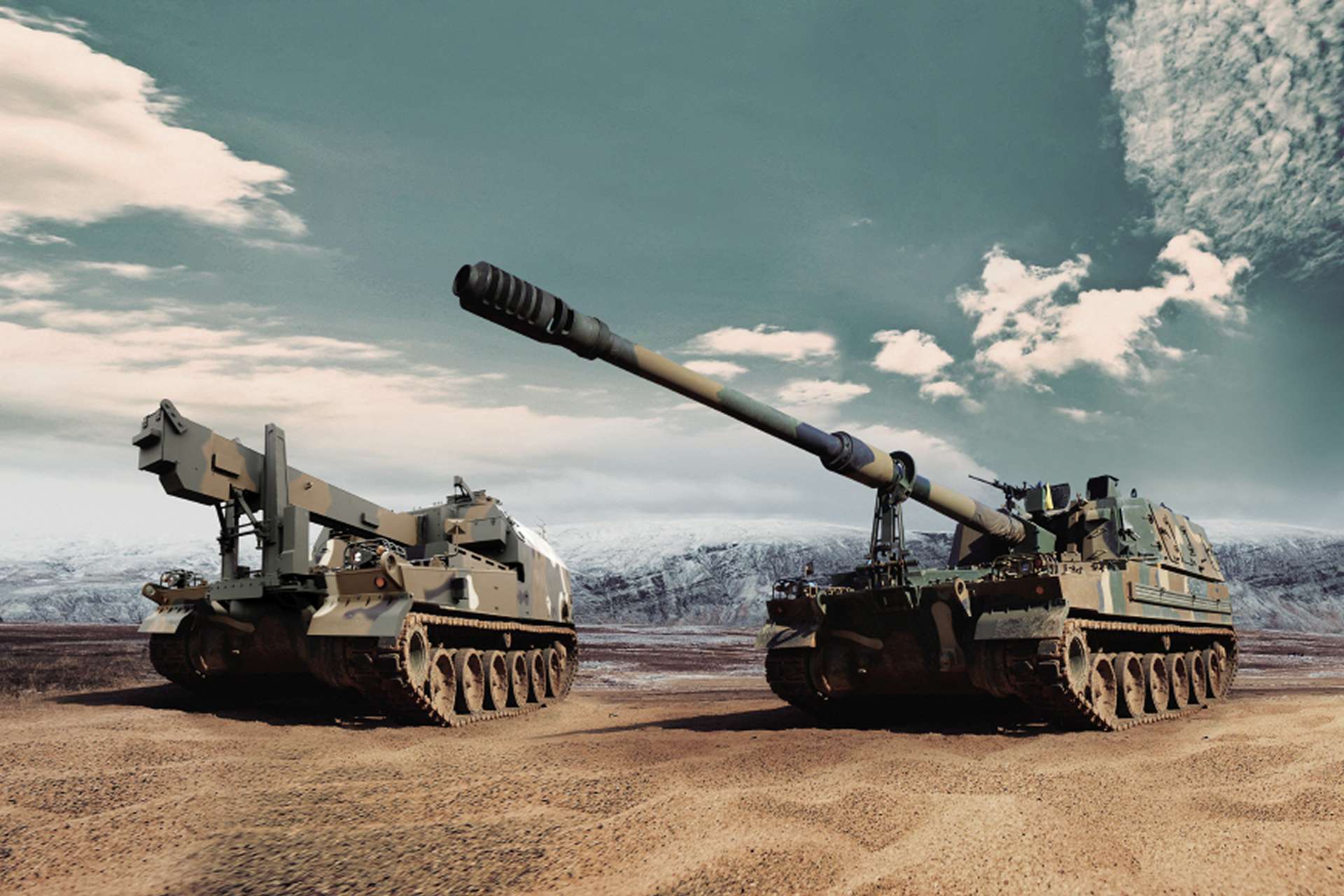
The contract includes 54 K9 self-propelled howitzers, 36 K10 ammunition resupply vehicles, ammunition, and various support vehicles, both tracked and wheeled. (Picture source: Hanwha Aerospace)
Hanwha Aerospace President and CEO Jaeil Son commented on the significance of the deal, noting the inclusion of artillery vehicles, support vehicles, and ammunition. The delivery of these systems is planned over the next five years, with the first batch expected by early 2027. Peter Bae, Vice President of Hanwha Aerospace Europe, highlighted the potential benefits to the Romanian defense industry through localization programs, aiming to integrate the Romanian industry into Hanwha Aerospace’s global supply chains and position Romania as a hub for Hanwha's land business in Europe.
The South Korean Defense Acquisition Program Administration (DAPA) plans to actively pursue further exports to Romania, supporting various promotional activities such as on-site meetings and technical demonstrations to highlight the capabilities of South Korean defense products. Seo Jeong-wook, head of the Defense Acquisition Program Administration, stated that the export to Romania, valued at approximately 1.3 trillion won ($938,302,963.00) by the DAPA, would enhance Korea's status as a defense exporter and emphasized the importance of continued cooperation with Romania to strengthen the defense industry partnership.
On May 29, 2024, Army Recognition reported that South Korean Minister of National Defense Shin Won-sik was scheduled to visit Romania to finalize Hanwha Aerospace's arms export contract, valued at 1.4 trillion won ($1,025,625,986). According to a high-ranking military official, Minister Shin's primary objective was to conclude Hanwha Aerospace's export deal with the Romanian government. This deal involved the sale of 54 K9 Thunder self-propelled howitzers and 36 K10 Ammunition Resupply Vehicles (ARVs), with the goal of signing the agreement within the first half of the year. Hanwha Group Chairman Kim Seung-yeon recently visited the company's Changwon site, encouraging employees to secure the Romanian order. If finalized, Hanwha Aerospace's defense order backlog would exceed 30 trillion won (approximately $21,978,261,000), a first for any South Korean defense firm.
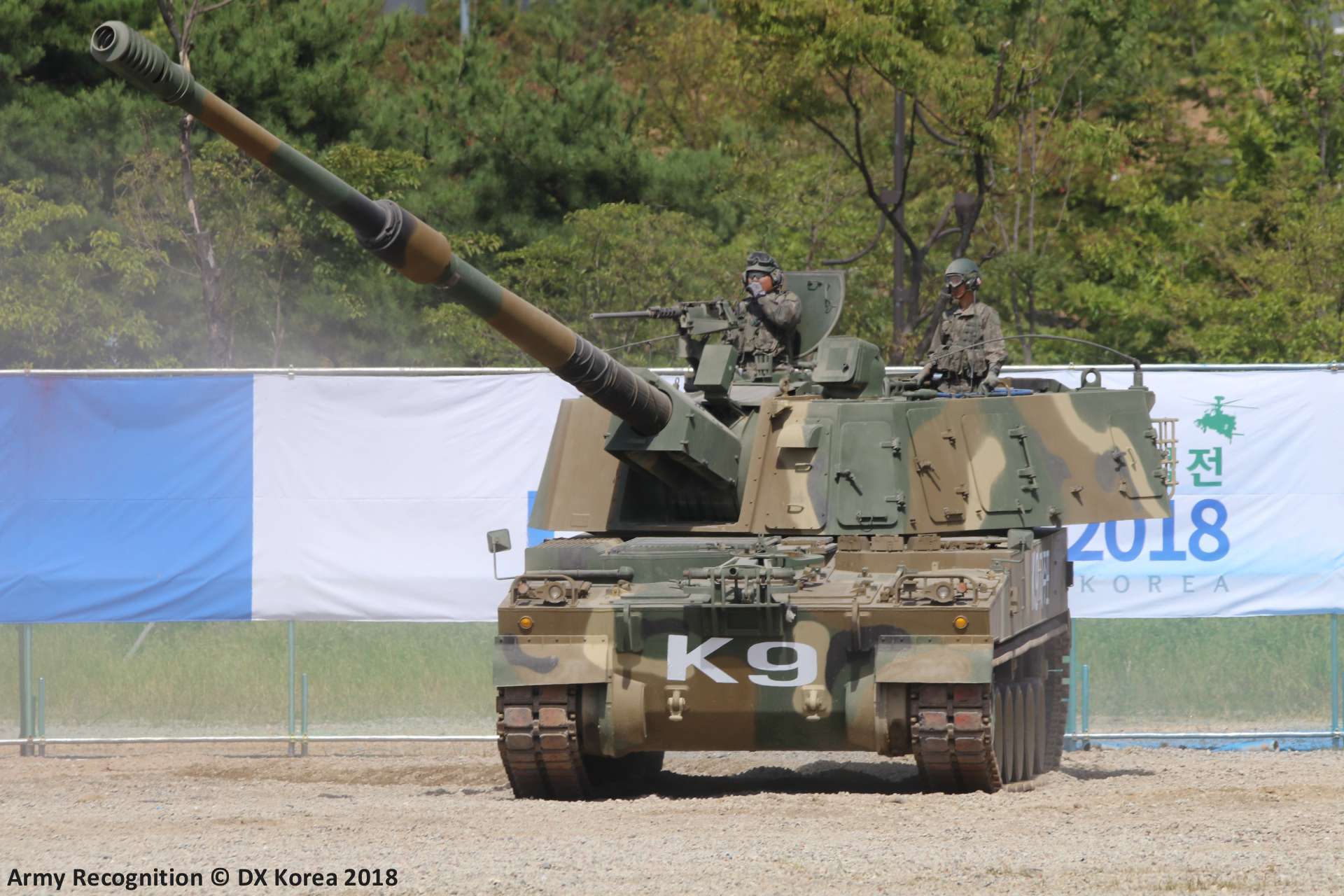
As of early 2024, the K9 Thunder 155mm self-propelled howitzer holds over 50% of the global market share for self-propelled howitzers, due to its high firing rate, long-range capabilities, and effective mobility in different terrains. (Picture source: Army Recognition)
As of early 2024, the K9 Thunder 155mm self-propelled howitzer holds over 50% of the global market share for self-propelled howitzers. Its adoption is due to its technical specifications, such as a high firing rate, long-range capabilities, and effective mobility in different terrains. These features have made it a preferred choice for modernizing artillery systems in various national armies. The potential export to Romania would increase the K9's market presence among NATO members, with nations like Norway, Estonia, Turkey, Poland, and Finland already procuring these systems. Additionally, the K9 has been exported to Australia and Egypt.
Introduced into service in 1999, the K9 Thunder provides improvements in range, firepower, and mobility compared to previous artillery systems like the K55 self-propelled howitzers. Approximately 1,800 K9 Thunder 155mm self-propelled howitzers have been produced since its development began in 1989. The project, led by the Agency for Defense Development (ADD) and involving several South Korean companies, aimed to counter North Korea's extensive artillery systems.
The K9 Thunder features a 155mm L52-caliber main gun capable of firing various NATO-standard munitions, with a maximum firing range between 18 km to 50 km, depending on the ammunition type. It can fire three rounds in 15 seconds and sustain a rate of 6-8 rounds per minute. The howitzer is armored with MIL-12560H steel, providing protection against 155mm projectile fragments, 14.5mm armor-piercing rounds, and anti-personnel mines. Powered by a 1,000 horsepower STX-MTU MT881 Ka-500 engine, it reaches speeds of 67 km/h and has an operational range of approximately 480 km. Advanced navigation and fire control systems enhance its operational efficiency.
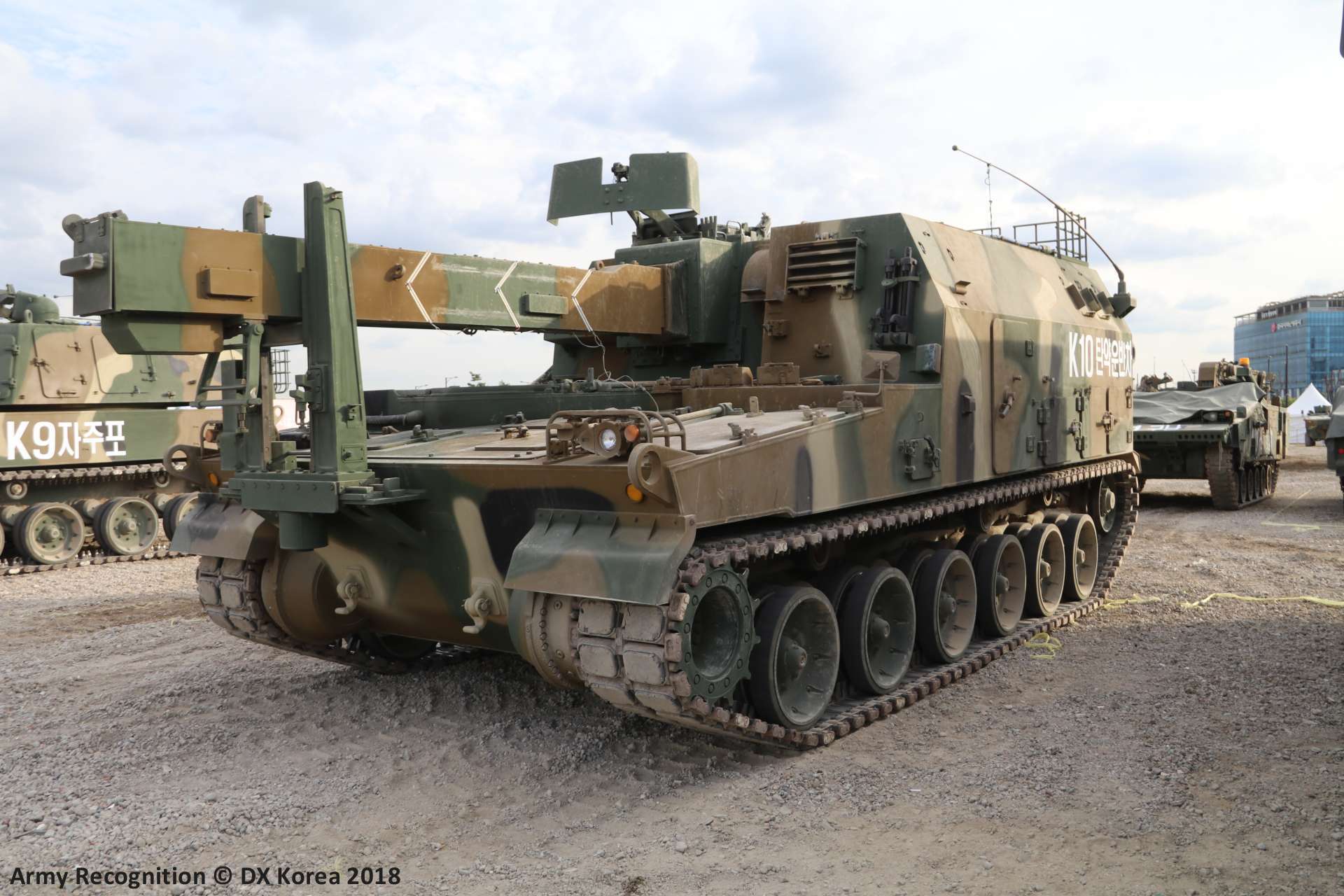
The K10 features an automated ammunition transfer system that reduces resupply time and manpower, transferring up to 12 rounds per minute, and taking 37 minutes to fully reload. (Picture source: Army Recognition)
The K10 Ammunition Resupply Vehicle (ARV), introduced in the early 2000s, shares the same chassis, powertrain, and suspension as the K9, ensuring compatibility and logistical efficiency. The K10 features an automated ammunition transfer system that reduces resupply time and manpower, transferring up to 12 rounds per minute, taking 37 minutes to fully reload, and carrying 104 rounds of 155mm ammunition with 504 units of charge. It operates with a crew of three and is armored against 155mm shell fragments and 14.5mm projectiles, offering robust protection in combat scenarios.
Current users of the K10 include South Korea, which has integrated a significant number of these vehicles into its military. Norway has also procured the K10, with an initial order followed by additional units, bringing their total to 14 vehicles designated as K10 VIDAR. Australia has ordered 15 K10 vehicles as part of its defense modernization program, and these 15 AS10 AARVs will be produced under license at Geelong. Additionally, Egypt has placed an undisclosed order for the K10EGY, along with the K11 Fire Direction Control Vehicle (FDCV), to enhance its artillery capabilities.

- Details
- Written by: Vandenbosch
- Category: 2024
- Hits: 2475
In a context where large-scale combat operations are becoming more frequent, the US Army recognizes the inadequacy of its current equipment availability prediction system. The traditional bank time model, limited in its ability to incorporate external factors such as training conditions, personnel strength, and parts availability, can only forecast equipment availability for a short period. Facing this challenge, the US Army is exploring more advanced analytical tools to improve its predictions.
Follow Army Recognition on Google News at this link
The Stryker is a US Armored personnel carrier. (Picture source: US DoD)
During a rotational deployment in Korea, the 2nd Stryker Brigade Combat Team, 4th Infantry Division, initiated an effort to integrate machine learning to improve equipment availability predictions, focusing particularly on the Stryker fleet of the 1st Battalion, 41st Infantry Regiment (1-41). Using training and maintenance data, the goal was to more accurately assess current and future equipment availability. This initiative demonstrated significant improvements in predictive accuracy through machine learning models based on time series data.
The team collected two years of daily maintenance and training data from a Stryker infantry battalion, beginning the analysis with linear regression. Although this model did not provide sufficient accuracy, it identified key variables influencing maintenance availability. Consequently, the team used more advanced machine learning tools and tested three models: Prophet, random-search/random-forest, and Bayesian gradient boosting regression. Prophet, an open-source model developed by Meta Platforms, showed the best results, outperforming traditional methods.
The initial data collection effort focused on an entire Stryker brigade but was scaled down to a single battalion to ensure training data consistency. Two datasets were used: one including days with no scheduled activity (DONSAs) and one excluding them. Maintenance data came from the Global Combat Support System-Army, and the battalion’s training schedules served as the exogenous dataset for forecasting.
The study revealed that completed services and DONSAs significantly impacted forecast accuracy. Removing the DONSA variable improved all models, highlighting the importance of adhering to service schedules for accurately predicting maintenance availability. The Prophet model, in particular, provides commanders with a clearer understanding of the impact of maintenance on future operations, allowing for better planning and resource allocation.
These models can also be used in large-scale combat operations to identify the units best positioned for specific missions, thereby improving decision-making and staff recommendations. Battalions can replicate these models using readily available daily data, leveraging soldiers' skills and existing tools like the Jupyter coding environment.
To maximize the benefits of these advancements, the Army must focus on three key areas: data availability, training, and software accessibility. By improving data interoperability and integrating data literacy into military education, the Army can enhance leaders' understanding of statistical models. Additionally, improving access to data transformation tools and collaborating with industry leaders like Palantir, AWS, and Microsoft will enable the Army to continue modernizing and using AI to improve military decision-making.
The "Stryker Ready" initiative represents a step towards integrating machine learning into military maintenance, demonstrating how available tools can transform operations and maximize the efficiency of the US Armed Forces.
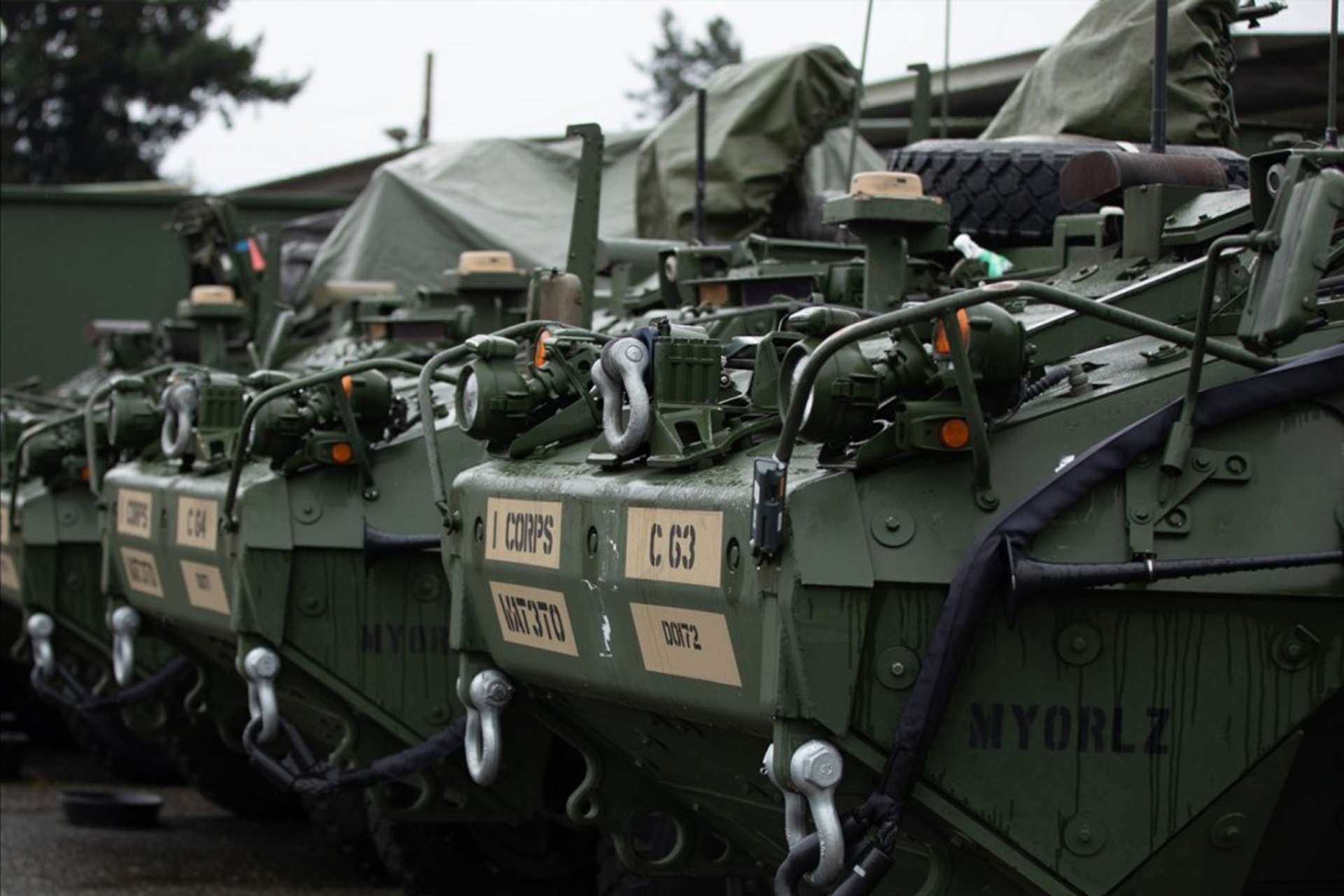
The US Army is exploring more advanced analytical tools to improve its Stryker Availability. (Picture source: US DoD)
Read more: US Army Rethinks and Revolutionizes Stryker Availability
- US Army Awards Oshkosh Defense Major Contract for Heavy Tactical Vehicles
- US Launches Minotaur I Rocket Equipped with Mk21A Reentry Vehicle
- Sudanese rebels capture Chinese WS-1B and North Korean BM-11 rocket launchers from the Sudanese Armed Forces
- Oman Deploys Turkish PARS III 8X8 Armored Vehicles in Military Drill for the First Time