



Advertise with US  - Use our online marketing services Company profile product pages
a
 

Military Defense Industry Technology - M1 Abrams ECP program


Sunday, November 4, 2012, 07:26 AM
 
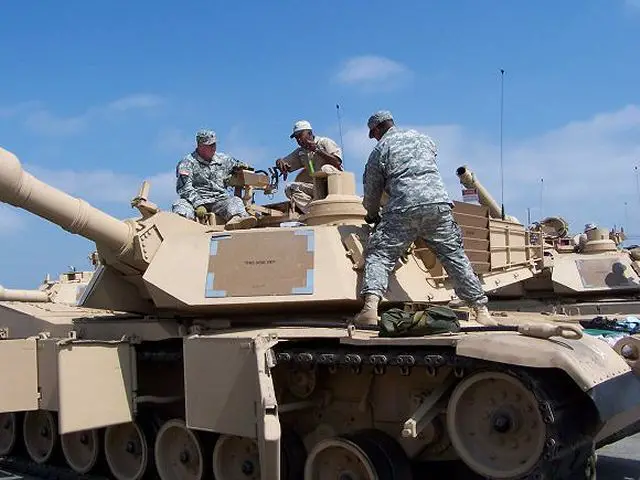
U.S. Army research and development for main battle tank M1 Abrams under ECP program.
Over the past decade the only thing that has been able to slow the Army's premier combat vehicle, hasn't been enemies on the battlefield, but rather the technological advancements added to the platform. While every vehicle is designed to have Space, Weight, and Power, or SWaP, margin for incremental improvements, recent upgrades made to the Abrams M1A2 SEP V2 have left little margin for future improvements.
By Bill Good, PEO Ground Combat Systems, Public Affairs

     
Over the past decade the only thing that has been able to slow the Army's premier combat vehicle, hasn't been enemies on the battlefield, but rather the technological advancements added to the platform. While every vehicle is designed to have Space, Weight, and Power, or SWaP, margin for incremental improvements, recent upgrades made to the Abrams M1A2 SEP V2 have left little margin for future improvements.
Abrams Engineering Change Proposal program reduces space, weight, and power margins, increases survivability and postures tank to accept future Network components.
(Credit photos: U.S. Army)


"The Abrams main battle tank was developed over three decades ago in response to a major Soviet threat. We were fortunate that engineers had the foresight to design in enough SWaP margin to enable us to host new capabilities needed during our recent missions in Iraq and Afghanistan," said Lt. Col. William Brennan, product manager for Abrams.

To help alleviate SWaP constraints, the Army has launched the Abrams Engineering Change Proposal, or ECP, program designed to buy back as much SWaP as possible by redesigning and modernizing many elements of the tank. This ECP is a modification to the system that leaves the essential capability unchanged. The Abrams ECP program will help ensure the Army can seamlessly incorporate other programs of record into the Abrams well into the future, without degrading operational performance.

"Right now the electrical power is in short supply on the tank. The centerpiece of the ECP 1 upgrade will be to restore lost power margin through the integration of a larger generator, improved slip ring, battery management system and a new power generation and distribution system," said Brennan.

Other major Abrams ECP upgrades will focus on communications, data transmission and processing, and survivability. The communications upgrade will integrate the Joint Tactical Radio System, or JTRS, and Handheld, Manpack, & Small Form Fit, or HMS, into the Abrams, replacing the current single-channel ground and airborne radio system, known as SINCGARS.

The ability to incorporate the Army's network is also a vital part of the ECP1 effort. To address network requirements the Abrams will integrate a gigabit Ethernet databus to allow greater data processing and transmission. The modified slip ring on the turret will also provide the ability to transmit larger amounts of data into the turret, in addition to providing more power.

"The ECP1 upgrade will posture the tank to accept the Army network components in the near term, while building the necessary margin to accept future capabilities in the decades to come," added Brennan.

While the Abrams remains the dominate vehicle on the battlefield, the ECP program will make it more formidable by including a new armor solution as well as an updated version of the counter-remote-control improvised explosive device electronic warfare, or CREW, system.

Initial production of tanks with ECP1 upgrades is slated to begin in 2017.

The Abrams ECP program is managed by Product Manager Abrams, which falls under leadership of the Project Manager, Heavy Brigade Combat Team within the Program Executive Office for Ground Combat Systems.


< Prev   Next >
SEO by Artio
 
--------------------------- FLASH NEWS ---------------------------
Kyodo news says the Japanese defense ministry is considering permanently deploying Patriot surface-to-air missile interceptors at its Tokyo headquarters. The announcement came a day before the DPRK launched three short-range missiles.Kyodo news says the Japanese defense ministry is considering permanently deploying Patriot surface-to-air defense missile interceptors at its Tokyo headquarters.
 
Your add video on Army Recognition

IDEF 2013 Otokar Turkey Turksih defence industry armoured vehicles
Tenders Defence Security  global International world worldwide tender public government ministry official agency bids news RFPs RFQs RFP RFQ procurement notices information request bids business opportunities online

FNSS defense company industry armoured amphibious vehicle turret manufacturer supplier Turkey Turkish military combat army military technology

Shaanxi Baoji Special Vehicles Manufacturing is one of Chinese leading design and production centres for wheeled armoured 4x4 and 6x6 tactical vehicles
Lockheed Martin
Thales France French Defence Industry
Acmat defense industry company light tactical truck protected vehicle land forces military designer manufacturer developer marketing France French
CMI Defence weapon  systems for armoured vehicle


Rafael Israel Israeli defence industry military technology equipment
Panhard is currently a French manufacturer of light tactical and military vehicles. Its current incarnation was formed by the acquisition of Panhard by Auverland in 2005. Panhard had been under Citroën ownership, then PSA (after the 1974 Peugeot Citroën merger), for 40 years.


Subscribe NewsLetter