|
| |
| General information |
|
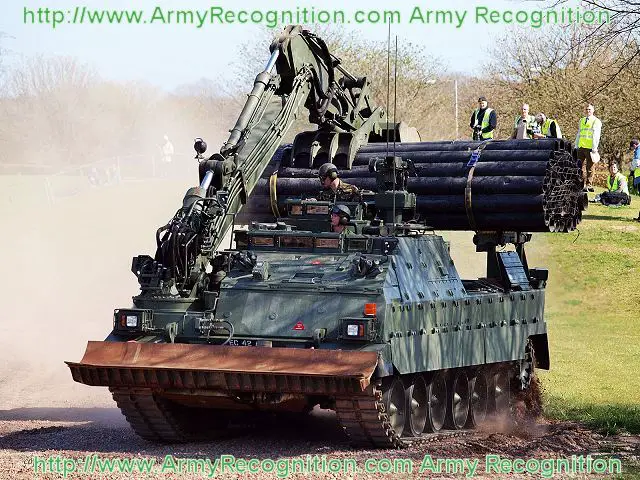
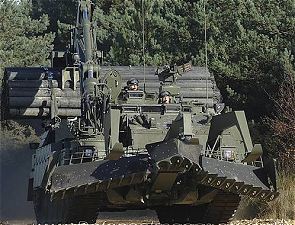
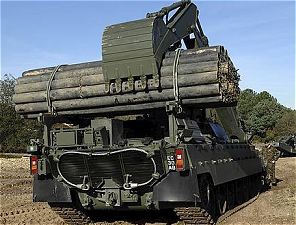
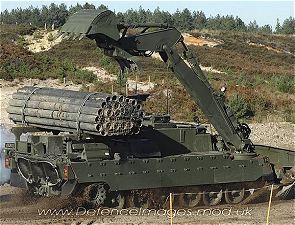
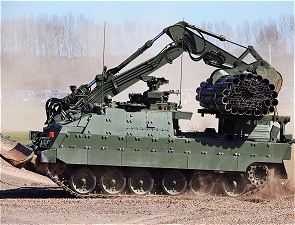
The Trojan engineer equipment is a minefield breaching armoured vehicle amongst other things, currently in use with the Royal Engineers of the British Army. The Trojan is designed and manufactured by the International Defense Company BAE Systems. . The contract was awarded in 2001 to Vickers Defence Systems, who were bought by BAE Systems in 2004. The project was known as the Future Engineer Tank. 33 have been built. In March 2004, the first prototype Trojan was delivered to the Royal Engineers Trials and Development Unit (RETDU) at Bovington. The vehicle, was to undergo a 10-month demonstration trials period – with a second vehicle due to be delivered to British units in Germany for climatic trials. The primary role of Trojan is as a minefield breaching system - clearing, preparing, and marking routes; additionally it will remove complex obstacles and provide short gap crossing abilities. On deployment of armoured forces, the first task is the preparation of defensive positions and multiple obstacles to enemy movement, including anti-tank ditches and mines. When battle is joined, armoured forces must manoeuvre, re-deploy and overcome obstacles, natural and man-made. These are likely to include mines and gaps, both wet and dry. TROJAN provides a wide range of capabilities vital in the battle area. It is fitted with a dozer-blade or a mineplough. These attachments are readily interchanged. TROJAN is custom-designed to create routes through or over obstacles. It can clear mines using the mine-plough or by firing explosive mineclearing hose. The cleared mine breach can then be automatically marked from under armour using the on-board Obstacle Marking System. It launches fascines into small gaps. It digs using its excavator and/or the dozer. All capabilities are exercised with the crew under full armour protection. It can carry general engineer stores and use its excavator as a crane and powered tools to undertake a wide range of tasks.
|
| |
|
Variants :
No variants
|
| |
|
| |
|
|
|
|
| Armament |
|
The Trojan is fitted with a Thales 7.62mm overhead weapon station that can be aimed and fired with the operator under cover. To supplement its armament, the Trojan is also fitted with electrically operated smoke grenade launchers and can lay its own smoke screen by injecting diesel fuel into the exhaust on either side of the hull.
|
| Protection |
|
The Trojan is based based on a Challenger 2 tank chassis, but lacks the main armament. The armour of the Trojan provides a protection against small arms direct fire, anti-tank mines, and IED (Improvised Explosive Devices).
|
| Propulsion |
|
The Trojan is based on automotive components of the Challenger 2 MBT including power pack and running gear that have been integrated in a new well protected chassis. The Trojan is motorised with a Perkins CV12 diesel engine, David Brown TN54 enhanced low-loss gearbox and the OMANI cooling group with an engine power of 1.200 hp. The Trojan is also equipped with an APU (Auxiliary Power Unit). The suspension of the Trojan is composed on each side with aluminium roadwheels with the drive sprocket at the rear, idler at the front and two track-return rollers either side. The upper part of the track is covered by conventional aluminium skirts.
|
| Accessories |
|
The Trojan is equipped with a large hydraulic excavator arm, which can be used to excavate areas, move obstacles, and deposit the fascine that the Trojan carries at its rear. More often than not, the Trojan is also fitted with a mine-clearing plough on the front, which enables it to clear minefields, either detonating them on contact, or pushing them out of the way to clear a safe channel for following vehicles. For mine-clearing mission, the Trojan can also carry behind it a trailer carrying the Python, a rocket-propelled mine clearing system similar to that of the Giant Viper. This allows for a much quicker way (if disposable) of clearing a path for ground forces. The tube, packed with explosive, is launched across the minefield, and detonates when it hits the ground, clearing a 7-metre wide path for 230 metres.
|
| |
| Specifications |
| |
|
Armament
|
|
One 7,62 mm machine gun and anti-tank weapons.
|
|
Country users
|
|
United Kingdom
|
|
Designer Company
|
|
BAE Systems
|
|
Accessories
|
|
Python Minefield Breaching System, Full-Width Mine Plough, NBC system, CCD camera
|
|
Crew
|
|
3 soldiers
|
|
|
Armor
|
|
Chobham/Dorchester Level 2
|
|
Weight
|
|
62,500 kg
|
|
Speed
|
|
59 km/h
|
|
Range
|
|
450 km
a
|
|
Dimensions
|
|
Lenght, 10,5 m; Width, 3,5 m; Height, 3,5 m
|
|
|
| |
|
|
| |
|
|
| |
|
|
|
|
 Version française