| |
| |
Russia
 Back
Menu
Back
Menu
New S-500
missile system, too much slowness in the design.
|
The
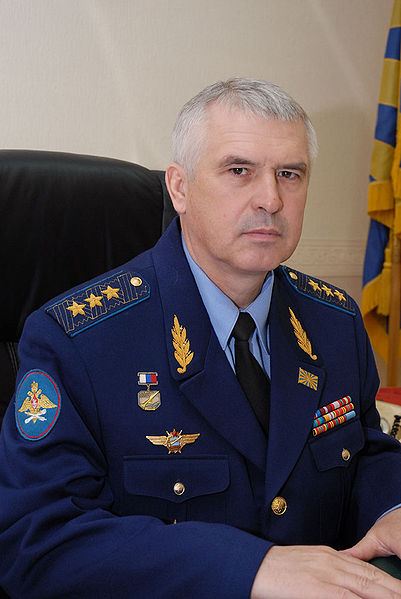
commander of the Russian Air force Alexandre Zeline
condemned Thursday slowness in the systems design of
anti-aircraft missiles S-500. “The way in which
are conceived the S-500 system is not appropriate me”,
it indicated at the press. “I would like that
the potential of the Group Almaz-Antée (designer
of the system) is doubled, even triple”, said
Alexandre Zeline. The new universal system will be able
to destroy targets flying with 7 km/sec to 200 km of
altitude, as well as the warheads of hypersonic cruise
missiles, announced the general.
27
November 2009 |
|
|
|
| |
China
Back
Menu
New chinese
armoured vehicle for airborne troops.
|
The
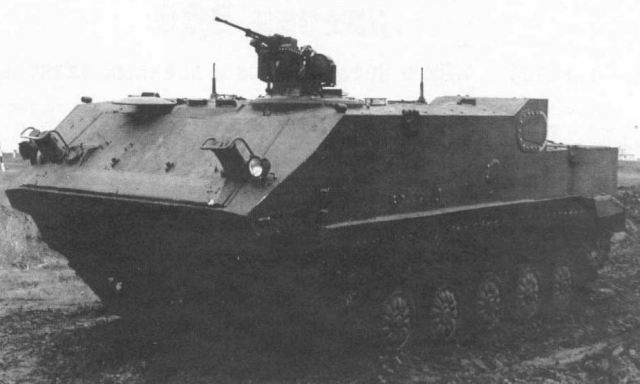
existence of a new Chinese small-tracked armoured vehicle
bearing a strong similarity to the new Russian BTR-MD/BTR-D3
Rakushka ('Shell') air-deployable armoured vehicle was
recently revealed by Chinese Internet sources. The vehicle,
also seen at a Chinese armour display, could still be
a prototype and Chinese sources have yet to reveal any
of its technical details. Assuming the vehicle is intended
for use by airborne forces of the People's Liberation
Army (PLA), its introduction would be consistent with
the PLA's ongoing effort to mechanise its airborne forces
after the Russian pattern. The Chinese ZBD-03 airborne
infantry fighting vehicle (IFV) that emerged in 2004
is similar to the Russian BMD series, but it offers
greater room for troops and is so far only armed with
a 25 mm or 30 mm cannon compared with the combined 100
mm.
27
November 2009 |
|
|
|
| |
Australia
(Thales)
Back
Menu
Thales Hawkei
light wheeled protected vehicle passes Blast Test Milestone.
|
Thales
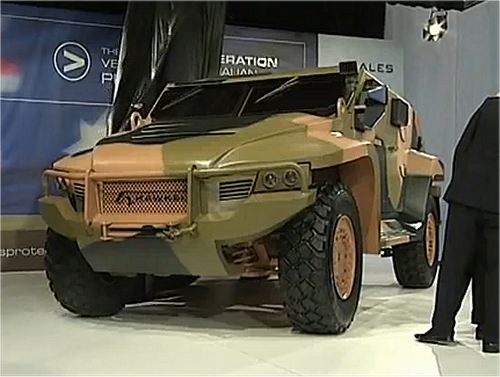
Australia's ground-breaking Hawkei Australian Light
Protected Vehicle has passed a significant milestone
with the successful completion of the first series of
mine blast tests on the passenger compartment. Conducted
on a full monocoque hull prototype, the test involved
a high level blast beneath the centre of the vehicle,
representing the type of detonation that occurs when
a vehicle passes directly over a land mine. The Hawkei's
hull has also recently been successfully tested against
IED fragments, another key operational threat. These
tests are part of a series designed to ensure that the
Australian designed and built Hawkei provides the highest
possible protection for Australian soldiers. The data
gathered during the blast testing from full anthropomorphic
dummies will be used to further refine the blast management
system used in the vehicle. Achieving the highest levels
of protection in the light vehicle class is one of the
primary goals for the Hawkei design team, which includes
Plasan Sasa, one of the world's foremost armour solutions
companies.
27
November 2009 |
|
|
|
| |
Spain
Back
Menu
Spanish
army need a new 8x8 wheeled armored vehicle to enhance safety and mobility
of Spanish troops.
|
Defense
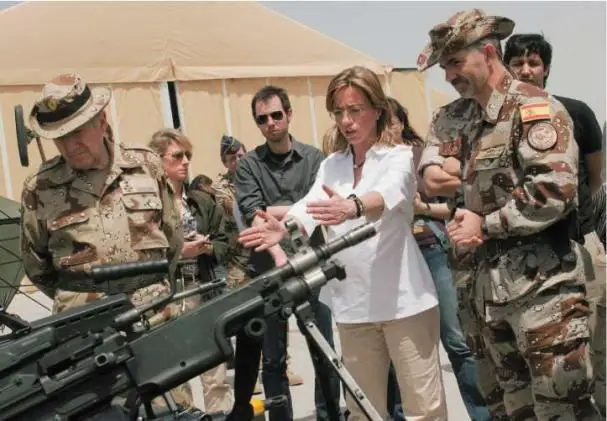
Minister Carme Chacon today presented to the Council
of Ministers a report on the need for a new 8x8 wheeled
armored vehicle to enhance safety and mobility of Spanish
troops. According to the Defense Ministry's policy to
give top priority to the safety and protection of Spanish
soldiers, the Defense Minister has requested an additional
effort to acquire a new fleet of 4x4 armored squad and
platoon vehicles, and of next generation 8x8 vehicles,
to complete the renewal of the Spanish Army’s
armored vehicles inventory. The Defense Ministry is
considering, in an effort to expedite arrangements for
the future purchase, the main models of 8x8 wheeled
armored vehicles available on the market, some of which
are already in operation with allied forces. The acquisition
of a new vehicle of this type will increase the capabilities
of security, safety, design and mobility of Spanish
troops in carrying out their assigned missions.
26
November 2009 |
|
|
|
| |
France
(Renault Trucks Defense )
Back
Menu
The Ministry
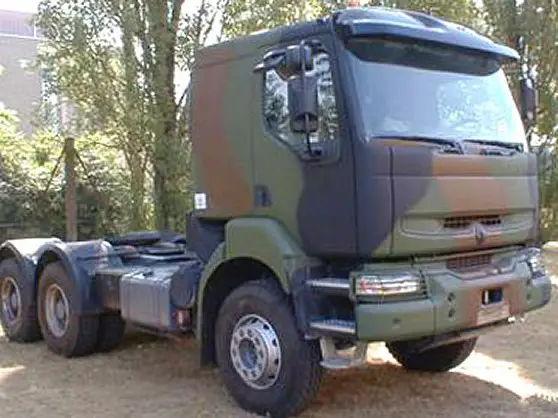
of Defence of Chad has confirmed an order of 64 units of fire tender
Midlum and Kerax 8x8 and 6x6.
|
The
Ministry of Defence of Chad has once again chosen Renault
Trucks Defense to expand its fleet. The Ministry has
confirmed an order of 64 units of fire tender Midlum
and Kerax 8x8 and 6x6 equipped with tank and flatbed.
A first contract had been signed in January 2009 for
52 kerax.
26
November 2009 |
|
|
|
| |
Canada
(General Dynamics)
Back
Menu
General
Dynamics Awarded USD$2.2 Billion Contract for Light Armored Vehicles,
presumably for the Saudi National Guard.
|
The
U.S. Army TACOM Life Cycle Management Command, in support
of the U.S. Army Security Assistance Command (USASAC),
has awarded a $2.2 billion contract to General Dynamics
Land Systems-Canada for 724 Light Armored Vehicles (LAV)
for a Foreign Military Sale (FMS). Vehicle deliveries
will begin in April 2011. General Dynamics Land Systems,
the Canadian company's parent corporation, is a business
unit of General Dynamics. The contract was signed through
the Canadian Commercial Corporation, a Crown Agency
of the Canadian Government. Vehicles provided under
this contract will be the LAV II version -- a 300 horsepower
8x8 vehicle with a gross vehicle weight of up to 32,000
lbs (14,500 kg). The vehicles will be produced in 10
different variants. The Light Armored Vehicles ordered
under this contract are a variant of the Canadian Army’s
Coyote; they will be exported, presumably to the Saudi
National Guard.
26
November 2009 |
|
|
|
| |
Iran
Back
Menu
For Teheran
the Russian systems S-300 will compensate for the old age of its air
defense system.
|
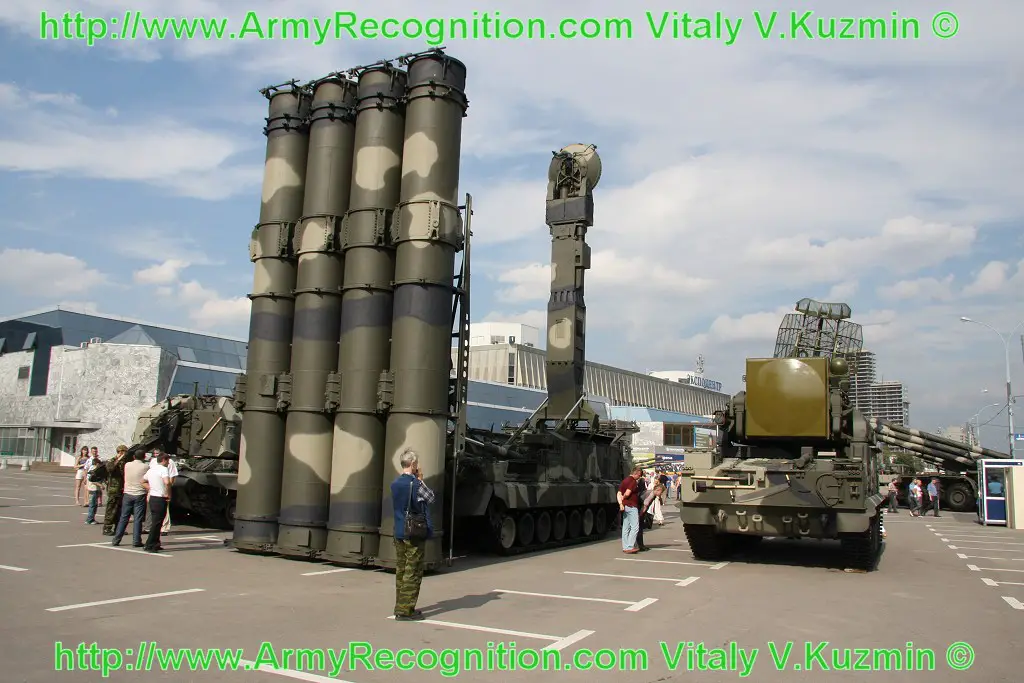
The out datedness
of the anti-aircraft defense equipment (DCA) explains
the desire of Teheran to obtain Russian systems of anti-aircraft
missiles S-300, declared Wednesday during a conversation
with RIA Novosti Vladimir Evséïev, Russian
institute of the worldwide economy and international
relations. “Iran does not have modern systems,
the DCA being equipped with Tor-M1. These systems ensure
an anti-aircraft protection in a ray of 20km and they
are not mobile. That wants to say that Iran does not
have systems able to be protected, also Teheran would
like it to obtain the Russian systems of anti-aircraft
missiles S-300”, indicated Vladimir Evséïev.
In addition, the Russian researcher specified that “S-300
Marie very well with Tor-M1. It was initially expected
that Tor-M1 protect S-300, charged in their turn to
ensure the protection of the territory of the country.
Iran is unable to only manufacture of S-300 because
of its not easily retrievable technological delay. Teheran
cannot copy this system either. Tor-M1 will not be able
to protect the Iranian nuclear sites. All this made
that Iran seeks to obtain S-300”.
25
November 2009 |
|
|
|
| |
Senegal
Back
Menu
China and
Senegal hope to enhance military cooperation.
|
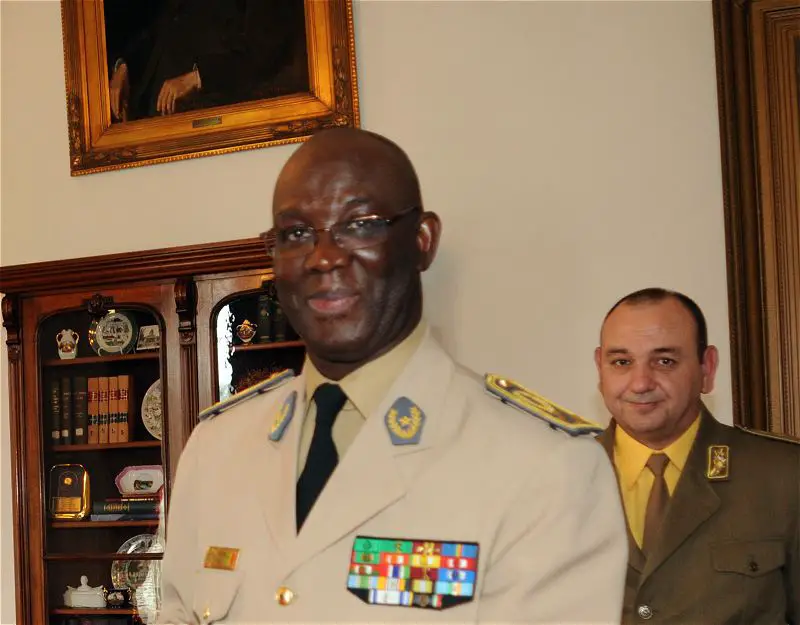
The
Xinhua press agency reports, Senior military officials
of China and Senegal said, they would enhance cooperation
between the two armed forces. China and Senegal had
cooperated beneficially since the resumption of diplomatic
ties in 2005, said Chinese Defense Minister Liang Guanglie
in a meeting in Beijing with Abdoulaye Fall, visiting
Chief of General Staff of the Armed Forces of Senegal.
Liang appreciated Senegal's support for China on reunification
and major international issues. China and Senegal had
developed sound military relations and China was willing
to work with Senegal to advance friendly cooperation,
Liang said. The armed forces in both countries shared
similarities in their self-development and Senegal hoped
to enhance understanding and trust through more communication
and cooperation with the Chinese military, Fall said.
Ahead of his meeting with Liang, Fall had discussions
with Chen Bingde, Chief of the General Staff of China's
People's Liberation Army.
24
November 2009 |
|
|
|
| |
United
Kingdom
Back
Menu
High level
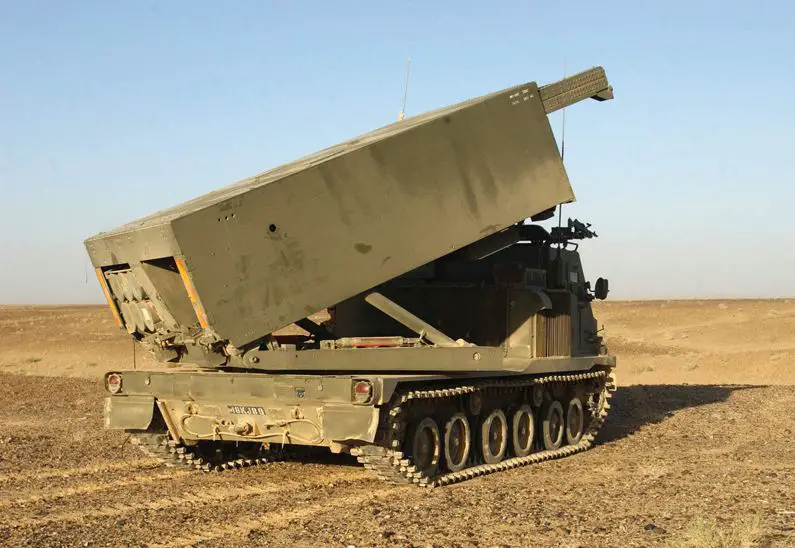
blast protection for the British GMLRS Guided Multiple Launch Rocket
System.
|
Three
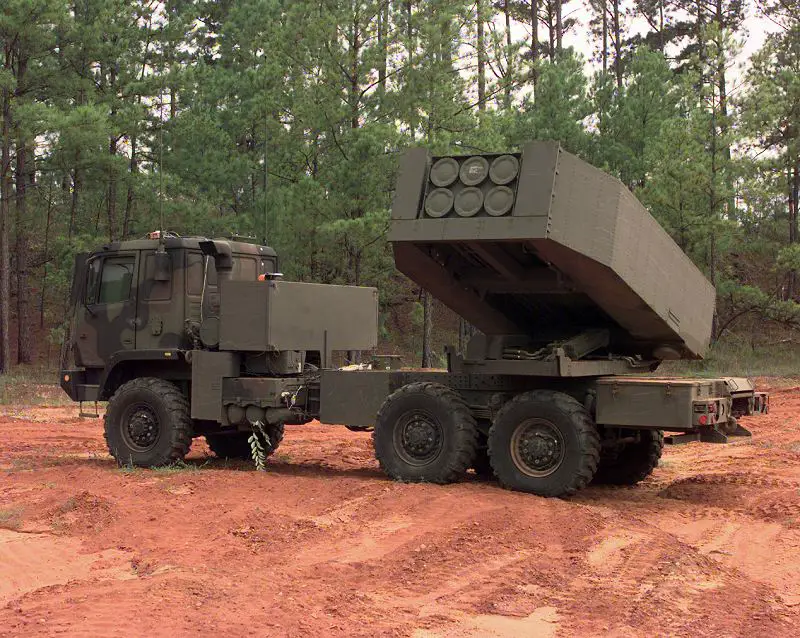
members of 39th Regiment Royal Artillery of the British
army escaped unscathed when their Guided Multiple Launch
Rocket System (GMLRS) vehicle recently detonated a large
anti-tank mine in Helmand province, Afghanistan. The
blast blew off the vehicle's left-side track, separated
three wheels from their axles and ripped off the bar
armour. Shock absorbers and armour sponson plates were
also damaged. However, the crew survived without a scratch
thanks to improved ballistic and mine protection which
included underbody armour and better protected seats
in the cab, fitted to the system over the last year
as part of an Urgent Operational Requirement. The upgrades
have been fitted on all operationally-deployed GMLRS
launchers, and this weapon system is proving extremely
successful in the battle against the insurgents with
its ability to fire a precision guided rocket up to
70km.
23
November 2009 |
|
|
|
| |
Russia
Back
Menu
Russian
army will obtain for the end of 2010, five new tactical missile ballistic
systems Iskander-M.
|
For
the end of 2010, the Russian army will obtain five new
tactical operational missiles Iskander-M, declared Saturday
in Moscow the chief of the ballistic troops and the
artillery Sergueï Bogatinov. “The army will
be equipped with five Iskander-M missiles, like confirmed
it besides the president. It will be done for the end
of 2010 enabling us to form a first brigade of missiles,
equipped with Iskanders-M”, indicated M.Bogatinov.
23
November 2009 |
|
|
|
| |
Yemen
Back
Menu
Yemeni army
is fighting against Shi'ite rebels.
|
An
armoured personnel carrier is seen on a battlefield
in the northwestern Yemeni province of Saada, where
the army is fighting Shi'ite rebels, in this undated
handout released by the Yemeni army on November 23,
2009.
23
November 2009 |
|
|
|
| |
France
Back
Menu
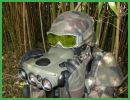
A new order
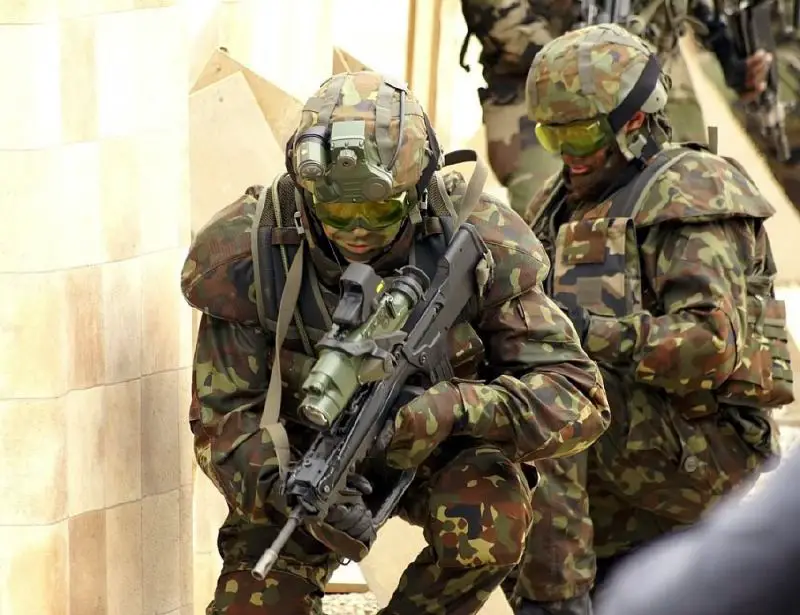
for 16,454 FELIN digital soldier systems.
|
Hervé
Morin, the Minister of Defense, today announced a new
order for 16,454 FELIN digital soldier systems (Fantassins
à Equipements et Liaisons INtégrés),
bringing the total ordered to date to 22,588 units.
The Directorate General of Armaments (DGA) awarded the
acquisition contract to Sagem (Safran Group) on November
20, 2009. The total FELIN program, including development,
industrialization, production and initial support, will
cost a total of one billion euros. A batch of 358 pre-production
systems delivered in December 2008 was evaluated by
several army units during the first half of 2009 under
different geographical extremes (mountain, jungle, desert).
This final phase of testing was to verify the adequacy
of the system under the conditions of modern combat.
The new or renewed equipment provided includes a protective
armour vest, combat clothing, day / night weapon sights,
day / night observation and vision systems, communication
and information systems, and individual and squad weapons.
Offering improved ergonomics FELIN, also provides better
protection against the effects of modern small-caliber
weapons. Its integrated weapon sights have been completely
redesigned, and make it easier to neutralize opponents
by day and night. FELIN also greatly improves the flexibility
and night fighting capabilities thanks to its enhanced
observation and positioning capabilities.
23
November 2009 |
|
|
|
| |
United
States (BAE Systems)
Back
Menu
BAE SYSTEMS
secures $60.6 in contract modifications for heavy vehicle.
|
BAE
Systems has been awarded contract modifications from
the U.S. Army Tank Automotive & Armaments Command
(TACOM) for work on Bradley Fighting Vehicles, Multiple
Launch Rocket System (MLRS) Redesigned Cabs, and M113A3
Ambulance vehicles. The total value of the contract
modifications is $60.6 million.
Specifically, the contracts include:
-$54.4 million for installation of survivability modifications
on Bradley vehicles at Fort Hood, Texas, Fort Stewart,
Georgia, Fort Bliss, Texas, Iraq, Kuwait and Germany.
Modifications include an advanced fire suppression system,
new seats, new ammunition restraints, and mounting provisions
for armor tiles.
-$5.4 million for design updates to the Bradley Operation
Desert Storm Situational Awareness vehicles to more
closely parallel that of a Bradley A3 vehicle. This
design work supports production deliveries to the National
Guard in 2010.
-$414,000 for installation of the Auxiliary Power Unit
(APU) and Environmental Control Unit (ECU) modification
kits on the MLRS redesigned cabs in the field. The award
also includes training to the MLRS crew and maintenance
personnel.
-$350,000 for integration of the Mounted Soldier Systems
(MSS) for the M113A3 Ambulance vehicle. The system includes
cooling vests for crew members, helmet mounted display,
wireless intercom improvements, and the Check 6 infra-red
rear view system.
23
November 2009 |
|
|
|
| |
Lebanon
Back
Menu
Military
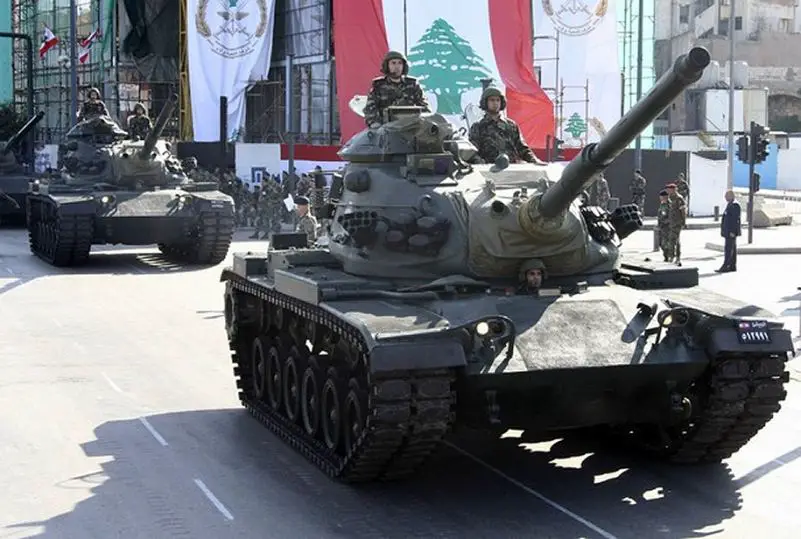
parade in Beirut for the 66th anniversary of Lebanon's independence
day.
|
Lebanese
army soldiers ride armoured personnel carriers as they
take part in a military parade to celebrate the 66th
anniversary of Lebanon's independence day in downtown
Beirut November 22, 2009.
22
November 2009 |
|
|
|
| |
France
(Panhard)
Back
Menu
Panhard
delivers the VBL Mk2 to the Kuwaiti Ministry of Interior.
|
Panhard
delivers twenty vehicle VBL Mk2 ordered by the Kuwaiti
Ministry of Interior last year. The Kuwaiti VBL Mk2
is configured to carry anti-terrorist operations in
urban areas. The Mk2 version of the VBL benefits from
many improvements in relation to previous model: the
VBL Mk2 is significantly more powerful by the use of
a new 125 hp. Steyr Engine, whilst its all-terain mobility
has also been enhanced by the use of a 4-speed ZF automatic
gearbox and larger tyres. Centralised tyre inflation
also help to improve the VBL's Mk2 mobility over loose
terrain, especially sand area. The electrical system
in the VBL Mk2 offers new features as an onboard diagnostic
system. The Kuwait VBL Mk2 is equipped with a Kongsberg
12.7 mm machine gun turret.
20
November 2009 |
|
|
|
| |
Canada
Back
Menu
The Close
Combat Vehicle (CCV) acquisition project for the Canadian Army.
|
The
Canadian Army is trying to move the CAD2.2 billion (USD2
billion) Close Combat Vehicle (CCV) acquisition project
forward quickly, before the minority Conservative government
changes, or changes its mind. The project to acquire
up to 138 CCVs was announced by the government in July,
but plans to issue a solicitation of interest and qualification
on 15 September, to be followed swiftly by a request
for proposals, have been delayed to give some of the
competitors more time to organise their industrial benefits
proposals. Under current plans, the 30-45 tonne CCV
will not replace a current vehicle, but will bridge
the gap between the army's LAV III 8x8 light armoured
vehicles and Leopard 2A4 and A6 tanks. The army wants
the CCV to be able to deliver fully equipped infantry
and forward artillery observers to the battle area for
close combat operations, in medium- to high-threat environments,
with, where necessary, Leopard tank support.
20
November 2009 |
|
|
|
| |
United
Kindom
Back
Menu
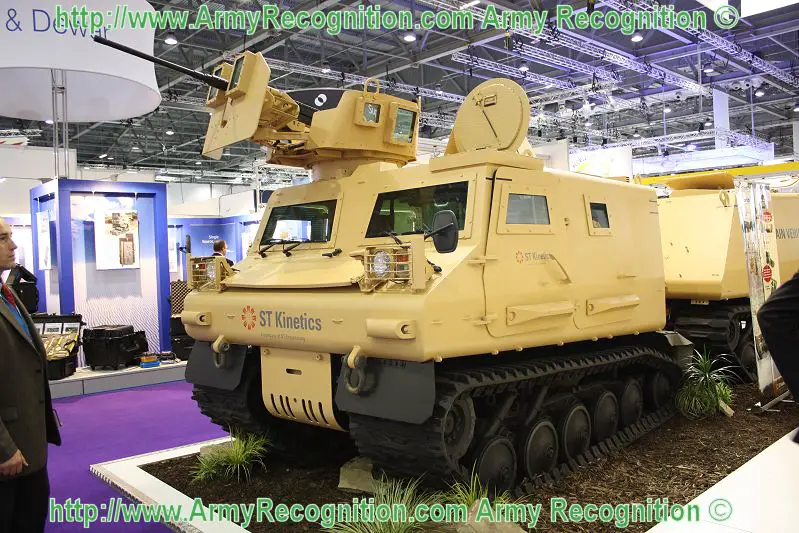
Warthog vehicle
arrives in UK for Afghan modifications.
|
The
first of 100 new Warthog vehicles, bought by the MOD
to be used by British troops in Afghanistan's Green
Zone, arrived in the UK this 19 November 2009 to be
prepared for operations. The MOD has bought more than
100 Warthog amphibious vehicles from Singapore Technologies
Kinetics. The first was unveiled yesterday, Thursday
19 November 2009, at Thales UK's new vehicle integration
facility in West Wales as the company will be installing
UK-specific kit to the vehicles. This will include additional
armour, specialist electronic countermeasures equipment
and communication tools, before the vehicle is deployed
to Afghanistan early next year.
20
November 2009 |
|
|
|
| |
Australia
Back
Menu
Hawkei Military
Vehicle Production to Generate 700 Jobs.
|
Production
of the next generation Hawkei Protected Military Vehicle–Light
(PMV-L) in Australia would generate almost 700 jobs
in Victoria, most of them in the Bendigo area, according
to independent economic analysis. The detailed economic
study also found that the Bushmaster vehicle program
is currently supporting 1100 jobs, but employment will
fall in coming years as orders and production decline
on the original Australian Defence Force Bushmaster
program. The Managing Director of Thales Australia,
Chris Jenkins, said the analysis conducted by ACIL Tasman
was the first detailed assessment of the economic contribution
of Project Bushranger to Bendigo, Victoria and Australia,
taking both direct and indirect benefits into account.
20
November 2009 |
|
|
|
| |
United
Kingdom (Supacat) Back
Menu
Supacat demonstrates
a new version of his products, the Jackal ISTAR.
|
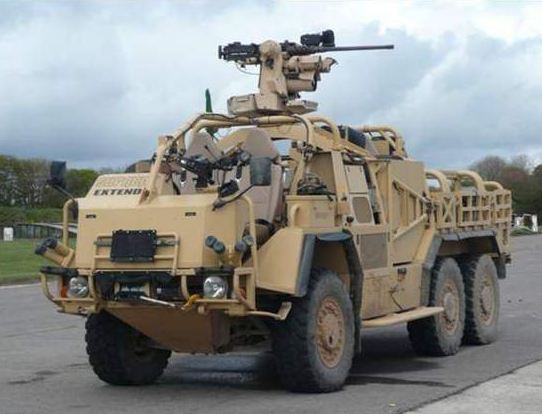
Supacat,
working in conjunction with Thales, recently demonstrated
their joint prototype Jackal ISTAR variant at the Owning
the Night Exhibition at Bisley on 10/11 Nov 09. The
system demonstrates the joint team's capability to easily
integrate advanced weapons and sensor systems onto a
Supacat Jackal recce platform to significantly enhance
the ISTAR capability on offer. Using a Supacat platform
in the UK MoD's Jackal 2 configuration, the system was
fitted with the Kongsberg Protector Remote Weapon Station
(RWS) that has already been procured for two UK MOD
programmes and also the newly developed and now in service
Remote Optical Target Acquisition System (ROTAS) that
incorporates the Catherine Mega Pixel thermal camera,
high zoom colour TV camera and the Celt laser.
19
November 2009 |
|
|
|
| |
France
(Sagem ) Back
Menu
Slovenia
border police selects Sagem JIM LR infrared multifunction imager.
|
Following
international bidding within the context of the EU’s
Schengen programs, Slovenia’s Border Police has
selected Sagem’s (Safran group) JIM LR multifunction
infrared imagers. As part of the bidding process, Slovenia’s
Border Police tested the JIM LR for one month in open
terrain and urban areas. In the face of stiff competition,
these tests highlighted JIM LR’s effectiveness
and confirmed it is well suited to homeland security
needs. Ergonomic and highly integrated, JIM LR provides
border protection units with enhanced capabilities:
day and night detection and identification of vehicles,
boats, light aircraft and pedestrians at a distance
of up to several kilometers, intelligence gathering
for intervention teams, etc. JIM LR’s open architecture
means it can be easily integrated in diversified surveillance
systems. Case in point: the JIM LR’s ordered by
Slovenia will contain remote control terminals produced
by the Slovenian company Dat-Con, specialized in homeland
security solutions.
19
November 2009 |
|
|
|
| |
Germany
(Mercedes-Benz) Back
Menu
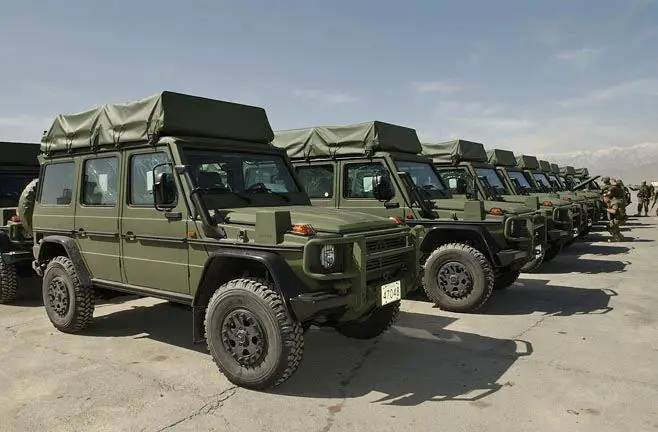
Germany`s
Mercedes-Benz delivered on Oct. 29th 2009 the first of 1,200 specially
made G - Class for the Australian Army.
|
Germany`s
Mercedes-Benz delivered on Oct. 29th 2009 the first
of 1,200 specially made G - Class offroad vehicles to
the Australian Army. The new purpose-built cross-country
vehicles will replace the Australian Defence Force’s
(ADF) existing tactical vehicle fleet. Their entry into
the Australia’s military is the result of a large-scale
project by the ADF, internally coded as ‘Land
121’ but more commonly referred to as ‘Project
Overlander’.
19
November 2009 |
|
|
|
| |
Iran
Back
Menu
S-300 for
Iran, Russia respects its engagements in the field of the military technical
cooperation.
|
Russia
respects its engagements in the field of the military
technical cooperation with Iran, declared Tuesday in
Moscow the spokesman of the Russian ministry of the
Foreign affairs Andrei Nesterenko commenting on the
contract Russo-Iranian on the delivery of ground-to-air
missiles S-300 in Iran. “The Russian part assumes
its engagements in the field of the military technical
cooperation with responsibility and it will always stick
to this position… The Russian Federation cooperates
with Iran in the military field and technique while
respecting its international obligations”, indicated
M.Nesterenko. They are “deliveries of purely defensive
armaments which cannot destabilize the situation in
the area”, it added. A contract of delivery of
Russian S-300 missiles in Teheran was signed in December
2005, but the forever officially announced beginning
of its execution. In December 2008, Iranian agency IRNA
announced that Russia had dispatched towards Iran the
first batch of spare parts for S-300. This information
was contradicted thereafter by the Russian Federal service
in charge of the military technical cooperation.
17
November 2009 |
|
|
|
| |
Cuba
Back
Menu
Large-scale
military exercises in November for the Cuban army.
|
The
Cuban Defense Ministry has announced that large-scale
military exercises will take place in the country on
November 26-28. The three-day Bastion-2009 drills will
be held on the eve of the National Defense Day, which
is celebrated in Cuba on November 29. "The Bastion-2009
strategic exercises will be held through the country
on November 26-28 as part of a program aimed at strengthening
Cuba's defense capability," the ministry said in
a statement on Monday. "The drills will comprise
different types of tactical exercises with the participation
of units from the Fuerzas Armadas Revolucionaria [Revolutionary
Armed Forces], the Interior Ministry and components
of territorial defenses," the statement said. The
exercises were originally planned for 2008, but had
to be postponed because of the three devastating hurricanes
that hit the country last year.
17
November 2009 |
|
|
|
| |
Kuwait
Back
Menu
Possible
Foreign Military Sale to the government of Kuwait of four-year PATRIOT
Air Defense System sustainment and repair/return programs
|
The
Defense Security Cooperation Agency notified Congress
today of a possible Foreign Military Sale to the government
of Kuwait of four-year PATRIOT Air Defense System sustainment
and repair/return programs and associated spare parts,
equipment and logistical support worth approximately
$410 million. The Government of Kuwait has requested
a possible sale of four-year PATRIOT Air Defense System
sustainment and repair/return programs to include spare
and repair parts, support equipment, repair/return,
transportation support, modification kits, Contractor
Engineering Technical Services/Contractor Maintenance
Support Services, Liaison Office Support Services, U.S.
Government and contractor technical and logistics personnel
services and other related elements of program support.
The estimated cost is $410 million. This proposed sale
will contribute to the foreign policy and national security
of the United States by helping to improve the security
of a friendly country which has been, and continues
to be, an important force for political stability and
economic progress in the Middle East. The Government
of Kuwait needs the PATRIOT sustainment and repair/return
program to enhance its capability to meet current and
future enemy air-to-ground weapon threats. Kuwait will
use the sustained capability to deter regional threats
and to strengthen its homeland defense.
16
November 2009 |
|
|
|
| |
Kazakhstan
Back
Menu
Finmeccanica
expects electro-optic systems developed by its subsidiary Selex Gallileo
to be used to upgrade Kazakh T-72 main battle tanks.
|
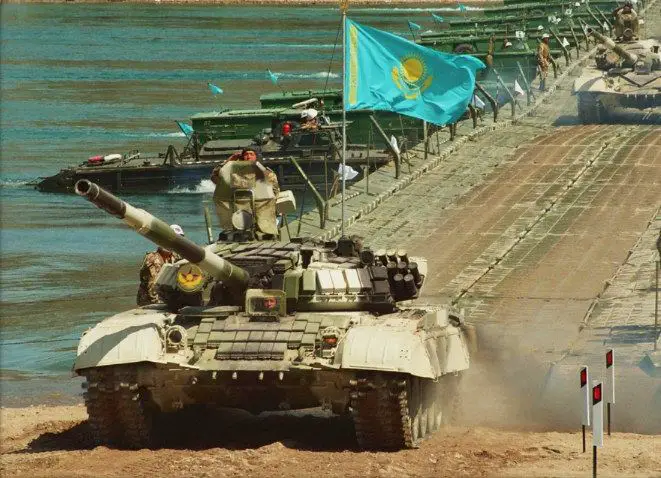
Finmeccanica
expects electro-optic systems developed by its subsidiary
Selex Gallileo to be used to upgrade T-72 main battle
tanks (MBTs) operated by the Kazakh armed forces under
a memorandum of understanding (MoU) signed by the Italian
company and Kazakhstan. The industrial co-operation
agreements signed between Kazakh sovereign wealth fund
(SWF) Samruk-Kazyna and Finmeccanica on 4 November relate
to joint projects in the rail and civilian helicopter
domains in addition to military electro-optic systems.
10
November 2009 |
|
|
|
| |
Estonia
Back
Menu
Estonia rotates
troops in Afghanistan.
|
Estonia
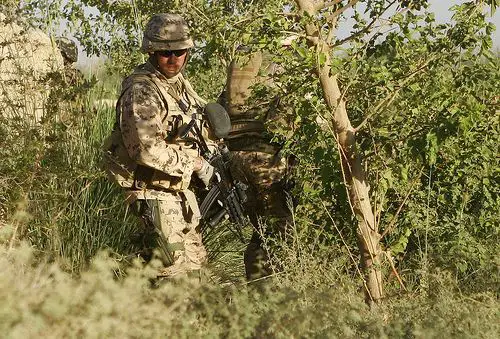
has sent fresh troops to Afghanistan as part of a regular
rotation of its peacekeeping contingent in the south
of the war-torn Central Asian country, the Estonian
Defense Ministry has said. Estonian soldiers have been
in Afghanistan as part of the International Security
Assistance Force (ISAF) since 2003. About 300 Estonian
troops are currently providing support to units of the
British 19th Infantry Brigade in the Helmand Province
in southern Afghanistan. The ESTCOY-9 motorized infantry
unit and the NSE-8 national support element will replace
the Estcoy-8 and NSE-7 units, which have been deployed
in Afghanistan for six months. Lt. Gen. Ants Laaneots,
the commander of the Estonian Defense Forces, said in
October that all members of ESTCOY-9 and NSE-8 units
were equipped with modern weaponry, including personal
night vision devices and compact ground penetrating
radars to detect mines. The country's military has seen
six deaths and about 30 servicemen wounded during its
participation in NATO operations in Afghanistan.
08
November 2009 |
|
|
|
| |
Australia
(Thales) Back
top page
Thales Australia`s
Hawkei Vehicle on display at Armoured Vehicles Australia.
|
Hawkei
is Thales's contender for the Department of Defence's
LAND 121 Phase 4 program to replace Army Landrovers.
The sleek 7-tonne 4x4 can carry up to six soldiers,
and incorporates high levels of blast and ballistic
protection. An engineering mock-up of the Hawkei will
be on display at Armoured Vehicles Australia (AVA),
highlighting its internal seating layout and ground-breaking
design. The mock-up is a full scale representation of
the vehicle which engineers use to experiment with different
internal configurations and ergonomic (human factors)
aspects, ensuring the end result is a vehicle designed
to optimise operational effectiveness. "The Hawkei
is the best solution to meet the Australian Defence
Force's light protected vehicle requirements,"
said Ian Irving, Vice President in charge of Thales's
Land & Joint Systems activities in Australia. "Together
with Plasan, Boeing and PAC Group, we have formed an
unrivalled team. And our exclusive relationship with
Plasan for LAND 121-4's Australian option has been a
real bonus. We're proud to be working with one of the
most sought after composite armour and hull design specialists
in the world. "The response to the Hawkei's launch
has been overwhelmingly positive and the work done by
Thales, along with our partners, is seen as a very compelling
offer."
06
November 2009 |
|
|
|
| |
Italy
(Oto Melara) Back
top page
Oto Melara
Signs Contract Worth Around 20 Million Euro for 81 HITROLE Light Turrets.
|
Oto
Melara, a Finmeccanica company, signed a contract worth
around 20 million euro with Italy’s Ministry of
Defence - General Directorate of Terrestrial Armaments
to supply 81 HITROLE Light turrets. The HITROLE turrets
will be used to equip a number of the Lince vehicles
currently employed in Afghanistan, thus increasing operational
effectiveness and diminishing risks to personnel. The
contract also includes technical assistance. Oto Melara
was selected by Italy’s Ministry of Defence following
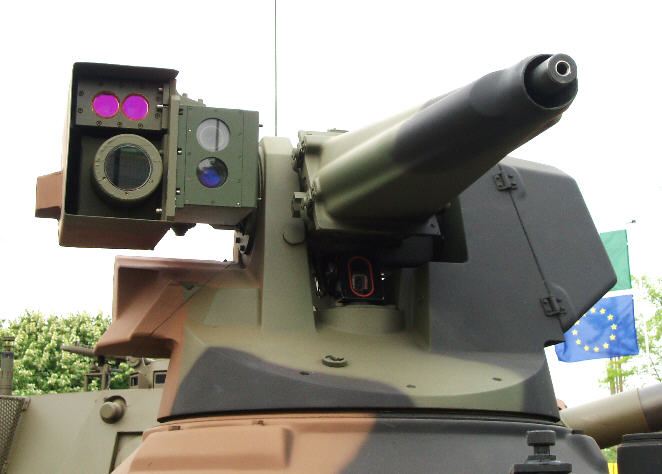
an international tender that began in July this year.
The first turret will be delivered for operational testing
four months from the contract registration, while a
large number of the turrets will be delivered by the
second half of 2010.
05
November 2009 |
|
|
|
| |
United
States (Lockheed Martin) Back
top page
Lockheed
Martin’s Guided MLRS Reaches New Distance Record In Successful
Test.
|
Lockheed
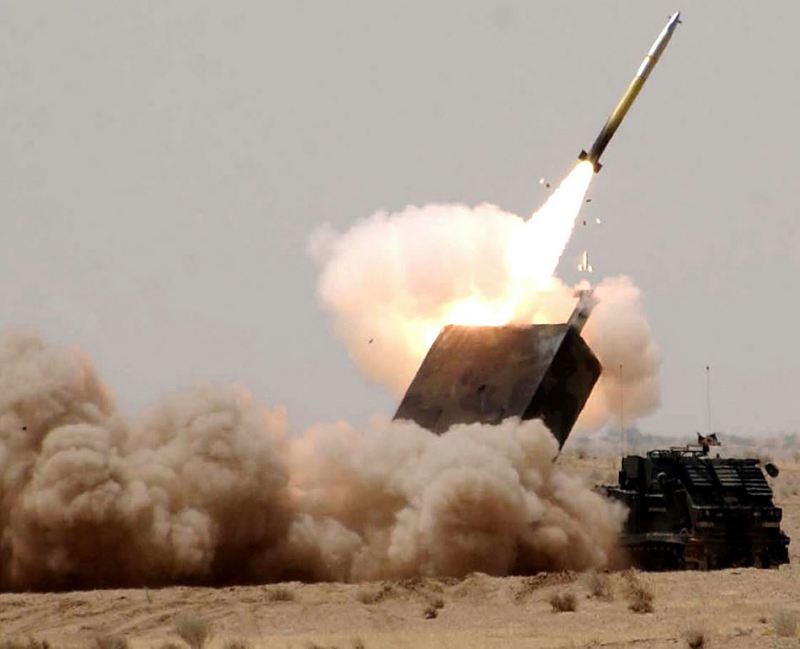
Martin successfully fired a U.S. Army Guided Multiple
Launch Rocket System (GMLRS) rocket 92 kilometers in
a recent test at White Sands Missile Range, NM. The
flawless test highlighted recent product improvements
of this battle-proven system to give it a longer reach,
maintaining its accuracy and effectiveness while minimizing
potential collateral damage. Firing crews for the launch
were from the 5th Battalion, 3rd Field Artillery from
Fort Lewis, WA. This test firing of a unitary GMLRS
met all mission objectives, which included:
- Verify production of GMLRS and HIMARS production lines;
- Validating rocket and launcher reliability;
- Proving performance of system software; and
- Obtaining performance, technical and reliability data.
05
November 2009 |
|
|
|
| |
France
(EADS) Back
top page
EADS Defence
delivers the First Five SIR Command Systems for the French Army’s
VBCI .
|
EADS
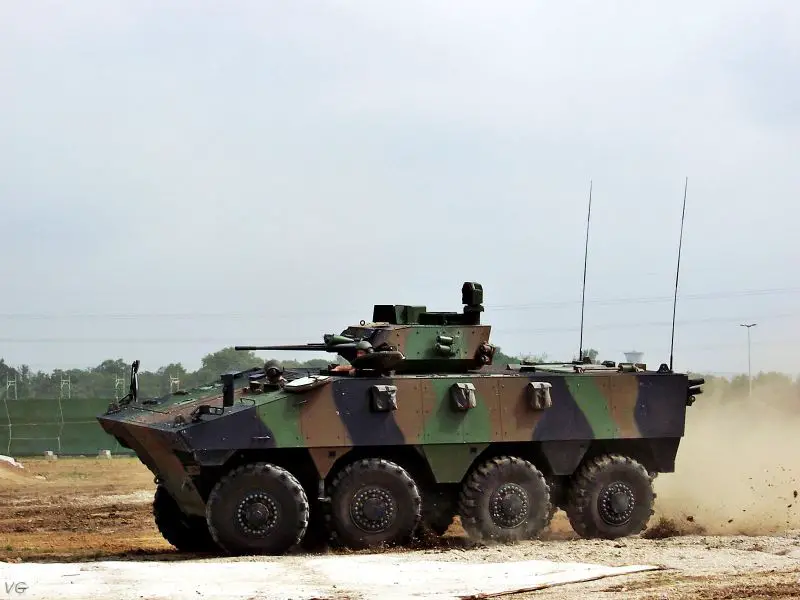
Defence & Security (DS) has just delivered the first
five SIR (Regimental Information System) command systems
to the DGA. These systems will equip the new generation
of VBCI armoured vehicles. This delivery is the outcome
of three years of development work conducted in close
collaboration with the DGA and the representatives of
the French Army. Ultimately, 110 VBCIs are to be equipped
with the SIR, which will be used in the different theatres
of operation where the French Army is deployed. Since
2002, EADS Defence & Security, through its integrated
Business Unit Defence and Communications Systems (DCS),
has supplied some 600 SIR systems integrated in different
types of Forward Armoured Vehicles (VAB, Véhicules
de l’avant blindé), 10’ and 15’
shelters, and AMX10 combat vehicles. 118 SIR kits used
in off-vehicle mode have also been produced by DCS.
Today, the SIR has been delivered to 80 regiments and
French Army training schools. The SIR technology is
interoperable with the other command systems of the
French Army and NATO. The SIR software was entirely
produced by DCS, which constantly upgrades the system
to satisfy the Army's requirements. At the core of the
digitisation of the battle space, this system permits
fully integrated command at regiment, group, battalion,
squadron and company levels. DCS developed this technology
to meet the highly specific needs of the French Ministry
of Defence, to speed up the Command and Control processes
and fully coordinate the units and weapons systems while
guaranteeing very high mobility and surveillance capacities.
04
November 2009 |
|
|
|
| |
United
States (General Dynamics ) Back
top page
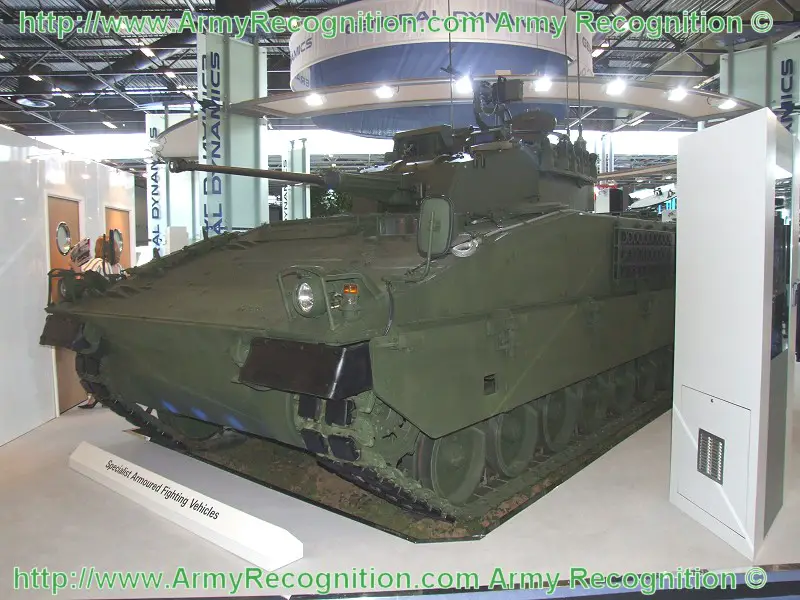
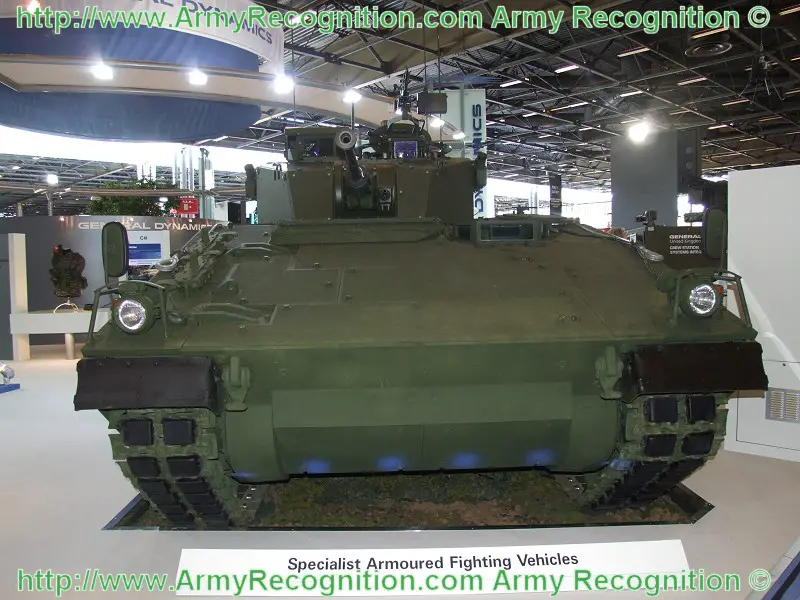
General Dynamics
UK-led Team Delivers FRES Ascod SV Bid.
|
General
Dynamics has submitted its bid to provide the British
Army's next generation of reconnaissance Armoured Fighting
Vehicles. The General Dynamics team, led by General
Dynamics UK, is offering a low-risk evolution of the
ASCOD Infantry Fighting Vehicle, already in use with
the Spanish and Austrian armies, for the Specialist
Vehicle element of the Future Rapid Effect System (FRES
SV). The ASCOD SV vehicle will have the best mobility
in its class, with tremendous growth potential for optimum
survivability for British troops against the threats
of the future. General Dynamics has integrated turrets
from every leading manufacturer onto its vehicles, and
has selected Lockheed Martin UK INSYS as its turret
provider for the Scout variant of FRES SV. Dr Sandy
Wilson, President and Managing Director of General Dynamics
UK, said: "General Dynamics' ASCOD SV has leap-frogged
its rival for FRES. Based on a proven European design,
ASCOD SV is the latest-generation vehicle developed
specifically for FRES SV by a team of GD's British and
European engineers. It is a low-risk choice for FRES
SV, with excellent weight and growth potential. Our
UK engineering talent and experience means that General
Dynamics UK is now the country's leading integrator
of Armoured Fighting Vehicles. We're offering a new
solution with best-of-class technology and the confidence
that comes from our track record of being trusted to
deliver."
04
November 2009 |
|
|
|
| |
Nepal
Back
top page
Nepal's army
and police have been placed on high alert.
|
Nepal's
army and police have been placed on high alert, a government
minister said Tuesday, after the opposition Maoist party
announced plans to blockade the capital and shut down
the main airport. Finance Minister Surendra Pandey said
the Maoists' plans were in breach of the 2006 peace
agreement signed by the former guerrillas, who have
held regular protests in Nepal since their government
fell in May. "The government has placed all the
security agencies on high alert in view of the protests,"
said Pandey. "The Maoists have violated the spirit
of the comprehensive peace accord by announcing plans
to blockade the Kathmandu Valley and shut down the airport.
This is not a democratic way to press for their demands."
The Maoists, who fought a 10-year civil war against
the state before winning landmark elections in 2008,
last week announced a fortnight of nationwide protests
aimed at destabilising the new coalition government.
They have vowed to bring Kathmandu to a standstill on
November 10 by shutting the country's only international
airport during the peak tourist season and blocking
all roads into the capital. They are calling for the
president to apologise for blocking Maoist leader Pushpa
Kamal Dahal's attempt to sack the head of the army,
a move they say was unconstitutional.
04
November 2009 |
|
|
|
| |
Russia
Back
top page
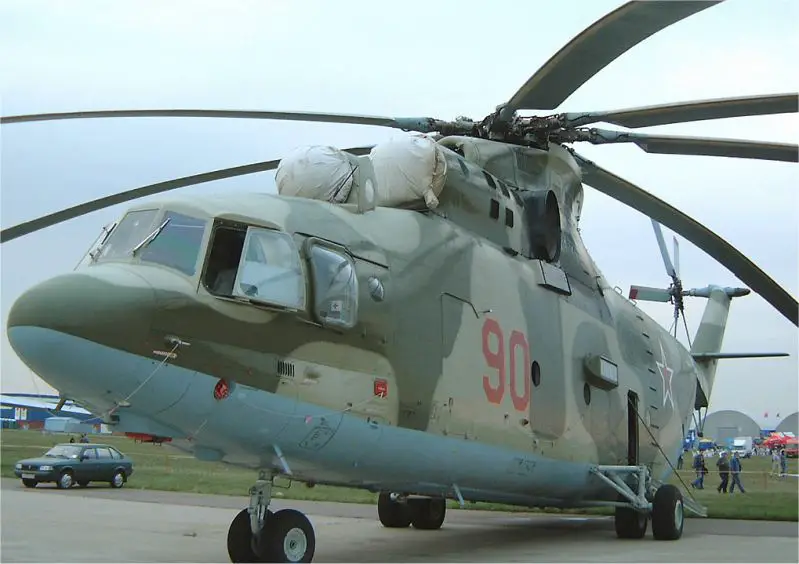
Russia proposed
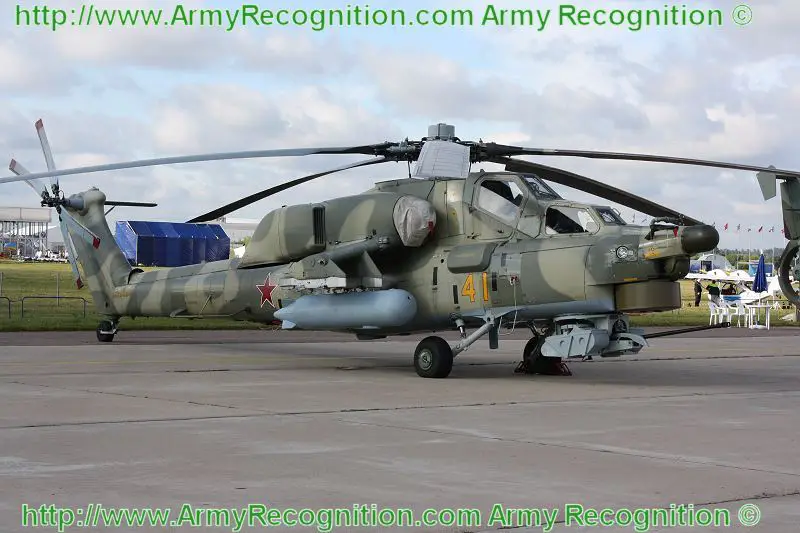
to NATO the bigger helicopter of the world, the Mi-26.
|
Associated
to the project of development of a heavy helicopter
fulfilling the requirements of NATO, Russia proposed
to NATO the bigger helicopter of the world, the MI-26
(NATO code: Halo), announced Mikhaïl Korotkevitch,
chairman of Helicopter Factory of Moscow, to the journalists.
“The design of a powerful helicopter is often
evoked by NATO, and the Member States of Alliance express
an important interest for our heavy helicopters”,
it declared. Work of the research department Mil, the
MI-26T is currently in time of a modernization. According
to M.Korotkevitch, this helicopter answers 100% with
the requirements formulated by Atlantic Alliance. “The
tests are showed that the Mi-26T satisfied with all
the requirements emitted towards the transport cargo
of NATO. There is not any doubt that the future will
belong to this aircraft and its supplier, and the Rostov
factory of helicopters. Multi-purpose helicopter with
broad fuselage, the Mi-26T is intended for the cargo
transport of and weapons of important size. It is also
used for the building work, the installation of high
voltage pylons, the assembly of equipment of drilling
and the fire control.
03
November 2009 |
|
|
|
| |
Canada
Back
top page
Technical
problems on the tanks Leopard 2A6 used by the Canadian Army in Afghanistan.
|
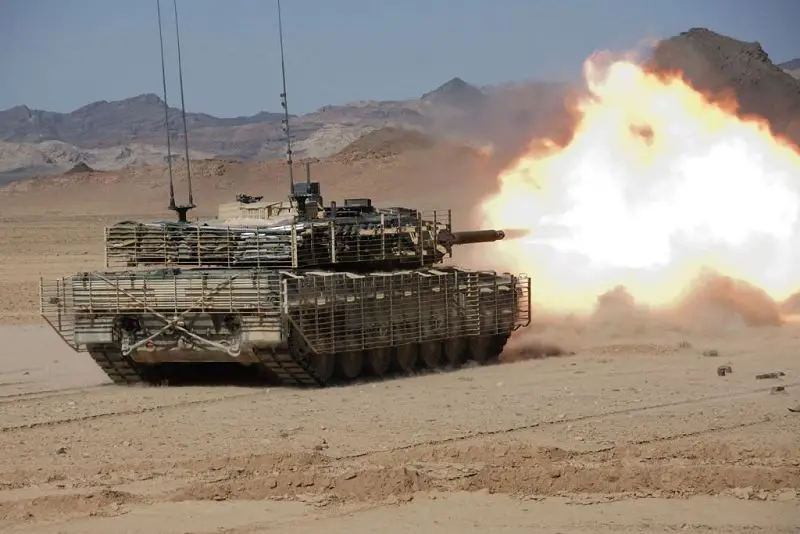
The
Canadian army could not use some of its new tanks in
Afghanistan shortly after their arrival because of technical
problems, indicated the auditor General Sheila Fraser
in a report published Tuesday. So that the tanks Leopard
2A6M are of return on the combat battlefield, it was
necessary to strip some parts of other armoured vehicles
in the zone of war, or on tanks intended for the training.
According to the general auditor, the problem was worsened
by a shortage of spare parts. She added that it is as
a last resort that one takes parts on tanks on the field,
but that the operational force in Afghanistan immediately
started to use this method as of the arrival of the
Leopard 2 A6M. A series of intense combat and a growing
number of roadside bombs obliged the army to deploy
a squadron of old tanks Leopard 1 in Kandahar, in the
autumn of 2006. The commanders quickly realized that
the tanks are old and that air-conditioning is not adequate
in the desert. In April 2007, the conservative government
announced that it was going to spend 650 million $ for
an emergency plan for the acquisition of new tanks.
03
November 2009 |
|
|
|
| |
United
Kingdom (BAE Systems) Back
top page
BAE’s
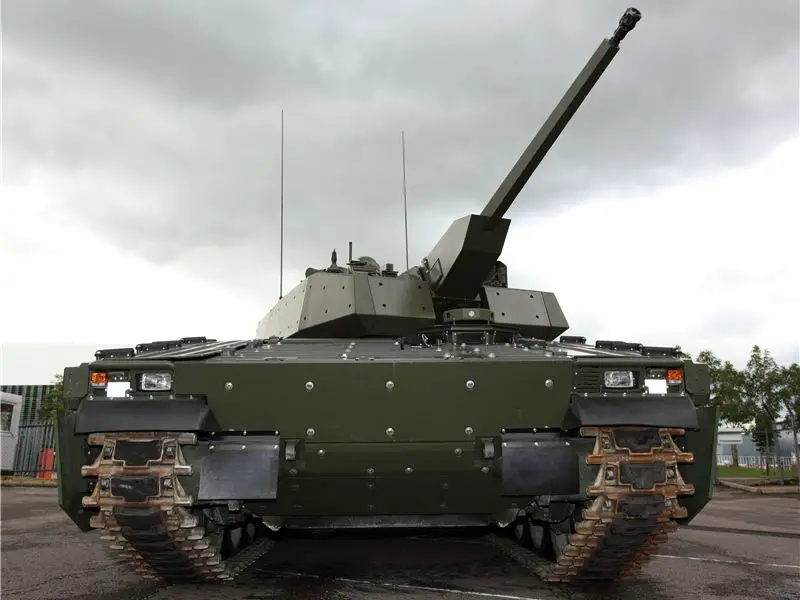
bid for the FRES Specialist Vehicle competition will be based on the
CV90 chassis.
|
BAE’s
bid for the FRES Specialist Vehicle competition will
be based on the CV90 chassis, seen here in Norwegian
service, fitted with a turret-mounted 40mm automatic
cannon. BAE Systems will submit its bid for the British
Army’s most important programme on Thursday 5
November. The bid is for “Recce Block 1”,
the £2bn first phase of the FRES SV (Future Rapid
Effect System – Specialist Vehicles) programme.
The Scout variant will give British troops a much-needed
replacement for the ageing CVR(T) Scimitar, with greatly
improved protection, firepower and reconnaissance abilities.
The UK Ministry of Defence has said it will select a
winner in the first quarter of 2010. The BAE Systems
contender for all the variants is based on the latest
version of its proven CV90 chassis, sold to six countries
and recognised as the best combat vehicle in its class.
For the vital Scout role, the chassis has been shortened
and given a lower profile. The Scout turret and UK mission
fit of all variants will be integrated onto the chassis
in the UK, preserving jobs and the key skills necessary
to continue to support British Army operations. BAE
Systems has delivered well over 100 urgent operational
requirements to modify vehicles in Iraq and Afghanistan,
mostly to provide protection to crews against ever-changing
threats. The CV90 chassis has a mature supply chain,
much of it already in the UK, and BAE Systems plans
to increase UK content. The vehicle, turret technology
and weapon system all have significant export potential.
BAE Systems has already spent more than £25m –
not including the weapon system - on developing an all-new
British-designed turret for the Scout variant. It features
sophisticated sensor systems and a revolutionary 40mm
cannon. The latter’s ease of use, ability to fire
on the move, versatility and much-increased punch means
that it will give a major improvement over the 30mm
Rarden gun used in Scimitar. Its 40mm high explosive
round has more than three times the explosive power
of the 30mm Rarden, while its armour-piercing projectile
will penetrate more than 140mm of steel armour. The
BAE Systems FRES demonstrator vehicle has already begun
mobility trials at Millbrook proving ground and fired
its weapon system at the Shoeburyness range.
02
November 2009 |
|
|
|
| |
Russia
Back
top page
Less than
10% modern helicopters used in the Russian Army.
|
Modern
helicopters constitute less than 10% of the helicopters
used by the Russian armed forces, declared Monday the
Deputy Prime Minister Russian Sergueï Ivanov at
a meeting of the military industrial Commission of Russia.
“The park of helicopters currently in service
is at the same time worn and obsolete. The part of the
modern helicopters is lower than 10% of those which
are used by the Russian air forces”, it affirmed.
The Deputy Prime Minister noted that a similar situation
characterized aviation concerned with Federal security
service (FSB), of the ministry for the Interior and
the ministry for the Emergencies. “We must change
this share to 80% from here at 2020”, it pointed
out.
02
November 2009 |
|
|
|
| |
Sweden
Back
top page
Patria comments
on the court decision in Sweden.
|
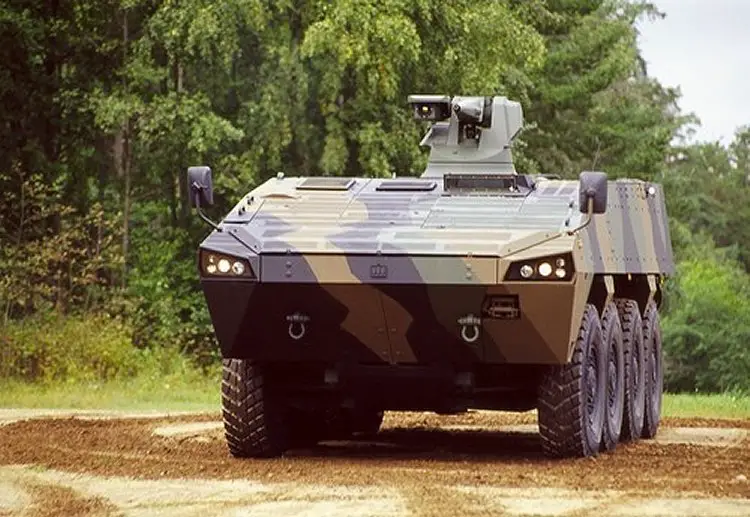
The
Stockholm County Administrative Court has today decided
that the Swedish Defence Materiel Administration, FMV's
decision to award the AWV 2014 contract to Patria must
be cancelled and the public procurement proceedings
are recommenced due to inadequacies in the procurement
process. Patria regrets the decision of the Administrative
Court’s decision. However, Patria is confident
to succeed even in the new tender process as Patria
AMV is considered to be a high quality vehicle proven
in the international crisis management operations. Sweden’s
FMV defense procurement agency recently selected Finland’s
Patria for a EUR 240 million contract to deliver 113
AMV (Armoured Modular Vehicle) wheeled Armored Personnel
Carriers (APCs) to the Swedish Armed Forces. The 27
tonne AMV has a crew of 3, and can carry up to 9 soldiers.
A varied set of turrets and modules can configure it
for different roles, from MEDEVAC through to IFV or
even automated mortar carrier.
01
November 2009 |
|
|
|
| |








![The Cuban Defense Ministry has announced that large-scale military exercises will take place in the country on November 26-28. The three-day Bastion-2009 drills will be held on the eve of the National Defense Day, which is celebrated in Cuba on November 29. "The Bastion-2009 strategic exercises will be held through the country on November 26-28 as part of a program aimed at strengthening Cuba's defense capability," the ministry said in a statement on Monday. "The drills will comprise different types of tactical exercises with the participation of units from the Fuerzas Armadas Revolucionaria [Revolutionary Armed Forces], the Interior Ministry and components of territorial defenses," the statement said. The exercises were originally planned for 2008, but had to be postponed because of the three devastating hurricanes that hit the country last year.](/images/stories/central_america/cuba/missile_vehicle_system/sa-2/pictures/SA-2_sol_air_missile_system_tracked_armoured_vehicle_Cuban_Cuban_army_001.jpg)